Hokkien radio broadcasts in Singapore (1937–1983)


Until the early 1980s, Chinese radio broadcasting in Singapore served mainly the local Chinese dialect groups — the Cantonese, Teochew, Hokkien, Hakka, and Hainanese. Since Hokkien people made up the largest segment of the Chinese population in Singapore,1 Hokkien broadcasts were an important part of Chinese-language programming. 2
Nanguan and gezai opera: March 1937 to July 1949
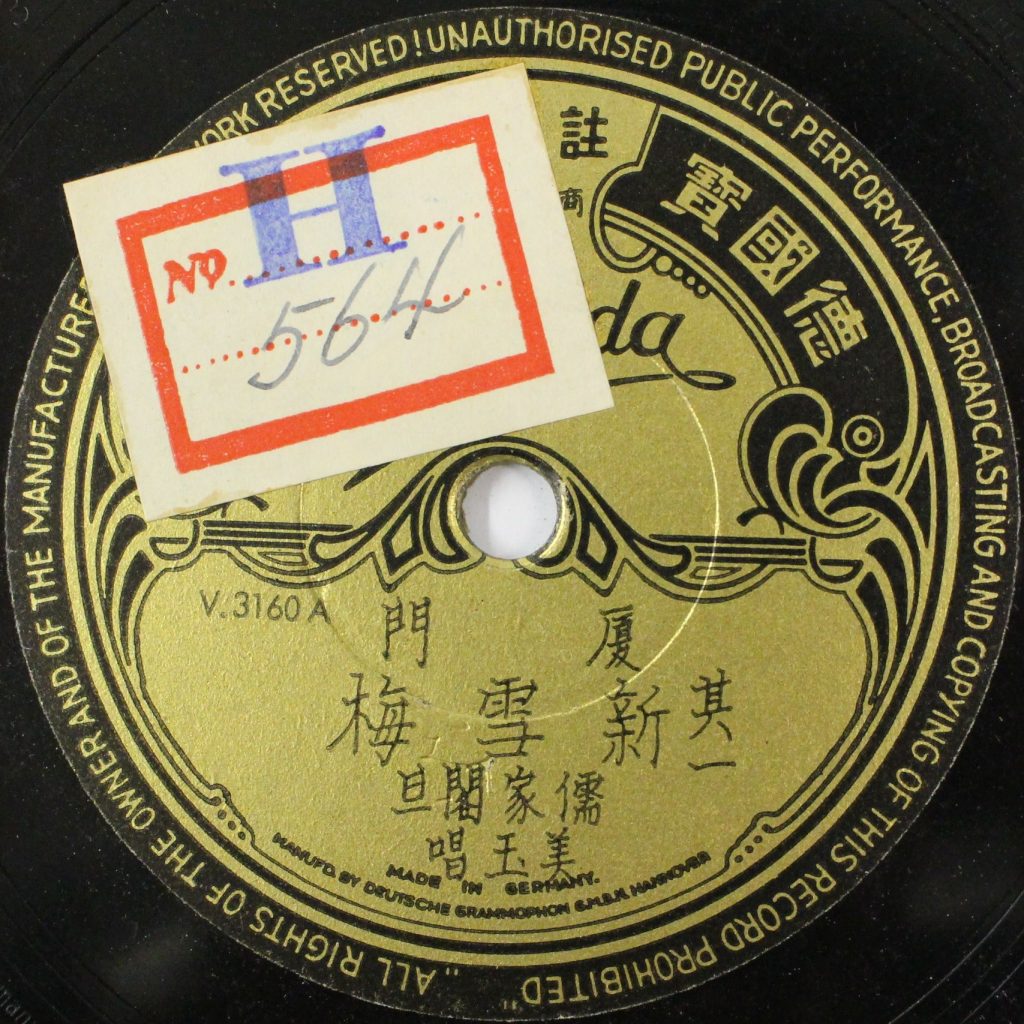
When the British Malaya Broadcasting Corporation (BMBC) launched Radio ZHI in March 1937, its Chinese programme aired for only two to four hours each week. Mandarin popular songs and Peking opera accounted for the bulk of its content, followed by Cantonese music and Teochew music. Hokkien music only appeared 10 times up to early June 1938, each lasting about 30 minutes, likely because there were significantly fewer Hokkien records in Singapore compared to Cantonese, Mandarin, and Teochew ones. The content was limited to traditional Hokkien music, namely nanguan (namkuan, now more commonly known as nanyin) and gezai (kua-á, or Hokkien opera) gramophone records featuring Singaporean Amoy songstresses Bee Geok and Poh Lae under the Pagoda label; as well as gezaixi (kua-á-hì, or Taiwanese opera) records featuring Taiwanese singers such as Cheng Hiang and Peck Hoon released by Taiwan Columbia, a subsidiary of Nipponophone Co.3 These gezai records were dumped alongside other Japanese goods in British Malaya in the 1930s, when Taiwan was under Japanese rule, and became the main source of Hokkien records for radio programming in British Malaya.4 In addition, BMBC also invited the most veteran nanyin group in Singapore, Heng Hoon Musical Association, to perform live on radio on 15 April 1937.
Starting from 13 June 1938, the airtime for Chinese programmes was increased to about eight hours per week, and Hokkien broadcasts began to appear weekly on Wednesday evenings for about 30 minutes until September 1940, even after BMBC rebranded itself as the Malaya Broadcasting Corporation (MBC) in March 1940. The content expanded to include the nanyin and gezai records released by Pathé and its sublabel Regal, featuring Amoy and Changchow singers and musicians. After Singapore’s gezai troupe Kim Geok Lian released its first batch of records under the Regal label in September 1938, its records quickly became an important component of Hokkien broadcasts.

In October 1940, the airtime for Chinese programmes further increased to about 13 hours per week, with Hokkien broadcasts appearing thrice weekly and lasting for 35 minutes each. From 12 January 1941, Hokkien broadcasts would air daily, accounting for approximately 20% to 25% of the total airtime for Chinese programmes — higher than the other dialects.
During the Japanese Occupation, the MBC was renamed Syonan Hoso Kyoku (Syonan Broadcasting Station) and began broadcasting on 28 March, 1942.5Between late April 1942 and mid-May 1945, Hokkien broadcasts aired at least 27 times, each lasting between 15 and 30 minutes. Furthermore, nanyin musicians in Penang were invited to perform on the local station for an hour each week in 1943, an arrangement that lasted for a year.6
The British regained control of the radio service after Japan surrendered on 15 August 1945. After 1 April 1946, BMBC was taken over by the Pan-Malayan Department of Broadcasting, which launched Radio Malaya–Singapore (commonly known as Radio Malaya) that month.7 From 1946 onwards, Radio Malaya went through several rounds of restructuring and name changes.
In 1946, the airtime for Chinese programmes reverted to about 13 to 14 hours per week. This doubled to about 24 hours per week in 1947, and then rose to about 30 hours per week in 1948 and 1949. In addition to playing records, these programmes introduced talks on women’s issues and family matters, storytelling, live performances, shows relayed from theatres, song requests from listeners, as well as listeners’ mailboxes. Accordingly, the weekly airtime for Hokkien broadcasts increased from 90 minutes in 1946 to three to four hours in 1947 and 1948, but returned to 90 minutes in 1949. In addition to nanyin and gezai records, they featured recordings of Taiwanese popular songs and “new opera” sung by Taiwanese singer Cheng Hiang and others. Local nanyin groups such as the Siong Leng Musical Association were also invited to perform live on radio.
Modern songs, opera troupes, and storytellers: August 1949 to 1975
When Radio Rediffusion began broadcasting on 1 August 1949, its Gold Channel aired Chinese programmes for 16 hours a day, which increased to 18 hours a day starting in 1963. Hokkien broadcasts increased from 90 to over 200 minutes per day from December 1949, accounting for an average of 25% of the total airtime. They were often sponsored by local jewellery shops or companies selling modern products, with advertisements aired during these timeslots.8
Meanwhile, Radio Malaya’s airtime also increased significantly from 30 hours per week in 1950 to about eight hours per day in the 1950s. By 1961, after Radio Singapore was formally established, it had increased to 16 hours per day, finally reaching 21 hours per day from February 1964. While Hokkien broadcasts accounted for less than 10% of the total airtime, they were often picked up by and aired on Radio Rediffusion as well.
The content of Hokkien broadcasts also became more diverse due to the emergence of a new genre known as modern Hokkien songs, as well as the continued development of gezai opera broadcasts and spoken Hokkien programmes.
Modern Hokkien songs first aired on Radio Malaya no later than September 1950, and were soon played on Radio Rediffusion too. They were included in the 30 gramophone records featuring members of the Penang-based Eng Yean Hokkien Opera Troupe, led by the Lim sisters Eng Eng and Yean Yean, and released under the Parlophone label.9 The 30 records mainly consisted of cover versions of Taiwanese popular songs released in the 1930s, but also included operas imitating Taiwan Columbia’s new opera “Peach Blossoms Weeping Blood“ as well as gezaixi opera based on the story of Butterfly Lovers (San-phik Ing-tâi) with jazz accompaniment.10Songs from these 30 records continued to air on radio until the late 1960s. After Flower Brand and Horse Record released dozens of Hokkien popular songs, they also became part of the modern Hokkien songs segment on the radio.
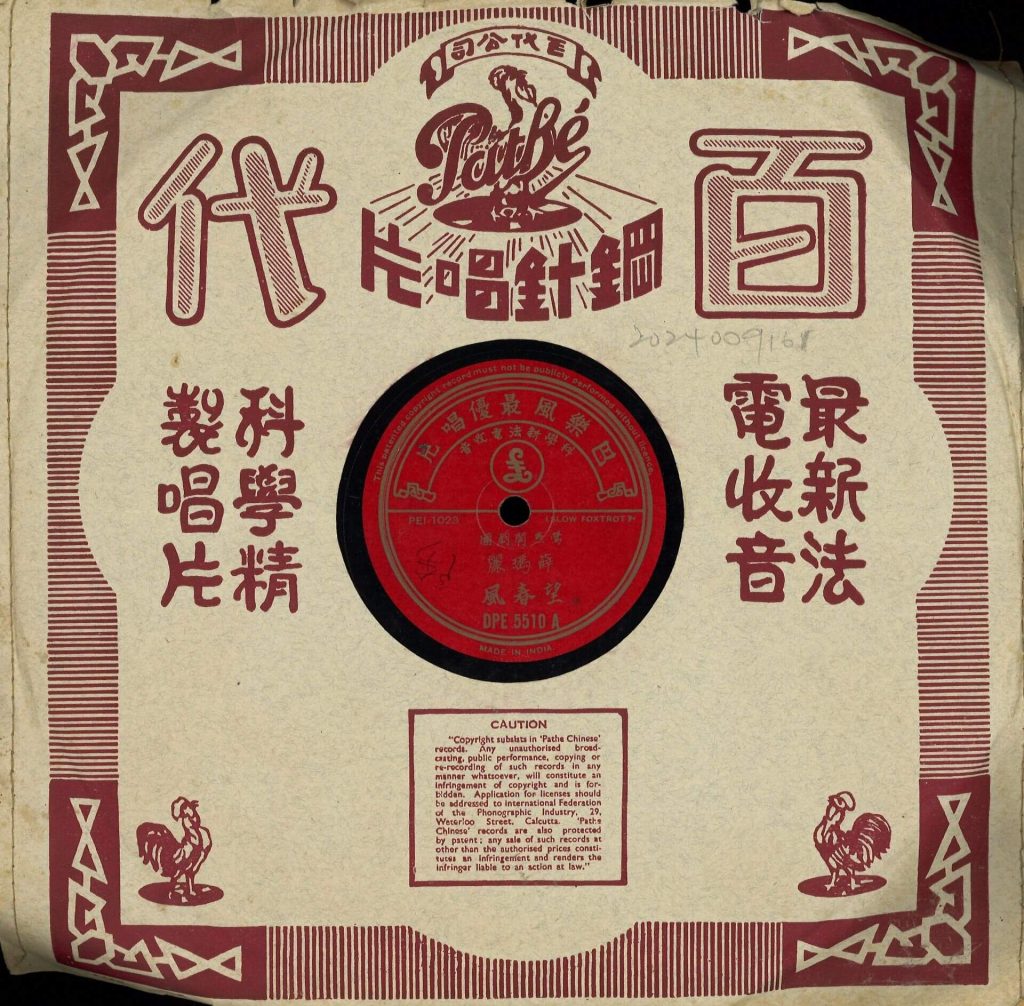
The gezai broadcasts were greatly enhanced by the emergence of new local Hokkien opera troupes, most notably Sin Kee Lin, which released its debut recordings under the Regal label in October 1950.11These local troupes appeared on both radio stations via live performances, gramophone records, relayed broadcasts from theatre performances, and radio station recordings. From the 1960s, gezai troupes from Taiwan such as Sin-tâi-kong, Pik-hua, and Bóo-tan-kuì further enriched such programmes with their performances, whether live, recorded, or relayed.12 The widespread popularity of Radio Rediffusion’s recordings of Sin-tâi-kong’s performances led the station to broadcast them every day from 9am to 9.30am under the name “Hokkien Opera” (Hok-kiān-hì).13 In around 1967, the station added another 30-minute timeslot in the evening called “Hokkien kua-á-hì”. Both programmes featured local and Taiwanese gezai troupes and lasted until 1982.
Among the spoken Hokkien programmes, storytelling was particularly popular and was eventually categorised into long, medium, and short versions, with the long versions broadcast nightly during prime time. The more famous Hokkien storytellers were Ong Toh (1920–1999) and Lao Siong (birth and death years unknown).14 Besides storytelling, Radio Rediffusion introduced other Hokkien programmes, such as radio dramas and jokes, as early as 1951. By the 1960s and 1970s, many new forms of such programmes had developed, including detective stories, folk stories, children’s dramas, dramatised novels, and many others.
Decline of Hokkien broadcasting: 1976 to 1983
Beginning in 1976, Hokkien broadcasts on Radio Singapore’s Third Network dropped to less than 3%. Following the Speak Mandarin Campaign in 1979, they decreased to less than 2% in 1980, and subsequently less than 1% from 1981 to 1983. Meanwhile, Radio Rediffusion’s Hokkien broadcasts managed to maintain 20% of the total airtime per week from 1976 to 1979, though this dropped to 16% in 1980, 12% in 1981, 7% in 1982, and eventually ceased completely in 1983.15 Despite this decline, Hokkien broadcasts continued on Radio Singapore’s Fourth Network, accounting for 10% to 20% of the three-hour airtime every evening from 1976 until 1983. Today, Mediacorp’s CAPITAL 958 is the only radio station in Singapore with news reporting in Hokkien and other dialects.
| 1 | Cheong Yan Peng, “Xinjiapo zhongwen guangboshi (1945–1965): Yige shehuishi de yanjiu” [History of Chinese broadcasting in Singapore (1945–1965): A social history] (Master’s thesis, National University of Singapore, 2004), 44. |
| 2 | There has been little research on the subject, with previous studies mostly relying on oral history and overlooking the enormous amount of radio broadcast schedules published daily in newspapers. This article uses these radio programmes as primary sources to examine how the airtime and content of Hokkien broadcasts on the wireless, state-run Radio Malaya (and later Radio Singapore), and the private, cable-transmitted Rediffusion developed from 1937 to 1983. |
| 3 | The original names, along with the birth and death years, of Bee Geok and Poh Lae remain unknown. Cheng Hiang, original name Lau Cheng Hiang, 1912–1943; Peck Hoon, original name A-hioh, birth and death years unknown. For an overview of the recording industry of Taiwan under Japanese rule, see Ying-fen Wang, “Sounding Taiwanese through Gramophone Recordings, 1895–1945,” in Phonographic Modernity: The Gramophone Industry and Music Genres in East and Southeast Asia, ed. Fumitaka Yamauchi and Ying-fen Wang (University of Illinois Press, 2024), 168–204. The term nanyin did not appear in Singapore newspapers until 1946. It was originally referred to as nanguan (namkuan in Hokkien), before it was replaced by nanyin, a term that was popularised in mainland China after 1949. Taiwan continues to use the term nanguan today. |
| 4 | Ying-fen Wang, “Sounding Taiwanese through Gramophone Recordings, 1895–1945,” 193–194. |
| 5 | “Local Broadcasts Starts from To-morrow,” Shonan Times, 27 March 1942, 4. |
| 6 | Chua Yu Bong, “Xingma nanyue hua cangsang” [On the History of Nanyue in Singapore and Malaysia], in Malaixiya Fujian Shetuan Lianhehui Wenhuabu Nanyuezu chengli jinian nanyue dahui tekan [Special edition commemorating the founding of the Malaysian Hokkien Association Federation Cultural Department Nanyue Division and its participation in Nanyue Gala Festival] (Malaysia Hokkien Association Federation Cultural Department Nanyue Division, 1981), 149–150. |
| 7 | “Radio Malaya–Singapore,” Malaya Tribune, 3 April 1946, 4. |
| 8 | For more, see Cheong, “Xinjiapo zhongwen guangboshi,” 30. |
| 9 | “First Hokkien Records Made,” The Straits Times, 18 June 1950. The total is 62 songs. |
| 10 | Lau Yick Sau, “Taige ‘nanxiang’: Chutan rizhi shiqi Taiyu liuxingge yu dongnanya zhi fanchang ji chuanbo” [The southward advance of Taiwanese songs: A preliminary investigation of the covering and dissemination of Taiwanese popular songs of the Japanese colonial period] (Paper presented at the 4th Conference of the Sonic History of Taiwan, unpublished), 20–21 August 2021. |
| 11 | “Lige Fujian diyiqi xinchangpian” [Regal label new Hokkien records], Nanyang Siang Pau, 23 October 1950, 9. |
| 12 | Tsai Hsin-hsin, “Yijiu liuling niandai Taiwan gezaixi fu xingzhou zhanyan yinji” [The legacy of Taiwanese gezaixi performance in Singapore in the 1960s], Taiwan Wenxue Xuebao 39 (2021): 1–34. |
| 13 | “Li de husheng you benyuefen qi jue tuichu gexin jiemu” [Rediffusion launches new programme from this month], Nanyang Siang Pau, 16 October 1964, 7. |
| 14 | For Ong Toh, see Yap Neng Jye, “Xinjiapo ‘li de husheng’ zhongwen guangbo chutan (1949–1965)” [An oral history of Chinese broadcasting in Singapore: The case of Rediffusion (1949–1965)] (Bachelor thesis., National University of Singapore, 2000), 34–38. |
| 15 | See also Huang Wen-ju, “Kongzhong fasheng: Xinjiapo ‘li de husheng’ xiayu guangbo fazhan” [On air: The development of Hokkien broadcasts on Rediffusion in Singapore], in Yidi bingsheng: Xinjiapo Minnanyu geyao yu Xiayu yingyin de zaidi fazhan (1900–2015) [Changing place and sounding together: The local development of the Hokkien songs and Amoy-dialect audio-visual media in Singapore] (Kaohsiung: Chunhui Publishing, 2017), 82. |
Cheong, Yan Peng. “Xinjiapo zhongwen guangboshi (1945–1965): Yige shehuishi de yanjiu” [History of Chinese broadcasting in Singapore (1945–1965): A social history]. Master’s thesis, National University of Singapore, 2004. | |
Chua, Yu Bong. “Xingma nanyue hua cangsang” [On the History of Nanyue in Singapore and Malaysia]. In Malaixiya Fujian Shetuan Lianhehui Wenhuabu Nanyuezu chengli jinian nanyue dahui tekan [Special edition commemorating the founding of the Malaysian Hokkien Association Federation Cultural Department Nanyue Division and its participation in Nanyue Gala Festival]. Kuala Lumpur: Malaysia Hokkien Association Federation Cultural Department Nanyue Division, 1981. | |
Huang, Wenju. “Kongzhong fasheng: Xinjiapo ‘Li de hushing’ Xiayu guangbo fazhan” [On air: The development of Hokkien broadcasts on Rediffusion in Singapore]. In Yidi bingsheng: Xinjiapo minnanyu geyao yu Xiayu yingyin de zaidi fazhan (1900–2015) [Changing place and sounding together: The local development of the Hokkien songs and Amoy-dialect audio-visual media in Singapore]. Kaohsiung: Chunhui Publishing, 2017. | |
Lau, Yick Sau. “Taige ‘nanxiang’: Chutan Rizhi shiqi Taiyu liuxingge yu Dongnanya zhi fanchang ji chuanbo” [The southward advance of Taiwanese songs: A preliminary investigation of the covering and dissemination of Taiwanese popular songs of the Japanese colonial period]. Paper presented at the 4th Conference of the Sonic History of Taiwan, 20–21 August 2021. | |
Tsai, Hsin-hsin. “Yijiu liuling niandai Taiwan gezaixi fu xingzhou zhanyan yinji” [The legacy of Taiwanese gezaixi performance in Singapore in the 1960s]. Taiwan Wenxue Xuebao 39 (2021): 1–34. | |
Wang, Ying-fen. “Sounding Taiwanese through Gramophone Recordings, 1895–1945.” In Phonographic Modernity: The Gramophone Industry and Music Genres in East and Southeast Asia, edited by Fumitaka Yamauchi and Ying-fen Wang. Urbana: University of Illinois Press, 2024. | |
Yap, Neng Jye. “Xinjiapo ‘Li de husheng’ zhongwen guangbo chutan (1949–1965)” [An oral history of Chinese broadcasting in Singapore: The case of Rediffusion (1949–1965)]. Bachelor thesis, National University of Singapore, 2000. |