Sun Yat Sen Nanyang Memorial Hall (Wan Qing Yuan)


Built in the early 20th century, the Sun Yat Sen Nanyang Memorial Hall (also known as Wan Qing Yuan) is a two-storey colonial villa-turned-museum in the Balestier precinct of Singapore. A witness to changes in the Chinese community in Singapore for more than a century, the former Sun Yat Sen Villa was gazetted as a National Monument in 1994 to commemorate its history as Sun Yat-sen’s (1866–1925) revolutionary base in Nanyang (Southeast Asia). Today, the Memorial Hall is a museum owned by the Singapore Chinese Chamber of Commerce and Industry and managed by the National Heritage Board, presenting the 1911 Chinese Revolution from the perspectives of Chinese communities living in Singapore and Nanyang during the early 20th century.
Early history: Bin Chan House
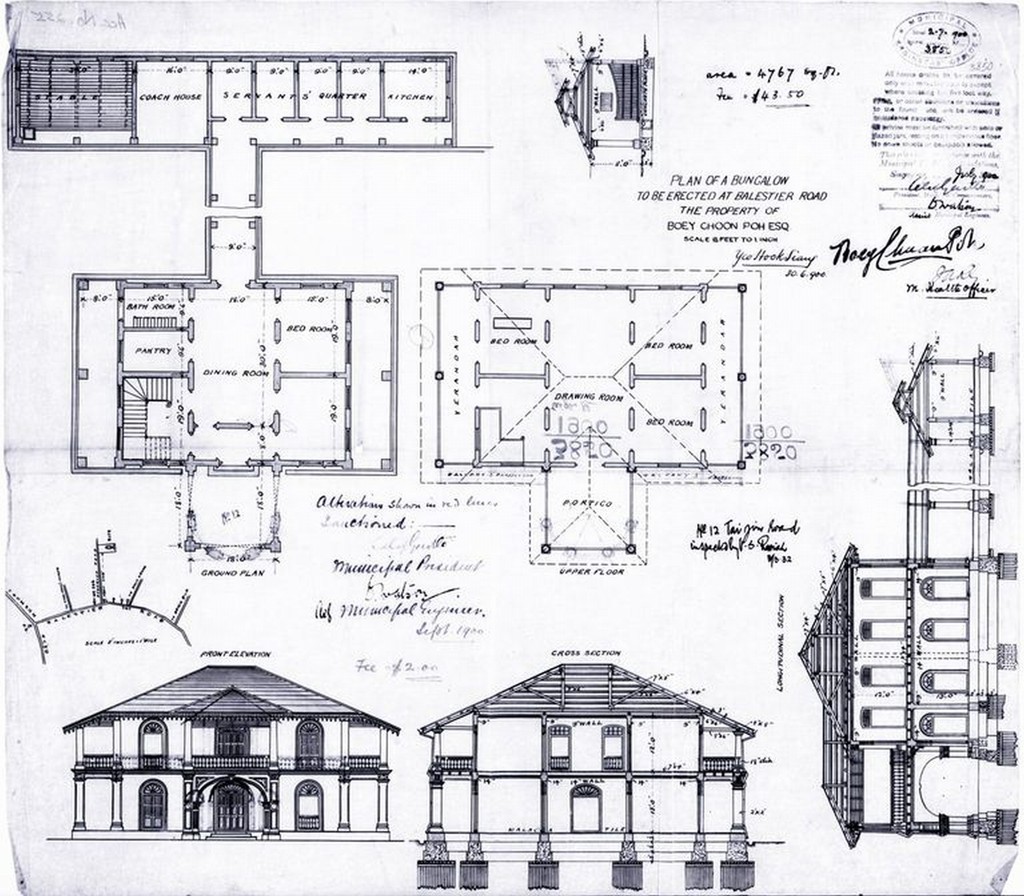
The colonial villa was first commissioned for construction in 1900 by wealthy Chinese merchant Boey Chuan Poh (1870–1926). Completed by 1902, it is made up of a main building and an annex within a landscaped garden. The villa features western architectural elements such as classical columns, ornate arched windows and doors, eaves decorated with filigree fascia, and a porte-cochère to receive guests. At the same time, the design was well-suited for Singapore’s tropical climate, with features such as movable louvre windows to improve ventilation and projected verandas on the second floor to provide shade to the central living space. A covered walkway links the main building to the annex, which housed the kitchen, servants’ quarters, stable, and coach house.
Boey named the villa “Bin Chan House”, a name shared by Boey’s racehorse, Bin Chan. In the same year that the villa was completed, Boey sold the villa to Lim Ah Siang (1853–1917), a timber merchant. The villa would change ownership multiple times until rubber tycoon Teo Eng Hock (1872–1959) and his brother Teo Bah Tan (c. 1879–1949) bought it in 1905.
Sun Yat-sen’s revolutionary base: Wan Qing Yuan
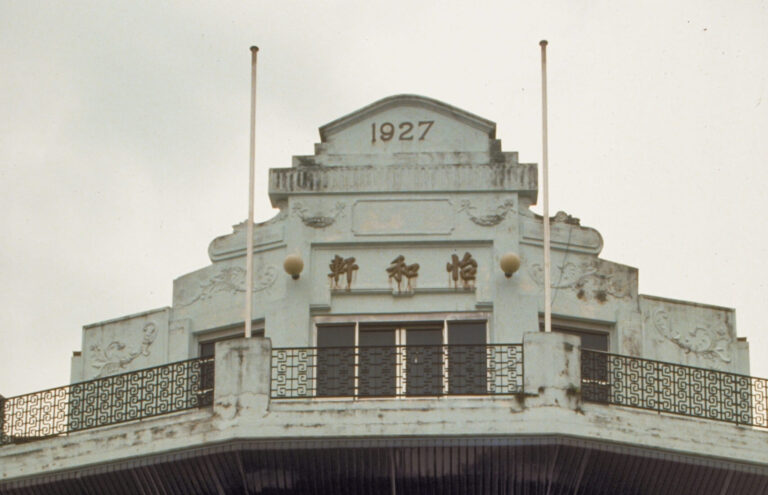
The Teo brothers bought the villa for their mother, Tan Poh Neo (c. 1840–1932), as a retirement home. It was renamed “Wan Qing Yuan” or “Serene Sunset Garden”, a name inspired by a Tang dynasty poem by Li Shangyin (813–858), and represents the owners’ wishes for their mother to spend her remaining days in peace.
In July 1905, Sun Yat-sen met Teo Eng Hock, Tan Chor Lam (1884–1971), and Lim Nee Soon (1879–1936) through his close friend Yau Lit (1865–1936) and established a friendship with the trio who shared his ideals. When Sun returned to Singapore in late 1905, Teo Eng Hock, with the permission of his mother, offered him Wan Qing Yuan as a place to stay and carry out revolutionary activities.
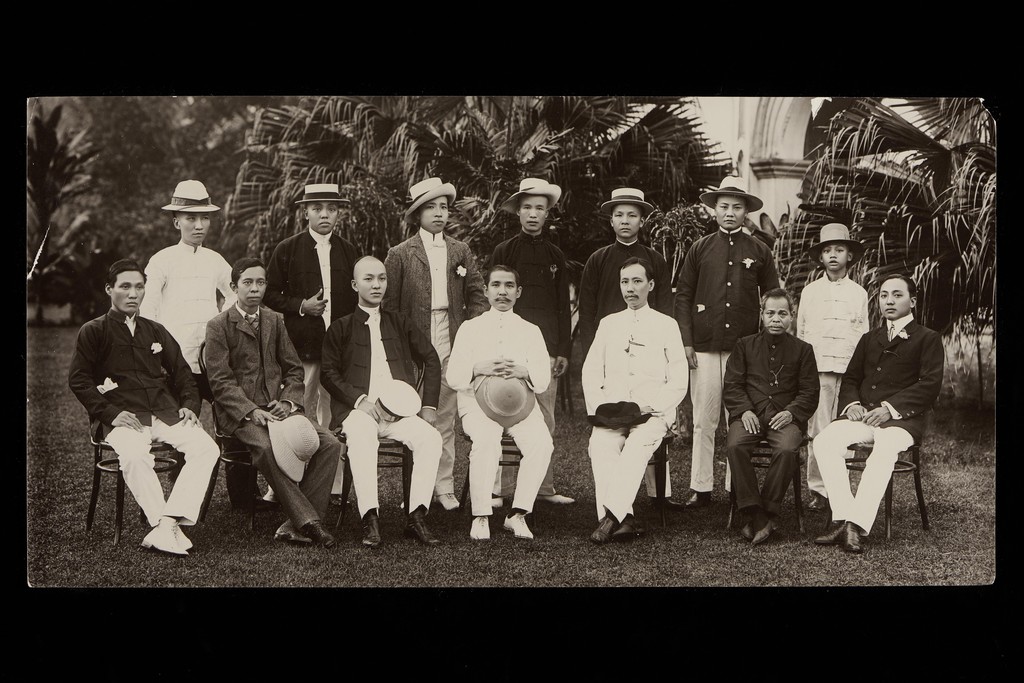
Sun established the Tong Meng Hui (Chinese Revolutionary Alliance) Singapore Branch at Wan Qing Yuan in 1906, and the villa subsequently became the alliance’s headquarters in the Nanyang region in July 1908. Wan Qing Yuan was an important base for Sun’s revolutionary activities in the region, and Sun himself stayed in the villa four times out of his nine visits in Singapore. Notable figures of modern China such as Hu Han Min (1879–1936), Wang Jing Wei (1883–1944), Huang Xing (1874–1916), and Ju Zheng (1876–1951), as well as revolutionaries in Southeast Asia, also stayed in the villa to participate in revolutionary discussions.
Three important uprisings, namely the Huanggang Uprising (May 1907), Zhennanguan Uprising (December 1907), and Hekou Uprising (April 1908) were planned in Wan Qing Yuan. Additionally, Sun conceptualised four designs of the “Blue Sky, White Sun and Red Earth” flag at Wan Qing Yuan and requested Tan Sok Jee (birth and death years unknown), wife of Teo Eng Hock, to create a piece of embroidery based on them.
Despite its importance, Teo Eng Hock eventually sold Wan Qing Yuan in August 1910. The villa changed ownership several times after its sale and fell into disrepair.
The six men who saved Wan Qing Yuan
In 1937, six Chinese leaders — Lee Kong Chian (1893–1967), Tan Ean Kiam (1881–1943), Lee Chin Tian (1875–1965), Chew Hean Swee (1887–1964), Lee Choon Seng (1888–1966), and Yeo Kiat Tiow (birth and death years unknown) — jointly acquired Wan Qing Yuan from an Indian businessman and donated it to the Singapore Chinese Chamber of Commerce (Singapore Chinese Chamber of Commerce and Industry today). The management of Wan Qing Yuan was later handed over to the Chinese Nationalist government, which funded its refurbishment. The villa was reopened to the public as a Memorial Hall on 1 January 1940.
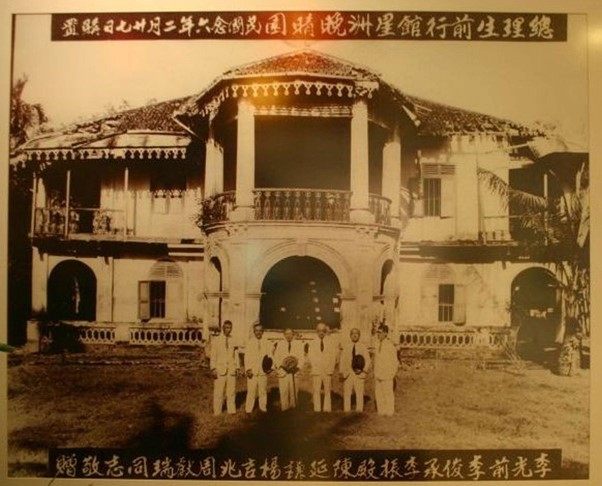
A monumental history: Sun Yat Sen Nanyang Memorial Hall
During the Japanese Occupation (1942–1945), Wan Qing Yuan was used as a communications centre by the Japanese, who destroyed many photographs and artefacts in the villa. After World War II, the Chinese Nationalist government again allocated funds to renovate the villa and turned it into the office of the Kuomintang Singapore Branch.
After the establishment of the People’s Republic of China in 1949, the British government in Singapore closed down the Kuomintang branch at Wan Qing Yuan. The place was handed back to the Singapore Chinese Chamber of Commerce, which subsequently funded the renovation of Wan Qing Yuan in 1965. The villa was renamed “Sun Yat Sen Villa”, and reopened to the public in 1966, in conjunction with Sun’s 100th birth anniversary.
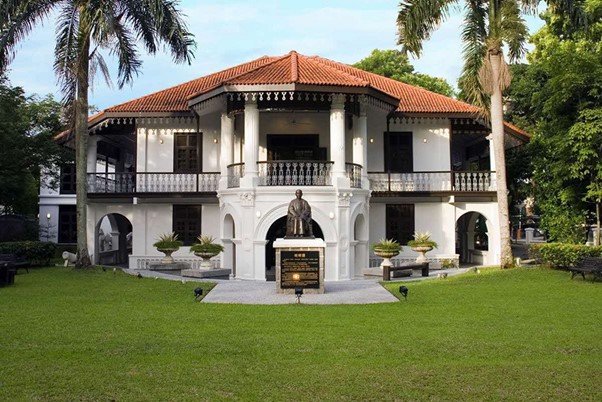
In 1994, the Sun Yat Sen Villa was gazetted as a national monument. Two years later, the Singapore Chinese Chamber of Commerce and Industry renamed the villa “Sun Yat Sen Nanyang Memorial Hall” and announced plans for its expansion. The villa closed for renovations and reopened to the public in 2001.
In 2009, the Memorial Hall’s management was handed over to the National Heritage Board and the villa underwent another round of renovations. It reopened to the public on 8 October 2011, to mark the centenary of the 1911 revolution. The revamped Memorial Hall featured four permanent galleries that traced the history of Sun in Singapore, as well as the history of the Chinese pioneers in Singapore. There is also a special gallery with exhibitions that provide interesting insights into the many aspects of Chinese heritage and culture. In addition, the Memorial Hall actively engages with the community through its signature programmes during major Chinese festivals, as well as its education and outreach efforts.
After more than a decade, the Memorial Hall closed on 16 September 2024 for much-needed restoration and renovation works. It is slated to reopen in 2027, which will mark a new chapter in its legacy.
Chua, Jermaine, ed. Wan Qing Yuan: A New Chapter. Singapore: Sun Yat Sen Nanyang Memorial Hall, 2018. | |
“Monument Focus: Sun Yat Sen Nanyang Memorial Hall / Wan Qing Yuan.” Roots, 9 October 2024. | |
“The Building.” Sun Yat Sen Nanyang Memorial Hall website. |