Culinary hybridisation and Singapore Chinese food


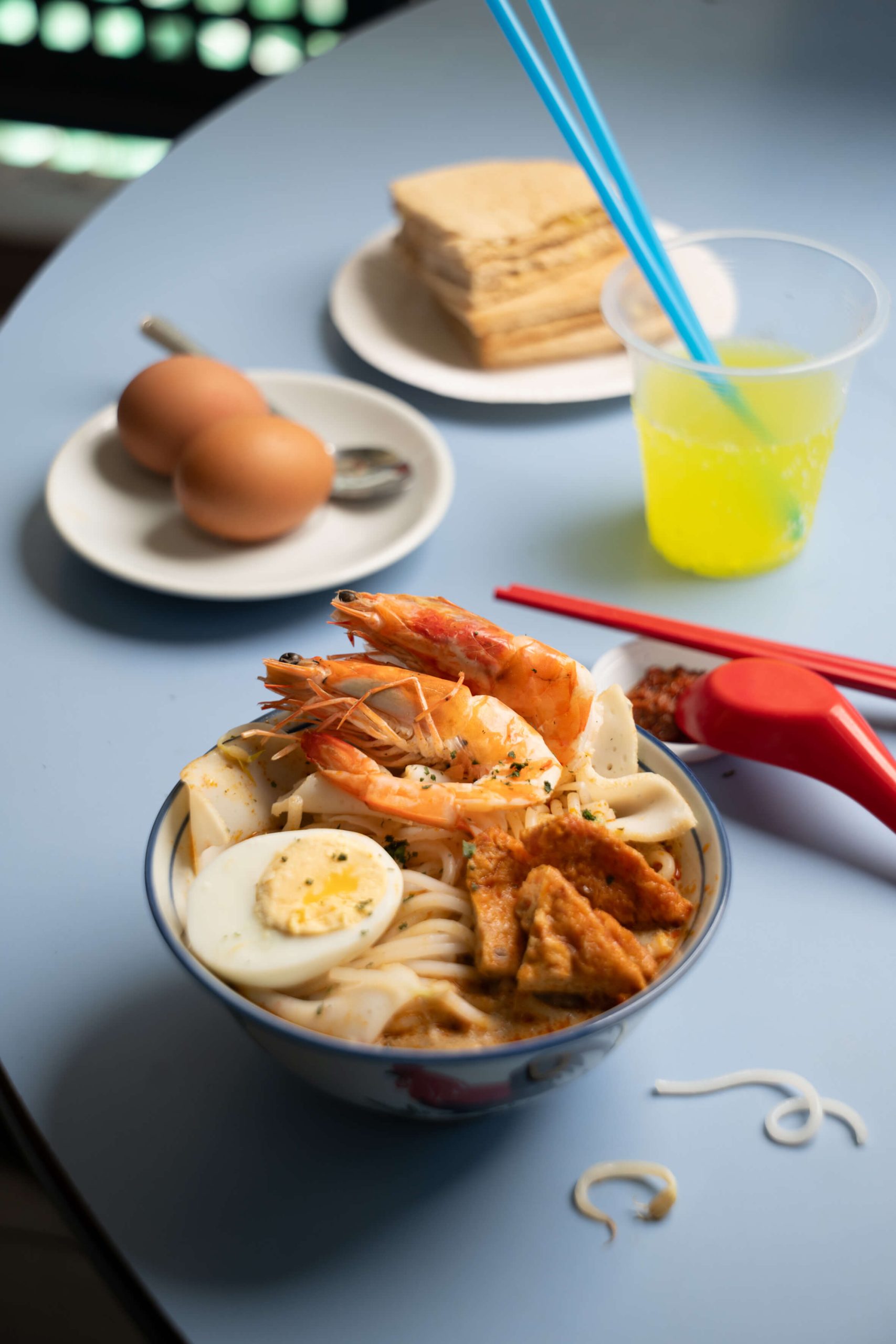
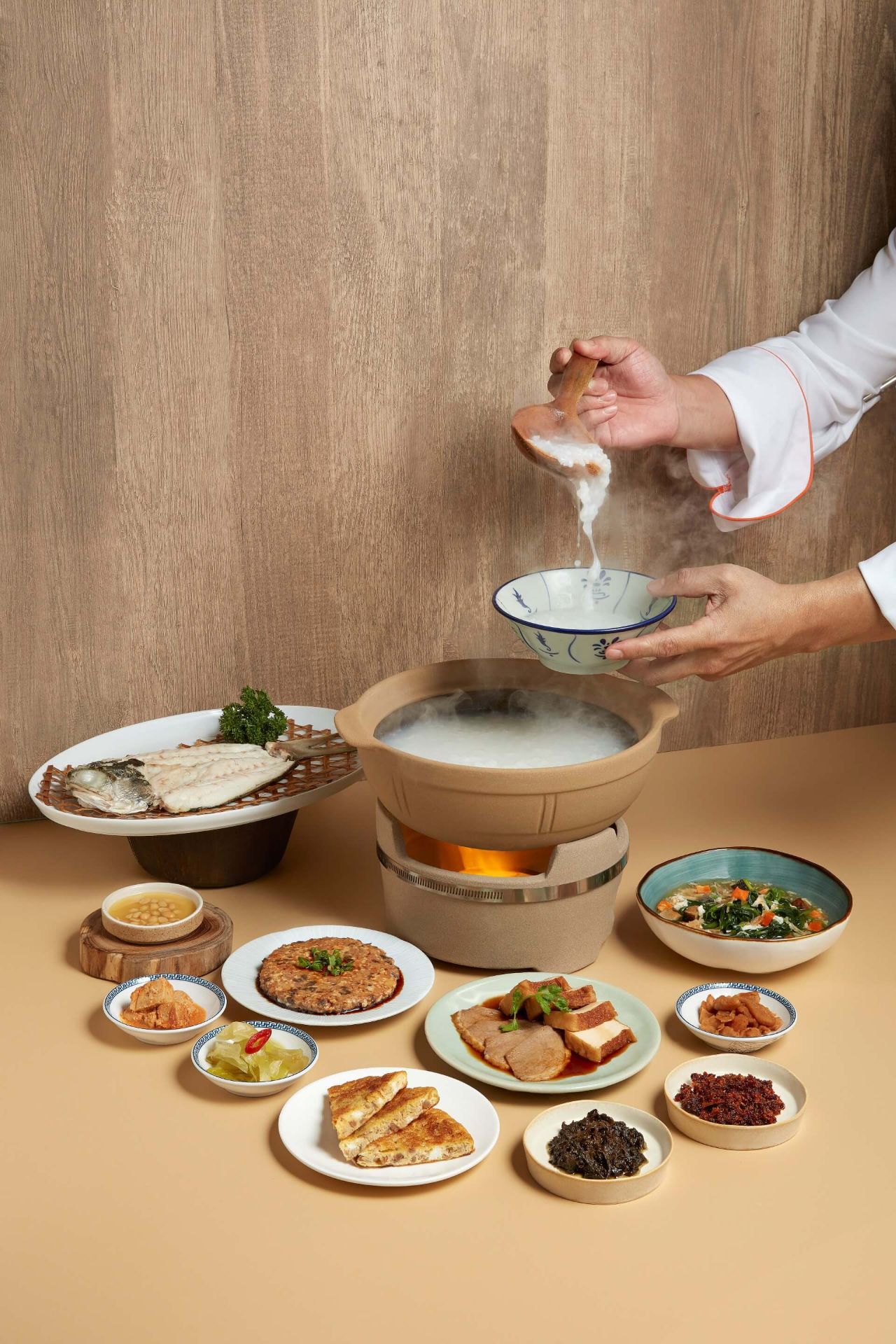
Singapore has often been described as having one of the best street food scenes in the world. At hawker centres across the island, diners are treated to an array of food options — Chinese, Malay, Indian, as well as unique hybridised dishes born from a confluence of different cultures. These dishes blend non-traditional techniques, ingredients and flavour profiles from different heritages, and are unique to the region.
Peranakan food
A prime example of hybridised Chinese cuisine can be found in Peranakan culture, a regional ethnic group dating back to the 17th century. Most Peranakans trace their origins to early Hokkien or Teochew immigrants who married Malay or indigenous women within the Straits Settlements.1 Chinese Peranakan culture is a distinctive blend of Chinese and Malay culture, expressed through its cuisine, language and Westernised practices.2 As we will see, this cultural and culinary fusion is an organic and selective process, resulting in Peranakan dishes that are either preserved in their original form, partially adapted, or entirely reimagined.
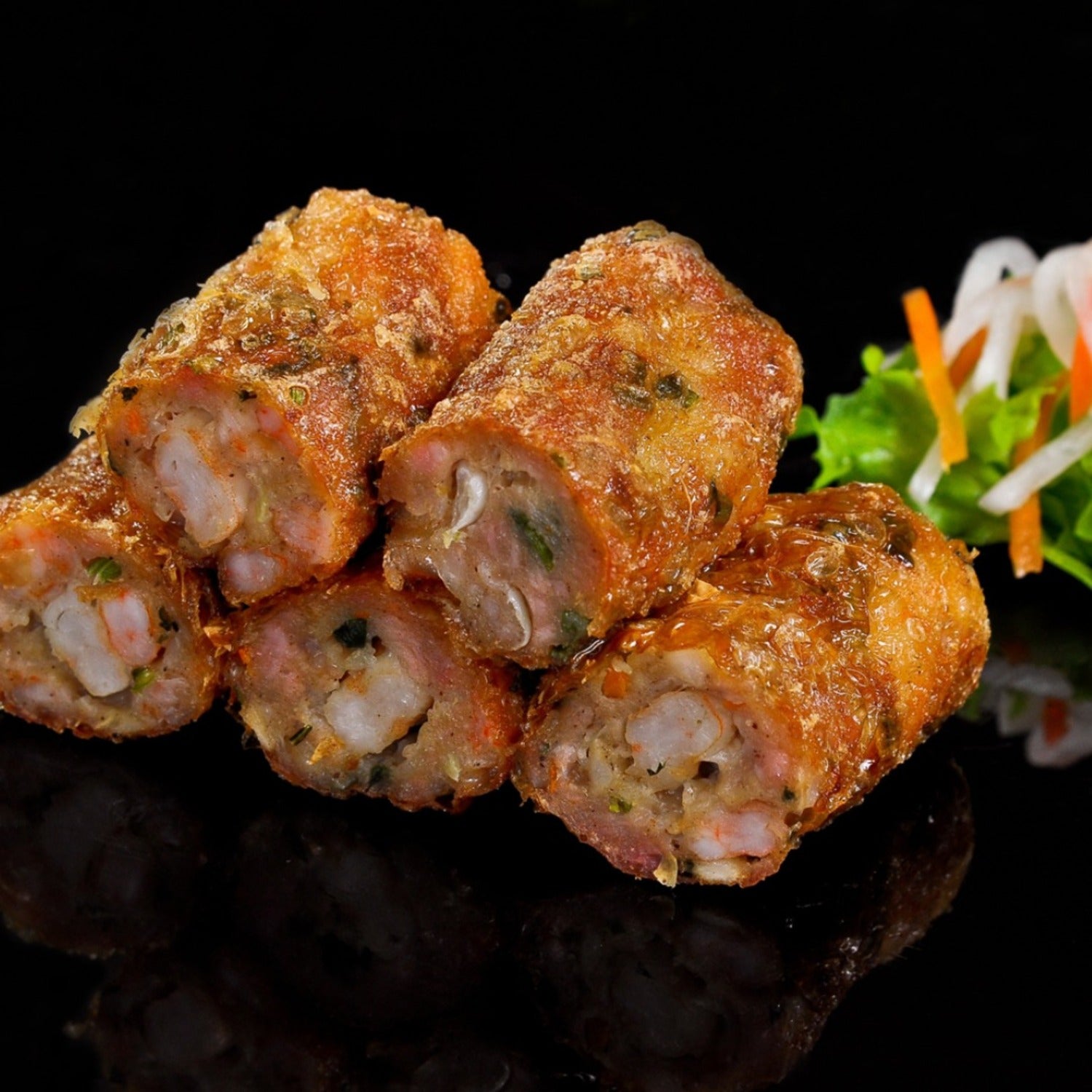
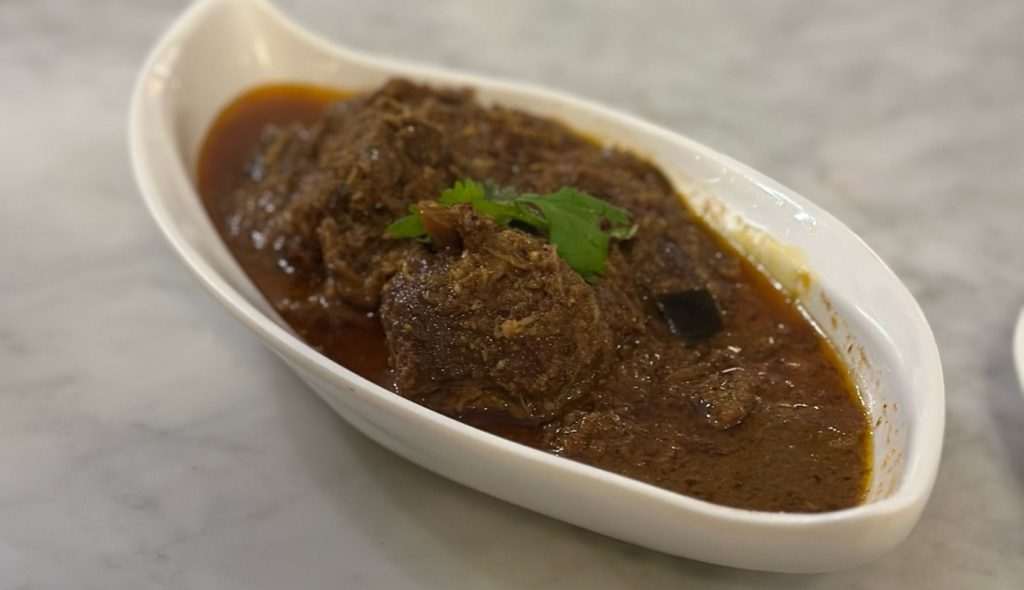
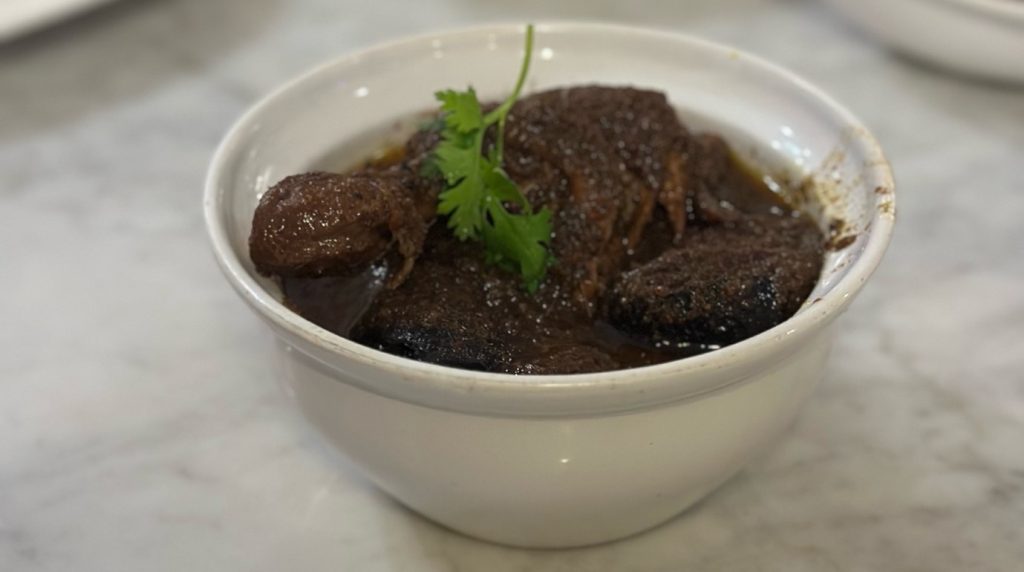
Peranakan culinary repertoire includes original dishes from both Chinese and Malay cultures. Commonly cooked Chinese dishes include hae zhor (Teochew meat and prawn roll) or ngoh hiang (Hokkien fried five-spiced meat roll); kiam chye (Teochew braised mustard green), and hu pioh soup (Hokkien seafood soup with vegetables and dried fish maw). From Malay cuisine, commonly cooked staples include ayam panggang (Malay grilled chicken), beef rendang (Malay or Indonesian beef stew) and sambal udang (chilli paste prawns).
Beyond preparing traditional Chinese and Malay dishes, the Peranakans have also developed several distinctive local dishes which combine Chinese and Malay cooking methods with local Southeast Asian ingredients.3 Peranakan cuisine is defined by its bold, spicy, sweet, and sour flavours, achieved through the use of native herbs like chilli, kunyit (turmeric), lengkuas (galangal), daun limau purut (lime leaves) and pandan (screwpine leaves).4 Other notable ingredients include asam jawa (tamarind), buah keras (candlenut), coconut, dried prawns and belacan (shrimp paste).
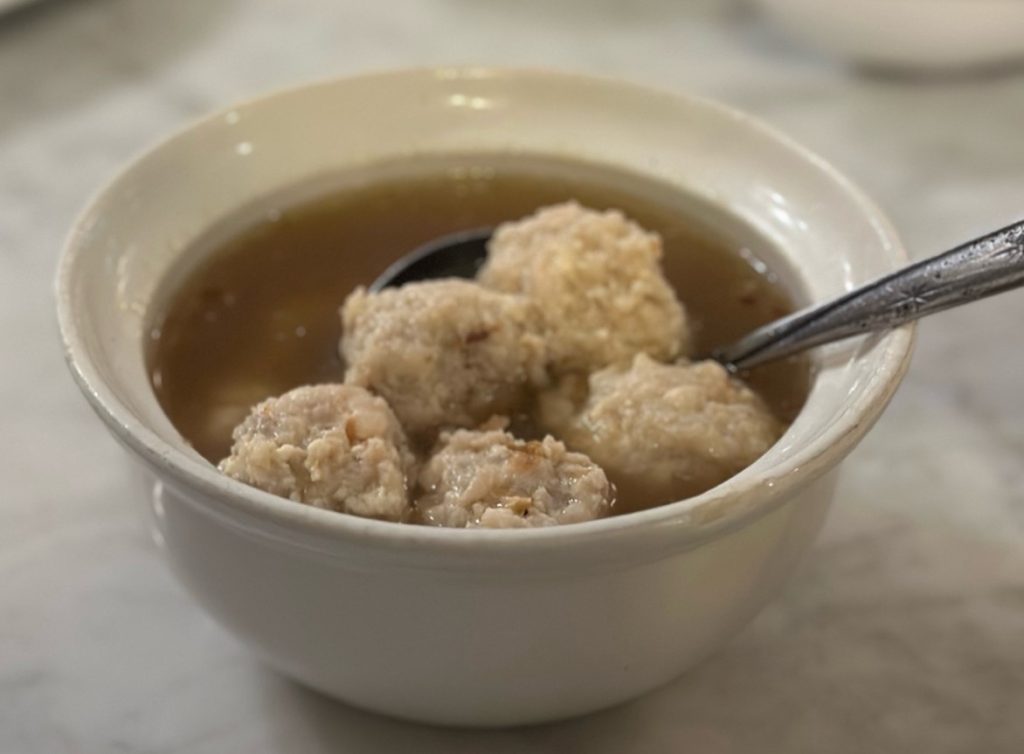
A hallmark of Peranakan cooking is the use of a rempah — a blended spice mixture for curries and stews. Within Peranakan cooking, the rempah is often combined with Chinese techniques or ingredients, resulting in iconic fusion dishes like ayam buah keluak (stewed chicken with black nut); and Nonya asam pedas (spicy tamarind fish). Notably, Peranakan food retains a heavy (Chinese) emphasis on pork, seen in dishes like bakwan kepiting (pork and crab meatballs), distinguishing it from non-pork or halal Malay dishes. All in all, Peranakan cuisine is a hybrid cuisine par excellence that evokes a nostalgic familiarity of Chinese traditions, mixed with Malay influences and brought together through the use of local ingredients.5
Chinese influence on other culinary traditions
The second way we observe culinary hybridisation is through the diffusion of commonly used Chinese ingredients into other ethnic cuisines. In Singapore (and other Chinese-dominant cities in the region), we observe the adoption of ingredients such as noodles and tofu by the local Malay and Indian communities, who originally did not consume such foodstuffs.6
Noodles and tofu are common Chinese ingredients used in everyday cooking. “Yellow” Hokkien noodles and rice noodles are distinctively Chinese and routinely used in dishes such as Hokkien mee (fried Hokkien noodles), kway teow tng (flat rice noodles in pork broth), fried kway teow (fried flat rice noodles), and kway chap (flat rice noodles with braised pork offal).7 Similarly, tofu (bean curd) and its various derivatives (e.g. dried tofu and tofu skin) are regularly consumed by the Chinese and added into various homecooked or restaurant dishes.8
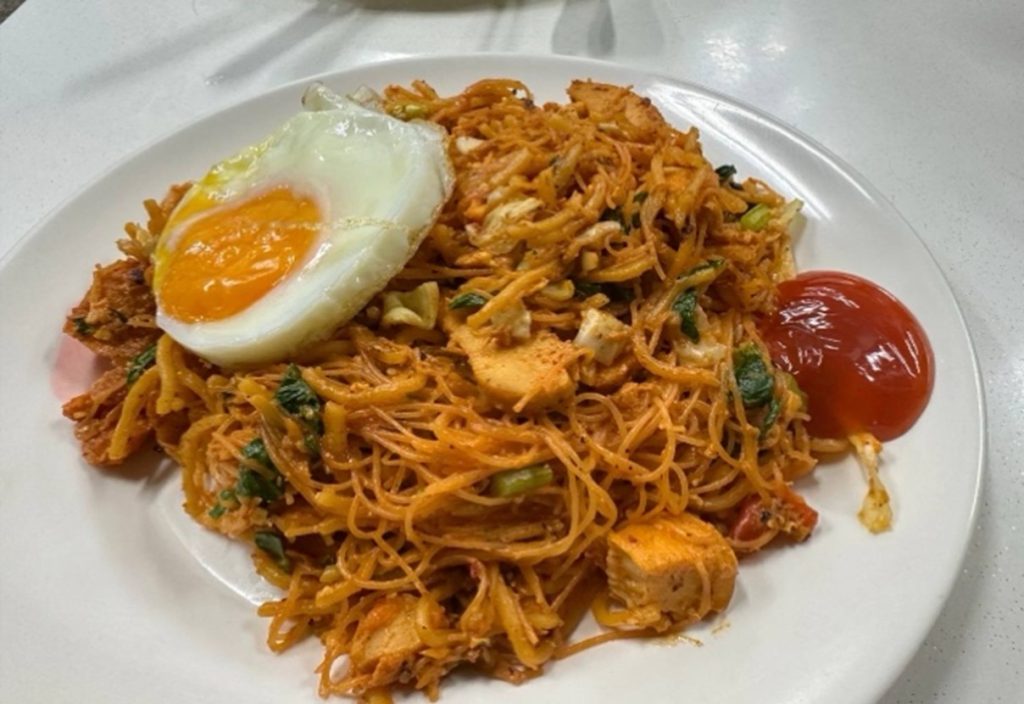
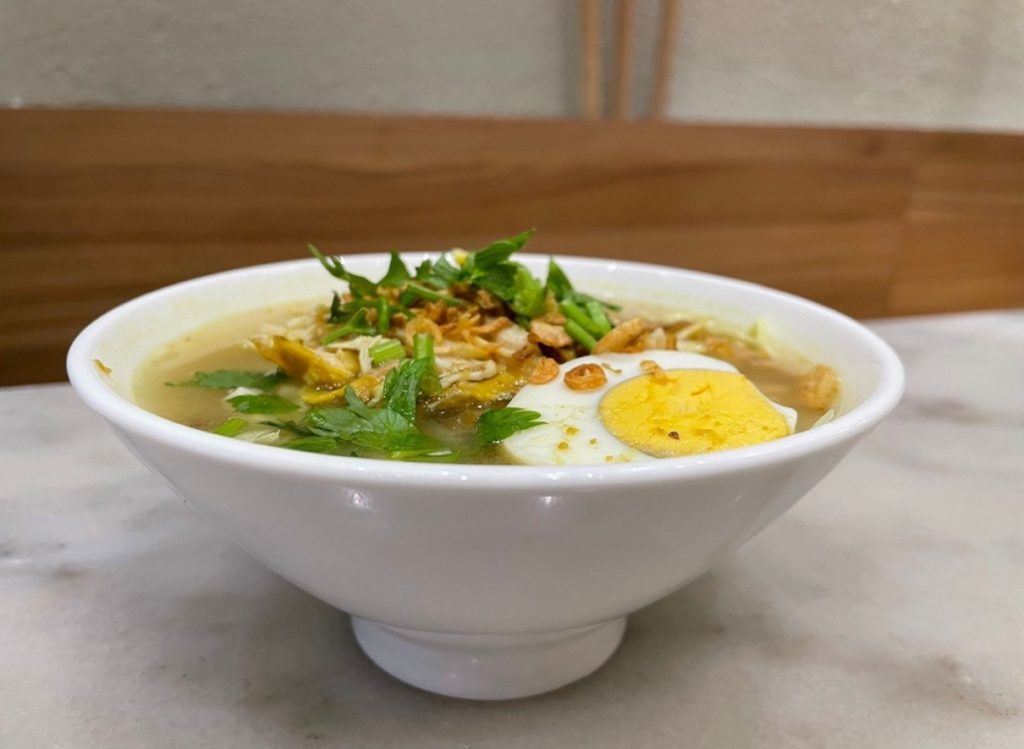
Over time, Malay and Indian communities in the region have incorporated noodles and tofu into their culinary repertoire, creating hybridised dishes that are now central to their culture. For example, the Indians have mee and beehoon goreng (fried noodles in Malay), a popular style of stir-fried noodles with tomato sauce, a special chilli paste, and chopped vegetables. Similarly, the Malays often cook noodle-based dishes such as a Malay variation of mee goreng and mee soto (soup noodles in Malay), a turmeric-based chicken soup served hot with noodles.9 These are but a few examples of how the Chinese arrival into Singapore and the wider region has influenced the culinary cultures of the other ethnicities, with common vegetarian ingredients becoming a staple in Malay and Indian cuisine.
Creation of new dishes for the Chinese community
Singapore’s rich cultural mixing has also resulted in the creation of new dishes for the Chinese by non-Chinese chefs. One prominent example is fish head curry, a dish that has become a staple of Singaporean Chinese cuisine despite its distinctly South Indian origins.
Fish head curry was conceived by M. J. Gomez (unknown–1974) in 1949, a first-generation Tamil immigrant.10 Gomez noticed that his Chinese customers had a cultural preference for consuming fish heads and began preparing them in a South Indian (Kerala) style. Over time, both Chinese and Indian chefs have further adapted the dish, fine-tuning it with techniques or ingredients from their own culinary traditions.
A Chinese example is the version by Zai Shun Curry Fish Head, a Michelin Bib Gourmand-awarded Teochew restaurant.11 Their take on fish head curry involves first steaming the head of a fish to half-cooked, before finishing the dish in an Indian-inspired curry made with tamarind and a medley of fresh vegetables such as tomatoes, ladyfingers, and long beans. Zai Shun’s steaming technique is distinctively Teochew, while the use of tamarind reflects South Indian and Malay influences. This innovative approach exemplifies how cultural interplay can produce entirely new creations. As described by James Sterba of the New York Times, “a Chinese… serving Indian curry that included some Malay ingredients — typically Singapore style”. 12
Singapore’s historical, social, and cultural landscape has fostered the creation of hybridised culinary inventions. Centuries of coexistence have enabled communities to share ingredients, techniques, and practices, giving rise to new dishes and cooking styles. Crucially, culinary hybridity is a dynamic, two-way process: Chinese elements like rice noodles and tofu have permeated Malay and Indian cuisines, just as Indian and Malay traditions have influenced Chinese cooking. This fluid exchange exemplifies Singapore’s broader cultural interplay, where identities and practices are continually reimagined and reshaped, forming an integral part of the nation’s multicultural fabric.
| 1 | Ng Fooi Beng, “Peranakan Community and Culture,” 258; John Teo, “The Peranakan’s Interconnected World: Hybridity, Diversity and Challenges,” 246–47. |
| 2 | Chua Beng Huat, Life Is Not Complete Without Shopping: Consumption Culture in Singapore, 99; Ng, “Peranakan Community and Culture,” 270. |
| 3 | Chua, Life Is Not Complete Without Shopping, 100; Ng, “Peranakan Community and Culture,” 274. |
| 4 | Chua, Life Is Not Complete Without Shopping, 135. |
| 5 | Chua, 136–137. |
| 6 | Tan Chee Beng, “Food and Ethnicity with Reference to the Chinese in Malaysia,” 134; Chua, Life Is Not Complete Without Shopping, 105. |
| 7 | Su-Chuin Soon, Elvin Xing Yifu, and Chee Kiong Tong, “Chinese Community and Culture in Singapore,” 15–16; Gia Lim Tan, An Introduction to the History and Culture of the Teochews in Singapore, 114–15. |
| 8 | Chua, Life Is Not Complete Without Shopping, 106–110. |
| 9 | Chua, 106–110. |
| 10 | Patrick Jonas, “The Man behind Fish Head Curry,” The Straits Times, 10 December 2017; Renuka M. and Rakunathan Narayanan, “Fish Head Curry,” Singapore Infopedia, October 2020; James P. Sterba, “Singapore Special: Fish Head Curry,” The New York Times, 28 March 1979. |
| 11 | Xiao Jun Wu, Rachel Tan trans., “Behind the Bib: Zai Shun Curry Fish Head,” MICHELIN Guide, 15 September 2017. |
| 12 | Sterba, “Singapore Special.” |
Chua, Beng Huat. Life Is Not Complete Without Shopping: Consumption Culture in Singapore. Singapore: Singapore University Press, 2003. | |
Jonas, Patrick. “The Man behind Fish Head Curry.” The Straits Times, 10 December 2017. | |
M., Renuka and Rakunathan Narayanan. “Fish Head Curry.” Singapore Infopedia, October 2020. | |
Ng, Fooi Beng. “Peranakan Community and Culture.” In A General History of The Chinese in Singapore, edited by Kwa Chong Guan and Kua Bak Lim, 258–276. Singapore: Singapore Federation of Chinese Clan Associations, 2019. | |
Soon, Su-Chuin, Elvin Xing Yifu and Chee Kiong Tong. “Chinese Community and Culture in Singapore.” In The Singapore Ethnic Mosaic, edited by Mathew Mathews, 9–103. Singapore: World Scientific Publishing Co, 2019. | |
Sterba, James P. “Singapore Special: Fish Head Curry.” The New York Times, 28 March 1979. | |
Tan, Chee Beng. “Food and Ethnicity with Reference to the Chinese in Malaysia.” In Changing Chinese Foodways in Asia, edited by Tan Chee Beng and David Wu, 125–151. Hong Kong: The Chinese University of Hong Kong Press, 2001. | |
Tan, Gia Lim. An Introduction to the History and Culture of the Teochews in Singapore. Singapore: World Scientific Publishing Co, 2018. | |
Teo, John. “The Peranakan’s Interconnected World: Hybridity, Diversity and Challenges.” In A General History of The Chinese in Singapore, edited by Kwa Chong Guan and Kua Bak Lim, 246–256. Singapore: Singapore Chinese Federation of Chinese Clan Associations, 2019. |