Catholic High School


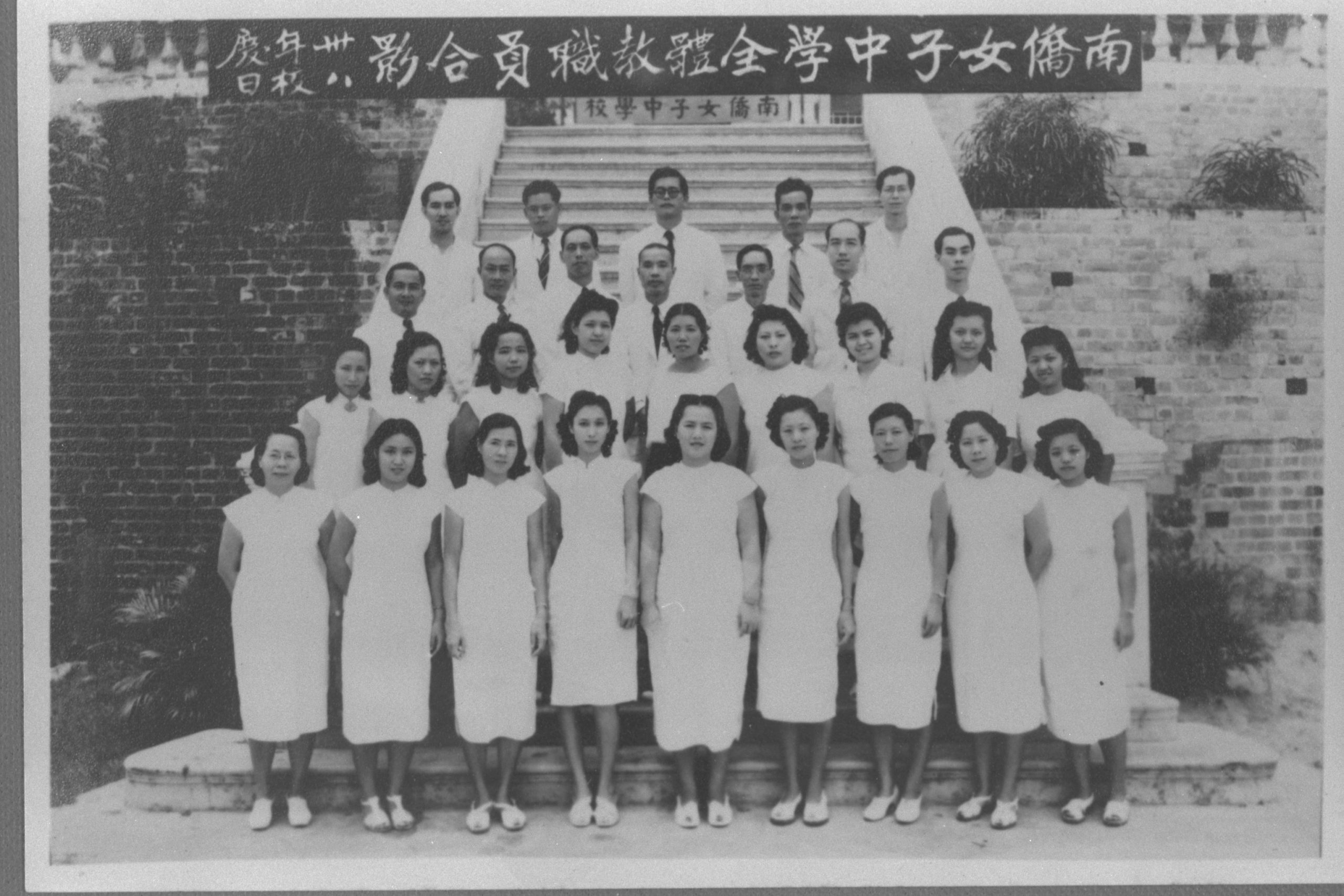
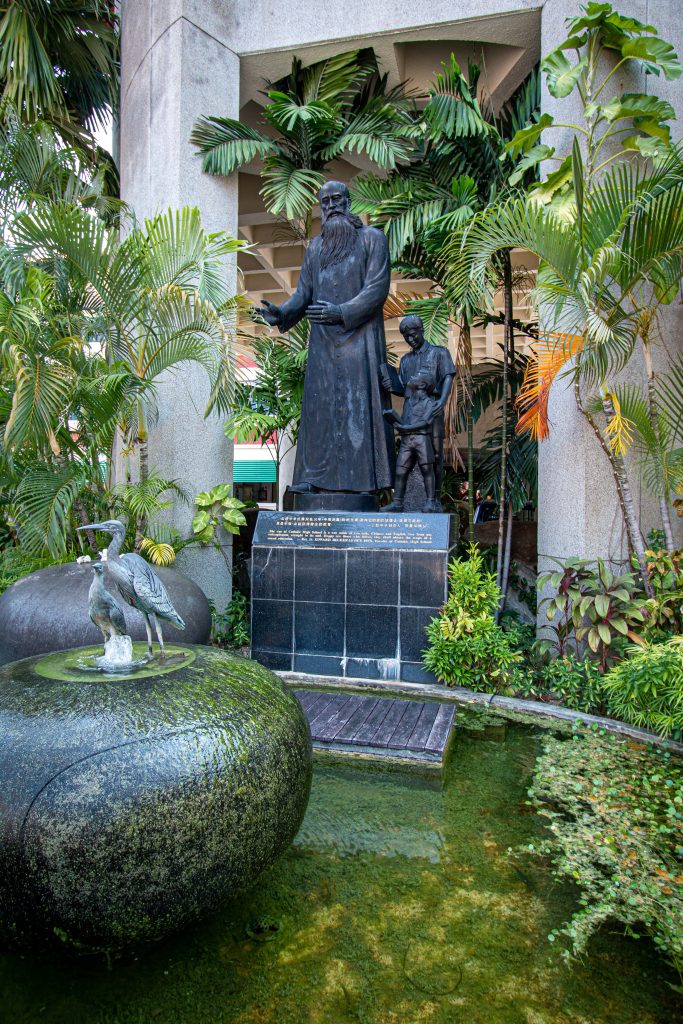
Catholic High School was founded in 1935 by French missionary Reverend Father Edward Becheras (1879–1957), with the support of Paul Lee (1885–1959), a Catholic businessman from Shantou, Chaozhou.
Lee was inspired by the English mission school St. Joseph’s Institution, which had been established in 1852. Passionate about setting up a Chinese mission school in Singapore, he personally interviewed candidates for the position of principal. The first principal, whom he hired from China, was Yao Kwok Wah (1910–1975).
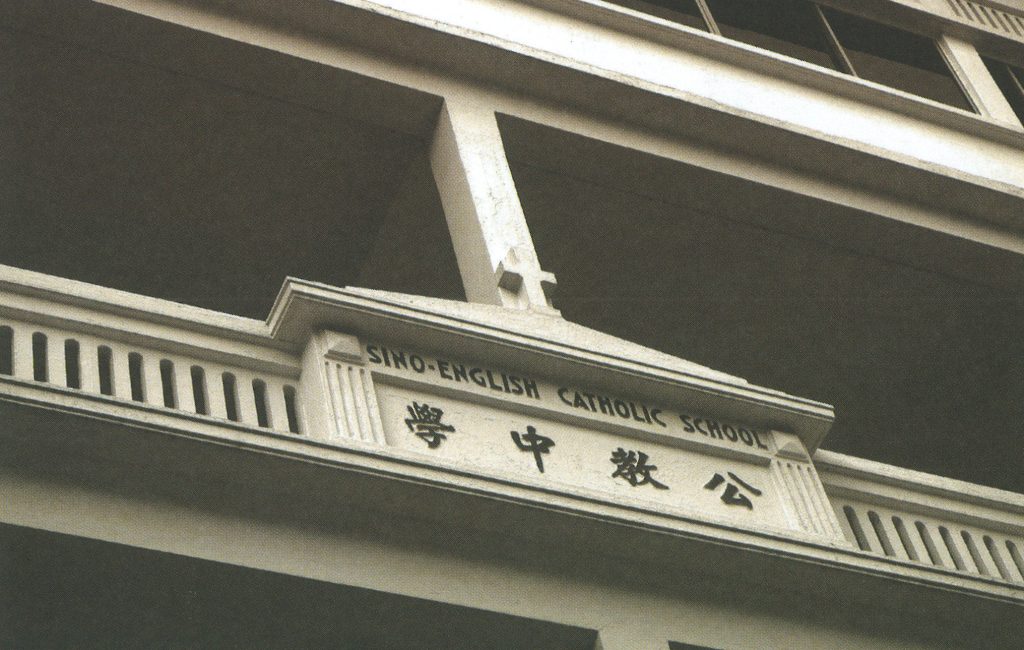
In 1935, the school began running classes for orphans and the poor in a small hut on the premises of the Church of Saints Peter and Paul in Queen Street. A plaque inscribed with the school’s Chinese name, written by Yao when the school was founded, is still displayed at the school’s former premises in 222 Queen Street.
Upholding the school motto of “Care, Honesty, Service”, Catholic High School emphasises love as a core value and embraces all students regardless of their religion and faith, which shapes its vision: the Catholic High student is a Leader, Gentleman, and Bilingual Scholar of high integrity and robust character, who is passionate about life, learning and service to others.
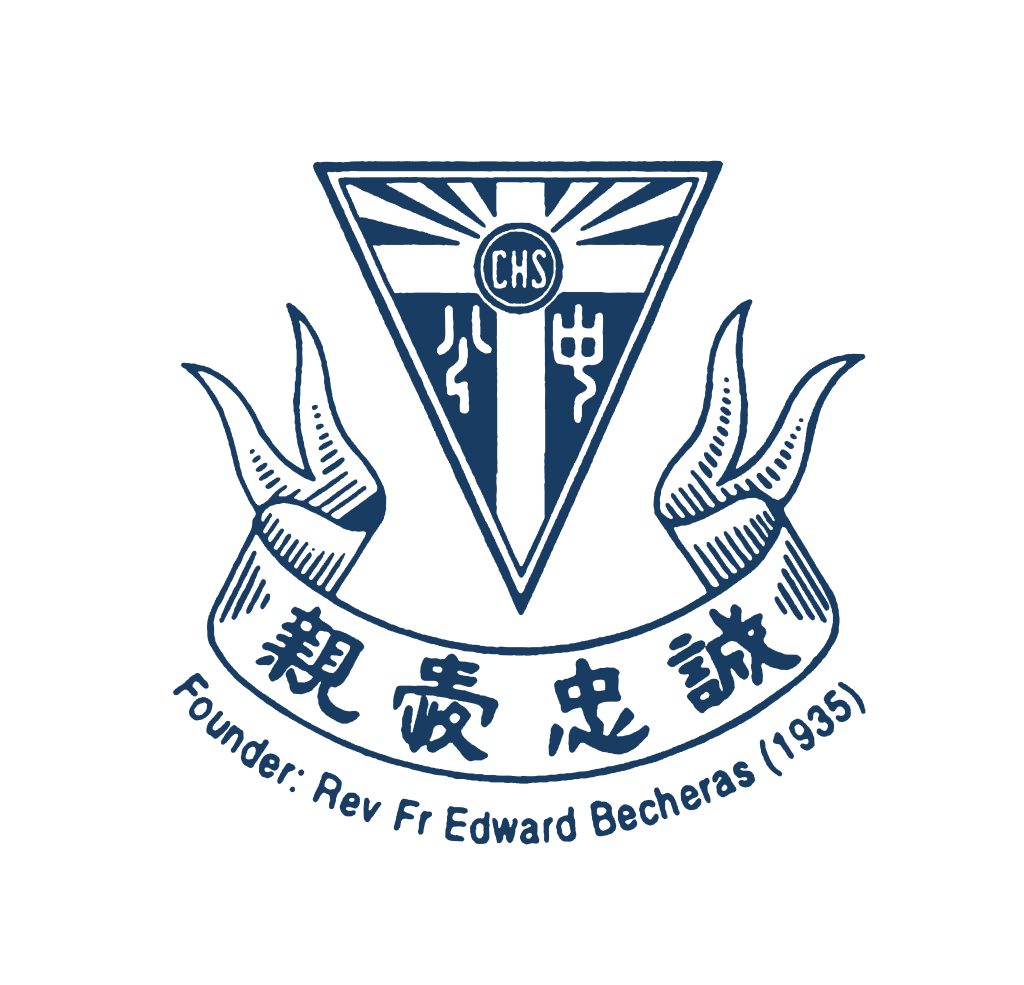
School motto
Care, Honesty, Service
Brief history
Catholic High School was the first full-fledged Chinese-medium school established by the Catholic Church in Singapore, and the second Chinese-medium secondary school founded locally. Its founder Becheras believed that students should be proficient in both Chinese and English to adapt to the local environment. As a result, the school’s name was initially “Sino-English Catholic School”.
Driven by a passion for education and his concern for the students’ development, Becheras envisioned the school as an institution where one might acquire bilingual skills. “The way of the Catholic High School is a way made of two rails — Chinese and English, free from any entanglement, straight to its end” he remarked. “Happy are those who follow. They shall obtain the scope of a sound education.” This belief continues to be a cornerstone of the school’s philosophy today.
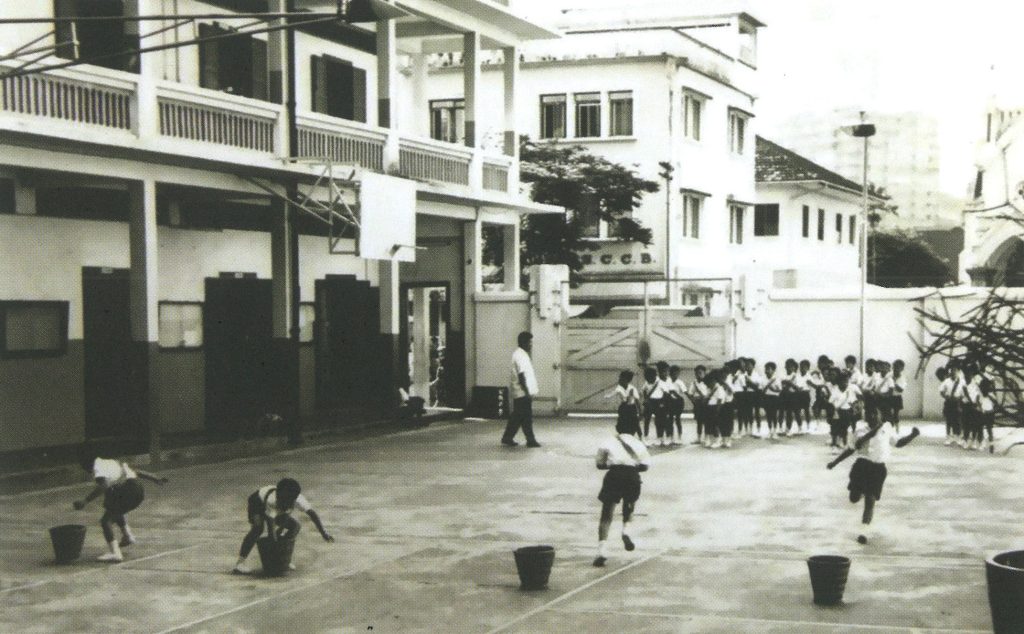
In 1937, the school’s first three-storey building was completed, and started to run junior middle classes the following year. In 1939, the first cohort of students graduated, and the school started to offer senior middle classes in 1940.
In the post-war 1950s, there were new development opportunities for the school. In 1950, principal Yao Kwok Wah was promoted to Inspector for Chinese Schools by the Education Department, and the Diocese invited the Marist Brothers to take over the administration of the school. In 1951, a four-storey block was completed for the primary section. In 1960, students from the primary section sat Singapore’s first Primary School Leaving Examination.
In 1966, the school published the inaugural issue of its literary magazine Xuewen (Students’ Essays). In 1968, Catholic High School became the first Chinese-medium school to offer the Cambridge examinations under the school’s name.1 Previously, students took the exams as private candidates. In 1970, the school’s alumni association was officially established, and in 1972, the school expanded with a new four-storey building. In 1979, Catholic High School was selected as a Special Assistance Plan (SAP) school and continued to develop its bilingual education.2 As the student population grew, the school continued to expand. By the 1980s, it was operating concurrently in Queen Street (secondary school), Gentle Road (kindergarten and lower primary), Norfolk Road (upper primary), Bishan Street 12, and Bright Hill Drive. In 1992, the separate campuses were reunited at the present Bishan site.
The secondary school, newer four-storey building and three primary school buildings in Queen Street have all been preserved. The address of the old secondary section has been changed to 51 Waterloo Street, while the four-storey building retains the original address of 222 Queen Street.
In 1995, the secondary section obtained autonomous status, and a Chinese Cultural Gallery to showcase the school’s artefacts and old records was also set up the same year.3 In 1998, the primary section commenced the Gifted Education Programme.4 In 2013, the secondary section embarked on a dual-track model: the Joint Integrated Programme and the O-Level Programme. Together with students from CHIJ St Nicholas Girls’ School and Singapore Chinese Girls’ School, Catholic High School students can enrol in Eunoia Junior College for their pre-tertiary education without having to sit the O-Level exams under the six-year integrated programme.5
After being accorded SAP status, Catholic High School continued to refine its bilingual education model, and helped students gain a deeper understanding of the essence of Eastern and Western cultures through programmes on literature and culture. It uses international educational resources and collaborates with overseas institutions to broaden students’ perspectives.
Apart from the regular curriculum, the school offers the Bicultural Studies Programme and Music Elective Programme, as well as talent development programmes across various disciplines to meet students’ diverse interests.6
Other facilities on campus include a “Chinese Cultural Corridor” which showcases the school’s journey in developing its bilingual and bicultural education, and an Aviation Milestones Gallery and Space Exploratory Gallery to inspire students’ interest in aviation and aerospace. These unique cultural spaces allow students to appreciate the beauty of modern technology and Chinese culture.
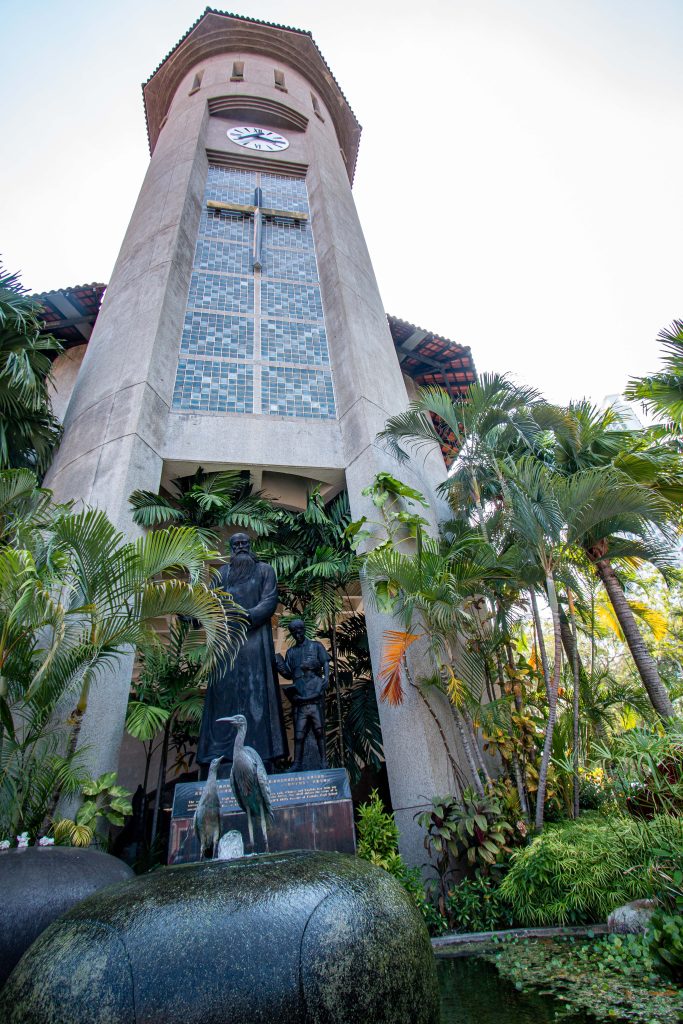
The clock tower on the campus is representative of the school’s spiritual origin and mission, as it reminds teachers and students daily of the purpose of setting up Catholic High School. Today, the school is one of Singapore’s highly regarded institutions under the auspices of the Roman Catholic Archdiocese of Singapore, enrolling both Catholic and non-Catholic male students aged six to 16.
Catholic High School’s best-known and longest-serving principal was Reverend Brother Joseph Dufresse Chang (1918–2021). He arrived in Nanyang from Beijing in 1952, and began teaching at the primary section of Catholic High School. In 1960, he was appointed as principal and held the position until 1974. Well-read, effectively bilingual, and musically accomplished, Brother Joseph created a school environment that would help artistically talented students realise their potential. In 1994, he retired from an overseas job and returned to Singapore. In 1996, to support the school’s development, the Catholic High Alumni Singapore set up the Brother Joseph Education Fund. It raised S$350,000 in just two weeks, a phenomenon fondly remembered as the “Brother Joseph effect”.
Catholic High School has produced many leaders and professionals in various fields, including Singapore’s third Prime Minister Lee Hsien Loong. Other outstanding alumni who hold or have held political office include Gan Kim Yong, Lim Swee Say, Lee Chiaw Meng (1937–2001), Chan Soo Sen, Dr Ow Chin Hock, Fong Sip Chee (1938–1992), Baey Yam Keng, Desmond Choo, and Chan Chee Seng (1932–2022). The school also counts among its alumni nominated parliamentarian Mark Lee Kean Phi, who represented the business community, and former top civil servant (Permanent Secretary) Tjong Yik Min (1952–2019). In the education sector, distinguished alumni include former Nanyang Technological University president Su Guaning and former Singapore University of Technology and Design president Chong Tow Chong. Also among its alumni are Cultural Medallion recipients such as singer-songwriter Liang Wern Fook, author Yeng Pway Ngon (1947–2021), and artist Chua Ek Kay (1947–2008).
Principals and years in service
- Yao Kwok Wah (1935–1950)
- Reverend Brother Philippe Wu (1950–1956)
- Reverend Brother Subran Sun (1957–1958)
- Reverend Brother Marcellin Sheng (1959)
- Reverend Brother Joseph Dufresse Chang (1960–1974)
- Yap Khoon Chan (1974–1982)
- Tan Kiok Ngiap (1983–1990)
- Liaw Beng Teck (1991–1993)
- Loke Kay Khee (1992–1997)
- Goh Hwee Choo (1998–2002)
- Lee Hak Boon (2003–2014)
- Soh Lai Leng Magdalen (2015–2019)
- Poh Chun Leck (2019–2024)
- Teo Yvonne (2024–present)
This is an edited and translated version of 公教中学. Click here to read original piece.
| 1 | Referring to Singapore-Cambridge General Certificate of Education Ordinary Level (GCE O-Level) and Singapore-Cambridge General Certificate of Education Advanced Level (GCE A-Level). GCE O-Level is an annual national examination jointly organised by the Singapore Examinations and Assessment Board (SEAB), Ministry of Education (MOE) and Cambridge Assessment International Education which leads to the Singapore-Cambridge General Certificate of Education Ordinary Level, commonly referred to as the “O-Level”; GCE A-Level is an annual national examination jointly organised by the Singapore Examinations and Assessment Board (SEAB), Ministry of Education (MOE) and Cambridge Assessment International Education which leads to the Singapore-Cambridge General Certificate of Education Advanced Level, commonly referred to as the “A-Level”. |
| 2 | The Special Assistance Plan (SAP) was introduced in 1979 to nurture students with bilingual aptitude. The schools under this plan are called SAP schools, known to provide students with high quality teaching and an environment that emphasises bilingual learning. |
| 3 | Established in 1994, autonomous schools follow the Ministry of Education syllabus, while providing a wider range of programmes than regular government schools, to enhance students’ learning experience. |
| 4 | Gifted Education Programme: The Ministry of Education rolled out the Gifted Education Programme in 1984, caters for intellectually gifted students. |
| 5 | Integrated Programme: A six-year course covering the secondary school and junior college curricula that leads to certification examinations such as the Singapore-Cambridge General Certificate of Education Advanced Level (GCE A-Level) examination. The programme allows students who scored in the top 10% of their cohort to proceed directly to junior college without taking the O-Level examination, giving them more time to develop their intellectual curiosity, creativity, critical thinking, and leadership skills. |
| 6 | Bicultural Studies Programme: The Ministry of Education established the Bicultural Studies Programme in 2005 to nurture bilingual and bicultural talents who can engage with both Chinese and Western cultures, while maintaining local awareness and a global perspective. Students in the programme have opportunities to participate in various learning activities, including immersion trips, as well as seminars and lectures on Chinese history, culture, and contemporary developments. |
Au, Yue Pak. Bainian shuren [It takes a hundred years to nurture a person]. Singapore: Seng Yew Book Store, 1992. | |
Catholic High School 45th anniversary souvenir magazine. Singapore: Catholic High School, 1980. | |
“Catholic High School.” MOE Heritage Centre. | |
Chongju wushi: gongjiao zhongxue yijiuliuliu zhongxi biyeban wushi zhounian jiniankan [Reunited after 50 years: Catholic High School’s 1966 Secondary Four graduating class’ 50th anniversary commemorative magazine]. Singapore: Catholic High School, 2016. | |
The Singapore Chinese Schools’ Conference 60th anniversary, 1947–2007. Singapore: Singapore Chinese Schools’ Conference, 2007. | |
Chong, Wing Hong. “Gongjiao zhongxue bashinian shuangyu jiaoyu” [Catholic High School’s 80 years of bilingual education]. Lianhe Zaobao, 19 November 2017. | |
Chong, Wing Hong, e Amazing Grace: In memory of Brother Joseph Dufresse Chang 1927–2021. Singapore: Catholic High Alumni Singapore, 2023. | |
Mok, Mei Ngan. “Yishiyiyou: yaoruiyun yishu sanshu yaoguohua” [A mentor and a father figure: Yao Swee Huin remembers his third uncle Yao Kwok Wah]. Yuan Magazine, 138th issue, 2019, 4–7. | |
Poon, Sing Wah. Xinjiapo xiaozhang fangtanlu [Interviews with Singapore school principals]. Singapore: Candid Creation Publishing, 2006. | |
Taking the lead : 80 years of bilingual education. Catholic High School Management Committee, 2015. | |
Qingju gongjiao wushi, 1963–2013 [Fifty years of brotherhood at Catholic High School, 1963–2013]. Singapore: Catholic High School, 2013. | |
Women de ganqing guxiang — gongjiao zhongxue de gushi [Home of our shared memories — The stories of Catholic High School]. Singapore: Catholic High Alumni Singapore, 2003. | |
Wu, Hua. Xinjiapo huawen zhongxue shilue — gongjiao zhongxue [A Brief History of Chinese Secondary Schools in Singapore — Catholic High School].Singapore: Educational Publishing House, 1976. |