The Majestic Theatre in Singapore


The Majestic, a former theatre built around 1927 at Eu Tong Sen Street in Kreta Ayer, is a conserved building most recognisable for its art deco façade with chinoiserie motifs. The façade features colourful glazed tiles that form a squarish frame with a string of blue dragons, as well as a centrepiece of vertical window panels with five Chinese opera figures.
Among the three cinemas in the Kreta Ayer area which date back to pre-war Singapore, Majestic, part of a gazetted conservation area of Chinatown in 1989, is the only one which has retained its original exterior. It functioned as a cinema for about seven decades until it closed in 1998. Today, it remains a landmark bearing witness to the popularity of Cantonese opera and Chinese cinema in the 20th century, which shaped Kreta Ayer as a key area of leisure in the South Bridge Road area (known as da po or Greater Town).
Construction of the theatre
The state-of-the-art Majestic Theatre was a project of Penang-born Chinese tycoon Eu Tong Sen (1877–1941), who by then had not only inherited his family business Eu Yan Sang that ran medical halls and a remittance business, but also diversified into tin, rubber, and banking. Along with the Southern Hotel next door, the theatre was part of his plans to develop entertainment business in Chinatown, having already owned two other Chinese theatres along the same street.
The theatre was originally known as Tien Yien Dai Moh Toi, which could be translated as the “Great Theatre of Heavenly Shows”, though the words Tien Yien (Tian Yan) also made reference to the Western idea of evolution. The architectural firm Swan & Maclaren was commissioned for its construction, with the design realised by its partner, Irish architect Denis Santry (1879–1960), synthesising Western and Chinese sensibilities.
The five panels of glazed tiles depicting Chinese opera actors in costumes of partly Manchu style, along with decorative designs in dragon and cloud motifs, consisted of artworks created for the theatre by Chinese artisans in Shanghai over two years. The glazed tiles were made in Belgium with artworks supplied by Swan and Maclaren. Murals decorating the main lobby depicted scenes from Chinese classics, along with traditional bird and flower vignettes.
The five Chinese characters of Tien Yien Dai Moh Toi (天演大舞台) were written by Tan Hengfu (1874–1954), a pioneer calligrapher in Singapore who ran his own traditional private school in a Chinatown shophouse along Upper Hokkien Street. Curiously, a stroke is missing in the character for Yan (meaning “perform” or “evolve”). The reasons for this have long remained a subject of speculation among his students.
Early days to World War II
In 1929, shortly before Majestic Theatre opened on 18 August, it was reported that the stage was equipped with the latest devices from London, and “all stage effects such as rain, snow, water, sea, lightning, etc., [could] be produced in an effective and realistic manner”. By the end of the year, the theatre was also keeping up with the latest technology to provide for “talkies”, films with dialogue and soundtrack, with Australian sound-on-disc equipment made and distributed from Sydney. While the equipment could amplify up to six loudspeakers, a pair at two sides of the screen were found to suffice.
The theatre’s early years coincided with the Great Depression. Though known as a venue for Chinese opera, it was renamed in 1932 as Shanghai Theatre, a venue where magic shows and fundraising shows for schools would also be held. In 1936, it was rented out to the Shaw Brothers and renamed Queen’s Theatre, often screening the latest Cantonese blockbusters, which were a prominent genre in the early days of talkies. Cantonese opera artiste and film star Sit Kok-sin (1904–1956), who founded the Feifei Film Company in Shanghai, also performed live at Queen’s Theatre in August 1936.
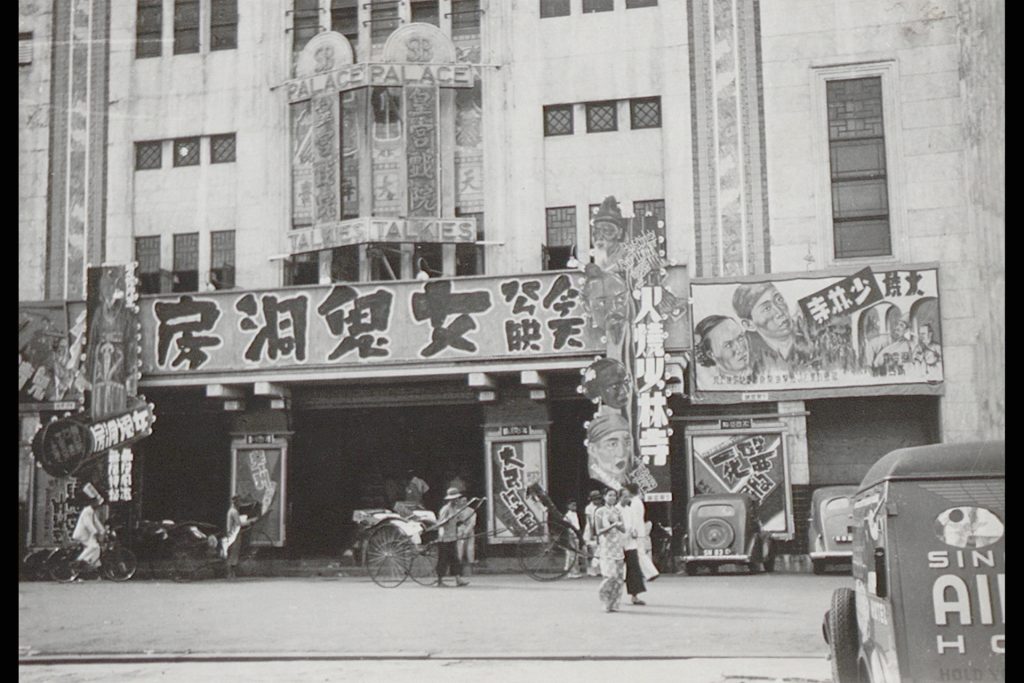
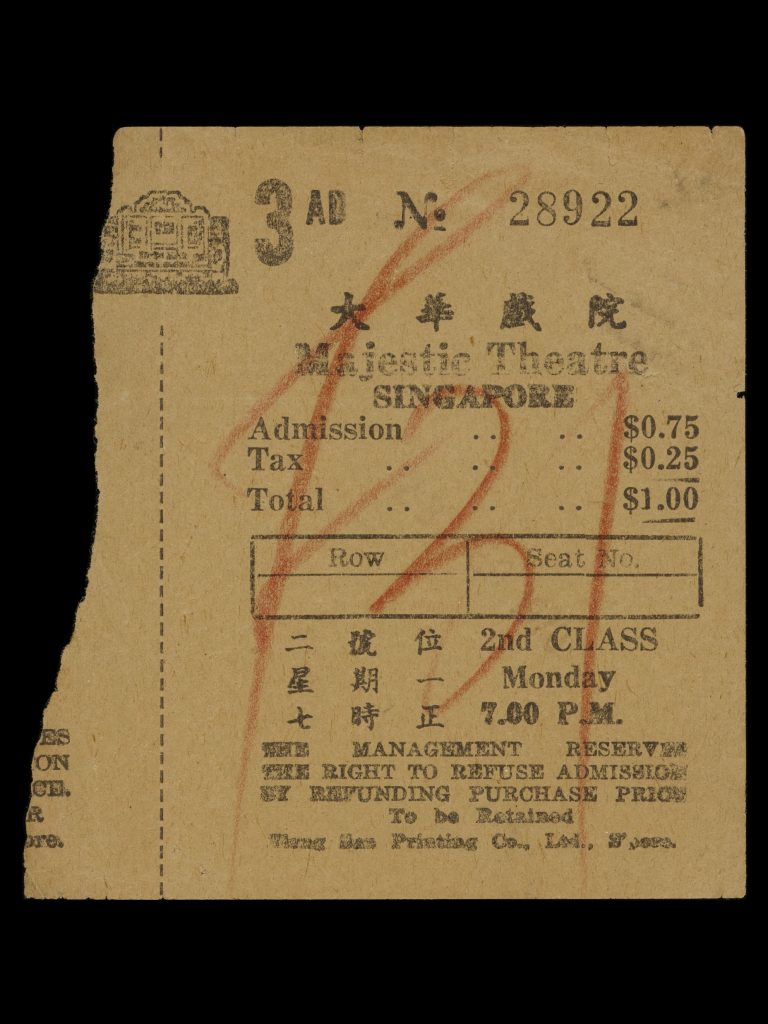
When the Second Sino-Japanese War broke out in 1937, Chinese war documentaries were also screened at the theatre, alongside movies featuring Hong Kong actors such as Ng Cho-fan (1910–1993) as wartime heroes. Hong Kong actress Lee Yi-nin (1914–1950), known for movies with themes of feminism and war, was invited to host a fundraising concert at the theatre in 1940 for victims of war.
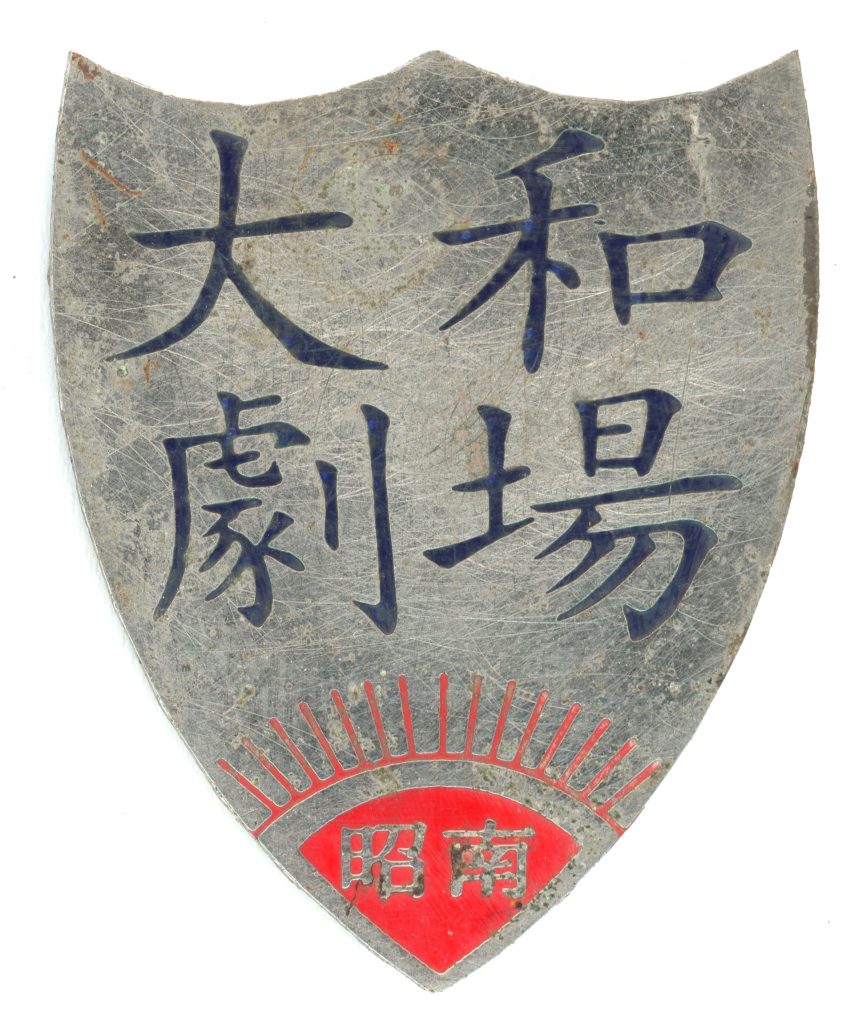
During the Japanese Occupation of Singapore, the theatre was renamed Yamato Gekizjo. Threatened with hard labour under Kinro Hoshitai or “Labour Service Corps”, Singapore’s renowned Cantonese storyteller Lee Dai Soh (1913–1989) once worked there as a simultaneous interpreter with the help of English programme booklets. The first film he worked on was incidentally titled Slave Ships, a depiction of African Americans in slavery. It was a precarious job — Cantonese interpretation could not overlap with on-screen dialogue or it would upset the Japanese audience. The theatre was also known for screening the 1943 movie Eternity featuring Li Hsiang-lan (Yoshiko Yamaguchi, 1920–2014), who sang a popular anti-opium song as part of the movie.
Postwar golden age of Chinese cinema
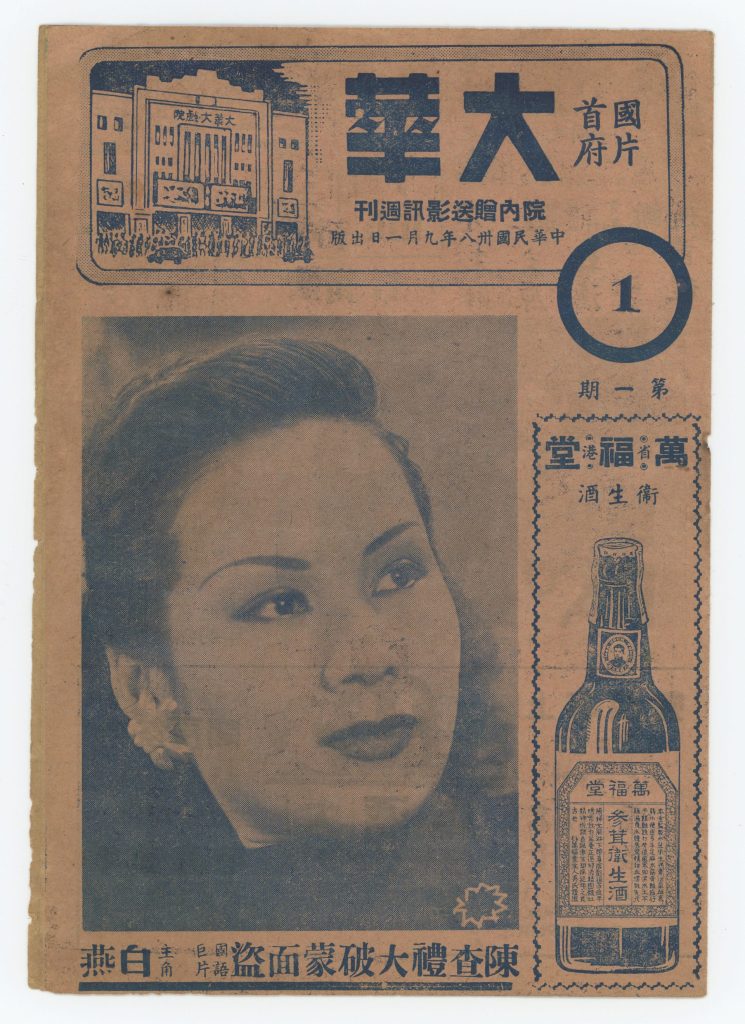
After the war, the theatre was renamed Da Hua (大华) in Chinese under its new tenant, Kong Ngee Film Company, founded by the Ho Brothers who produced Cantonese films in Malaya and Singapore. By then, Chinese opera theatres could no longer be sustained in Chinatown, as amusement parks such as New World at Jalan Besar and Happy World in Geylang had become more popular venues for such live performances. However, Majestic Theatre would see the screening of popular Chinese opera films from China and Hong Kong as part of a new trend in the 1950s and 1960s, including Huangmei opera movies like Marriage of the Fairy Princess, which screened for more than 40 days in 1956.
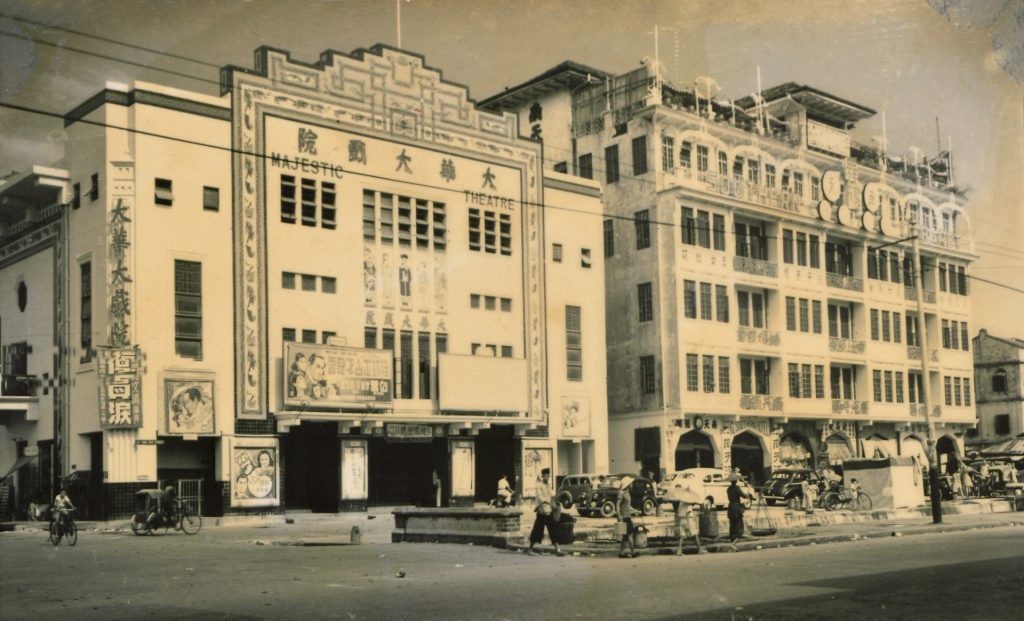
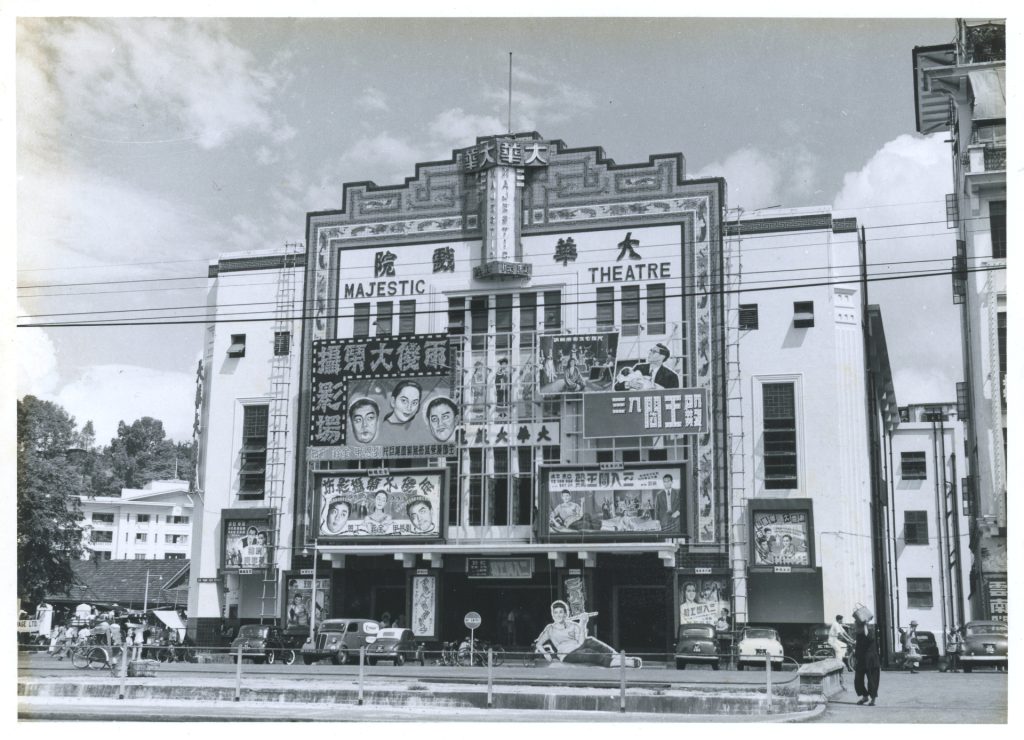
In 1956, Loke Wan Tho (1915–1964) of Cathay Organisation bought the theatre from the Eu family for S$1.1 million, together with two partners. Grace Chang of Mambo Girl (1957) performed here in charity shows. Lion City (1960), a movie representing “Malayanisation of Chinese-language cinema” and depicting Singapore in the era of self-government, was also screened here. The venue soon became popular in the 1960s among young couples, who would typically enjoy a meal afterwards at the adjacent People’s Park market, prior to its destruction in a 1966 fire. In the late 1960s, movies screened at Majestic Theatre ranged from Taiwanese romance to Japanese action to Hong Kong teenage musicals featuring a-go-go dancing, which sometimes included tie-in dance contests held as publicity events.
In the 1970s, Majestic Theatre witnessed the popularity of kung fu movies such as Bruce Lee’s (1940–1973) Fist of Fury and The Way of the Dragon, the latter screening for more than 40 days. It also screened wenyi pian or “literary romantic movies”, often starring Taiwanese actress Lin Ching-hsia or Lin Feng-chiao, alongside Chin Hsiang-lin or Chin Han as the male lead. The genre typically featured works by Chiung Yao (1938–2024), the most notable Taiwanese romance novelist then.
In 1977, the popularity of Hong Kong movies reached its zenith when action comedy The Private Eyes by the Hui brothers (Michael, Samuel, and Ricky Hui), released during the Chinese New Year period, screened for more than two months at Majestic Theatre, among other cinemas.
Development since the 1980s
The 1980s saw a general decline in the cinema business, with about 40 cinemas closing down across Singapore between 1981 and 1984, half of these in 1983 alone. The trend was partly attributed to the rise of videotapes. In the Chinatown area, which saw rapid urban development in the 1970s, the first cinema to cease operation was the Metropole Theatre, which was acquired in 1985 by Fairfield Methodist Church. The Oriental Theatre closed in 1991, though it was converted into a cineplex with two halls that lasted till 2000.
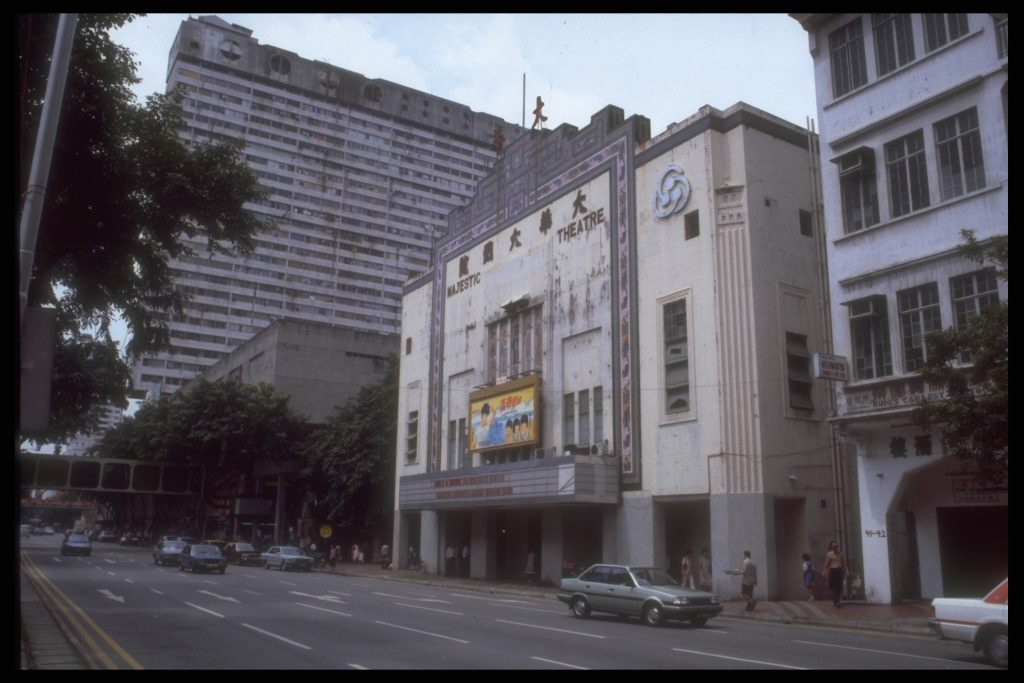
Majestic Theatre, already fully acquired by the Cathay Organisation in 1983, would later be known in the 1990s as a major venue of the Singapore International Film Festival, screening arthouse movies such as In the Heat of the Sun by Jiang Wen. It closed in 1998 after screening a run of The Mad Phoenix, an award-winning biopic on a legendary Cantonese opera playwright, in its original Cantonese version.
Nevertheless, the 1,194-seat theatre was unsustainable amid the rise of cineplexes. In January 2003, it was renamed The Majestic and reopened as a three-storey shopping mall, with Popular Bookstore among its tenants. Some classic films were later screened in its atrium. The conversion cost S$8 million, with the exterior of the building being largely retained while new interior design elements were introduced by prominent architect Liu Thai Ker based on features of the exterior.
Eventually, Cathay Realty put up the building for sale at S$43 million in 2007; it was sold the following year. In 2011, it became a betting centre run by the Singapore Turf Club, with the former box office area facing the street leased to a used items shop and a further corner unit occupied by a social enterprise selling arts and crafts. As of 2025, the building also housed a learning centre, providing educational programmes for the community.
Chia, Yei Yei. “Niucheshui bainian yingyuanshi hua shang juhao” [Century-old cinemas in Chinatown bid farewell]. Lianhe Zaobao, 6 March 2016. | |
Davison, Julian. Swan and Maclaren: A Story of Singapore Architecture. Singapore: Oro Editions; National Archives of Singapore, 2020. | |
Kong, Kam Yoke. The Majestic Theatre: Where Chinese Opera Ruled. National Library Board, Singapore, 26 June 2012. | |
Sharp, Ilsa. Path of the Righteous Crane: The Life and Legacy of Eu Tong Sen. Singapore: Landmark Books, 2009. | |
Wong, Chee Meng. You ying zhen tian sheng: Niucheshui bainian wenhua licheng [A century of Singapore’s Chinatown in cultural and historical memory]. Singapore: Global Publishing, 2019. | |
Wong, Chin Soon. Shile zhanqian lao xiyuan [Pre-war old theatre in Singapore]. Singapore: Youth Book Co., 2011. | |
Wong, Han Min and Yeo, Min Hui. Singapore Screening Spaces 1896–1945: Lost Screens & My Last Kacang Puteh. Singapore: Pagesetters Services Pte Ltd, 2026. |