Chinese Children’s Publications and Literature in Singapore


Singaporean Chinese literary historian Fang Xiu (1922–2010) once pointed out that Chinese children’s literature in Singapore and Malaya can be traced back to works written in 1920 — “Shui shuo women nianji xiao” (Who Says We Are Too Young) by Jin Ding (birth and death years unknown), and “Jie di liang” (Siblings) and “Xin yifu” (New Clothes) by Ru Ying (birth and death years unknown). However, these were clearly written in response to the wartime needs of resistance and national salvation, and were not children’s literature in the true sense.1 During the early years of Singapore’s nation-building, sources of children’s literature were typically periodicals or imported books.
Imported materials
Many children’s publications emerged between the 1920s and 1950s, most of which originated from China, Taiwan, and Hong Kong, such as Xiao pengyou (Little Friends), World Children, and Children’s Paradise. These materials reflected the times by featuring Chinese and Western folktales, as well as content related to the Malayan society and environment.
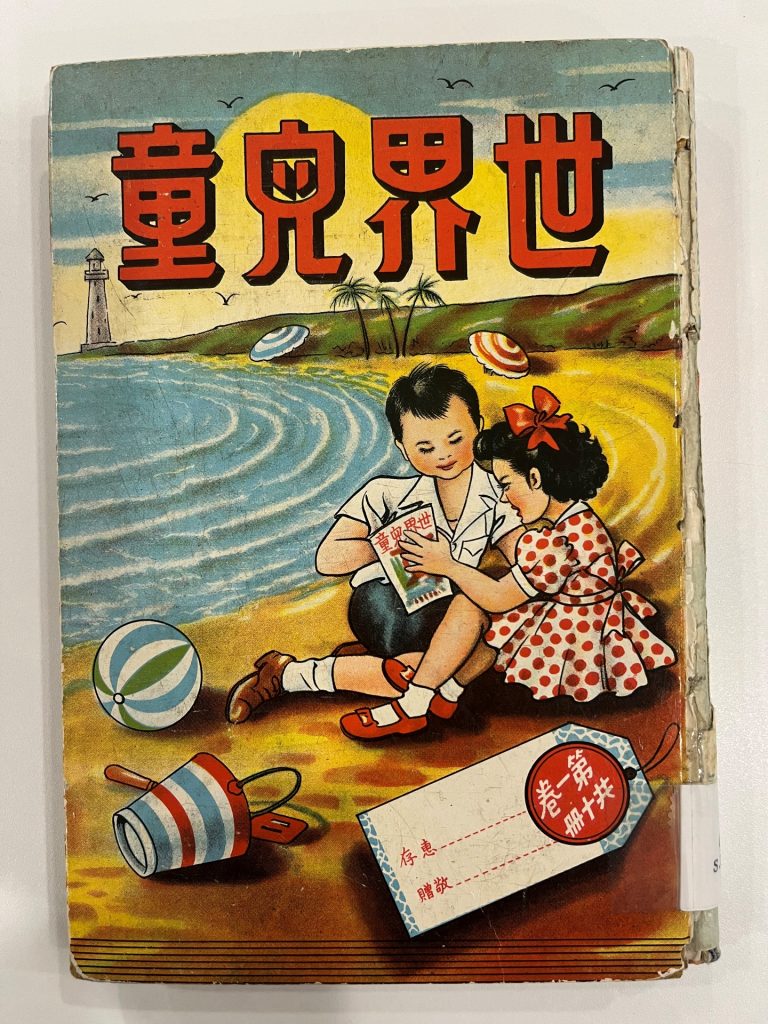
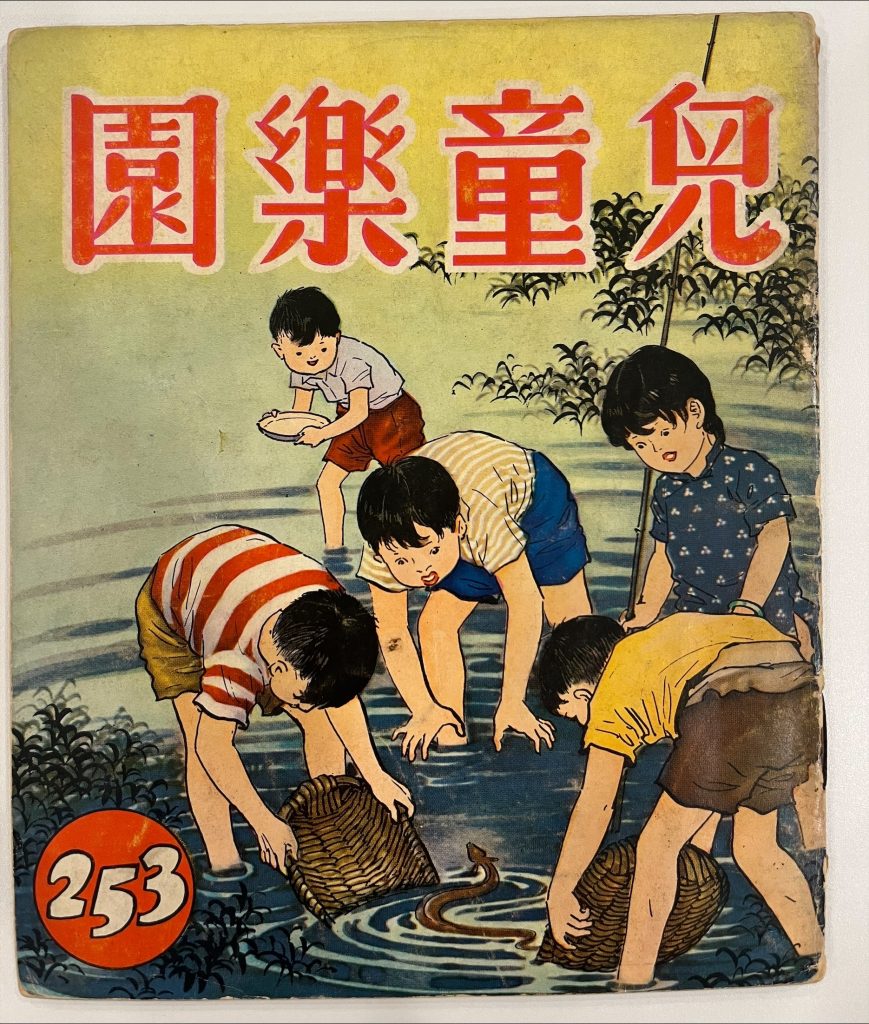
During the Cold War in the 1950s, the British colonial government imposed several book bans. In particular, it prohibited the importation of publications from 53 publishing houses in Mainland China and Hong Kong in 1958.2 Consequently, major bookstores in Singapore adjusted their strategies by abridging or slightly modifying content, changing titles (for example, Xiao pengyou was renamed Nanyang ertong or Nanyang Children), or routing publications through Hong Kong before selling them in Singapore. To adapt to the shifting political climate in Singapore and Malaya, the marketing and distribution channels of children’s literature kept evolving.
Fostering a Malayan outlook
Malaiya shaonian (Young Malayans) was the first post-war Chinese-language children’s publication published and distributed in Singapore and Malaya. Founded in 1946, its editor was Hsu Yun Tsiao (1905–1981), a renowned scholar of Nanyang (Southeast Asia) studies.3 The publisher, Tan Yeok Seong (1903–1984), sought to foster a Malayan consciousness among youths by incorporating topics related to Malaya and Nanyang, such as history, geography, culture, and folklore. The covers of the first seven issues featured a circular map of Malaya flanked by three youths of different ethnic groups each on the left and the right, reflecting the editors’ vision and image of young Malayans.4
In the historical context of the Cold War in the 1950s and 1960s, children’s reading materials were not merely for education, but also tools for shaping ideology. However, from a contemporary perspective, some researchers argue that the “neutrality” and “de-sinicisation” of editorial policies were not merely responses to Cold War tensions. Instead, they were deliberate decisions driven by the urgent need for newly emerging Southeast Asian nations to cultivate a distinct national identity.5
These localised materials gained popularity because young readers could identify with relatable characters and settings. The publications captured the authentic voices and experiences of Singaporean children, while literary elements added vibrancy to the works. Genres such as fairy tales, young adult fiction, and essays utilised rhetorical devices to enhance their appeal, which enlivened the market and spurred the further development of children’s literature.
With Singapore’s economic take-off in the 1980s, more available resources allowed for a greater focus on the development of children’s books. As Singapore Chinese children’s literature was then in a nascent stage, works generally centred on three aspects:
- Nation: Recognising Singapore as a young nation, the literature emphasised that patriotism must be rooted in a deep understanding of and closeness to the country
- Modernity: While advocating the mastery of technology and constant understanding of available resources, works also promoted the values found in classic children’s literature, effectively bridging tradition and modernity
- Children: The main purpose was to cater to children’s interests and promote parent-child relationships
The social role of children’s literature
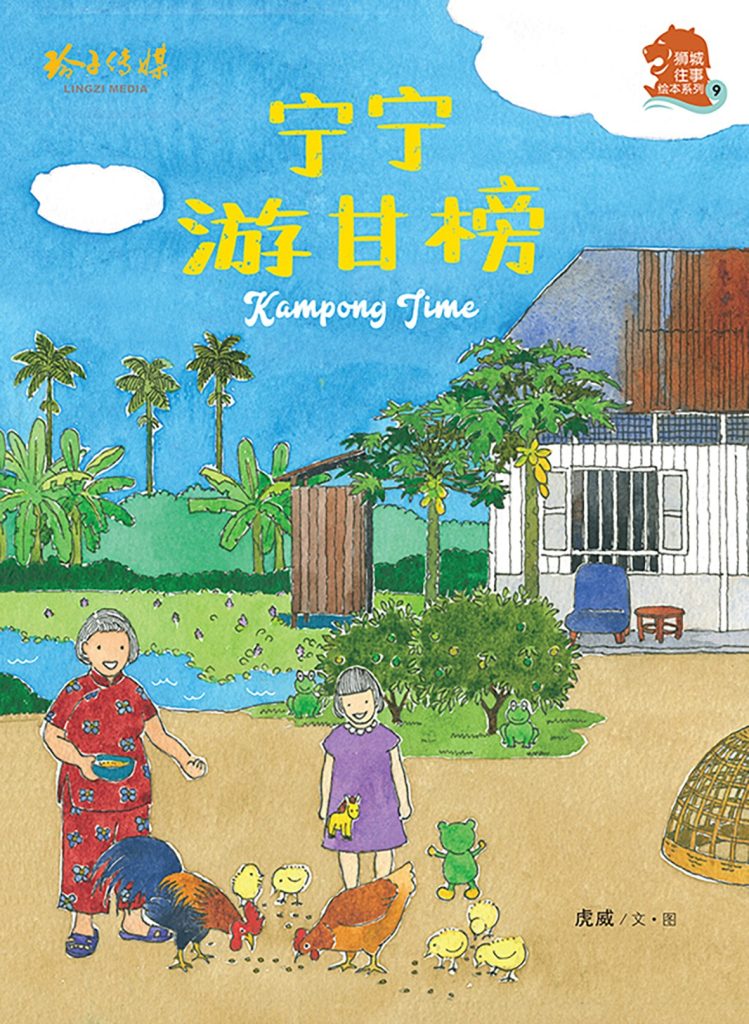
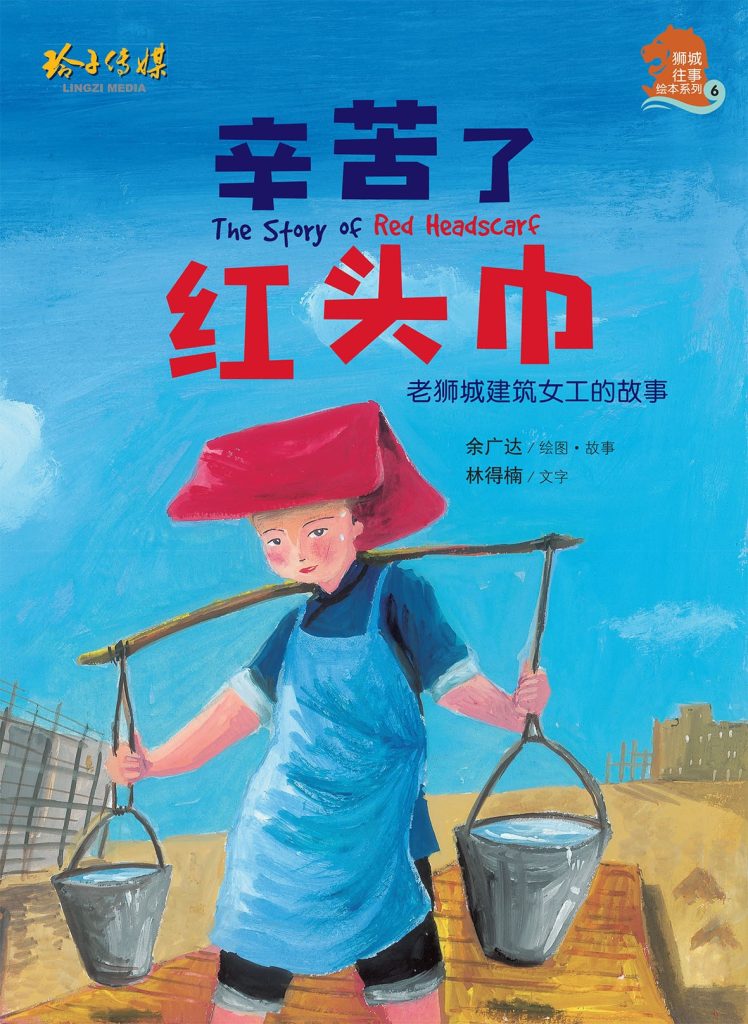
Children’s reading materials and literary works today adopt lively and engaging formats such as picture books, comics, and comic strips. Their genres include nursery rhymes, fairy tales, stories, essays, and poetry, with such diverse themes as local geographical landscapes, places of interest, historical sites, customs, cuisines, and pioneering figures who had contributed to society. Parents also view these materials as a vital tool for their children to maintain an interest in the Chinese language. Children’s reading materials and literary works therefore shoulder a dual social role: enriching children’s education while strengthening their foundation in their mother tongue.
Several veteran writers have made significant contributions to the field, including Ai Yu, Zhou Can, Lin Qiong, Lin Jin, Yu Qing, Chen Yan, Zheng Xin, Ge Fan, Wen Kai, Hong Sheng, Lie Pu, Soon Ai Ling, Tan Hua Sok, and Xin Bai.6 Lin Gao also edited and published two children’s publications, Bailingniao (Skylark) and Yinghuochong (Fireflies), under the banner of the Singapore Association of Writers between 1997 and 1998.7 Other local writers, such as Hu Wei, Ah Guo, Ang Thiam Poh, Lin Wenpei, Patrick Yee, and Xu Haina, continue to cultivate and enrich the children’s literary scene in Singapore.
This is an edited and translated version of 儿童读物与新华儿童文学. Click here to read original piece.
| 1 | Jiang Feng and Lu Defang, “Zhanwang fanhua si jin de mingtian: dongnanya huawen ertong wenxue de xianzhuang yu weilai” [Looking forward to a flourishing tomorrow: The present and future of Southeast Asian Chinese children’s literature], in Shiji zhi jiao de dongnanya huawen wenxue tanshi [Southeast Asian Chinese literature around the turn of the century], edited by Zhuang Zhongqing and Chen Yulun (Xiamen: Xiamen University Press, 1999), 34–39. |
| 2 | Colony of Singapore Government Gazette, 22 October 1958 (Singapore: National Archives of Singapore). |
| 3 | Malaiya shaonian adopted a broad definition of “youth”, encompassing students from Primary 3 to lower secondary levels. The editor also indicated a specific focus on younger readers. See “Yi ge shengming” [A statement], Malaiya shaonian, Issue 37, 20 July 1947, 1. |
| 4 | Xu Zhen, “Malaiya shaonian (1946–1948): ‘Malaiya shaonian’ de zhengzhi yishi” [Young Malayans (1946–1948): The political consciousness of young Malayans], in Jiangou nanyang ertong, zhanhou xinma huayu ertong kanwu ji wenhua yanjiu [Constructing Nanyang children: a study of Chinese children’s publications in post-war Singapore and Malaya], edited by Xu Lanjun and Li Lidan (Singapore: Global Publishing, 2016), 1–20. |
| 5 | Xu Lanjun, “Preface,” in Jiangou nanyang ertong, zhanhou xinma huayu ertong kanwu ji wenhua yanjiu [Constructing Nanyang children: A study of Chinese children’s publications in post-war Singapore and Malaya], viii–ix, xxviii. |
| 6 | Lin Jin, “Yu ertong wenxue you yuan” [A journey into children’s literature], Singapore Chinese Literature 98 (2023): 160. |
| 7 | See “Publications,” Singapore Association of Writers. |
Lee, Ching Seng. “19th-century Printing in the Chinese Language.” In A General History of the Chinese in Singapore, edited by Kua Bak Lim, 359–372. Singapore: Singapore Federation of Chinese Clan Associations, 2015. | |
“Rang yuedu geng jingcai haowan de ertong xinshu” [New children’s books bringing fun back to reading]. Lianhe Zaobao, 26 April 2024. | |
Sin, Joo Ee. “Jianshu xinma huawen ertong wenxue de fazhan licheng” [A brief history of Chinese children’s literature in Singapore and Malaysia]. Zhong Jiao Xue Bao, no. 35 (2010), 69–77. | |
Tan, Chee Lay. “Tongshu de fajue yu tongzhen de huigui” [Rediscovering children’s books and childhood innocence]. Lianhe Zaobao, 31 May 2025. | |
Xu, Lanjun and Li Lidan, eds. Jiangou nanyang ertong, zhanhou xinma huayu ertong kanwu ji wenhua yanjiu [Constructing Nanyang children: A study of Chinese children’s publications in post-war Singapore and Malaya]. Singapore: Global Publishing, 2016. | |
Yak, Jessie. “1980 niandai ertong xiaoshuo zhong de ‘xinjiapo ertong’” [“Singaporean children” in children’s fiction of the 1980s]. BiblioAsia 10, no. 1, April–June 2014. | |
Zhang, Xinghong. Xingzhou xingguang: xiandai lüren shouji [Island of stars: Singapore stories]. Singapore: Global Publishing, 2016. |