Singapore Chinese literature and literary camps


Literary camps play a vital role in the development of Singapore Chinese literature. Since the 1980s, the Chinese media and literary organisations in Singapore have been the key drivers behind various Chinese literary camps, which have helped build the Singapore Chinese literature scene.
International Chinese Literature Camp
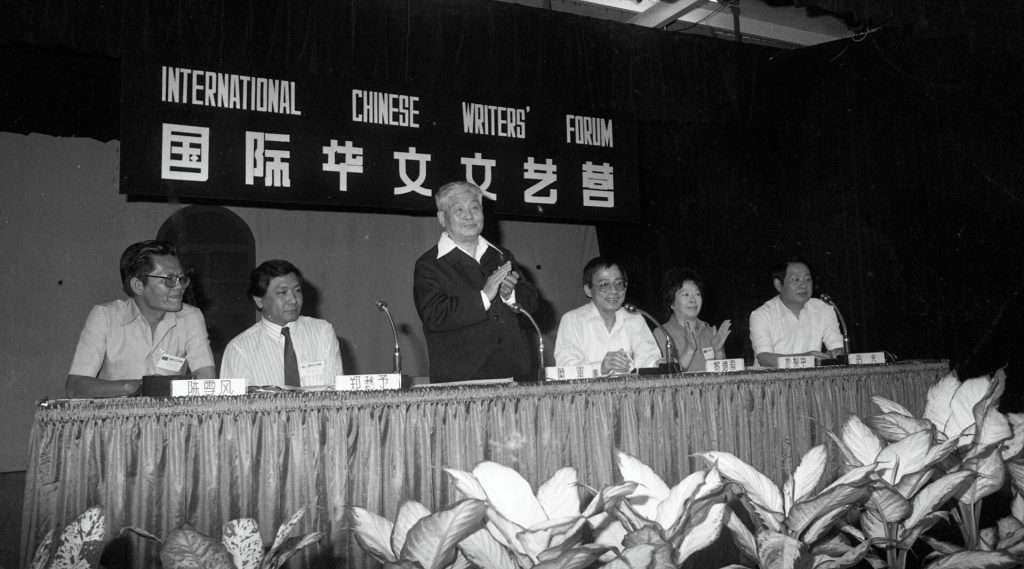
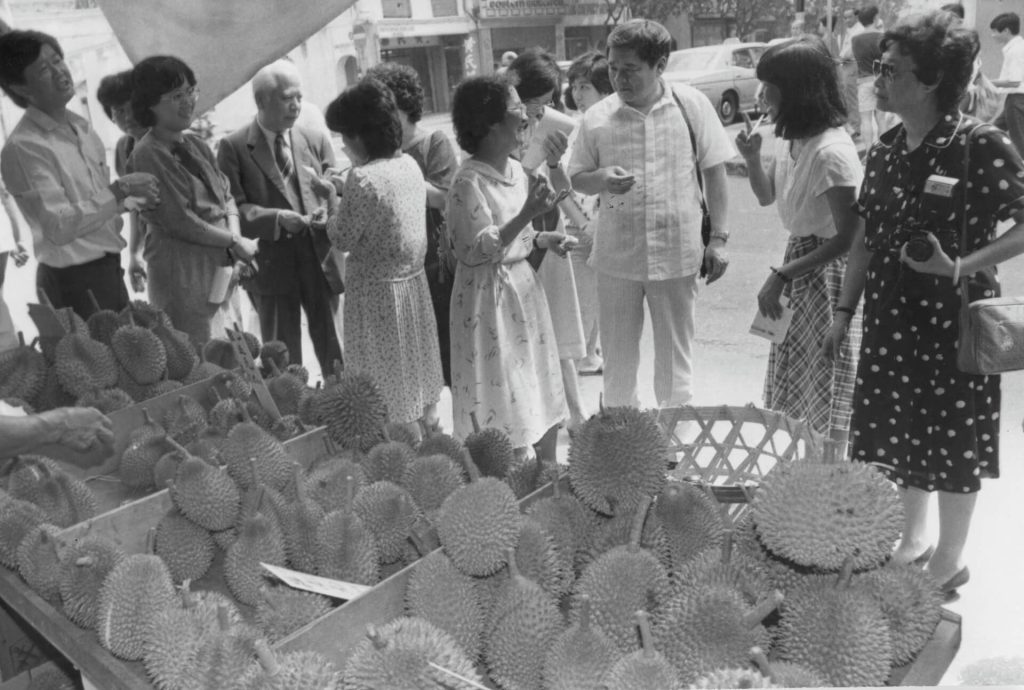
The first International Chinese Literature Camp, held in Singapore from 13 to 19 January 1983, was essentially a grand gathering of Chinese literary figures from around the world. The event invited novelists, poets, academics, literary critics and sinologists from China, Hong Kong, Taiwan, Malaysia, the United States, Japan, South Korea, the Philippines and Indonesia, who explored literature and writing through keynote speeches, lectures and exchanges. During the Cold War era, the camp was a major event in the global Chinese literary scene and helped promote the growth of Singapore Chinese literature.
The inaugural camp was jointly organised by the People’s Association’s periodical Citizen, Sin Chew Jit Poh, Singapore Association of Writers, and Singapore Literature Research Society (predecessor of Singapore Literature Society). It boasted an impressive lineup of participating writers such as Ai Qing (1910–1996), Xiao Jun (1907–1988), Xiao Qian (1910–1999), Luo Fu (1928–2018), Rong Zi (Wang Rongzhi, 1928–2021), Wu Hongyi, Yu Lihua (1931–2020), Nieh Hua-ling (1925–2024), Zheng Chouyu (1933–2025) and Liu Daren.
The camp generated great excitement, with the various literary events packed with participants. Wherever the writers went, crowds gathered, and an unprecedented wave of literary enthusiasm swept across Singapore. On its opening day, Sin Chew Jit Poh ran this headline: Bafang fengyu hui xingzhou, fangkuai wenzi jie qingyi (From all corners of the world, they gather in Singapore, where friendships are forged through Chinese characters), highlighting the event’s significance in the regional literary scene.
The first International Chinese Literature Camp marked the first time Singapore invited Chinese writers from China, Taiwan, Hong Kong and other regions to the city-state. It was also the first time since World War II that writers from China delivered public speeches in Singapore. Literary exchanges during that week were a heartwarming affair. Taiwanese poet Luo Fu recited his poem “Zhi Ai Qing” (To Ai Qing) in honour of the celebrated poet, while poet Zheng Chouyu presented his poem “Yu fengzheng zhengfeng — xiangei xiaojun xiansheng” (Racing the Wind with a Kite — Dedicated to Mr Xiao Jun), which deeply moved the audience.
Lianhe Zaobao and Lianhe Wanbao began organising the event from its second edition in 1985, and the camp was held biennially until 1993. Totalling six editions over a decade, it brought together renowned writers from China, Hong Kong, Taiwan and Southeast Asia.
While the camp, which once drew crowds of literary enthusiasts, gradually faded from public memory after the turn of the century, its influence left an indelible mark on the history of Singapore Chinese literature.
ASEAN Chinese Literature Camp
In 1988, writer Luo Ming (1935–2025), then president of the Singapore Literature Society, proposed setting up the ASEAN Chinese Literature Camp. The first camp was hosted by Singapore at Kim Mui Hoey Kuan from 21 to 24 December 1988. Since then, it has been held biennially in different ASEAN member countries on a rotational basis.
The first and second editions of the camp saw participants from five countries: Singapore, Malaysia, Thailand, the Philippines and Indonesia. Brunei joined the event since the third edition onwards, and by the 12th edition, there were representatives from Vietnam, Myanmar and Cambodia.
Starting from its fourth edition, the camp began publishing an anthology of Chinese literary works from ASEAN each run. It went on to present the ASEAN Literature Award from its fifth session in 1996, with each participating country nominating one candidate.
Notably, the camp also spurred the development of Chinese literature and the formation of Chinese literary organisations in some ASEAN countries. For example, its fourth edition, hosted by the Philippines in 1994, led to the establishment of the Chinese Writers Association of the Philippines. At its 16th session held in 2018 in Mandalay, Myanmar, the first time the country played host, the organisers announced the official formation of the Myanmar Chinese Writers Association.
National Secondary School Chinese Literary Camp
The National Secondary School Chinese Literary Camp is an influential Chinese literary activity in Singapore. It mainly targets secondary school and junior college students.
In 1980, Sin Chew Jit Poh organised the inaugural Youth Literary Camp, inviting many renowned writers to conduct literary lectures at the event. The camp was held for three consecutive years, with the second and third editions jointly organised by Sin Chew Jit Poh, Singapore Association of Writers and Singapore Literature Research Society.
The National Secondary School Chinese Literary Camp, co-hosted by Singapore Literature Society and Singapore Middle School Chinese Teachers’ Association, made its debut in 1991. It aims to foster passion for literature and writing among students through lectures, exchanges, literary recitations, creative writing and multimedia activities. Each edition is given a specific theme, covering classical and modern literature as well as exploration of literature and the arts. It also incorporates cross-disciplinary arts such as opera and film and television literature to raise cultural awareness. For example, the theme for the session in 2010 was “Zoujin sanguo, zouchu sanguo” (Entering and Leaving the Three Kingdoms), while that of the 2011 edition was “Tangsong de yueliang, jintian de shiqing” (Moon of the Tang and Song Dynasties, Poetic Spirit of Today). In 2012, the camp was themed “Qingqing songsong hongloumeng” (A Fun Way to Learn about the Dream of the Red Chamber).
The Youth Literary Camp and the National Secondary School Chinese Literary Camp have inspired generations of students and nurtured among them a love for literature, opening their eyes to the world of literature from an early age.
This is an edited and translated version of 新华文学与文艺营. Click here to read original piece.
“23 ming guoji mingzuojia huiji yitang, guoji huawen wenyiying jinwan kaimu” [23 renowned international authors gather as the International Chinese Literary Camp opens tonight]. Sin Chew Jit Poh, 13 January 1983. | |
“Cujin qingshaonian dui wenyi de aihao, benbao ding zhounei juxing shoujie qingshaonian wenyiying” [Promoting an interest in literature among youth: Sin Chew Jit Poh to host inaugural Youth Literary Camp this week]. Sin Chew Jit Poh, 11 March 1980. | |
“Jiqu shijie mingzuojia jingyan tigao woguo wenhua yishu shuiping” [Drawing from the experience of renowned international authors to raise the standard of Singapore’s arts and culture]. Sin Chew Jit Poh, 14 January 1983. | |
Luo Ming. Jiushinian de huimou: xiaosa zouyihui [90 years in retrospect: A life of grace]. Singapore: Luo Ming Literature Studio, 2025. | |
“Yaxi’an huawen wenyi maijin jiushi niandai” [ASEAN Chinese literature progresses into the 90s]. Lianhe Zaobao, 23 April 1990. | |
“Yaxi’an huawen wenyi de jiaoliu yu fazhan” [The exchange and development of ASEAN Chinese literature]. Lianhe Zaobao, 8 December 1988. | |
“Yaxi’an huawen wenyiying choubei jingguo” [The preparatory process of the ASEAN Chinese Literary Camp]. Lianhe Zaobao, 18 December 1988. | |
“Qingshaonian wenyiying diyitian, wenyijie liu zhiming renshi shouyao fabiao zhuanti yanjiang” [First day of the Youth Literary Camp: Six renowned literary figures invited to deliver keynote speeches]. Sin Chew Jit Poh, 16 March 1980. | |
“Quanguo zhongxuesheng wenyiying 16 ri baoye zhongxin juxing” [National Secondary School Chinese Literary Camp to be held at News Centre on the 16th]. Lianhe Zaobao, 13 June 1991. | |
“Shi de jiqing zai renxie litang huidang, Zheng Chouyu he Luo Fu jixing xieshi xiangei Xiao Jun he Ai Qing” [The passion of poetry echoes through the People’s Association auditorium: Zheng Chouyu and Luo Fu compose impromptu poems in honour of Xiao Jun and Ai Qing]. Sin Chew Jit Poh, 19 January 1983. |