Local lexicon: Singapore the ‘starry island’


The term “星洲” (xingzhou, literally “starry island”, used to refer to Singapore) is generally believed to have been coined by Khoo Seok Wan (1874–1941), a talented poet in Singapore in the 19th century who gave himself the name “xingzhou yugong” (A man in exile on the “starry island”). The belief that Khoo created the term stemmed from an article by him published in a Singapore newspaper, Thien Nan Shin Pao, on 31 May 1898. In the article, he wrote: “The islanders sometimes refer to 新嘉坡 (xinjiapo, where the first character means “new”) as 星嘉坡 (xingjiapo, where the first character means “star”). Initially, I thought it was merely a variation in the transliteration of Singapore. I now realised that the use of “星” (xing, meaning “star”) symbolises beauty, which fits perfectly. However, Singapore is an island surrounded by clear waters with no land beneath, existing harmoniously amidst nature with ever-changing scenery. Instead of using “坡” (po, meaning “hill”) in its name, why not replace it with “洲” (zhou, meaning “island”) to more accurately reflect its true nature? I therefore call this place xingzhou and would like to name myself xingzhou yugong. My students and the people here felt the term was an accurate description of Singapore that could highlight its characteristics and hence continued to use it to refer to the island. This passage is written to explain how this term came about.”
Khoo Seok Wan’s ‘xingzhou’
In the article, Khoo stated that of the two translations for Singapore, xinjiapo and xingjiapo, the latter, with its first character meaning “star”, could better capture the beauty of Singapore. He also suggested replacing the last character, po (hill), with zhou (island), to more accurately reflect Singapore’s geography. Khoo therefore preferred to call Singapore “xingzhou”.

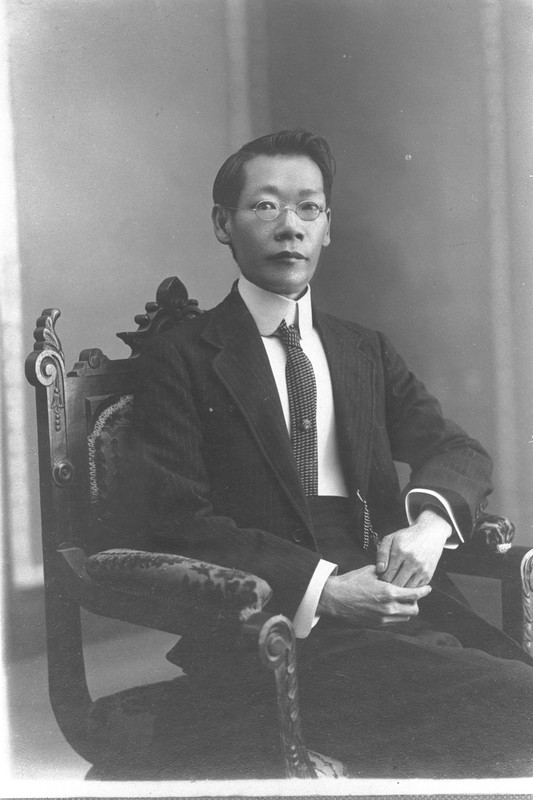
On 15 January 1930, Khoo wrote an article titled “Xingzhou suyuan tan” (The origin of xingzhou) for the anniversary magazine of Sin Chew Jit Poh, in which he claimed to have created the term “xingzhou”. He wrote: “The term ‘xingzhou’ first appeared in 1898, when I coined the term in an article I contributed to Thien Nan Shin Pao. When Song Sen1served as principal of Yangzheng Primary School, he cited this article in an issue of the school’s monthly publication. The term has been used for a long time, as if it was a natural name for Singapore.” It is believed that the later generations were influenced by these two articles and regarded Khoo as the first person to use “xingzhou”.
Tso Ping Lung’s ‘xingzhou’
In an article titled “Xingzhou kao yuan” (Tracing the origins of xingzhou) published in Nanyang Siang Pau on 1 January 1971, scholar Tan Yeok Seong (1903–1984) pointed out that Tso Ping Lung (1850–1924), the Qing government’s first consul to Singapore, had mentioned “xingzhou” in a poem included in his poetry collection published in 1887. Titled “You liao bu” (From Riau Archipelago to Singapore), the last two lines of the poem read: “cheng xing bu zhi xing yuan jin, you kan yu huo zhao xingzhou” (Despite not knowing how far or near I am, I feel great. As the lights of fishing boats enter my sight, I realise xingzhou is just ahead). This showed that Tso had used the term “xingzhou” before Thien Nan Shin Pao was founded in 1898. Tan clearly did not agree that Khoo coined the word “xingzhou”. However, some argued that the “xingzhou” Tso had in mind was the night scenery of the Riau Archipelago rather than Singapore.2
Before modern Singapore was founded, the island was mostly referred to in ancient Chinese books as 息力 (xili), with other variations such as 实叻 (shile), 石叻 (shile), and 息辣 (xila), all different written forms of the same name. These terms originated from the Malay word selat, which means “strait”. After Singapore was founded, the British continued to use the ancient name “Singapura” and referred to it in English as “Singapore”. Since then, various Chinese transliterations have emerged based on this English name. These names fall mainly into two categories: those starting with the character 新 (xin, meaning “new”), such as 新甲埔 (xinjiapu), 新加坡 (xinjiapo), 新嘉坡 (xinjiapo), and 新忌利坡 (xinjilipo); and those prefixed with 星 (star), such as 星架坡 (xingjiapo), 星格伯耳 (xinggeboer), and 星奇坡 (xingqipo).
Chinese translations by the Chinese community
The early Chinese translations of the term “Singapore” were numerous and varied, but as transliterations of the English name, they do not convey the sentiments and geographical knowledge the Chinese had of Singapore. The Chinese community, which was gradually taking shape, naturally tweaked these translations that did not align with Chinese language conventions. They redefined them based on the grammatical structure of the Chinese language and replaced these transliterations, which lacked Chinese flavour, with those more in line with Nanyang Chinese culture and language norms. Sinicised names such as 叻州 (lezhou), 叻邦 (lebang), 新州 (xinzhou), 新洲 (xinzhou), 星坡 (xingpo), and 星洲 (xingzhou) thus emerged during this process.
In 1830, when prominent Hokkien businessman See Hoot Kee (1793–1847) erected the Heng San Teng temple stele, he used the term 叻州 (lezhou) in its inscription. In 1836, a stele commemorating the reconstruction of Ning Yeung Wui Kuan referred to Singapore as 新州 (xinzhou). Other examples include the term 叻邦 (lebang) on a stele at Ying Fo Fui Kun in 1875, and 新州 (xinzhou) on a Kiung Chow Hwee Kuan stele in 1880. In a petition to the Chinese emperor dated 24 July 1880 to request relief for a deceased consul of Singapore, Zeng Jize (1839–1890), son of Chinese statesman Zeng Guofan (1811–1872), referred to Singapore as 新洲 (xinzhou).
In 1896, two years before he claimed that “the use of 星洲 (xingzhou) began in 1898”, Khoo wrote in an article published in the third volume of the book Shuyuan zhuitan (Notes of Khoo Seok Wan): “On 14 November of the Bing-shen year, I sailed East by boat from xingzhou”, casually using the word “xingzhou” in several places within the book, showing that the term was gradually becoming known to people even before 1898.
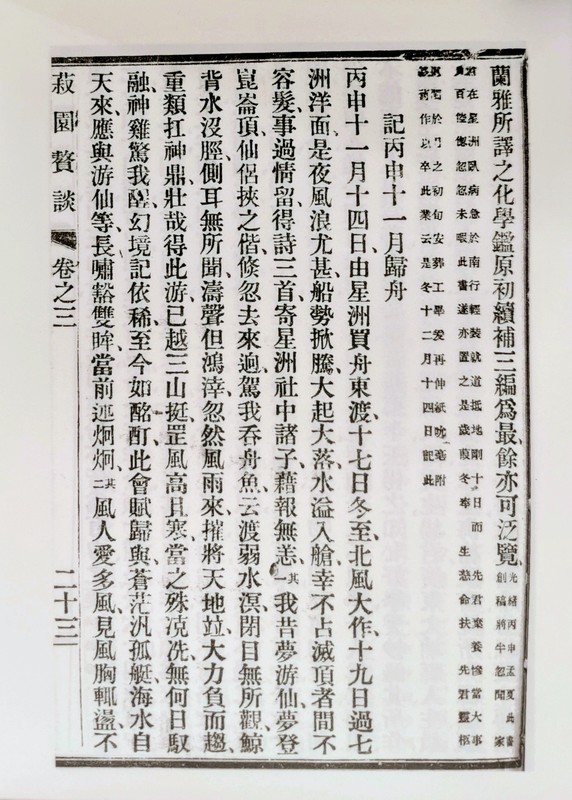
These sinicised terms first appeared in spoken language and later in written records. They underwent a process of pragmatic selection and competition with similar expressions, before the term 星洲 (xingzhou) emerged as the preferred name.
Overall, it is difficult to say who was the first to use the term 星洲 (xingzhou). While Khoo did not create it, there is no doubt that he helped to promote its widespread use in Singapore’s Chinese community.
This is an edited and translated version of 【本土语汇】星洲. Click here to read original piece.
| 1 | Song Sen, also known as Song Mulin (1877–1952), served as principal of Yangzheng Primary School from 1907 to 1915. |
| 2 | See Toh Lam Huat, “Hua shuo xingzhou” [About xingzhou], Lianhe Zaobao, 2 January 2017. |
Khoo, Seok Wan. “Xingzhou suyuan tan” [The origin of xingzhou]. Sin Chew Jit Poh, 15 January 1930. | |
Tan, Yeok Seong. “Xingzhou kao yuan” [Tracing the origin of xingzhou]. Nanyang Siang Pau, 1 January 1971. | |
Toh, Lam Huat. “Hua shuo xingzhou” [About xingzhou]. Lianhe Zaobao, 2 January 2017. |