Modern Girls and New Women: Modern Chinese women in post-war Singapore


For the first time since the establishment of Singapore as a British colonial entrepot, the numbers of Chinese men and women approached parity in the period after World War II. The female-to-male ratio among the Chinese in Singapore evened out from 1:5 in 1911 and 1:2 in 1931, to just under 1:1 in 1957.1 From the 1940s to 1960s, as Singapore transitioned from a male-dominated immigrant colony to a more gender-balanced nation, ideals of womanhood and gender were rapidly evolving. Chinese intellectuals believed that the emancipation of women was crucial to realising the modern nation. Women were thus expected to step up for the nationalist movement. Being a modern Chinese woman in post-war Singapore meant being subjected to different, sometimes conflicting, gender ideals. Yet, women lived out — and challenged — these expectations in their own ways.
As Singapore stood on the cusp of nationhood, lofty ideals of merdeka (national independence) and anti-colonialism mingled with the promise of gender equality, modernity, and reform in all aspects of life. The modern Singapore Chinese woman not only supported merdeka, but aspired towards new gender ideals — attending school, working outside the home, dating before marriage, participating in politics, and going to the movies and amusement parks. Even one’s dress, hairstyle, behaviour, and social circle had to be tastefully cultivated.
In the first half of the 20th century, women’s education and employment rates were at unprecedentedly high levels, although they continued to lag behind those of men. Girls formed around one quarter of the school-going population in Chinese- and English-medium schools in Singapore and Malaya.2 During the Japanese Occupation (1942–1945), many families lost men to conscription or wartime violence. Malayan women, like their counterparts in the Western world, were therefore forced to earn their keep. After the war, women became more prominent in the workplace and in politics. In Singapore, the percentage of women in the gainfully employed population doubled from 6.6% (18,027) in 1931 to 13.2% (47,051) in 1947.3 Many more women were likely working in the informal economy as hawkers, laundresses, and domestic workers, among others.
At this crucial turning point, the “Modern Girl” and “New Woman” offered two conflicting yet complementary ideals of being modern in this new world. Women of the time aspired to these ideals, but also moulded and navigated them for their own interests.
Modern Girls
From the 1920s to 1960s, the streets of Singapore underwent a gendered revolution — women were more visible on the streets, in schools, and at workplaces. They also wore the latest fashion and adorned themselves with the latest consumer products. In the colonial metropolis of Singapore, women were a key consumer group. Advertisements of the period featured women as objects of desire and economic consumers.
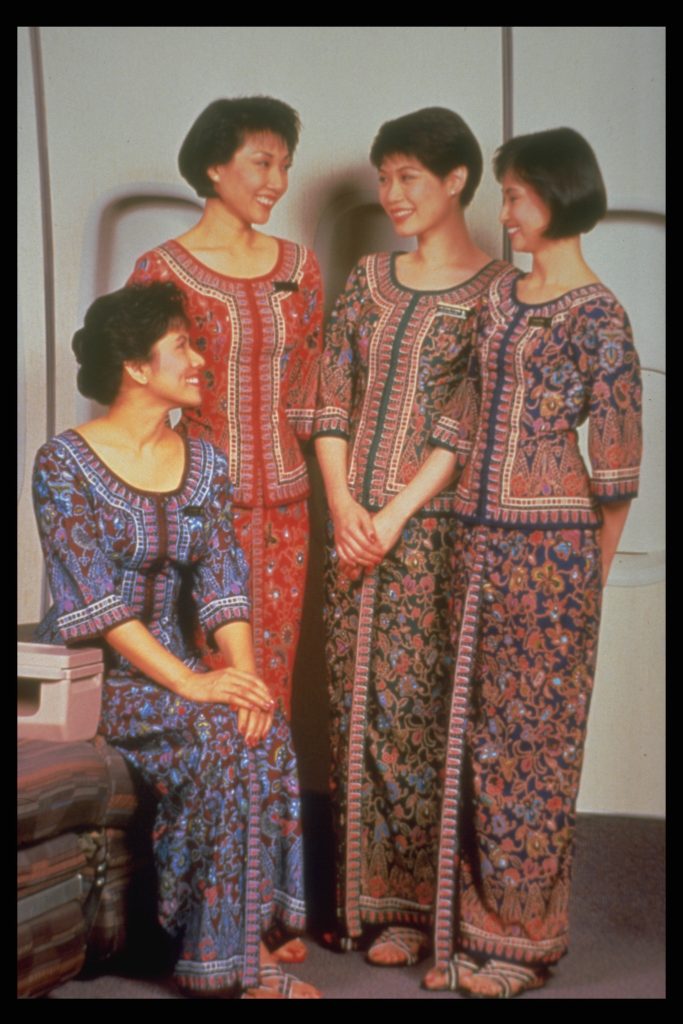
The Modern Girls of Singapore looked not only to London, Paris, and New York for the latest fashion, but also reimagined the classic Chinese cheongsam and Malay-style baju panjang in daring new ways.4 From the early decades of the 20th century, a new version of the cheongsam with a tightened silhouette emerged: instead of the traditional loose, knee-length dress, more were opting for a long, fitted costume with side slits. Similarly, at around the same time, the baju panjang also evolved from a long, loose-fitting blouse paired with a batik sarong skirt to the sarong kebaya, a figure-hugging, sheer voile embroidered blouse worn with the batik sarong. A striking legacy of the sarong kebaya is embodied by the “Singapore Girl” — it is now the uniform worn by Singapore Airlines stewardesses.
Just like the Singapore Girl, the Modern Girl evoked feelings of ambivalence in the public. Some worried that this “Westernisation” of Chinese womanhood would erode cultural values. Many commentators in newspapers and periodicals felt anxious that the Modern Girl’s newfound independence and economic power would threaten the moral fabric of society and the patriarchal order. For instance, female getai striptease performers were often derided in the Chinese press as “materialistic gold-diggers”.5
New Women
Some women had a different understanding of what it meant to be modern. A 1953 article in the “New Women” (Xin funü) column of left-wing newspaper Sin Pao wrote:
Actually, the original meaning of “modern” is not “new makeup”, but refers to the current era (xiandai) … Everywhere, women continue to be oppressed, stepped on, unable to get the rights and benefits they deserve …
We should do away with seductive makeup and instead pursue beauty that is healthy, devote ourselves to the struggle for women’s true freedom and equality, and work hard for humanity’s shared aspirations. Other than this, there is no higher form of beauty!6
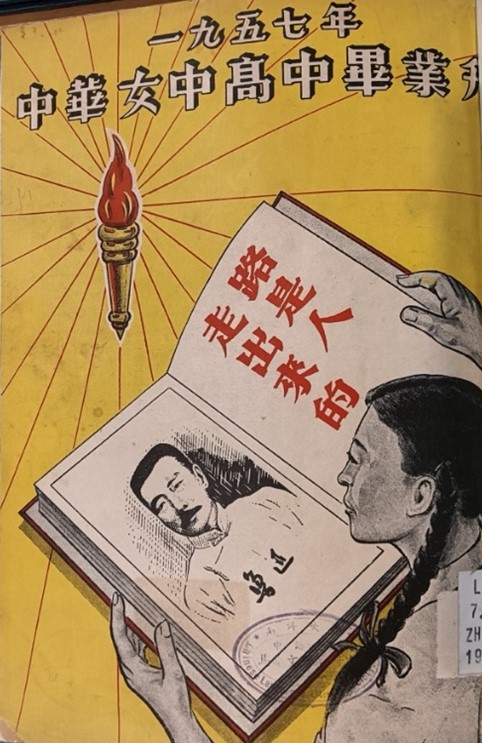
These sentiments were typical of criticism levied by New Women against Modern Girls. The New Woman constituted another ideal that modern women in Singapore aspired towards. If the Modern Girl was a vain, attractive, and vacuous woman, the New Woman was plain, hardworking, and principled. If the Modern Girl enjoyed shopping, movies, and amusement parks, the New Woman was eager to prove that her abilities were on par with men in schools and workplaces.
The Singapore New Woman was more prevalent in Chinese-speaking circles. They were inspired by May Fourth feminism in China, and usually educated in Chinese-medium schools. Just like the New Women of China, the Singapore New Woman was independent, civic-minded, and politically conscious.
Women and girls with a strong, robust, and masculine physique were the quintessential symbol of the New Woman, in both China and Singapore. Inspired by Chinese jianmei (“robust beauty”) discourse, many saw the health of the female body as representative of the strength of the nation.
Dance hostesses
While the ideals of the Modern Girl and New Women may appear to contradict each other, they often played out in complementary and complex ways. For instance, dance hostesses may appear as the classic archetype of the Modern Girl, but were also financially independent and civic-minded New Women. Glamorous and attractive, they were one of the most visible groups of young working women in post-war Singapore. Also known as cabaret girls, dancing girls, and taxi dancers, these women, mostly Chinese women, would dance with male patrons in cabarets and amusement parks.
Beneath the glamorous Modern Girl façade, however, many dance hostesses were New Women who struggled for economic survival and dignity as women workers. In 1950, the Singapore Cabaret Girls Association changed its name to the Singapore Dance Hostesses’ Association because it felt that the term “cabaret girls” was “too degrading”, “impolite”, and “discourteous”. The public also regarded dance hostesses as “lower in status than the average Malayan girl”.7
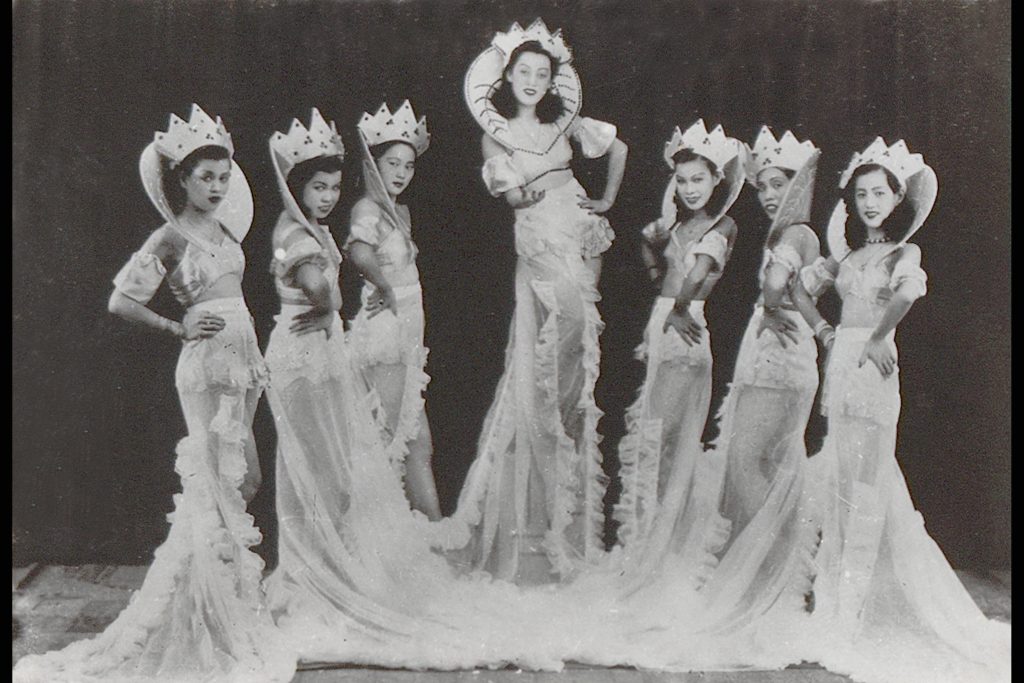
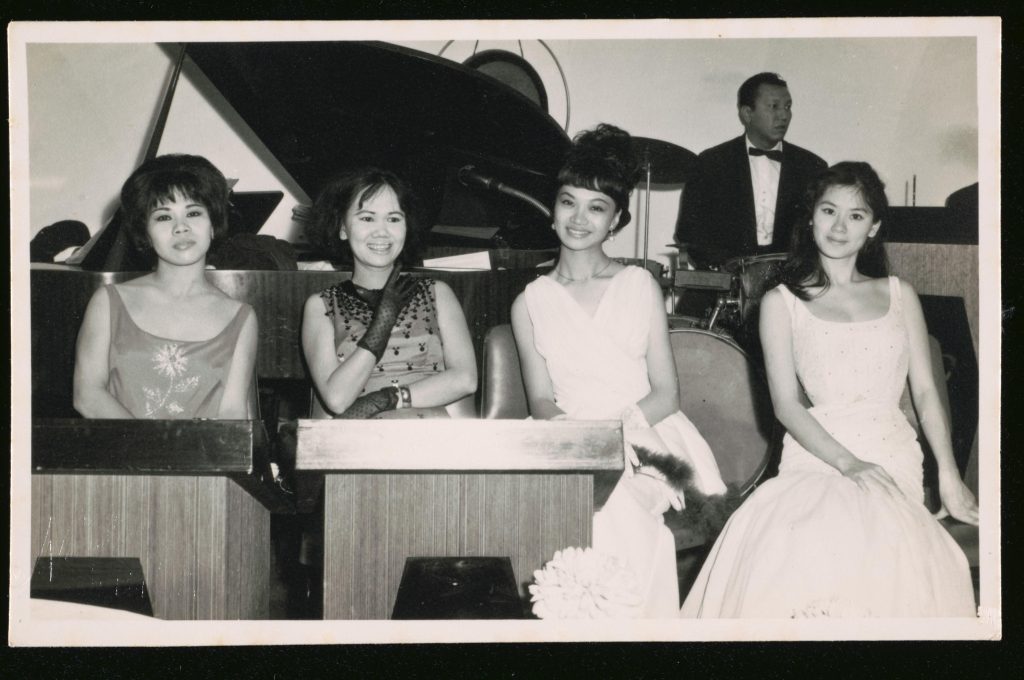
Dance hostesses carefully cultivated a Modern Girl image to cater to male sexual desire and make a living. In 1949, their association successfully lobbied for income tax deductions of up to S$125 a month — the estimated amount spent by a dance hostess on dresses, shoes, cosmetics, and hair.8 Dancing seven days a week, from 6pm to midnight, a dance hostess might perform up to 40 dances an evening.9 This took a physical and mental toll on their bodies.
By 1956, the tensions between the Modern Girl and New Women had come to a head. When dance hostess Liang An Ni (birth and death years unknown) was molested by a male client in his car, the Singapore Women’s Federation — a left-wing, anti-colonial group of women who identified as New Women — released a statement condemning the incident. They criticised the immoral, pornographic “yellow” culture that flourished under permissive colonial rule.10 Anxious about the growing prevalence of Modern Girls, they argued that such “yellow” culture had compelled young women to work in the nightlife industry where they were vulnerable to harassment.11
However, dance hostesses were not merely Modern Girls, but also New Women in their own right. They used the image of the glamorous Modern Girl to eke out a living and support their families. They sought to professionalise their trade, and even actively contributed to society. In 1946, dance hostesses of Happy World established the Happy Charity School to provide free education to street children after World War II.12 In 1953, the five leading cabarets each held an “all-for-charity” night to raise funds for the establishment of Nanyang University.13
Today, Singapore has developed into a more gender-balanced nation where men and women are equally represented in most schools and workplaces. History shows that this has not always been the case. Women in post-war Singapore were often typecast as Modern Girls and New Women, but as the example of dance hostesses has shown, they learned to navigate these stereotypes to their own advantage. As much as these gender ideals sought to mould women, women challenged, reshaped, and gave life to them in their own ways.
| 1 | Karen Teoh, Schooling Diaspora: Women, Education, and the Overseas Chinese in British Malaya and Singapore, 1850s–1960s (New York: Oxford University Press, 2018), 8. |
| 2 | Teoh, Schooling Diaspora, 99. |
| 3 | M.V. Del Tufo, Malaya, Comprising the Federation of Malaya And the Colony of Singapore: a Report On the 1947 Census of Population (London: Crown Agents for the Colonies, 1949), 104. |
| 4 | Chua Ai Lin, “Singapore, Colonial Cosmopolis c. 1930: The World of the Modern Girl” (presented at Asia Research Institute, 2004), 3. |
| 5 | Ho Hui Lin, “The 1950s striptease debates in Singapore: Getai and the politics of culture” (M.A. thesis., National University of Singapore, 2014), 38. |
| 6 | “Wuzuo yaoyan dabao ba [Don’t dress in a flashy/seductive way],” Sin Pao, 17 December 1953. |
| 7 | “What’s in a name?” The Straits Times, 25 June 1950; “’Cabaret girl’ is too degrading,” The Straits Times, 11 June 1950. |
| 8 | “Income tax deduction for glamour,” The Singapore Free Press, 20 January 1949. |
| 9 | “On Their Toes From 6 p.m. Till Midnight. Taxi-Dancing is a Hard Life,” The Straits Times, 30 September 1937. |
| 10 | “Yellow culture” referred to pornographic magazines, newspapers, books, and other forms of sexualized entertainment. In the 1950s, left-wing activists launched the Anti-Yellow Culture Movement to highlight the colonial government’s failure in protecting societal morals. The Singapore Women’s Federation was a leading convenor of the Anti-Yellow Culture Council formed in 1956. See Lau Yu Ching, “The Anti-Yellow Culture Movement, 1953–1961: Morality And The Language Of Decolonising Singapore,” M.A. Thesis, National University of Singapore, 2016. |
| 11 | “Wunü Liang An Ni beiru [Dance hostess Liang An Ni was humiliated],” Sin Chew Jit Poh, 25 July 1956. |
| 12 | Adeline Foo and Michelle Heng, “Beneath the Glitz and Glamour: The Untold Story of the ‘Lancing’ Girls,” BiblioAsia 12, no. 4 (January–March 2017). |
| 13 | “Cabaret assists Colony education,” The Singapore Free Press, 9 May 1953. |
Chua, Ai Lin. “Singapore, Colonial Cosmopolis c. 1930: The World of the Modern Girl.” Presented at Asia Research Institute, 2004. | |
Foo, Adeline. Lancing Girls of a Happy World. Singapore: Ethos Books, 2017. | |
Lee, Su Lin Lewis. “Gramophones, Cinema Halls, and Bobbed Hair.” In Cities in Motion: Urban Life and Cosmopolitanism in Southeast Asia, 1920–1940, 227–263. Cambridge: Cambridge University Press, 2016. | |
The Modern Girl around the World Research Group, Alys Eve Weinbaum, Lynn M. Thomas et al., eds. The Modern Girl Around the World: Consumption, Modernity, and Globalization. Durham: Duke University Press, 2008. | |
Show, Ying Xin. “Gendering Chinese diaspora: New Women’s Monthly and transnational sisterhood in postwar Malaya.” Inter-Asia Cultural Studies 24, no. 4 (2023): 625–642. | |
Teoh, Karen. Schooling Diaspora: Women, Education, and the Overseas Chinese in British Malaya and Singapore, 1850s–1960s. New York: Oxford University Press, 2018. |