Nan Chiau High School


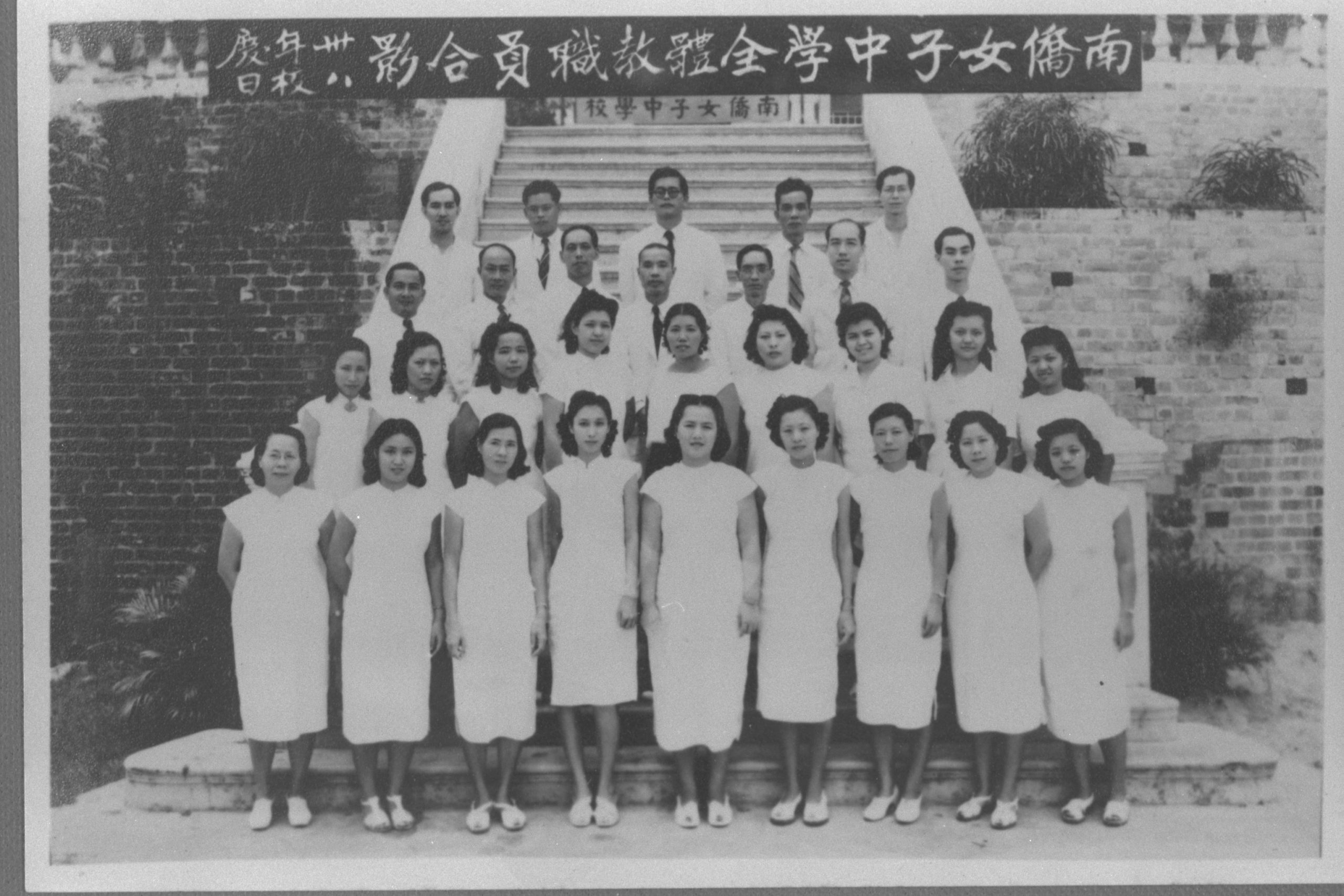
When Singapore was under British rule, teachers in the Chinese-medium schools mainly came from China. After the War of Resistance against Japan broke out in 1937, Chinese-medium schools faced a shortage of teachers as teacher supply from China was disrupted. Against this backdrop, local Chinese community leader and philanthropist Tan Kah Kee (1874–1961) saw the need to train local teachers and decided to establish a teachers’ training school.
Tan’s proposal was supported by all quarters of society, with many businessmen and associations donating to the cause. Tan’s son-in-law Lee Kong Chian donated a villa and a plot of land at Kim Yam Road as the site of the school. Together with the efforts of the Hokkien Huay Kuan, the Nan Chiau Teachers’ Training School was officially established in 1941.
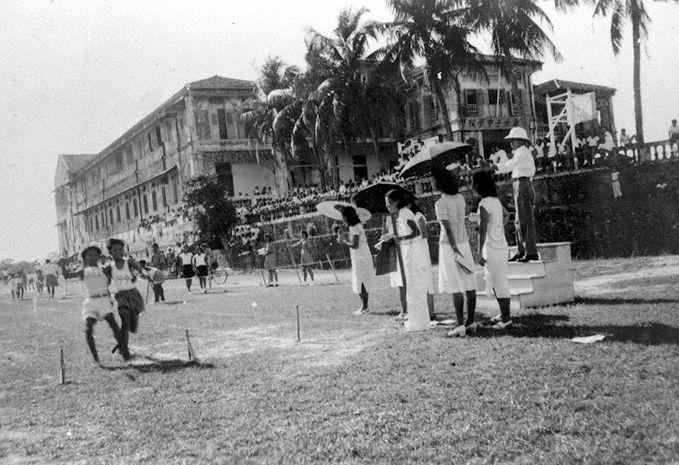
Shortly after the school was founded, the Japanese invaded Singapore, and Nan Chiau Teachers’ Training School was forced to cease operations. Towards the end of December 1941, the Japanese army advanced towards Singapore and the Chinese community quickly formed the Dalforce, a Chinese volunteers’ army, to resist the Japanese invasion, using the campus at Kim Yam Road as its headquarters.
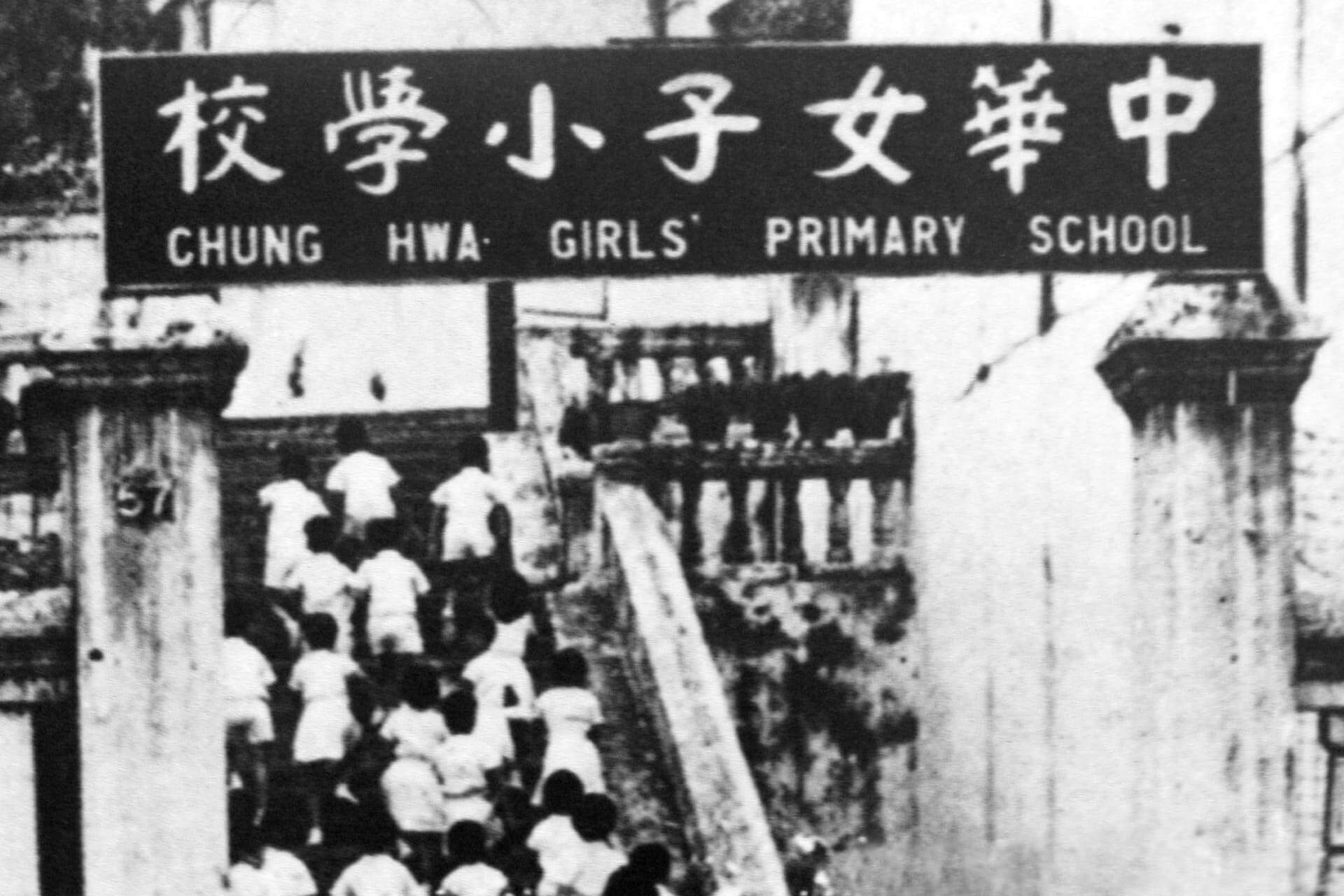
After the war, the reopening of Nan Chiau Teachers’ Training School became a key topic of discussion of the Hokkien Huay Kuan’s board of directors, given the social circumstances and resource constraints then. After careful consideration, the board decided to reopen the school, which resumed classes in 1947. The school was renamed Nan Chiau Girls’ High School, and provided graduates of Chong Fook Girls’ School with an option for further studies. The school also set up a co-educational primary section.
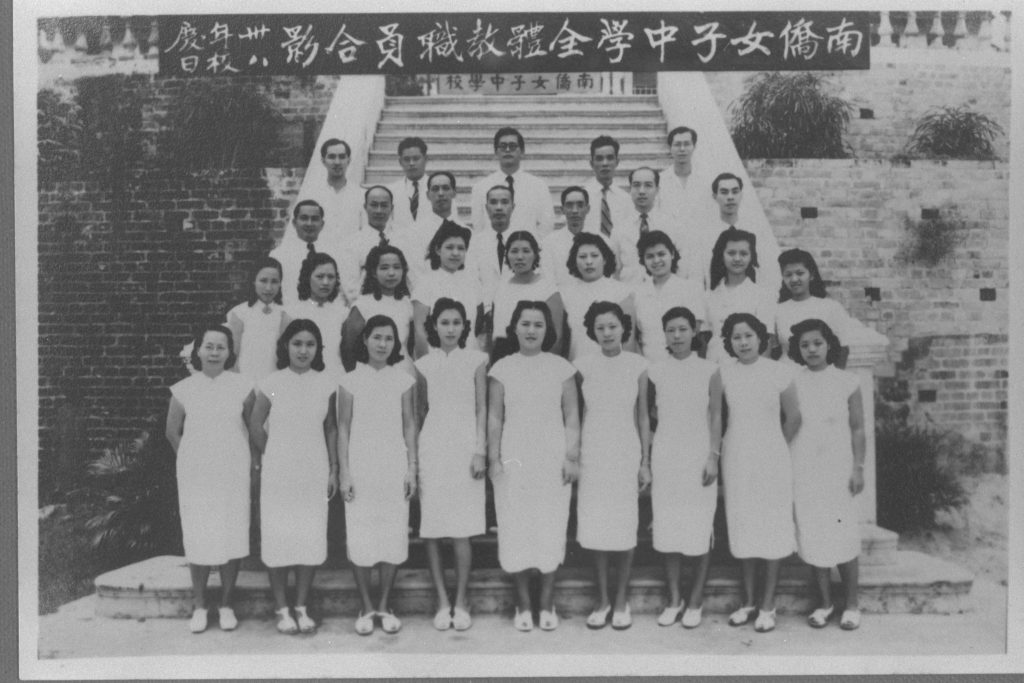
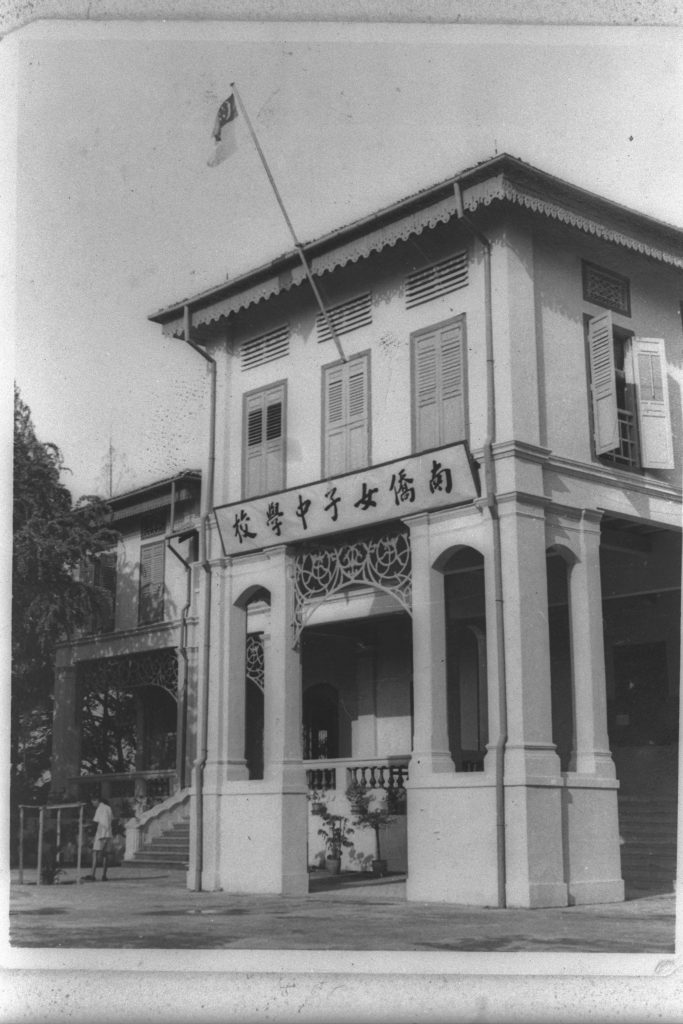
The school’s motto is Sincerity and Perseverance, which originated in Tan Kah Kee’s philosophy of education that was applied to all schools under the Hokkien Huay Kuan, as well as institutions founded by Tan in China, such as Xiamen University, Jimei University, and Jimei Middle School. In the 1950s, Zhao Xingdao (birth and death years unknown) composed the music and Lin Jin Joo (1911–2003) wrote the lyrics for the school song. Still sung today, the song expresses the aspirations of the students to promote Chinese culture by upholding the school motto.
School motto
Sincerity and Perseverance
Brief history
In 1947, Yang Zhenli (1902–unknown) became the first principal of Nan Chiau Girls’ High School. In 1949, the school added a senior middle section and built a female hostel in 1951 for female students who lived in remote areas. In 1961, the school introduced the afternoon session to cope with growing enrolment demand.
In 1965, Nan Chiau began rebuilding its campus at Kim Yam Road. The Hokkien Huay Kuan purchased a plot of vacant land of over 60,000 sq ft adjacent to Kong Hwa School at Guillemard Road, to construct a temporary campus for Nan Chiau students. It also invested $2 million in the rebuilding of the Kim Yan Road campus.
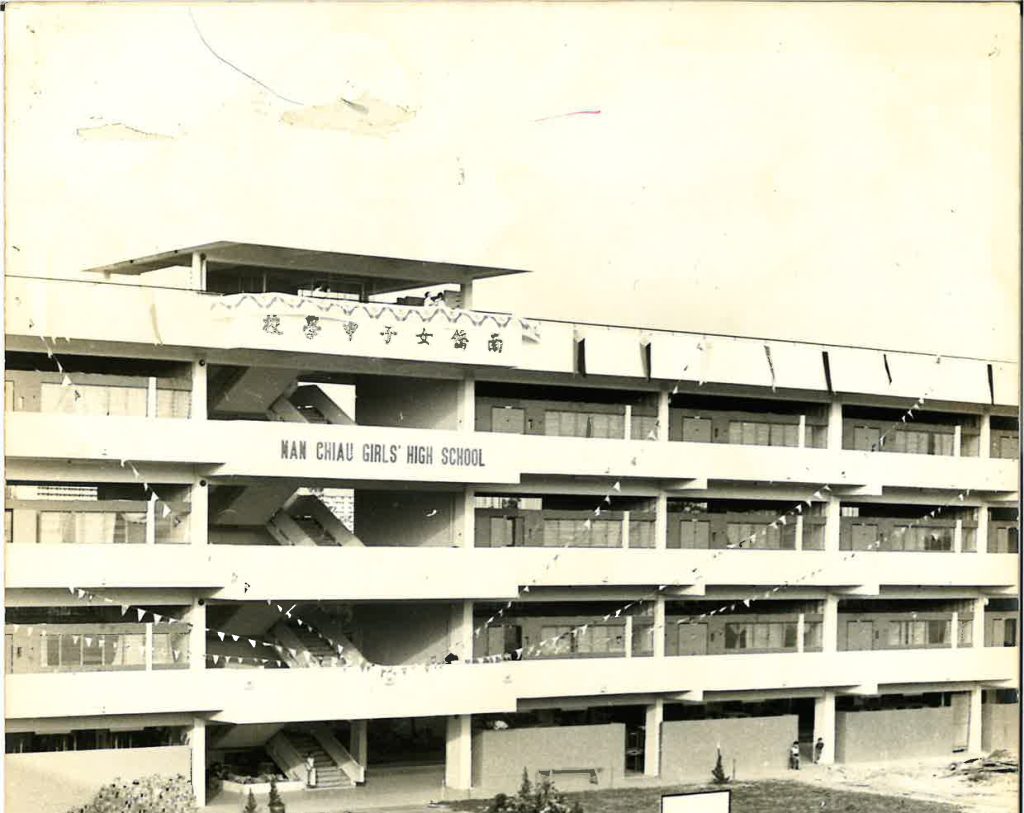
In 1969, the new campus at Kim Yam Road was completed and welcomed back Nan Chiau students. The same year, Chung Cheng High School’s board of directors and Hokkien Huay Kuan agreed to swap the site of Chung Cheng’s branch at Kim Yam Road with Nan Chiau’s premises at Guillemard Road. Chung Cheng’s branch moved to 339 Guillemard Road, while the premises at Kim Yam Road became part of the expanded Nan Chiau.
In 1974, the number of students at Nan Chiau and its affiliated primary school totalled 2,692, the highest in the school’s history, with 48 secondary classes and 24 primary classes. To cope with the increased student population, the Hokkien Huay Kuan spent another $300,000 in 1976 to expand the school building to five storeys to equip the school with more comprehensive teaching facilities.
With the reform of Singapore’s education system and given that Nan Chiau did not qualify for the Ministry of Education’s (MOE) Special Assistance Plan (SAP) then, the school’s development was somewhat constrained.1 In 1984, it began admitting male students and changed its name to Nan Chiau High School to expand its enrolment.
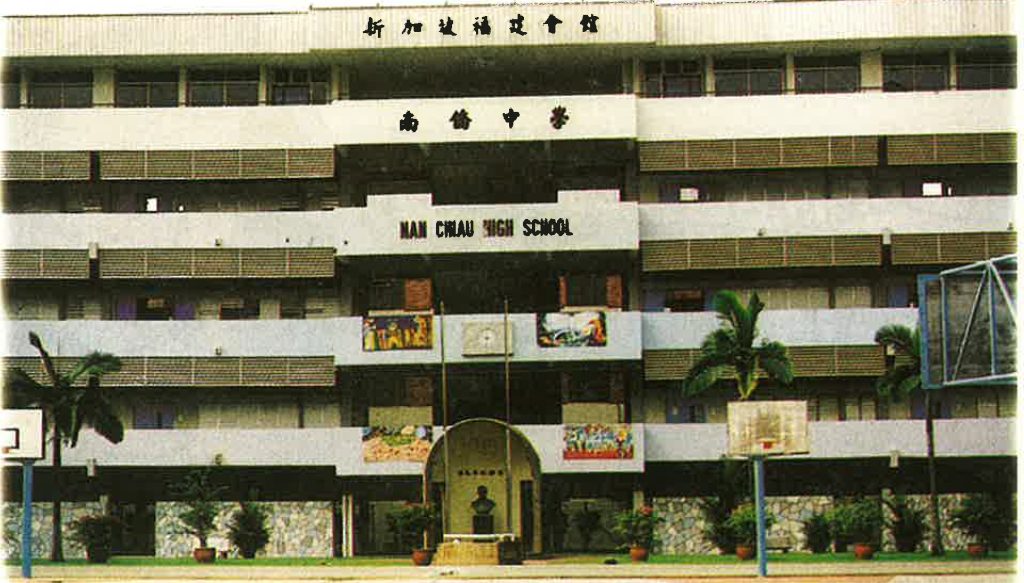
In the 1990s, the school continued to face low enrolment as a result of the changing demographics in the River Valley area. By 1999, the school was on the verge of having no new students, and relocation became the only option to save the school. At that time, Hokkien Huay Kuan had to decide whether to give up the site at Kim Yam Road and move the school to a new area, or keep the site but close the school. This issue, which concerned the school’s survival, sparked discussions among the Hokkien Huay Kuan, school management, and alumni. From April 1999 to April 2000, local newspapers carried news and commentaries on the fate of Nan Chiau.
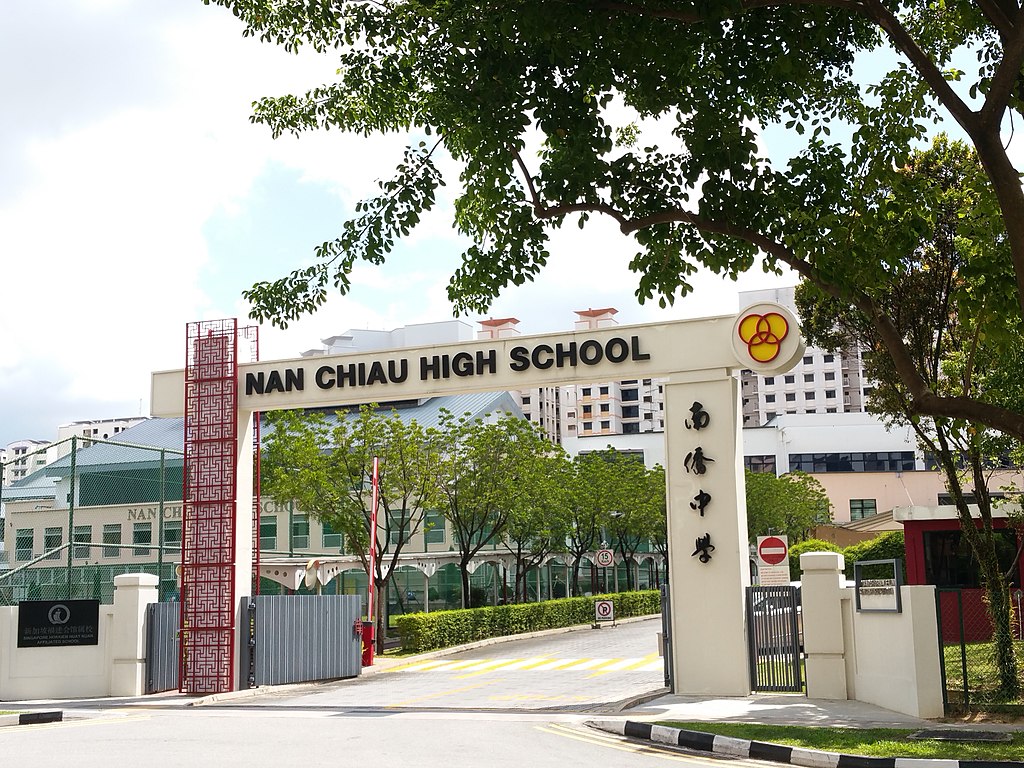
After much deliberation, the Hokkien Huay Kuan decided in January 2001 to give up the campus at Kim Yam Road. With support from various quarters of society, it relocated Nan Chiau High School to Sengkang new town and also set up Nan Chiau Primary School. From then on, the primary school was separated from Nan Chiau High School and managed independently. This move enabled the school to continue to develop and made it the first Chinese-medium school in Singapore to relocate in its entirety.
In 2012, Nan Chiau High School became the 11th SAP school in Singapore. This milestone marked MOE’s recognition of the school’s contributions to Chinese education and elevated the school’s standing in Singapore’s education system. It also fulfilled the long-held aspirations of Hokkien Huay Kuan’s successive school board members, teachers, students, parents and many alumni who have cared deeply for Nan Chiau over the years.
To enhance students’ understanding of Chinese culture, Nan Chiau runs a Bicultural Flagship Programme aimed at nurturing bilingual talents with an appreciation of both Chinese and Western cultures. In 2020, the school was selected to offer the Chinese Language Elective Programme that aims to improve students’ proficiency in Chinese, enhance their understanding and appreciation of Chinese literature and cultivate bilingual talents with a global perspective.2
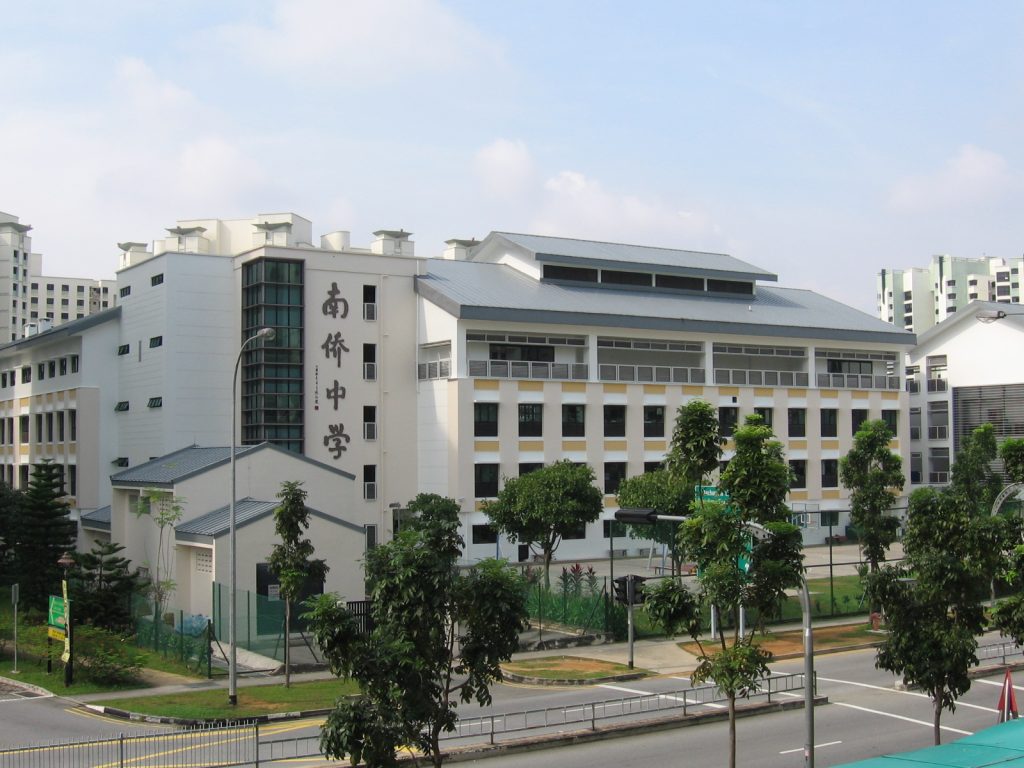
After Nan Chiau moved to Sengkang, the facilities at its former campus at Kim Yam Road remained unused for over a decade until 2012, when the site was redeveloped for commercial use. When Nan Chiau vacated Kim Yam Road, it left behind a pair of stone pillars engraved with its Chinese name Nan Qiao Zhongxue. During Siau Fong Fui’s tenure as Nan Chiau’s principal, the school decided to bring the pillars back to the campus for restoration and preservation. On 7 February 2021, the pillars were officially relocated to the Sengkang campus, marking the end of a relocation journey that has taken 20 years.
Since its establishment, Nan Chiau has undergone numerous developments in a changing social and education landscape. Staying true to the spirit of Sincerity and Perseverance, it has produced many talents who have achieved success in their respective fields. Notable alumni include Cultural Medallion recipients and dance pioneers Lim Fei Shen and Goh Lay Kuan.
Principals and years in service
- Zhuang Kuizhang (1941)
- Yang Zhenli (1947–1950)
- Qiu Rentuan (1951–1960)
- Lin Fanglan (1961–1968)
- Kau Ah Suo (1969–1988)
- Su Wei Cher (1989–1997)
- Ng Lee Huat (1998–2004)
- Yeo Kuerk Heng (2004)
- Ong Kian Choon (2004–2010)
- Tan Yee Kan (2011–2018)
- Siau Fong Fui (2019–2022)
- Ler Jia Luen (2023–present)
This is an edited and translated version of 南侨中学. Click here to read original piece.
| 1 | The Special Assistance Plan (SAP) was introduced in 1979 to nurture students with bilingual aptitude. The schools under this plan are called SAP schools, known to provide students with high-quality teaching and an environment that emphasises bilingual learning. |
| 2 | The Chinese Language Elective Programme (CLEP) is offered by selected secondary schools and junior colleges to nurture students who have an interest and aptitude in Chinese language and literature. |
“Chen Zhensheng: fahui mei ge ren qianneng xu baituo ‘yi dao qie’ jiaoyu” [Chan Chun Sing: a one-size-fits-all education approach must be abandoned if we are to unleash everyone’s potential]. Lianhe Zaobao, 9 March 2022. | |
“Lao menzhu yu nanqiao ‘tuanyuan’” [The old pillar “reunites” with Nan Chiau]. Lianhe Zaobao, 8 February 2021. | |
Lee, Gim Siong. “Xilie huodong qing chuangxiao qishi nian, nanqiao zhongxue tezhi yingpian jilu fazhan licheng” [To commemorate its 70th anniversary, Nan Chiau High School organised a series of activities and produced a film documenting its development]. Lianhe Zaobao, 20 February 2017. | |
Nan Chiau Girls’ High School 20th Anniversary Souvenir Magazine, 1947–1967. Singapore: Nan Chiau Girls’ High School, 1967. | |
Nan Chiau Girls’ High School 23rd Anniversary in Conjunction with the Official Opening of Expanded Campus Souvenir Magazine. Singapore: Nan Chiau Girls’ High School, 1970. | |
Nan Chiau Girls’ High School 30th Anniversary Souvenir Magazine, 1947–1977. Singapore: Nan Chiau Girls’ High School, 1977. | |
Nan Chiau Girls’ High School 35th Anniversary Souvenir Magazine. Singapore: Nan Chiau Girls’ High School, 1982. | |
Toh, Lam Huat. “Chun feng hua yu, run wu wu sheng: fujian huiguan yu bendi jiaoyu fazhan de xin faxian” [Recent findings about the Hokkien Huay Kuan and its contribution to local education]. Lianhe Zaobao, 20 February 2020. |