The evolution of Singapore’s Chinese-medium school system


Generally speaking, “Chinese-medium schools” in Singapore were schools run by the Chinese community, with Chinese as their main language of instruction before English-stream education became widespread. In the first half of the 20th century, these schools exerted a far-reaching impact on local education and social development. They gradually transformed through multiple rounds of education reform before fading into history in 1987, when all schools nationwide adopted a unified language stream.
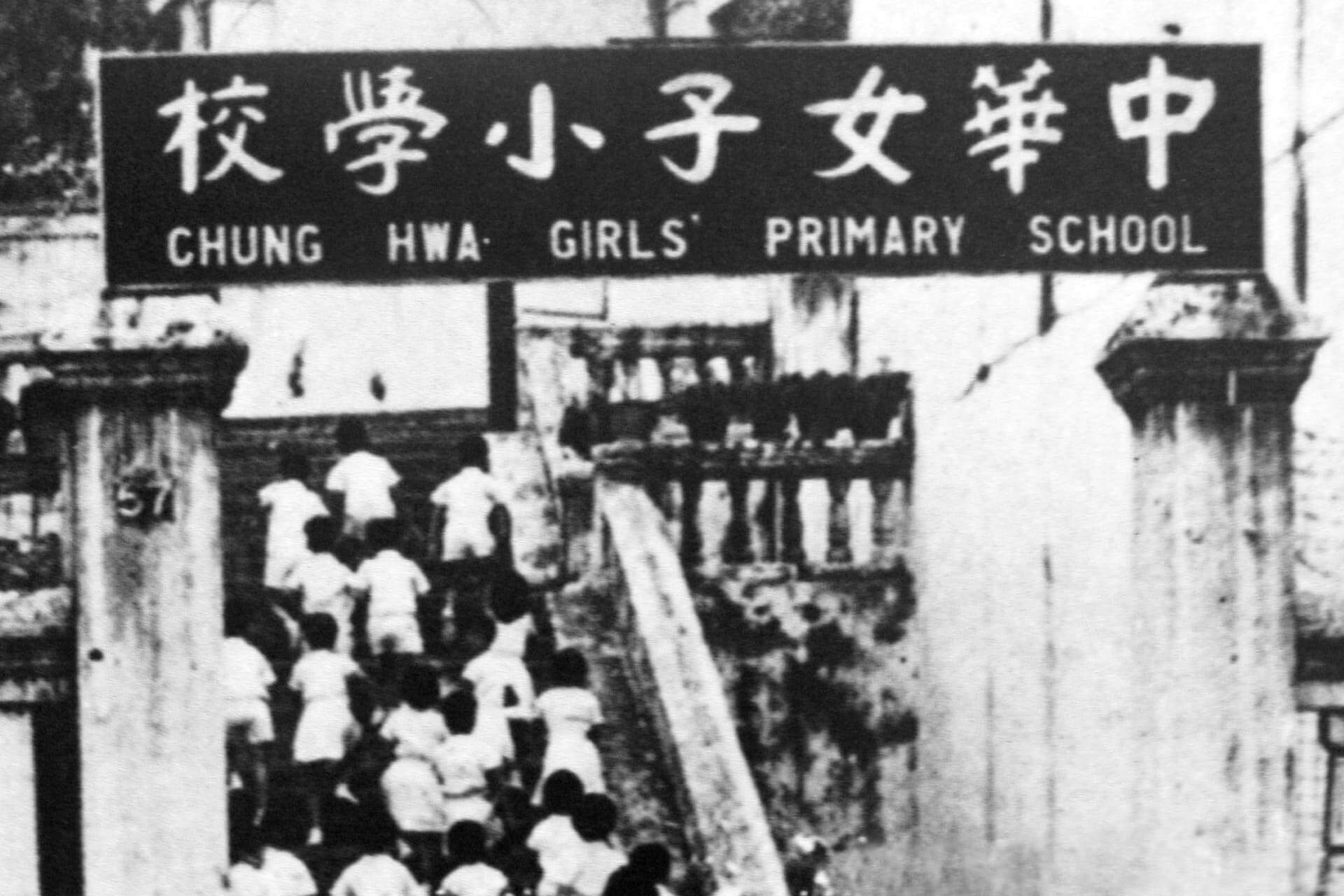
During the British colonial period, the authorities and society referred to schools as “Chinese-medium schools”, “English-medium schools”, “Malay-medium schools” and “Tamil-medium schools” based on their language streams. “Chinese-medium schools” were those whose medium of instruction was Chinese, and which placed importance on transmitting Chinese culture. Of these Chinese-medium schools, a small number of primary and secondary schools that were founded by churches, such as Catholic High School and CHIJ St Nicholas Girls’ School, adopted a bilingual policy that placed equal emphasis on English and Chinese. These mission schools were also considered a part of the Chinese-medium school system. Singapore’s oldest Chinese-medium schools run by the community date back over 100 years. Some still operate today, such as Kwong Shiu School (founded in 1905, now Yangzheng Primary School) established by the Cantonese community, and Khee Fatt School (founded in 1906, now Qifa Primary School) established by the Hakka community.
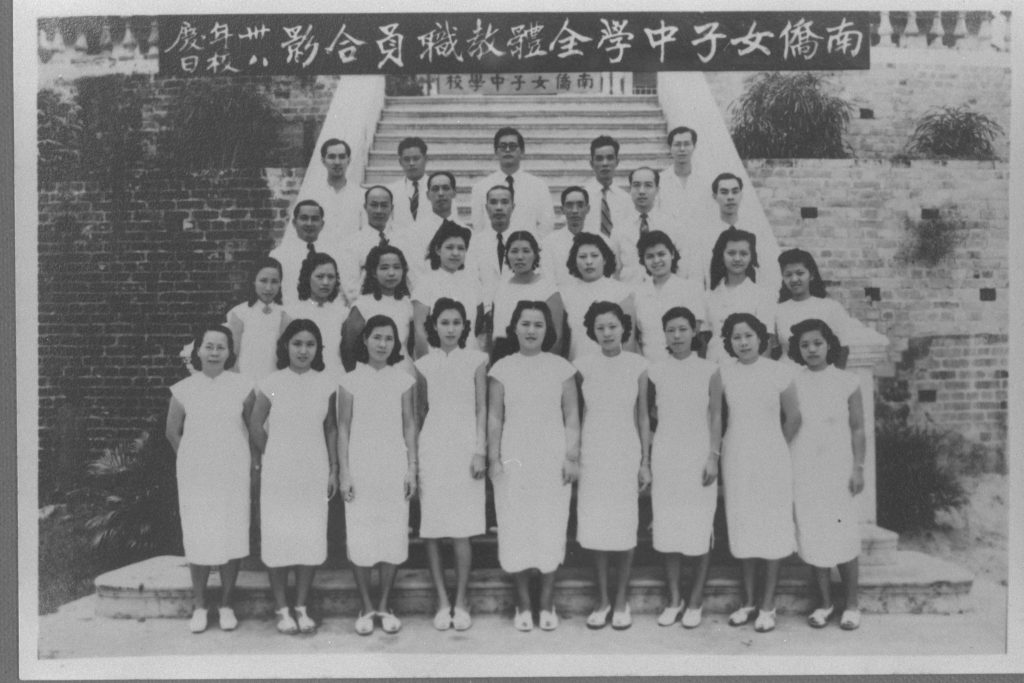
The British colonial government set up only English-medium and Malay-medium schools, and did not place emphasis on the community’s needs for Chinese-language education. To preserve the Chinese language and culture, Chinese community leaders and civic organisations took the initiative to establish schools. Chinese-medium schools grew rapidly in the early 20th century, becoming the primary education pathway of Chinese children. The Chinese community prioritised basic education when it first founded schools, so most of the schools they established were primary schools. Over time, as societal needs grew, Chinese community organisations and churches also set up middle schools. The Chinese High School (established in 1919, now Hwa Chong Institution) was the first Chinese-medium middle school in Singapore. Subsequently, many primary schools added middle school sections, forming a more complete education system. Nanyang Girls’ School (now Nanyang Girls’ High School) is a case in point.
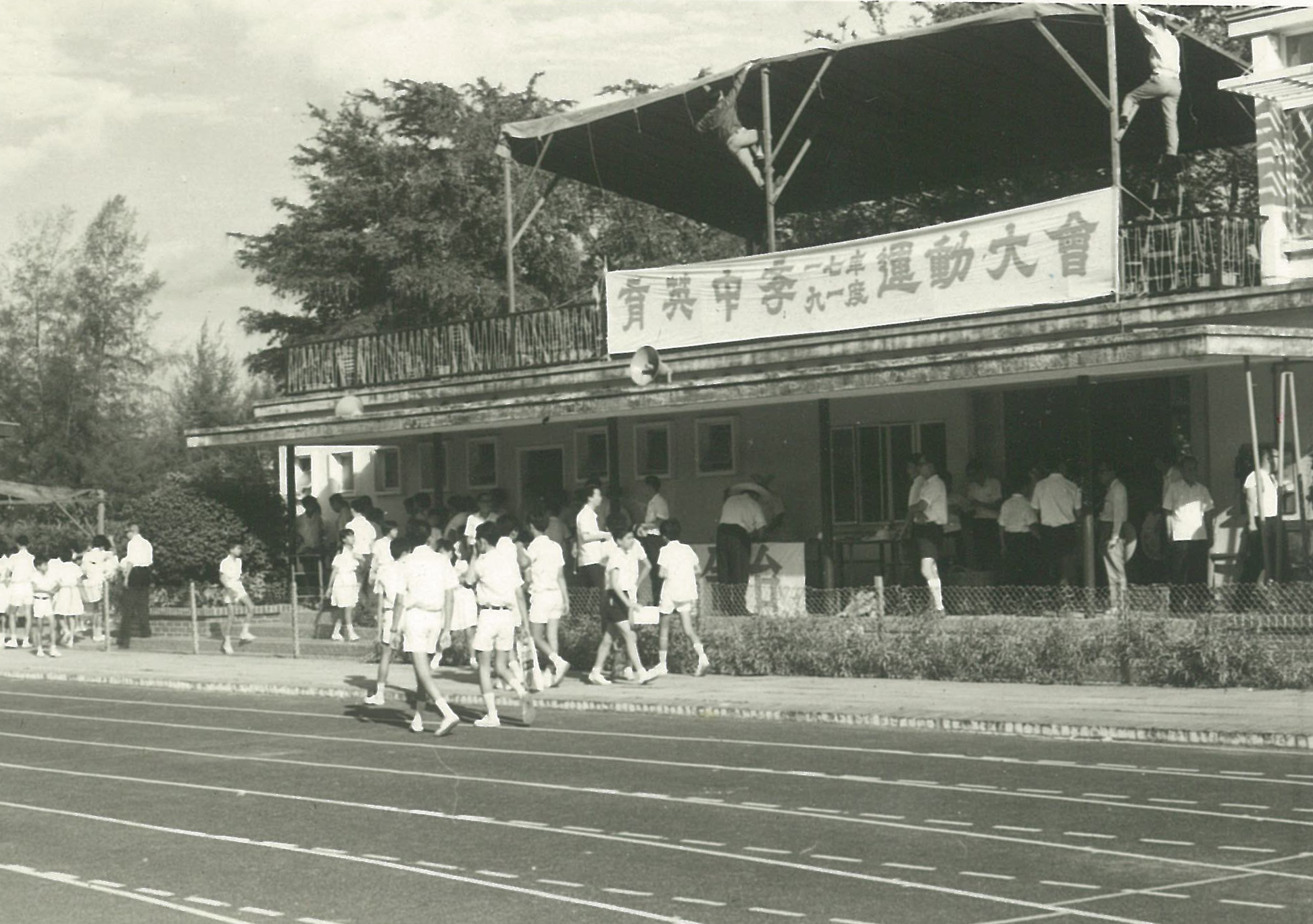
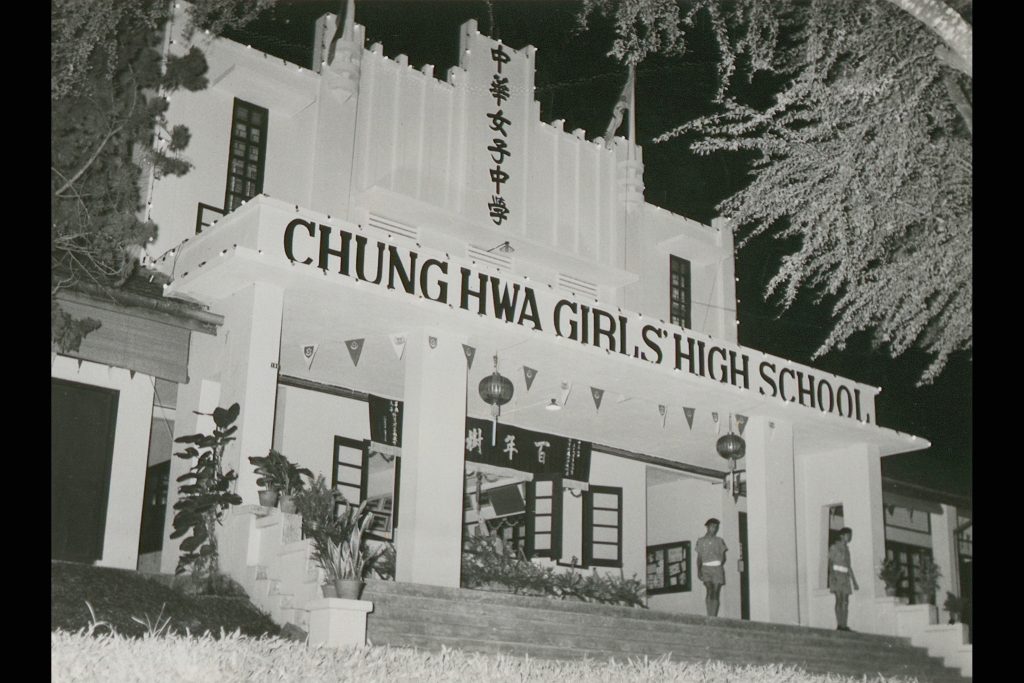
After World War II, as the society underwent rebuilding, Chinese education flourished. By the late 1940s and the early 1950s, the Chinese-medium school system in Singapore had become largely comprehensive, with many primary and middle schools offering students a complete pathway for a full education. Chinese-medium schools generally adopted the school system prevalent in China (which was itself influenced by the American education system). Primary school education typically lasted six years, though a few schools, such as Tuan Mong School once implemented a seven-year system, while middle schools followed a “3-3 system” (three years of junior-middle and three years of senior-middle). Many Chinese-medium schools for girls offered teacher-training classes at post-primary level to nurture educators for the Chinese-medium schools. Zhonghua Secondary School, Nan Hua High School and Nan Chiau High School, which were former girls’ schools, ran teacher-training courses at one point. Some schools also provided tuition or evening classes to meet community needs.
A turning point
However, the 1950s also marked a turning point in the development of Chinese-medium schools. The colonial government’s clear inclination towards English-medium schools in terms of educational resources and employment policies prompted parents to increasingly favour English education for their children out of practical considerations. In 1954, the number of students in English-medium schools surpassed that in Chinese-medium schools for the first time, and the gap continued to widen year after year. The trend could not be reversed even after the government, led by then Chief Minister David Marshall (1908–1995), set up the All-Party Committee of the Singapore Legislative Assembly on Chinese Education in 1955 to review issues related to Chinese education and culture.1 With the Cold War evolving into regional conflicts, student protests erupted one after another in Singapore. To accommodate students affected by the disruptions, the government established four Chinese-medium middle schools in 1956, namely, Singapore Government Chinese Middle School (now River Valley High School), Kallang West Government Chinese Middle School (now Dunman High School), Gan Eng Seng Government Chinese Middle School (now North Vista Secondary School) and Hua Yi Government Chinese Middle School (now Hua Yi Secondary School). Other Chinese-medium secondary schools, such as Whampoa Secondary School, were set up subsequently, but enrolment in Chinese-medium schools continued to decline.
Statistics show that in 1959, there were 27,223 pupils registered for Primary 1 classes in Chinese-medium schools. However, by 1984, the number had plummeted to 260, accounting for only 0.7% of total Primary 1 enrolment across all streams. In the same year, 38,242 pupils registered for Primary 1 classes in English-medium schools.2 The crisis in Chinese-stream education had sparked concern in the Chinese community as early as in the 1960s, but appeals by Chinese intellectuals and community organisations proved futile against the prevailing trend. Apart from factors such as employment prospects, the shift also had to do with English’s ascent as a global lingua franca after World War II. This, coupled with the anti-communist climate, rising racism and anti-Chinese sentiments in Southeast Asia, further exacerbated the challenges facing Chinese-medium schools.
Education reforms
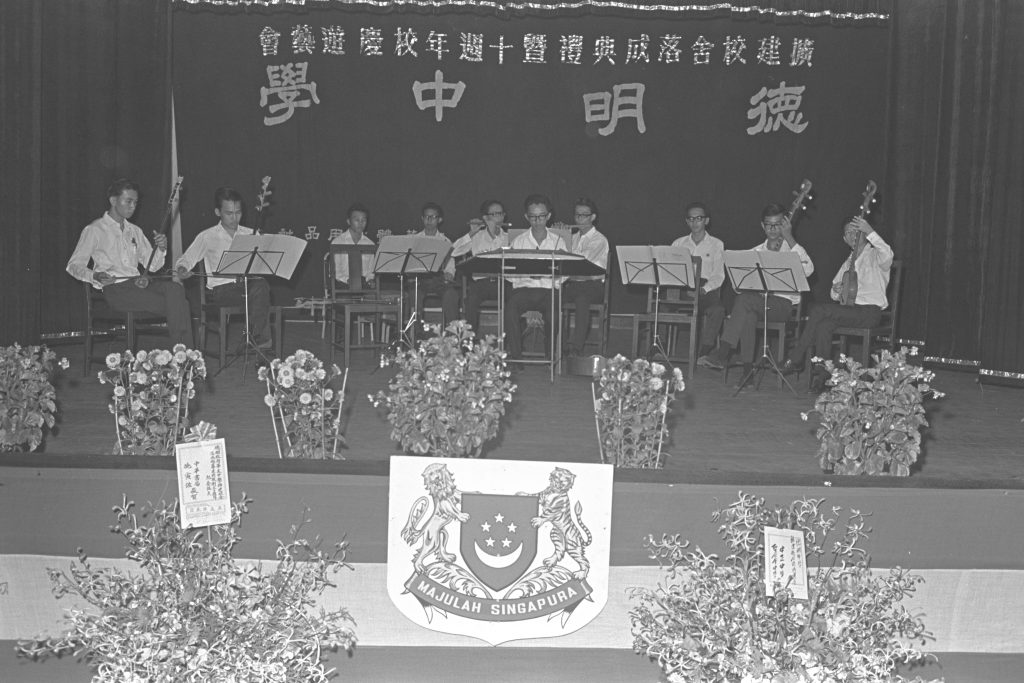
The 1960s and 1970s marked a pivotal period of consolidation for Singapore’s education system. The government began large-scale school construction, while gradually closing or merging smaller Chinese-medium schools. Meanwhile, some English-medium and Chinese-medium schools merged to become “integrated schools”, offering both English- and Chinese-stream curricula in the same campus. During the 1970s to 2000s, with urban renewal and the development of new towns, some former Chinese-medium schools were forced to relocate due to declining enrolment or the demolition of their premises, in order to secure student intake. Hua Yi Secondary School is a case in point. When it was located at Depot Road, the school faced the threat of closure as its enrolment had dropped drastically due to the neighbourhood’s ageing population. Moving to the densely populated and well-connected Jurong West in 2000 gave it a new lease of life.
In the late 1950s, the government pushed for Chinese-medium middle schools to switch from the “3-3 system” to a “4-2 system” (four years of secondary and two years of pre-university) to align with the school system of English-medium schools. Most Chinese-medium schools completed the transition in the early 1960s, while some schools implemented both systems at one point to minimise disruptions to students. In the late 1960s, the government began establishing “junior colleges” to replace “pre-university” education offered by secondary schools. “Pre-university” was the term used by English-medium schools and government Chinese middle schools for senior-middle education, while other Chinese-medium schools continued to call it “senior-middle” (gaozhong).
It is worth noting that while Singapore’s second junior college, Hwa Chong Junior College (established in 1974), was formed from the senior-middle section of The Chinese High School, it also admitted English-stream students as a government-aided school.3 Strictly speaking, it is not a traditional “Chinese-medium school”. Nevertheless, it was rooted in the Chinese school system and can be regarded as a product of the transformation of Chinese-stream education.
The Report on the Ministry of Education 1978 proposed several comprehensive reforms,4 including making English the first language and the mother tongue the second language, and having all subjects, except the mother tongue, taught in English. At the end of 1983, the Ministry of Education (MOE) announced that it would gradually unify the various language streams from 1984 and complete the process in 1987. With this, the Chinese-medium school system formally came to an end.
Continuing the spirit of Chinese-medium schools
To preserve the Chinese cultural atmosphere and values of Chinese-medium schools, MOE introduced the Special Assistance Plan (SAP) in 1979, and encouraged top-performing Primary 6 school-leavers (from both Chinese and English streams) to enrol in these selected secondary schools. These schools, which had strong Chinese-medium school backgrounds, placed equal emphasis on English and Chinese, and for a short while, students had to take supplementary courses in English.
The first nine SAP secondary schools were Anglican High School, Catholic High School, The Chinese High School, Chung Cheng High School (Main), Dunman High School, Maris Stella High School, Nanyang Girls’ High School, River Valley High School and CHIJ St Nicholas Girls’ School. Nan Hua High School and Nan Chiau High School became SAP schools in 2000 and 2012 respectively. In 1989, 10 primary schools were also designated as SAP schools, including three affiliated to SAP secondary schools. They were Catholic High School (Primary Section), Maris Stella High School (Primary Section), CHIJ St Nicholas Girls’ School (Primary Section), Ai Tong School, Maha Bodhi School, Nan Hua Primary School, Nanyang Primary School, Pei Chun Public School, Red Swastika School and Tao Nan School. In 1992, five more primary schools joined the league: Holy Innocents’ Primary School, Hong Wen School, Kong Hwa School, Pei Hwa Presbyterian Primary School and Poi Ching School.
While the phasing out of the Chinese-medium school system was a result of the consolidation of the education system, it also reflected the reshaping of national identity. Following Singapore’s independence, English became not only the working language of business and government, but also the common language transcending ethnic groups. In light of this, the Chinese language became the “mother tongue” or “second language” under the national education system. With their emphasis on bilingualism, the SAP schools preserved the fine traditions and educational spirit of early Chinese-medium schools, while continuing to nurture talent.
This is an edited and translated version of 消逝的华校体系:从传统华校到华校背景的新加坡中小学. Click here to read original piece.
| 1 | T. R. Doraisamy, 150 Years of Education in Singapore (Singapore: TTC Publication Board and Teachers’ Training College, 1969), 147. |
| 2 | See “Standard of Chinese Language in Schools,” Singapore Government Press Release, 2 May 1987. |
| 3 | A government-aided school is a school that maintains a certain level of autonomy over how it operates while receiving funding from the Singapore government and following a similar curriculum to that of government schools. |
| 4 | Also known as the Goh Report. In August 1978, Goh Keng Swee (1918–2010), who was then Deputy Prime Minister and Minister for Defence, led a team to conduct a comprehensive review of Singapore’s education system and put forward recommendations for reform. |
Doraisamy, T. R. 150 Years of Education in Singapore. Singapore: TTC Publication Board and Teachers’ Training College, 1969. | |
Neo, Peng Fu, ed. Xinjiapo huaxiao lianhehui shigang [History of the Singapore Chinese Schools’ Conference]. Singapore: The Society of Chinese Education Singapore, 2018. | |
Poon, Sing Wah, ed. Xiaoshi de huaxiao: guojia yongyuan de zichan [Vanishing Chinese-medium schools: A perpetual national asset]. Singapore: Federation of Chinese School Alumni Associations, 2014. | |
Sim, Cheryl. “Special Assistance Plan schools.” National Library Board, Singapore. | |
Singapore Chinese Schools’ Conference, ed. Xinjiapo huaxiao lianhehui 60 zhounian jinian [The 60th anniversary commemorative booklet of the Singapore Chinese Schools’ Conference]. Singapore: Singapore Chinese Schools’ Conference, 2007. | |
“Special Assistance Plan Schools.” SG101. | |
Teo, Sum Lim. “Xinjiapo huayu jiaoxue de biange yu jiyu” [The transformation and opportunities of Chinese language teaching in Singapore]. Yuan Magazine |