Yuying Secondary School


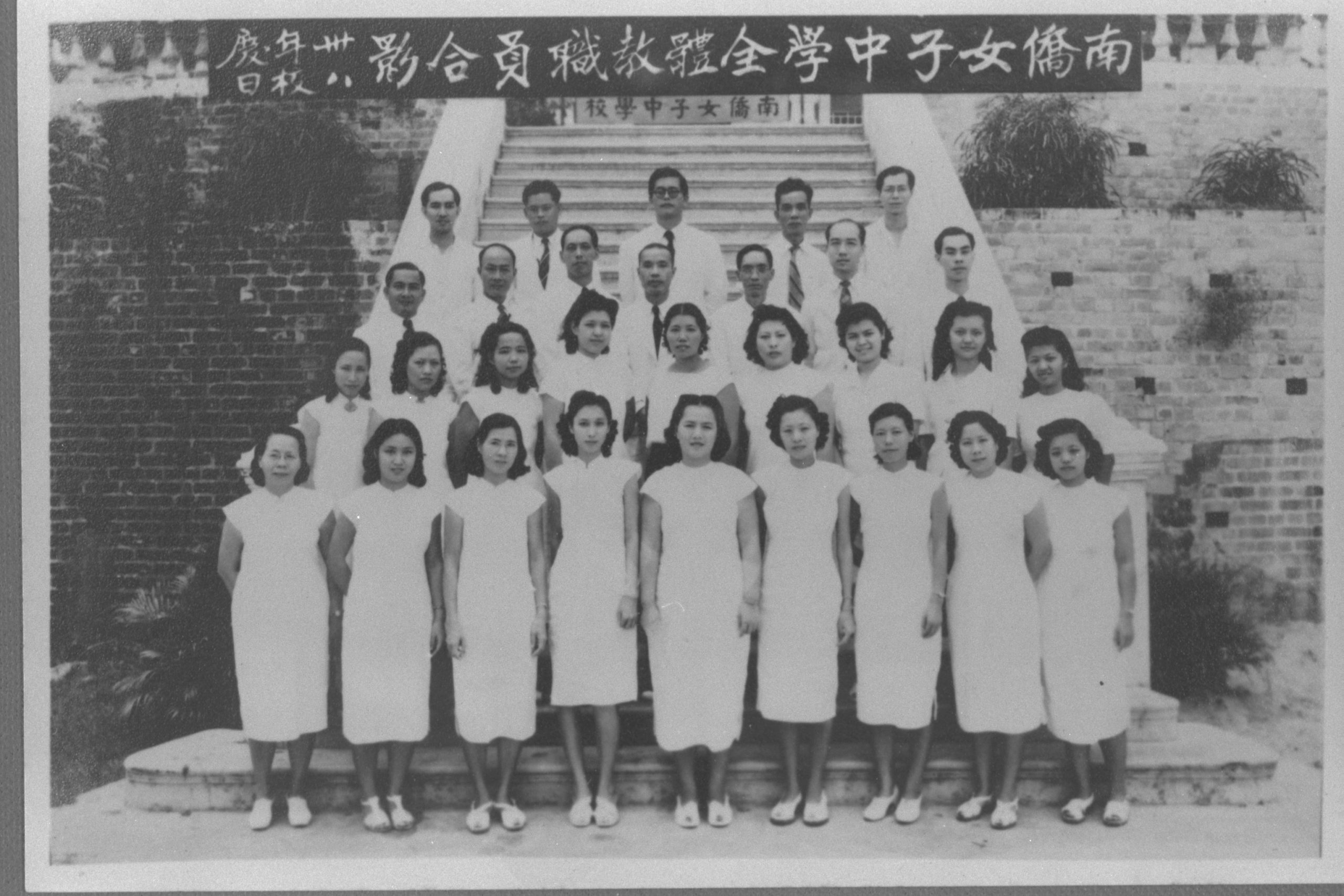
Yuying Secondary School was founded as Qiongya yuying xuetang in 1910 by seven local Hainanese leaders, led by Wee Cheow Keng (1860–1939), together with Huang Ke Hui, Yun Chang Lang, He Yu Lin, Lu Xi Yao, Chen Kai Guo and Fu Chang Bin, to provide opportunities for Hainanese children in Singapore to receive an education.1 The name “yuying” means “nurturing talent”. In 1911, the school was renamed Yock Eng School.
A traditional Chinese-medium school, Yock Eng adopted the four virtues of “Propriety, Righteousness, Integrity and Honour” as its motto. The school song was written by Liang Deru (birth and death years unknown), who taught at Yock Eng in the 1940s. In just 60 characters, the lyrics outline the school’s vision of nurturing intelligent, benevolent and courageous people who bring honour to nation and community. After Yock Eng became an English-medium school in the 1980s, its school song, motto and words on the crest were all changed to English.
School motto (old)
Propriety, Righteousness, Integrity and Honour
School motto (current)
Together, Achieve Personal Excellence
Brief history
The school started as a primary school with just 15 students, housed in three shophouses along Prinsep Street that were converted into classrooms. In 1919, it raised funds to add four more classrooms.
By 1925, the school’s reputation had grown, and student enrolment reached 241. It expanded its curriculum to include English, physical education, mathematics, literature and art, and also established examinations, finance and student welfare departments. By the early 1930s, the school had about 340 students, most of whom were children of Hainanese immigrants. In 1939, Yock Eng decided to look for a new site for the school, after repeated requests to the colonial government to extend the expiring lease of its campus at Prinsep Street were unsuccessful. In 1938, it purchased a site at 65 Tanjong Katong Road to build the new campus. In 1939, Yock Eng launched a fundraising campaign where teachers and students sold flowers on the streets to raise funds. The campaign received enthusiastic support from Hainanese merchants in Singapore and Malaya.
In June 1940, construction began on Yock Eng’s new campus at Tanjong Katong, which was completed in February the following year. The new two-storey school building combined modernity with Art Deco elements, and reflected the blend of architectural influences in the early 20th century. Its most distinctive feature was an octagonal clock tower that had a flagpole on top of it.
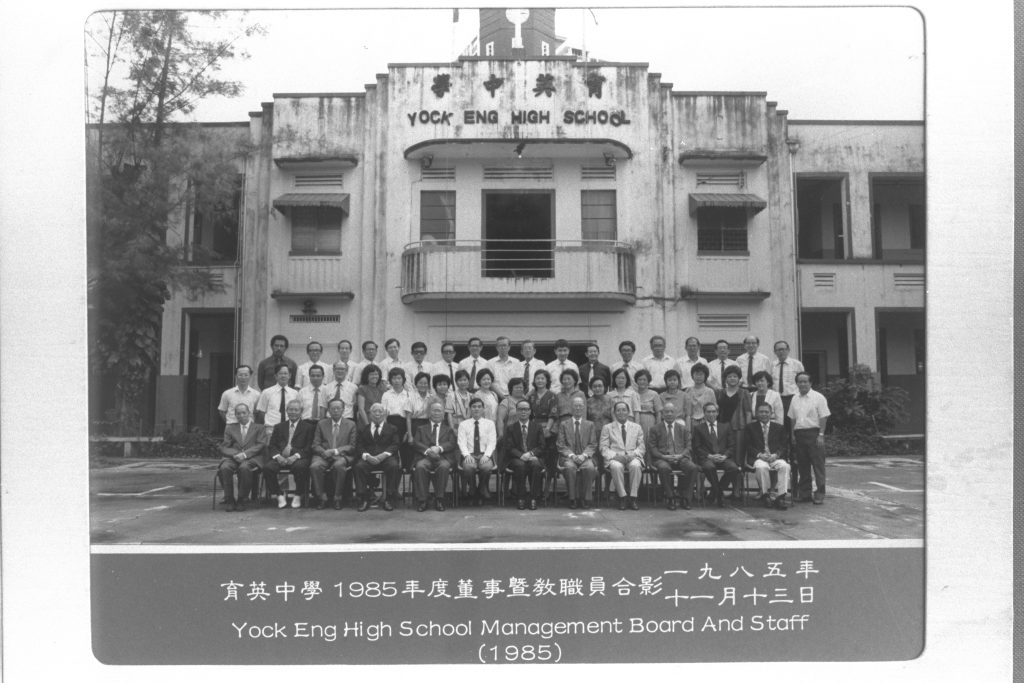
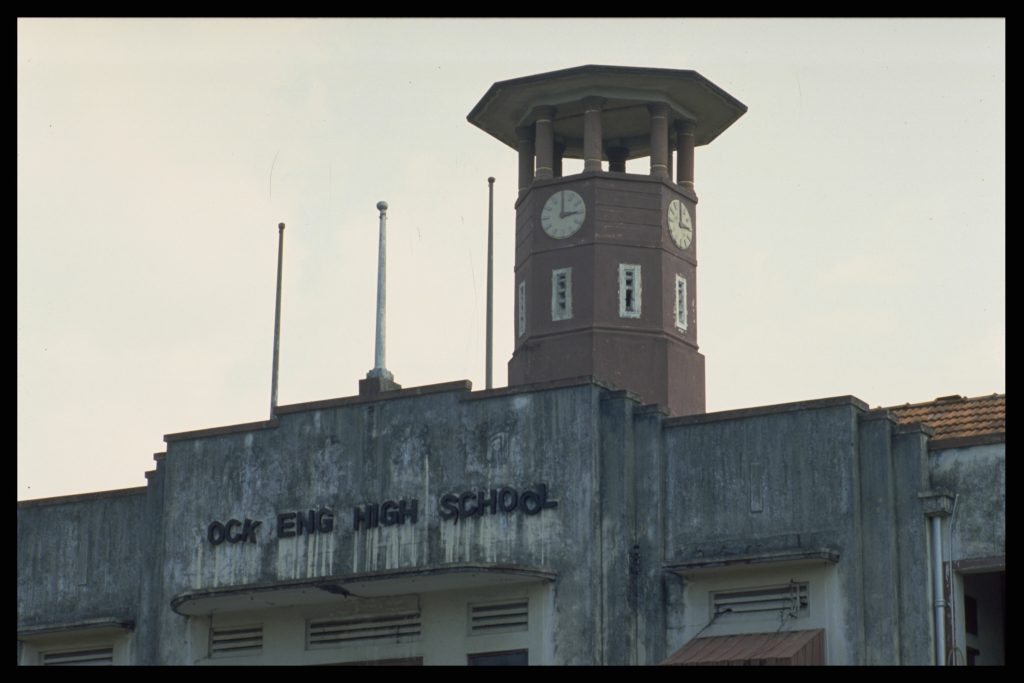
In December 1941, after the Japanese invasion, Yock Eng’s new campus was acquired by the British colonial government as the headquarters of the air raid precaution corps. This happened just three days before the scheduled opening of the new premises.
In February 1942, Singapore fell to Japanese forces and Yock Eng’s campus was occupied by Japanese soldiers. After Japan’s surrender in 1945, the school premises were used by Dutch Allied troops as military barracks. Then-Chairman of the school board Foo Chee Fong (1898–1975) repeatedly negotiated with the Commander for the Allied Powers in the Far East for the return of the campus, and the request was eventually approved. The Dutch troops vacated the premises and compensated Yock Eng about $20,000. This allowed the school to officially resume classes. At that time, the campus was left completely bare, with all documents and records lost. A provisional board of directors was set up to raise funds for the reopening of the school. In July 1946, Yock Eng resumed classes with Wong Chong Chie (birth and death years unknown) as its principal, and held an opening ceremony for the new school building on 28 November. Yock Eng regained its vitality, while Kiung Chow Hwee Kuan (now known as Hainan Hwee Kuan) and the Kheng Chiu Tin Hou Kong (a Chinese temple established by the Hainanese in 1857) also resumed their support to the school. The school also added a junior middle school section, and was renamed Yock Eng High School, with a total student enrolment of over 600. By 1947, its student population increased to 937.
In 1956, Zheng Xinrong (birth and death years unknown) was appointed principal of the school, which established a senior middle section, making it a Chinese-medium school with a complete education system catering to students from primary to senior middle school levels. From 1957, the school began receiving government grants and officially became a government-aided school.2 By 1958, student enrolment exceeded 2,400.
In 1960, during Chen Zhongyan’s (birth and death years unknown) tenure as principal, the school began planning the construction of a science centre in response to growing social demand for technical and business education. Five years later, the science centre was officially opened in conjunction with Yock Eng’s 55th anniversary celebrations.
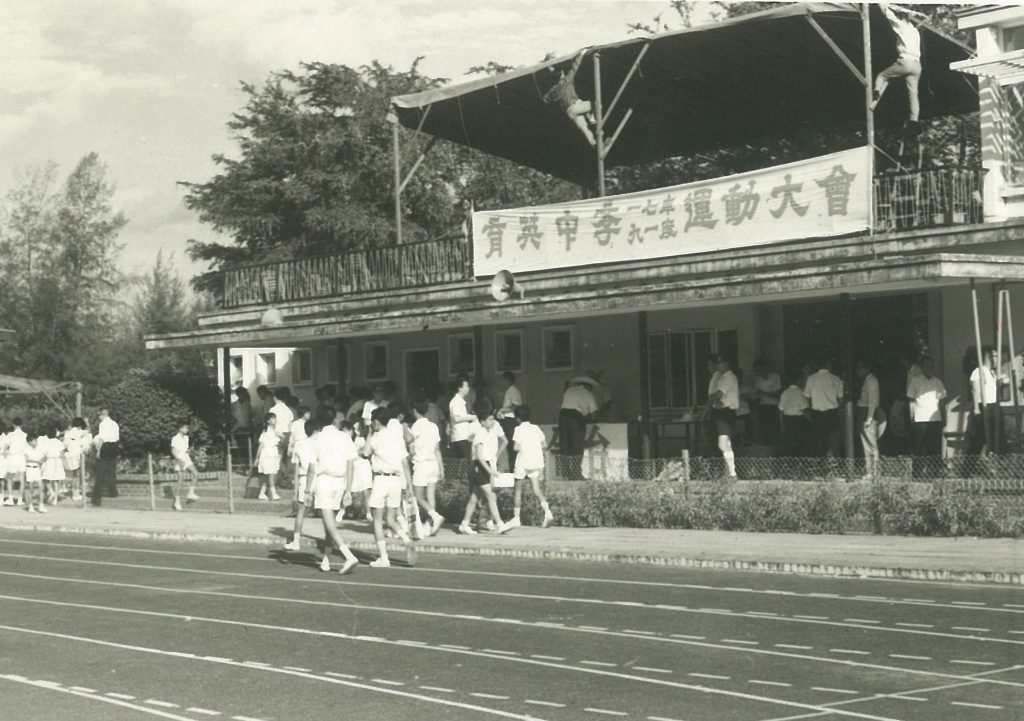
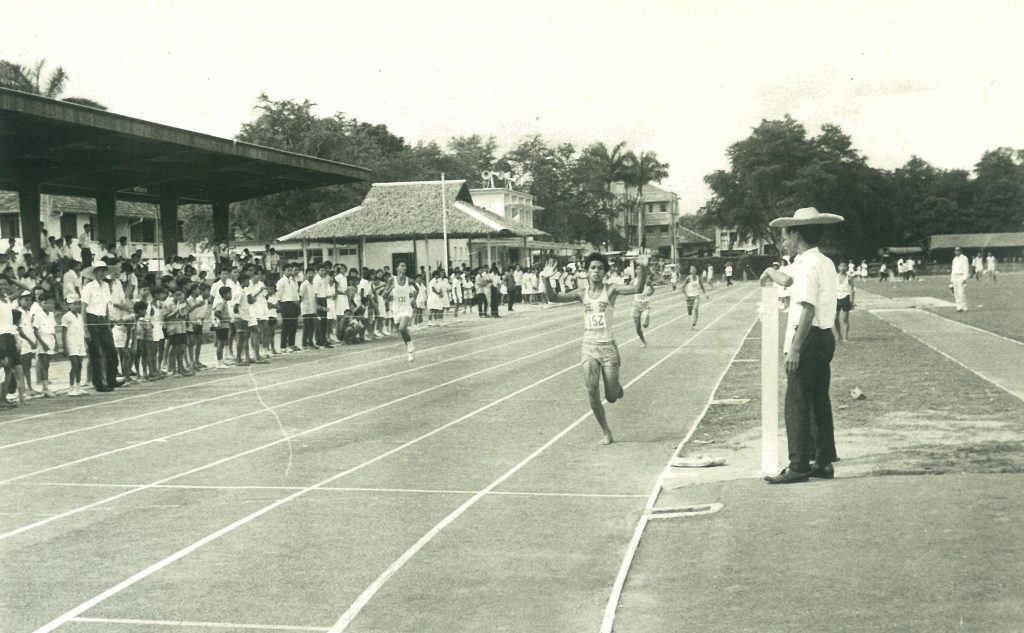
From the mid-1970s to the late 1980s, Yock Eng High School faced significant challenges in its development. In 1976, the school planned to separate its secondary and primary sections. In 1981, in face of declining enrolment, the Ministry of Education (MOE) suggested that Yock Eng relocate to densely-populated Hougang. The same year, the school admitted its first batch of English-stream students. In 1983, the primary section was discontinued due to insufficient enrolment, and its existing primary school students were transferred to Kong Hwa School.
In 1984, Yock Eng accepted MOE’s suggestion and began constructing a new campus in Hougang. In 1985, the new campus at Hougang Avenue 1 was completed and the school’s English name was changed from “Yock Eng High School” to “Yuying Secondary School”. The same year, the school began admitting non-Chinese students and offered the corresponding mother tongue programmes. In 1986, the last cohort of Chinese-stream students graduated, marking Yuying’s full transition into an English-medium school. On 13 August 1987, the school held an inauguration ceremony for the new campus. In 1994, Yuying became single-session and established its alumni association.
In 2015, Yuying’s board of directors (later renamed the School Management Committee) allocated funds to renew the school’s land use rights and extend its management contract of the school for another 30 years, maintaining Yuying’s status as a government-aided school.
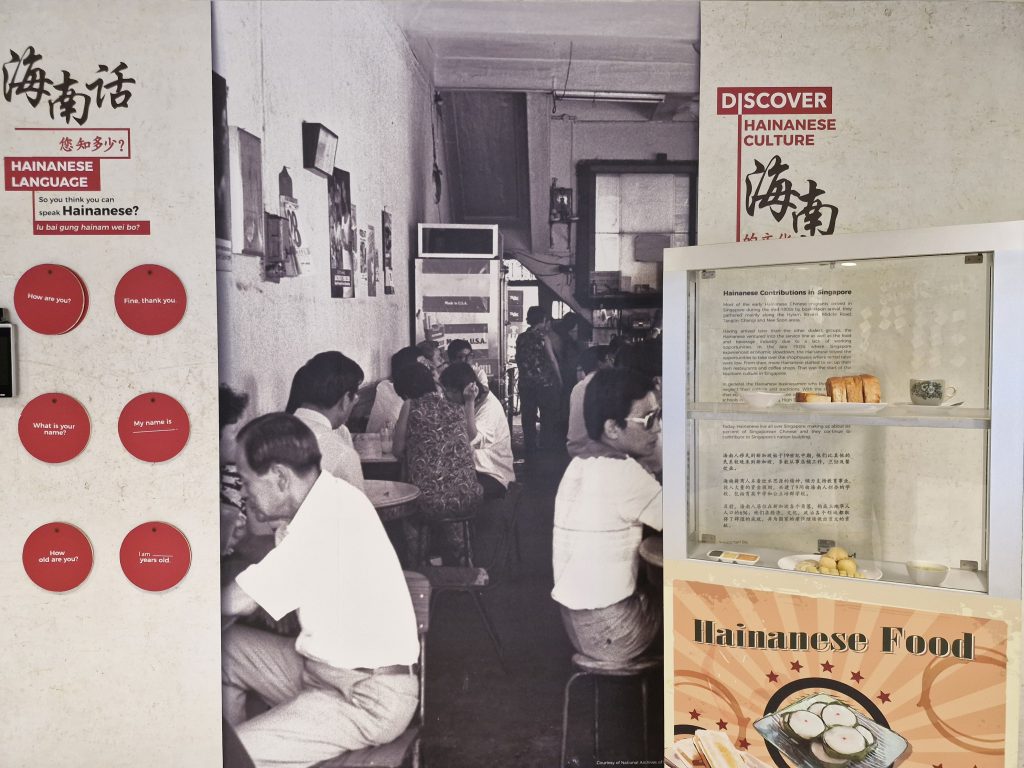
As a school founded by the Hainanese community, Yuying Secondary School demonstrates strong Hainanese culture and traditions. In November 2009, to mark the start of its centennial celebrations, the School Management Committee and alumni, together with staff and students, organised a heritage learning journey to Hainan. Since then, the school has regularly conducted exchange programs and established sister-school partnerships with several schools in Hainan to forge cultural ties. Its Heritage Gallery, opened in 2020 and refurbished in 2025, documents the arduous efforts of the Hainanese forefathers in founding and developing the school, and also showcases items with distinctive Hainanese characteristics, reflecting the virtue of remembering one’s roots. Yuying’s board of directors are all Hainanese, as are many of its alumni. To this day, the local Hainanese community continues to take pride in Yuying.
Alumni of Yuying have established themselves in various fields. They include Tay Beng Chuan, former president of the Singapore Chinese Chamber of Commerce and Industry, and renowned sculptor and recipient of the 1995 Singapore Cultural Medallion Han Sai Por.
Principals and years in service
- Wong Chong Chie (1946–1951)
- Fu Meinan (1952–1953)
- Chew Yuen Kuang (1953–1955)
- Zheng Xinrong (1956–1959)
- Chen Zhongyan (1960–1962)
- Lin Tsung (Acting) (1963)
- Wang Zuo (1963–1966)
- Gao Chongjian (1966–1967)
- Zheng Jianbo (Acting) (1967)
- Lin Tsung (1967–1971)
- He Hedong (1971–1978)
- Wong Toon Kwang /Wong Soon Kwang (1979)
- Long Peng Fei (1980)
- Wu Tat Huan (1981–1985)
- Kwek Hiok Chuang (Acting) (1985)
- Wee Kee Yin (1986–1997)
- Loke Kay Kee (1998–2002)
- Ng Ngoing Keng (2003–2008)
- Goh Aik Choon (2009–2015)
- Lo Chee Lin (2016–2022)
- Chong Jack Sheng (2023–present)
This is an edited and translated version of 育英中学. Click here to read original piece.
| 1 | The birth and death years of several Hainanese leaders are unknown. These seven individuals are recognised for their contributions to the local Hainanese community. |
| 2 | Government-aided schools are schools set up by various community organisations to cater to the educational needs of their respective communities. They receive funding from the Singapore government and maintain the same education standards as Government schools. |
Au, Yue Pak. “Yuying zhongxue jiushi zai” [90 years of Yuying Secondary School]. In Xian’ge bujue [The legacy lives on], 88– Singapore: The Youth Book Co., 2006. | |
Li, Huayan. “Huiyi muxiao: haolaiwu de yuying” [Yock Eng High School and the Hollywood Theatre]. Red Ant website, 8 January 2018. | |
Our Yuying, Our Love. Singapore: Yuying Secondary School, 2020. | |
Yock Eng High School 23rd Senior High Section Class Graduation Magazine. Singapore: Yock Eng High School, 1959. | |
Yock Eng High School 70th Anniversary Souvenir and Graduation Magazine. Singapore: Yock Eng High School, 1980. | |
“Yuying xuexiao choujian xiaoshe zhi jingguo yu fazhan” [The establishment of Yock Eng School campus]. The Singapore Hainan Hwee Kuan website. |