Zhonghua Secondary School


Zhonghua Secondary School was founded as Chung Hwa Girls’ School in 1911. More than a century ago, women generally had little opportunity to receive formal education. In 1911, when Sun Yat-sen (1866–1925) came to Singapore to promote his revolutionary ideas, he also advocated women’s education. Influenced by Sun, Reverend Tay Sek Tin (1872–1944), a supporter of Sun’s revolutionary cause, jointly founded Chung Hwa Girls’ School with Chinese community leaders including Phua Choon Heang (birth and death years unknown). The school officially opened on 15 September 1911, and later became Chung Hwa Girls’ High School.
Over the years, Zhonghua Secondary School has upheld its school motto of li yi lian chi (礼义廉耻), which is translated in English as “Courteous, Righteous, Edified and Dignified”. The English version was introduced when the school began admitting non-Chinese students. The original school song, written and composed by Li Jianong (birth and death years unknown), also embodies the spirit of the school motto. After the school was converted into a government-run school, it adopted a bilingual version of the school song which retained the original Chinese lyrics.
School motto
Courteous, Righteous, Edified and Dignified
Brief history
In its early years, Chung Hwa Girls’ School offered only primary education for Chinese girls. As it grew in scale, its curriculum expanded to include teacher training, and also added secondary and pre-university sections.
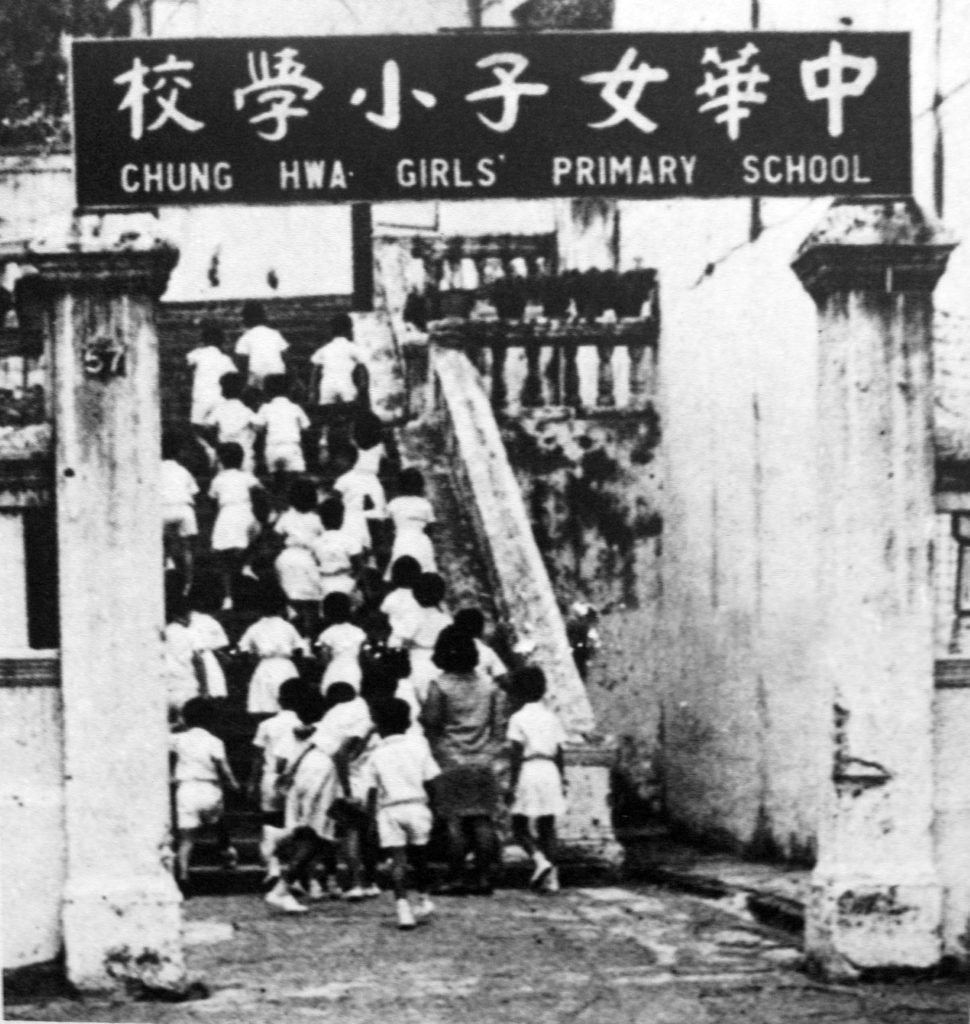
The school was initially set up in Mohamed Sultan Road with just over 10 students. In 1925, to meet the growing demand for education, the school moved into a building at 1 Tank Road, donated by Phua Choon Yeang’s uncle, Phua Choon Yang (1850–1912). Yu Thai Chong (birth and death years unknown), a female member of the United Chinese Library, served as the school principal. To provide students with a more spacious learning environment, the board of directors actively raised funds and later relocated the primary school section to the former site of The Chinese High School in Niven Road. From then on, the school developed rapidly and student numbers steadily grew to over 100.
In the mid-1930s, Chung Hwa started teacher training courses to nurture local educators. In 1934, the school introduced a simplified Normal Training Course and saw its first batch of graduates in 1941. During this period, the school flourished, with student numbers doubling from over 400 to more than 800. However, classes were suspended with the outbreak of World War II and the fall of Singapore in 1942.
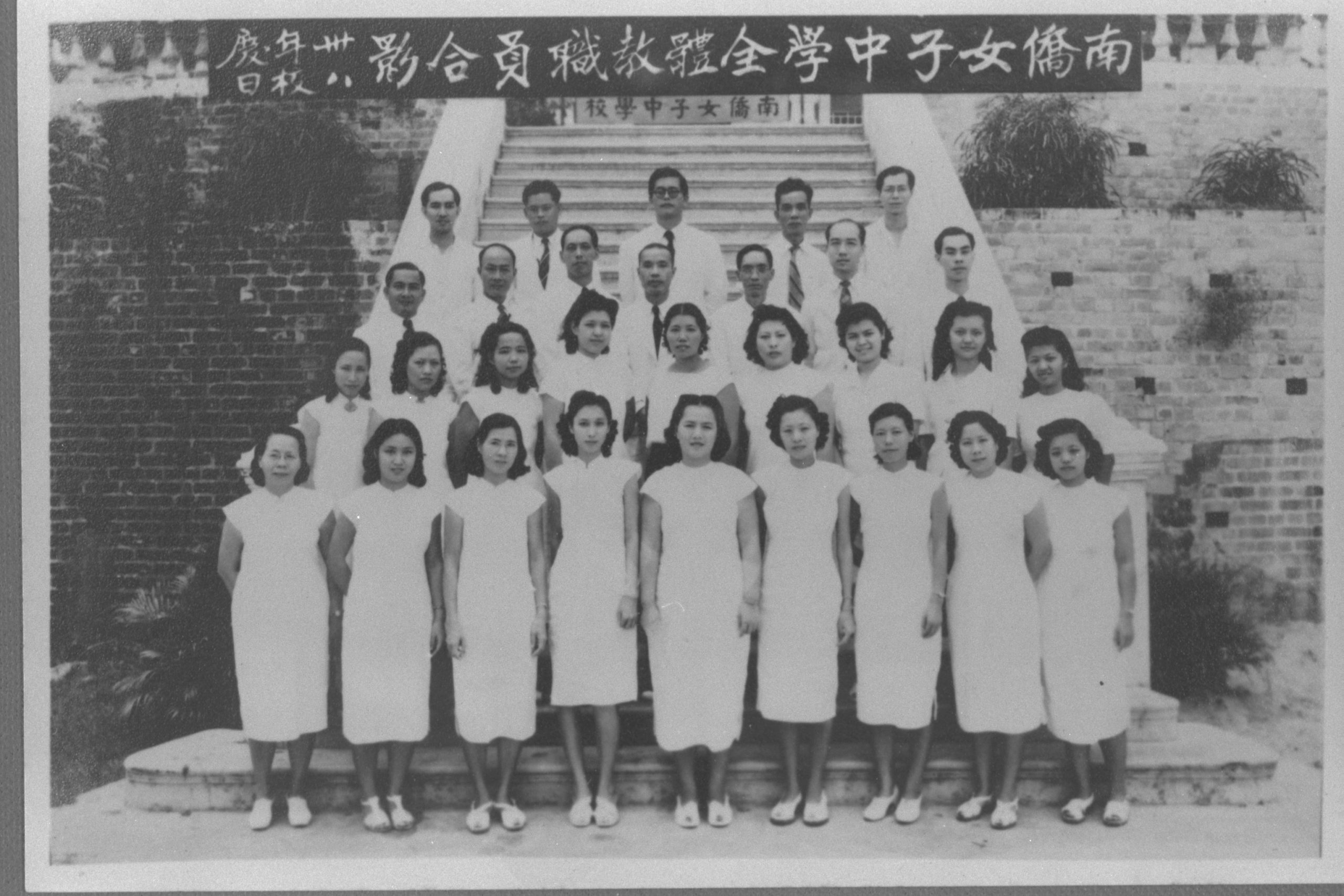
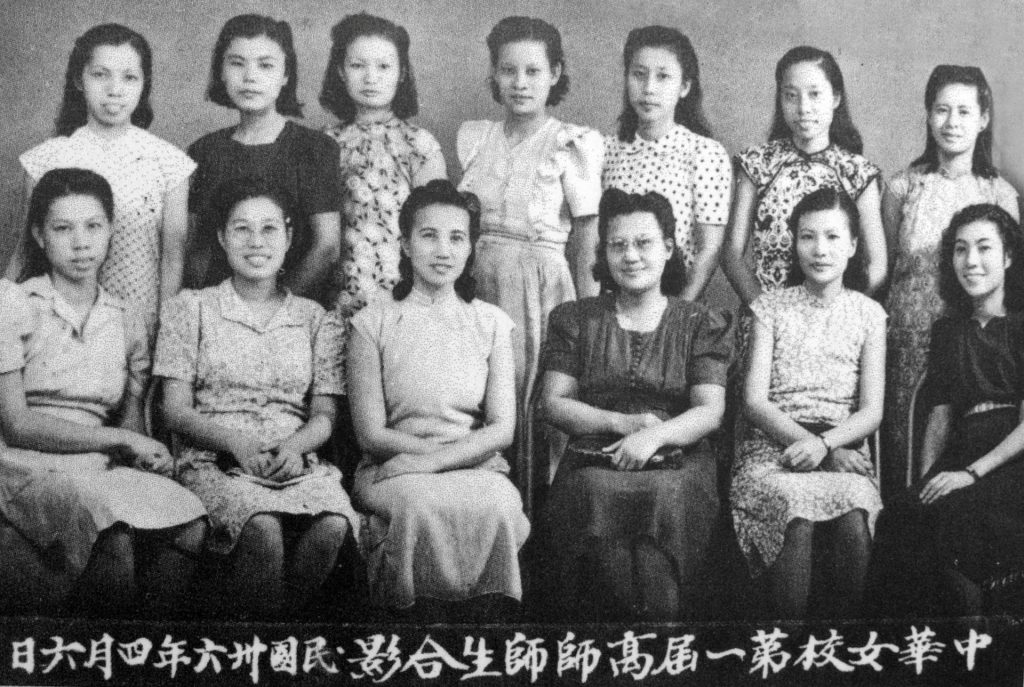
During the Japanese Occupation, Chung Hwa’s premises were bombed. After the war, the school was unable to resume classes, affecting students enrolled in its simplified Normal Training Course. These students had sat for examinations before the war, but they still needed another six months of study before graduation. To ensure that they could graduate, then-principal Wang Yuchong (1911–1983) sought assistance from Nan Chiau Girls’ High School for the students to attend classes there. The request was approved by Tan Kah Kee (1874–1961), then-president of the Hokkien Huay Kuan. After refurbishment, the school resumed classes in May 1947 with the introduction of two teacher training courses. The first post-war batch of trainees of the Normal Training Course graduated and many of them chose to stay on at the school or teach there, reflecting the cohesion and sense of belonging among the students.
In 1949, the school held a sports performance at the Gay World Stadium and raised $23,100 for the expansion of its campus.
In the early 1950s, amidst Singapore’s political and social unrest, the school was affected by many incidents of identity cards being snatched and burned. At that time, the school was in the midst of constructing its new premises and despite the difficult circumstances, Principal Wang persevered and only stepped down after the new campus was completed.
In 1950, trainees from the second batch of the Normal Training Course graduated. However, with the setting up of the Teachers’ Training College between 1950 and 1951 by the government, teacher training courses at all Chinese-medium schools, including Chung Hwa, were discontinued.
In 1951, the new campus at Bartley Road was completed and served as the main school, while the primary section remained at Niven Road. In 1954, the school was renamed Chung Hwa Girls’ Middle School and middle school classes were introduced in place of the training courses. Senior middle section was also introduced in the same year. In 1957, the school became a government-aided school.1 In 1958, the three-year junior middle school programme was changed to the four-year system, while the three-year senior middle programme was replaced by the two-year pre-university system in 1962. From then on, like other Chinese-medium secondary schools, Chung Hwa transitioned from a 3-3 system (three years of junior-middle school and three years of senior-middle school) to the 4-2 system (four years of secondary followed by two years of pre-university).
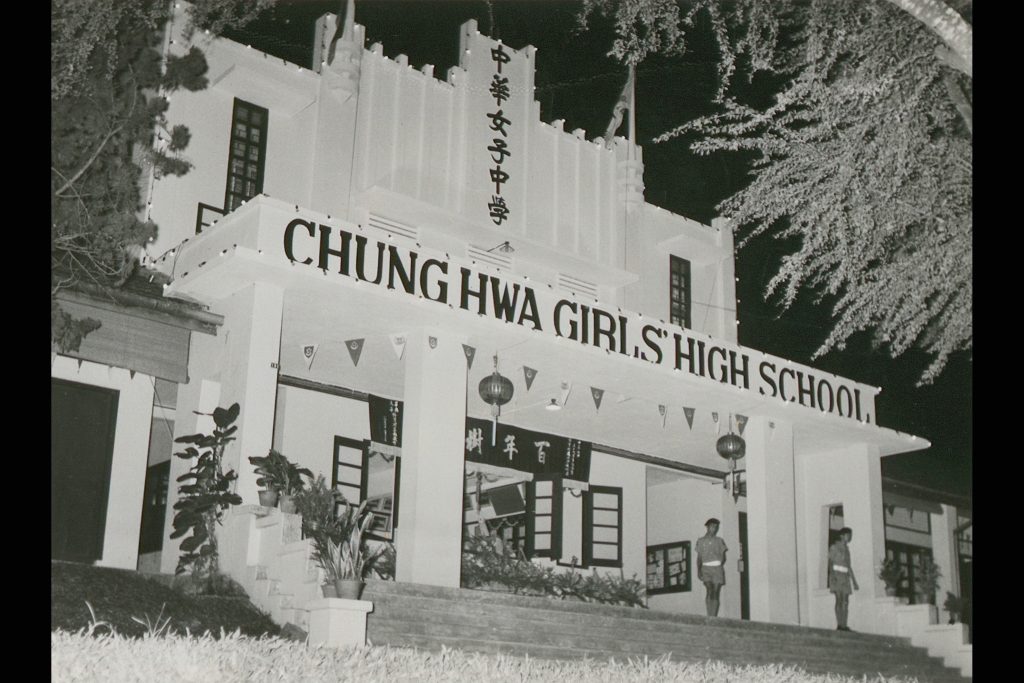
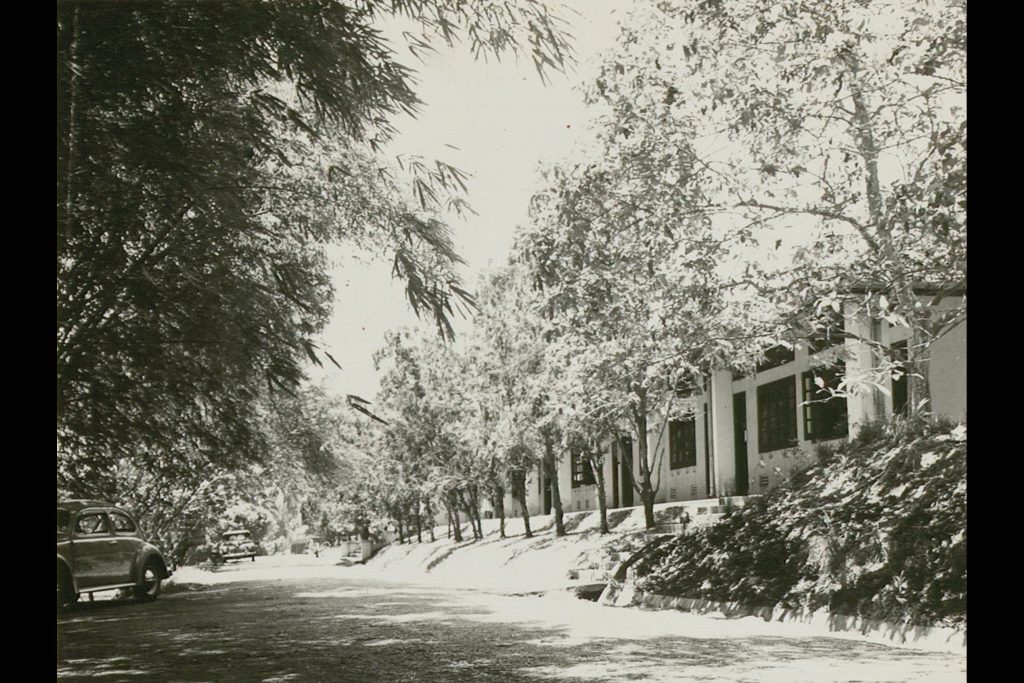
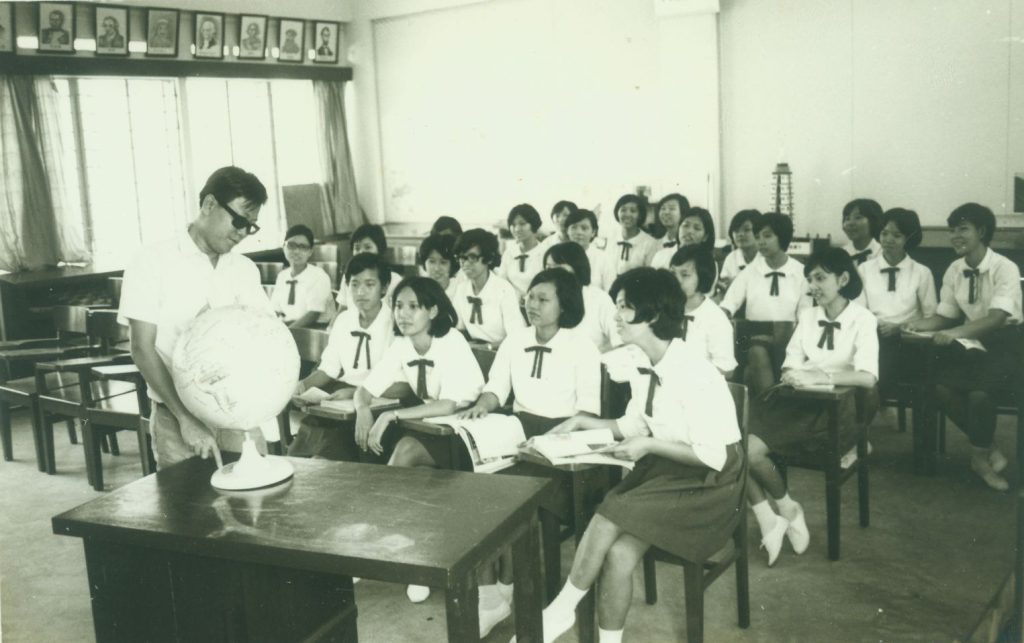
In 1962, the school accepted the Ministry of Education’s recommendation to run the primary and secondary schools separately with each having its own principal, while keeping to one board of directors. Feng Dongai (1919–2022) was appointed principal of the primary school section, while Sheng Peck Choo (1912–2005) helmed Chung Hwa Girls’ Middle School.
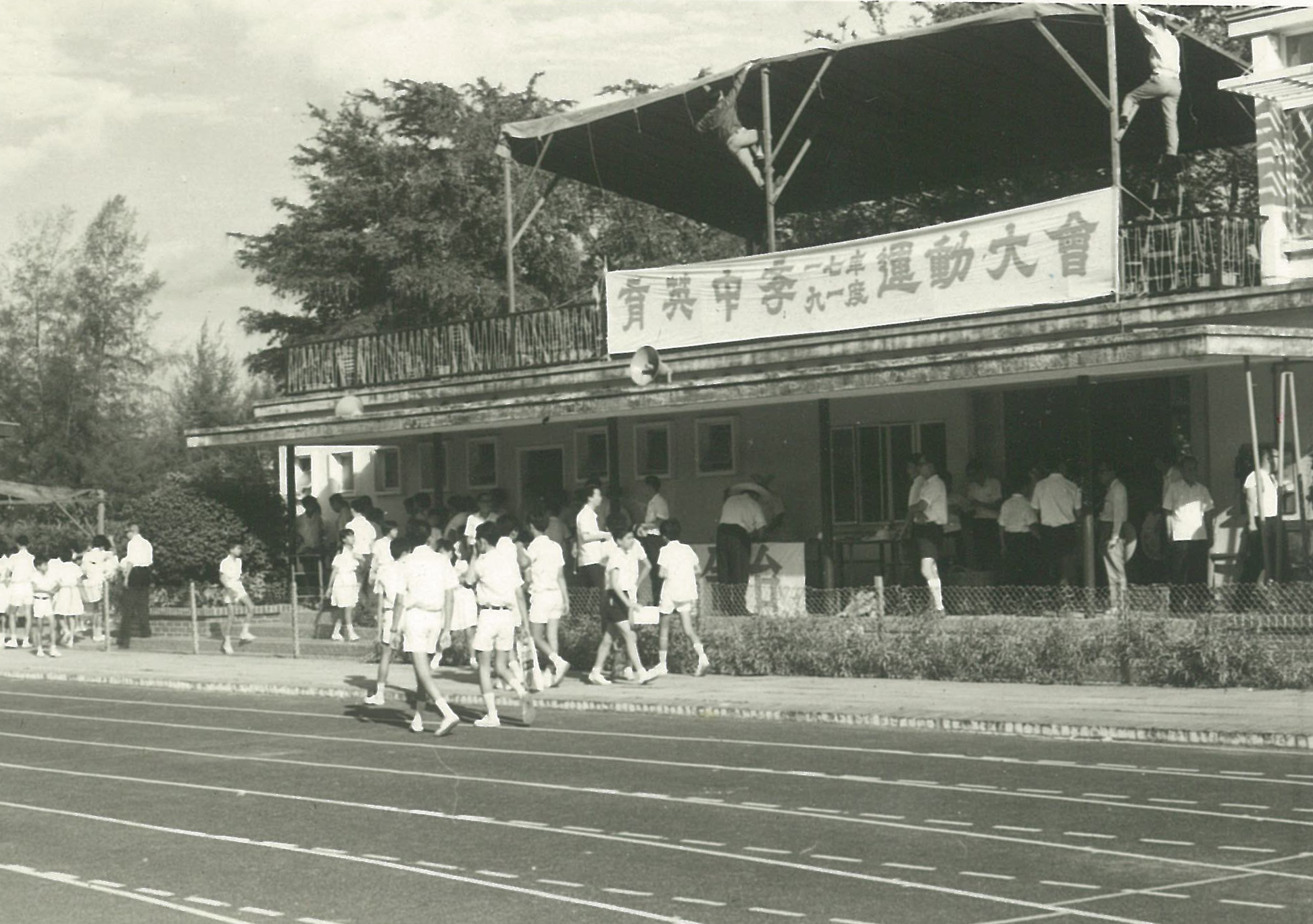
In 1969, the school celebrated the completion of a new teaching block. The same year, Chung Hwa became the first girls’ school in Singapore to introduce both technical and home economics education. Towards the late 1970s, the school began to show formidable strength in sports, with its basketball team winning 21 inter-school championships from 1978 to 1985 and producing three national players.
As early as 1978 to 1979, when Sim Miaw Chan was serving as the school principal, Chung Hwa began strengthening the teaching of English to improve students’ proficiency in the language. In 1980, in line with reforms to the education system, the school introduced English-stream classes and began admitting non-Chinese students. In 1987, Chinese-stream classes were phased out.
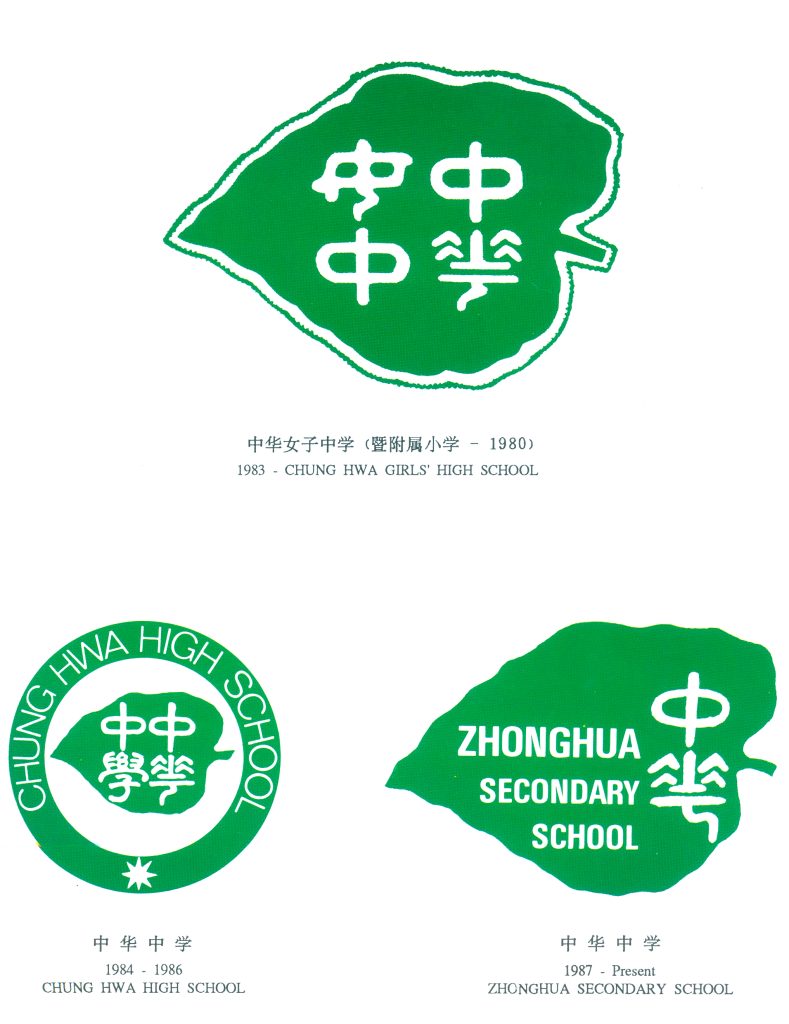
In 1984, the school officially became a government-run school and began admitting male students, and was renamed Chung Hwa High School. During this period, residents at Upper Paya Lebar, which were the main source of its students, moved out of the area, resulting in a severe shortage of students and the school had to look for a new site.
In 1987, the school relocated to Serangoon Avenue 4 to serve a wider community. Subsequently, the school changed its name to Zhonghua Secondary School, and modified its crest to reflect the change.
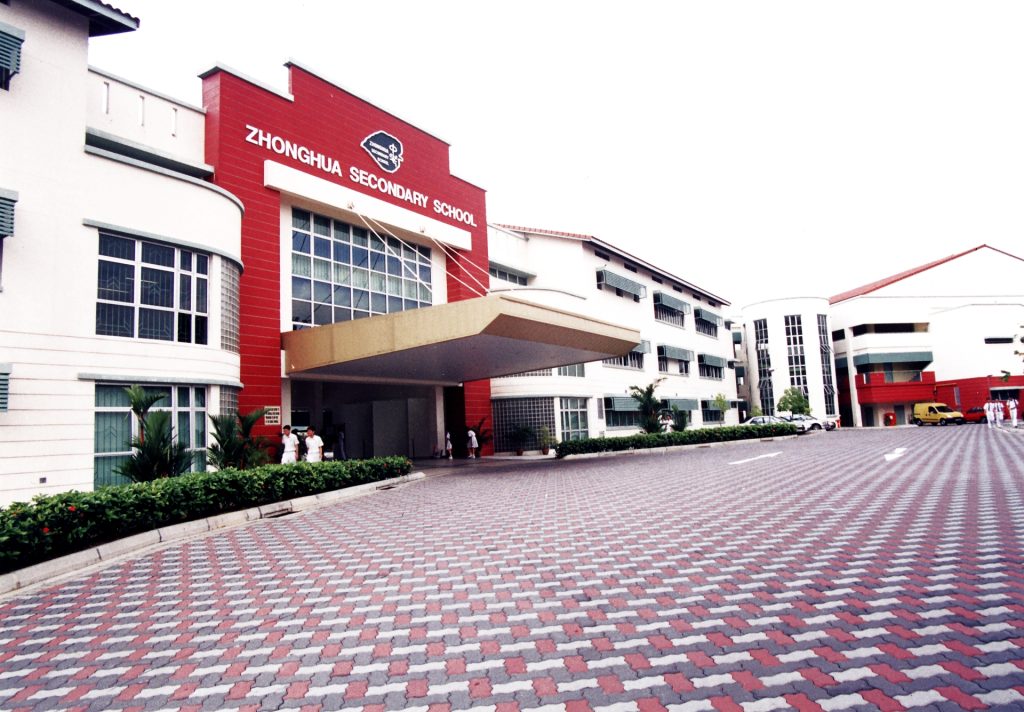
In 1996, Zhonghua Secondary School became an autonomous school and offered a wider range of programmes.2 In December 1999, to meet the needs of education in the 21st century and expand its facilities, the school relocated from Serangoon Avenue 4 to its current campus at Serangoon Avenue 3. Officially opened on 8 September 2001 to the theme “Inheriting from our past, Nurturing the future”, Zhonghua emphasised the importance of traditions and innovation to lay the foundation for students to rise to challenges in the new era.
In 2009, Zhonghua became the first co-educational autonomous secondary school to offer the Art Elective Programme, an art curriculum that focuses on new media and design.
In 2011, Zhonghua celebrated its 100th anniversary in an event graced by then-Prime Minister Lee Hsien Loong, who praised the school for its ability to evolve over time and stay relevant for the community. In 2012, Zhonghua launched a mass Physical Education programme for all Secondary 1 students to learn basketball and volleyball, besides providing them with a structured grounding in various sports skills.
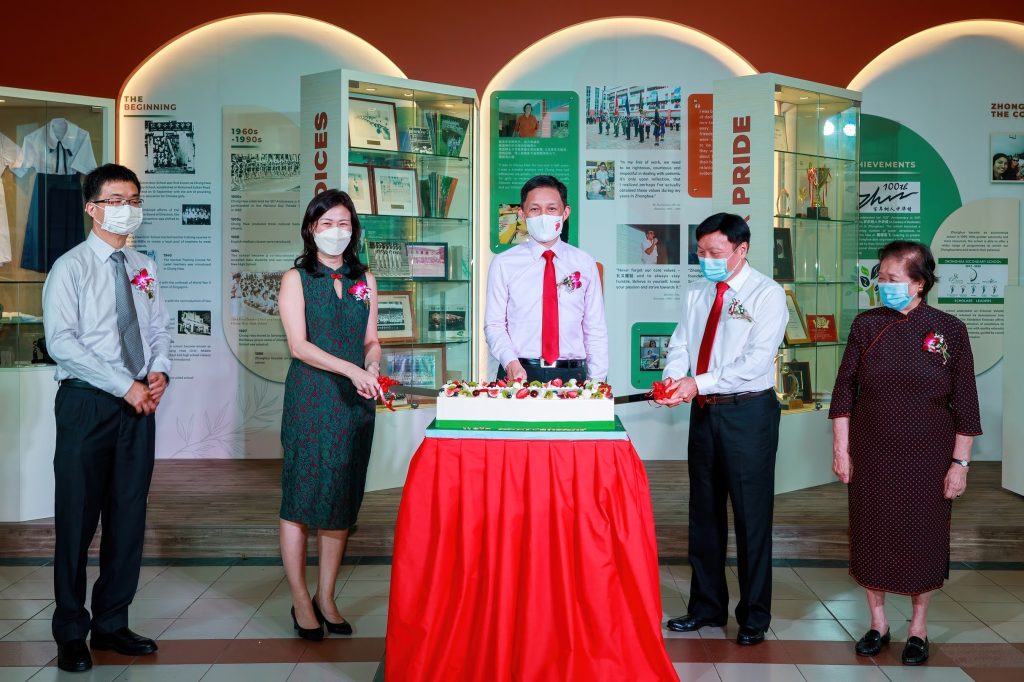
In 2021, Zhonghua celebrated its 110th anniversary amid the pandemic. The celebrations were held online, during which the guest of honour, then-Education Minister Chan Chun Sing, officially unveiled the school’s Heritage Gallery.
Alumni of Zhonghua have made their contributions in various fields, particularly in business, academia and the media.
Principals and years in service
- Yu Thai Chong (1911–1919)
- Wen Caiyun (1920–1924)
- Ruan Qiao (1925–1933)
- Liu Zhiling (1934–1939)
- Wang Yuchong (1939–1951)
- Huang Siou Chyn (1952–1954)
- Sheng Peck Choo (1954–1977)
- Sim Miaw Chan (1978–1985)
- Ng-Gan Lay Choo (1986–1995)
- Chua Yen Ching (1995–1998)
- Chang Swee Tong (1998–2002)
- Tan Hwee Pin (2002–2007)
- Dolly Ong (2007–2013)
- Loh Leong Beng (2013–2019)
- Cindy Low Shiok Cheng (2019–2024)
- Tan Kim Koon (2024–present)
This is an edited and translated version of 中华中学. Click here to read original piece.
| 1 | Government-aided schools are schools set up by various community organisations to cater to the educational needs of their respective communities. They receive funding from the Singapore government and maintain the same education standards as Government schools. |
| 2 | Established in 1994, autonomous schools follow the Ministry of Education syllabus, while providing a wider range of programmes than regular government schools, to enhance students’ learning experience. |
Au, Yue Pak. “Zhonghua zhongxue liang qian xiaozhang, reai xuexiao qing tong munü” [Two former principals, one heart for Zhonghua]. In Xian’ge bujue [The legacy lives on], 119–122. Singapore: The Youth Book Co., 2006. | |
Chung Hwa Girls’ High School 60th Anniversary Souvenir Magazine: 1911–1971. Singapore: Chung Hwa Girls’ High School, 1972. | |
Souvenir Programme Commemorating the Official Opening of the New School Buildings and the Home Economics Unit in Conjunction with the School’s 66th Anniversary. Singapore: Chung Hwa Girls’ High School, 1977. | |
“Zhonghua nüzi zhongxue, baiyi baiqun, pei yi pian lüye xiaohui” [Chung Hwa Girls’ School: white uniform featuring a green leaf on the school crest]. Lianhe Zaobao, 3 June 2017. | |
Zhonghua Secondary School 80th Anniversary Souvenir Magazine (1911–1991). Singapore: Chung Hwa Girls’ High School, 1991. | |
Zhonghua Secondary School: Celebrating our 90th anniversary. Singapore: Zhonghua Secondary School, 2001. | |
Zhonghua Secondary School 100th anniversary: A century of dedication to education. Singapore: Zhonghua Secondary School, 2011. |