‘War of words’ on television: Singapore’s televised Mandarin debates (1968–2011)


On 29 August 1993 at 8.30pm, the grand final of the first International Varsity Debate, jointly organised by the Singapore Broadcasting Corporation (SBC) and China Central Television (CCTV), aired on television in Singapore over Channel 12. The topic up for debate was “Humans are kind by nature”, with the National Taiwan University arguing for the motion and Fudan University against it. The panel of judges comprised Chinese wuxia (martial arts) novelist Jin Yong (1924–2018), Confucian scholar Tu Weiming, local academics Wu Teh Yao (1915–1994) and Eddie Kuo, and lawyer Hee Theng Fong. The guest of honour was then-Deputy Prime Minister Lee Hsien Loong. The Fudan team was coached by modern Chinese philosophy scholar Yu Wujin (1948–2014) while their adviser was Wang Huning, who later went on to become one of the top leaders of the Chinese Communist Party. The debate, with brilliant performances from the two teams and a strong lineup of judges, was hailed as the most star-studded debate in the history of the Chinese, as well as a highlight of Singapore’s televised Mandarin debates.
‘Youth Forum’ and the first televised debate in Mandarin
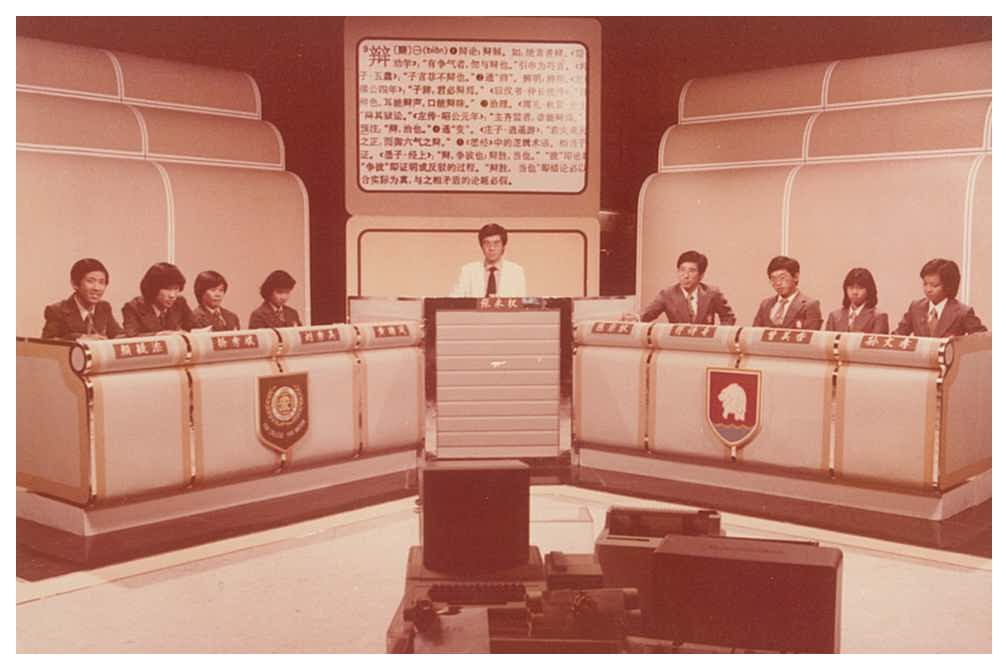
The history of Singapore’s televised Mandarin debates can be traced back to 19 May 1968. At 6.50pm, Channel 5 of Radio and Television Singapore aired Singapore’s first ever televised Mandarin debate as part of the programme titled “Youth Forum”. The motion debated was “Television in Singapore hindered education”, with Chinese High School for the motion and Catholic High School against it. The producer for that debate was Kuo Pao Kun (1939–2002), who later went on to become the doyen of local theatre. The outcome of the debate was surprisingly a draw, with one side winning on content and the other on technique. As the debate had to produce a winner, the two teams had to compete again at a later date. This debate was the first, and also the last, in the history of Singapore’s televised debates that ended in a draw.
Despite the unprecedented draw in the first debate, the broadcast of eight debates on “Youth Forum” from May to July 1968, from the preliminary rounds to the grand final, drew much reaction from the local Chinese community. Not only did “newspapers and magazines write about the debates, many viewers and listeners also wrote to the newspapers to express their views”. Riding on this wave, the television station introduced the “Youth Forum” inter-varsity debate from September to November the same year. Four teams participated in the debate, namely the University of Singapore, Nanyang University, Singapore Technical College and Teachers’ Training College (TTC). The debate, which ended with TTC being crowned the champion, can be regarded as the predecessor of inter-varsity debates.
Inter-varsity debates become regular programmes
In 1970, the television station again hosted debates at the tertiary level. The five key tertiary institutions in Singapore at the time took part in the debate, with the University of Singapore, Nanyang University and TCC each sending two teams, and Ngee Ann Technical College and Singapore Technical College each fielding one team, bringing the total number of participating teams to eight. In 1973, the Intervarsity Debate was officially launched. There were seven participating teams that year, one each from the University of Singapore, Singapore Technical College and Ngee Ann Technical College, and two each from Nanyang University and the National Institute of Education (NIE) (its predecessor being TCC). The debate ended with the blue team from NIE beating its red team to win the championship. After that year, the Intervarsity Debate became a regular programme produced every two years.
In 1972, the television station began to invite “pre-university students of Chinese-medium secondary schools to participate in the debate” as part of the “Student Forum” programme, “in the hope that this would motivate students to pay attention to current affairs and issues of immediate concern in Singapore, improve their competence and ability to express themselves, and allow them to bond with one another”. A total of eight teams participated in this round of televised debates, including Holy Innocents’ High School, Chinese High School, CHIJ St. Nicholas Girls’ School, Dunman High School, Thomson Secondary School, Chung Cheng High School, National Junior College and Nan Chiau Girls’ High School.
In 1974, on the foundation of the “Student Forum” programme, the television station jointly organised the pre-university inter-school Mandarin debate with the Ministry of Education. A total of 23 schools, including those offering Chinese pre-university education, junior colleges and the Adult Education Board took part in the competition. Eight schools made it to quarter-finals, namely Tuan Mong High School, Nan Chiau Girls’ School, Hwa Chong Junior College, Catholic High School, Dunman High School, National Junior College, Chinese High School and Whampoa Secondary School. From then on, the inter-school debate also became a biennial programme.
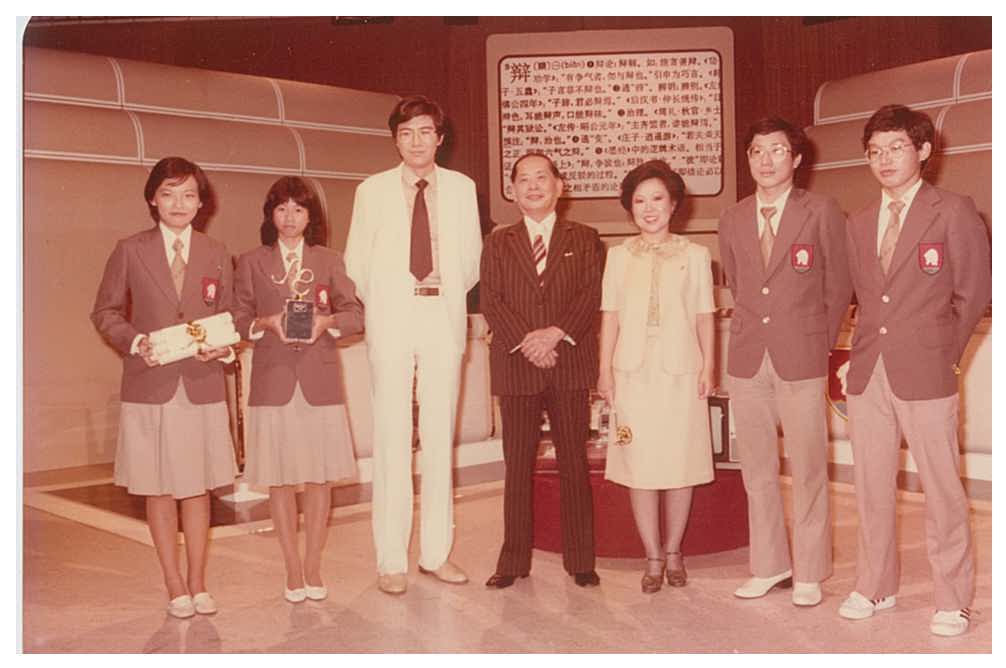
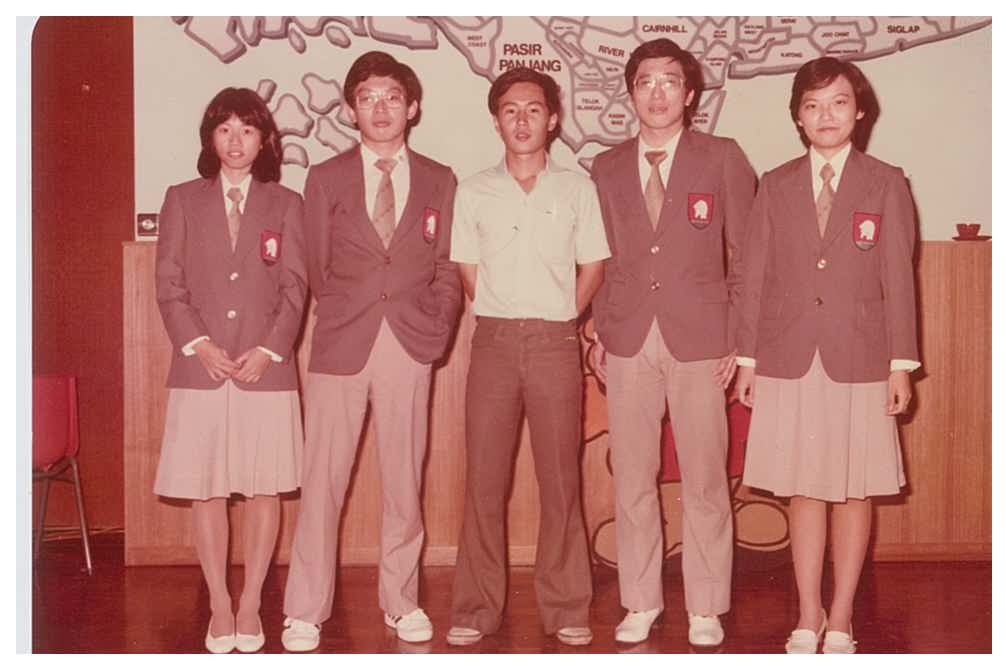
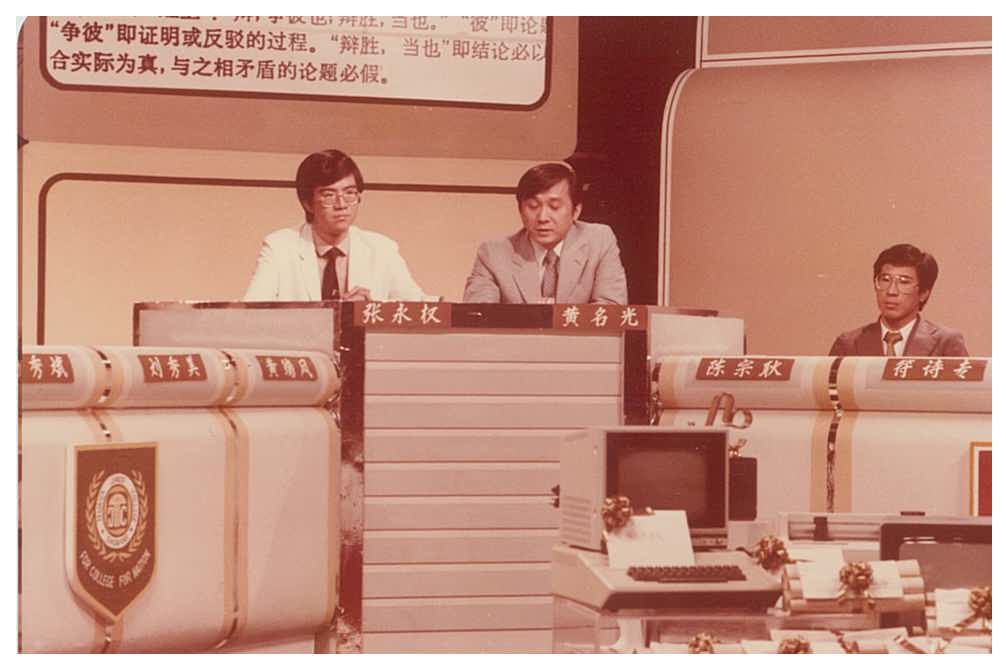
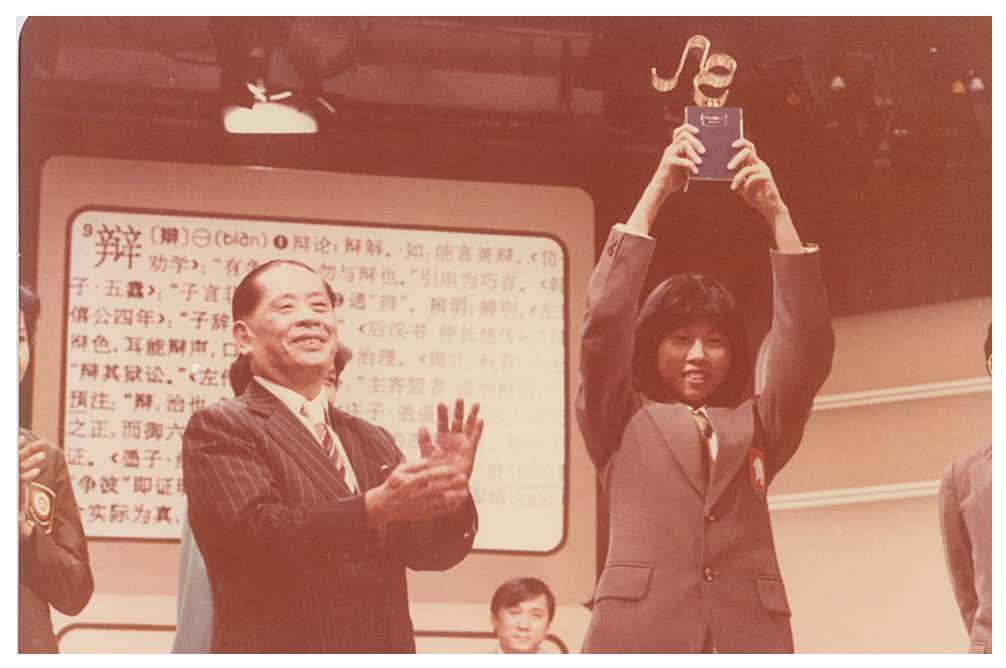
Cultural practitioners who were former debaters
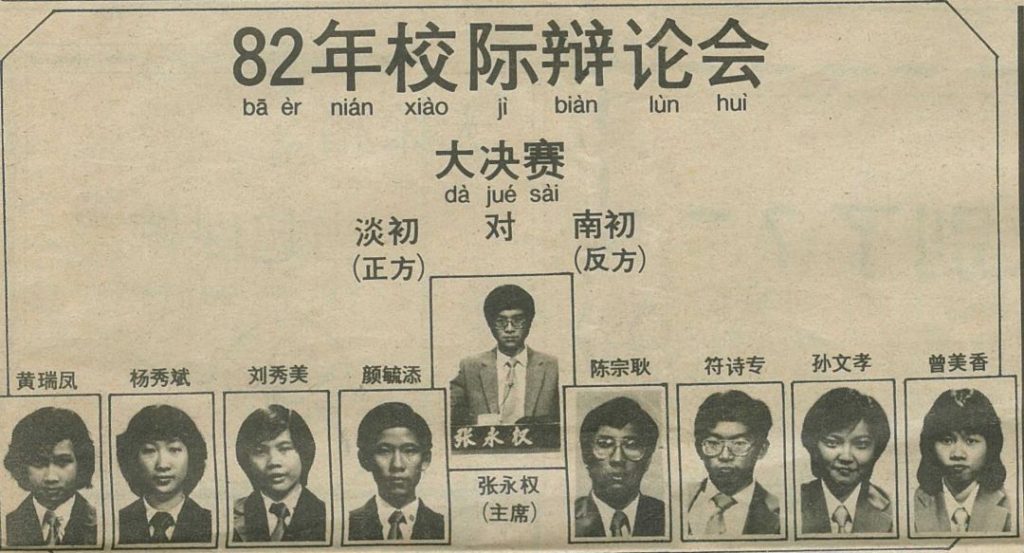
From 1973 to 1991, the inter-varsity debate and the inter-school debate were held alternately, becoming a must-watch Chinese cultural programme on television every year. Many of the eloquent debaters on the competition went on to become the mainstay of the cultural circle of the local Chinese community. They include Choo Thiam Siew (secondary school, 1968), Perng Peck Seng (secondary school, 1968), Chan Yan Chong (tertiary, 1973), Toh Lam Huat (tertiary, 1975), Chow Lin Meow (tertiary, 1975), Wang Lian San (tertiary, 1975), Foo Suan Fong (inter-school, 1978; tertiary, 1985), Neo Peng Fu (inter-school, 1980), Lim Sau Hoong (tertiary, 1983), Yeo Guat Kwang (tertiary, 1985), Ong Chang Woei (inter-school, 1988) and Tan Chee Lay (inter-school, 1991).
In the late 1980s and early 1990s, the two debate programmes were discontinued due to changes in the local language education landscape. The television station stopped organising and airing the inter-varsity debate and inter-school debate in 1989 and 1991 respectively. As a result, the hub of televised Mandarin debate shifted from Singapore to other countries.
The birth of international inter-varsity debate
In addition to the two debate programmes, the television station collaborated with Sin Chew Jit Poh as early as 1971 to hold inter-varsity debates for students outside of Singapore, organising debates for tertiary students in Singapore, Malaysia and Hong Kong. This series ceased after the third edition. Thirteen years later in 1984, SBC again kick started regional inter-varsity debates by hosting the Asian Inter-Varsity Debating Championship. In 1993, the debate was changed to a biennial event hosted by SBC and CCTV, with the venue alternating between Singapore and China. In 2007, this debate was renamed the International Varsity Debate. However, it was also discontinued after the 10th edition held in Qingdao in 2011.
Spanning more than 40 years from 1968 to 2011, televised Mandarin debates started in Singapore and also made a mark overseas, becoming a cultural soft power of Singapore in the early days. For the local Chinese community and Chinese-medium education, the heyday of tertiary, secondary and inter-school debates were also the glorious years when local Chinese education was full of vigour.
This is an edited and translated version of 电视里的口舌之争:新加坡华语电视辩论会(1968-2011). Click here to read original piece.
Choo, Lian Liang. Bianlun naxie shier [Things about debate]. Lianhe Zaobao, 19 November 2010. | |
Kuo, Eddie. Xinwen, chuanbo, meitiren [Journalism, communication and media professional]. In Xinglin tingyu: Guo Zhenyu xueshu suibi [Eddie Kuo’s academic reflections], 16–24. Singapore: Global Publishing, 2020. | |
Tang, Quin Choy. Naxienian de bianlunhui [Those years of debates]. In Huiwang jialigu shan [Reflections from Caldecott Hill], edited by Philip Tay Joo Thong, Choo Lian Liang et al., 127–134. Singapore: Global Publishing, 2021. | |
Tay, Philip Joo Thong, Choo, Lian Liang et al., eds. Huiwang jialigu shan [Reflections from Caldecott Hill]. Singapore: Global Publishing, 2021. |