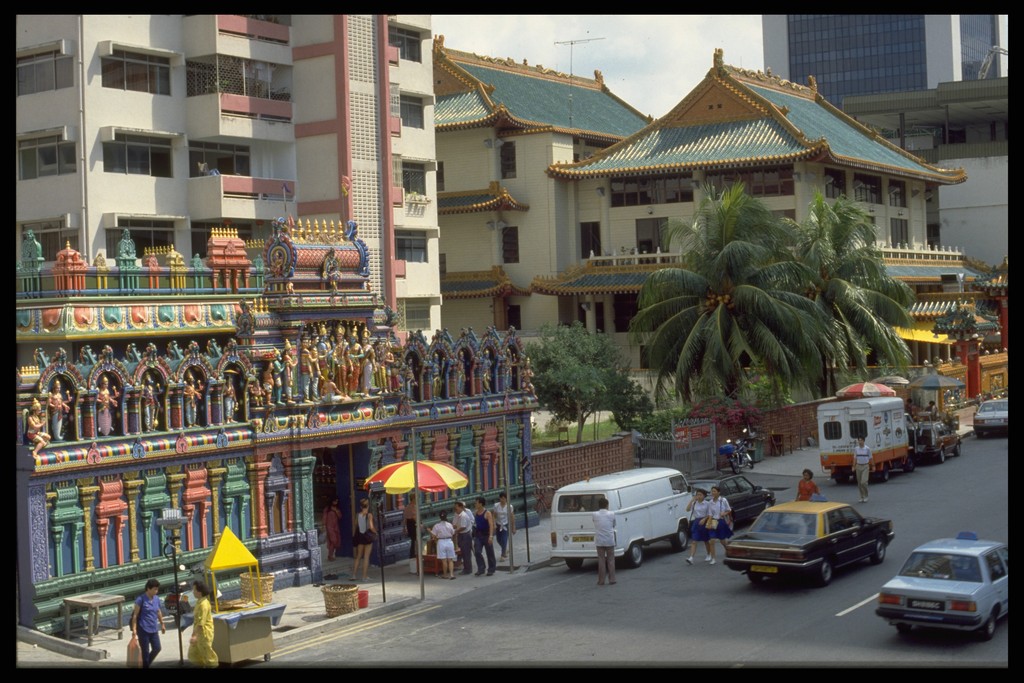
Grand Universal Salvation Ritual at Peck San Theng


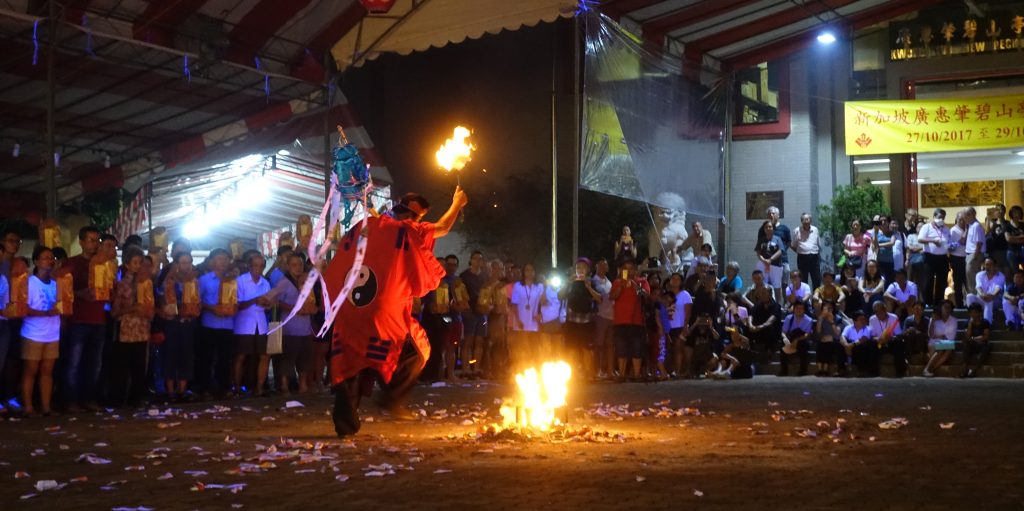
In October 2023, on the eve of Chong Yang Festival, Kwong Wai Siew Peck San Theng in Singapore held a three-day, four-night Grand Universal Salvation Ritual. The ritual is practised by the Chinese community to offer prayers for the deceased and redeem lost souls. While similar to the Zhong Yuan Festival (Hungry Ghost Festival), the Grand Universal Salvation Ritual is not held annually.
In the lunar seventh month of 1922, Peck San Theng held a seven-day-and-night Grand Universal Salvation Ritual.1 Originating in southern China, this was the first ceremonial event of its kind conducted by the Chinese in Southeast Asia. Until 2023, Peck San Theng had held 15 Grand Universal Salvation Rituals irregularly (see Table 1). Except for those conducted in 1911, 1964 and 1976, the ceremonies lasted three days and four nights. Apart from engaging Buddhist monks, Taoist priests and nuns (bhikkhunis) to recite scriptures, Peck San Theng has also invited Hakka zhaigu (vegetarian nuns) to perform the rituals since 2017.2
Table 1: Years and intervals of salvation rituals held by Peck San Theng
| Year held | Interval (years) | Year held | Interval (years) | Year held | Interval (years) |
| 1922* | 0 | 1974# | 3 | 1998 | 11 |
| 1943 | 21 | 1976* | 2 | 2003 | 5 |
| 1946 | 3 | 1978# | 2 | 2007 | 4 |
| 1952 | 6 | 1980 | 2 | 2012 | 5 |
| 1958 | 6 | 1982# | 2 | 2017 | 5 |
| 1964* | 6 | 1985 | 3 | 2023 | 6 |
| 1971# | 7 | 1987# | 2 |
# Small-scale one-day, two-night salvation rituals
* The ceremonial event lasted seven days and eight nights. All others being three-day, four-night rituals.
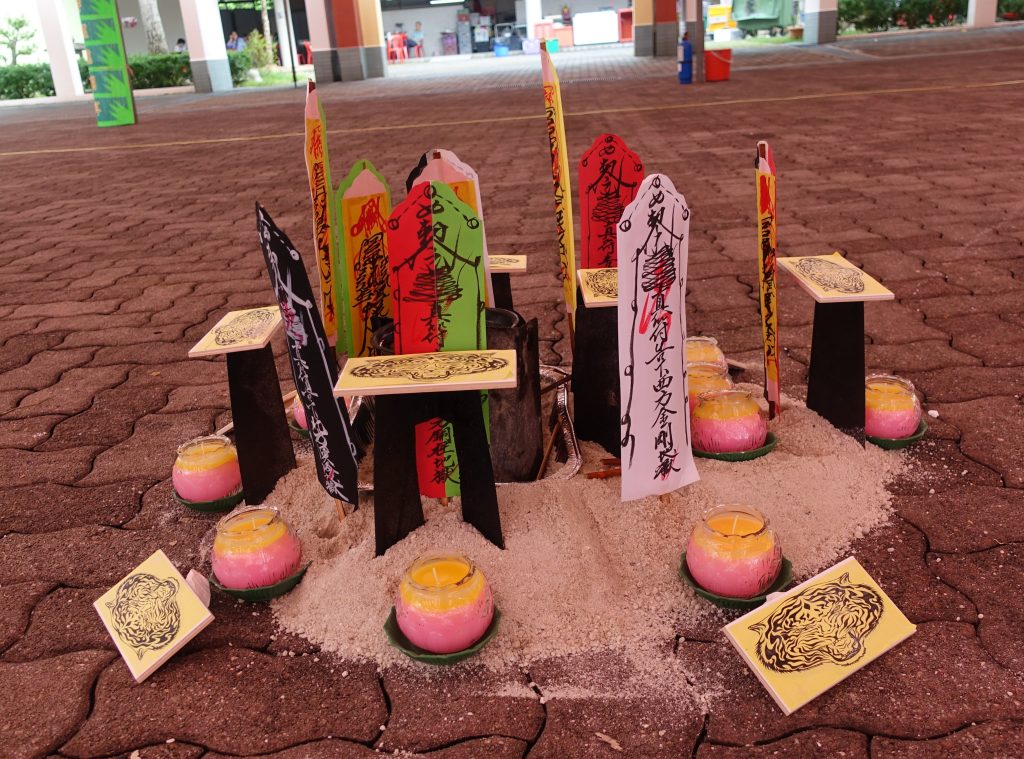
By performing redemptive rites, the Grand Universal Salvation Ritual seeks to prevent ancestors who died in foreign lands (outside China) from becoming wandering spirits. The “principal offering” tablets (Editor’s note: the main ancestral tablet for worship) used in the ceremony includes the collective ancestors from the Guangzhou, Huizhou and Zhaoqing prefectures (such as tablets of ancestors from these regions in Guangdong, China), collective ancestors of affiliated associations (such as tablets of clan members of the Nam Sun Wui Kun), as well as tablets for universal salvation (such as hungry wandering spirits, unattended souls, and fallen martyrs from the army, navy and air force). The other tablets, which form the majority, are “auxiliary offering” tablets of ancestors honoured by their descendants.
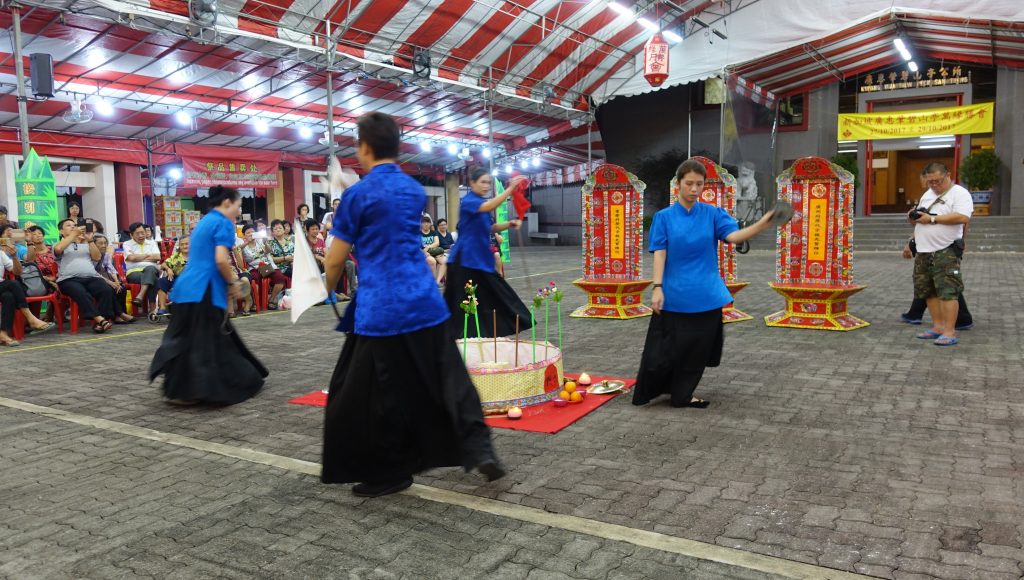
Filial piety and religious charity
The Grand Universal Salvation Ritual emphasises the importance of filial piety and religious charity. Broadly speaking, the objects of these “principal” and “auxiliary” offerings may be understood as ancestors honoured by their descendants, forebears taken care of by associations, and unattended wandering spirits redeemed through the spiritual power of the ritual experts. The former two embody the practice of filial piety, while the latter reflects universal salvation through religious charity. During the ceremony, the ritual experts recite sutras and perform penance for these “ancestors”, “forefathers” and “wandering spirits”, who are then rescued from purgatory through the Taoist “Breaking the gates of Hell” ritual, before being guided by Buddhist monks to cross the celestial bridge, embark on the ark of salvation, and attain rebirth in the Pure Land. The ceremony also includes rituals that bring blessings and good fortune to the living.3
The earliest inscription on the Grand Universal Salvation Ritual at Peck San Theng emphasises that it was a “commemorative” rather than superstitious ceremony. Its purpose was to ensure that “the spirits are at peace, and people from all walks of life including gentry, merchants and devotees would donate generously to accumulate boundless merit, forge friendships and bring blessings to many”.4 Through personified, simulated and dynamic rituals, the event embodies the practice of filial piety and religious charity. The inscription points out that “since Republican China, the notion of commemoration has spread throughout the nation. Witness the national commemoration of the Northern Expedition which captured Wuhan and then Central Plains. Witness the commemoration of patriots who sacrificed their lives to save the country and restore the glory of the Han people. Witness the commemoration within households when they worship and honour their ancestors. During the Qing Ming and Chong Yang festivals, gentry, merchants, women and children travel in great numbers to Peck San Theng and donate generously. This is a personal commemoration”. Thus, the Grand Universal Salvation Ritual emphasises that commemorative activities and sacrificial rituals permitted by the state uphold the Confucian ideals of loyalty and filial piety, and are not acts of superstition about the netherworld. In addition, the ritual experts included legitimate and revered Buddhist monks such as Venerable Master Hsu Yun (1840–1959). In terms of ceremonial content, the greatest difference between the Grand Universal Salvation Ritual and Zhong Yuan Festival lies in the primary objects of redemption. The Grand Universal Salvation Ritual focuses on the broader spiritual realm and is not linked to any region or community.5 On the other hand, local communities, whether villages or charitable institutions such as hospitals, perform deliverance rituals for individuals, ancestors or the deceased from hospitals through auxiliary offerings.
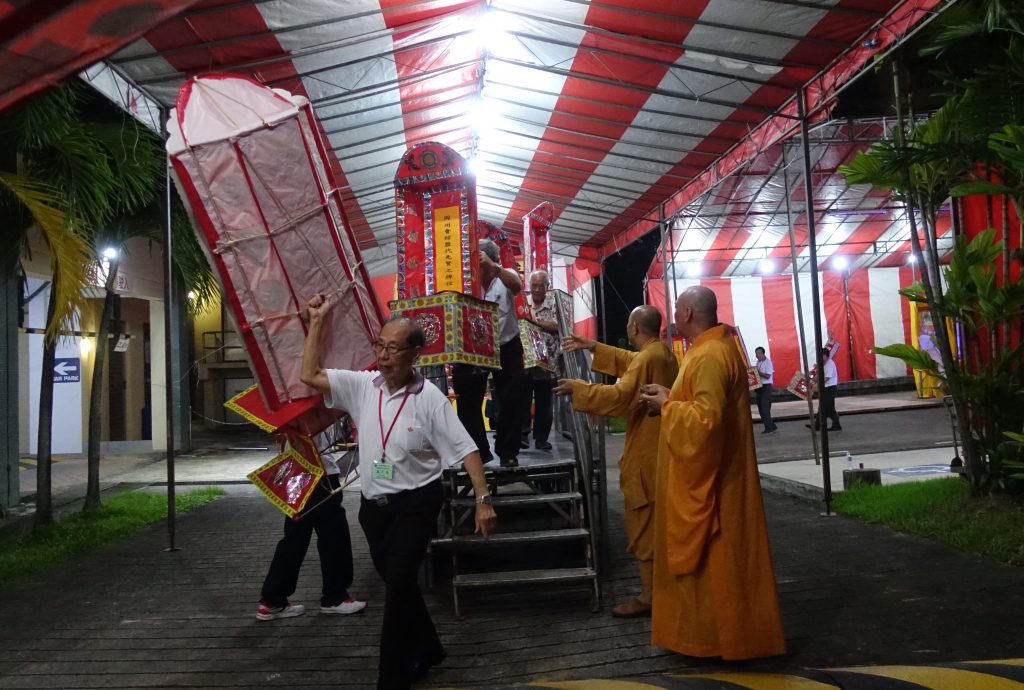
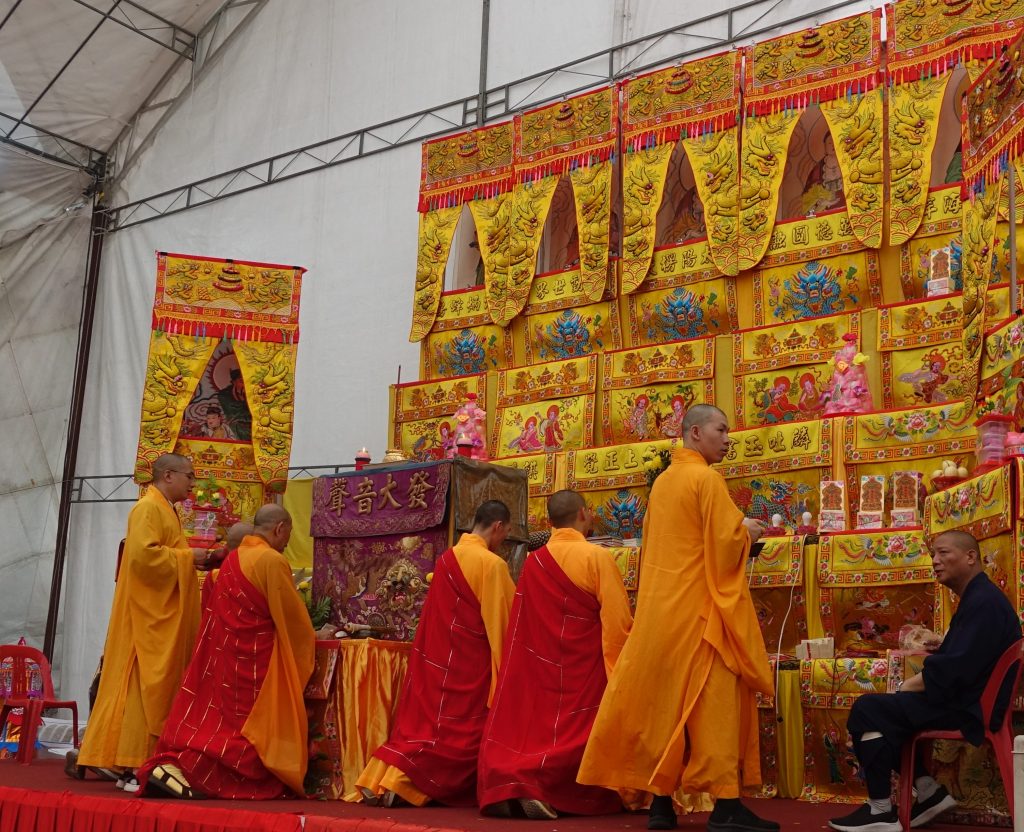
Such an institutionalised religious activity that emphasises commemoration emerged in southern China during the late Qing and early Republican periods as a response to socio-cultural trends and the state’s anti-superstition campaigns and policies to honour national martyrs. Starting with fundraising and merit-accrual activities at hospitals, charitable institutions and temples in Guangzhou, this practice was quickly adopted by neighbouring villages and towns, which repackaged it into a traditional Chinese folk religious event with a new language, format, and objects of worship. This new ritual to placate wandering spirits was later emulated by overseas Chinese communities. The Grand Universal Salvation Ritual practised by the Guang-Zhao (or Kwong-Siew) communities in Southeast Asia has consistently followed the format of those in the Pearl River Delta, where rituals were conducted by Buddhist monks, Taoist priests, and nuns.
After the 1990s, the leaders of Peck San Theng promoted it as a centre for the local Chinese community to honour their ancestral roots, pay respects to their forefathers and promote Chinese culture. For this reason, it changed the Grand Universal Salvation Ritual from an irregular event to a regular one held once every five years, so as to secure a stable source of income to promote Peck San Theng’s status as a bastion of Confucian culture centred on benevolence and filial piety.6
In a nutshell, the Grand Universal Salvation Ritual held by the Guangzhou, Huizhou and Zhaoqing communities in Singapore has evolved from one that emulated the commemorative redemption ritual of the Pearl River Delta, to a cross-cultural and multi-ethnic ceremony that emphasises the importance of Chinese culture and filial piety. This offers insight into the transnational transmission of Chinese culture and its local adaptation.
This is an edited and translated version of 碧山亭万缘胜会. Click here to read original piece.
| 1 | “Wanrenyuan shenghui zhiwen” [Records and Observations of The Grand Universal Salvation Ritual], The Union Times, 1 September 1922. |
| 2 | Zhaigu (vegetarian nuns) are female Buddhist practitioners who observe long-term vegetarianism, centre their spiritual activities around temples, and keep their hair unshaven unlike ordained Buddhist nuns. The temples where they reside are commonly known as zhaitang (vegetarian halls). For more on zhaigu, see Show Ying Ruo, “Shicheng shan nüren – 19shiji yilai de xinjiapo zhaigu shequn” [The good women of lion city: vegetarian nuns and their religious community in Singapore since the 19th century], Research on Women in Modern Chinese History 35 (2020): 121–182. |
| 3 | For more on the rituals, see Choi Chi-cheung, “Linghun xinyang, yishi xingwei yu shequn jiangou: yi malaixiya binlang yu de guangdong ji tingzhou huiguan wei li” [Spiritual belief, ritual practice and community building: the case of the Kwangtung and Tengchow Association in Penang, Malaysia], 93–108. |
| 4 | Peck San Theng Grand Universal Salvation Ritual Memorial (1923). The original stele can be found inside Peck San Theng’s Fu De Ci. Also see Kenneth Dean and Hue Guan Thye, eds., Chinese Epigraphy in Singapore 1819–1911, vol. 2 (Singapore: National University of Singapore Press, Guilin: Guangxi Normal University Press, 2017), 808–809. |
| 5 | Although the inscriptions on the principal tablets at the Grand Universal Salvation Ritual may differ slightly by region, they typically include the following: (1) collective tablets for those who perished in local disasters involving water, fire or wind, or in accidents involving machinery, vessels or vehicles; (2) collective tablets for fallen martyrs from the army, navy and air force worldwide; (3) collective tablets for deceased relatives, clan members and friends of various surnames; (4) collective tablets for unattended souls; (5) individual tablets for men, women, the elderly and children; (6) tablets for wandering spirits in the Ten Directions Dharma Realms. See Choi Chi-cheung, “Linghun xinyang, yishi xingwei yu shequn jiangoui” [Spiritual belief, ritual practice and community building]. |
| 6 | Shi Yikai, “Xinjiapo guanghuizhao bishan ting: shenzhong zhuiyuan, yuanyuan liuchang” [Singapore Kwong Wai Siew Peck San Theng: honouring the ancestors, embracing a timeless legacy], Yang 16 (2008): 5. |
Singapore Kwong Wai Siew Peck San Theng Heritage Management Committee, ed. Bishan ting lishi yu wenwu [The history and artefacts of Peck San Theng]. Singapore: Singapore Kwong Wai Siew Peck San Theng, 2019. | |
Choi, Chi-cheung. “Linghun xinyang, yishi xingwei yu shequn jiangou: yi malaixiya binlang yu de guangdong ji tingzhou huiguan wei li” [Spiritual belief, ritual practice and community building: the case of the Kwangtung and Tengchow Association in Penang, Malaysia]. In Kejia zuqun yu wenhua zaixian [Hakka ethnicity and cultural representation], edited by Chiang Min-hsiu and Ted Chiou Chang-tay, 93–108. Taipei: Best-Wise, 2009. | |
Choi, Chi-cheung. “Cong fan mixin dao wanyuanhui: Guangzhou dao dongnanya de chengshi jiushu yishi” [From anti-superstition to the Grand Universal Salvation Ritual: redemption rituals in the cities of Guangzhou and Southeast Asia]. In Haike yingzhou: chuantong zhongguo yanhai chengshi yu jindai dongya haishang shijie [Sea travellers and the immortal isle: traditional Chinese coastal cities and the modern East Asian maritime space], edited by Li Hsiao-ti and Chan Hok Yin, 30–42. Shanghai: Shanghai Chinese Classics Publishing House, 2017. | |
Choi, Chi-cheung. “Shengsi liang wangran: zhanhou xinma huaren dui sinanzhe de daonian yu wangque” [Between life and death: post-war commemoration and forgetting of the victims among Chinese communities in Singapore and Malaya]. Journal of China in Comparative Perspective 3, no. 2 (2022): 51–83. | |
Choi, Chi-cheung. “Ancestors are watching: Ritual and Governance at Peck San Theng, a Chinese Afterlife Care Organization in Singapore.” Religions 11, no. 8 (2022): 1–13. |