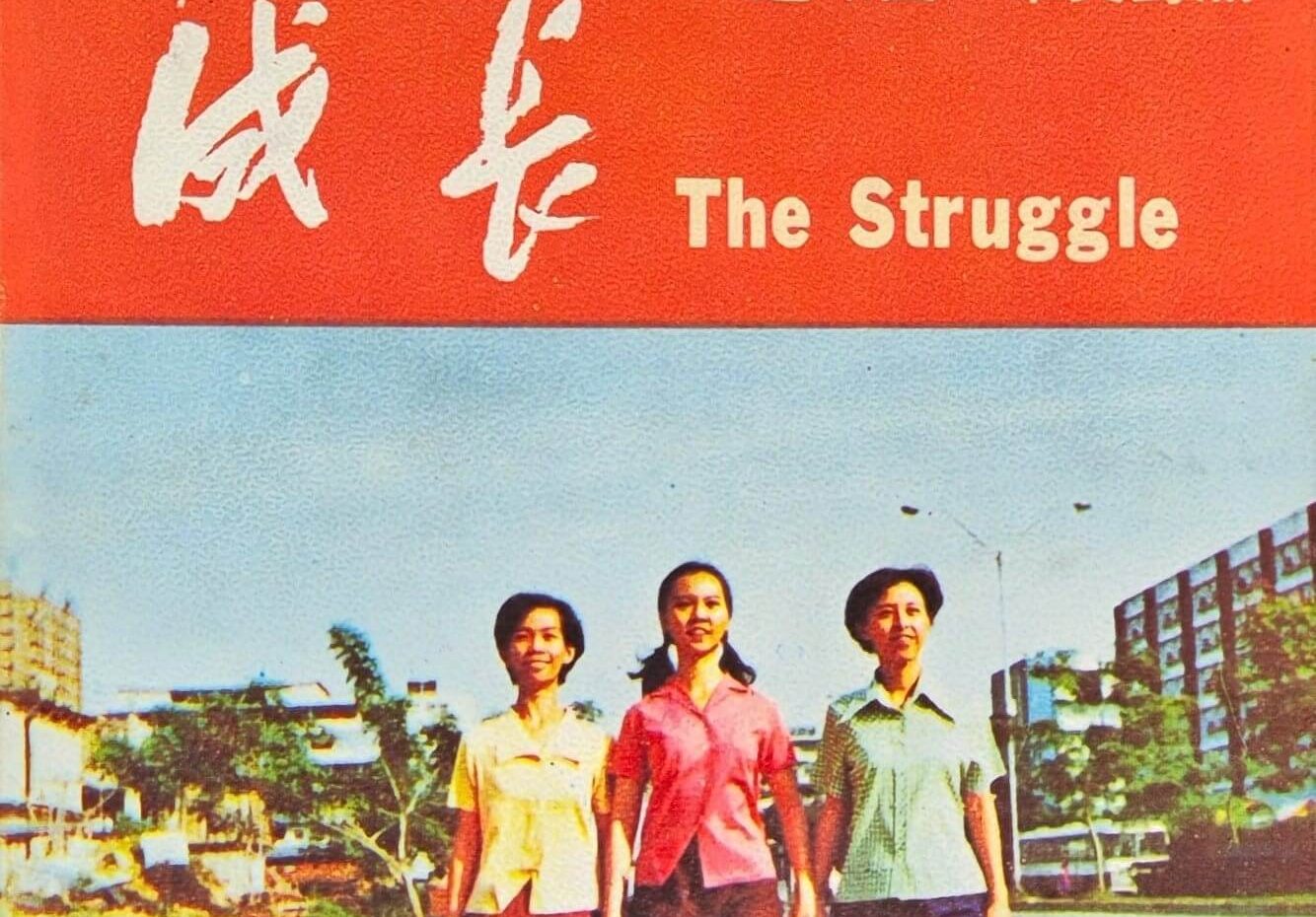
Pioneer artiste: Joanna Wong Quee Heng


Joanna Wong Quee Heng is a leading figure of Cantonese opera in Singapore and a recipient of the Cultural Medallion in 1981. She is the founder and artistic director of the Chinese Theatre Circle, and serves as the Permanent Honorary President and Artistic Advisor of Pat Wo Wui Kun, a Cantonese opera guild in Singapore. She was also awarded the Public Service Star by the President of Singapore in 1974, and appointed a Justice of the Peace in 1998 for her contributions to community service.
Wong was born in 1939 to a comfortably-off family in Penang, Malaysia. However, when she was 12, her father died and her family’s fortunes declined. After entering secondary school, she worked as a private tutor to support herself. She did well enough in the Singapore-Cambridge GCE O-Level and A-Level examinations to secure a scholarship to study science at the University of Malaya in Singapore.1 From primary school to university, Wong was educated in English, with Latin as a second language.
She showed a natural talent for English poetry recitation from as early on as primary school. In university, she joined the Chinese society. In a performance staged by the society in 1960, Wong directed two dances and one act of the Chinese opera The Cowherd and the Fairy, and sang A Song of Picking Lotus with piano accompaniment. She also translated full-length operas like the Goddess of River Luo and Madame White Snake into English, which generated interest among the English-educated. At university, Wong also met fellow schoolmate and Cantonese opera enthusiast Leslie Wong (1940–2023). They married in 1965.2
Innovating the stage
At 14, Wong made her stage debut as a ma dan (female warrior role) in Prime Ministers of Six Kingdoms, staged by the Chin Woo Athletic Association in Penang. At 15, she recorded a performance of the Cantonese opera Yidai tianjiao (A Hero of the Time) for Radio Malaya. By 16, she had progressed from the position of third hua dan (actress) to lead hua dan in the Phun Yue Wooi Koon Penang. In 1968, through the recommendation of Cantonese opera artist Wei Menglan (birth and death years unknown), Wong joined the Kong Chow Wui Koon Opera Troupe in Singapore. Together with Leslie Wong, Wei Menglan, as well as Wei’s husband Feng Yanpeng (birth and death years unknown), the quartet focused on refining Cantonese opera and innovating stage productions.
During her time at the Kong Chow Wui Koon Opera Troupe, Wong performed in many acclaimed productions adapted by her husband, including Madame White Snake, The Heroes, The Patriotic Princess, Red Pear Blossom, and The Legend of Purple Hairpin. Meanwhile, Wong’s performances caught the attention of Radio Television Singapore, which adapted several of her leading works into TV programmes, such as Madame White Snake (1968), The Heroes (1969), The Patriotic Princess (1971), Red Pear Blossom (1971), and Golden Branches and Jade Leaves (1979). Wong’s stage partner at the time was Wei Menglan, and later, Wu Yanhong (unknown–2023).
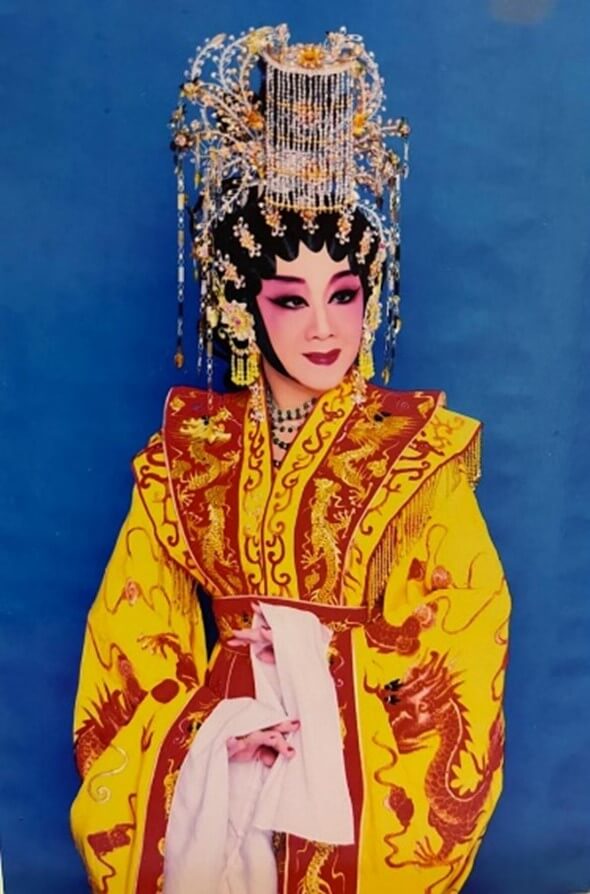
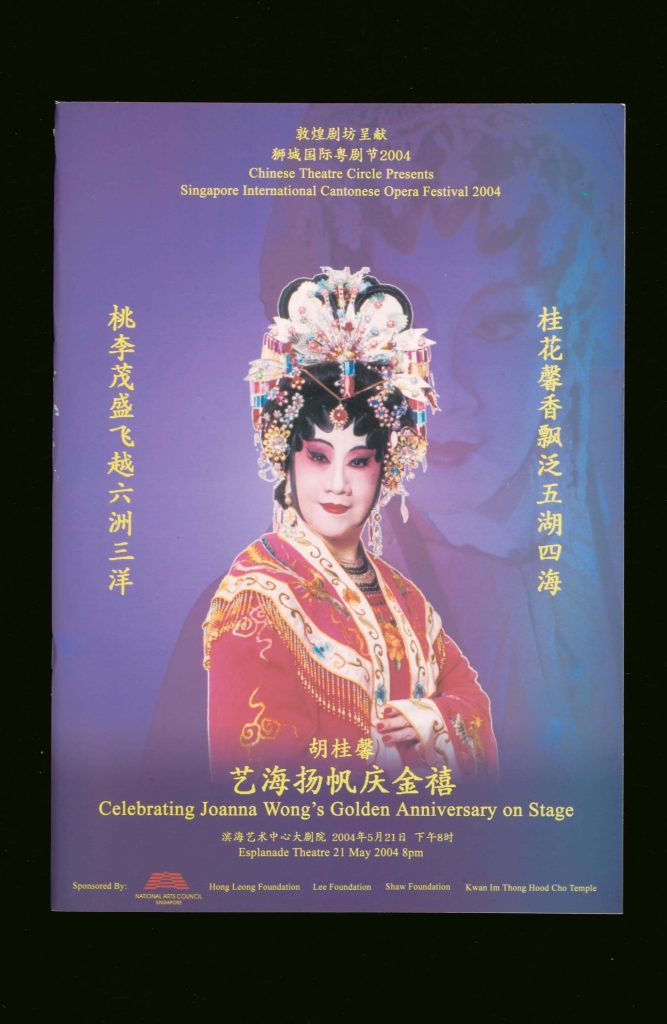
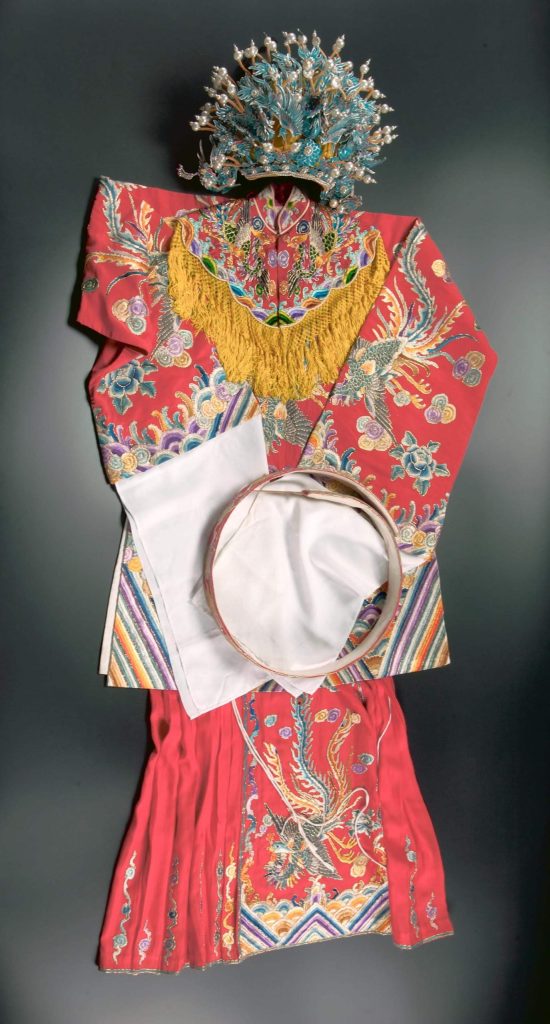
A list of Wong’s notable performances follows:
- 1968: Wong took on her first female lead role in Singapore, playing Bai Suzhen in Madame White Snake, a role that demands singing, acting, and martial arts skills. The play was tailor-made for her by Leslie Wong.
- 1970: To mark the 130th anniversary of the Kong Chow Wui Koon, Wong performed The Patriotic Princess — a classic made famous by Cantonese opera legends Yam Kim-fai (1913–1989) and Pak Suet Sin — at the National Theatre. Subsequently, she performed other Yam-Pak masterpieces such as Red Pear Blossom and Dream of the Peony. Her masterful acting earned her the moniker “Pak Suet Sin of Singapore”.
- 1972: Wong performed Madame White Snake for Queen Elizabeth II (1926–2022) during the latter’s visit to Singapore.
- 1973: Wong performed Madame White Snake at the Lee Theatre in Hong Kong, and was invited by Hong Kong’s Television Broadcasts Limited (TVB) to film the full opera The Patriotic Princess and one act from Goddess of River Luo.
- 1976: Wong pioneered the use of English surtitles during performances to help English-educated audiences appreciate Cantonese opera.
- 1978: Wong performed Goddess of River Luo and Farewell to a Warrior in Berlin, Germany with German surtitles.
In 1981, together with Lou Mee Wah, Zeng Yanling, Choy Yien Chow, See Too Hoi Siang, and other passionate Cantonese opera artists, Joanna and Leslie Wong founded the Chinese Theatre Circle with the aim of broadening the scope of regional opera. Over the years, Joanna Wong has led Chinese Theatre Circle to perform in numerous countries across five continents. Her iconic works include The Patriotic Princess, Farewell to a Warrior, Fragrant Princess, Female Generals of the Yang Family, A Costly Impulse, and Wu Ze Tian. Over the years, Cantonese opera artists who have collaborated with Wong include Luo Pinchao (1912–2010), Zhu Xiuying (1921–2003), Chen Xiaohan (1936–2016), Peng Chiquan, Huang Weikun, and Ou Kaiming.
Throughout her long career, Wong made significant contributions to Cantonese opera in Singapore. As early as the 1960s, she was determined to reform the status of opera stage by elevating the artistic levels of performances traditionally staged for clan association festivities to those of theatre productions. She was also the first to introduce both Chinese and English subtitles in performances, enabling audiences to better understand plots sung in classical Chinese and allowing English-educated viewers to better appreciate the shows. In addition, she has nurtured many practitioners who remain active in Singapore’s Cantonese opera scene today, whether on stage or behind the scenes. Wong also promoted Cantonese opera in primary and secondary schools, as well as institutes of higher learning. It is not surprising that Wong is held in high esteem in both Singapore’s traditional opera scene and the Cantonese opera community abroad.
This is an edited and translated version of 先驱艺术家:胡桂馨. Click here to read original piece.
| 1 | Singapore-Cambridge General Certificate of Education Ordinary Level (GCE O-Level): An annual national examination jointly organised by the Singapore Examinations and Assessment Board (SEAB), Ministry of Education (MOE), and Cambridge Assessment International Education, commonly referred to as the “O-Levels”; |
| 2 | Singapore-Cambridge General Certificate of Education Advanced Level (GCE A-Level): An annual national examination jointly organised by the SEAB, MOE, and Cambridge Assessment International Education, commonly referred to as the “A-Levels”. It is taken after the O-Levels. |
| 3 | See Aw Yue Pak and Huang Wenying, eds., Hongqushu shang zhi budaoweng: Hu guixin [Joanna Wong: An indomitable life, an operatic legacy] (Singapore: Chinese Theatre Circle; The Youth Book Co., 2013), 23–26, 29–38. |
Aw, Yue Pak and Huang, Wenying, eds. Hongqushu shang zhi budaoweng: Hu guixin [Joanna Wong: An indomitable life, an operatic legacy]. Singapore: Chinese Theatre Circle; The Youth Book Co., 2013. | |
Huguixin yi hai yang fan qing jinxi yanchu tekan [Celebrating Joanna Wong’s golden anniversary on stage publication]. 2004. Anniversary publication, internal reference. | |
Yi, Yan. Liyuan shiji: Xinjiapo huazu difang xiqu zhi lu [Hundred years development of Singapore Chinese opera]. Singapore: The Singapore Chinese Opera Institute, 2015. |