Dunman High School


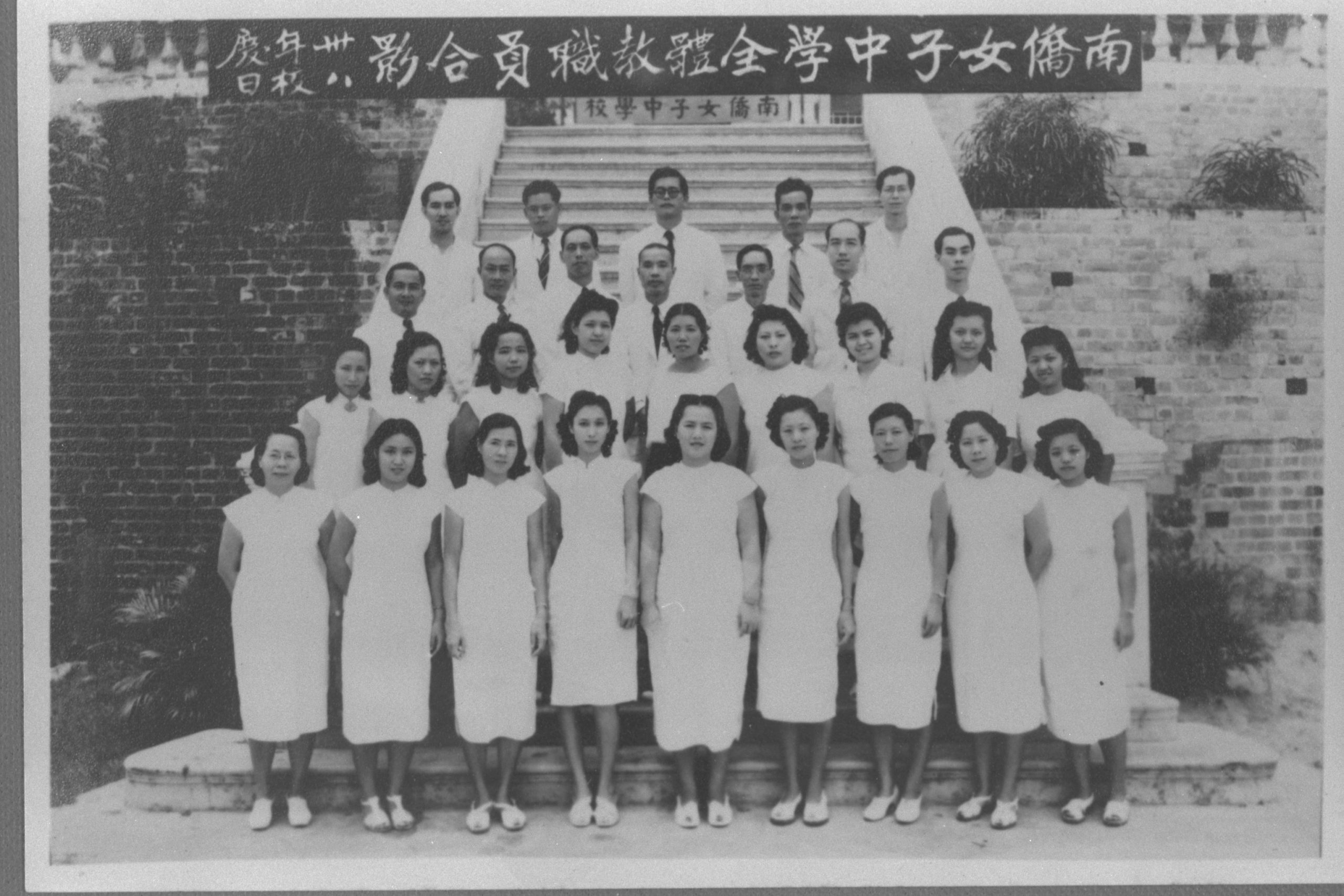
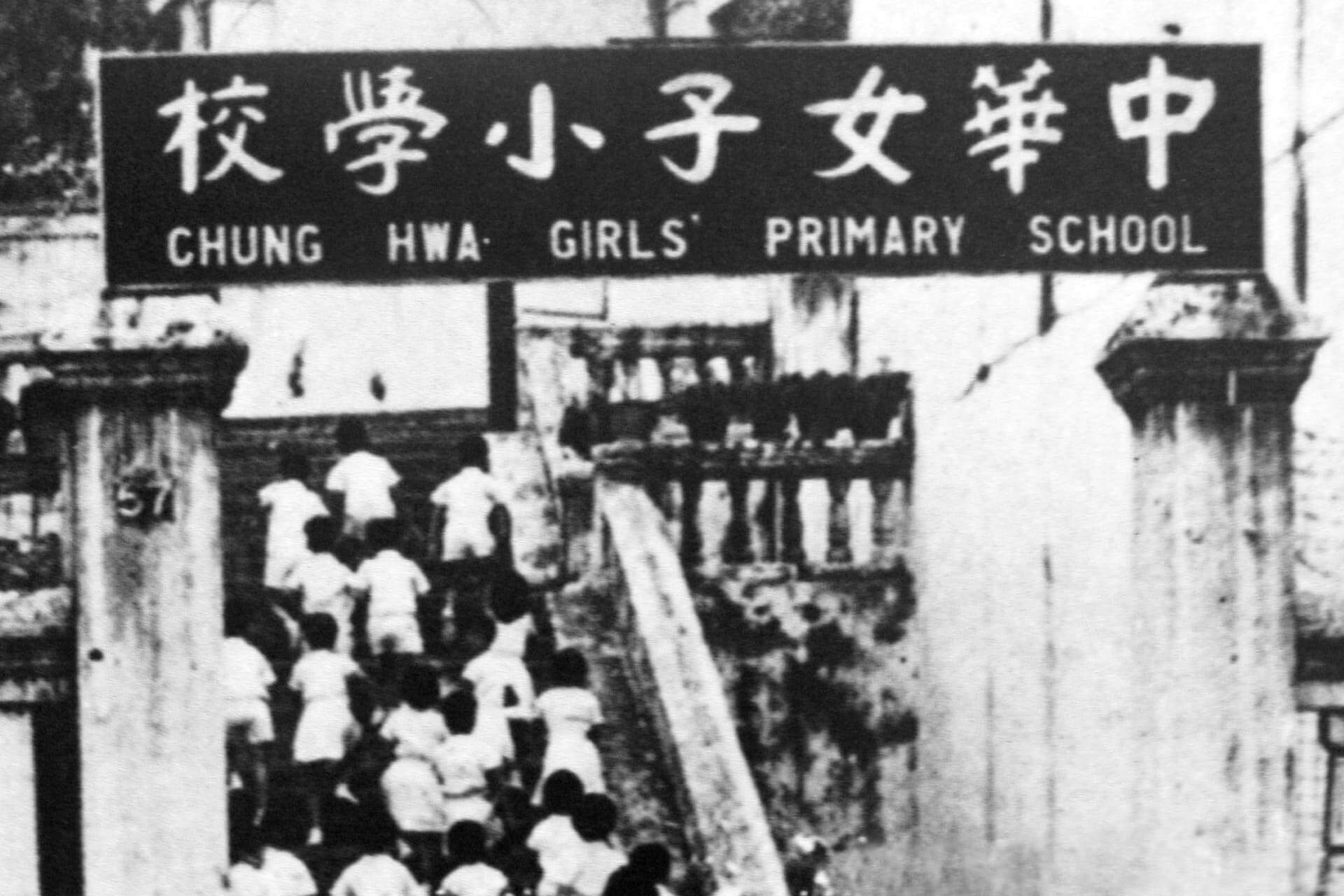
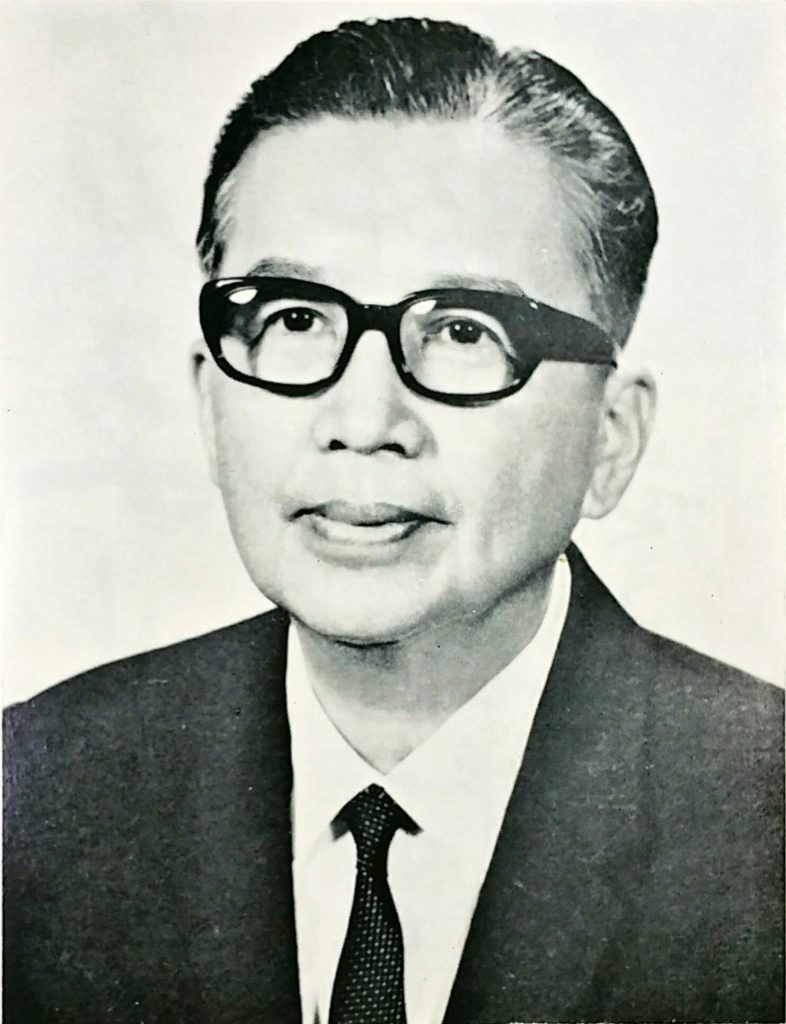
Dunman High School traces its beginnings to 1956, amid a state of political unrest in Singapore fuelled by student protests, which forced many schools to stop classes. To provide for students affected by the disruption, the government opened several Chinese-medium secondary schools so they could continue their studies. One of these was Kallang West Government Chinese Middle School, which was later renamed Dunman High, and borrowed more than 10 classrooms from Kallang West Government English Primary School. It operated two sessions: a morning session led by Principal Sun Huan Syn (1907–1958), and an afternoon session headed by Headmaster Chen Jen Hao (1908–1976). The initial enrolment was 111 boys, and the school had just over 10 teachers. There were only four students in its first batch of graduates. In its second year, girls were accepted, and the student population grew to a few hundred. By the 1960s, the number of students had shot up to around 2,000.
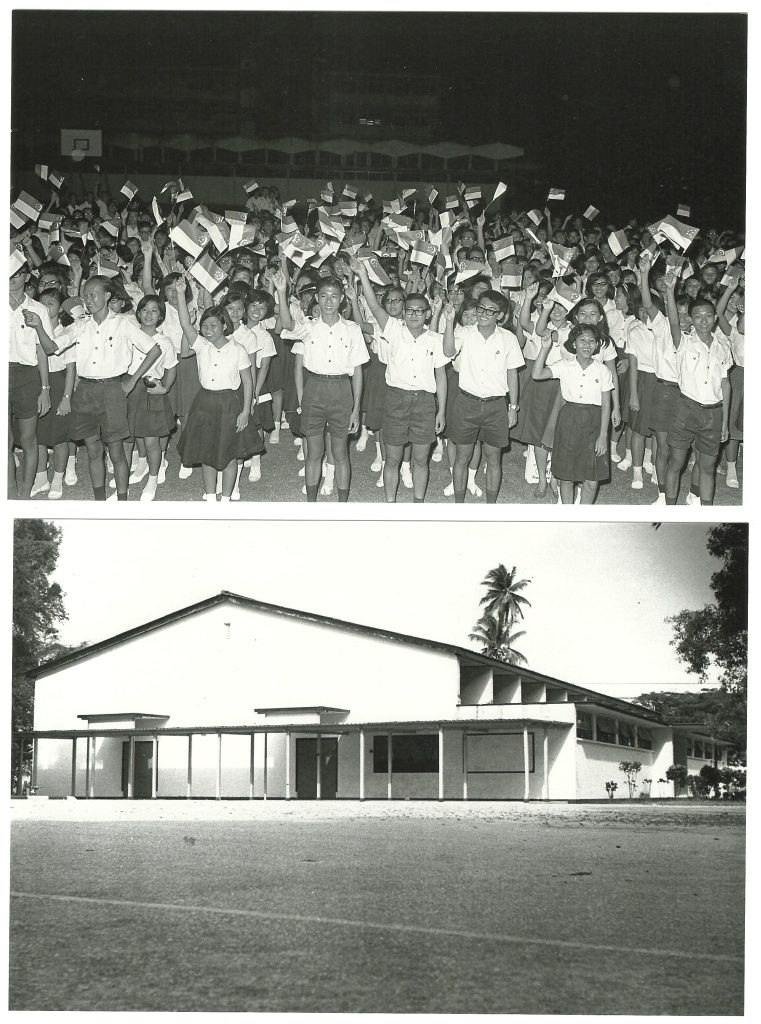
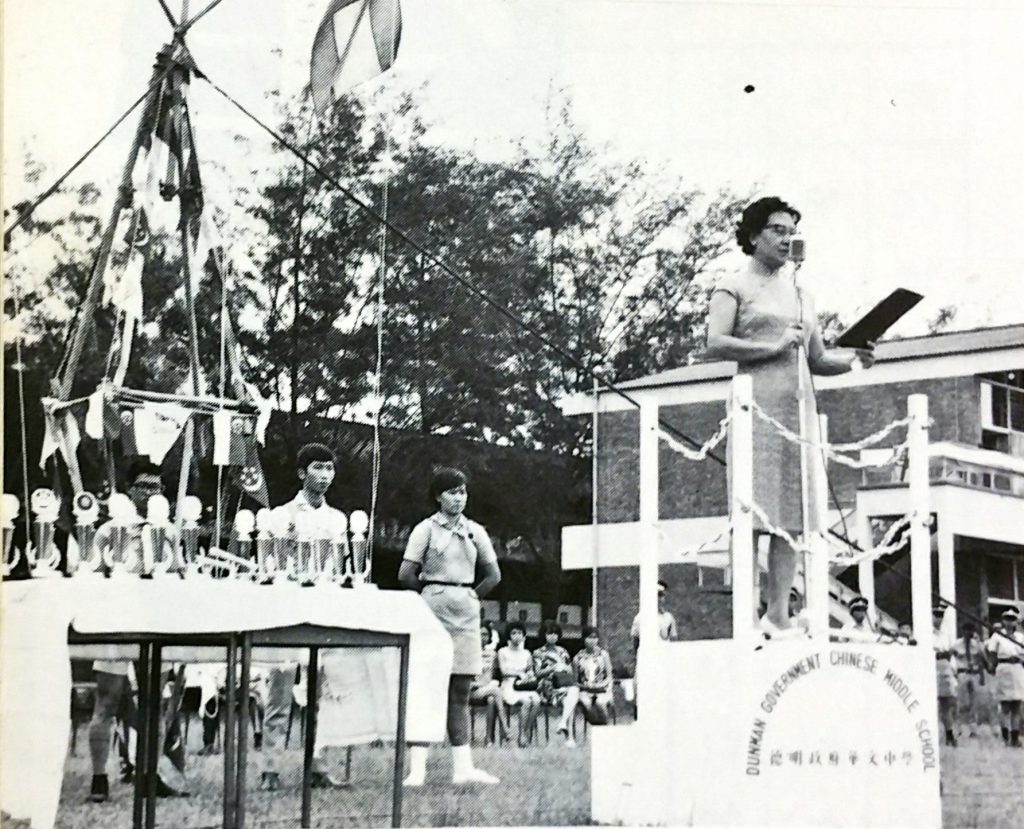
In 1958, the school relocated from Mountbatten Road to Dunman Road, and was renamed Dunman Government Chinese Middle School. When the Ministry of Education (MOE) sought suggestions for the school’s Chinese name, “De Ming” (德明) was chosen in the end. In 1979, the school was officially renamed Dunman High School.
School motto
Honesty, Trustworthiness, Courage and Loyalty
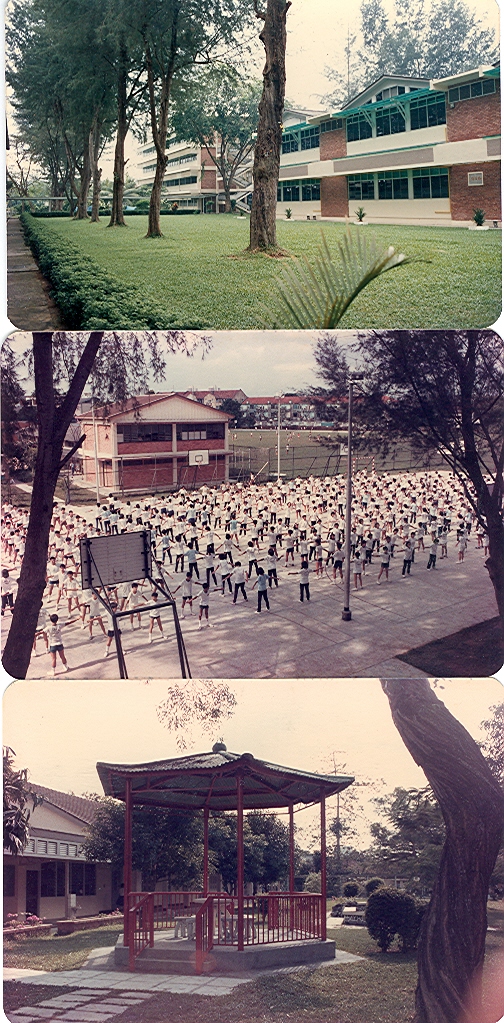
Dunman’s school crest was designed by Principal Chen Jen Hao and pioneer artist Liu Kang (1911–2004), a former art teacher at the school. The school motto of “Honesty, Trustworthiness, Courage and Loyalty” is prominently displayed in the campus, serving as a constant reminder for teachers and students to safeguard the moral bottom line and pursue noble character. A statue of Confucius also stands on the school grounds, which symbolises the school’s commitment to upholding traditional Confucian values. As with other Chinese-medium schools in the early years, Dunman High planted Casuarina trees on its campus as a symbol of resilience, simplicity and humility.
The school song of Dunman High was composed by local pioneer musician Michael Tien Ming Ern (1918–1994) and written by former Dunman High teacher Luo Wenxuan (birth and death years unknown). The school’s English name came from Dunman Road, which was named after Sir Thomas Dunman (1814–1887), a former British Commissioner of Police in Singapore. Its Chinese name, a transliteration of “Dunman”, draws on the first line of the Confucian classic Book of Great Learning, which states that the main objective of education is to allow one’s natural and perfect virtue to shine, love the people, and strive for perfection.
Brief history
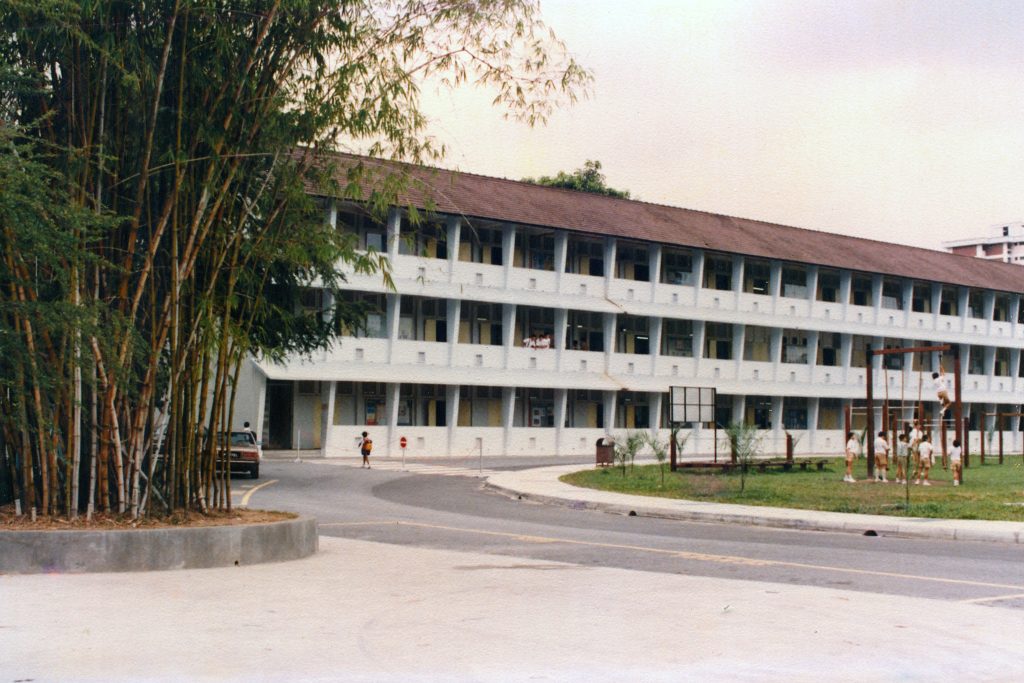
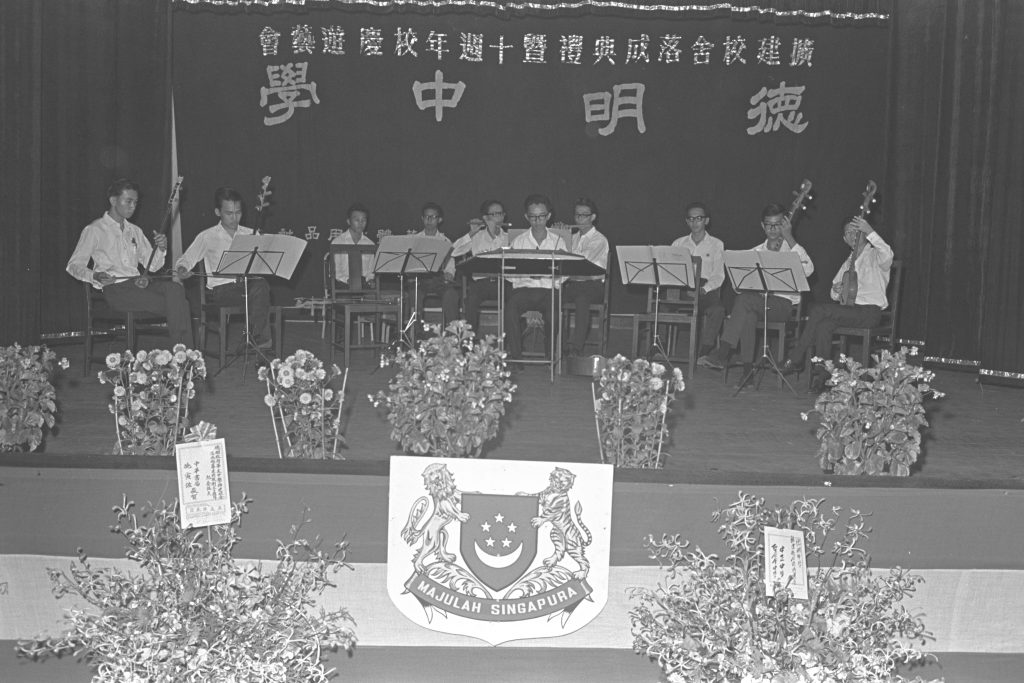
In 1966, upgrading of the school’s key infrastructure at Dunman Road was completed with a new four-storey building built by MOE, which added 16 new classrooms. Another two-storey building was completed around the same time, which housed four science laboratories, three home economics rooms, and one Audio Visual Aids (AVA) room. With the expansion of teaching facilities, the school’s capacity grew substantially — the student population rose to around 2,000 and the number of teaching staff increased to nearly one hundred. In 1979, the school was selected by MOE as one of nine Special Assistance Plan (SAP) schools.1 This marked the start of Dunman High’s journey of refining its bilingual education both in depth and breadth. It not only strengthened its teaching of the Chinese and English languages, but also improved students’ language proficiency, enabling them to express themselves confidently during multi-cultural exchanges and on the international stage.
As its enrolment jumped, the school started to face constraints in facilities and space. In 1981, it took over the neighbouring Dunman Primary School. The following year, Dunman High School was selected by MOE to provide the Music Elective Programme for musically talented students. More milestones were to follow. In 1994, the school was among the first batch of six schools selected to go autonomous, which gave it greater flexibility to run its programmes and curriculum.2 In 1995, the school moved to Tanjong Rhu Road. In 1996, Dunman High was selected by MOE to implement the Gifted Education Programme to provide intellectually gifted students with more challenging and in-depth learning resources.3
Dunman High School Hostel was officially opened in September 2001, making it the first government secondary school in Singapore to house a hostel. This also marked a new model of education resource support in government schools. In yet another milestone, the school launched a six-year Integrated Programme in 2005, which allows students to bypass the O-level examinations and take the A levels directly at the end of the sixth year.4 It was one of the first government secondary schools in Singapore to offer such a programme. The school also embarked on a Bicultural Studies Programme to nurture talents who can traverse comfortably between Chinese and Western cultures.5
Dunman High School implemented the Chinese Language Elective Programme (CLEP) at the Junior College level in 2008, followed by its introduction at the Secondary level in 2020. 6In 2007, Dunman High School underwent a major redevelopment programme and was temporarily located at the former Raffles Junior College campus at Mount Sinai Road. Two years later, Dunman students returned to a new campus equipped with state-of-the-art facilities such as a Performing Arts Centre and Life Science Laboratory.
Dunman High School alumni have made their mark in various fields. They include local Chinese community leaders Chua Thian Poh and Thomas Chua Kee Seng; political office holders Josephine Teo, Low Yen Ling and Goh Pei Ming; parliamentarians Alex Yam and Poh Li San; former nominated parliamentarian Ng Ser Miang and Douglas Foo Peow Yong; as well as Cultural Medallion recipients Lin Gao and Koh Mun Hong, who have drawn acclaim for their writing and ink paintings respectively.
Principals and years in service
- Sun Huan Syn (1956–1958)
- Chen Jen Hao (1959–1969)
- Shu June Mai (1970–1978)
- Lim Nai Yan (1979–1993)
- Cheah Chak Mun (1994–1998)
- Tan Thiam Hock (1999–2004)
- Sng Chern Wei (2005–2009)
- Foo Suan Fong (2010–2016)
- Low Teck Eng Tony (2017–2021)
- Chan Ying Yin (2022–present)
This is an edited and translated version of 德明政府中学. Click here to read original piece.
| 1 | The Special Assistance Plan (SAP) was introduced in 1979 to nurture students with bilingual aptitude. The schools under this plan are called SAP schools, known to provide students with high quality teaching and an environment that emphasises bilingual learning. |
| 2 | Established in 1994, autonomous schools follow the Ministry of Education syllabus, while providing a wider range of programmes than regular government schools, to enhance students’ learning experience. |
| 3 | Gifted Education Programme: The Ministry of Education rolled out the Gifted Education Programme in 1984, caters for intellectually gifted students. |
| 4 | Integrated Programme: A six-year course covering the secondary school and junior college curricula, leading to certification examinations such as the Singapore-Cambridge General Certificate of Education Advanced Level (GCE A-Level) examination. The programme allows students who scored in the top 10% of their cohort to proceed directly to junior college without taking the O-Level examination, giving them more time to develop their intellectual curiosity, creativity, critical thinking, and leadership skills. |
| 5 | Bicultural Studies Programme: The Ministry of Education established the Bicultural Studies Programme in 2005 to nurture bilingual and bicultural talents who can engage with both Chinese and Western cultures, while maintaining local awareness and a global perspective. Students in the programme have opportunities to participate in various learning activities, including immersion trips, as well as seminars and lectures on Chinese history, culture, and contemporary developments. |
| 6 | The Chinese Language Elective Programme (CLEP) is offered by selected secondary schools and junior colleges to nurture students who have an interest and aptitude in Chinese language and literature. |
Deming zhengfu huawen zhongxue xiaogui [School rules of Dunman Government Chinese Middle School]. Singapore: Dunman High School, 1971. | |
“Deming zhongxue kuojian xiaoshe luocheng ji shizhounian xiaoqing” [Dunman High School celebrates completion of school expansion project and its 10th anniversary]. Nanyang Siang Pau, 23 September 1966. | |
“Dunman High School.” MOE Heritage Centre. | |
Dunman High School 50th Anniversary. Singapore: Dunman High School, 2006. | |
Wu, Hua. Xinjiapo huawen zhongxue shilue [A brief history of Chinese secondary schools in Singapore].Singapore: Educational Publishing House, 1976. |