Local lexicon: How ‘bicycle’ got its name in Singapore Mandarin


The development of Singapore Mandarin is closely connected to the history and traditions of Chinese immigrants who settled in Nanyang, as well as Singapore’s history as a former British colony straddling East and West.
How did the Singapore Chinese community perceive things they were encountering for the first time? How did their names for these things then become part of a new vocabulary?
To explore this phenomenon, this article traces the history behind the term for “bicycle” in Singapore.
A ride through history
Bicycles first appeared in Singapore in the 1860s. At the time, it was seen as a type of outdoor sports equipment used for leisure rather than as a means of transport. A bicycle then was known in English as a “two-wheel velocipede”, with a larger front wheel and a smaller rear wheel.
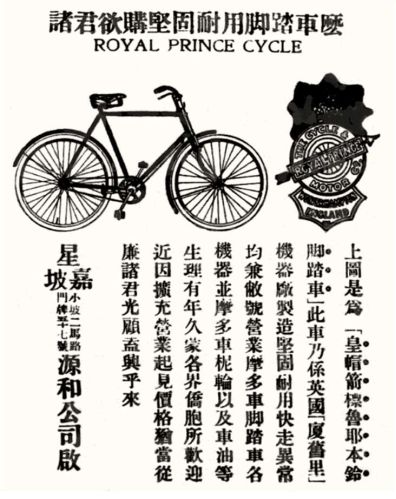
Bicycles became very popular and widely used in Singapore in the 1890s. Thanks to the Singapore Chinese-language paper Lat Pau, which was already in print then, valuable documentary records on the naming of the vehicle remain. In an 1892 advertisement in Lat Pau, the bicycle was termed as jiaotakuaiche (speedy pedal vehicle).
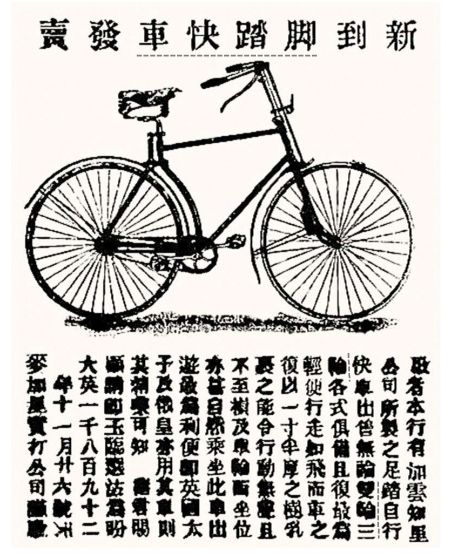
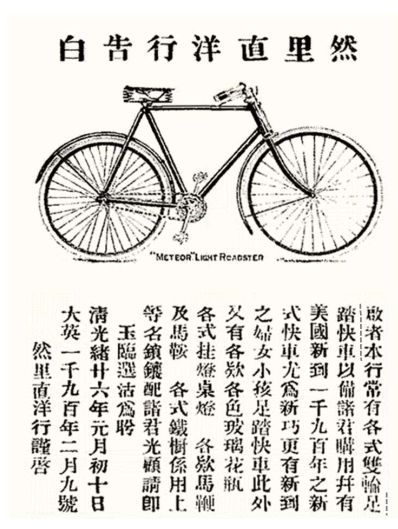
The Singapore Chinese were able to give the bicycle a name befitting the conventions and habits of the spoken Chinese language, and which reflected the appearance, function, and method of operation of the new equipment. According to the Lat Pau advertisement, there were two kinds of bicycles at the time: two-wheeled or three-wheeled, termed shuang lun (two-wheeled) or san lun (three-wheeled) in Mandarin.
Another advertisement in 1910 dubbed the bicycle zutakuaiche (speedy foot-pedal vehicle). The shift from the colloquial jiaotakuaiche to the more formal zutakuaiche is believed to have been made by newspaper literati.
In 1912, the term jiaotache — which is commonly used today — started to appear in newspaper advertisements. It is likely a shortened form of its predecessor, jiaotakuaiche. This change from a four-syllable word to a three-syllable one was in line with language development trends. At the same time, the term jiaoche, a simplified version of the word jiaotache, began to appear in advertisements.
Terms such as ziyouzutache (free foot-pedal vehicle) also began appearing in newspapers around the same time. Compared with other names that appeared during this period, ziyouzutache was more formal and closer to the written language. It is likely that the newspaper literati had modified the term based on the earlier name zutakuaiche (speedy foot-pedal vehicle). The modifier ziyou (free) was added to the original term to indicate that the vehicle was not driven by an external force, thus distinguishing it from the first-generation “motorcycles”, which were powered by machines.
When the Singapore Chinese first encountered the bicycle, they found different ways to refer to it in Mandarin. The various names fall into two categories: those which originated from the vernacular language of the man on the street, such as jiaotakuaiche, jiaotache and jiaoche; and those which were introduced by the literati, such as zutakuaiche and ziyouzutache.
Two names that stood the test of time
Bicycles hit new heights of popularity in the 1920s and 1930s. The subsequent paragraphs will analyse how the bicycle was referred to by Singapore’s two major Chinese newspapers, Nanyang Siang Pau and Sin Chew Jit Poh, during that period.
Among the names that emerged in the early days, jiaotache and jiaoche were the two most commonly used in those newspapers. Other names, such as jiao ta kuaiche, zutakuaiche and ziyouzutache, were slowly phased out.
In 1921, the term ziyouche (free vehicle), derived from ziyouzutache, began to appear in news reports. However, it was not frequently used.
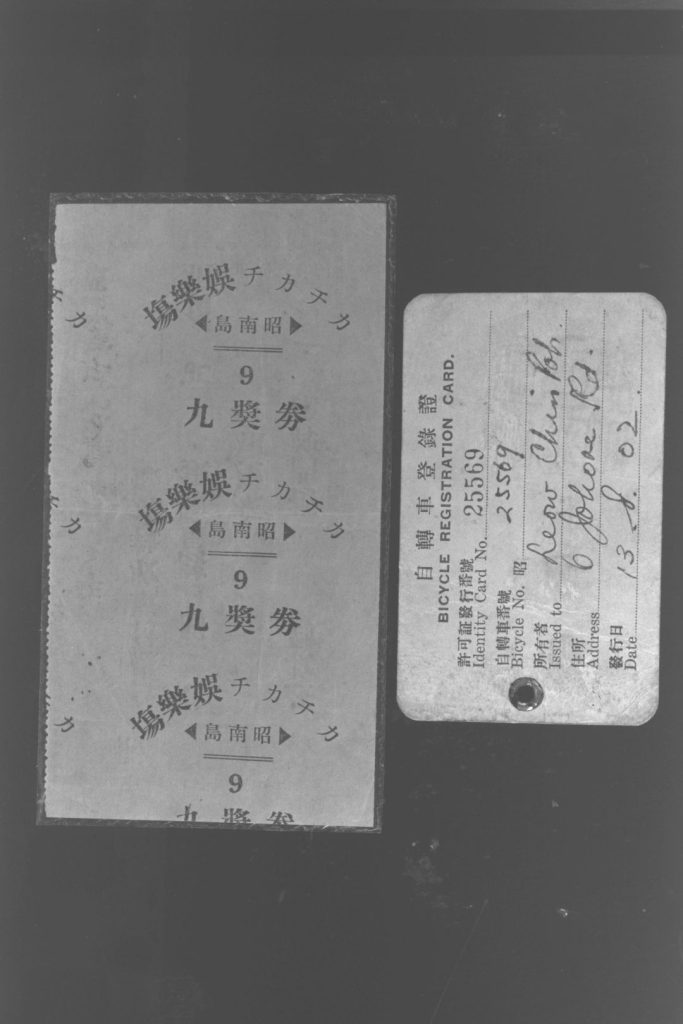
In 1924, the term zizhuanche (self-rotational vehicle) first appeared in Nanyang Siang Pau in a report on a Japanese cyclist who came to Singapore to compete in a road race. This term was transplanted directly from the Japanese word for bicycles, jitensha (自転车), and did not appear often in the newspapers. However, it became more commonly used during the Japanese Occupation from 1942 to 1945.
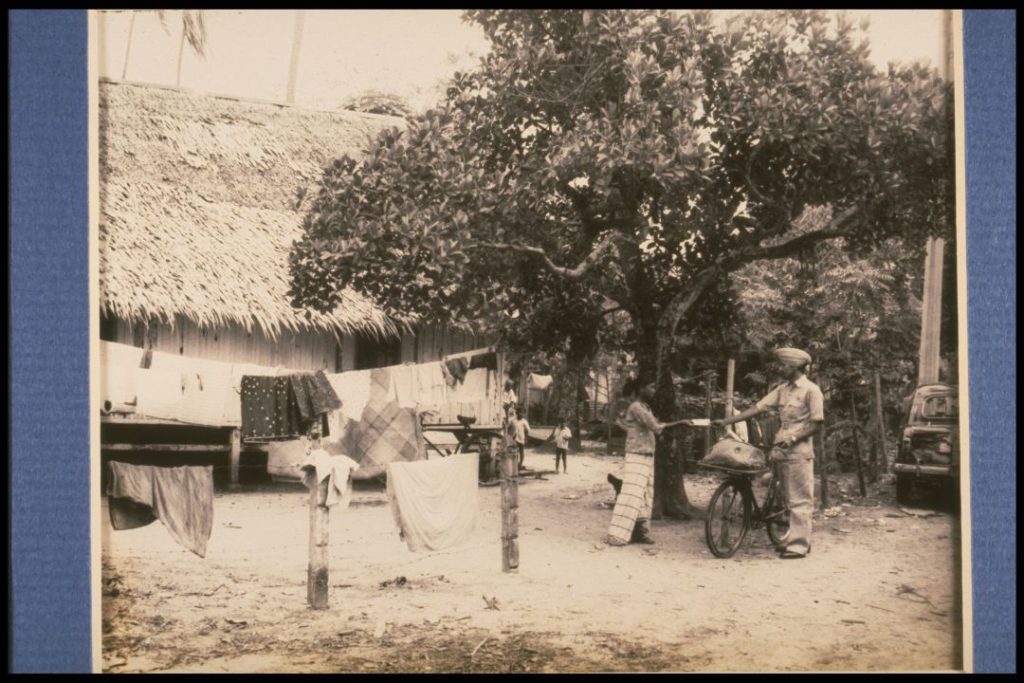
In 1925, a few new terms for bicycles appeared, such as zixingche (self-moving vehicle), jiaotadanche (foot-pedal single-track vehicle) and danche (single-track vehicle). The term zixingche was influenced by how the bicycle was known in the northern regions of China. Today, danche is widely used in Cantonese-speaking regions, including Hong Kong. This term is likely a shortened form of danlunjiche (single-track vehicle, e.g. bicycles and motorcycles), as opposed to shuanglunjiche (double-track vehicle, e.g. cars).
The Singapore Chinese community had different names for “bicycles” at different periods. Some names were a flash in the pan, but others stood the test of time and became fixed terms in the Singapore Mandarin lexicon. After World War II, the Singapore Chinese community used jiaotache and jiaoche interchangeably. These two terms were widely accepted and used in both written form and as part of everyday conversations. It is not by chance that jiaotache and jiaoche were the final two names that stood out. They suit the conventions of the local Chinese language, and are simple enough to be accepted by everyone.
This is an edited and translated version of 【本土语汇】脚踏车. Click here to read original piece.
Hsu, Yun Tsiao. Wenxin diaochong [Reflections on language]. Singapore: Institute of Southeast Asian Studies, 1973. | |
Lim, Buan Chay. Lunxue zazhu conggao [Collected writings of Lim Buan Chay]. Singapore: Xinhua Cultural Enterprises, 2017. | |
Lim, Buan Chay. Yuyan wenzi lunji [Collected writings on language]. Singapore: National University of Singapore’s Department of Chinese Studies, 1996. | |
Lim, Earn Hoe. Wocheng woyu: xinjiapo diwenzhi [Our city, our language: Chronicling Singapore’s Chinese language heritage]. Singapore: Great River Book Co., 2018. | |
Khoo, Kiak Uei. Malaixiya huayu yanjiu lunji [Collected writings on Malaysia’s Chinese language studies]. Kuala Lumpur: Centre for Malaysian Chinese Studies, 2018. | |
Wong, Wai Tik. Shicheng yuwen xiantan [Languages in Singapore]. Singapore: Federal Publications, 1995. |