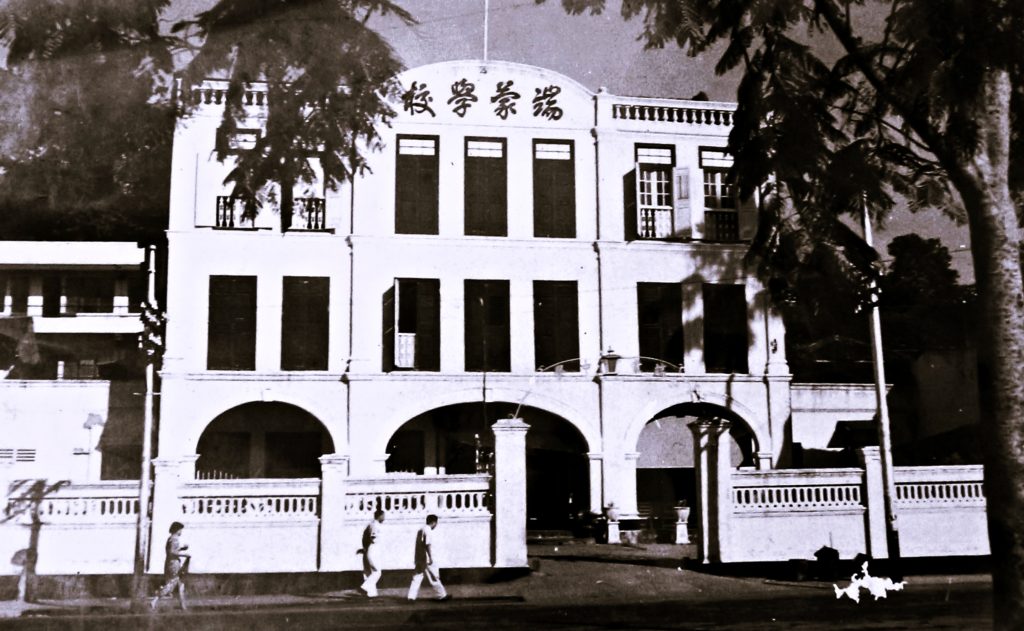
Tuan Mong High School


Tuan Mong High School, originally known as “Tuan Mong School”, was founded in 1906 and closed in 1994. It was first established as a primary school, with Chua Chu Yong (1847–unknown) serving as chairman and Tan Hoon Chew (birth and death years unknown) volunteering as principal.1 Both were Teochew. The school had two teachers and 68 primary school students, most of whom were the children of Teochew immigrants. Lessons were conducted in the Teochew dialect.
Tuan Mong’s school motto, set in August 1919, highlighted the values of diligence, prudence, integrity and righteousness. The school’s mission was to instil in students the Confucian value of moral self-cultivation. In 1955, the school set up a junior middle school section and introduced a new school song. The song was composed by pioneer musician Lee Howe (1919–2009), with Chinese lyrics by poet and calligrapher Zeng Luchuan (1900–1975). The lyrics emphasised that moral education can be upheld only by cultivating an upright character in students, and encouraged them to bring honour to their school.2
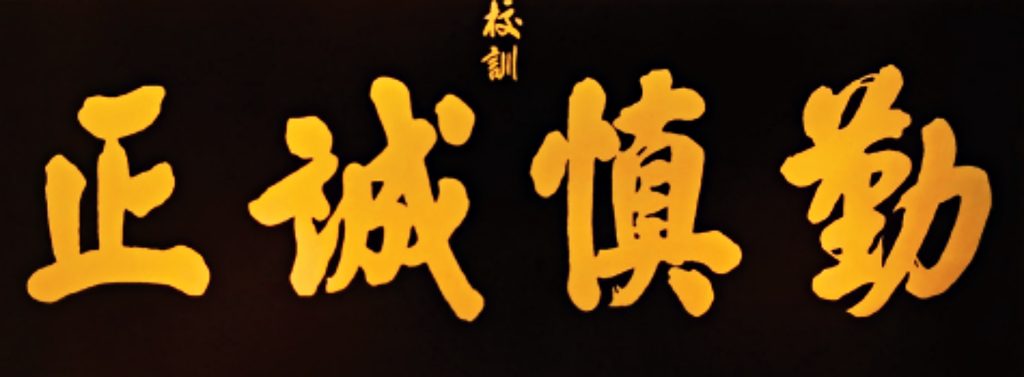
School motto
Qin Shen Cheng Zheng 勤慎诚正 (meaning diligence, prudence, integrity, righteousness)
Brief history
Between its inception and 1918, Tuan Mong occupied three sites. The earliest was a rented shophouse at 52 Hill Street, after which the school relocated to 13 Clarke Quay in 1913. In view of the growing student population, the school board purchased a site at Tank Road in 1917 for a new campus. The campus, which was within the Teochew Building today, was completed in 1918 and classes were taught in Mandarin.3 At first, Tuan Mong implemented a school system consisting of four years of lower primary and three years of upper primary education. In 1924, in response to adjustments in China’s national education system, the third year of upper primary class was restructured into the first year of junior middle school class. However, this change lasted only one year before the three-year upper primary system was reinstated. 4
In 1925, the school board acquired a plot of vacant land in Minto Road to build a branch school in the vicinity of North Bridge Road. The branch school started classes in 1926. In 1933, the Chinese High School temporarily closed, prompting Tuan Mong to establish a remedial junior middle school class. However, the class was discontinued the following year when the Chinese High School resumed operations. In May 1933, the school applied to the government to lease the former site of a railway station opposite its main campus to construct a sports field. Officially opened in 1934, its size was unprecedented among local primary schools at the time.
After the Japanese invaded Singapore in December 1941, Tuan Mong had to stop classes.5 Following Japan’s surrender in 1945, the Education Department ordered all schools to resume classes. Tuan Mong’s school board reappointed Lim Kok Chan (1902–1949) as principal, and classes officially resumed in November, while the branch officially reopened in July 1946.
Like other Chinese-medium schools, Tuan Mong initially admitted new students twice a year — at the start and middle of the year. In 1947, the Education Department of the British colonial government ordered all Chinese-medium schools to abolish mid-year admissions and enrol students only at the beginning of each year. Tuan Mong therefore discontinued its mid-year intake from that year.
In July 1949, Principal Lim Kok Chan passed away while in office. The academic head, Nai Tai Nee (birth and death years unknown), then temporarily took over the school’s affairs. In November that year, Tuan Mong appointed renowned carver and calligrapher Tan Keng Cheow (1907–1972) as principal, and he assumed the position in June the following year. During his 14 years as principal, Tan cultivated an atmosphere for the learning of calligraphy in the school. He published the book Yegongchuo zhenshuce (Writings of Ye Gongchuo) and gifted it to students to help with their learning, creating a conducive calligraphy learning environment in Tuan Mong. 6
In June 1953, Ngee Ann Kongsi took over the management of Tuan Mong’s properties and affairs, and drew up a three-phase campus expansion plan in 1955. After obtaining government approval to demolish the old campus in the final phase of the project, the school established its junior middle school section (junior high school) in January that year, enrolling two classes of male students and one class of female students in the first year. The school was also renamed Tuan Mong High School. In 1957, Tuan Mong became a government-aided school, while its branch was administered independently under the leadership of Chia Toh Yong (1906–1962). 7 Tuan Mong began offering senior middle school section (senior high school) in 1958.
The student population exceeded 2,000 in 1961. The following year, the construction of the school buildings (the left and right wings, and the rear building) and the auditorium was completed, marking the end of the construction project. In 1963, the school board loaned 20 classrooms in the new left wing to Ngee Ann College (now Ngee Ann Polytechnic), before reclaiming them in 1968. In 1964, the Ministry of Education (MOE) transferred principal Tan Keng Cheow to Chung Cheng High School, and appointed Wong Hork Kun (birth and death years unknown), a senior teacher in the secondary school section, to oversee the school’s affairs. On 1 September 1965, the school board appointed Kwok Hen Ching (1910–1984) as the school principal.
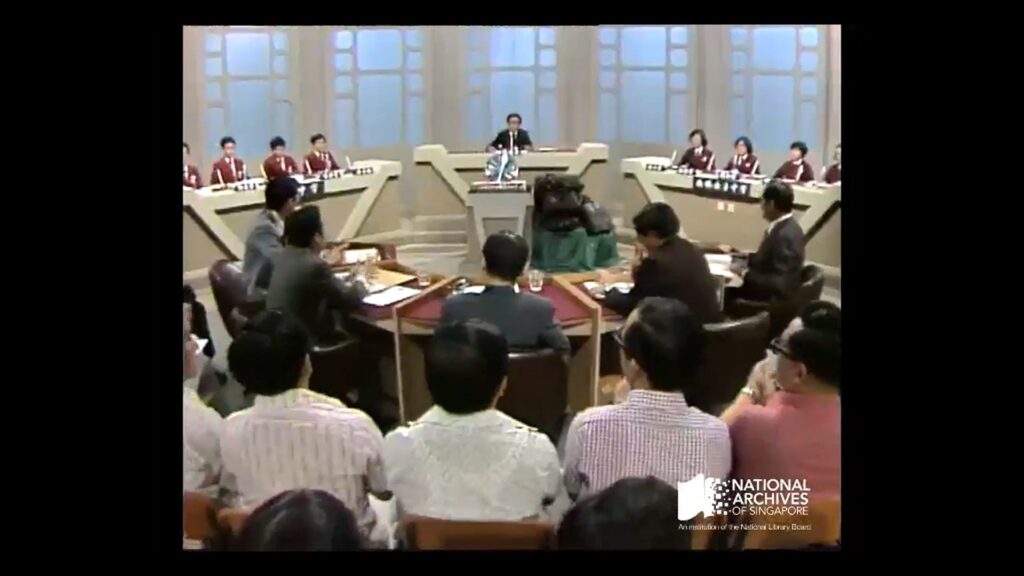
The period from 1977 to 1979 was a particularly successful one for Tuan Mong, with its students consistently performing well in external competitions. In nationwide competitions for pre-university students, Tuan Mong won four championships and four first runner-up titles. In 1978, Tuan Mong was crowned champion in the pre-university inter-school debate organised by MOE and Radio Television Singapore. In 1979, the school again shone at a national secondary school history quiz competition organised by the Historical Society of Nanyang University, clinching champion titles in the team category for pre-university and secondary school students, as well as in the individual category for secondary school students.
In 1980, at the request of MOE, Tuan Mong started four English-stream Secondary 1 classes, gradually transforming from a traditional Chinese-medium school to an integrated school offering both Chinese and English streams. Tuan Mong was recognised for its students’ sporting and cultural achievements, particularly in Chinese calligraphy. Many of the school’s former board members, principals and teachers were skilled calligraphers. To celebrate its 75th anniversary in 1981, the school held a Chinese Calligraphy and Painting Exhibition at the National Museum, as well as a Variety Concert at the Victoria Theatre.
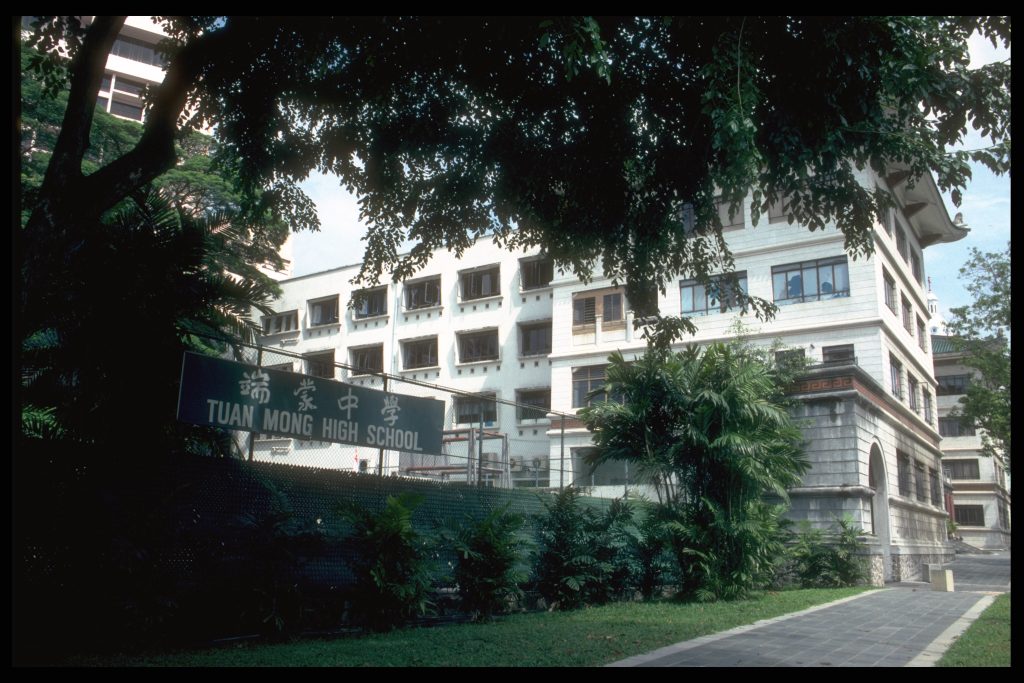
In the 1990s, due to declining student enrolment, Ngee Ann Kongsi and Tuan Mong had to decide whether to preserve the school or the land. Ultimately, they opted for the land, and Tuan Mong ceased operations in 1994. In 1996, the school’s alumni re-established the Tuan Mong Alumni Association to keep the spirit of their alma mater alive. An alumni association had been formed as early as 1923, but it disbanded in 1974.
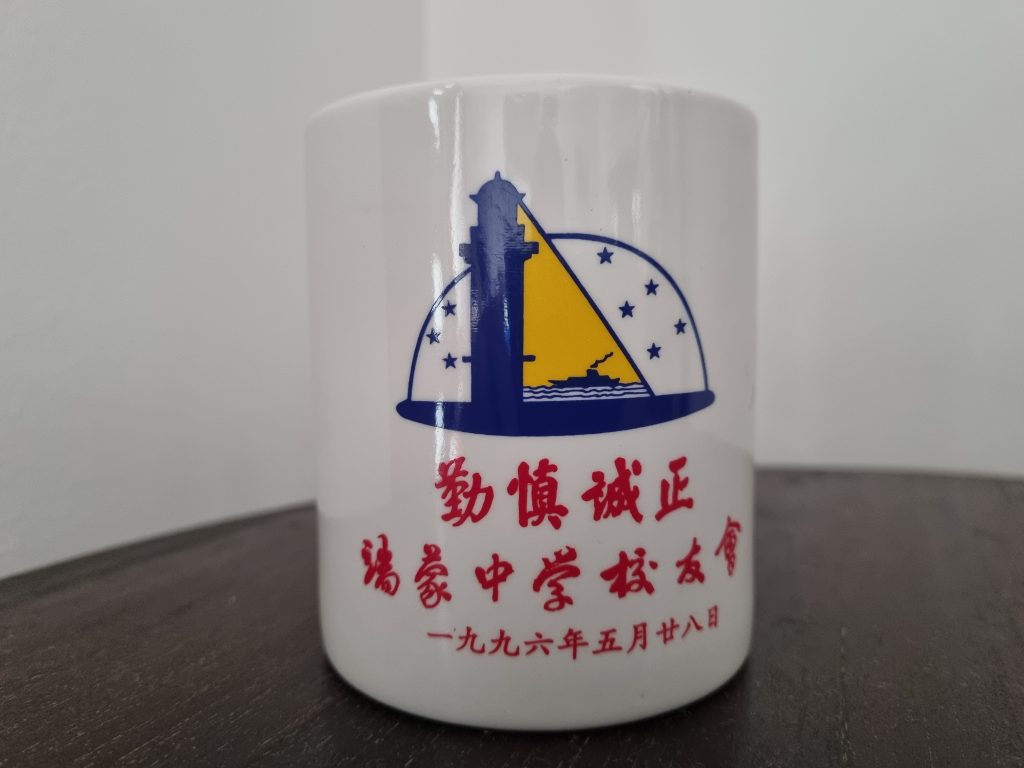
In 2016, Tuan Mong Alumni Association set up Class Elegant, a Chinese calligraphy class. Another Tuan Mong Chinese Calligraphy Society was also established in 2019. In 2022, with the support of the Singapore Teochew Poit Ip Hui Kuan, the alumni sought to name a primary school “Tuan Mong Primary School” to revive the “Tuan Mong” school name, revive the school motto and its ethos, as well as promote Chinese culture and traditions. However, MOE did not adopt the proposal.
Many outstanding individuals have graduated from Tuan Mong, including former political office holder Sam Tan Chin Siong; former parliamentarians Yeo Toon Chia, Seng Han Thong and Goh Choon Kang; former president of the Singapore Chinese Chamber of Commerce and Industry Lim Kee Ming; and Cultural Medallion recipients Tan Kian Por (1949–2019) and Tan Lip Seng.
Principals and years in service
- Tan Hoon Chew (1906–1909)
- He Ziyin, Zhang Xiuyun (1909–1920)
- Zhang Xiuyun, Shen Chaoyang, Hu Chaoqiu [Acting] (1920–1923)
- Lin Shufang (1923–1925)
- Chen Xiaohao (1925–1926)
- Chen Jielong (1926–1931)
- Wang Shaosheng (1931–1934)
- Li Linong (1934–1936)
- Lim Kok Chan (1936–1949)
- Nai Tai Nee (1949–1950)
- Tan Keng Cheow (1950–1964)
- Wong Hork Kun (1964–1965)
- Kwok Hen Ching (1965–1983)
- Chen Siew Yui (1984–1994)
This is an edited and translated version of 端蒙中学. Click here to read original piece.
| 1 | Equivalent to chairman of a school’s board of directors today. For biography of Chua Chu Yong, see: Lee Chee Hiang, i mai xiangcheng: Shile chengyi xianxian zhuanlüe [Carrying on the tradition: biographies of Singapore Teochew pioneers from Theng Hai] (Guangzhou: Jinan University Press, 2019), 11–13. |
| 2 | Peh Chong Teck, “Xiaoge yu xiaoxun” [School song and school motto], Lianhe Zaobao, 14 May 2016. |
| 3 | Yang Wee Chyun, “Xiaoshi” [School history], in Tuan Mong High School (1908–1976), 73–81. |
| 4 | See Lee Chee Hiang, “Xinjiapo chaoren shetuan dejiaoyu shiye yu zhengzhi huanjing de hudong, Chaoren xuexiao zhuanxing de guanca” [The interaction between the educational endeavours of Singapore Teochew associations and the political environment: observations on the transformation of Teochew schools], Shantou daxue xuebao (2004): 63–71; Wu Hua, Xinjiapo huawen zhongxue shilue [A Brief History of Chinese Secondary Schools in Singapore] (Singapore: Educational Publishing House, 1976), 104. |
| 5 | Yang, “Xiaoshi” [School history], 76. According to Yang, during the Shonan period, Tuan Mong and 14 other schools in the city, as well as six rural schools, were forced by the Japanese to conduct classes. In the first year, Mandarin was the main language of instruction, while English was abolished and replaced by Japanese. In the second year, Japanese became the main language of instruction and Chinese, the second language. By the third year, Chinese was abolished and all lessons were conducted in Japanese. Before school started every morning, students had to follow instructions from radio broadcasts to do morning exercises, sing the Japanese national anthem and face northeast to bow deeply in the direction of the Japanese Imperial Palace. |
| 6 | Wong Joon Tai. Two Hundred Years of Chinese Calligraphy in Singapore (Singapore: Nanyang Calligraphy Centre, 2025), 120. |
| 7 | Government-aided school: Government-aided schools are schools set up by various community organisations to cater to the educational needs of their respective communities. They receive funding from the Singapore government and maintain the same education standards as Government schools. |
Cultivating Values, Nurturing Generations: Tuan Mong High School 115th Anniversary Commemorative Publication. Singapore: Tuan Mong Alumni Association, 2021. | |
Ho, Yuen. “Qing xi taikong, xin xi shicheng” [Connected to space, rooted in Singapore]. Lianhe Zaobao, 28 September 2018. | |
Lee, Chee Hiang. “Quanli zhongxin de zhenghe yu bianqian: 19 shiji yihou xinjiapo chaoren shetuan fenzheng tanxi” [Integrations and changes of the power centre: An investigation into the disputes of Singapore Teochew clan associations after the 19th century]. The International Journal of Diasporic Chinese Studies 12 (2020): 1–22. | |
Lee, Kok Leong. “Erzhan jianxin suiyue de jiaoxue banxue” [Education amid hardship during World War II]. Lianhe Zaobao, 24 August 2023. | |
Ng, Kim Eng. “A Brief History of Tuan Mong High School.” In Tuan Mong High School 75th Anniversary Celebration Souvenir Magazine, 10–11. Singapore: Tuan Mong High School, 1981. | |
Peh, Chong Teck. “Bimo jingzhan, duanmeng shufa xinhuo xiangchuan” [The enduring legacy of Tuan Mong’s calligraphy]. Lianhe Zaobao, 5 June 2025. | |
Peh, Chong Teck. “Duanmeng xiaoyouhui yu taocibei” [The ceramic mug of Tuan Mong Alumni Association]. Lianhe Zaobao, 25 May 2023. | |
Peh, Chong Teck. “Xiaoge yu xiaoxun” [School song and school motto]. Lianhe Zaobao, 14 May 2016. | |
Poon, Sing Wah, ed. Xiaoshi de huaxiao: guojia yongyuan de zichan [Vanishing Chinese schools: A perpetual national asset]. Singapore: Federation of Chinese School Alumni Association, 2014. | |
Tuan Mong Alumni Association, ed. Tuan Mong High School Heritage Exhibition Catalogue: A Publication to Commemorate Tuan Mong Alumni Association 100th Anniversary. Singapore: Tuan Mong Alumni Association, 2023. | |
“Tuan Mong High School.” MOE Heritage Centre. | |
Yang, Wee Chyun. “Xiaoshi” [School history]. In Tuan Mong High School (1908–1976), 73–81. |