How soon kueh, braised duck, bak chor mee and Teochew porridge became uniquely Singaporean


Singapore’s rich multicultural fabric has been shaped by waves of migration from South China, India, and the Nusantara1. This diversity is vividly reflected in the city-state’s cuisine, offering a unique mix of dishes from various cultures. Many of these dishes are markedly different from their original forms, as immigrant settlers had to adapt to their new environment in Singapore and “localise” their ancestral cuisines.
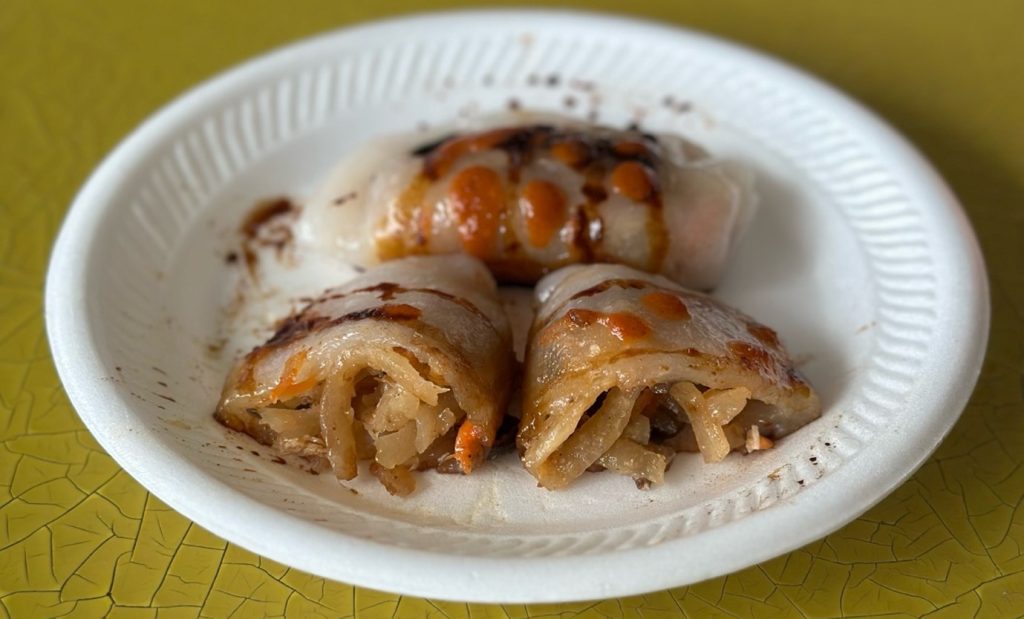
Ecological localisation: Soon kueh
The first and most distinct form of localisation is ecological adaptation. Ecological localisation refers to the adaptation of “ancestral” dishes to a particular locale. One way this is done is through ingredient substitution, replacing an absent ingredient with a similar wildlife, game, crops, seafood, vegetables, or fruit from the new locale. Among Singaporean Teochews, we observe this in dishes such as soon kueh (bamboo shoot cake) and lor ah (braised duck).
Soon kueh is a traditional savoury steamed dumpling popular during the spring season in Swatow (Chaoshan). It features a “skin” made of rice (sometimes with tapioca flour) and is stuffed with its namesake filling of soon (bamboo shoots) and sometimes dried shrimp. However, in Singapore, the Teochews have adapted the dish by using mangguang (turnip) as the primary stuffing instead.2
This shift occurred because, unlike the ancestral Teochew province of Guangdong — which boasts numerous edible bamboo species such as Acidosasa and Bambusa — edible bamboo is scarce in the Malacca Strait.3As a result, local Teochews have turned to mangguang as a substitute, a notable contradiction given the namesake moniker of the dumpling. This change in primary stuffing significantly alters the texture of the dish. The “traditional” Chaoshan bamboo shoots filling provides a much crunchier dumpling, whilst the Nanyang version with mangguang is softer and lighter in texture. It is also common to find a more prominent use of dried shrimp in the Nanyang version — perhaps to provide greater texture and flavour.
Ecological localisation: Braised duck
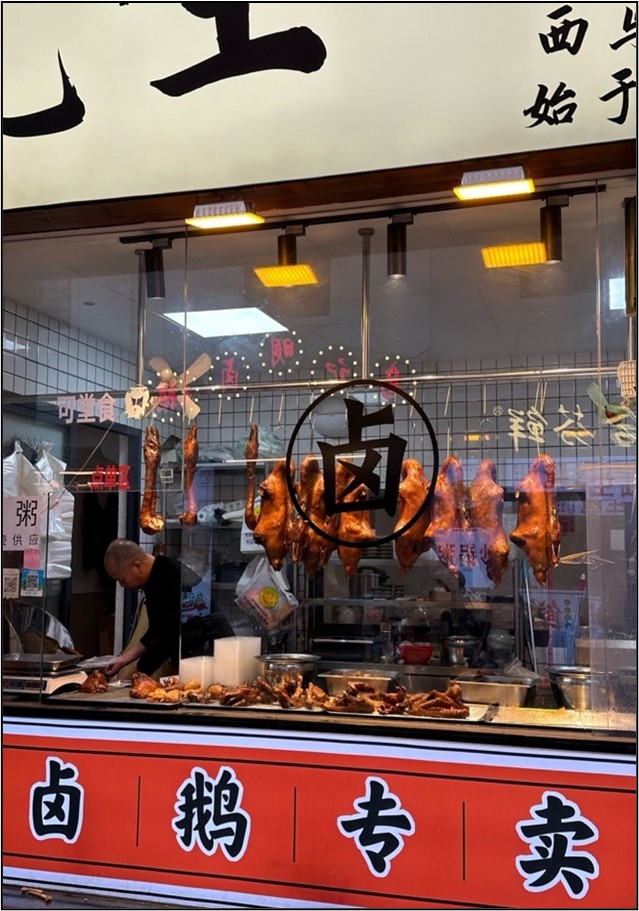
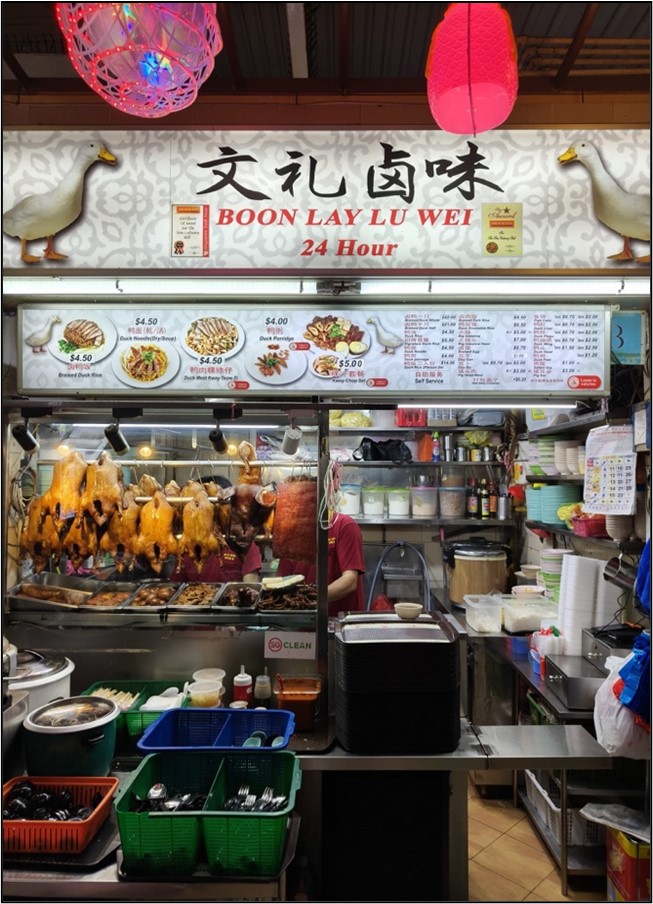
Ecological localisation can also be seen in the adaptation of lor gor (braised goose) to lor ah (braised duck), with the latter a less gamey Southeast Asian variation of the traditional dish.
Akin to the substituting of bamboo shoots in soon kueh, ecologically, edible geese are not commonly found in Southeast Asia. In China, geese domestication is common in East and Southeast China — particularly the wild swan goose (Anser cygnoides) — with the species known to winter in the southern regions adjacent to Chaoshan.4
Within Southeast Asia, only the cotton pygmy goose (also known as cotton teal) winters in the region, although the game is not traditionally eaten. When discovering the species, British scientists Hume (1829–1912) and Tilson (1841–1927) wrote that cotton pygmy geese “are by no means particularly good eating [sic]”.5Given this challenge, edible geese in Singapore must be imported frozen from faraway countries such as Hungary. Further, Singapore’s stringent food import regulations, particularly concerning poultry, complicate the import of geese. Following the 2003 Avian influenza and H5N1 outbreak, Singapore has imposed stringent controls on poultry imports to safeguard food security,6with authorised sources of geese often changing on short notice.7
These challenges in geese supply (and quality) result in a higher price but lower quality poultry. Many Singaporean Teochews have thus opted for duck as the preferred poultry instead. Imported fresh from Malaysia or Indonesia, duck is seen as game with similar texture and taste — while being cheaper, fresher, and more accessible.
Over time, local taste buds have also adjusted to the less fatty duck. In 2014, the owner of Teochew restaurant Huat Kee reported that customers find the taste of goose too strong and fatty, preferring duck. Another large Teochew chain, Swatow Seafood restaurant, sells bigger ducks in place of geese due to the changing tastes of local Chinese.8
Inter-cultural localisation: Bak chor mee
The second and more subtle form of localisation is inter-cultural localisation. Inter-cultural localisation refers to the adaptation of traditional foods in response to the social environment, done either by learning and incorporating new techniques or ingredients in their food preparation, or adapting the dish to suit the local palates. For Singaporean Teochews, this process has been influenced by interactions with other ethnic groups (e.g. Malays, Indians) and other Chinese dialect groups (e.g. Cantonese, Hokkien).
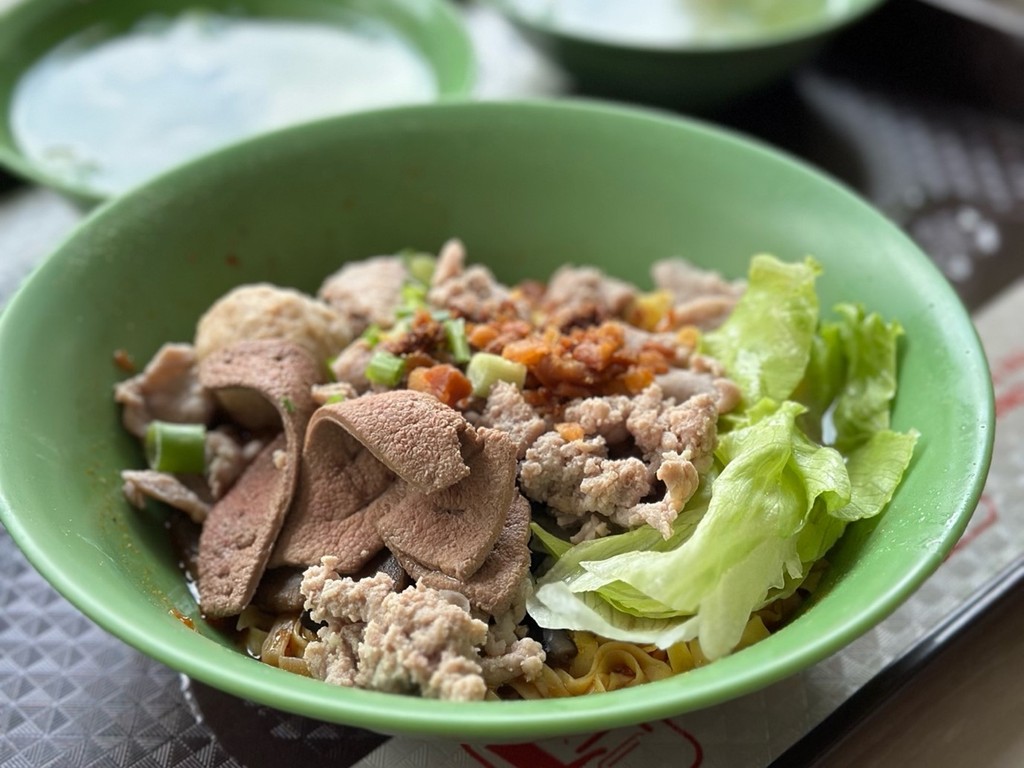
One prominent example is bak chor mee (minced pork noodles). Traditionally in Chaoshan, the dish comes as a soup-based noodle made with egg or rice noodles, minced meat, pork innards, and dumplings. In Singapore, dry versions of the dish are more common, with the noodles dressed in a sauce of lard, black vinegar, fish sauce and most interestingly, condiments like sambal (Malay chilli paste) or ketchup.
The sauces used in bak chor mee in Singapore are distinctly intercultural and learnt from other cultures. For example, in dry spicy variations, we observe the usage of sambal, a typical Malay condiment made with belachan (shrimp paste), garlic, chilli, ginger, shallots, spring onions, and sometimes lime juice. In non-spicy versions, ketchup is used as the main flavouring, a condiment adopted from the British during colonial times.
The usage of either sauce as the main flavouring ingredient is distinct from the “traditional” Chaoshan style and general Teochew cooking philosophy. Using heavy-flavoured sauces like sambal or ketchup contradicts the Teochew culinary philosophy of light cooking — meant to accentuate the freshness of food — with chilli itself also not a common ingredient used in Southern Chinese cooking. Anthropologist Tan Chee Beng suggests that the consumption of chilli in the Southern regions of China only became popular after internal immigration following China’s Economic Reform (post-1978).9This means that the Singaporean Teochews’ use of sambal likely only began after they migrated to Singapore. Singaporean bak chor mee is thus unique given its methodological variety and differences, with dry styles of the dish distinctively inter-cultural and unique to the Nanyang Teochews.
Inter-cultural localisation: Teochew porridge
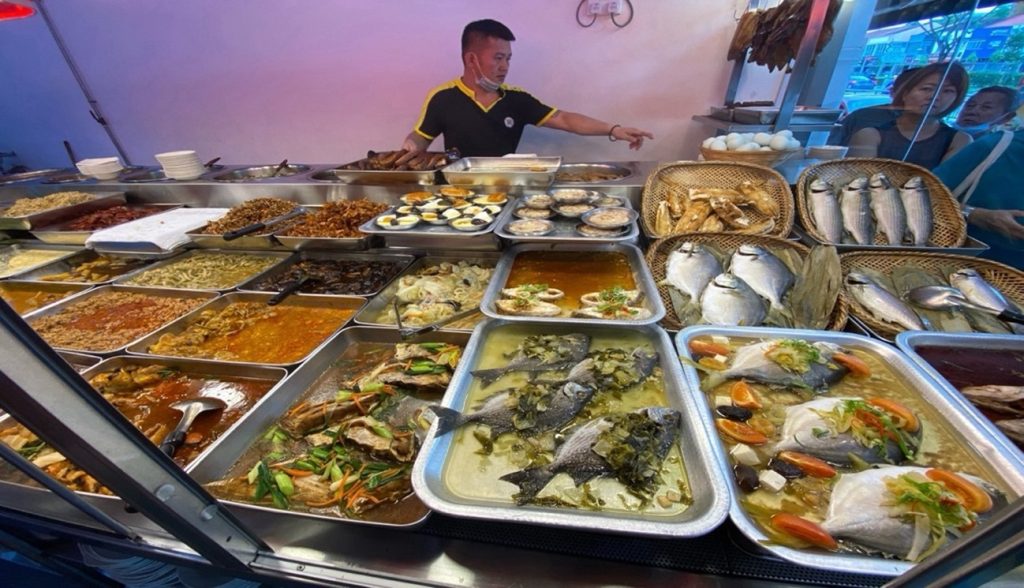
Another example of inter-cultural adaptation can be seen in the practice of consuming Teochew mue, a type of watery porridge made with rice cooked till soft but unbroken. 10Traditionally in Chaoshan, this porridge is served with an assortment of cooked dishes and preserved foods (zab giem). In Chaoshan, traditional accompaniments include lor gor (braised goose) and stir-fried vegetables, alongside various types of pickles such as cai poh (cured radish) and giam cai (cured mustard green), or seafood (fish, crustaceans or shellfish) that have been cured in soy sauce, chilli, garlic, vinegar, or liquor.
In Singapore, however, Teochew porridge has been simplified. The variety of traditional dishes such as raw marinated seafood, crabs, and a variety of fish has been reduced. Rather, local Teochew porridge culture incorporates simple, homecooked dishes from other dialect groups, such as soya sauce chicken (Cantonese), lala (Asian clams, Hokkien), preserved vegetables with pork belly (Hakka), and gu lou yok (sweet and sour pork, Cantonese) among other dishes.
This simplification reflects the influence of ecological and economic forces. Ecologically, Singapore features a much smaller marine biodiversity compared to Chaoshan. Studies show that the Malacca Strait has less than half the marine biodiversity of the Taiwanese Strait, with less commercially viable species in regional waters.11Given this resource constraint, it is not only more costly to sustain the same range of food, but also the accurate reproduction of Teochew dishes in Singapore.
Economically, with a smaller population of Teochews living in Singapore compared to Chaoshan, the demand for Teochew-specific food is lower and replaced by a demand for the food of other Chinese dialect groups. Furthermore, chefs working in Teochew restaurants may not always be Teochew themselves, adding to the difficulty of maintaining “authentic” Teochew cuisine, while bringing the culinary specialisations of other dialect groups to the table. In other words, the practice of eating Teochew porridge can be said to have simplified in depth but broadened in breadth, with a wide assortment of Teochew-specific dishes replaced by the comfort food from other dialect groups.
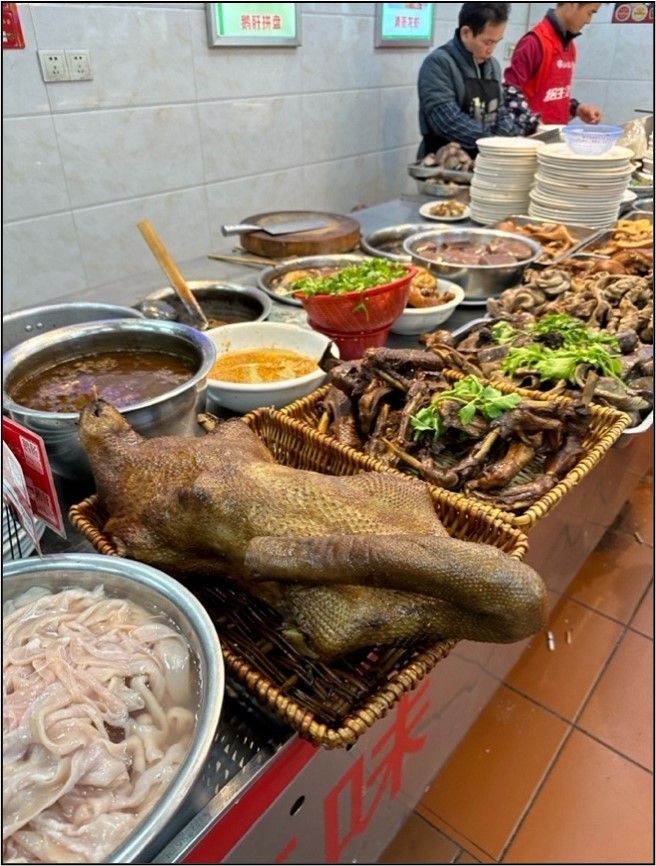
The localisation of Teochew cuisine in Singapore reflects the community’s adaptability to both ecological and cultural influences. Dishes like soon kueh, lor ah, bak chor mee, and Teochew porridge have evolved through the substitution of local ingredients and the incorporation of flavours and practices from other ethnic groups. These changes highlight the Singaporean Teochew’s resilience in preserving their heritage whilst adapting to their new environment. Such localised dishes not only preserve culinary traditions but also enrich Singapore’s multicultural food landscape. These examples, along many other dishes from various dialect groups and ethnicities, reflect the ever-evolving tapestry of Singaporean Chinese history and culture.
| 1 | Nusantara refers to a historical region influenced by Indonesian and Malay cultures. It once encompassed kingdoms like Sri Vijaya, Majapahit, and Johor-Riau, covering areas that are now Indonesia, Singapore, Brunei, southern Thailand, and parts of the Philippines.Refer to Timothy P. Bernard, ed., Contesting Malayness: Malay Identity Across Boundaries (Singapore: Singapore University Press, 2004). |
| 2 | Pek Hiang Tan, “Soon Kueh 笋粿,” My Singapore Food (blog), 2016. |
| 3 | Esther Titilayo Akinlabi, Kwame Anane-Fenin, and Damenortey Richard Akwada, “Applications of Bamboo,” in Bamboo: The Multipurpose Plant, edited by Esther Titilayo Akinlabi, Kwame Anane-Fenin, and Damenortey Richard Akwada (Cham: Springer International Publishing, 2017), 204–14. |
| 4 | An An et al., “Changing Abundance and Distribution of the Wintering Swan Goose Anser Cygnoides in the Middle and Lower Yangtze River Floodplain: An Investigation Combining a Field Survey with Satellite Telemetry,” Sustainability 11, no. 5 (January 2019): 1398. |
| 5 | Allan Octavian Hume and Charles Henry Tilson Marshall, The Game Birds of India, Burmah, and Ceylon, vol. 3 (Calcutta: A.O. Hume and Marshall, 1879), 103–8. |
| 6 | Hon Leong et al., “Prevention and Control of Avian Influenza in Singapore,” Annals of the Academy of Medicine, Singapore 37 (1 July 2008): 505. |
| 7 | Carolyn Khew, “Hungary Now Singapore’s Main Goose Source,” The Straits Times, 20 January 2014. |
| 8 | Khew. |
| 9 | Tan, “Cultural Reproduction, Local Invention and Globalization of Southeast Asian Chinese Food.” |
| 10 | Gia Lim Tan, An Introduction to the History and Culture of the Teochews in Singapore (New Jersey: World Scientific Publishing Co, 2018), 113. |
| 11 | Chen Yong-Jun et al., “Research Review of Fish Species Diversity in Taiwan Strait,” ACTA HYDROBIOLOGICA SINICA 40, no. 1 (25 January 2016): 157–164; A. G. Mazlan et al., “On the Current Status of Coastal Marine Biodiversity in Malaysia,” IJMS vol. 34 (1), March 2005, 79. |
Khew, Carolyn. “Hungary Now Singapore’s Main Goose Source.” The Straits Times, 20 January 2014. | |
Tan, Chee “Cultural Reproduction, Local Invention and Globalisation of Southeast Asian Chinese Food.” In Chinese Food and Foodways in Southeast Asia and Beyond, edited by Tan Chee Beng, 23–41. Singapore: NUS Press, 2011. | |
Tan, Gia Lim. An Introduction to the History and Culture of the Teochews in Singapore. Singapore: World Scientific Publishing Co, 2018. | |
Tan, Pek Hiang. “Soon Kueh 笋粿.” My Singapore Food (blog), 2016. |