Personal recollection: My time at Radio and Television Singapore’s Chinese Current Affairs unit (1960–1990)


Before 1960: Radio Malaya
Before World War II, Malaya was a British colony. The Malaya Broadcasting Corporation was established in 1941 and headquartered on the fifth and sixth floors of Cathay Building in Singapore. It housed studios, newsrooms and a programme department.
After the Japanese occupied Singapore in 1942, their propaganda and broadcasting arm Syonan Hoso Kyoku (“Light of the South” Broadcasting Corporation) used the facilities at Cathay Building for radio broadcasting, airing news and programmes from Tokyo.
After the end of World War II in 1945, the British returned to Singapore and in 1946 restored the use of Cathay Building as headquarters of the newly formed Radio Malaya–Singapore, while also setting up branches in Kuala Lumpur and Penang.
At the time, Radio Malaya’s Chinese programme director was Sze Chu Sian (1910–1990), with Ying Jianhua (birth and death years unknown) as his deputy. News coverage was helmed by Lu Guanfen (birth and death years unknown), while Wan King Cheong (c. 1919–1969) headed the Chinese section of Radio Malaya’s education service in Singapore.
Back then, television was not yet available, and other options for entertainment, such as cinemas, were limited. Tuning in to the radio was therefore the most common form of entertainment for Singapore’s Chinese-speaking audience. Rediffusion, Singapore’s first commercial cable-transmitted radio station, only began broadcasting in 1949.
From the late 1940s to 1950s, those who had worked in the Chinese unit of Radio Malaya and later remained active in the radio and TV scene include Foong Choon Hon (1928–2009), Ng Bok Sai (1926–2000), Sia Cheng Tit (1915–1991), Tan Poh Han, Fu Helin (1940–1990), Siew Chee Chong (c. 1940–1993), Wang Shimin (birth and death years unknown), Zeng Pengxiang (c. 1940–2006), and Zhang Lianying.
In 1951, the radio studios moved from Cathay Building to Caldecott Hill. In 1957, following Malaya’s independence from Britain, the station was renamed Radio Singapore.
1960s–1970s: Radio and Television Singapore
In 1963, Singapore merged with the Federation of Malaya, Sarawak and North Borneo (Sabah) to form Malaysia. In the same year, TV broadcasting officially began. After Singapore gained independence in 1965, the radio and TV stations were renamed Radio and Television Singapore (RTS).
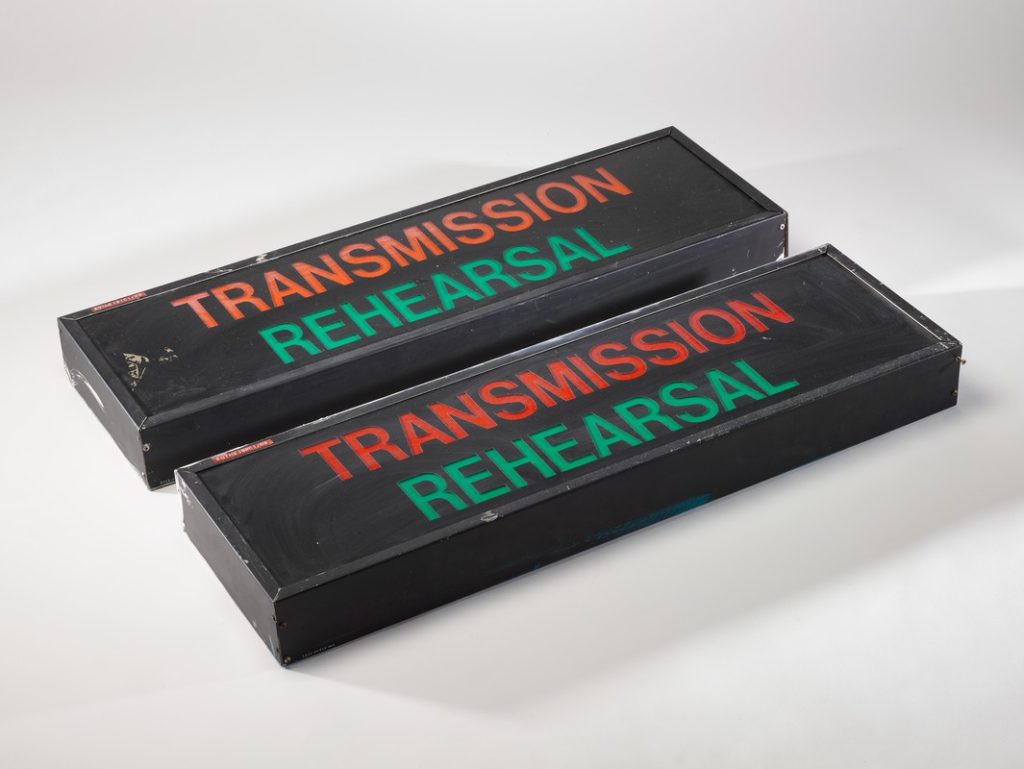
Since the early 1960s, the structure of the RTS had included a Central Production Unit (CPU), whose mission was to promote government policies and directives, and encourage the public to work together to build a self-reliant nation despite the inherent challenges.
The CPU was led by Wong-Lee Soik Tin (1938–1993), who later became the head of RTS. Prior to this, she had accompanied Singapore’s founding prime minister Lee Kuan Yew (1923–2015) on many official trips, covering his overseas visits and speeches.
Since its inception, the CPU comprised four language units — Chinese, Malay, Tamil and English — to convey important political messages to Singapore’s four main ethnic groups.
Until the early 1970s, the Chinese unit of the CPU was a small outfit with Choo Ping Chyuen and Huang Peide in charge of producing a 15-minute daily morning radio programme Daily Digest.
Shortly after TV broadcasting began in the 1960s, playwright Kuo Pao Kun (1939–2002) joined RTS and started a TV debate programme Youth Forum, which later evolved into the Inter School Debates. After Kuo left RTS, Xie Yudui (c. 1939–1990) took over the annual debates.
1970s–1980s: Joining RTS’ Chinese Current Affairs unit
I joined CPU in 1972 and was initially tasked to produce the Daily Digest and host the Chinese version of the TV current affairs programme What Others Say.
Around the 1970s, the CPU was renamed Current Affairs. At that time, both news and current affairs were under the News and Current Affairs Division.
As staff strength increased and staff training gradually improved, in addition to producing Daily Digest, the Chinese programme unit of the News and Current Affairs Division also produced a weekly TV programme, Our Workers. During the same period, the unit also organised the Inter School Debates and Intervarsity Debates held alternatively every year, with each debate series typically comprising seven rounds.
In the mid-1970s, the Chinese programme unit launched a new fortnightly 45-minute programme, Forum. Each episode would usually feature a moderator and four guests engaged in discussions on popular topics in a TV studio.
During this period, the Chinese programme unit was headed by Tan Gek Siam, who had returned from the British Broadcasting Corporation (BBC).
In 1979, the News and Current Affairs Division produced a notable documentary on Vietnamese refugees who fled their country by boat following the Vietnam War. Filmed by two veteran producers, Chan Heng Wing and Tan Gek Siam, the documentary captured the plight of Vietnamese refugees at refugee camps in several Southeast Asian countries.
1980s–1990s: Life at Singapore Broadcasting Corporation
On 1 February 1980, RTS became the Singapore Broadcasting Corporation (SBC). Cheng Tong Fatt was appointed its general manager and Wong-Lee Soik Tin, its deputy general manager. Former President of Singapore Ong Teng Cheong (1936–2002) served as chairman of the corporation. In the early 1980s, Cheng split the News and Current Affairs Division into the News Division and the Current Affairs Division, with the latter headed by S. Chandra Mohan (1938–2010).
During this period, as the number of programmes and staff increased, so did the number of feature documentaries being produced. Back then, documentaries were shot on cinefilm, which was costly, and so producers had to adhere to the 6:1 shooting ratio (six minutes of footage per one minute of finished film). Documentaries which I produced include Zouchu chufang (Out of the Kitchen) which encourages women to return to the workforce, Liyong Taiyangneng (Harnessing Solar Energy) which explores how clean energy has made its way to the people’s homes, and Bangongshi zidonghua (Office Automation) on how automation could help us become more efficient at work.
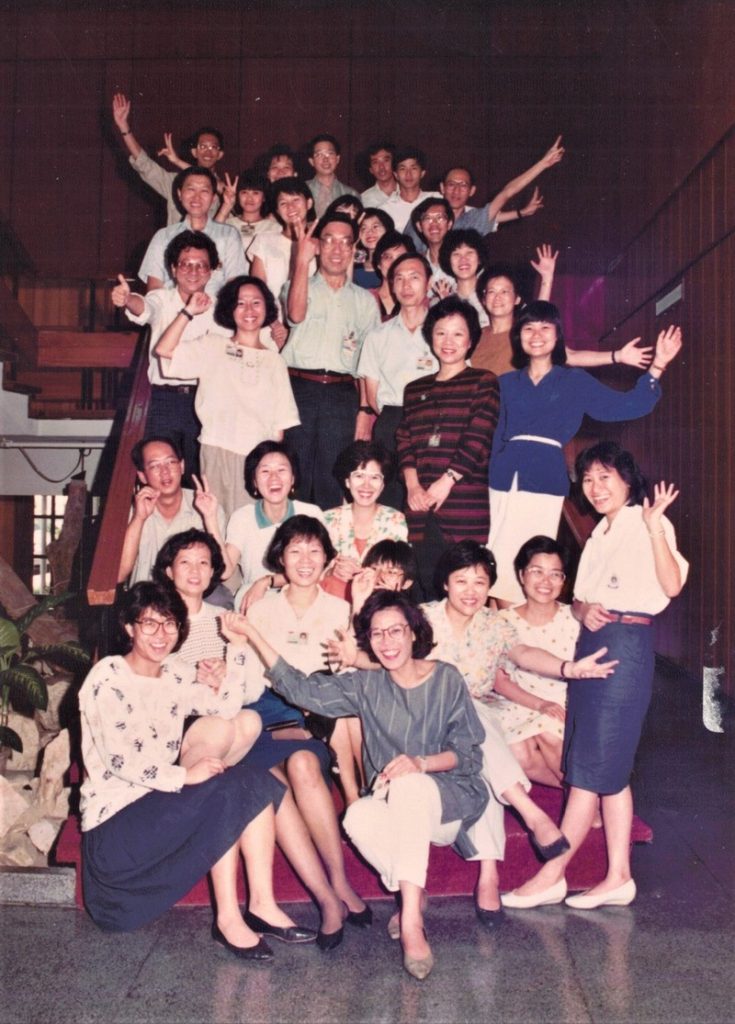
In early 1987, I ended my two-year secondment to the Chinese Drama Unit and returned to the Current Affairs Division to lead the Chinese programme unit (also known as Chinese Current Affairs) at the SBC. Over the next 10 years, the team produced several regular programmes, and our staff strength also grew from just over 20 to 44. Below are some notable programmes produced during that period:
- Focus, a 30-minute Current Affairs programme, which had previously been under News Division. In 1988, it became a weekly current affairs programme hosted by Wong Lin Tam. Viewership was about 400,000 to 500,000 per episode.
- Tuesday Report, a regular documentary that premiered in May 1990. The programme gained widespread acclaim for its meticulous and insightful Its most well-known episode was Amah — Vow of Celibacy, which looked at stories behind majie, women dressed in black-and-white who used to work as maids for wealthy families.
- Money Week, a weekly finance programme that premiered in 1995.
- Debate programmes, which evolved into the Asian Intervarsity Debate Championship in In 1993, SBC collaborated with China Central Television (CCTV) to expand it into the International Varsity Debate Competition. This major cultural event of the Mandarin-speaking world continued until 2011.
The Chinese Current Affairs was also responsible for producing the Chinese versions of Today in Parliament and Crimewatch, and participated in the production of other large-scale programmes and reporting such as National Day Parade and General Election.
In addition, Current Affairs Division had a Special Features Team responsible for producing important ad hoc programmes and documentary series on specific themes, such as All in the Family which featured families where all members worked in the same business, and Away from Home which looked at Singaporeans working in different parts of the world.
In early 1997, I left the Chinese Current Affairs to assume the position of chief representative of the Television Corporation of Singapore to China.
This is an edited and translated version of 【个人记述】我与新加坡广播电视台华文时事节目组(1960年代至1990年代). Click here to read original piece.
Tay, Philip J., Choo Lian Liang et al., eds. Huiwang jialigu shan [Reflections from Caldecott Hill]. Singapore: Global Publishing, 2021. |