Kusu Island pilgrimage in Singapore


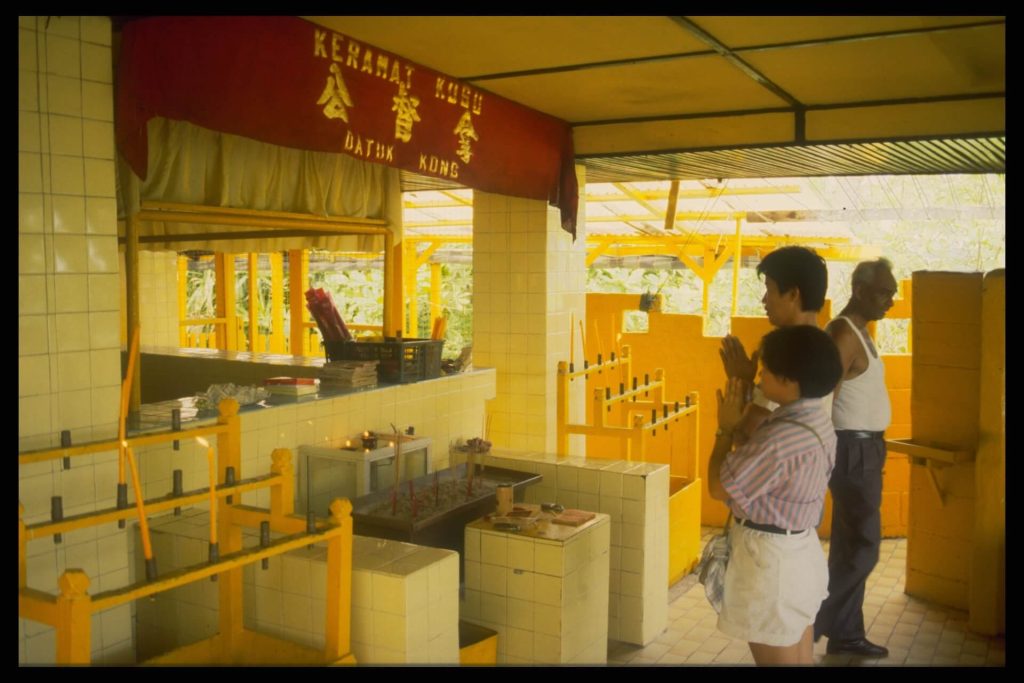
In the ninth lunar month every year, thousands of devotees travel by boat to Kusu Island, located about 5.6km south-west of the main island of Singapore, to pay their respects at the Kusu Tua Pek Kong Temple and Keramat Kusu. The Kusu Island pilgrimage is a centuries-old practice, ongoing since at least the 1800s. While pilgrims from all over the world are welcome, the pilgrimage has historically attracted Southeast Asian Chinese devotees.
Origins of the places of worship and the pilgrimage
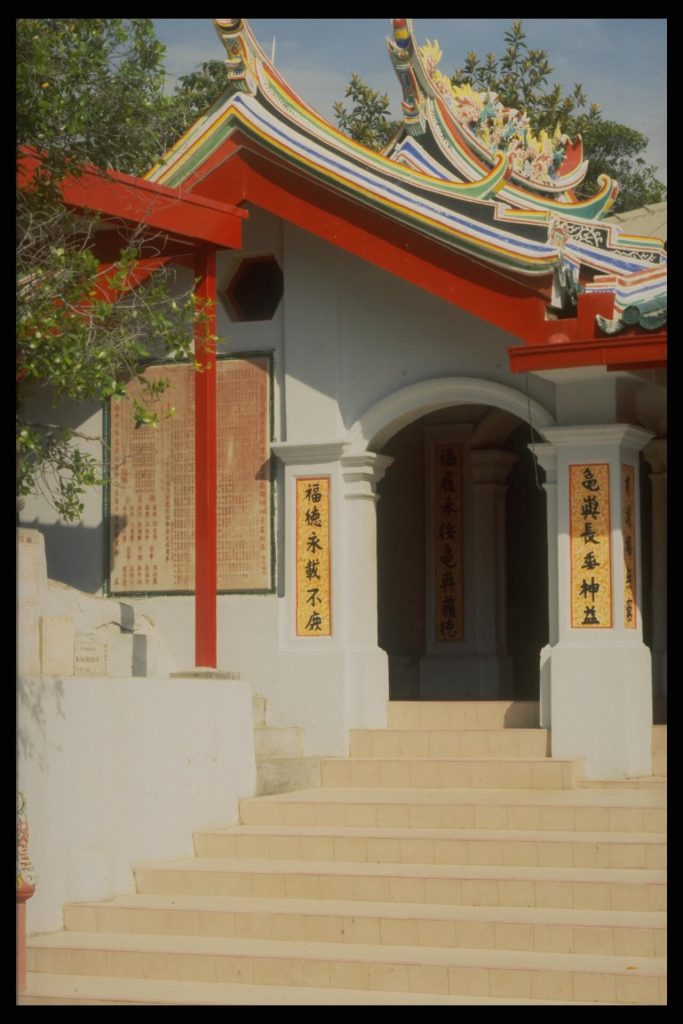
Kusu is the transliteration of the Hokkien pronunciation for gui yu, literally meaning Tortoise Island. This name is widely believed to have been inspired by the island’s tortoise-like shape before it was transformed by land reclamation works in the 1970s.1 The Tua Pek Kong Temple is located at what resembled the tortoise’s head, while the outcrop on which Keramat Kusu stands resembled the shell.
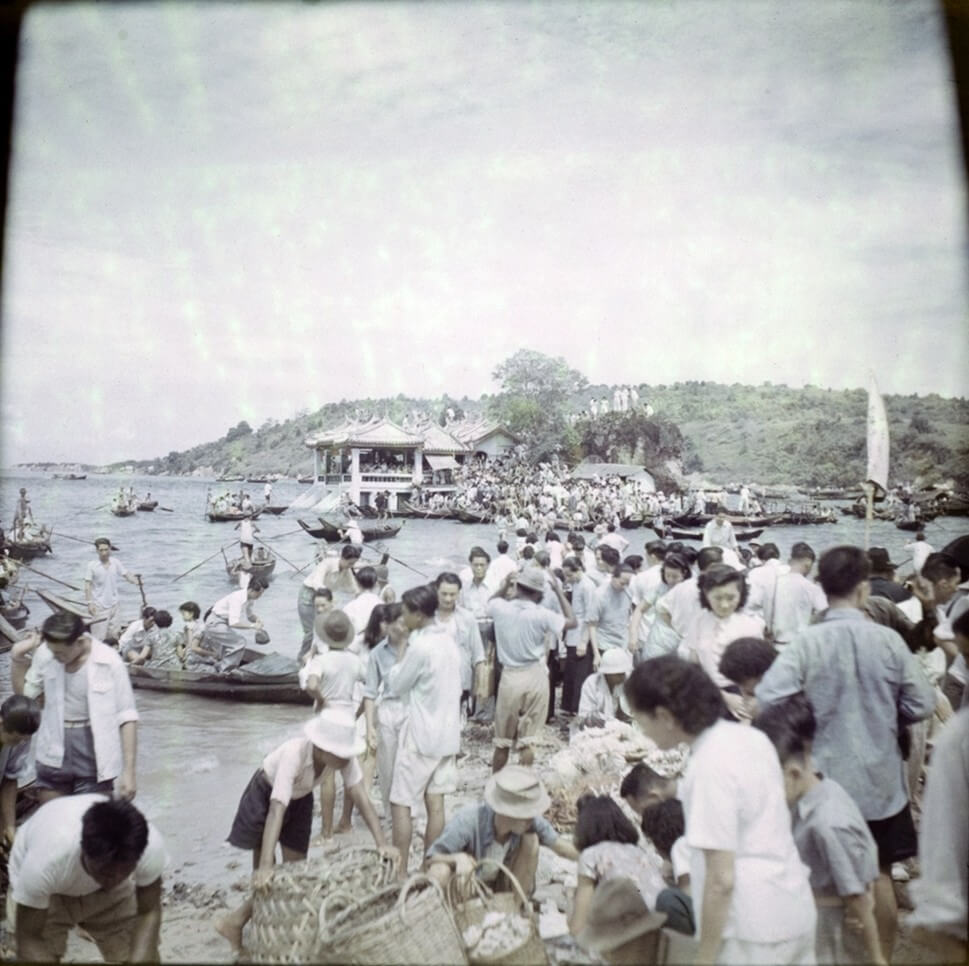
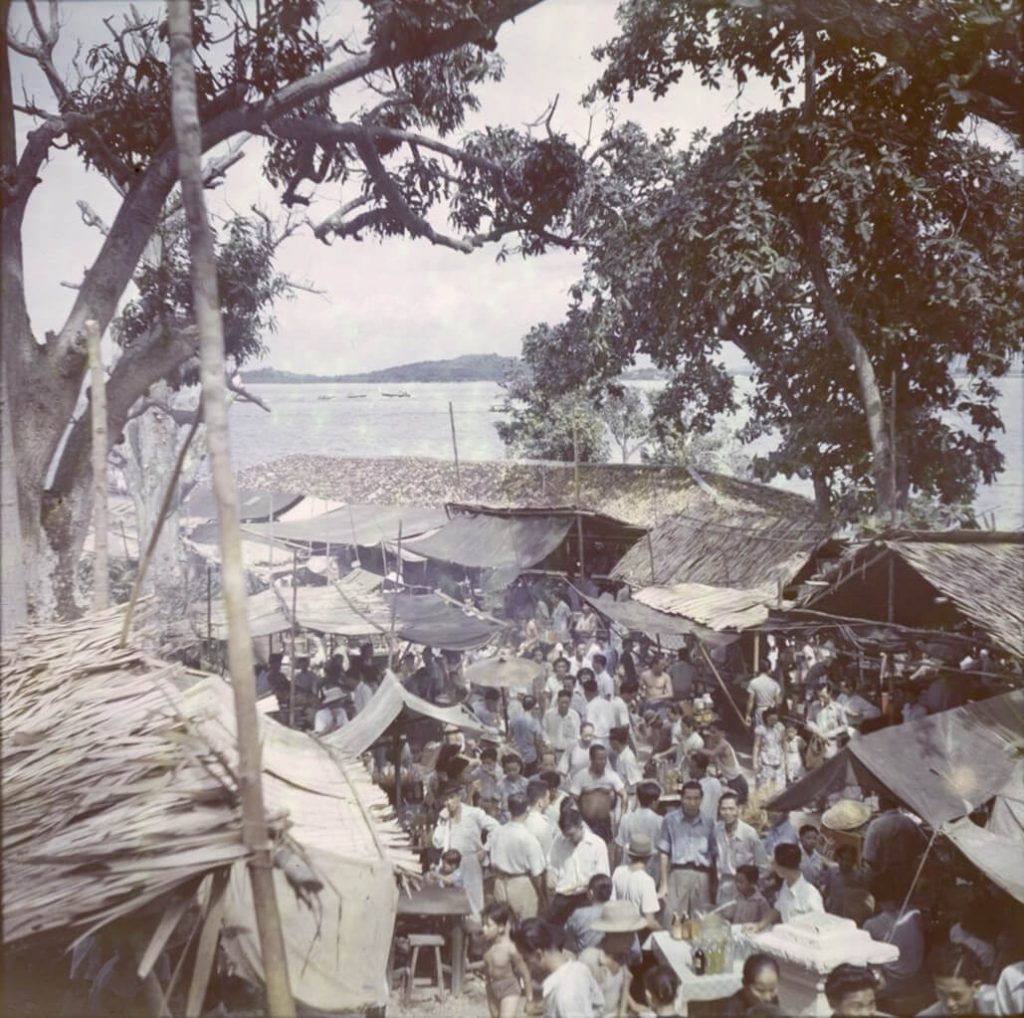
The origins of the pilgrimage are ambiguous, but oral histories from the caretakers of each place of worship sketch a brief outline. To begin with, the Tua Pek Kong Temple, typically the pilgrims’ first stop on the island, had existed since before 1923. While the present temple building was formally completed in 1923, fishermen had long before that been stopping by the island to pray at a small hut with a Tua Pek Kong statue for safety out at sea and a bountiful catch.2 Tua Pek Kong is a deity worshipped among overseas Chinese communities in Singapore, Malaysia and Indonesia, widely understood as the protector of seafarers and a god of prosperity.3
Indeed, a possible reason why the pilgrimage takes place in the ninth lunar month is that the 1923 renovations were said to be completed in the ninth lunar month, according to the temple caretaker.4 Contrary to popular belief, the timing of the pilgrimage is unrelated to other festivals that occur in the Chinese ninth lunar month, such as the Nine Emperor Gods Festival or the Double Ninth Festival.
After paying their respects at the Tua Pek Kong Temple, devotees then make their way up a flight of 152 stairs, ascending the rocky outcrop that leads to Keramat Kusu. Keramat are sacred shrines where people pay respects to saints or holy persons. This practice is believed to have its roots in pre-Islamic Malay animism and early Sufi Islam.5
Similar to the origins of the Tua Pek Kong Temple, Keramat Kusu had modest beginnings. Oral history passed down through generations of caretakers suggests that the original Datok Kong (Datuk Gong) keramat was set up in 1819 in the form of a small bamboo hut. Datok and Kong are honorific terms of address for one’s grandfather in Malay and Chinese respectively, and Datok Kong is a collective name for saints of highly venerated figures in society, worshipped by various communities in Southeast Asia.6 The hut was built by a man named Jumaat (birth and death years unknown), the first caretaker, who had wanted to commemorate his friend, a respected pious man named Syed Abdul Rahman (birth and death years unknown), who had unexpectedly disappeared on the island one day.
Subsequently, two other keramat were built beside the Datok Kong keramat, forming the family of three shrines at Keramat Kusu today. One keramat is dedicated to Nenek Ghalib (birth and death years unknown), the “grandmother” spirit to whom devotees pray for peace, safety, and fertility. The third keramat is for a lady named Puteri Sharifah Fatimah (birth and death years unknown). Both shrines were added some time in the 19th century, funded through donations from Chinese and Peranakan devotees, many of whom frequented the keramat.
Cross-worshipping on the island
As a form of respect, devotees make it a point to stop at both places of worship, despite their seemingly disparate religious origins. The mixing of cultures and faiths created by this cross-worshipping has led to specific social practices surrounding the pilgrimage.
For instance, it is understood that pilgrims must abstain from consuming pork the day before visiting the island, to respect the Muslim Datok Kong. In the 1950s, pilgrims would abstain from pork for the whole ninth lunar month.7 Food containing pork and lard is also not welcome on the island, including in the Tua Pek Kong Temple itself, in line with Islamic dietary laws.
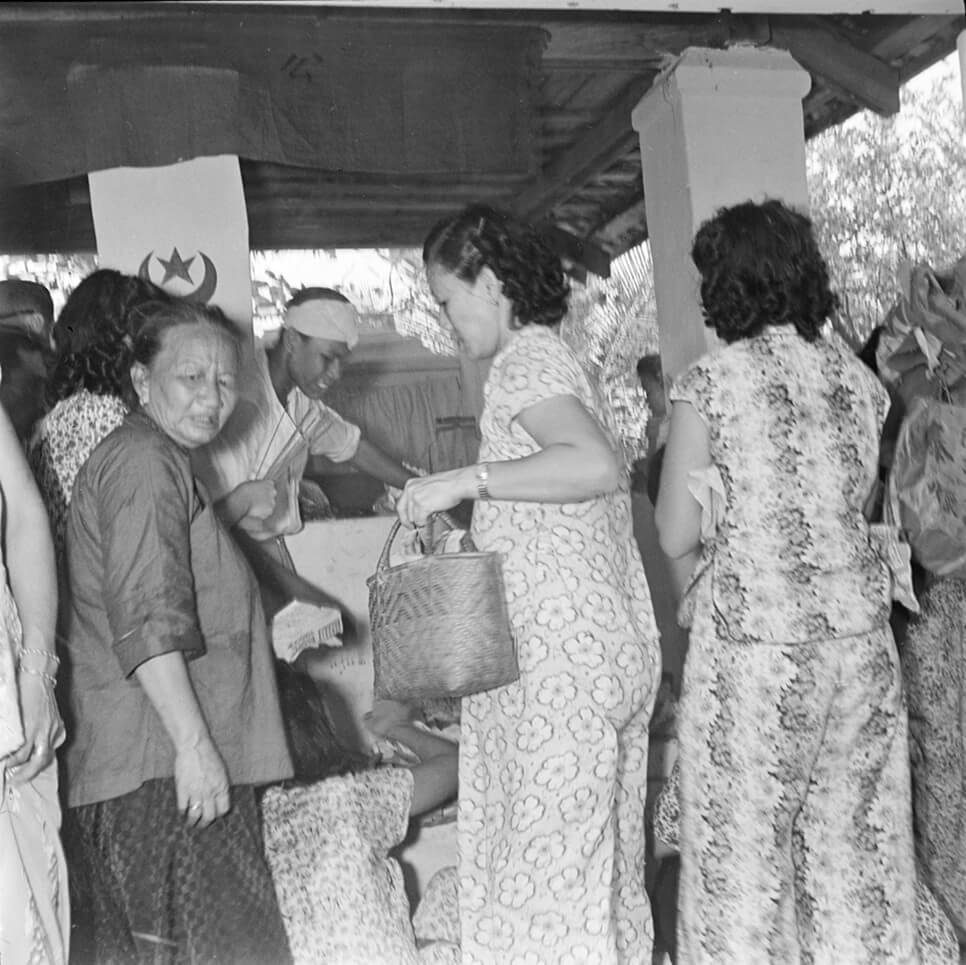
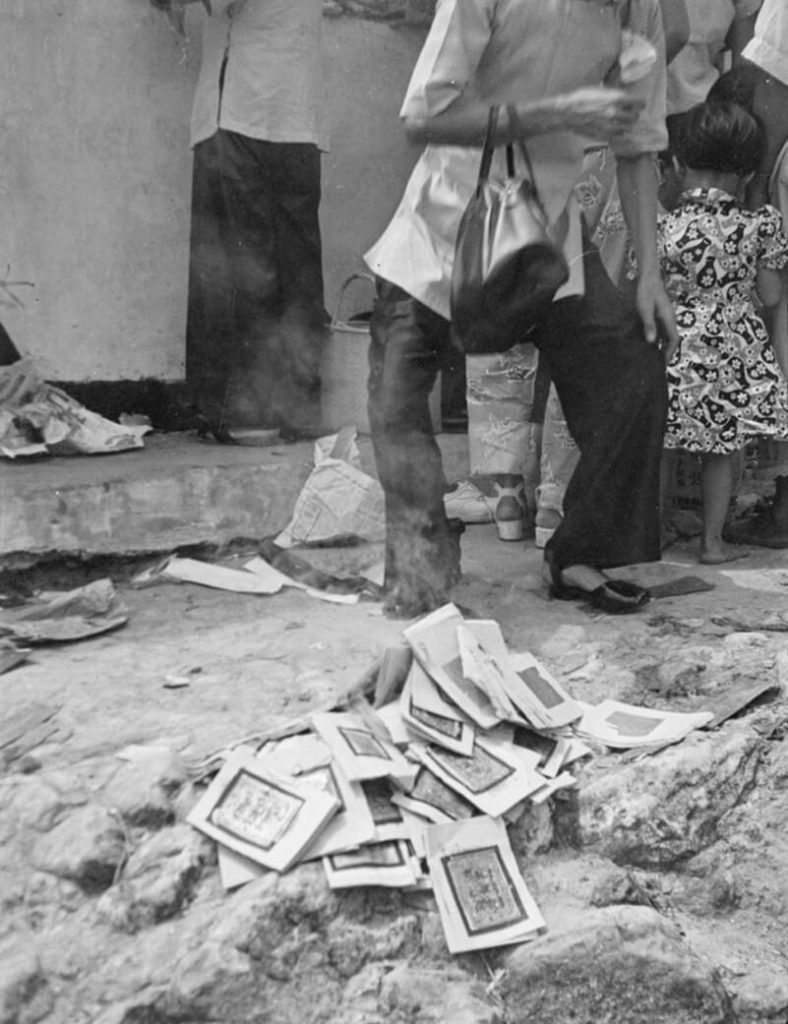
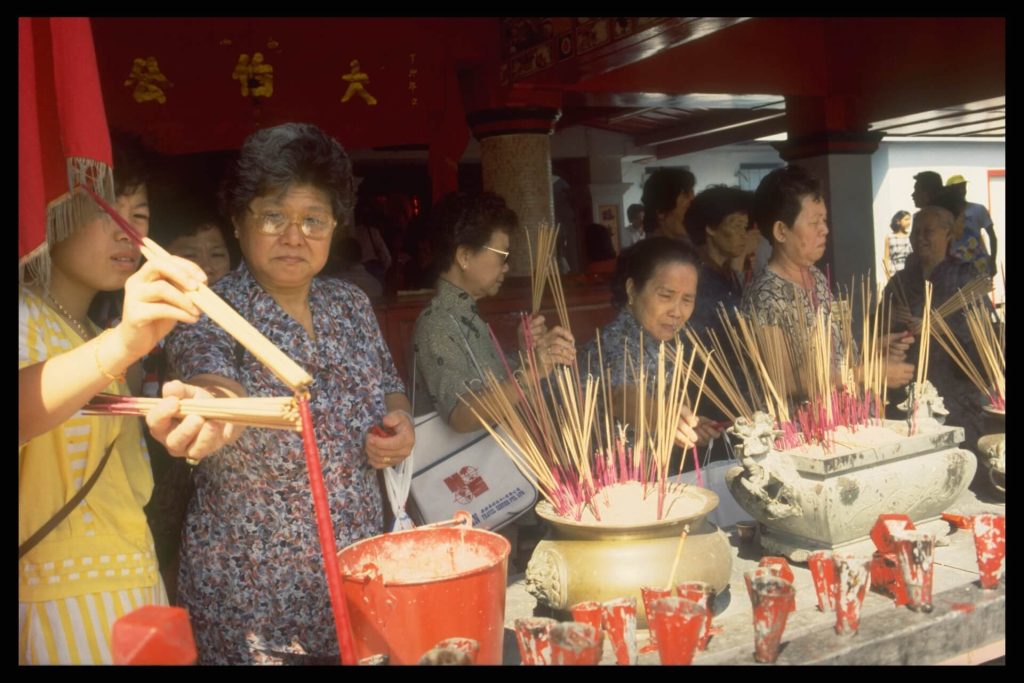
Furthermore, Chinese Taoist worshipping practices take place across both places of worship. At both the temple and keramat, devotees must first offer joss sticks to Ti Kong, the Jade Emperor. This is before they pray to Tua Pek Kong and Guan Yin at the temple, or Datok Kong and the two Datok Nenek at the keramat. At both places of worship, caretakers also sell joss paper to devotees who would like to burn joss paper as offerings. Following the Taoist tradition of tiamyew, caretakers at Keramat Kusu also offer to help devotees add oil to oil lamps, if devotees wish to make these offerings to the saints. As part of the ritual, the Malay caretakers and their assistants chant blessings in Hokkien, asking for prosperity and success for the devotees.
In addition, as early as the 1930s,8 devotees have been bringing yellow rice (nasi kunyit/kuning) as offerings to both places of worship, although today this practice is declining. Yellow symbolises royalty in Malay-Muslim culture, and it is also the colour that Keramat Kusu has been painted at least since the 1950s.
Chinese ethics of reciprocity and worship practices
An ethics of reciprocity informs how worship practices are organised on Kusu Island, shaped by the Chinese community’s social norms. For example, it is a widely held belief that if one visits the island to pray on the pilgrimage, they must continue to do so for three years consecutively. This is to ensure that the devotee’s reciprocal “duty” to the gods and deities on the island is fully served, in return to the blessings with which the gods have provided the devotee. There are many anecdotes from pilgrims who mentioned how they received blessings from the gods and deities at the temple and keramat, and in return sought to give thanks.
One story comes from a caretaker of Keramat Kusu, who recalled hearing from his elders that the Datok Nenek Ghalib keramat was funded through the donations of a Chinese tycoon known as Hong Lim (possibly Cheang Hong Lim, given Cheang’s known advocacy for the Kusu Island pilgrimage).9 He and his wife had been praying for a child at the tallest tree on the Kusu outcrop, locally known as the residence of the Datok Nenek spirit. When their wish was granted, they reciprocated and thanked her by donating enough money to cover the building of a concrete shrine to Datok Nenek.
The other story is the story of Siong Leng Musical Association, a local music company that performs and preserves the traditional Fujian musical style of Nanyin. Since the 1970s, Siong Leng has been performing Nanyin at the Kusu Tua Pek Kong Temple every year during the pilgrimage season. This practice started after former President of Siong Leng, Teng Mah Seng (1916–1992), prayed at the temple for the success of his business, and continued to return to give thanks every year after his wishes were granted.10 Accordingly, Siong Leng carried on the spirit of reciprocity and has continued to perform at the yearly pilgrimage even after the end of Teng’s term.
Our living heritage
Today, the Kusu Island pilgrimage continues to stand as an emblem of Singapore’s rich religious and ethnic diversity and harmony. In particular, the pilgrimage points to how the Singapore Chinese community has transformed and adapted to local influences, flexibly incorporating Southeast Asian practices like keramat worship into Chinese religion and belief.
Keramat Kusu’s caretakers are still in the process of rebuilding the keramat, with the help of the public’s donations as well.11 The tragic 2022 fire at Keramat Kusu brought the Kusu pilgrimage back into the spotlight, where calls were made to recognise the importance of preserving this cultural heritage. Indeed, those who embarked on the pilgrimage in recent years would have noticed that the pilgrimage continues to attract large crowds from both Singapore as well as other places, pointing to its cultural relevance and unique position as a cross-cultural, cross-faith practice.
| 1 | “PSA to enlarge Kusu Island seven-fold,” The Straits Times, 22 October 1974. |
| 2 | Jack Meng-Tat Chia, “Managing the Tortoise Island: Tua Pek Kong Temple, Pilgrimage, and Social Change in Pulau Kusu, 1965–2007,” New Zealand Journal of Asian Studies 11, no. 2 (2009): 72–95. |
| 3 | Jack Meng-Tat Chia, “Who is Tua Pek Kong? The Cult of Grand Uncle in Malaysia and Singapore,” Archiv Orientální 85, no. 3 (2017): 439–460. |
| 4 | Information shared with the author in July–September 2023, by the then caretaker of Kusu Tua Pek Kong Temple. |
| 5 | P. J. Rivers, “Keramat in Singapore in the Mid-Twentieth Century,” Journal of the Malaysian Branch of the Royal Asiatic Society 76, no. 2 (2003): 93–119. |
| 6 | Cheu Hock Tong, “The Datuk Kong Spirit Cult Movement in Penang: Being and Belonging in Multi-Ethnic Malaysia,” Journal of Southeast Asian Studies 23, no. 2 (1992): 381–404. |
| 7 | A. J. Anthony, “A Picnic… With the Harbour Gods,” Straits Times Annual, 1 January 1952. |
| 8 | “Chinese Topics in Malaya,” The Straits Times, 20 October 1932. |
| 9 | “Wednesday, 11th August 1875,” The Straits Times, 14 August 1875. |
| 10 | Teng Mah Seng, oral history interview by Jesley Chua Chee Huan, 9 June 1988, audio, National Archives Singapore (accession no. 000927), Reel/Disc 1 of 10. |
| 11 | Ng Wei Kai, “Shrines Destroyed in Kusu Island Fire 70% Reconstructed: Caretaker,” The Straits Times, 5 September 2022. |
Chen, Baoxing. “Jiuyue: xiangyanniaoniao hua guiyu” [September, Tortoise Island through the fragrance of incense]. Shin Min Daily News, 4 October 1984. | |
Gibson, William L. “The Origin Stories of Keramat Kusu.” BiblioAsia 18, no. 4, January–March 2023. | |
Lim, Kian Seng. “Guiyu jinxiang mang” [A bustling pilgrimage to Tortoise Island]. Lianhe Zaobao, 25 October 1987. | |
Lu, Caixia. “The Kusu Pilgrimage: An Enduring Myth.” The Newsletter, no. 59 (2012): 50–51. | |
Pok, Rui En. “The Development of the Kusu Island Pilgrimage, from the 1950s–Present.” University of Cambridge, undated. |