新加坡福建音乐


在新加坡,福建音乐指的是用福建方言演唱的音乐,一般归类为传统音乐,或摩登音乐(流行音乐)两种。
“福建人”一词,泛指来自中国福建省闽南地区的华人移民及其后裔。1福建人在这区域(包括中国、台湾及东南亚国家)的地位及影响,19世纪以来的文献就有记载。2罗马字称谓,如“South Fukienese”(福建南部人,闽南人)或“Hokkienese” (福建人)也应运而生。3在不同时空的背景下,福建音乐的叫法也有所不同,其中比较常见的是福建歌,尚有专适用于特定时间段的厦语歌、厦曲、闽南歌、闽南语歌曲。
南音之起源
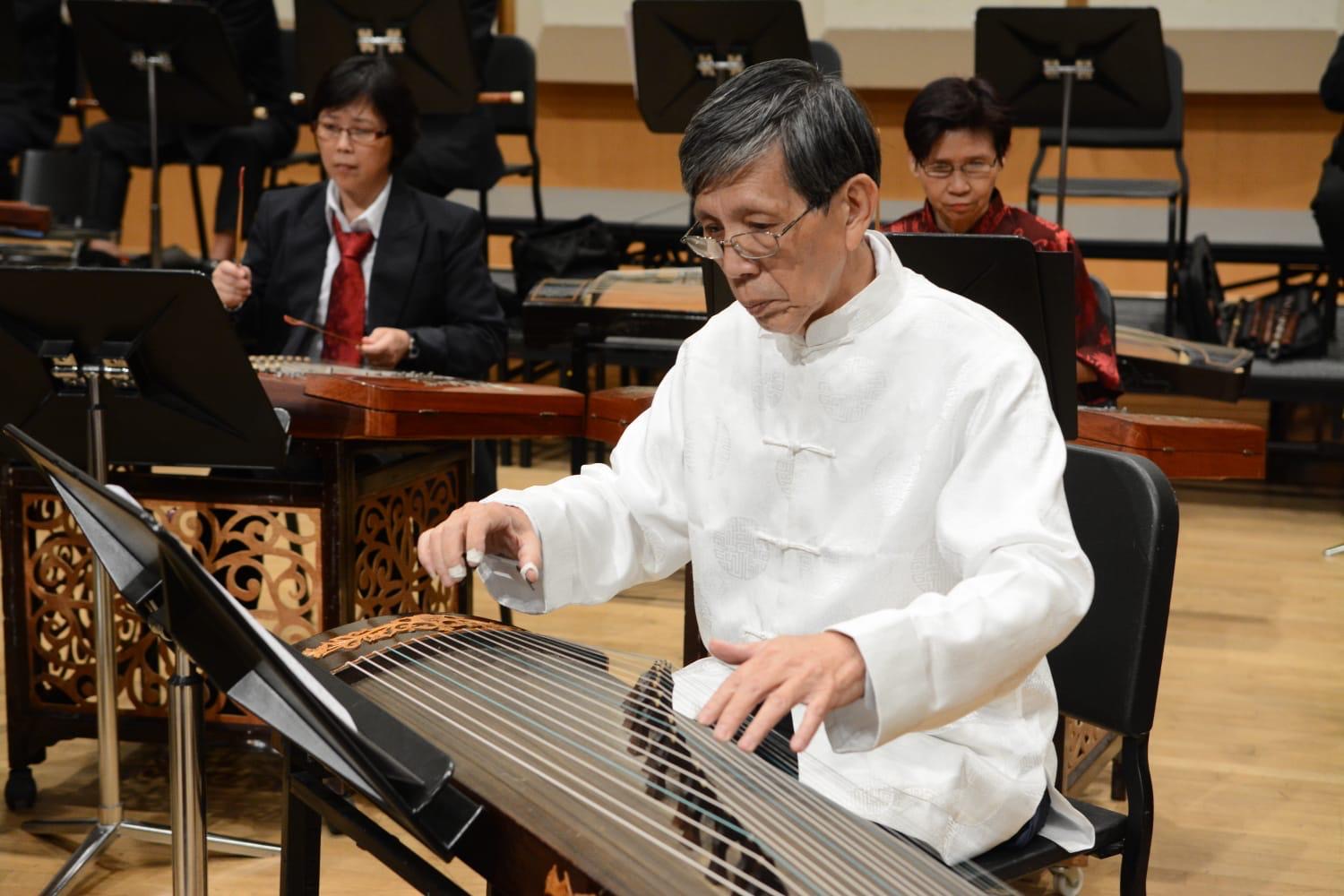
南音,亦称南管、南乐、弦管、南曲、南词或郎君唱4等,是传统福建音乐中最历久不衰的乐种。南音的起源上可追溯到14世纪的明朝初期。5南音属于以“指、曲、谱”三大类组成的合奏音乐。6曲目既有奏唱曲,也有器乐曲目,主要乐器包括琵琶、三弦、洞箫和二弦,另外还有用以标示节奏由五块板组成的拍板。南音在记谱、正式音乐结构和曲目方面,被认为有别于广东和潮州地区流行的丝竹音乐。7
南管演奏家杨朝长(1922-1993)曾说:哪里有福建人,哪里就有南管社。8他强调的是南音在福建人日常生活中的重要性。南音原为中国帝制时期上层社会成员演奏的音乐,后来成为移居新加坡的福建人生活中重要的组成部分。9对福建移民而言,南音即乡音。早期,新加坡未有任何南音社之时,福建社群(大多来自晋江)会聚集在“估俚间”吟唱南音。他们会自带琵琶,也会托泉州乡亲带来更多的乐器和乐谱,供大家尽情演奏、欢唱。10
后来,一些移居新加坡的福建人也纷纷创办南音社。被认为成立于20世纪初期的横云阁便是一例。11早年,横云阁多在神诞(如观音诞)或传统节日(如元宵节)期间闭门演出。后来,也有公开演出活动。天福宮每逢有南音演出,必定吸引大批的福建人前往欣赏。
此外,南音也在福建人的丧仪中扮演重要角色。一般而言,只有南音乐师的葬礼上会出现南音合奏,然而,有些福建人也会为其家属的丧礼聘请南音乐手前来演奏。11

南音在20世纪初期至中叶的发展
从20世纪初期至中叶,南音广受欢迎,从这期间成立的几间南音社可见端倪:1930年代的锦华阁、1937年左右的云庐南音社、1941年的湘灵音乐社、和1961年的泉声音乐社。13福建人的会馆及社团也各自成立南音小组,如安海公会的南音组成立于1940年代至1950年代间、晋江会馆的南音组成立于1978年。14
除了南音社,演出场地和广播平台也为南音的传播发挥重要作用。据《新自由西报》的报道,广播电台ZHL、ZHP1和ZHP2于1940年代初期,就曾在节目上播放“福建南管选段”。15《南洋商报》也报道,马来亚广播电台曾于1948年和1954年,分别邀请张氏公会和湘灵音乐社在广播上演出南乐。1950年代,新加坡首家有线商业广播电台丽的呼声也加入播放南乐的行列。16另外,快乐世界等游艺场也曾邀请南乐联友社、湘灵音乐社等南音团体到场内演出。
第二次世界大战的结束,也从各方面影响了新加坡福建音乐的发展。首先,新加坡和中国的联系中断,也阻止南音乐师进入新加坡。其次,这时期,厦语片开始兴盛,片中常有传统南音曲段,南音乐手也参与电影配乐。1953年的《荔镜缘》是其中的经典例子,出演该片的女演员江帆本身就是一名南音乐手。《星洲日报》的报道中,称其配乐是以“南管锦曲”为特色的南乐制作。江帆后来参演的几部同类电影也被称为“南音电影”。17
20世纪中期也是新加坡政治和文化的重大转型期。冷战期间,新加坡的福建人因与原乡隔绝,不得不转向其他地点,例如香港的“小福建”、台湾、菲律宾等地,寻找相应的福建音乐娱乐。18同时,随着城市化的新型消费模式,现代视听需求不同于以往,也影响了音乐产业:厦语片中的传统南音在1950年代上半叶不再盛行,摩登厦曲因势崛起。19在这小段时间内,“厦门”成了福建现代音乐的代名词。吊诡的是,它指的绝不是在厦门制作的音乐,因为在1950年代,在资本主义阵营对共产主义极端畏惧的情况下,中国几乎与世隔绝。20那个时期,中国以外的“大福建地区”,包括新加坡,厦语音乐成了福建音乐的主要形式。
南音与福建戏曲
南音的之发展,也和新加坡传统福建戏的发展息息相关。19世纪末至20世纪初,南音和传统福建戏曲可谓“血肉相连”。21在新加坡,南音也流行于梨园戏、高甲戏、布袋戏和提线木偶等剧种。
福泉兴这个来自马来亚的福建戏班,原以南管扎根,但早在1936年便已转型为歌仔戏班。这个广受欢迎的戏班后来改名新赛凤闽剧团,在新加坡活跃至21世纪初期。22日月生(或称日月星)木偶剧团的李载贻也觉察到歌仔戏和南管音乐此兴彼衰,他后来也成立了歌仔戏班“是也非”。23新加坡福建戏曲遂从注重曲牌的传统,逐渐过渡到歌仔戏那样以即兴曲调为主的形式,而曲调中最具代表性的,是每段四句、每句七字的“七字调”。

歌仔戏唱片的推出,更近一步推动了歌仔戏热潮,其中包括由新麒麟闽剧团呈献、东南亚唱片公司发行的《恩仇记》《女驸马》和《包公三勘蝴蝶梦》等。24
摩登厦曲的概念在新加坡或可说始于莺燕闽剧团。据报道,在1950年,该团灌录新加坡的首批摩登厦曲唱片,共发行62首歌曲,其中包括其他文化类型的音乐,如日本电影《支那之夜》的同名主题曲、马来流行歌曲《月光曲》和《美丽的梭罗河》等。25其他唱片公司也同样抓住了这个机会,例如巴乐风唱片公司邀来莺燕闽剧团的成员,包括林氏姐妹莺莺和燕燕、林中中、方静、陈毓泉及薛玛丽,分别录制流行福建歌曲唱片。26

20世纪末的福建音乐
1970年代末,湘灵音乐社的先驱丁马成(1915-1992)领头,试图恢复南音昔日荣景,让其成为本地福建社群的主流表演形式。然而,福建流行歌曲的盛行、加上来自其他如粤语和西方流行音乐等流派的竞争,使得此举困难重重。
1980年代和1990年代,尽管主流电视和广播电台禁止使用方言,福建流行音乐依然受到本地听众的关注。《干一杯》等歌曲红极一时,喜爱福建流行音乐的歌迷也会上KTV消费或购买在台湾和新加坡录制的卡带。据《海峡时报》报道,这股福建流行音乐风潮之所以会兴起,是因为“福建歌的歌词贴近人们的生活,对爱情、快乐和悲伤等问题皆有直白的表述”。27
来自台湾的福建娱乐产业,对新加坡的学生群体和成年人也产生很大的影响。他们成为福建流行歌曲“新浪潮”的受众。福建流行乐歌迷除了可以通过台湾刊物获得最新音乐资讯,唱片公司,如瑞华唱片,也曾在厂房中举办李茂山和罗时丰等台湾当红歌手的午餐音乐会。蓝领阶级被认为当时是福建音乐卡带的最主要买家。28
新加坡福建音乐的发展,在这百年以来经历了戏剧性的变化,从最初盛行的传统南音到冷战时期的厦语音乐,皆与区域间的政治和社会动态息息相关。文化传播方面,在新加坡流行的现代福建歌和歌仔戏,很多时候也受到台湾的影响,这种现象从20世纪后期延续至今。
本文原文为 Hokkien music in Singapore,此为编辑和翻译后的版本。点击此处查看原文。
| 1 | Jeremy E. Taylor, Rethinking Transnational Chinese Cinemas: The Amoy-dialect Film Industry in Cold War Asia (New York: Routledge, 2011), xii. |
| 2 | J.J.M. De Groot, Buddhist masses for the dead at Amoy (Leyde: E.J. Brill, 1884). |
| 3 | For the use of “Fukienese”, see Ng Chin-Keong, Trade and Society: The Amoy Network (Singapore University Press, 1983). For the use of “Hokkienese”, see Naosaku Uchida, The Overseas Chinese: A bibliographical essay based on the resources of the Hoover Institution (California: Stanford University, 1959). |
| 4 | Langjun here refers to the patron saint of nanyin. His name was Mengchang when he ruled the Houshu kingdom, located in present-day Sichuan in central China. Langjun was a court title conferred by the Song Emperor when Mengchang surrendered. Mengchang was famous for his musical talent and the common saying was that he was made patron deity of nanyin by the Houshu musicians when they migrated to the southeast. In the past, the worship of Langjun served as a rite of admission when a nanyin master accepted a new disciple. Today, nanyin societies still offer incense sticks to Langjun during important rituals. See Cloris Sau-Ping Lim, “Nanyin musical culture in southern Fujian, China: Adaptation and continuity” (PhD diss., SOAS University of London, 2014), 119. |
| 5 | Alan Robert Thrasher, Sizhu Instrumental Music of South China: Ethos, Theory and Practice (Leiden: Brill; Biggleswade: Extenza Turpin, 2008), 69–70. |
| 6 | Thrasher, Sizhu Instrumental Music, 12; Wang Ying-fen, “The transborder dissemination of nanguan in the Hokkien Quadrangle before and after 1945”, Ethnomusicology Forum 25, no. 1 (2016): 58, note 1. |
| 7 | Lim, “Nanyin musical culture”, 53. |
| 8 | This is a quote by nanguan musician Yang Chaochang, with the English translation provided by Wang (2016). See Huang Yixing, “Nanguan dongxiao gaoshou Yang Chaochang tan nanyue jiazhi” [The nanguan dongxiao master Yang Chaochang talks about the value of nanguan], Sin Chew Daily, 2 October 1982; Wang, “The transborder dissemination of nanguan”, 59. |
| 9 | Nanyin was known as the “music before the Emperor” (御前清曲), a prestigious title given by Emperor Kangxi of the Qing dynasty after a group of musicians performed at the imperial court. See Wang, “The transborder dissemination of nanguan”, 59. |
| 10 | Lay Woon Wee, “Xinijapo de fujian nanyin” [Fujian nanyin in Singapore] (Bachelor diss., National University of Singapore, 1998), cited in Huang Xiuqin, Xinjiapo nanyin chutan [A preliminary study on nanyin in Singapore] (Singapore: The Chinese Opera Institute and Arts Publishing of Singapore, 2010), 28. |
| 11 | See Kaori Fushiki, “Nanyin and the Singaporean culture: The creation of intangible cultural heritage in Singapore and intergenerational contrasts”, in Transglobal Sounds: Music, Youth and Migration, eds. João Sardinha and Ricardon Campos (London: Bloomsbury Academic, 2016), 97. There are inconsistent views as to when the earliest nanyin association was founded. Wang (2016) calculated that to be 1904 as the Nanyang Siang Pau reported the 25th anniversary of Heng Yun Ge in 1929; Fushiki (2016) stated that it was in the 1920s; while Huang (2010)’s maintained that it happened in the 1910s at Club Street and was founded by rubber businessman Li Yilai. |
| 12 | Teng Mah Seng oral history record, cited in Huang, Xinjiapo nanyin, 27–28. |
| 13 | According to a newspaper report in 1998, some members from Heng Yun Ge left and established Yun Lu Musical Society, believed to be the predecessor of Siong Leng. This requires further verification. See “Bendi nanyin zuzhi de yange” [The history of local nanyin organisations], Lianhe Zaobao, 3 May 1998. |
| 14 | Huang, Xinjiapo nanyin, 38–54; Xinjiapo jinjiang huiguan jinian tekan: 1918–1978 [Singapore Chin Kang Huay Kuan special commemorative issue: 1918–1978] (Singapore: Singapore Chin Kang Huay Kuan, 1978); The 100th anniversary of Chin Kang, 1918–2018 (Singapore: Singapore Chin Kang Huay Kuan, 2018), 57. |
| 15 | ZHL and ZHP were local radio stations popular in the 1930s. See Bradley C. Freeman and Yokanathan Ramakrishnan, “Radio in pre-independent Singapore (1936–1965)”, in Singapore Radio: Then and Now (Singapore: Cambridge Scholars Publishing, 2016). The Singapore Free Press and The Straits Times began to report more on radio news from 1930 onwards, see Chua Ai Lin, “The story of Singapore radio (1924–41)”, BiblioAsia, Apr–Jun 2016; The Singapore Free Press and Mercantile Advertiser (1884–1942), 6 October 1941, 6. |
| 16 | Zhang shi gonghui yinyuedui ding jin wan guangbo nanyue [Teo Clan Association Music Group set to broadcast Nanyue this evening] , Nanyang Siang Pau, 4 November 1948. |
| 17 | “Lijingyuan” [The Lychee and the Mirror], Sin Chew Daily, 12 June 1954. Taylor, Rethinking Transnational Chinese Cinemas, 51–54. |
| 18 | This was a major theme covered in Taylor’s Rethinking Transnational Chinese Cinemas during the Cold War period. |
| 19 | Taylor, Rethinking Transnational Chinese Cinemas, 64. |
| 20 | Taylor, Rethinking Transnational Chinese Cinemas, 13. |
| 21 | This is an observation made by Lim in her interview with Nanyin musician Chen Risheng in south Fujian in 2010. See Lim, “Nanyin musical ”, 88. |
| 22 | Fu An Xing was the troupe of Gwee Bock Huat’s grandfather, whereas Fu Yong Xing was established by his father. Sin Sai Hong shifted its base in Kuala Lumpur to Singapore in 1953. At that time, there were already other troupes like Eng Ean, Sin Kee Lin, and Nan Yi. See Wong Chin Soon, Liyuan hua dangnian [Traditional Opera in the Past] (Singapore: Lingzi Media, 2000), 63, 71, cited in Caroline Chia, “The interaction of oral and literate practices in Singaporean Chinese temple theatre” (PhD diss., University of Melbourne, 2016), 114–115. |
| 23 | Lee Chye Ee, National Archives of Singapore (accession no. 000936), no. 3, 20, cited in Chia, “Singapore Chinese temple theatre”, 116. Huang (2010) observed that the late 1960s to 1970s marked the decline of nanyin as a highly popular musical form. See Huang, Xinjiapo nanyin, 57–64. |
| 24 | “Dazhonghua mai yingchun dagongxian xinqilin jutuan yanzou santao ke-tsexi chang” [Hokkien opera troupe Xiao Kee Lin performs three gezai opera sets to welcome the Spring Festival], Sin Chew Jit Poh, 26 January 1972, 14. |
| 25 | “First Hokkien records made”, The Straits Times, 18 June 1950; Huang Wenju, “Kaichuang nanyang de zaidi yule wenhua: Tan xinjiapo lidehusheng xiayu guangbo [Creating Nanyang local entertainment culture: A look at Singapore’s Rediffusion], Guowen Tiandi 28, no. 8 (2013): 85. According to Huang Wenju, the earliest female singer to record modern Amoy songs was Fang Jing (born Fang Yuzhen, 1919–unknown) from Eng Ean Hokkien Opera troupe. |
| 26 | Wong Chin Soon, “Changpian gongsi fen tianxia yingyingyanyan shi tisheng sishi niandai moqi bendi changpian hangye” [Record companies scattered across the world, Lim sisters , local records industry in the late 1940s], Shin Min Daily News, 6 December 1987. |
| 27 | “Hokkien pop is the rage”, The Straits Times, 2 September 1988. |
| 28 | Ibid. |
Huang, Xiuqin. Xinjiapo nanyin chutan [A preliminary study on nanyin in Singapore]. Singapore: The Chinese Opera Institute and Arts Publishing of Singapore, 2010. | |
Lay, Woon Wee. Xinijapo de fujian nanyin [Fujian nanyin in Singapore]. Bachelor diss., National University of Singapore, 1998. | |
Wang, Ying-fen. “The transborder dissemination of nanguan in the Hokkien Quadrangle before and after 1945”. Ethnomusicology Forum 25, no. 1 (2016): 58–85. |