The history and origins of kopi in Singapore


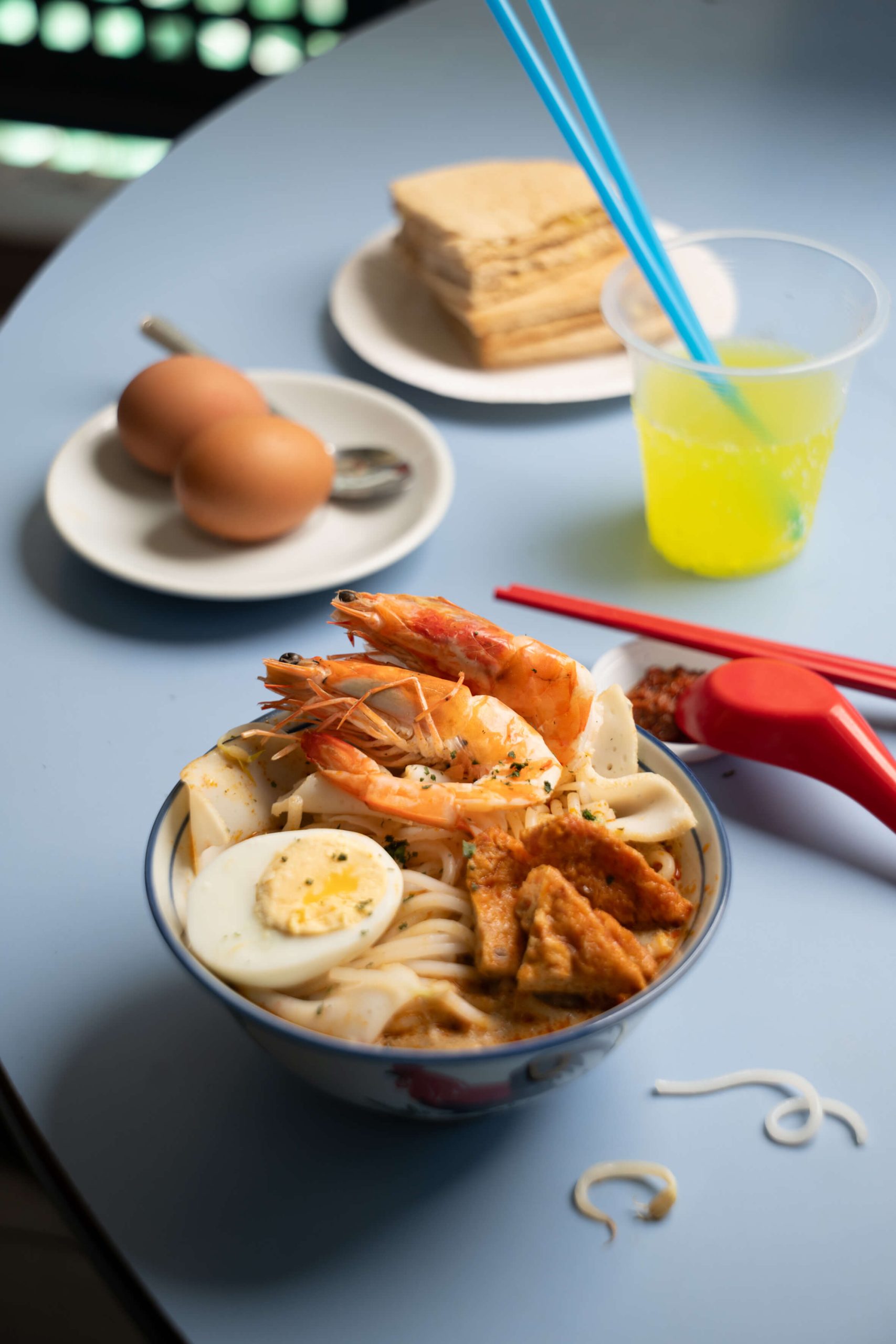
The quintessential Singaporean breakfast comprises Nanyang kopi (coffee in Malay), half-boiled eggs, and toasted bread with kaya (coconut jam). Today, this traditional breakfast has evolved into an all-day affair — commonly enjoyed during tea breaks and social gatherings in both business districts and heartlands. Often, however, when sharing the drink with our international peers, they are taken aback by the sweetness of the drink — accustomed instead to black coffee without sugar. In truth, Singapore’s kopi is more akin to Vietnamese, Thai, or Indian filter coffee, served sweet and rich in caffeine.
How did we get here? Why did Singapore, tucked in the corner of Southeast Asia with a population that has historically drank tea, take to coffee, a plant with Yemeni origins? How did the default kopi come to be served with condensed milk? Why the sock filter instead of paper or metal ones? Why robusta over arabica? This piece explores the origins of Singapore’s Nanyang kopi, uncovering commonly overlooked facets of its history and highlighting Singapore’s unique position in this journey.
History of coffee: From Europe to Southeast Asia
Singaporeans were not always coffee drinkers. Neither the Malays, Indians nor Chinese have a historical tradition of coffee consumption. Tea dominated the palate of most Straits Settlers, with both the Chinese and Indians traditionally accustomed to tea grown in their native regions.
Coffee, by contrast, originates from Africa and the Middle East, with the first recorded use appearing in the 15th century Yemen.1 Coffee rose as a commodity in the 16th century under the Ottoman Empire and was later introduced to Europe, with colonial powers like the British East India Company and Vereenigde Oostindische Compagnie (VOC, Dutch East India company) partaking in the coffee trade in around the 17th century.2
Within Southeast Asia, the Dutch were the first and most successful coffee traders. Through the 17th and 18th centuries, the VOC established vast coffee estates in Indonesia. By the 1880s, Java exported about 82% of all coffee leaving the Dutch East Indies, making up roughly 18% of world exports.3 Coffee likely entered Singapore through British influence, both in terms of drinking customs and supply chains. Much of Singapore’s coffee supply was likely sourced from Dutch plantations in Indonesia and traded through British trading houses such as Boustead and Co.4 The freight firms that traded coffee also supplied sugar,5 condensed milk from the United Kingdom, and dairy products from France6 — all key ingredients in the future composition of kopi.
Hainanese: The bridge between Europeans and Chinese
The Hainanese were central agents in localising British coffee-drinking customs for the everyday folk. Having migrated in a later wave among Chinese immigrants, job options were limited for the Hainanese, many Hainanese were employed as cooks and stewards in colonial homes or on European ships.7 It was in these kitchens that they learned the art of preparing coffee — filtered through muslin or cloth bags and served black, or sometimes with fresh milk and sugar.
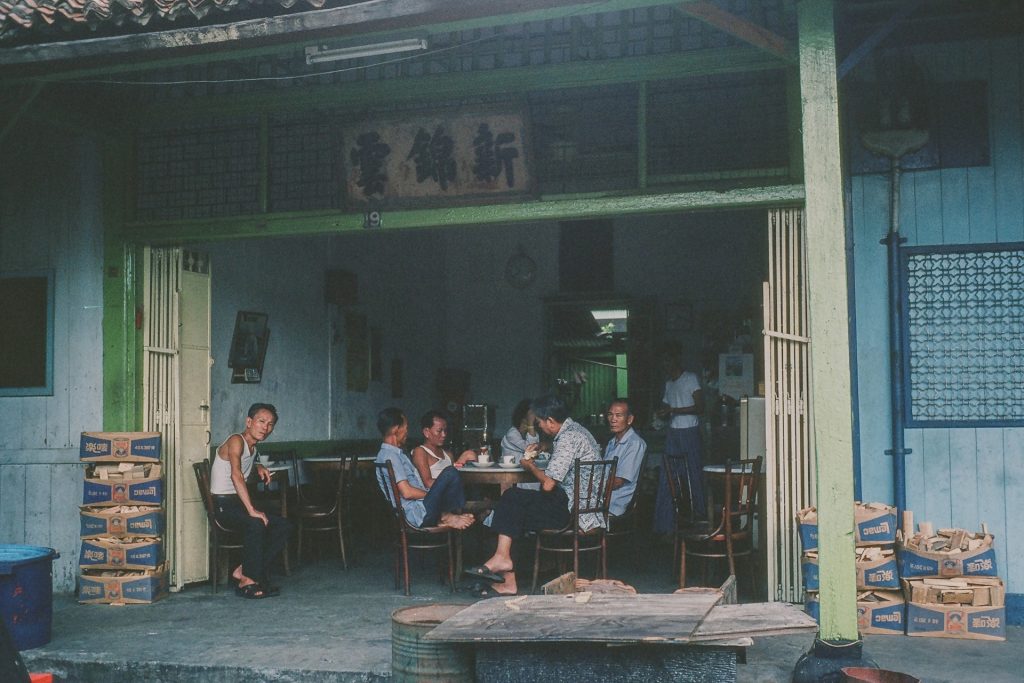
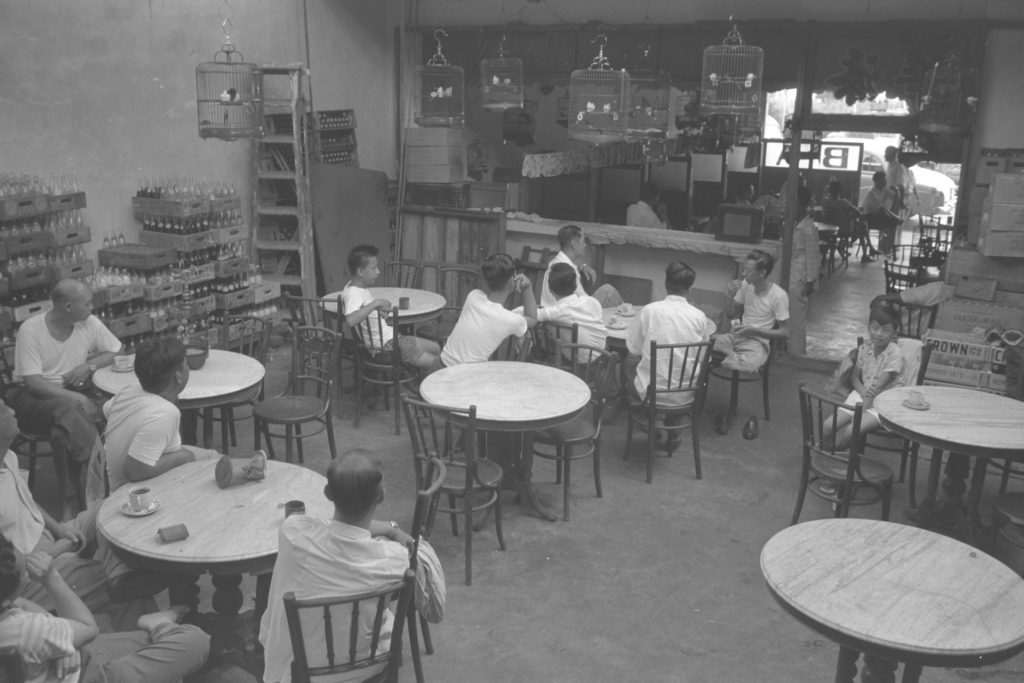
Following World War II and the gradual exodus of the British, many Hainanese began opening their own kopitiams (coffee shops). These establishments sold a variety of foodstuffs, but most importantly, localised and popularised coffee into what we know today as Nanyang coffee.8 It is estimated that by the 1950s, more than 80% of the coffee-shops in Singapore were owned by Hainanese and Foochows.9 Breakfast typically consisted of cakes, toast with kaya and butter, soft-boiled eggs, and kopi.
Traditional tea houses, by contrast, were the preferred hangouts of Chinese elites. As one scholar notes, “[u]nlike the locally embedded kopitiam culture, the tea receptions hosted by the bourgeois members of the Chinese community indicated cultural replication from China”.10 A unique class inversion thus occurred: kopitiams and kopi became embedded in everyday, working-class life, while tea and teahouses became markers of wealth and cultural prestige.
Divergence 1: Bean varietals (arabica vs robusta)
How then, is Nanyang coffee different from the European styles — and why?
First, the bean. Historically, the British (and Europeans more broadly) primarily consumed coffee brewed from arabica beans. An old British recipe from Mrs Beeton’s (1835-1865) 1861 Book of Household Management calls for coffee filtered through muslin, accompanied with fresh milk and sugar.11 Arabica, or specifically a type of Yemeni arabica called “Mocha coffee”, was then the dominant varietal, valued for its low bitterness and complex flavour profiles.
In Singapore, unlike the European preference for arabica coffee, local kopi (even till today) features a mix of arabica and robusta, and occasionally liberica beans. This shift was one of necessity, driven by a coffee-leaf rust epidemic in 1880 to 1883 that devastated low-altitude arabica plantations across Java.12 By 1917, Java’s share of global exports had plummeted — never recovering to its original heights — dropping to just 2% of world production. In response, Dutch plantations shifted to planting robusta instead, a varietal more agriculturally resilient, higher yielding, and cheaper to grow.13 But it came with a trade-off: robusta is significantly more bitter and lacks the nuanced flavour notes of arabica.14 This made drinking robusta coffee black and without sugar unpleasant to many. Still, for the emerging working class in Singapore, robusta coffee’s affordability and availability made it the default choice.
Divergence 2: Preparation (roasting and filtering)
Given robusta’s less desirable taste profile, kopi preparation evolved to mask its harshness. Hainanese coffee roasters began frying beans with margarine and sugar to give them autolytic, caramelised notes. Salt was added midway through roasting, followed by more sugar to round out the bitterness and create kopi’s signature deep profile.15
The sock filter used in kopi today likely evolved from early cloth filtration methods introduced by the British and French. European records from the 18th century (including Mrs Beeton’s cookbook) reference the use of linen or muslin bags for brewing coffee.16 While Europe eventually shifted to metal and paper filters, these were costly and impractical for daily use in colonial Southeast Asia. The ubiquitous “sock filter” — a variation of the muslin bag — was reusable, low-cost, and durable, and soon became the standard for local kopi.17 Interestingly, similar methods persist today in faraway places like Costa Rica, where café chorreado is brewed using a similar looking cloth filter called a bolista (little bag).18
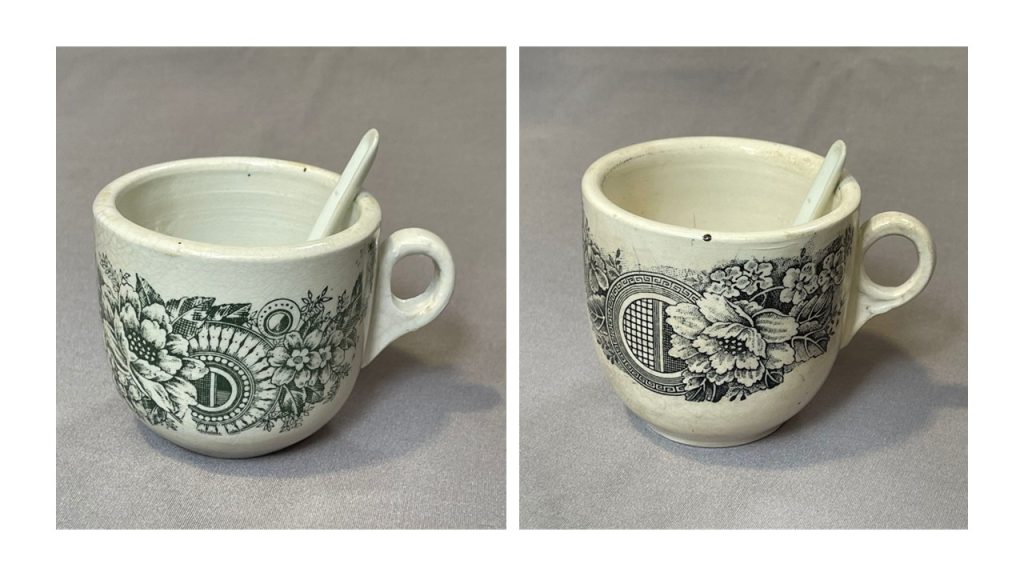
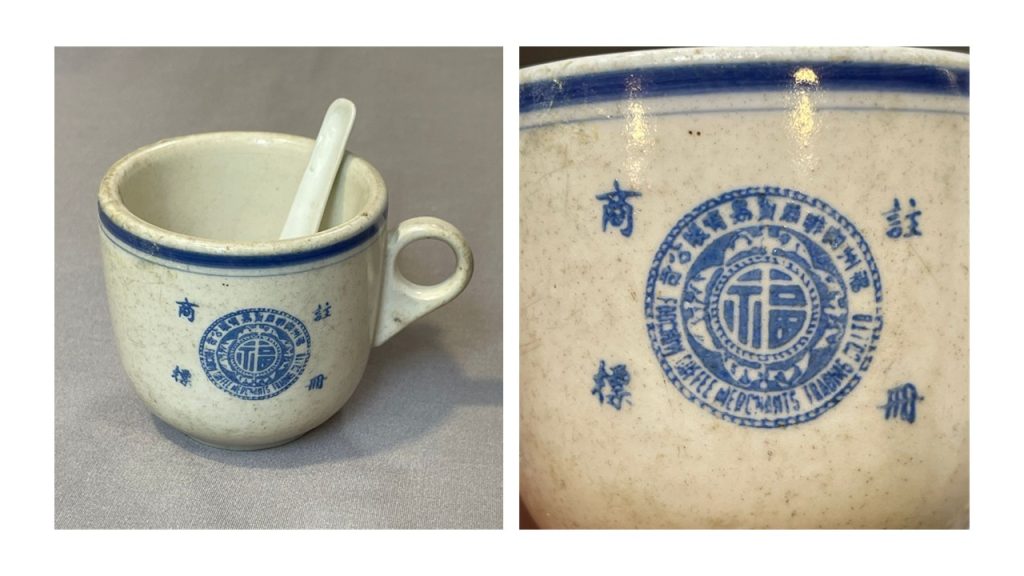
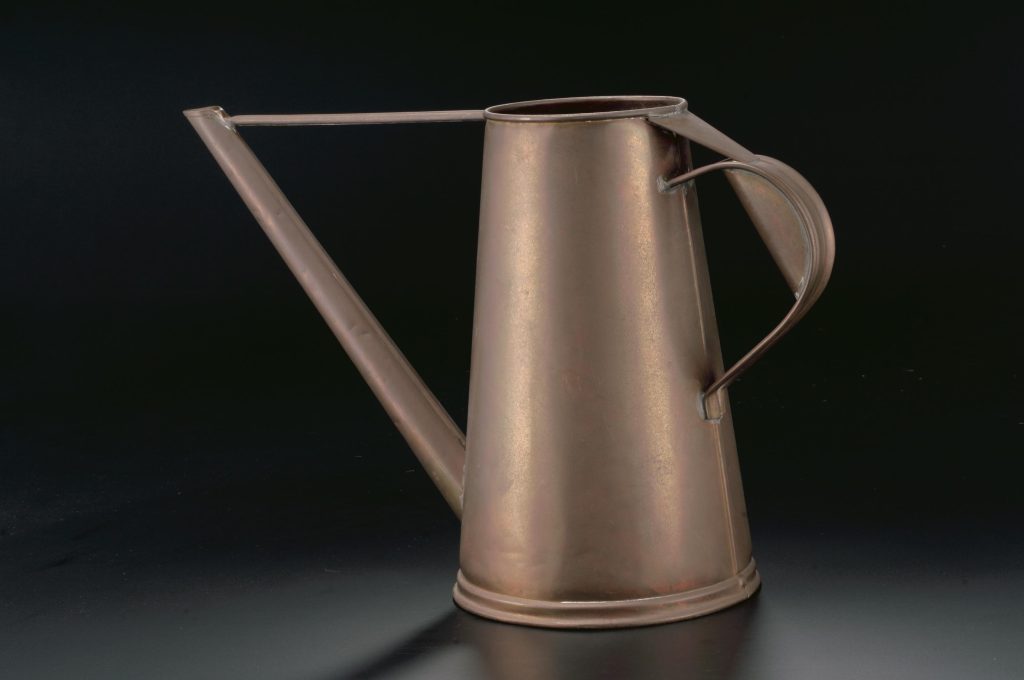
The final piece of the puzzle is the type of milk used. During the colonial era, fresh milk, due to its perishable nature, was a premium and very expensive commodity. In Batavia (Jakarta), historical price records suggest that fresh milk could cost up to 50% more than condensed milk.19 It was also frequently adulterated — mixed with water or other milks to stretch supply — raising public health concerns. As one account puts it, locals “consumed practically no fresh milk”, and milk was mostly for the Europeans.20 Thus, due to its price and food safety reasons, tinned condensed milk was more commonly consumed among locals, making its way into Indonesian coffee shops and even local ice cream.
Singapore saw similar developments. Reports from the Straits Settlements in the late 19th century documented concerns over milk adulteration.21 Canned milk, imported from Britain since the 1860s, emerged as a safer, more affordable option.22 For these reasons, sweetened condensed milk thus became one of the primary dairy options for locals. In kopi-making, condensed milk counterbalanced the bitterness of robusta and added a creamy overtone to the drink, an addition that has eventually evolved into a defining characteristic of local kopi.
Mixing it all together
From Yemen and Ethiopia, coffee travelled through the Arab world, entered European kitchens, and eventually arrived in Singapore through British colonial trade networks. Arabica beans initially dominated in the region, until agricultural blight and economic shifts pushed robusta beans to the fore. The Hainanese, through their work in colonial households and kitchens, inherited and transformed European brewing methods. They roasted beans with margarine, salt, and sugar to mask the bitterness of robusta, filtered the brew through muslin sock filters, and sweetened it with condensed milk — at once more affordable, more available, and more hygienic than fresh milk.
These were not simply culinary choices: they were pragmatic adaptations to the economic and environmental realities of the time. The development of Nanyang kopi emerged from the challenging socioeconomic conditions faced by early Chinese immigrants, but also from their ingenuity in adapting to them. Kopi became more than a beverage: it became a cultural touchstone. Served in kopitiams that doubled as gathering spots, neighbourhood institutions, and sites of vernacular culture, kopi became a symbol of everyday working-class life.
Dutch-grown beans shipped by British firms, roasted by Chinese hands, and served in a distinctly Southeast Asian style — what began as a colonial import has become an enduring feature of Singapore’s culinary and social landscape. In many ways, kopi’s story mirrors Singapore’s own. A product of migration, trade, and necessity, shaped by improvisation and made unique through local creativity. More than just a drink, kopi captures the adaptive spirit that has long defined life in Singapore.
| 1 | Ralph S. Hattox, Coffee and Coffeehouses: The Origins of a Social Beverage in the Medieval Near East (Seattle: University of Washington Press, 1985), 11–26. |
| 2 | Steven Topik, “The World Coffee Market in the Eighteenth and Nineteenth Centuries, from Colonial to National Regimes,” 8–10. |
| 3 | M. R. Fernando, “Coffee Cultivation in Java, 1830–1917,” in The Global Coffee Economy in Africa, Asia, and Latin America, 1500–1989, ed. Steven Topik and William Gervase Clarence-Smith (Cambridge University Press, 2003), 157. |
| 4 | Chiang Hai Ding, “A History of Straits Settlements Foreign Trade 1870–1915,” 87. |
| 5 | Chiang, “A History of Straits Settlements Foreign Trade 1870–1915,” 329–330. |
| 6 | C.E Velge, Straits Settlement Annual Report for the Year 1895, 670–672. |
| 7 | Lai Ah Eng, “The Kopitiam in Singapore: An Evolving Story about Migration and Cultural Diversity,” 7–9. |
| 8 | Kuo Huei-Ying, “A Cup of Nostalgia: Bourgeois Tea and Workers’ Coffee in Singapore Chinese Communities in the 1920s,” 96. |
| 9 | Kuo, “A Cup of Nostalgia,” 70. |
| 10 | Kuo, “A Cup of Nostalgia,” 103. |
| 11 | Isabella Beeton, The Book of Household Management, 3 (Ex-classics Project, 2009), 176–178. |
| 12 | Fernando, ‘Coffee Cultivation in Java, 1830–1917’, 157. |
| 13 | Herbert van der Vossen, “COFFEE SELECTION AND BREEDING,” in Coffee: Botany, Biochemistry and Production of Beans and Beverage, ed. M. N. Clifford and K. C. Willson (Springer US, 1985), 56. |
| 14 | van der Vossen, ‘COFFEE SELECTION AND BREEDING’, 57. |
| 15 | National Heritage Board, “Traditional Breakfast of Kaya and Kopi,” Roots, 18 October 2021. |
| 16 | William Harrison Ukers, All About Coffee, 620. |
| 17 | Barbara Quek, Makan Places and Coffee Socks, BiblioAsia, October–December 2018. |
| 18 | Ana Valencia, “Exploring The Costa Rican Chorreador”. |
| 19 | A. P. den Hartog, Diffusion of Milk as a New Food to Tropical Regions: The Example of Indonesia, 1880–1942, 114. |
| 20 | Hartog, Diffusion of Milk as a New Food to Tropical Regions, 90. |
| 21 | Velge, Straits Settlement Annual Report for the Year 1895, 768. |
| 22 | Lenore Manderson, “Bottle Feeding and Ideology in Colonial Malaya: The Production of Change,” International Journal of Health Services 12, no. 4 (1982): 597–616; Hartog, Diffusion of Milk as a New Food to Tropical Regions, 194. |
Chiang, Hai Ding. “A History of Straits Settlements Foreign Trade 1870–1915.” PhD Thesis. Canberra: Australian National University, 1963. | |
Fernando, M. R. “Coffee Cultivation in Java, 1830–1917.” In The Global Coffee Economy in Africa, Asia, and Latin America, 1500–1989, edited by Steven Topik and William Gervase Clarence-Smith, 157–172. Cambridge: Cambridge University Press, 2003. | |
Hartog, A. P. den. “Diffusion of Milk as a New Food to Tropical Regions : The Example of Indonesia, 1880–1942.” PhD thesis. Wageningen: Landbouwuniversiteit Wageningen, 1986. | |
Kuo, Huei-Ying. “A Cup of Nostalgia: Bourgeois Tea and Workers’ Coffee in Singapore Chinese Communities in the 1920s.” In Los Chinos de Ultramar: Movilidades, Tradiciones y Memorias/Overseas Chinese: Mobilities, Traditions, and Memories, Ronald Soto-Quirós, Lai Sai Acón Chan, David Ignacio Ibarra Arana, ahead of print, 1 January 2023. | |
Lai, Ah Eng. “The Kopitiam in Singapore: An Evolving Story about Migration and Cultural Diversity.” Asia Research Institute Working Paper No. 132 (January 2010): 1–29. | |
National Heritage Board. “Traditional Breakfast of Kaya and Kopi.” Roots, 18 October 2021. | |
Quek, Barbara. “Makan Places and Coffee Socks.” BiblioAsia 14, no. 3, October–December 2018. | |
Topik, Steven. “The World Coffee Market in the Eighteenth and Nineteenth Centuries, from Colonial to National Regimes.” In Economic History Working Papers, 22489. Economic History Working Papers. London School of Economics and Political Science, Department of Economic History, 2004. | |
Ukers, William Harrison. All About Coffee. Potter Press, 2011. |