Southeast Asian Chinese: From “huaqiao” to “huaren”


From the late 19th century to the first half of the 20th century, the term “huaqiao” (overseas Chinese) was widely used in Chinese communities in China, Southeast Asia, and around the world to refer to Chinese people living abroad. As the international political landscape evolved, many overseas Chinese who had once intended to return to China chose instead to settle in their host countries, eventually taking up local citizenship. For these individuals, the term huaqiao, which carried strong political connotations, was no longer appropriate. As a result, it ceased to be a collective term for all Chinese living overseas and came to refer only to Chinese citizens residing abroad.
Origins and early usage of the term “huaqiao”
During the Ming and Qing dynasties before the late 19th century, significant numbers of Chinese had already established long-term settlements in Southeast Asia. However, the Ming and Qing administrations paid little attention to the issue of emigration and even denied the existence of Chinese migrants.1 Between the 1370s and the late 19th century, China implemented maritime restrictions. Under the Qing administration, leaving the country without official permission was a criminal offense. As a result, for centuries, official Chinese documents rarely mentioned Chinese people residing abroad.
Neither the Chinese imperial court nor the public had a standardised term for emigrants. In popular writings and official documents, the more common terms include “tangren” or “tangshanren” (“people of the Tang”, a term for overseas Chinese that was used since the Tang dynasty), as well as “hanren” (Han people), “huaren” (ethnic Chinese), “neidi minren” (mainlanders), “zhonghuaren” (Chinese people), “huamin” (Chinese subjects), “huagong” (Chinese labourers) and “huashang” (Chinese merchants). When referring to places of origin, there were terms such as “minyueren” (natives of Fujian and Guangdong), “Fujianese”, “Cantonese”, “zhangquanren” (natives of Zhangzhou and Quanzhou), “guangfuren” (literally “natives of Guangfu”, meaning the Cantonese) and “chaozhouren” (natives of Chaozhou, or Teochew).2
After the late 19th century, the term “huaqiao” began to be used in China and Southeast Asia to refer to Chinese people living outside China. Literally, “hua” is an ancient name for China, while “qiao” signifies sojourning.
On the origin of the term “huaqiao”, the explanation offered by official documents in present-day China is that in 1878, Chen Lanbin (1816–1895), the Qing dynasty envoy to the United States, referred to Chinese residing abroad as “qiaomin” (sojourners) in a memorial to the throne. “Qiaomin” thus became a specific term. In 1883, reformist thinker Zheng Guanying (1842–1921) first used the term “huaqiao”. In a memorial to Li Hongzhang (1823–1901), a high-ranking official of the late Qing dynasty, Zheng wrote: “For ports in Southeast Asia with the largest numbers of huaqiao, arrangements should be made in due course, including the dispatch of ships to facilitate travel.”3
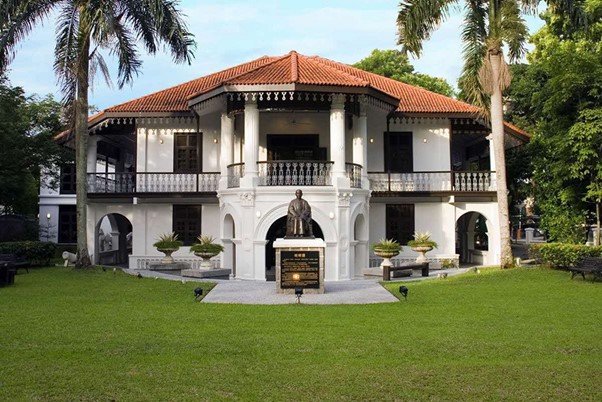
The term used by Zheng Guanying, “huaqiao”, was a newly coined one at the time and was subsequently widely adopted. By the early 20th century, “huaqiao” became a specific term for Chinese people residing overseas. Sun Yat-sen (1866–1925), who led the 1911 Xinhai Revolution, famously called huaqiao “the mother of revolution”.4 This statement commended and affirmed the steadfast support of Chinese people in Southeast Asia for the revolutionary movement.
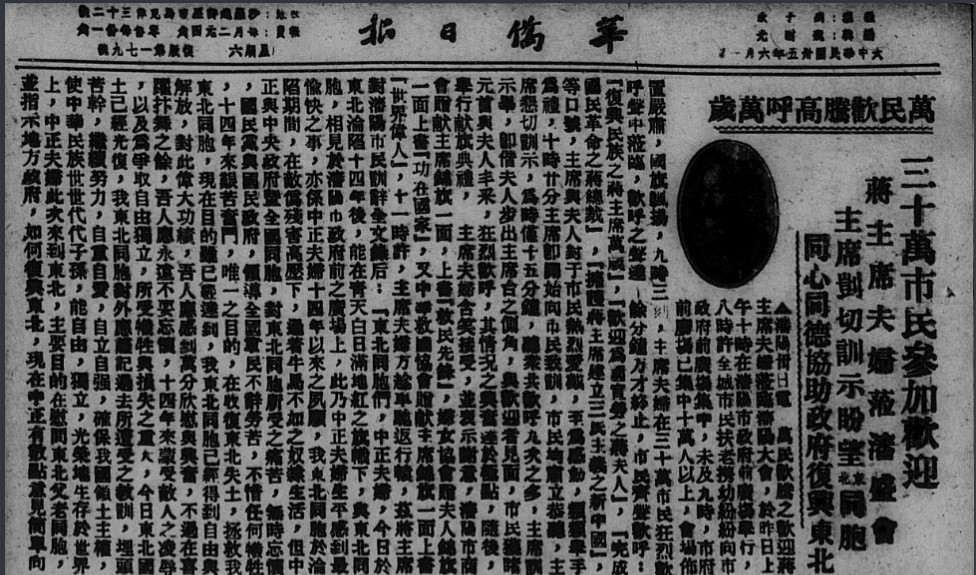
During the Republican era, the widespread use of the term “huaqiao” was evident in the names of some schools and organisations. In Singapore, Chinese community leader Tan Kah Kee (1874–1961) founded The Chinese High School (Huaqiao zhongxue) in 1919, which was the first Chinese-medium secondary school in Singapore. Another Chinese community leader, Lee Kong Chian (1893–1967), established the Oversea-Chinese Banking Corporation (Huaqiao yinhang) in 1932. In Hong Kong, local Chinese businessmen founded the newspaper Wah Kiu Yat Po (Overseas Chinese Daily News) in 1936. For decades, the newspaper was the city’s best-selling newspaper until it ceased publication in 1995.


Historical context and political significance of the term “huaqiao”
The term “huaqiao” emerged during the late Qing dynasty after years of evolution. Historian Wang Gungwu points out that during the first 1,000 years of the Common Era, the number of Chinese people living overseas was negligible and official documents also rarely mentioned them. Officials in ancient China held a traditional Confucian view towards those who left China, believing that Chinese people who made their way across the ocean to seek a livelihood in Southeast Asia and elsewhere were only residing abroad temporarily and would eventually return home as they prioritised filial piety and their hometowns.5
During the Ming and Qing dynasties from the 14th century to the late 19th century, the imperial court repeatedly enforced strict maritime restrictions, prohibiting commoners from going overseas and engaging in foreign trade to stave off external threats and curb smuggling and piracy. However, such edicts were not very effective. To escape war or poverty, many residents of China’s southeastern coastal regions took the risk and left the country to seek a livelihood abroad. After the late 16th century, the number of people leaving China by sea grew significantly. By the 19th century, social unrest during the late Qing period led to a mass exodus of Chinese people heading overseas, forcing the Qing court to confront the issue of emigration.
In the second half of the 19th century, the Qing government’s attitude towards overseas emigrants shifted from indifference to active protection. After the First Opium War (1840–1842), the Qing court was forced to sign a series of unequal treaties, allowing Western colonisers to lure or coerce Chinese labourers at various treaty ports in China into signing “contracts”, before trafficking them to Southeast Asia and other regions as “coolies”. These contract workers often suffered brutal exploitation and many died in foreign lands. As the plight of Chinese labourers caught the attention of the international community and domestic public, Qing officials began taking measures to safeguard the rights and interests of Chinese labourers.
The Qing government followed Western diplomatic practices and began dispatching envoys abroad and establishing embassies and consulates after 1875 to protect overseas Chinese. Southeast Asia, being geographically close to China and home to large Chinese populations, became a key region for the establishment of diplomatic missions.
Wang Gungwu points out that apart from addressing the plight of Chinese labourers, the Qing court also realised that seeking opportunities abroad was neither an act of treason nor a crime, and that Chinese people who achieved success overseas were in fact valuable assets to the Qing Empire. Officials thus came to view the achievements of overseas Chinese as justification for changing policies on overseas Chinese affairs. Hence, Qing envoys stationed abroad were expected to not only protect but also make use of overseas Chinese. The government and the public in the late Qing dynasty also believed that the image of emigrants should be improved and their social status elevated. They should no longer be labelled as “abandoned subjects of the Celestial Empire,” “criminals” or “vagrants”. Instead, there should be a new term that conveyed approval and embodied expectations for law-abiding citizens. Thus, the term “huaqiao” was formally adopted to refer to overseas Chinese.6
At the beginning of the 20th century, this newly coined term quickly spread among the intelligentsia, political circles and the general public. As a political label, “huaqiao” defined overseas Chinese as Chinese citizens residing abroad and legitimised their residence and activities abroad.
On the legal front, the first nationality law promulgated by the Qing government in 1909 established the principle of bloodline: regardless of place of birth, anyone born to Chinese parents shall have Chinese nationality. The regulation clearly defined “Chinese people” and implied that overseas Chinese, regardless of where they were born, were theoretically Chinese nationals. The Chinese Nationality Law promulgated by the Republic of China in 1929 largely inherited that of the Qing dynasty which was based on bloodline, stipulating that anyone of Chinese ethnicity acquired Chinese nationality.7
At the political and social levels, during the late Qing and early Republican period when modern Chinese nationalism was on the rise, several key figures dedicated to social reforms widely used the term “huaqiao”, which helped to popularise the term such that it was also adopted in Chinese communities in Southeast Asia and North America. These figures included Sun Yat-sen, who led the Xinhai Revolution, as well as reform advocates Liang Qichao (1873–1929) and Kang Youwei (1858–1927). Overseas Chinese were an important target audience for their reformist propaganda. In their writings and speeches, “huaqiao” became a collective term for Chinese living abroad, consciously shaping overseas Chinese from a vague community to one with specific political and cultural identities. They stressed that overseas Chinese were an important force for national rejuvenation and closely linked “huaqiao” to the destiny of zhonghua minzu (Chinese people) by incorporating the term into the narrative of Chinese nationalism.
During the Republican era (1912–1949), China experienced a series of major events, including the warlord era, the Northern Expedition that led to national unification, the eight-year War of Resistance against Japan and the Chinese Civil War. Amid rapid social upheaval and deepening national crises, various political forces actively sought to mobilise overseas Chinese in Southeast Asia through propaganda and outreach, appealing to their ethnic sentiment and kinship ties to mobilise their support for China’s reconstruction and revival. This phenomenon was particularly evident during the Second Sino-Japanese War (1937–1945). For instance, the Chinese in Malaya and Singapore contributed substantial manpower and material resources to support China’s war effort. Some academics point out that “the sense of identity with China among overseas Chinese in Southeast Asia intensified as their motherland faced crises. From the rise of nationalist sentiment in the late Qing period to the powerful wave of patriotism in the late 1930s, they actively participated in China’s War of Resistance against Japan.”8
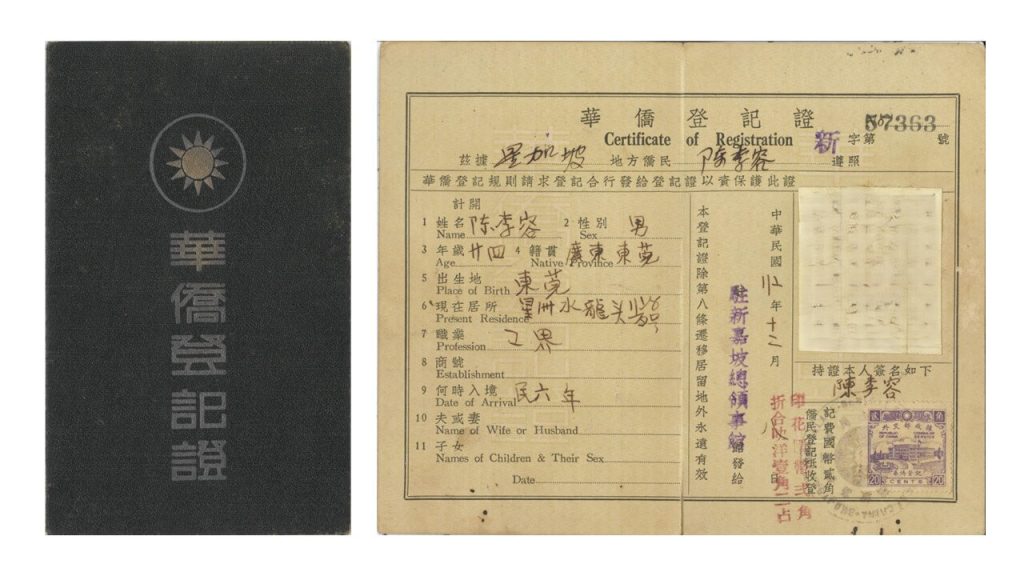
After the end of World War II in 1945, the international political landscape changed dramatically. In 1949, the Communist Party of China (CPC) established the People’s Republic of China (PRC). Countries in Southeast Asia also gained independence from colonial rule one after another. Among these newly emerging nations, Chinese communities faced a choice concerning national and self-identity. Many Chinese had long settled in Southeast Asia and their places of residence had become their homeland. They had no plans to return to China, but actively sought citizenship in their host countries to legally change their nationality from “nationals” of China to “citizens” of their host countries.
For these Chinese communities, the shift in national identity was driven by not only personal motives but also external pressures. The mid-20th century was the era of the Cold War. Most newly emerging countries in Southeast Asia adopted anti-communist or non-aligned positions, striving to prevent the infiltration of communism and requiring ethnic Chinese citizens to shift their loyalty from China to their host countries. Words and deeds that identified with China politically were often regarded as “pro-communist” or “pro-China”, and not tolerated by the ruling authorities. As this political climate changed, the term “huaqiao”, which implicitly means “Chinese sojourners”, came to be seen as inappropriate and was dropped.
In the early 1950s, the PRC government, which had just come to power, also took note of the nationality issue of overseas Chinese and indicated its intention to resolve this “legacy problem”. According to incomplete Chinese official statistics, there were more than 10 million overseas Chinese living in Southeast Asian countries at that time. Among them, about 80 per cent were second- or third-generation overseas Chinese born locally, with many possessing dual nationality: that of their country of residence and Chinese nationality which they had retained.
On 23 September 1954, then-Chinese Premier Zhou Enlai (1898–1976) stated in the government work report delivered at the First Session of the National People’s Congress of the PRC that historical issues between China and its neighbouring countries needed to be resolved, as these issues not only put overseas Chinese in a difficult situation, but also often caused tensions between China and the countries concerned. Zhou said: “Overseas Chinese who have already or voluntarily obtained the nationality of their host countries, naturally lose their Chinese nationality. Their relationship with China is one of kinship. After becoming citizens of their host countries, ethnic Chinese should be loyal to the nations where they have become citizens, and work together with the local people to contribute to the political and economic independence and cultural prosperity of their countries.”9
In 1955, during the Asian-African Conference held in Bandung, Indonesia, Zhou Enlai again clarified China’s position on the issue of overseas Chinese when explaining China’s foreign policy. China also signed the Sino-Indonesian Dual Nationality Treaty with the Indonesian government, which marked a fundamental shift in the Chinese government’s policy towards overseas Chinese. One key provision of the treaty was to encourage overseas Chinese to obtain the nationality of their host countries and become citizens there.
Wang Gungwu believes that what the Chinese government wanted to convey through this declaration was that once overseas Chinese acquired the nationality of another country, they would no longer be regarded as Chinese nationals or receive protection from China. He says: “In terms of the new international relations between China and the newly independent countries of Southeast Asia, this was a subject of great sensitivity. The Chinese government, in order to win the support of these nations, had to make their position very clear about where they stood on overseas Chinese. That was the basis on which the Indonesian government and the other governments in the Philippines, Malaysia, Thailand and elsewhere could actually allow their Chinese to become citizens and nationals of their new nations.”10
Since then, a consensus within and outside China has been that “huaqiao” refers specifically to Chinese citizens living outside China, rather than a blanket term for overseas Chinese. In particular, it should not be used to describe ethnic Chinese who do not hold Chinese nationality.
Chinese Singaporean identity
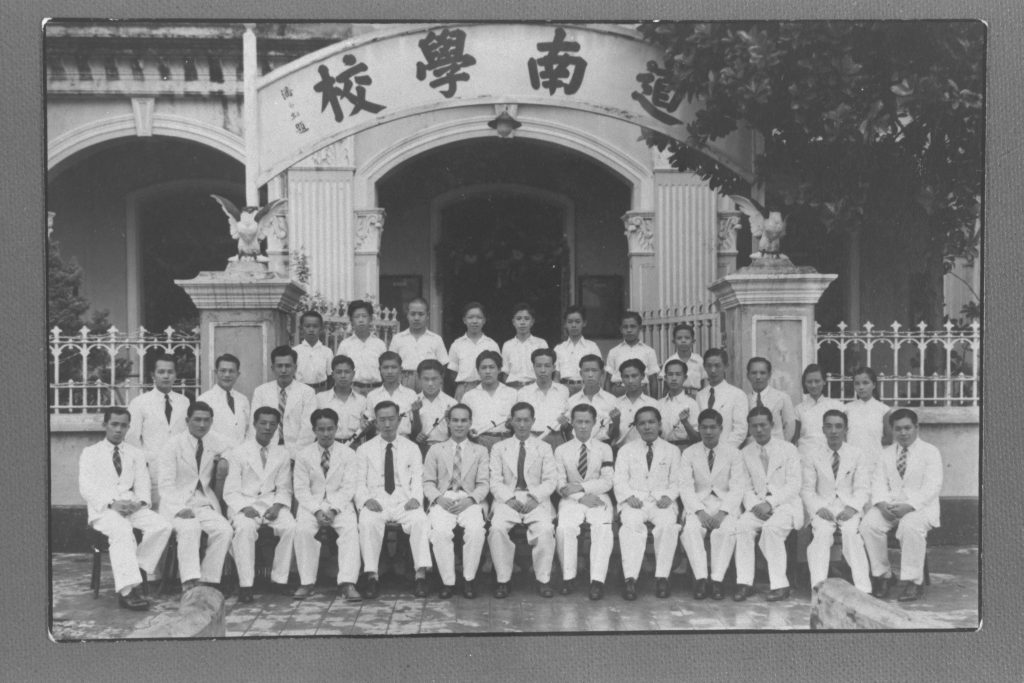
On 9 August 1965, Singapore officially declared independence. When founding Prime Minister Lee Kuan Yew (1923–2015) outlined the vision for the newly emerged nation, he said: “We are going to have a multi-racial nation in Singapore. We will set the example. This is not a Malay nation; this is not a Chinese nation; this is not an Indian nation. Everybody will have his place: equal; language, culture, religion.”11
This vision of the multiracial country sets the tone for Chinese Singaporeans’ sense of identity. Academics note that following Singapore’s independence, the politically charged term “huaqiao” was clearly no longer relevant and was replaced by “huaren”. The change from “huaqiao” to “huaren” signifies a shift in national identity.12
In the 21st century, the question of whether the Chinese government still maintains the distinction between “huaqiao” and “huaren”, as it did in the mid-20th century, has once again attracted scholarly attention. At a forum in 2016, Leo Suryadinata, a researcher on overseas Chinese, said that as the new leadership of the CPC stepped up efforts to implement policies on overseas Chinese affairs, it appeared to be intentionally blurring the distinction between “huaqiao” and “huaren”. He noted as an example that at the World Overseas Chinese Businessmen and Industrialists Conference in 2015, then-Chinese Premier Li Keqiang (1955–2023) referred to “huashang” (Chinese businessmen) as “qiaoshang” (overseas Chinese businessmen), and “haiwai huaren” (overseas Chinese) as “haiwai qiaobao” (compatriots living abroad).13
In March 2024, during a visit to Singapore, Liu Jianchao, Minister of the International Department of the CPC Central Committee, was asked at a public forum about the issue of “huaqiao” and national identity of the Chinese in Southeast Asia. He replied that in terms of national identity, “whichever country you hold citizenship in, whichever country you are a citizen of, you should be loyal to that country”. As for the concept of “huaqiao”, Liu explained that it refers to a special group, who are ethnic Chinese “residing long-term in another country but hold Chinese citizenship”.14
This is an edited and translated version of 东南亚华人:从“华侨”到“华人”. Click here to read original piece.
| 1 | Wang Gungwu, The Chinese Overseas: From Earthbound China to the Quest for Autonomy (Cambridge, MA: Harvard University Press, 2000), 42–43. |
| 2 | Zhuang Guotu, “Lun dongnanya de huazu” [On the Chinese in Southeast Asia], Journal of World Peoples Studies 3 (2002): 37. |
| 3 | Qian Pingtao and Chen Xiansi eds, Dongnanya lishi wutai shang de huaren yu huaqian [Ethnic Chinese and overseas Chinese on the historical stage of Southeast Asia] (China: Shanxi Education Press, 2001), 45. |
| 4 | Huang Jianli, “’Huaqiao wei geming zhi mu’ zanyu zhi laili yu xushu” [Overseas Chinese as the mother of revolution: the origins and discourse of the epithet], The International Journal of Diasporic Chinese Studies 3, no. 2 (2011): 21–56. |
| 5 | Wang Gungwu, The Chinese Overseas: From Earthbound China to the Quest for Autonomy (Cambridge, MA: Harvard University Press, 2000), 42–44, 49. |
| 6 | Wang Gungwu, “Yueyang xunqiu kongjian: Zhongguo de yimin” [Seeking their own space: China’s migrants], 21. |
| 7 | Following its relocation to Taiwan, the Republican China government continued to ground its overseas Chinese policy — particularly toward Chinese communities of Singapore and Malaysia — in this principle of bloodline. See Toh Jin Xuan, Xuetong de yuanzui: bei yiwang de baise kongbu dongnanya shounanzhe [The original sin of bloodline: the forgotten Southeast Asian victims of the White Terror] (New Taipei City: The Commercial Press Ltd, 2020); Beipiao taiwan: malaixiya ren kuajing taiwan de liuzhuan jiyi [Northbound to Taiwan: memories of the Malaysian diaspora’s transnational journey] (Taipei: Rye Field Publishing Co., 2022). |
| 8 | Zhuang Guotu, “Cong minzu zhuyi dao aiguo zhuyi: 1911–1941 nian jian nanyang huaqiao dui zhongguo rentong de bianhua” [From nationalism to patriotism: the change of identity of Huaqiao in Southeast Asia in 1911 to 1941], Journal of Sun Yat-sen University (Social Science Edition) 40, no. 4 (2000): 112. |
| 9 | “Lun Zhou Enlai dui qiaowu gongzuo de gongxian” [On Zhou Enlai’s contributions to overseas Chinese affairs], All-China Federation of Returned Overseas Chinese, 1 July 2021. |
| 10 | Wang Gungwu, “The State between Migration and Sojourning: the China difference,” YouTube, LSE Lecture, 28 April 2009. |
| 11 | Jackie Sam, “A pledge by Lee: We want to co-operate with Central Govt,” The Straits Times, 10 August 1965. |
| 12 | Lee Guan Kin, “Singapore Chinese culture: National identity, ethnic belonging, and cultural construction,” Culturepaedia. In the article, Lee notes that, outside of mainland China, Hong Kong, Macau, and Taiwan, the terms huaren, huayi (Chinese descent), and huazu (Chinese ethnic group) can be used interchangeably. Chinese communities in different countries have their own preferences and customs when it comes to such terminology. For example, among Chinese communities in Singapore and Malaysia, the terms xinjiapo huaren (Chinese Singaporean) and malaixiya huaren (Chinese Malaysian) are preferred; However, in the United States and Canada, immigrant descendants generally prefer to be called huayi meiguoren (Americans of Chinese descent) or huayi jianandaren (Canadians of Chinese descent). Huayi refers to the descendants of huaqiaoand huaren. The term huayi carries a subtle sense of distance or detachment from China. |
| 13 | Sim Tze Wei, “Bendi xuezhe: mohu huaqiao huaren jiexian, zhongguo litui qiaowu zhengwu zhengce weibi youli haiwai huaren” [Local academic: distinctions between overseas Chinese and ethnic Chinese are fading, China’s outreach to the diaspora could pose risks for overseas Chinese], Lianhe Zaobao, 19 February 2016. |
| 14 | Liu Jianchao, “Dongnanya huaren yinggai xiaozhong guoji suozaiguo” [Ethnic Chinese in Southeast Asia should be loyal to the country of their citizenship], Lianhe Zaobao, 27 March 2024. |
Wang, Gungwu. “Yueyang xunqiu kongjian: Zhongguo de yimin” [Seeking their own space: China’s migrants]. The International Journal of Diasporic Chinese Studies 1, no. 1 (2009): 1–49. | |
Zhuang, Guotu. “Cong minzu zhuyi dao aiguo zhuyi: 1911–1941 nian jian nanyang huaqiao dui zhongguo rentong de bianhua” [From nationalism to patriotism: the change of identity of Huaqiao in Southeast Asia in 1911 to 1941]. Journal of Sun Yat-sen University (Social Science Edition) 40, no. 4 (2000): 110–116. | |
Zhuang, Guotu. “Lun dongnanya de huazu” [On the Chinese in Southeast Asia]. Journal of World Peoples Studies 3 (2002): 37–48. |