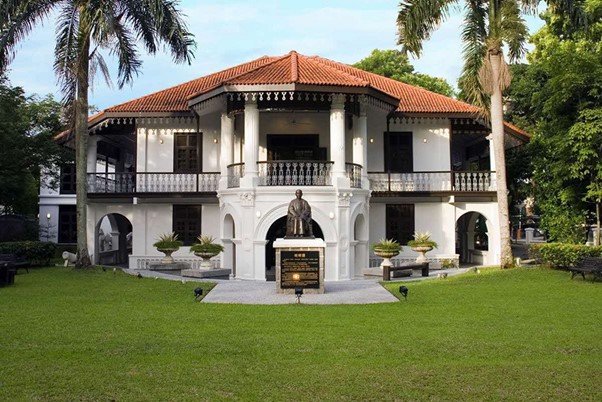
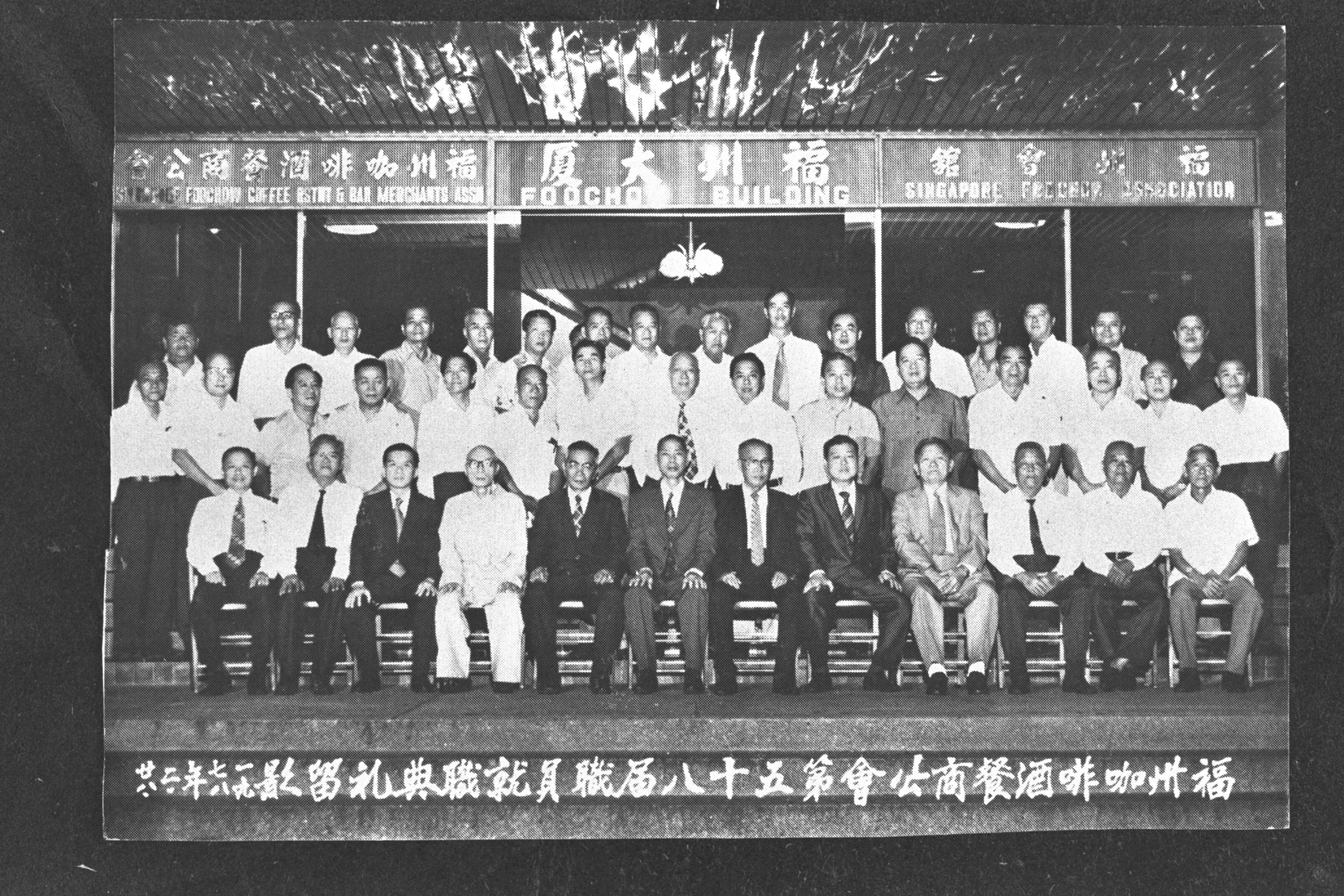
Singapore Hokkien Huay Kuan


After Singapore was established as a trading port in 1819, it attracted large numbers of immigrants. Among them were wealthy Peranakan Hokkien merchants from Malacca, including See Hoot Kee (1793–1847). By 1828, See had founded Heng San Teng, a temple and cemetery that became the central hub and leadership body of the Hokkien community in Singapore.1
However, as Singapore’s economy grew and the population skyrocketed, social affairs became far more complex. Consequently, Heng San Teng’s role as a burial ground made it unsuitable for managing the broader affairs of the Hokkien community. So in 1840, See and others, including fellow Malaccan merchant Tan Tock Seng (1798–1850) and others established Thian Hock Keng as a place of assembly and deliberation for the Chinese community and clan associations.2 It soon transcended dialect boundaries to become the highest governing body for the Chinese community in Singapore, far surpassing its original role as a place of worship. This also marked the start of what we know today as the Singapore Hokkien Huay Kuan.
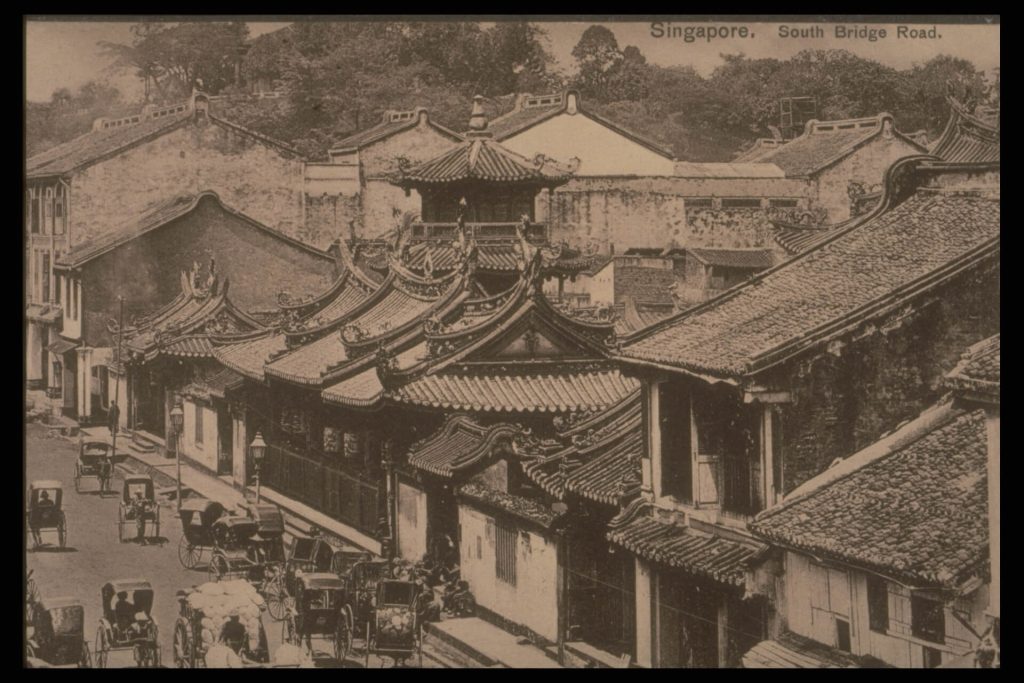
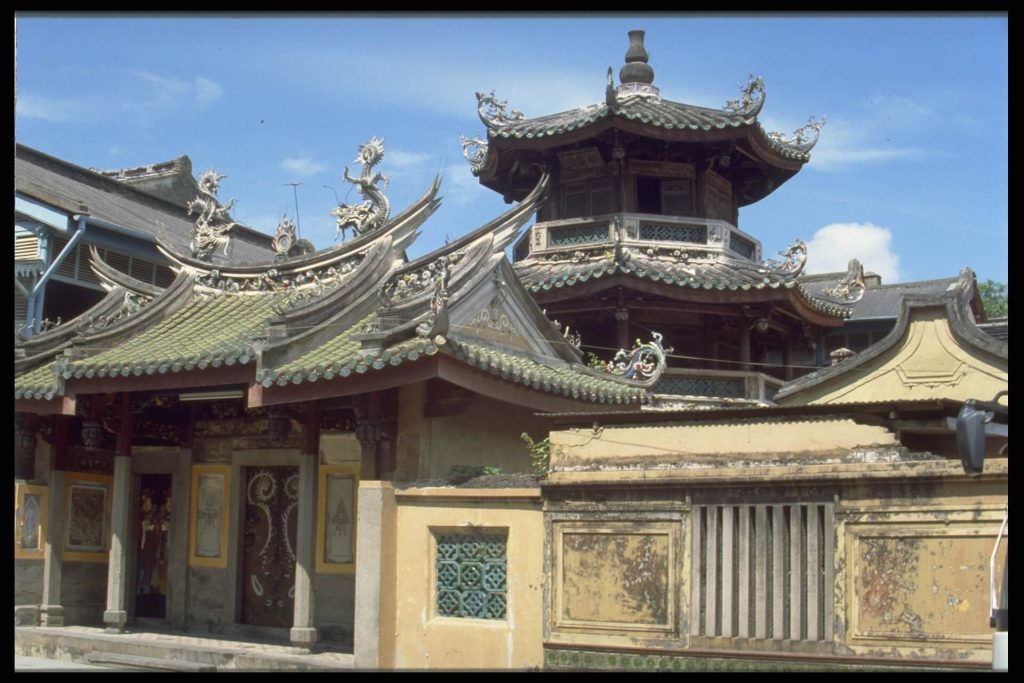
The origins of Hokkien Huay Kuan
Thian Hock Keng had three different leaders — Tan Tock Seng, Tan Kim Ching (1829–1892), and Tan Boo Liat (1874–1934) — before it was restructured in 1915 and registered as a formal association. The following year, the government exempted Thian Hock Keng from registration and officially named it Thian Hock Keng Hokkien Huay Kuan.3 This milestone formally bifurcated their operations: while the temple and the clan association remained under the same institutional umbrella, their day-to-day management was split, separating religious temple affairs from secular communal governance. Banker See Tiong Wah (1886–1940) became the first chairman of the restructured Hokkien Huay Kuan and its fourth president since Tan Tock Seng.
In 1937, under its fifth president, Tan Kah Kee (1874–1961), the Hokkien Huay Kuan was registered as a not-for-profit limited company. He introduced reforms, such as a membership system and democratic elections, and devoted efforts to charity and education initiatives.4
Key functions in the early years
In its early years, the Hokkien Huay Kuan served four main functions. First, it provided myriad social services, offering temporary accommodation to newly arrived immigrants (sinkeh), recommending job opportunities, mediating community disputes, registering marriages, arranging funerals, buying and managing burial grounds such as Leng San Teng in Leng Kee Road (no longer in operation), and aiding orphans, the elderly, and disaster victims. It also championed social reforms by discouraging superstition and advocating simplified funeral rites and modest wedding ceremonies.
Second, it played a political role, organising a Comfort Mission to China to support Chinese soldiers and civilians during the War of Resistance against Japan, and mobilising Hokkien communities across Southeast Asia to push for better governance in Fujian.
Third, its religious function saw Thian Hock Keng hosting major traditional events, including ancestral worship during Qing Ming, birthday celebrations for the deity Mazu and Confucius, and the Zhong Yuan Festival.
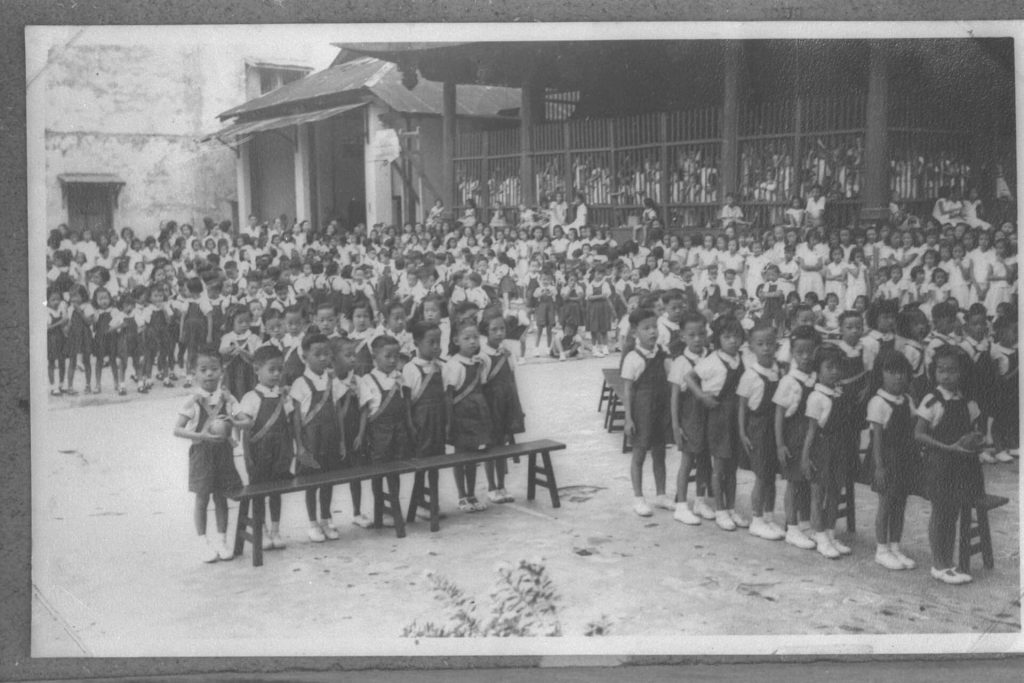
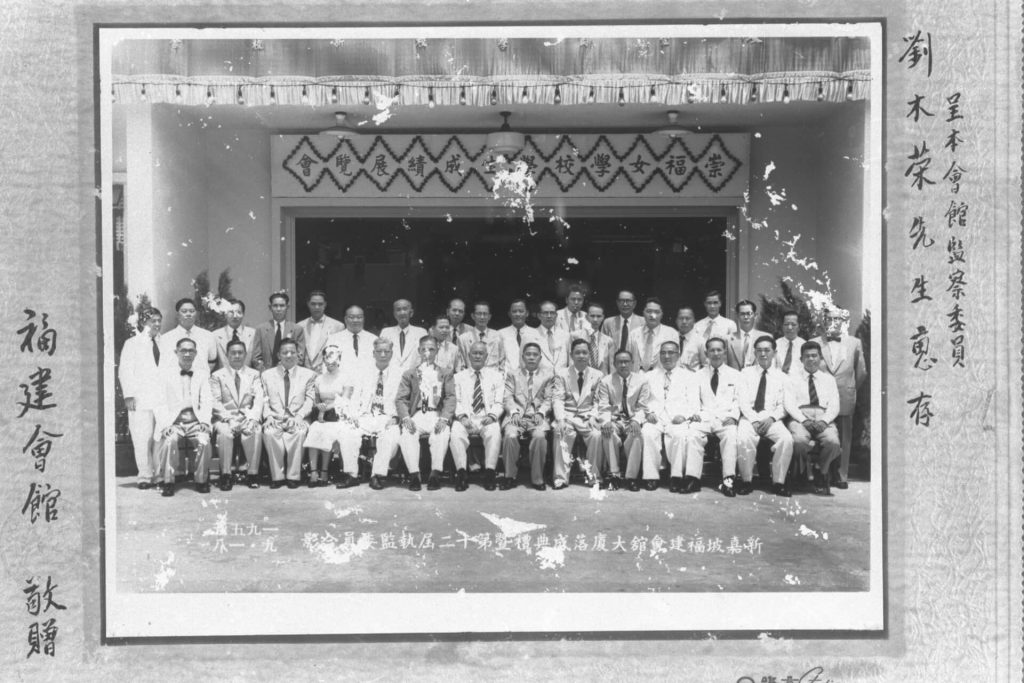
Today, Hokkien Huay Kuan remains deeply committed to its fourth mission — its legacy in education. Since 1906, it has set up or taken over the running of several schools. These include Tao Nan School (taken over in 1931), Ai Tong School (taken over in 1929),5 Chongfu School (1915), Kong Hwa School (1953), and Nan Chiau High School and Nan Chiau Primary School (1947). It also built the Chong Wen Ge beside Thian Hock Keng in 1849 to promote reverence for the written word. In 1953, with Tan Lark Sye (1897–1972) at the helm, Hokkien Huay Kuan donated 523 acres of land for the campus of Nanyang University, which was established two years later in 1955.6
Adapting to the times
By the 1980s, the social structures that had long sustained clan associations — bang (dialect group) and bang quan (dialect-group hegemony) — were disintegrating. Clansmen were becoming less dependent on these associations for mutual aid, while the associations were grappling with ageing leadership, declining membership, and a shortage of successors. Under its seventh president, Wee Cho Yaw (1929–2024), the Hokkien Huay Kuan began a process of transformation.
The restructured Hokkien Huay Kuan has three core pillars: promoting Chinese culture, supporting education, and contributing to social services.
In 1986, it established the Hokkien Huay Kuan Arts & Cultural Troupe, which launched Singapore’s first Mandarin performing arts class for children. The troupe gradually expanded its programmes to include preschool classes, broadcasting lessons, and calligraphy and Chinese painting courses. It also formed children’s and youth groups to conduct performing arts classes, oral lessons, and storytelling sessions, as well as language and holiday learning camps at its affiliated schools. In 1989, the troupe launched a Chinese dance training programme. By 2013, this had developed into a professional Chinese dance company. Later renamed the Singapore Chinese Dance Theatre, it plays a key role today in promoting and developing local Chinese dance.7
Subsequent presidents after Wee Cho Yaw — Chua Thian Poh, Tan Cheng Gay, and Chua Kee Seng — continued to advance Hokkien Huay Kuan’s cultural, educational, and social initiatives.
Keeping Hokkien culture alive
In 2014, the Hokkien Huay Kuan Cultural Academy at Sennett Road was completed. As Singapore’s first Chinese cultural academy by a clan association, it runs the “SchoolAfterSchool” student care programme and offers courses in language, culture, and humanities, including introductory Hokkien lessons. It also operates a Mandarin-focused preschool.
The Hokkien Huay Kuan places great importance on preserving historical and cultural records. To date, it has published more than 10 books covering the religious beliefs, occupations, education, and customs of the Hokkien community, as well as its notable figures.
The association also hosts annual literary awards, including the SHHK Primary Schools Chinese Essay Writing Competition, the National Secondary School Chinese Essay Writing Competition (Xin Lei Jiang), and the Tertiary Chinese Literary Awards. In addition, it organises the National Primary Schools Chinese Story-Telling Competition and the National Thinkers Challenge for primary schools.
To promote Hokkien culture, it has organised the Singapore Hokkien Festival every two to three years since 2006. The festival, whose eighth edition was held in 2025, showcases Hokkien food, history, and cultural performances.
While it no longer manages its schools directly after its restructuring, the Hokkien Huay Kuan works with the government to raise their academic standards through initiatives such as the Bicultural Chinese Elective Programme and immersion programmes. It also provides scholarships for teachers’ professional development and bursaries for students from low-income families.
Its social services fall into two main categories: charitable donations, as well as scholarships and bursaries related to culture and education. Through the Hokkien Foundation, the association has donated to various charities and community causes, including Nanyang Technological University, Singapore Chinese Cultural Centre, Singapore Anti-Narcotics Association, and Samaritans of Singapore. The Hokkien Huay Kuan also provides bursaries for the children of its staff and members, and students at its six affiliated schools. Scholarships for students at the Singapore University of Technology and Design are available as well.
For over 180 years, the association has witnessed not only Singapore’s transformation from a colonial trading port to a thriving nation, but also the evolution of its own community. Once transient immigrants longing for their homeland, many went on to put down their roots and proudly call Singapore home.
This is an edited and translated version of 新加坡福建会馆. Click here to read original piece.
| 1 | Toh Lam Huat, ed, Nanhai mingzhu: Tianfugong [Pearl of the South Seas: Thian Hock Keng], 16. |
| 2 | A stele on the eastern wall of Thian Hock Keng’s entrance hall describes it as a “venue for deliberation by the Chinese”. |
| 3 | Perng Peck Seng et al, Bo jing nanming — Tianfugong yu fujian huiguan [Guardian of the South Seas — Thian Hock Keng and the Singapore Hokkien Huay Kuan], 46. |
| 4 | Toh Lam Huat, ed, Nanhai mingzhu: Tianfugong [Pearl of the South Seas: Thian Hock Keng], 378. |
| 5 | Ai Tong wushinian [Fifty years of Ai Tong School] (Singapore: Ai Tong School, 1962), 7. |
| 6 | Perng Peck Seng et al, Bo jing nanming — Tianfugong yu fujian huiguan [Guardian of the South Seas — Thian Hock Keng and the Singapore Hokkien Huay Kuan], 85. |
| 7 | Koh Chin Yee, “Fujianren, zuozhenxing: Cong tianfugong dao fujian huiguan” [Hokkiens together: From Thian Hock Keng to the Hokkien Huay Kuan], in Xiangqing: Xinjiapo fujianren de huiguan [Our roots, our bonds: Min clans of Singapore], edited by Toh Lam Huat (Singapore: Singapore Hokkien Huay Kuan, 2017), 33. |
Kua, Bak Lim, ed. Shijie fujian mingrenlu: Xinjiapo pian [Prominent figures of the world Fujian communities: The Singapore chapter]. Singapore: Singapore Hokkien Huay Kuan, 2012. | |
Perng, Peck Seng et al. Bo jing nanming — Tianfugong yu fujian huiguan [Guardian of the South Seas — Thian Hock Keng and the Singapore Hokkien Huay Kuan]. Singapore: Singapore Hokkien Huay Kuan, 2005. | |
Toh, Lam Huat, ed. Nanhai mingzhu: Tianfugong [Pearl of the South Seas: Thian Hock Keng]. Singapore: Singapore Hokkien Huay Kuan, 2010. | |
Toh, Lam Huat, ed. Shiji kuayue (1840–2020) — Xinjiapo fujian huiguan 180 zhounian baokan shiliao huibian [Transcending centuries (1840–2020) — a chronicle of the Singapore Hokkien Huay Kuan’s 180 years of history]. Singapore: Singapore Hokkien Huay Kuan, 2020. | |
Toh, Lam Huat, ed. Xiangqing: Xinjiapo fujianren de huiguan [Our roots, our bonds: Min clans of Singapore]. Singapore: Singapore Hokkien Huay Kuan, 2017. |