Modernist works in Singapore Chinese literature


From the early 20th century to independence in 1965, Singapore’s Chinese literature was largely shaped by works which could be described as “realist”, closely tied to the literary tradition of China’s May Fourth Movement. Realist literature, defined by its reflection and critique of everyday life, has long been the dominant strand in the Chinese-language literary scene.
Modernism emerged as a literary genre distinct from realism. The definition of modernism in literature has always been controversial. However, most academics agree that the modernist movement differs from preceding literary trends (such as romanticism and realism) by its heavy reliance on symbolism and metaphor, alongside avant-garde techniques like stream of consciousness in aspects such as subject matter, concept, technique, form, and theme, while expressing, to varying degrees, an alienation from or even a sense of rebellion against society.
The origins of modernism in Singapore Chinese literature
It is difficult to determine exactly when modernist literature first appeared in Singapore Chinese writing. Academics generally hold three views: First, China’s symbolist literature of the 1920s influenced local writing through Chinese writers who came south, such as Liu Yanling (1894–1988), the first Chinese poet to introduce Western modernism to readers in China, and Yu Dafu (1896–1945), a novelist who incorporated modernist elements into his earlier works; as well as through reprints of Chinese symbolist works in the literary supplements of early local newspapers. This suggested that Singapore’s modernist Chinese literature could have emerged in the 1950s or earlier.
Second, Taiwan’s modernist literature in the 1960s influenced the literary scene in Singapore and spurred the creation of modernist works here.
Third, some local writers were influenced by European and American modernist writers.
While these three factors influenced Singapore Chinese literature during different periods and through different routes, they can all be traced to the modernist literary trends of Europe and the United States that began in the late 19th century and flourished in the early 20th century. Early modernist writers include French writer Charles Pierre Baudelaire (1821–1867) and American writer Edgar Allan Poe (1809–1849), whose works moved away from moral instruction to focus on dense symbolic allusions, the psychological depths of the macabre, and an aesthetic devotion to the musicality of language.
Modernist works in Singapore Chinese literature
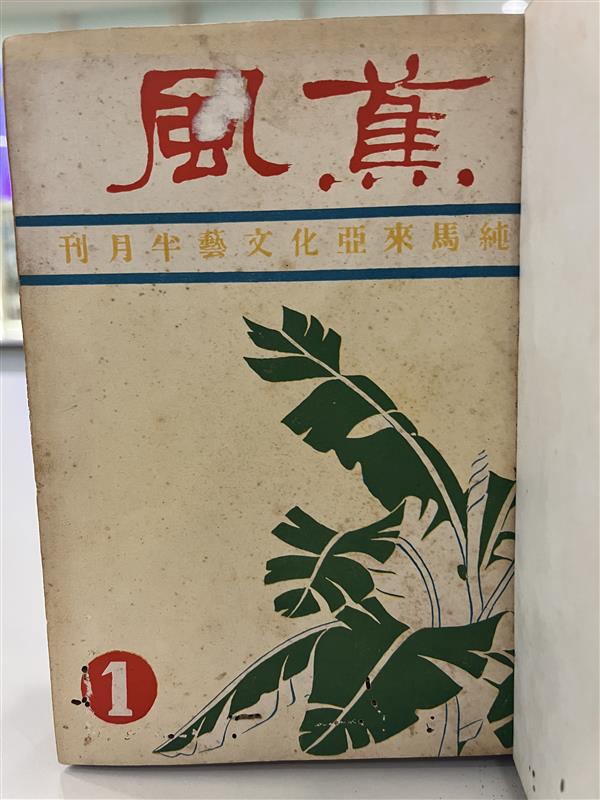
Poetry was one of the earliest and most significant forms of modernist literature in Singapore. Singaporean Chinese writer and Cultural Medallion recipient Wong Yoon Wah believes that Huang Yingliang’s (1933–2018) poetry collection Shijian de heliu (The River of Time), published in the 1950s, was an early work that drew on Western modernist trends while embodying the local “new tradition”. Around 1950, Singaporean Chinese poets such as Fan Bei Ling (1932–2012) and Wei Beihua (1923–1961) also composed poems with modernist characteristics. Critic Wen Renping (Woon Swee Tin) points out that Bai Yao’s (1934–2015) poem “Mahe jingli” (Standing Quietly by the Muar River, published in March 1959 in The Student Weekly) should be regarded as the first modernist poem in Singapore (and Malaya) Chinese literature. The poem not only features a stream of consciousness and obscure poetry, but is also rich in allusions and symbolism. Subsequently, Chao Foon magazine began introducing its readers to Western modernist trends, actively promoting the creation of local modernist literary works. Around the 1970s, writers such as Wan Yanji, Mu Lingnu, Wong Yoon Wah, Dan Ying, Meng Zhongji, Xie Qing, Nan Zi, Lin Fang (1942–2021), Wen Kai, Yeng Pway Ngon (1947–2021), and He Lanning produced a substantial number of skilfully crafted modernist poems. Notable collections include Mu Lingnu’s Juren (Giant), Yeng Pway Ngon’s Shoushutai shang (On the Operating Table) and Xinjiapo 15 shiren xinshiji (New Poetry Collections of 15 Singapore Poets), and Wong Yoon Wah’s Neiwai Ji (Inside/Outside Collection of Poetry). After 1980, poets such as Chua Chim Kang, Xi Ni’er, Liang Yue, Wu Mu, Tan Chee Lay, and Chow Teck Seng continued this momentum and continued to expand the field of modernist poetry.
In the realm of modernist fiction, Mu Lingnu’s Mu Lingnu xiaoshuo ji (Collection of Short Stories by Mu Lingnu), Yeng Pway Ngon’s Jicuo de youjian (Misdirected Mail), Liang Wern Fook’s Liang Wenfu de ershiyi ge meng (Liang Wern Fook’s 21 Dreams), and Chia Joo Ming’s Chonggou nanyang tuxiang (Reconstructing the Image of Nanyang) are notable works. Some of Kuo Pao Kun’s (1939–2002) plays, such as The Silly Little Girl and the Funny Old Tree, and certain essays by Yin Songwei, such as Wu zuobiao daoyu jishi (Chronicles of a Coordinate-less Island), also embody strong modernist characteristics. By the end of the 20th century, modernist works had become a vital part of Singapore Chinese literature.
This is an edited and translated version of 新华文学中的现代主义作品. Click here to read original piece.
Huang, Wanhua. Xinma bainian huawen xiaoshuoshi [A century’s history of Chinese novels in Singapore and Malaysia]. China: Shandong Publishing House of Literature and Art, 1999. | |
Liw, Pei Kien. Xinhua dangdai wenxue zhong de xiandai zhuyi [Modernism in contemporary Singapore Chinese literature]. Singapore: Global Publishing, 2017. | |
Neo, Choon Hong. Wenxue de fangxiang yu jiaoyin [The directions and footprints of literature]. Singapore: The Youth Book Co., 2009. | |
Phoon, Kwee Hian. Xinjiapo huawen xiandai zhuyi wenxue yundong yanjiu [A study of the Singapore Chinese modernist literary movement]. Singapore: Candid Creation Publishing, 2010. | |
Tan, Chee Lay. Xinjiapo huawen ji wenxue jiaoxue [Teaching of Chinese language and literature in Singapore]. Nanjing: Nanjing University Publishing House, 2012. | |
Tee, Kim Tong et al. Mahua wenxue yu wenhua duben [A reader on Malaysia Chinese literature and culture]. Taipei: China Times Publishing Co., 2022. | |
Wong, Yoon Wah. Cong xinhua wenxue dao shijie wenxue [From Singapore Chinese literature to global Chinese literature]. Singapore: Teochew Poit Ip Huay Kuan, 1994. |