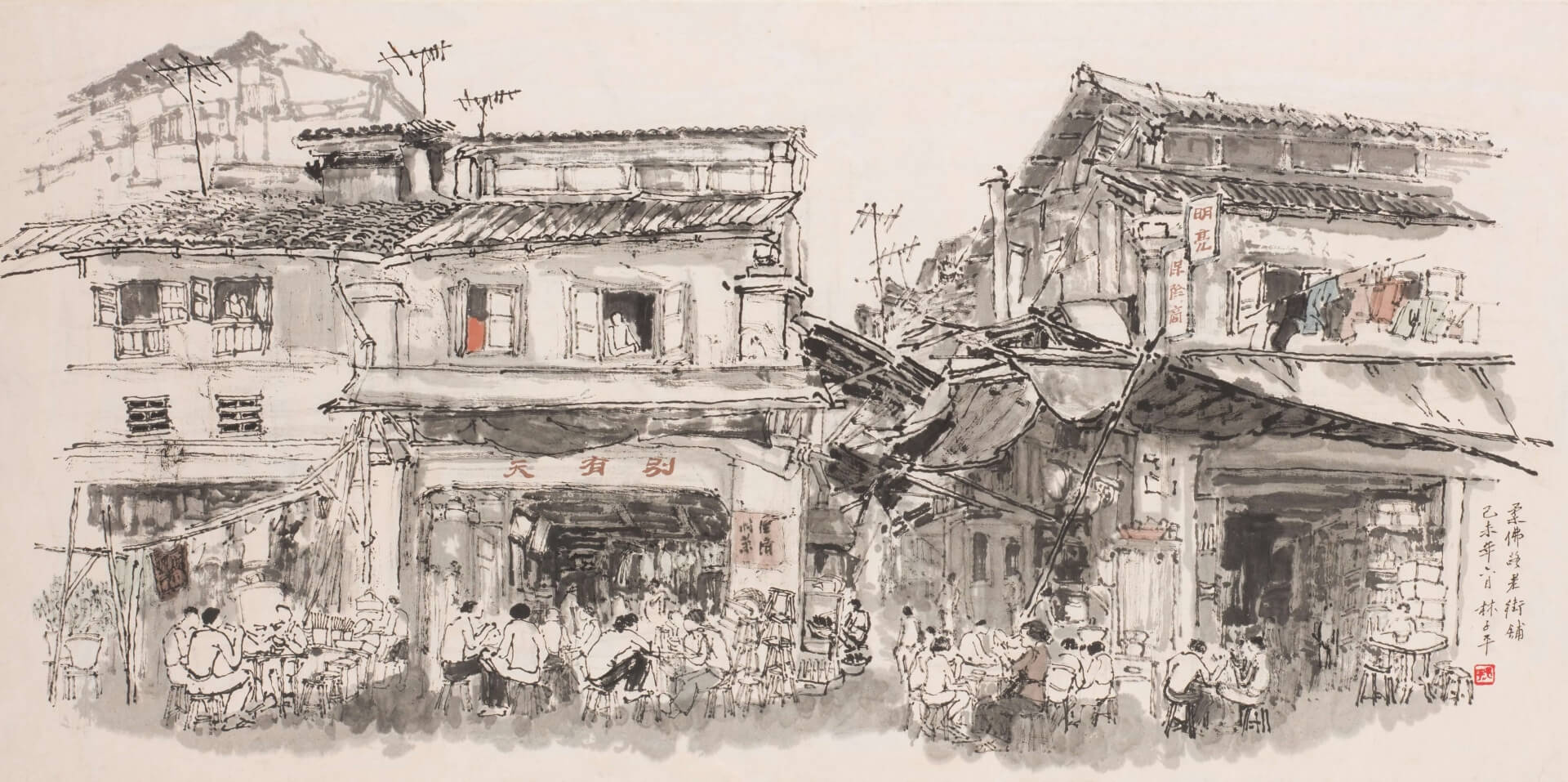
Siaw-Tao Chinese Seal Carving, Calligraphy and Painting Society


The founding of Siaw-Tao Chinese Seal Carving, Calligraphy and Painting Society in 1971 reflected the needs and landscape of Singapore’s art scene at that time. Back then, the Nanyang Academy of Fine Arts (NAFA) had been in existence for over 40 years, while several art societies such as the Society of Chinese Artists, Singapore Art Society, The Singapore Watercolour Society and Modern Art Society had also sprung up and frequently held exhibitions. Meanwhile, the so-called first-generation artists began experimenting with the Nanyang style of painting in exploring the modernity of Southeast Asia. Yet, while the value of traditional Chinese art forms was never discarded, the local art scene then lacked a dedicated platform to showcase and promote these traditional arts.1
According to Tan Kee Sek, one of Siaw-Tao’s founding members, NAFA’s formal curriculum back then focused primarily on Western painting, with Chinese ink painting being offered as a minor subject, taught by artists See Hiang To (1906–1990) and Chen Chong Swee (1910–1985). Seal carving was widely regarded as a supplementary art form then, and its creative potential was not given much attention. For students interested in traditional art forms, distinguished artists such as See and Fan Chang Tien (1907–1987) often provided informal and even free guidance outside of the classrooms. As a result, most of the younger generation of Chinese ink artists did not receive systematic training in an institution, but instead studied under individual mentors. Over time, this gave rise to various artistic lineages, and led to the establishment of several ink painting societies in the 1960s and 1970s Singapore.
The founding of Siaw-Tao
In 1967, See’s students, including Zhuang Shengtao and Oh Khang Lark, founded Molan Art Association, one of the earliest art societies established during that period. The association focused on the study of calligraphy, ink painting and seal carving, and the creation of artworks in these three major art domains. It provided an important platform for showcasing and exchanging ideas on traditional arts forms.2 Subsequently, another group comprising See’s younger students, who were fresh NAFA graduates, formally registered the Siaw-Tao Chinese Seal Carving, Calligraphy and Painting Society on 26 May 1971.3 To a certain extent, Molan Art Association and Siaw-Tao Chinese Seal Carving, Calligraphy and Painting Society can be regarded as “sister societies”. Both are deeply influenced by See and uphold the principle of attaching equal importance to calligraphy, painting and seal carving, while striving to provide the younger generation of artists with space for creation and research. It is worth noting that the name “Siaw-Tao” (which means “roaring waves”) was deliberately picked to echo “Molan” (which means “waves of black ink”), as founding members recalled.4
At its founding conference on 9 June 1971 held at a restaurant at the National Theatre, Siaw-Tao Chinese Seal Carving, Calligraphy and Painting Society appointed See and other notable artists such as Chen Jen Hao (1908–1976), Huang Pao Fang (1912–1989), Wong Jai Ling (1895–1973) and Chen Chong Swee as advisors. In 1991, it added Pan Shou (1911–1999) to the panel of advisors. Tan Kian Por served as the founding president, with Tan Kee Sek as vice-president. Other founding members included Lee Hock Moh and Lim Buan Chay (1951–2024).5 To embrace more creative ideas and enrich the society’s artistic scope, Siaw-Tao opened membership to the public in 1972.6 Its current advisors Nai Swee Leng and Koh Mun Hong were among those who joined the society during that period.
Siaw-Tao’s early activities
Siaw-Tao’s early activities were primarily held at the Kovan Road home of its president Tan Kian Por. The residence also served as the society’s registered address. Members frequently gathered there to engage in in-depth discussions and research on topics related to calligraphy, painting and seal carving.7 Since its inception, Siaw-Tao has also actively organised exhibitions, including an annual event to showcase members’ latest artworks to the public — a tradition that endures today. These annual exhibitions hold significant cultural significance as they not only became an important tradition, but also served as one of the few platforms in Singapore then for displaying contemporary works of seal carving.
Siaw-Tao’s founding objectives were not just centred on creating works of calligraphy, painting and seal carving; they also provide fellow artists with a platform for continued exchanges of ideas on artistic endeavours. As Tan Kee Sek said, “Through such an organisation, we are able to bring everyone together. The calligraphy, painting and seal carving that one learns and loves can also continue to be studied and developed.”8
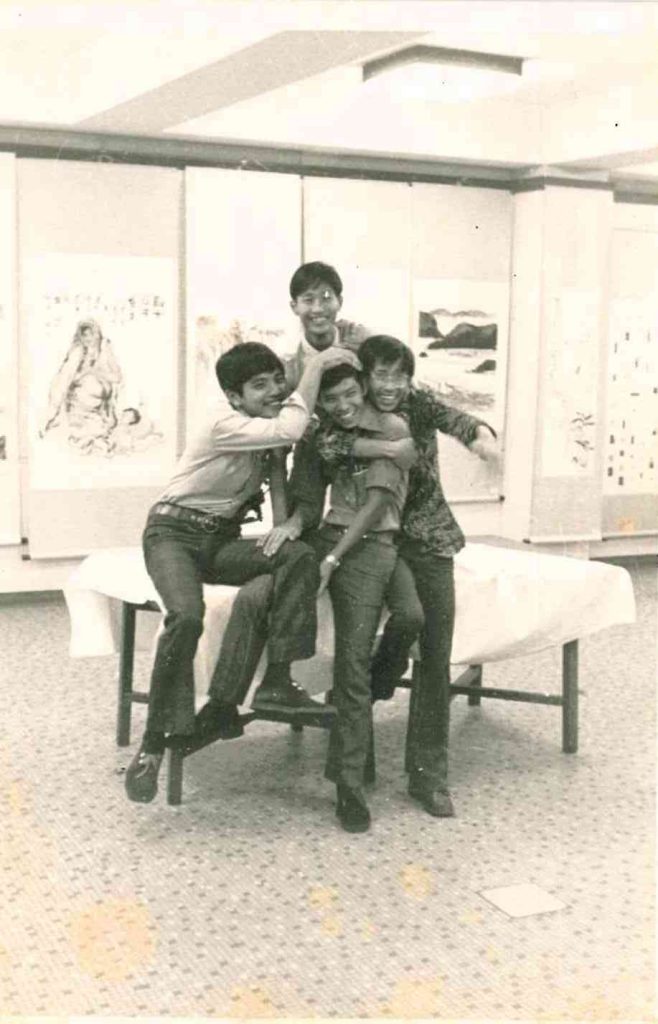
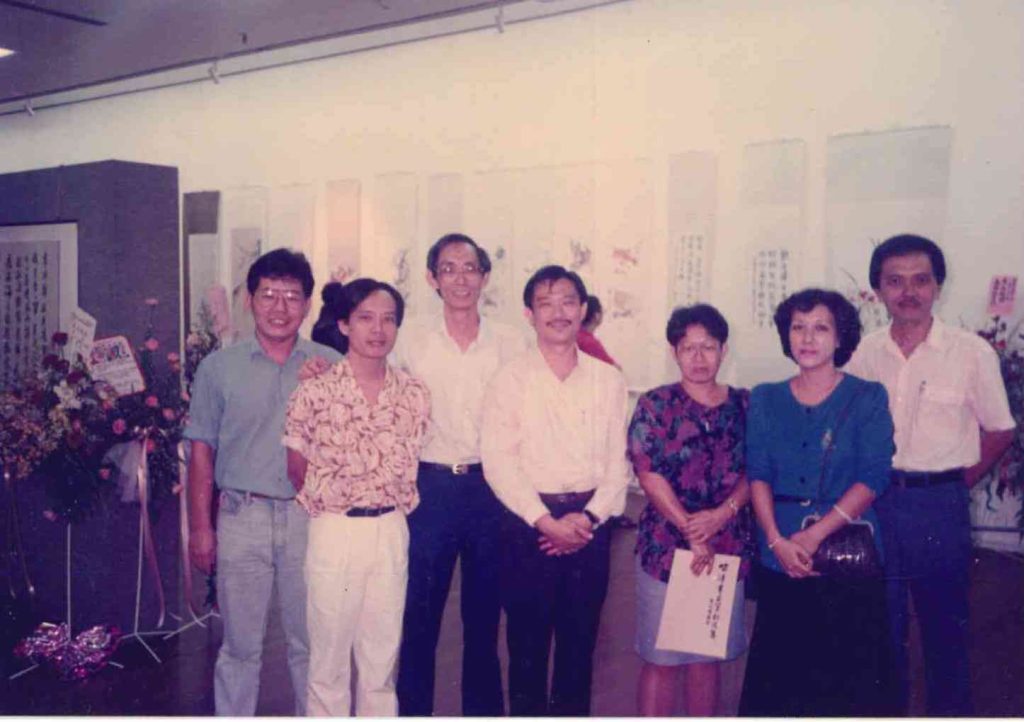
From lectures to yaji
While Siaw-Tao primarily shared research findings through lectures in its early years, the setting gradually shifted to that of yaji (literati gathering), which were regular gatherings where members exchanged views on their artworks in a more relaxed atmosphere. Such gatherings provide members with opportunities for collision of ideas and artistic collaboration. As Tan Kian Por noted, “(Yaji activities) attracted many newcomers and fellow enthusiasts to come together to discuss issues related to the content and forms of painting in a harmonious atmosphere.”9
Take for example a seal inscription created in 1992, which bears lines from an ancient poem engraved by senior and younger members of Siaw-Tao, as well as an inscription by Koh Mun Hong — such works offer a glimpse into the distinctive styles of the seal carvers, while reflecting shared creative concepts and approaches among members. Similar collaborative pieces are not uncommon within Siaw-Tao and serve as an important practice platform to enhance members’ artistic skills.
At a time when art galleries were not common, Siaw-Tao and other seal carving, calligraphy and painting societies provided support to members and overseas artists to showcase their works. For instance, shortly after its inception, Siaw-Tao hosted several solo exhibitions for Tan Kian Por. Between 1977 and 1979, Siaw-Tao held five exhibitions in Singapore for several Hong Kong artists, and subsequently collaborated with artists from Malaysia, Japan, and the United States. These activities not only advanced the artistic growth of its members, but also strengthened transnational exchanges in the arts.10 At the same time, Siaw-Tao undertook the task of publishing collections of works of its advisors and members. One notable example is Shixiangtuo shufaji (Collection of Calligraphy Works by See Hiang To) published in 1981, which has since become an important resource for the study of Singapore’s arts history.11
The late 1970s coincided with the beginning of China’s reform and opening, and this pivotal period offered Siaw-Tao, which was already quite established then, opportunities to engage China’s arts community. In 1979, several Siaw-Tao members were part of a delegation to China on a cultural immersion trip organised by Singapore Art Society, which allowed them to establish initial connections with Chinese artists.12 Among the many Chinese artists who forged ties with Siaw-Tao, Wu Yongliang (1937–2020), a professor at the China Academy of Art and a visiting professor at NAFA then, deserves special mention. Wu maintained close exchanges with Siaw-Tao members through the years and was invited to serve as Siaw-Tao’s overseas advisor in 2006.
In 1989, Siaw-Tao held the widely acclaimed “The World of Lotus” exhibition at the National Museum Art Gallery. This rare arts event exhibition brought together renowned artists from Singapore, Malaysia, mainland China, Taiwan and Hong Kong,13 who showcased their artworks based on the traditional theme of the lotus. Apart from Siaw-Tao members, participating artists included distinguished artists Chen Wen Hsi (1906–1991), Zhu Qizhan (1892–1996), Chao Shao-an (1905–1998), Xie Zhiliu (1910–1997), Cheng Shifa (1921–2007), Tan Tee Chie, Tang Yun, Han Tianheng, Yang Shanshen and Zhang Shaoshi.
In 2005, Siaw-Tao introduced an “ordinary membership” mainly for students of senior members, in addition to its “basic membership” for senior members. The inaugural cohort of more than 60 ordinary members brought not only greater diversity to the artworks at Siaw-Tao’s annual exhibitions, but also new blood to the society. Over the years, many ordinary members have made significant strides in their artistic practice, with a number of them going on to establish themselves in their respective art fields. In 2021, Siaw-Tao scrapped the “ordinary membership” and accorded all members one standard membership.
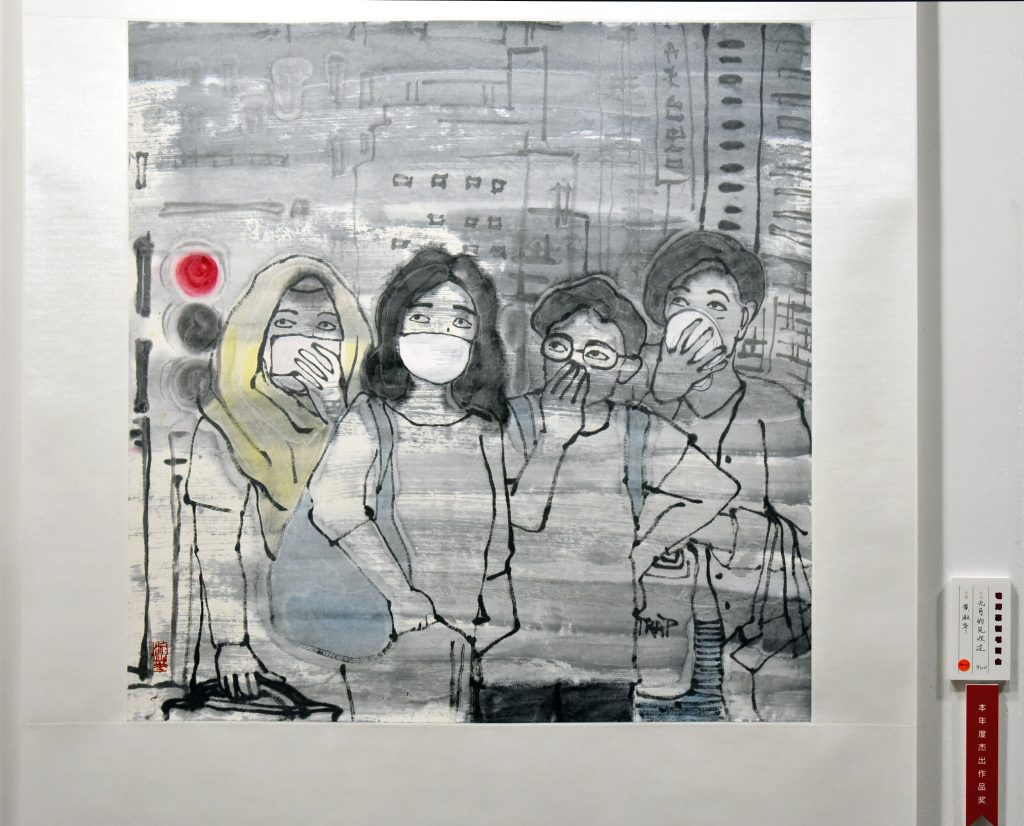
Siaw-Tao today
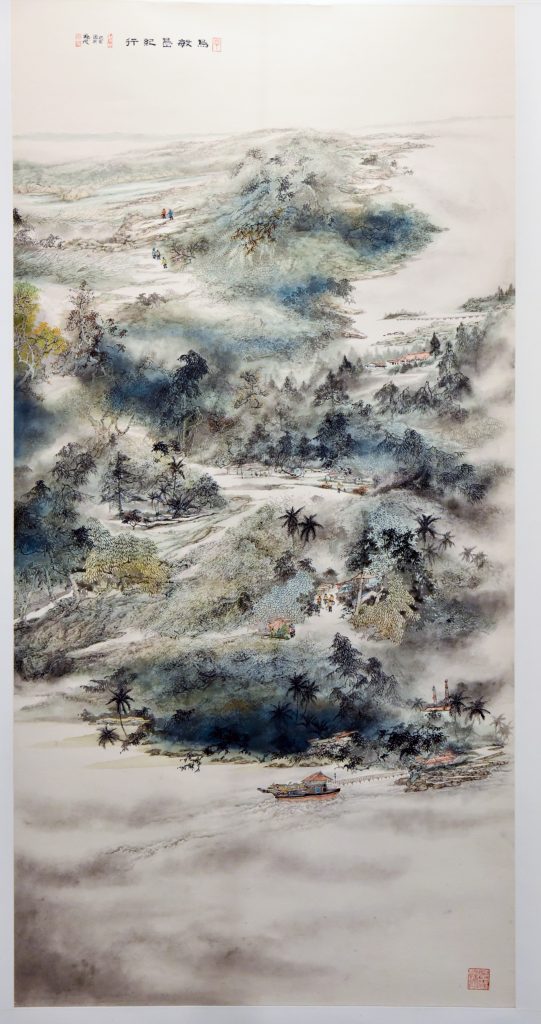
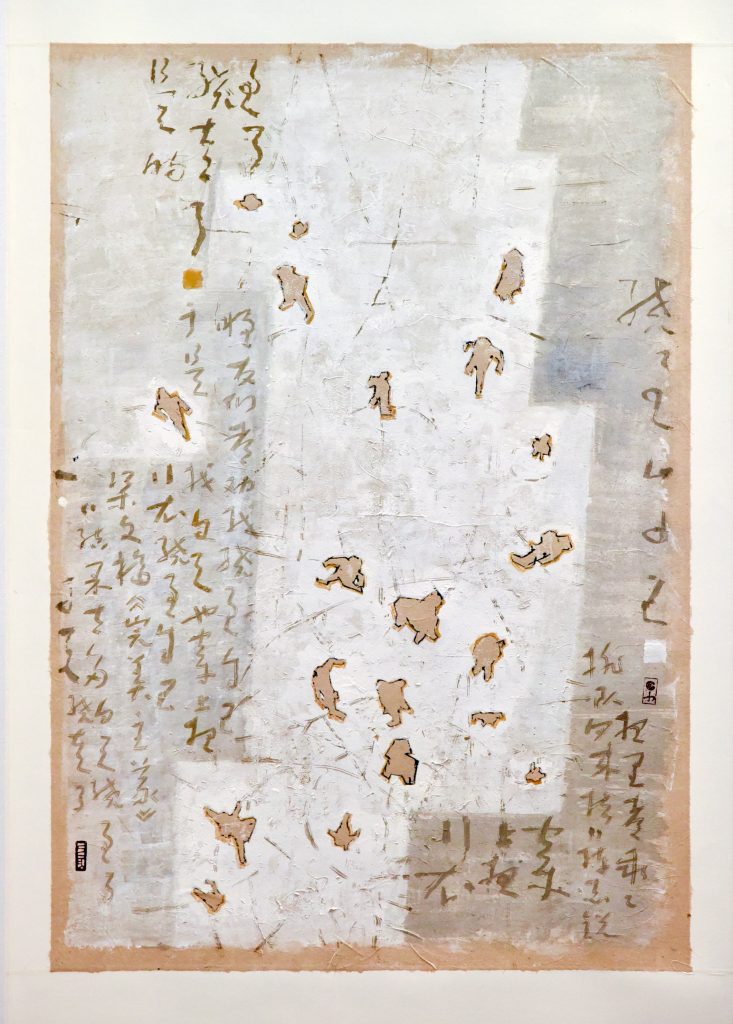
Tan Kee Sek stepped down as president in 2014 and was succeeded by Tay Bak Chiang, marking the handover of leadership to a new generation. The same year, Lee Hock Moh, Koh Mun Hong, Nai Swee Leng and Poh Bee Choo were appointed advisors, while Goh Choon Kang was named honorary advisor. Tan Kee Sek was conferred the title of honorary president. Under the leadership of its second-generation members, Siaw-Tao’s artworks encompass broader forms of artistic expression, including incorporating glue-based colours or other pigments into ink techniques, creating ink works infused with contemporary designs and illustrative elements, as well as producing seal carvings with non-stone materials or non-seal script elements.
To share its activities and artistic concepts with a wider audience, Siaw-Tao launched its Facebook page in 2011, posting event updates and images of artworks. Since 2016, it also publishes a pictorial titled Tao Sheng annually (except in years when it published its journals). In 2019, Siaw-Tao signed a Visual Arts Venue Partnership memorandum of understanding with the Singapore Chinese Cultural Centre (SCCC) and has since been holding its annual exhibition at the Centre every year.
The artistic achievements of Siaw-Tao members have been widely recognised in the arts community, with several members being recipients of Singapore’s prestigious arts awards. For instance, Lee Hock Moh, Tan Kian Por, Koh Mun Hong and Nai Swee Leng were awarded the Cultural Medallion in 1981, 2001, 2016 and 2025 respectively, while Tay Bak Chiang received the Young Artist Award in 2002. In 2025, Siaw-Tao was honoured with the Singapore Chinese Cultural Contribution Award (Group) by SCCC.
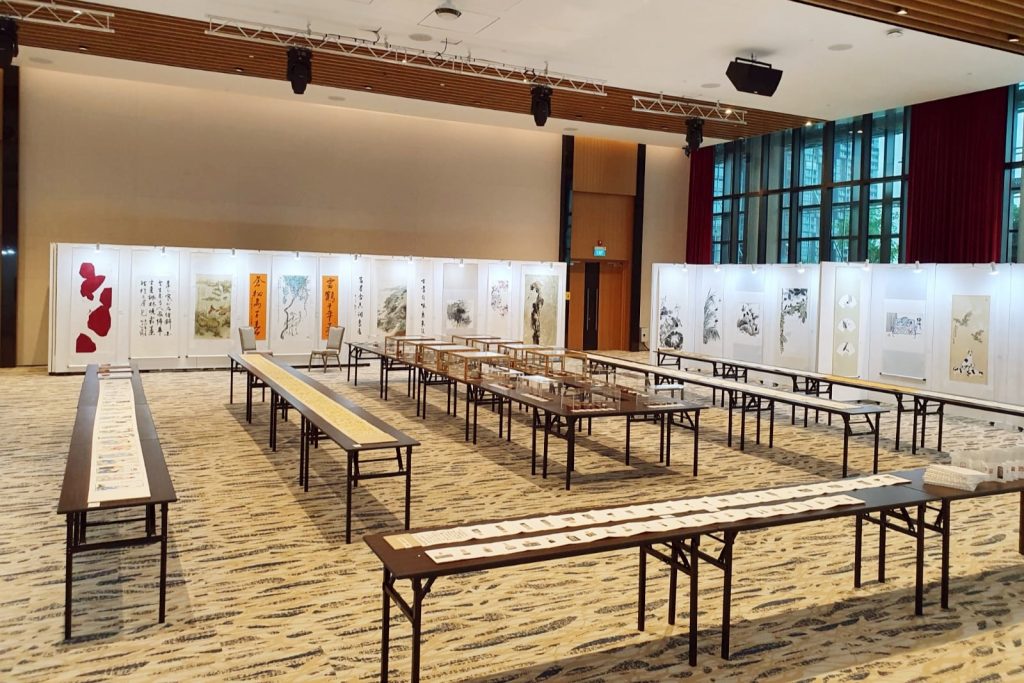
Siaw-Tao’s annual exhibitions and newly introduced mid-year exhibitions of a smaller scale have become key events in Singapore’s ink art scene. In recent years, these exhibitions have also incorporated themes or themed zones, such as letters, folding fans, local cuisine and colloquial expressions to encourage members to explore greater diversity in their artistic endeavours.
Founding president Tan Kian Por once said in a 1992 interview that one regret of Siaw-Tao was not having a clubhouse of its own.14 This wish was finally fulfilled in 2021, when Siaw-Tao successfully rented a space on the fourth floor of Waterloo Centre as its first clubhouse.15 The move has not only made it easier to organise exhibitions that are more complex, but has also given members a conducive environment for artistic pursuits, marking a key milestone in Siaw-Tao’s development.
This is an edited and translated version of 啸涛篆刻书画会. Click here to read original piece.
| 1 | For more information on Singapore’s art scene from the 1930s to the 1970s, see Yeo Mang Thong, Xinjiapo zhanqian huaren meishushi lunji [Essays on the history of pre-war Chinese painting in Singapore] (Singapore: Society of Asian Studies, 1992); Kwok Kian Chow, Channels & Confluences: A History of Singapore Art (Singapore: Singapore Art Museum, 1996). |
| 2 | Since the post-war era, Singapore has had Chinese calligraphy, painting and seal carving associations. For example, the Nanyang Epigraphy, Calligraphy and Painting Society was established in 1948, but it ceased operating soon after and had limited influence. |
| 3 | “Xiaotao zhuanke shuhuahui wuyue nianliuri zhuce” [Siaw-Tao Chinese Seal Carving, Calligraphy and Painting Society registered on 26 May], Sin Chew Jit Poh, 6 June 1971. |
| 4 | Siaw-Tao Chinese Seal Carving, Calligraphy and Painting Society 45th Anniversary Documentary, 2015. |
| 5 | “Xiaotao zhuanke shuhuahui jing juxing chengli dahui” [Siaw-Tao Chinese Seal Carving, Calligraphy and Painting Society held its inaugural meeting], Nanyang Siang Pau, 10 June 1971. |
| 6 | “Xiaotao zhuanke shuhuahui xuan benniandu xinlishi” [Siaw-Tao Chinese Seal Carving, Calligraphy and Painting Society elected its new committee], Sin Chew Jit Poh, 13 January 1972. |
| 7 | Tong Noong Chin, “Chaoran yu xianshi: xie zai xiaotao zhuanke shuhua hui meizhan zhiqian” [Idealism and reality: Written prior to the art exhibition by the Siaw-Tao Chinese Seal Carving, Calligraphy and Painting Society], Lianhe Wanbao, 22 October 1985. |
| 8 | Siaw-Tao Chinese Seal Carving, Calligraphy and Painting Society 45th Anniversary Documentary, 2015. |
| 9 | Wu Yin, “Buting xiang mubiao jinfa de huahui” [A painting society that is constantly advancing towards its goal], Lianhe Zaobao, 22 July 1992. |
| 10 | About Siaw-Tao’s various activities, see “A Brief History of Siaw-Tao,” Siaw-Tao Chinese Seal Carving, Calligraphy and Painting Society website. |
| 11 | Xiaotao shuhuahui chuban shixiangtuo shufaji [Siaw-Tao Chinese Seal Carving, Calligraphy and Painting Society published a collection of calligraphy works by See Hiang To], Sin Chew Jit Poh, 13 May 1981. |
| 12 | Qi Jun, “Meishu jiaoliu jie youqing” [Friendship through artistic exchange], Sin Chew Jit Poh, 9 October 1980; “Han Tianheng ren xiaotao huahui guwen” [Han Tianheng appointed as advisor to Siaw-Tao], Lianhe Wanbao, 9 June 1986. |
| 13 | Li Yongle, “Chushui furong ge you zi” [Each lotus has its own grace], Lianhe Wanbao, 6 June 1989. |
| 14 | Wu Yin, “Buting xiang mubiao jinfa de huahui” [A painting society that is constantly advancing towards its goal], Lianhe Zaobao, 22 July 1992. |
| 15 | Tao Sheng, 5 (2022). |
Carving Possibilities: An Exhibition by Siaw-Tao Seal Carvers. Singapore: Siaw-Tao Chinese Seal Carving, Calligraphy and Painting Society, 2023. | |
Siaw-Tao. Singapore: Siaw-Tao Chinese Seal Carving, Calligraphy and Painting Society, 1971. | |
Siaw-Tao 40th Anniversary Collection of Artworks. Singapore: Siaw-Tao Chinese Seal Carving, Calligraphy and Painting Society, 2010. | |
Siaw-Tao 50th Anniversary Collection of Artworks. Singapore: Siaw-Tao Chinese Seal Carving, Calligraphy and Painting Society, 2020. | |
Siaw-Tao Collection of Artworks and Cao Tang Men Collection of Artworks. Singapore: Siaw-Tao Chinese Seal Carving, Calligraphy and Painting Society, Selangor: Cao Tang Men Eastern Arts Society, 2008. | |
The World of Lotus. Singapore: Siaw-Tao Chinese Seal Carving, Calligraphy and Painting Society, 1989. |