Nan Hua High School


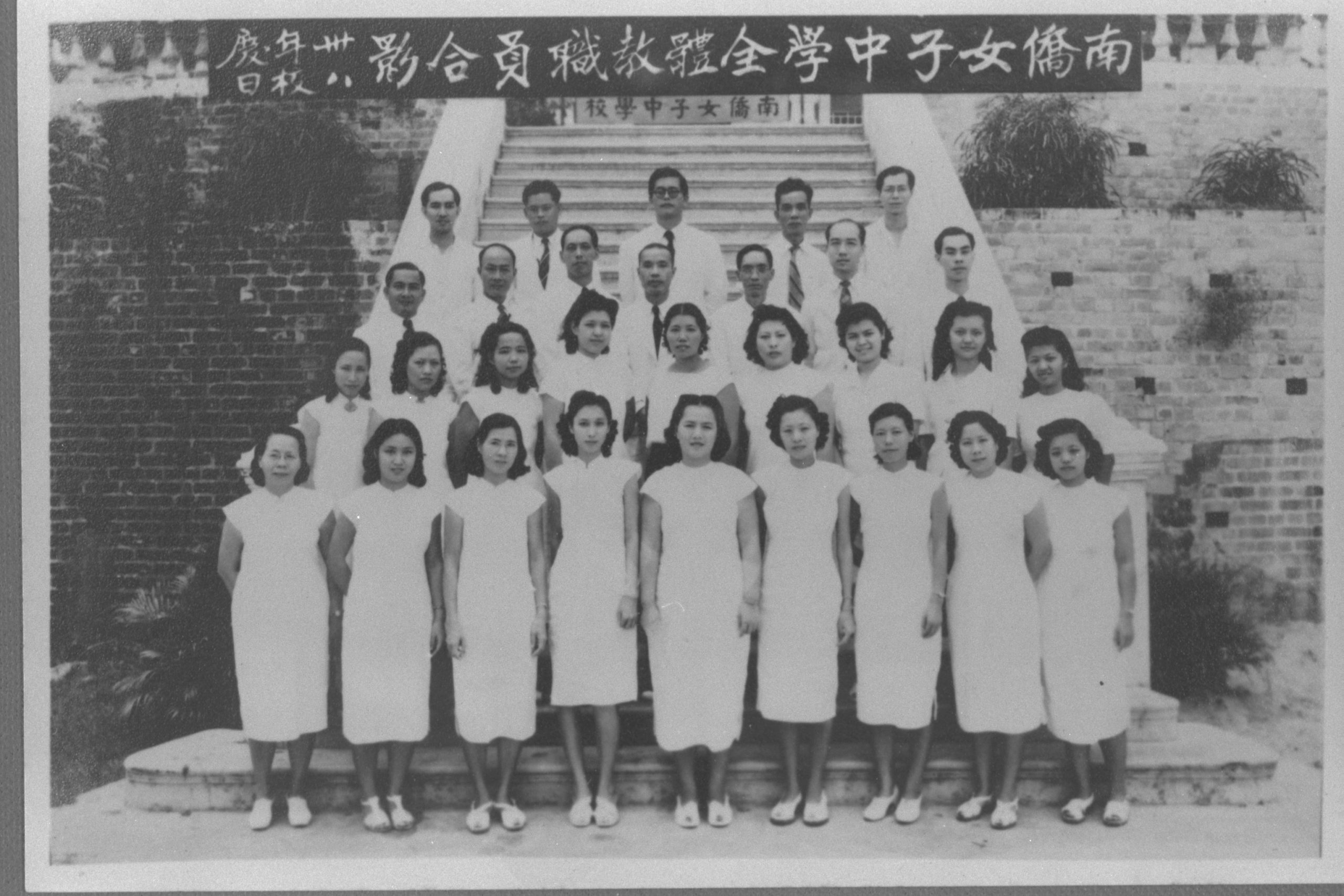
The founding of Nan Hua High School — as Nam Wah Girls’ School in 1917 — was closely linked to Kwong Shiu Yeung Ching School (today’s Yangzheng Primary School). In 1916, the latter closed its girls’ section after about two years due to insufficient funds, prompting the affected female students to appeal for assistance. Distressed by the thought of these girls losing their opportunity to receive education, the then-principal of Tao Nan School Xiong Shangfu (birth and death years unknown) proposed raising funds to set up a new school. He invited the Guofeng Huanjing jutuan (Guo Feng Fantasy Drama Society) to perform in various locations to raise funds, and actively sought support from Cantonese merchants such as He Zhongying (1920–1952), Li Liangqi (1890–1958) and Chen Yifu (birth and death years unknown), enabling the new school to be established. Nam Wah Girls’ School was eventually founded on 14 June 1917, with He Zhongying serving as its first chairman and Wu Mulan (birth and death years unknown), a leading figure in the women’s rights movement in Republican China, as its first principal.
In the early days, girls with long hair plaited in two braids were an iconic image of female students of traditional Chinese-medium schools. Today, Nan Hua High School is the only local school that still upholds this tradition.
In keeping with the tradition of Chinese-medium schools, the school’s motto encompasses the traditional virtues of Loyalty, Filial Piety, Humanity, Love, Courtesy, Righteousness, Integrity and Sense of Shame. The current school song, with lyrics written by then-principal Yang Shui Chor (1909–1984), is the second in the school’s history and has been in use since 1962.1 The song emphasises how students, guided by the school motto, work together to create a bright future and serve the nation. With the implementation of bilingual education, the school added an English version to the school song in 1986.
School motto
Courtesy, Righteousness, Integrity and Sense of Shame (1945–1962)
Courtesy, Righteousness, Integrity, Sense of Shame, Loyalty, Filial Piety, Humanity and Love (1962–2003)
Loyalty, Filial Piety, Humanity, Love, Courtesy, Righteousness, Integrity and Sense of Shame (2004–present)
Brief history
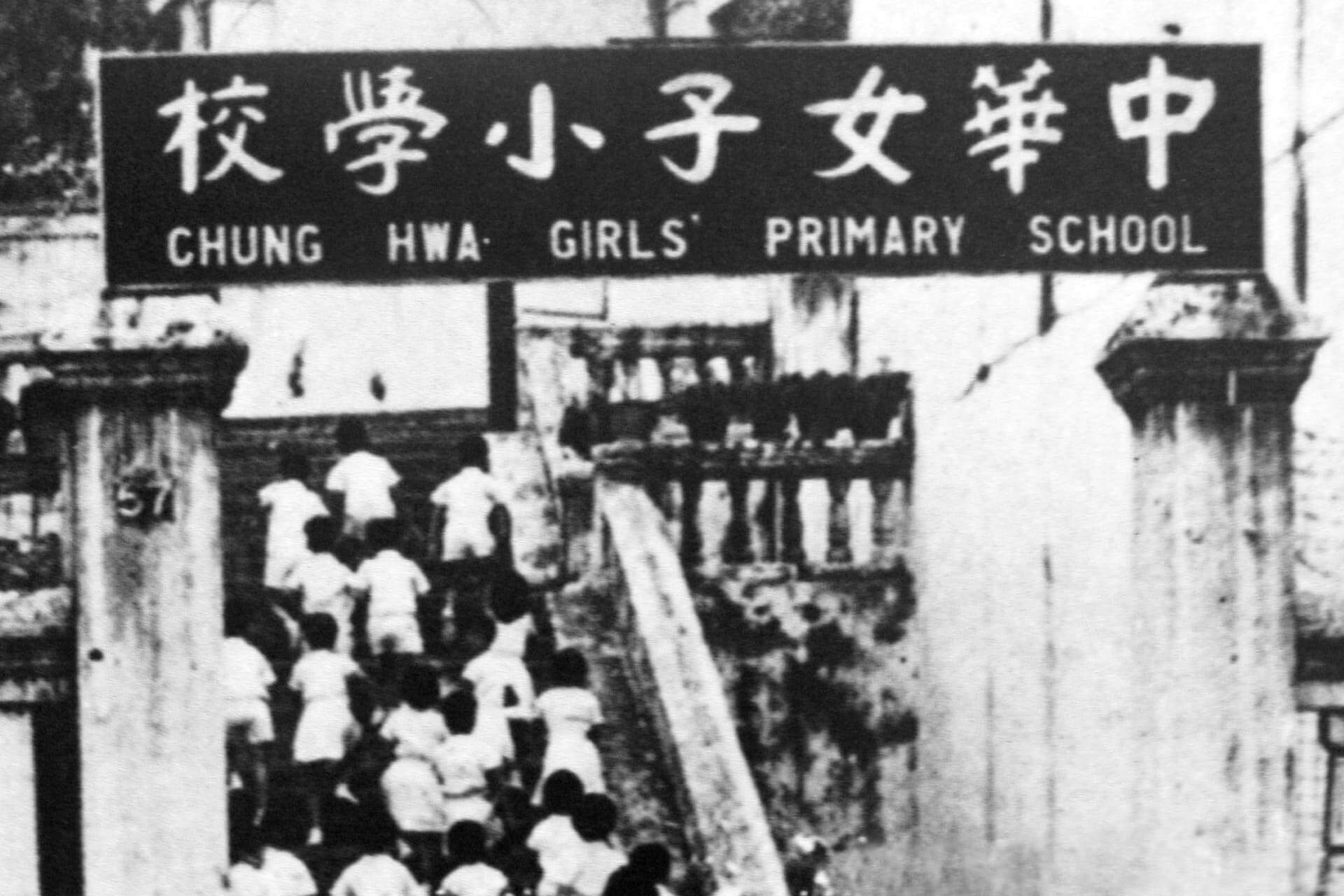
Nam Wah Girls’ School was first established at Coleman Street with two shophouses serving as classrooms for dozens of primary school students. In 1918, the school started a two-year basic teacher training course. As enrolment increased, the school soon faced space constraints, and plans were made to relocate the school. In 1921, under the leadership of principal Shi Lei (birth and death years unknown), the school moved to a new campus at 54 Bencoolen Street. However, the school was closed temporarily in 1924 due to financial difficulties. By then, Shi had stepped down and was succeeded by Cheng Xingjin (birth and death years unknown). The school’s chairman, Mei Guoliang (birth and death years unknown), appealed to the community for donations, and generous contributions enabled debts to be settled. When the school resumed operations in 1928, it had only about 100 students and six classes. Throughout the 1920s and 1930s, the student population continued to grow. Besides providing basic education, the school also extended the teacher training course to three years to form the Basic Teacher Training Programme.
In 1939, community leader Woo Mon Chew (1888–1958) assumed the role of chairman. The Teacher Training Programme was enhanced to become a four-year course, and Nam Wah had a total of 300 students and 14 classes across 10 levels of the teacher training and primary sections. As enrolment grew, the premises proved inadequate and the school added a school branch at Middle Road, while starting a fundraising drive to construct a new three-storey campus at 2 Adis Road on Mount Sophia. In 1941, the new campus at Adis Road was officially completed. It functioned as the main school housing the Teacher Training Programme and primary school section. The old campus at Bencoolen Street served as the branch school and offered primary school classes only, while the original branch at Middle Road was discontinued. In December that year, with the Japanese army advancing southwards, the campus at Adis Road ceased operations after it was requisitioned and turned into an orphanage by the British troops. After Singapore fell to the Japanese in February the following year, the campus became a propaganda department of the Japanese Imperial Army.
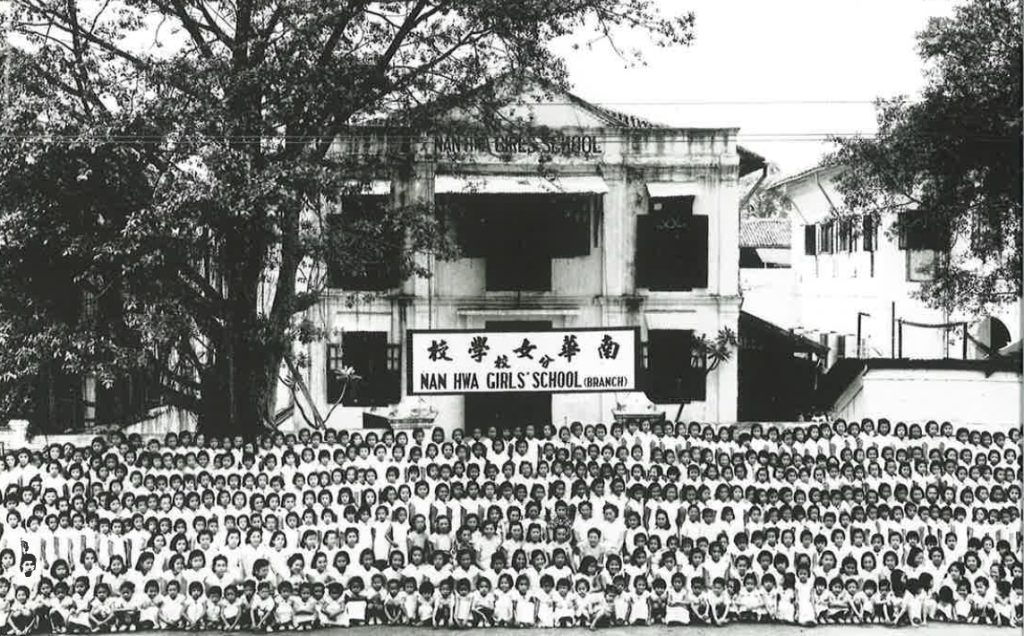
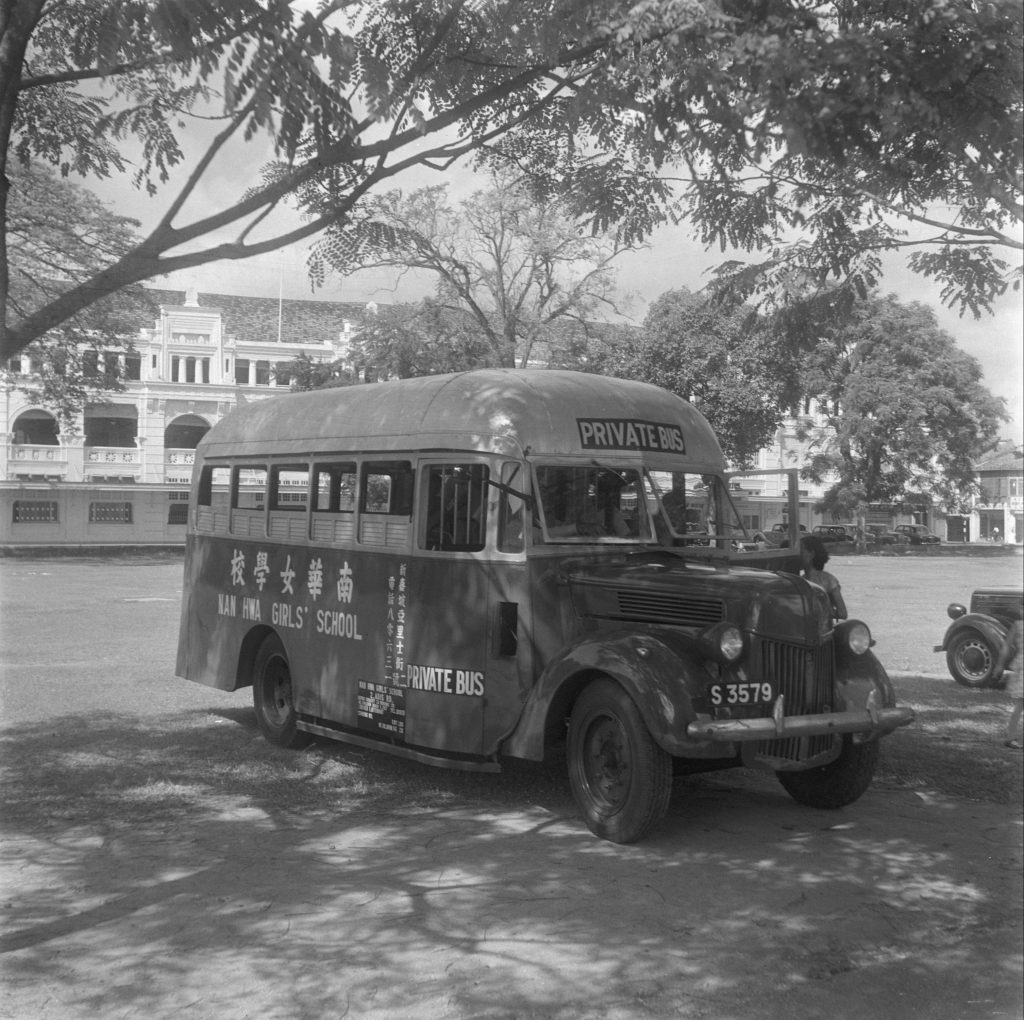
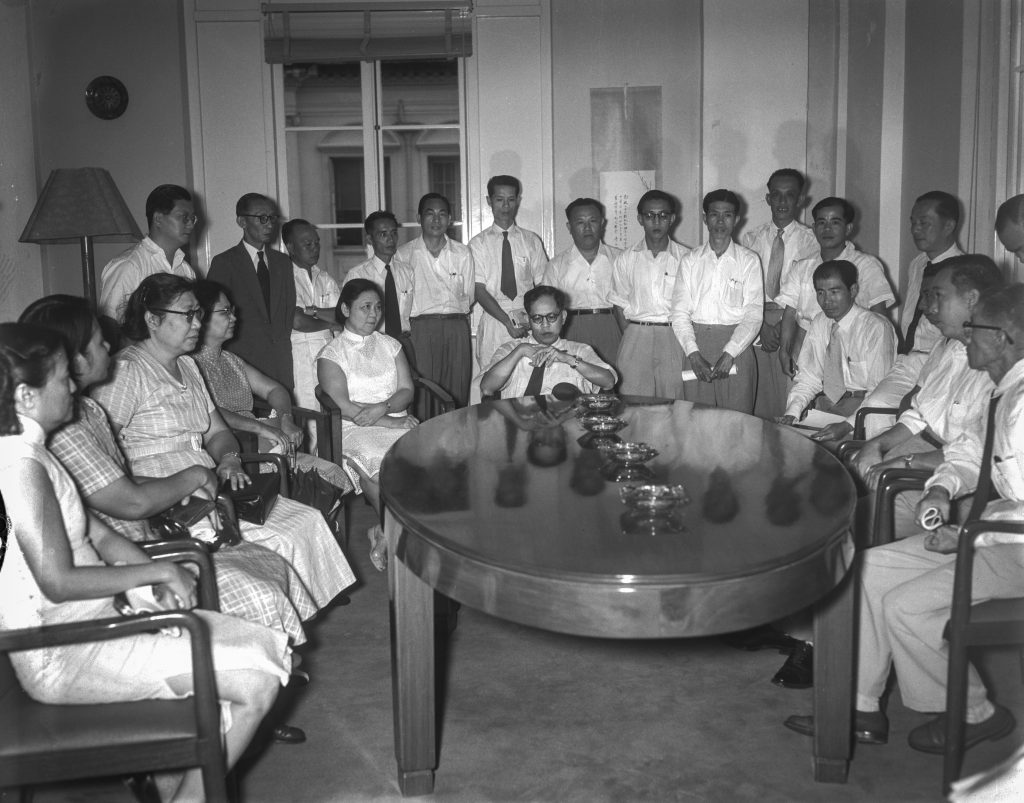
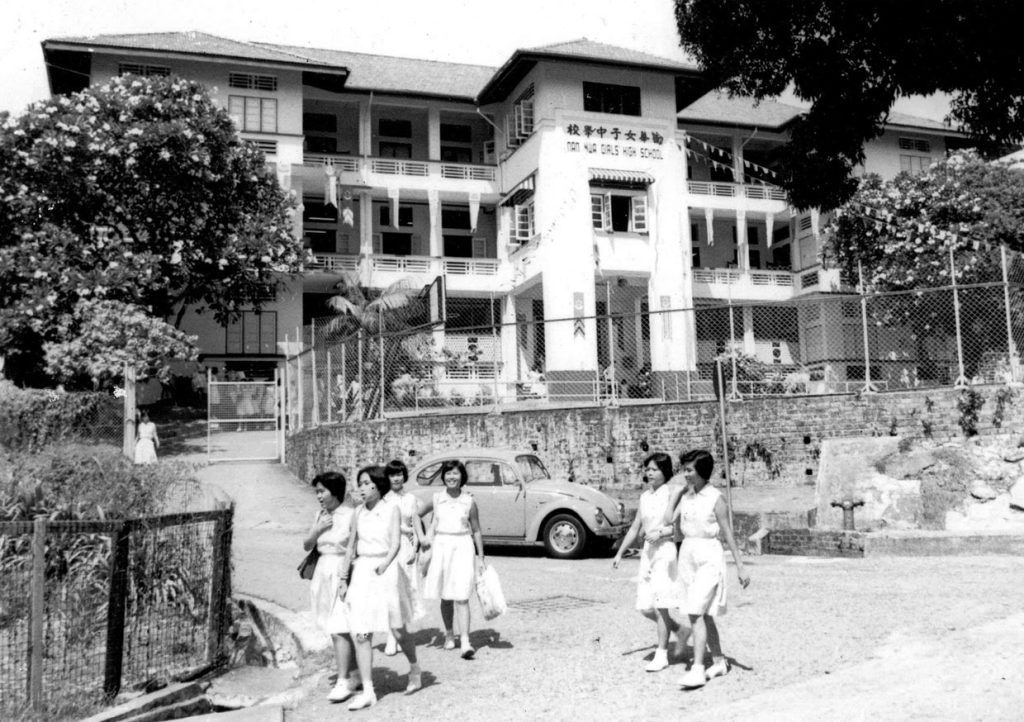
Shortly after the Japanese surrendered in August 1945, the school board led by Woo Mon Chew immediately set out to raise funds to reclaim and refurbish the campuses at Adis Road and Bencoolen Street, as well as to enrol students again. Nam Wah Girls’ School reopened two months later. Yang Shui Chor, former principal of Cheng Fong Girls’ School, was appointed principal to oversee the school’s administration. With support from both parents and the community, student enrolment quickly rose to 700. In 1948, the school formed a Girl Guides troop, becoming the first Chinese-medium school in Singapore to do so. Student numbers also exceeded 1,500. In 1949, as the Department of Education would soon establish a Teachers’ Training College, the school decided to introduce a junior-middle section and admitted its final cohort of students for its Teacher Training Programme. The school also ran evening classes at one point to provide education for older girls who had missed formal schooling, but discontinued the classes in 1952 due to insufficient enrolment.
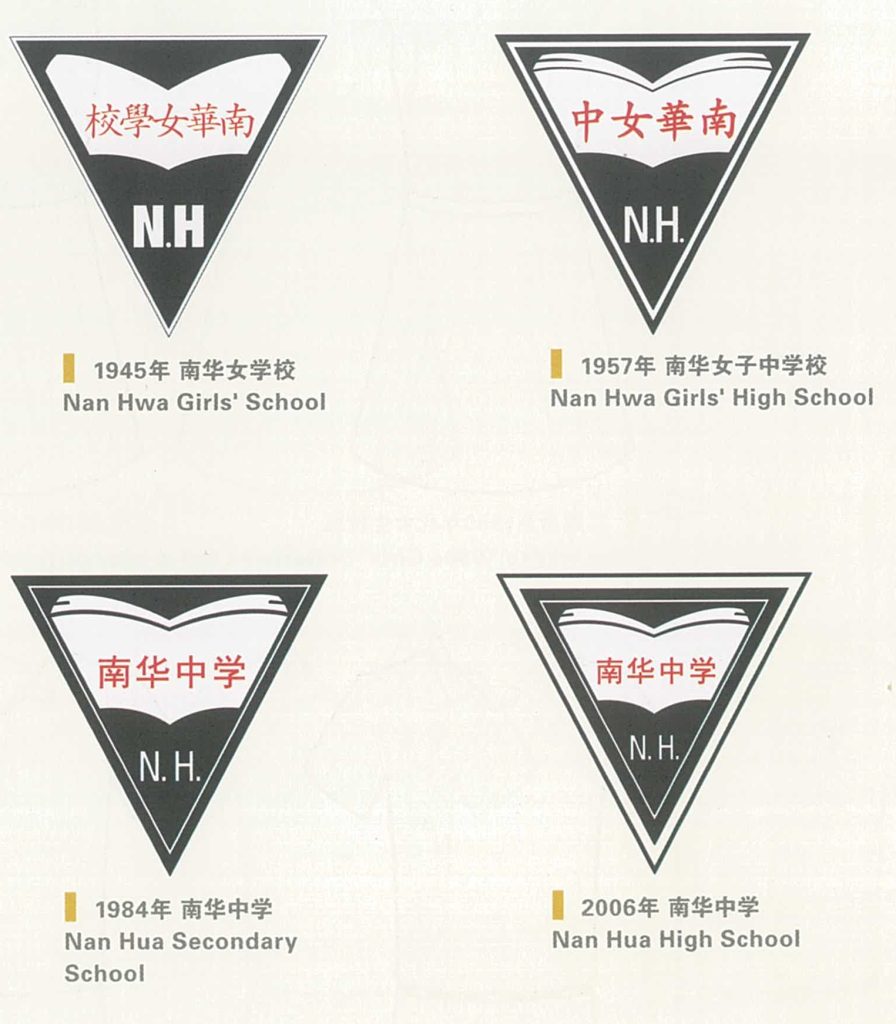
In 1957, the school’s name was officially changed to Nan Hwa Girls’ High School, while the branch school was renamed Nan Hwa Girls’ High School (Branch). Yang Shui Chor was appointed principal of both schools, which became government-aided.2 In 1958, the main school added a senior-middle section.
In 1961, the main and branch schools became administratively independent. The branch school appointed Gao Jingming (birth and death years unknown) as its principal, while Yang continued as principal of both the primary and secondary sections of the main school, which admitted only female students in line with its tradition. Both the main and branch schools remained under the same board of directors. In 1965, the branch school was transformed into a primary school and started admitting boys, leaving the main school as the secondary school.
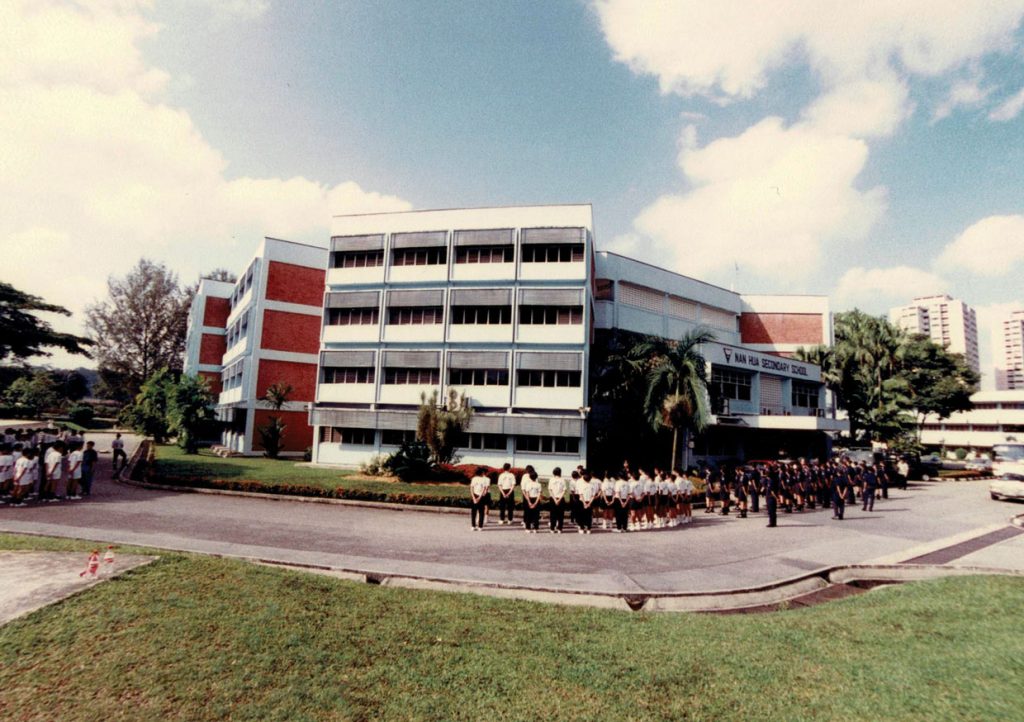
In the 1970s, Nan Hwa’s student enrolment gradually declined due to urban redevelopment. In December 1982, both the main and branch schools moved from Adis Road to 330 Clementi Ave 1 at the recommendation of the Ministry of Education (MOE). In 1984, the school began to transition to an English-medium school and admitted male students for the first time. The school thus changed its name to Nan Hua Secondary School. In April 1986, the school handed over its administration to MOE, ending its status as a government-aided school to become a government school. English lyrics were also added to the school song.
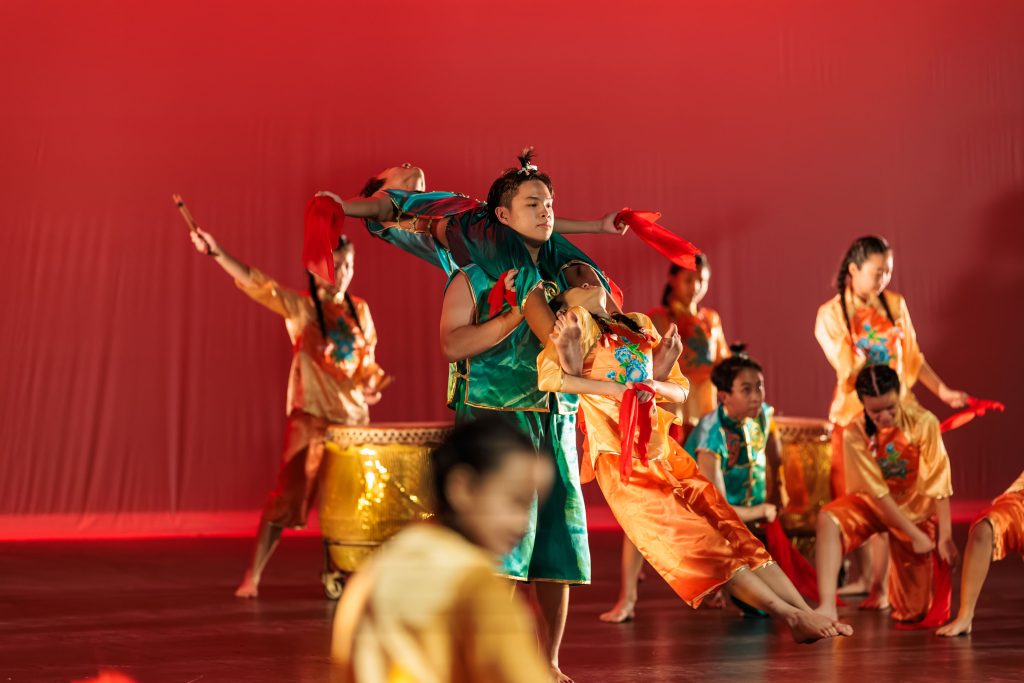
In 1998, Nan Hua Secondary School introduced several annual events, such as Cultural Potpourri (formerly named Musical Escapade) to showcase the diverse talents of students from its performing arts groups. The same year, the Nan Hua Secondary School Alumni Association was formally established, and together with the school it organised its first Mid-Autumn Festival celebration.
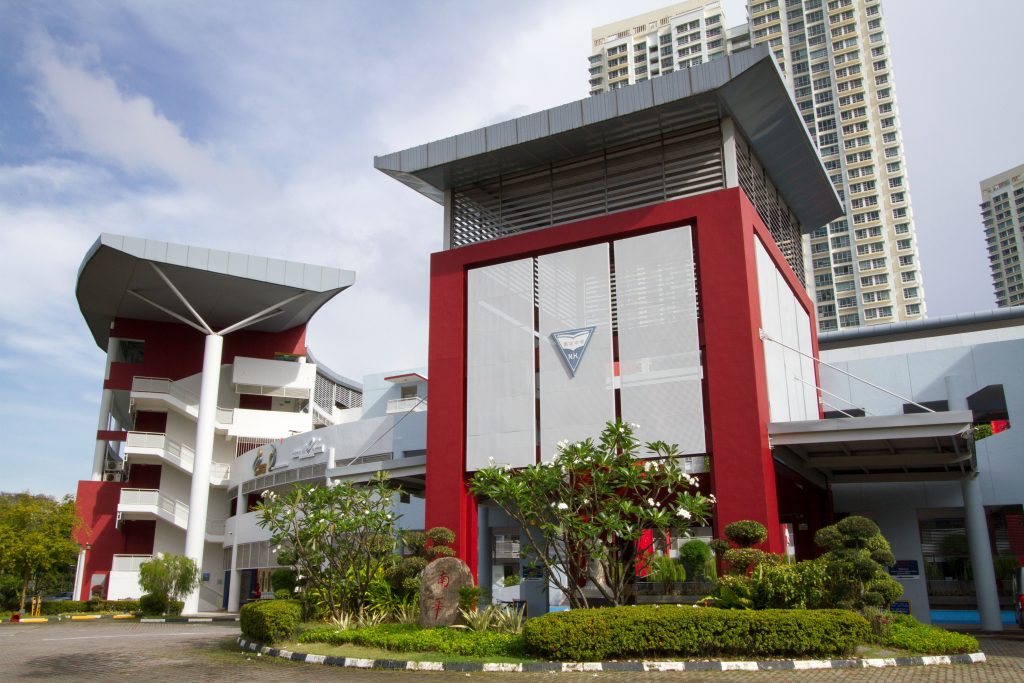
In 2000, Nan Hua Secondary School was designated as Singapore’s 10th Special Assistance Plan (SAP) school, with a focus on nurturing bilingual and bicultural talents.3 In 2003, the school relocated to its new campus at 41 Clementi Avenue 1, and attained autonomous status in 2006.4 The same year, the school’s English name was changed to Nan Hua High School.
In 2008, Nan Hua High School and Nan Hua Primary School jointly organised the Nan Hua Family Local Chinese Cultural Immersion Camp for the first time since their separation in the 1960s, marking their shared commitment to advancing the school’s mission as an SAP school.
To move with the times, Nan Hua High School has, since 2014, been guided by the vision of nurturing world-ready Nanhuarians who embrace tradition and are champions of society. In 2024, the school renewed its vision and mission. The new vision is: Curious Learners, Cultured Scholars and Courageous Leaders, while the new mission is to nurture Bicultural Nanhuarians who are Confident, Compassionate and Culturally Versatile with a Passion for Life.
In 2017, Nan Hua High School marked its centennial with a grand celebration themed “Centennial Excellence, Pioneering Tomorrow”. Since its founding, the school has nurtured many outstanding alumni, who have achieved remarkable success particularly in the fields of education, dance and performing arts. Nan Hua’s alumni include former nominated parliamentarian Ong Hua Han, who champions issues concerning persons with disabilities.
Principals and years in service
- Wu Mulan (1917)
- He Yingting (1918)
- Wang Zuyun (1919–1920)
- Shi Lei (1921–1923)
- Cheng Xingjin (1924–1927)
- Yao Chuying (1928–1929)
- Wu Yunwen (1930)
- Yao Chuying (1931–1932)
- Li Cailing (1933–1935)
- Deng Zhicheng (1936)
- Lu Lanying (1937–1938)
- Yao Chuying (1939–1940)
- Feng Yimei (1941)
- Yang Shui Chor (1945–1971)
- Tsao Yu Hang (1972–1983)
- Yap Siew Keng (1984–1986)
- Ching Ah Kim (1986–1988)
- Mrs Koh Sou Keaw (1989–1991)
- Mrs Leong Kum Hoong (1991–1994)
- Winnie Tan Swee Ling (1994–1998)
- Loh Leong Beng (1999–2003)
- Foo Suan Fong (2003–2009)
- Mrs Tan Jong Lek (2010–2022)
- Chiew Jing Wen (2023–present)
This is an edited and translated version of 南华中学. Click here to read original piece.
| 1 | The first school song was used from 1945 to 1962. |
| 2 | Government-aided schools are schools set up by various community organisations to cater to the educational needs of their respective communities. They receive funding from the Singapore government and maintain the same education standards as Government schools. |
| 3 | The Special Assistance Plan (SAP) was introduced in 1979 to nurture students with bilingual aptitude. The schools under this plan are called SAP schools, known to provide students with high quality teaching and an environment that emphasises bilingual learning. |
| 4 | Established in 1994, autonomous schools follow the Ministry of Education syllabus, while providing a wider range of programmes than regular government schools, to enhance students’ learning experience. |
Au, Yue Pak. “Qianxiao zai chuang huihuang: nanhua xiaoxue jianli 81 nian” [A new campus, a brighter future: Nan Hua Primary School 81st anniversary]. In Xian’ge bujue [The legacy lives on], 94–101. Singapore: The Youth Book Co., 2006. | |
Ho, Woon Ho, ed. Centennial Excellence, Pioneering Tomorrow: Nan Hua High School 1917–2017. Singapore: Nan Hua High School Alumni, 2017. | |
Koh, Hsiang Yu. “Bainian nanhua, fanying yushibingjin jingshen” [Nan Hua: A century of progress and renewal]. Lianhe Zaobao, 10 July 2017. | |
Nan Hwa Girls’ High School 50th Anniversary Variety Concert and Souvenir Magazine. Singapore: Nan Hwa Girls’ High School, 1966. | |
Nan Hwa Girls’ High School 60th Anniversary Souvenir Magazine, 1917–1977. Singapore: Nan Hwa Girls’ High School, 1977. | |
Nan Hua Secondary School Magazine. Singapore: Nan Hua Secondary School, 1999. | |
Ng, Dennis. “Kan wusuo chuantong huaxiao, gezi banxiao tese yu qiangxiang” [Five traditional Chinese schools and their strengths]. Lianhe Zaobao, 9 October 2018. | |
Zhang, Yaoxin. “Nanhuaren zihao qing bainian” [Nan Hua celebrates a century of pride]. Lianhe Zaobao, 14 June 2017. |