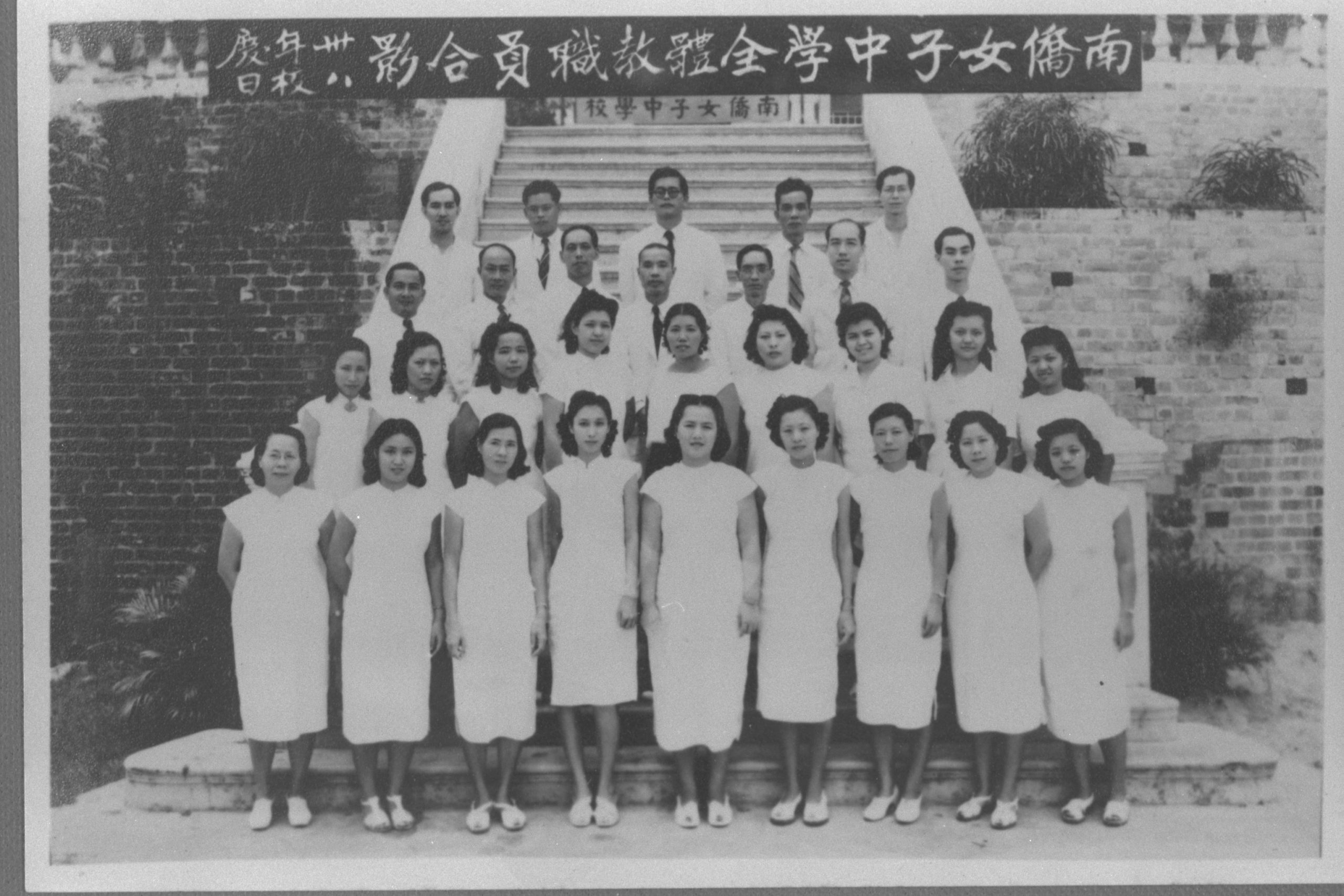
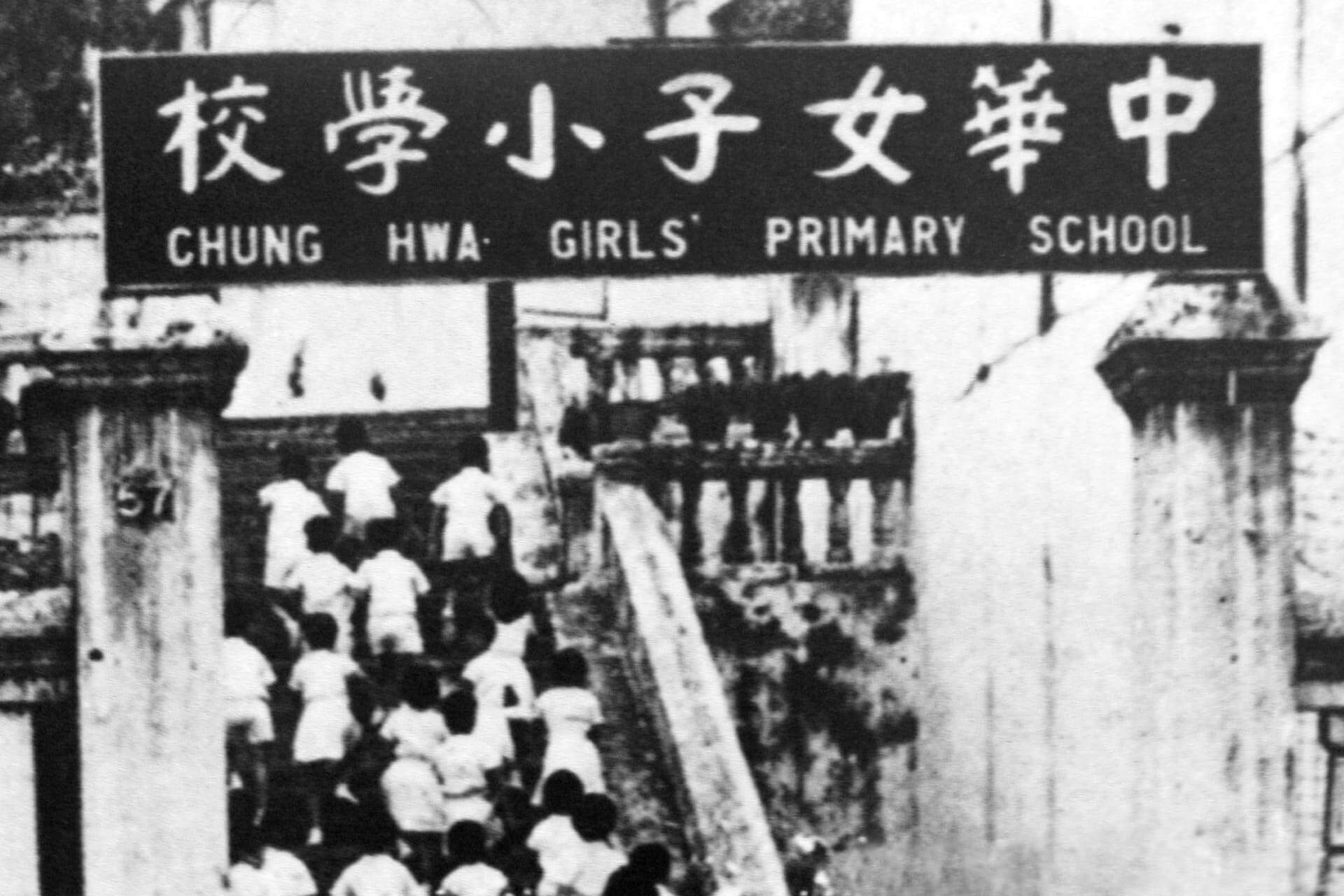
Xinmin Secondary School


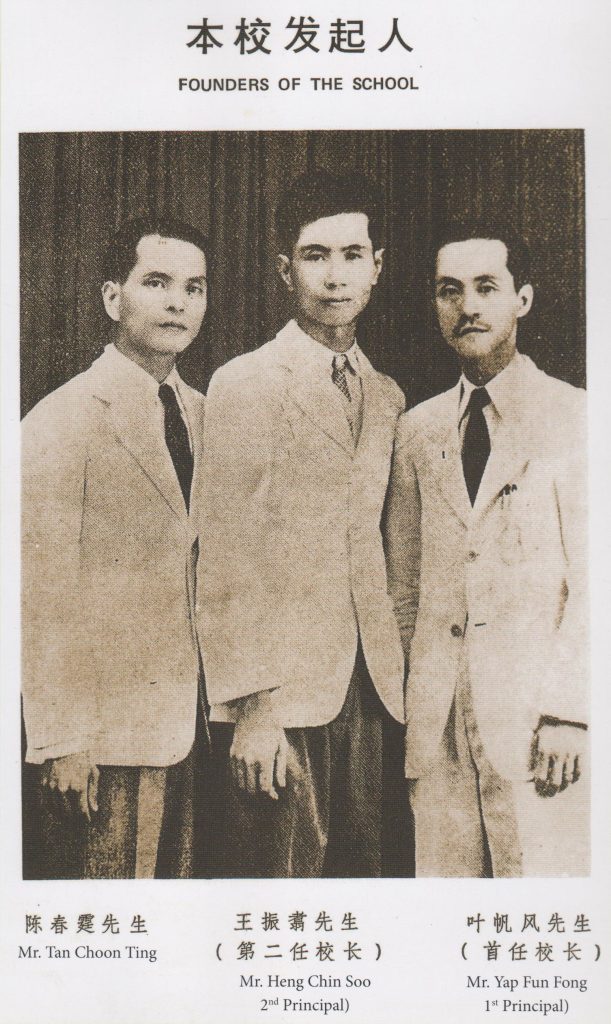
Xinmin Secondary School was founded in 1945 in Hougang. Initially named Sin Min Public School, it served as a primary school until the 1950s, when middle school sections were set up. Its founders were Yap Fun Hong (1914–2014), Heng Chin Soo (1907–1964), and Tan Choon Teng (birth and death years unknown). The school was established shortly after the Japanese Occupation of Singapore, during a period of postwar recovery when many children were deprived of education due to the war. This situation inspired the three founders to dedicate themselves to promoting education.
According to one of the founders, the name “Xinmin” embodies the ideal of advancing “New Democracy.”1 During that period, many schools in Singapore and Malaya adopted the same name, such as the Sin Min School in Tampines. Today, only two schools in Singapore still bear the name — Xinmin Secondary School and Xinmin Primary School — both sharing the same root.
Xinmin Secondary School’s current school song was first adopted in 1948, with lyrics by Yap and music by Li Ding (Huang Liding, 1917–1988), and expresses ideals of freedom, peace, morality, and putting knowledge into practice.
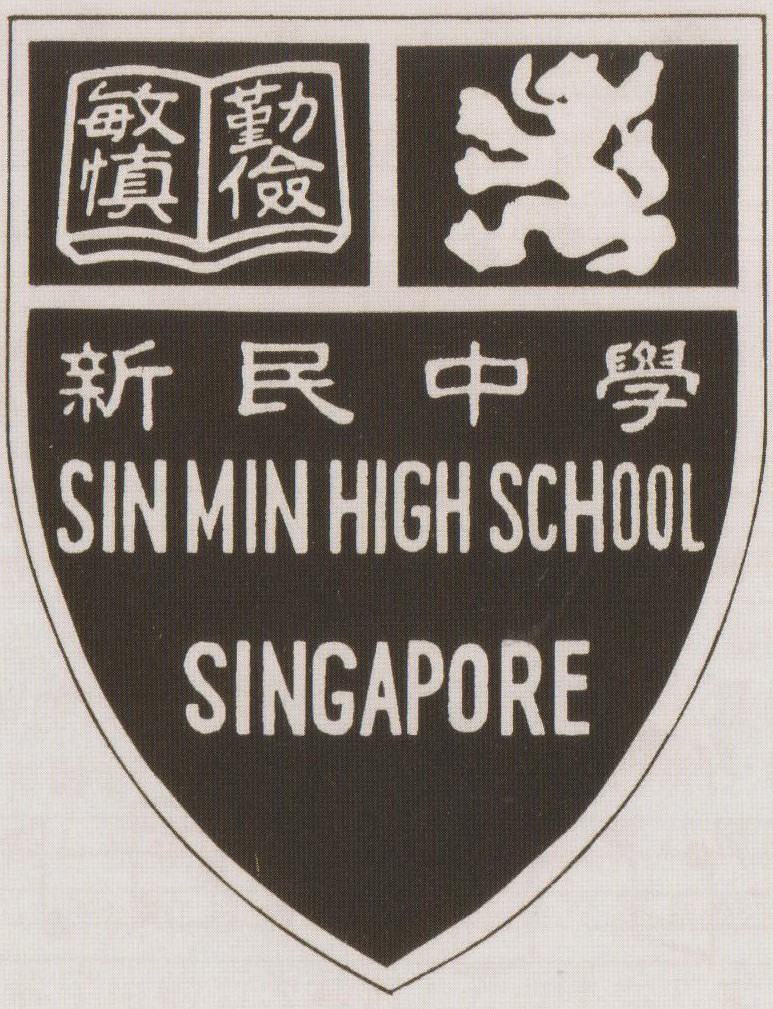

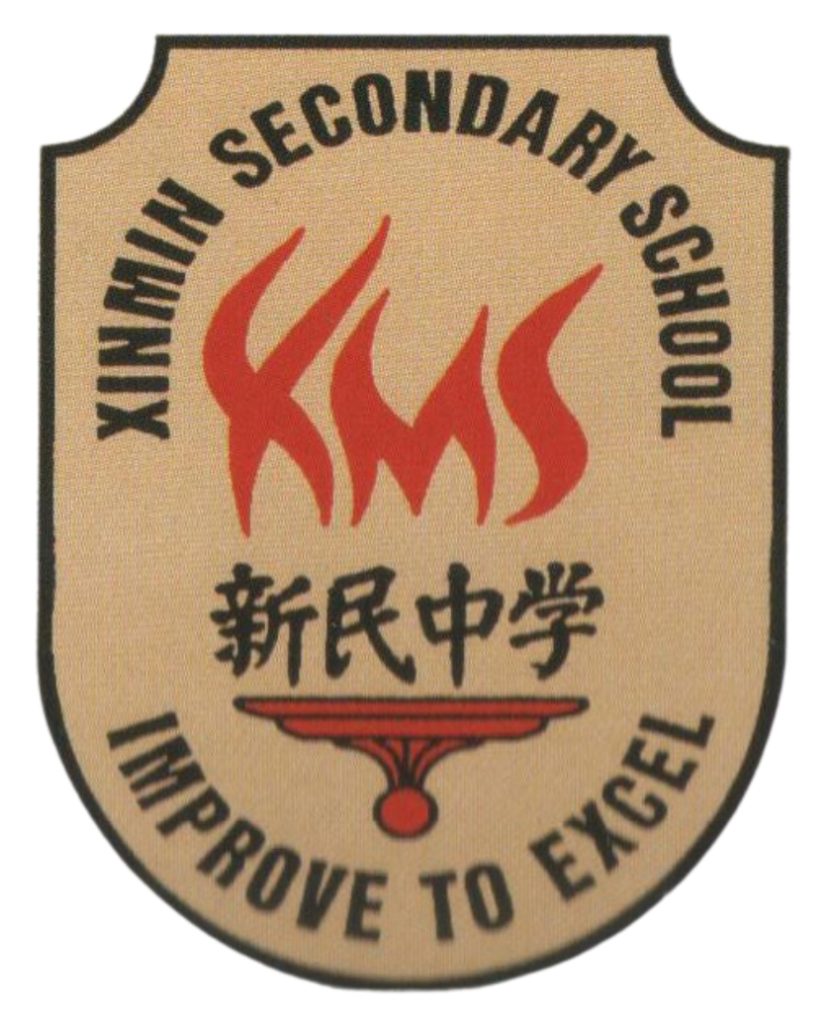

School motto
Diligence, Thrift, Agile and Prudence (Old)
Improve to Excel (Old)
Steadfast in Spirit, Diligent in Service (Old)
Strive • Excel • Serve (Current)
Brief history
Before Singapore gained independence, most schools were located in the city and children living in the outlying areas had limited access to education. Yap, Heng, and Tan therefore decided to establish a school in Hougang, so that children in Hougang and Serangoon could also receive an education.
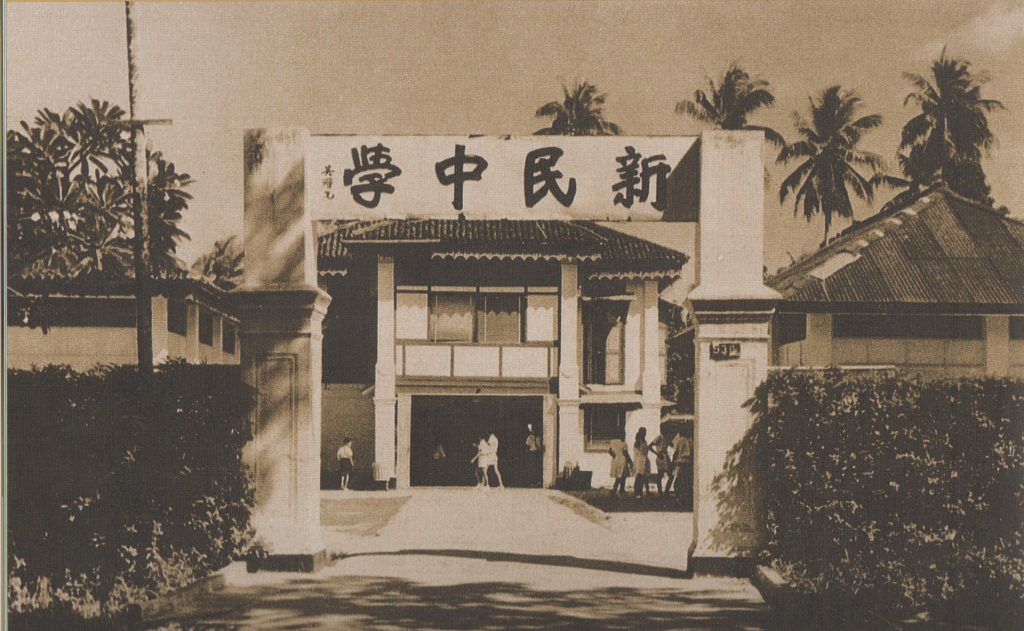
When the school was founded, it faced many challenges due to a lack of funds. To raise money, Yap sold his five pigs and used the proceeds to rent three old bungalows along Serangoon Road to be used as the school premises. This became a well-known story among Xinmin students. The school later admitted 620 students and officially opened with Yap as its first principal.
In 1950, student enrolment increased to 1,000. Financial constraints, however, remained unresolved, and the issues of inadequate facilities and teachers’ low salaries saw little improvement. In 1952, the owner of one of the three bungalows announced plans to auction the property on the open market. Representatives of the school’s board of directors successfully bid for the property, and subsequent fundraising efforts for the school’s development also received enthusiastic support from the community. Sin Min thus acquired a campus of its own.
In 1954, then-principal Tung Sey Yew (birth and death years unknown) recognised that a secondary education was sorely needed in Hougang and Serangoon, and applied to the Department of Education (now the Ministry of Education, or MOE) for the school to run a middle school section. In 1956, the school received approval and began admitting middle school students.
In 1958, to raise more funds, Sin Min staged two fundraising concerts. Through the efforts of teachers and students, $10,000 was raised and used to build additional classrooms and purchase land. From then on, Sin Min gradually expanded its campus, laying the foundation for its future development.
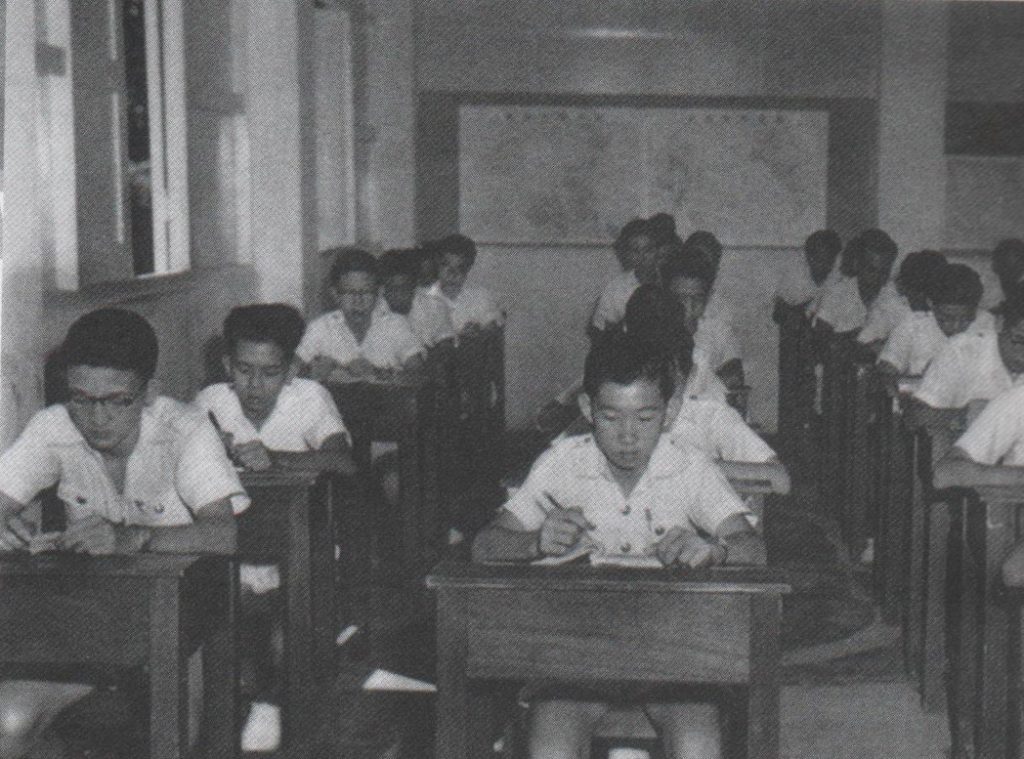
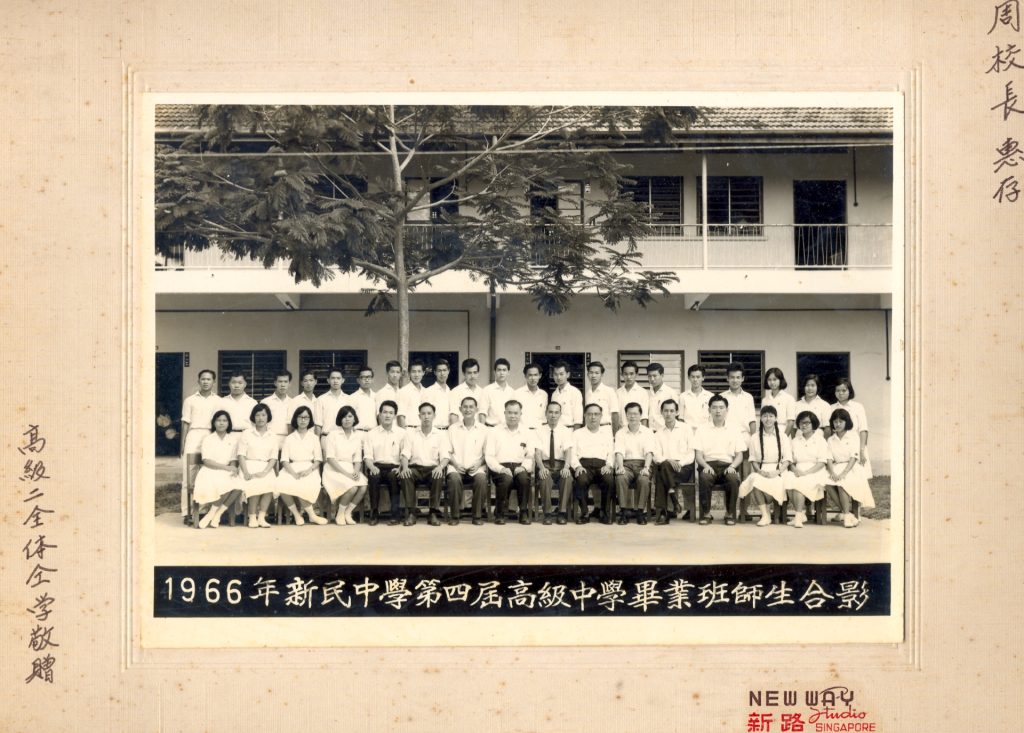
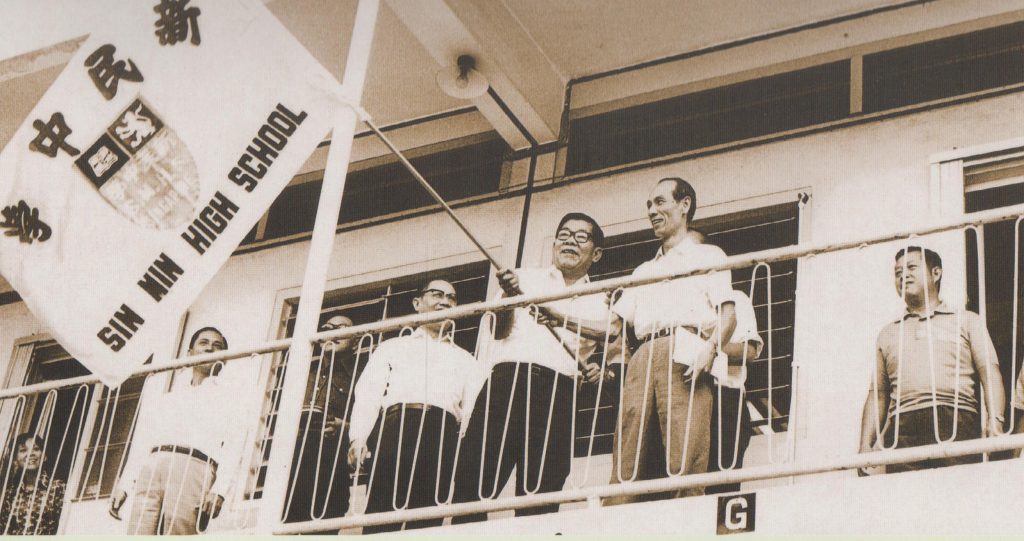
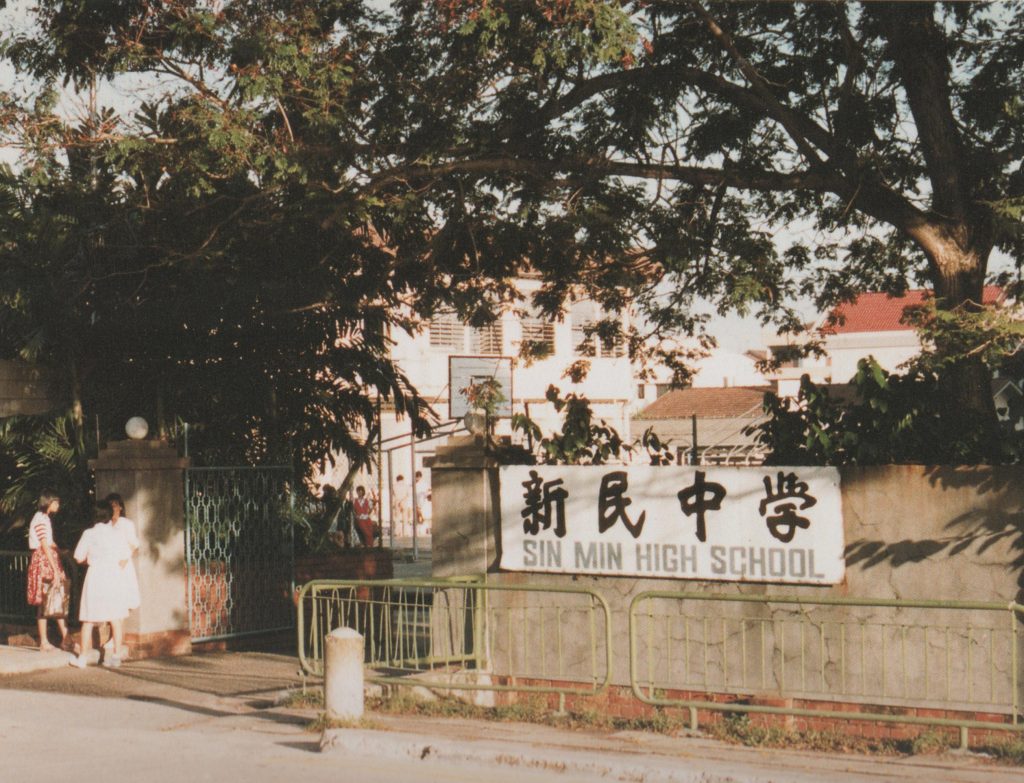
In the 1970s, following changes in Singapore’s education policy, student numbers in Chinese-stream schools nationwide declined sharply. In 1983, in line with MOE’s reform policy, Sin Min began its transition from a Chinese- to English-medium school. It also became a government school, retaining its Chinese name. Then-principal Chew Peng Leng (1919–2022) became its longest-serving principal.
In 1986, Teo Ting Kok took over as principal and focused on improving students’ English. In 1988, the primary section separated from the secondary section (previous middle school section), and was named Xinmin Primary School. In 1990, Xinmin Secondary School transitioned from a government-aided school2to a government school under MOE, and a School Advisory Committee was established to support the school’s development. It was during Teo’s tenure that the school relocated to its present site, and was officially renamed Xinmin Secondary School in 1991. In 1992, Xinmin alumnus Goh Tong Pak became the next principal. During his time there, Xinmin adopted a new school crest, symbolising the school’s refreshed education philosophy.
In 2001, Xinmin Secondary School attained autonomous status.3Its school uniforms were changed, and its motto “Improve to Excel” was replaced with “Steadfast in Spirit, Diligent in Service”. Xinmin’s overall image was also significantly enhanced. In 2003, under MOE’s initiative, its Hougang campus underwent a two-year renovation. During this period, the school temporarily relocated to a holding campus in Fernvale. In December 2004, the school moved back to Hougang.
In 2015, the Creative Arts Complex officially opened, boasting a performance theatre and other facilities to cater to co-curricular activities such as choir, Chinese dance, and guzheng ensemble.
Under the leadership of current principal Tan Soon Hui, the school has adopted a “total curriculum” approach since 2023 to develop its students’ talents and character. In 2025, the school commemorated its 80th anniversary. Themed “Decades of Dedication:: Shaping Future Generations,” the anniversary honoured the unwavering commitment of those who have contributed to the school’s development and reaffirmed the school’s mission of developing every Xinmin student to be a curious learner, a compassionate contributor, and a confident leader.
Xinmin Secondary School has also produced many outstanding alumni who have achieved remarkable success in fields ranging from business to education.

Principals and years in service
- Yap Fun Hong (1945–1949)
- Heng Chin Soo (1950–1953)
- Tung Sey Yew (1954–1964)
- Chew Peng Leng (1965–1985)
- Teo Ting Kok (1986–1991)
- Goh Tong Pak (1992–1997)
- Lee Hak Boon (1998–2002)
- Low-Sim Ay Nar (2003–2006)
- Liew Wei Li (2007–2010)
- Ong-Lim Hong Peng (2011–2017)
- Tan Kuo Cheang (2018–2022)
- Tan Soon Hui (2023–present)
This is an edited and translated version of 新民中学. Click here to read original piece.
| 1 | Lim Soon Lan, “Sishi zai shi jing ru zuo, Xinmin xuexiao chuangbanren ye fan feng xiaozhang fangwen ji”, Lianhe Zaobao, 27 February 1994. |
| 2 | Government-aided schools are schools set up by various community organisations to cater to the educational needs of their respective communities. They receive funding from the Singapore government and maintain the same education standards as Government schools. |
| 3 | Autonomous school: Established in 1994, autonomous schools follow the Ministry of Education’s syllabus while providing a wider range of programmes than regular government schools to enhance students’ learning experience. |
9th Pre-university Class, 11th Secondary 4 Class and 26th Primary 6 Class Graduation Souvenir Magazine 1971. Singapore: Xinmin Secondary School, 1971. | |
Annual and Graduation Souvenir Magazine 1974. Singapore: Xinmin Secondary School, 1974. | |
Annual and Graduation Souvenir Magazine 1976. Singapore: Xinmin Secondary School, 1976. | |
Annual and Graduation Souvenir Magazine 1979. Singapore: Xinmin Secondary School, 1979. | |
8th Anniversary Commemorative Magazine. Singapore: Sin Min Public School, 1953. | |
Senior-middle and Secondary 4 Class Graduation Souvenir Magazine 1962. Singapore: Xinmin Secondary School, 1962. | |
Soh, Eng Cher. “Ji xinmin zhongxue chuangxiao 75 zhounian” [Commemorating the 75th anniversary of Xinmin Secondary School]. Lianhe Zaobao, 2 November 2020. | |
Wu, Ruiming. “Xinmin zhongxue qian xiaozhang zhoubinglin lishi xiangshou 103 sui” [Chew Peng Leng, former principal of Xinmin Secondary School, dies at 103]. Shin Min Daily News, 10 June 2022. | |
Yap, Fun Hong. Fengyu pingzong shiwuzai [Fifteen years drifting through storms]. Singapore: Seng Yew Book Store, 1996. | |
Yap Fun Hong, oral history interview by Ang Siew Ghim and Lim Soon Lan, 17 February 1994, audio, National Archives of Singapore (accession no. 001457), Reel/Disc 1 to 6. |