Ee Hoe Hean Club


The Ee Hoe Hean Club in Singapore, a prominent social club for Chinese businessmen, was once a leading institution in the Chinese community.
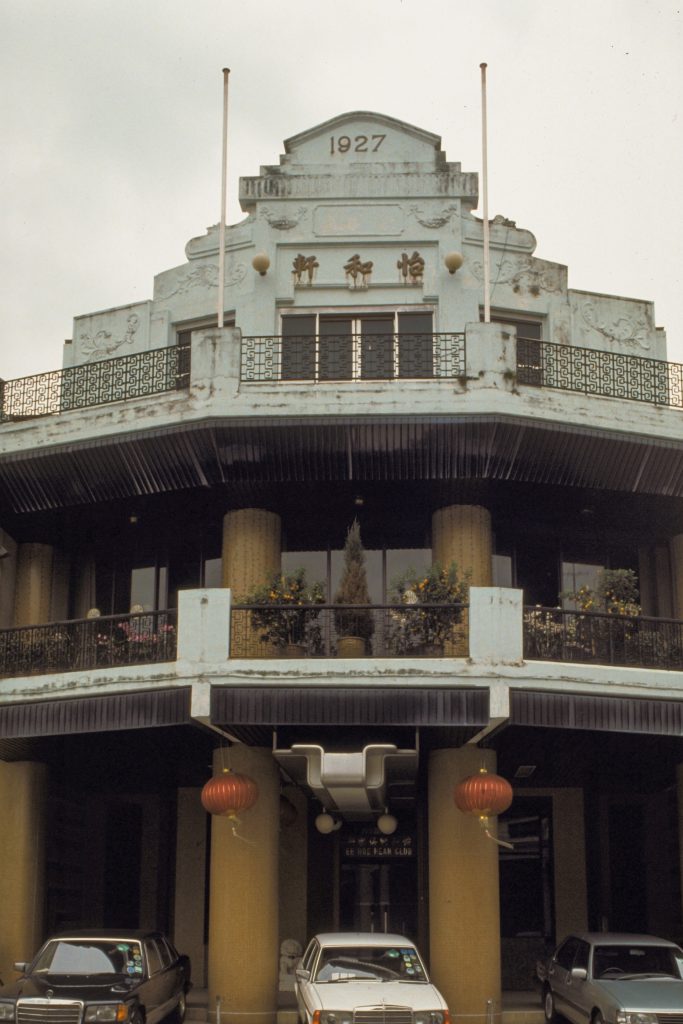
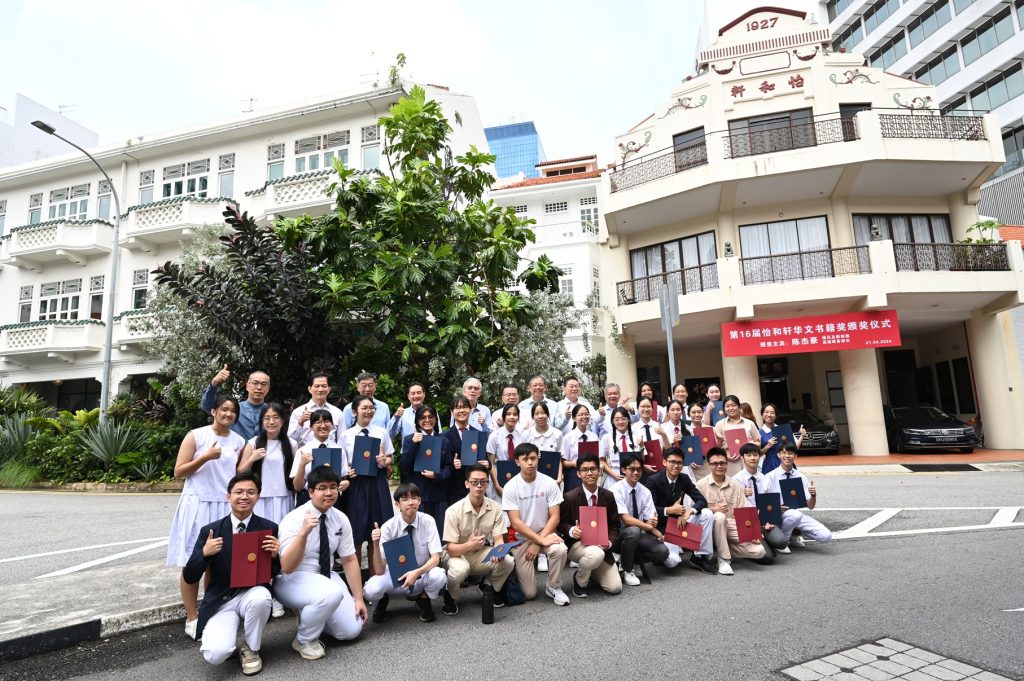
In 1895, wealthy Hokkien merchants in Singapore — including Lim Chwee Chian (1864–1923), a tin-mining magnate of Malaya — initiated the founding of the club. Originally located at 28 Duxton Hill, the club moved to 38 Club Street in 1911, before relocating to its current site at 43 Bukit Pasoh Road in February 1925. In 1927, six trustees, including Lim Nee Soon (1879–1936) and Lim Kim Tian (1879–1944), purchased the property for $25,000, giving the club a permanent home.
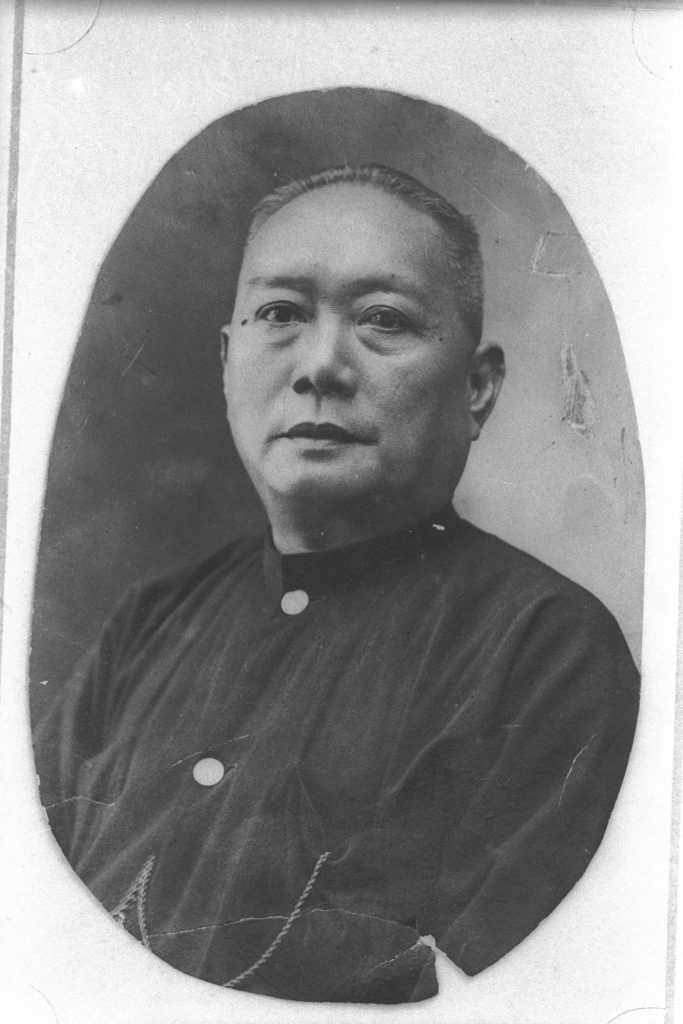
Lim Chwee Chian served as its first chairman and was succeeded by Tan Kah Kee (1874–1961), following his death in 1923. Under Tan’s leadership, the club reached the height of its influence.
Reforming social practices among the Chinese community
In 1925, the Ee Hoe Hean Club expanded its mission to include “improving social practices”. Tan Kah Kee introduced democratic elections and revised the club’s constitution, stipulating a one-year tenure for board members, a maximum consecutive term of three years for the chairman and vice chairman, as well as voting rights for all members. He also broke down dialect barriers by admitting members from different dialect groups and encouraging non-Hokkien community leaders to serve as directors or chairman of the club. For instance, Lim Nee Soon, a Teochew, was appointed chairman twice.
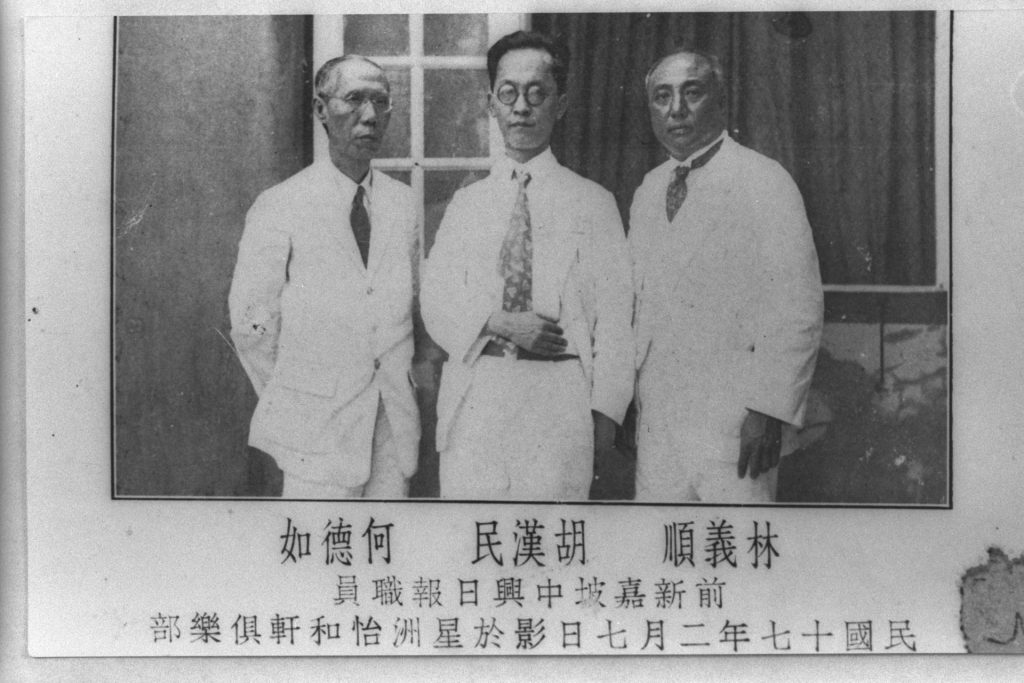
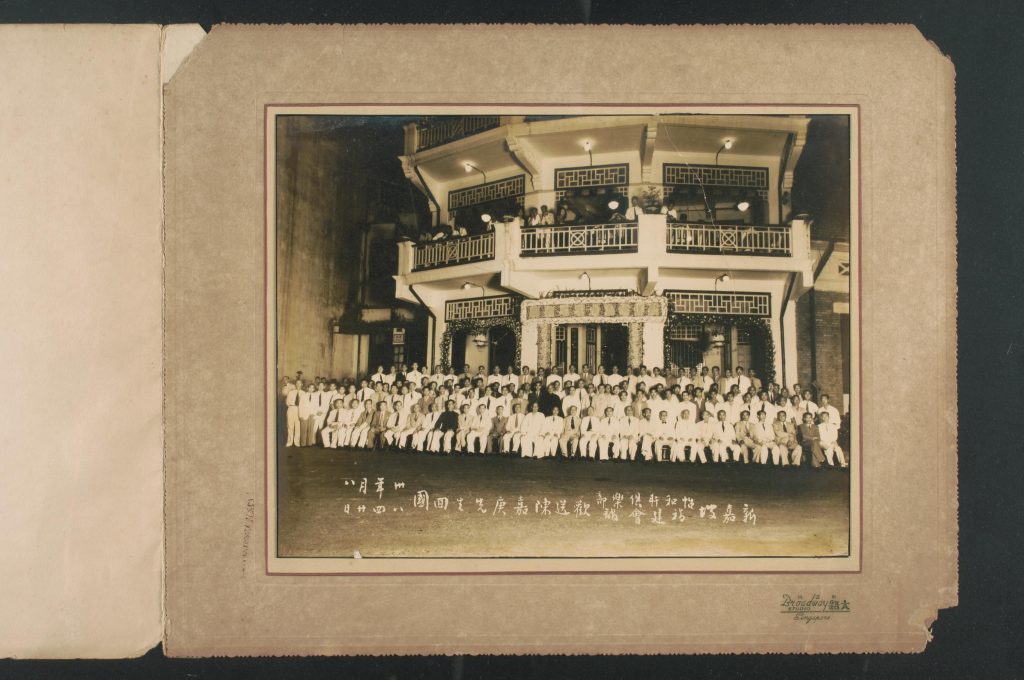
The club also introduced new rules to reform undesirable social practices, including banning opium, setting up a library, requiring punctual attendance at dinners, and mandating the use of serving spoons and chopsticks at banquets. It placed particular emphasis on propriety when members invited Caucasians to banquets, stating that “no members or guests shall engage prostitutes to accompany them, in order to preserve national dignity”.1 The club also set moral requirements for membership. Any member who “engaged in improper conduct … or was imprisoned for offences” would be asked to withdraw voluntarily, or have his membership and rights revoked if his actions were deemed by the board to be detrimental to the club’s reputation.
Club community leaders also actively participated in disaster relief and anti-war efforts in China. Following the Jinan incident (also known as the 3 May Tragedy) in 1928, Tan established a Shandong relief fund committee and used the club’s third floor as its office. The nine-month fundraising campaign coordinated donations across Malaya and raised a total of $1.34 million. In 1936, Tan organised a Malayan Chinese committee, headquartered at the Ee Hoe Hean Club, to raise money for the purchase of aircraft. Framed as a birthday tribute to Chiang Kai-shek, the initiative funded 13 fighter planes in support of China’s anti-war efforts. Following the Marco Polo Bridge Incident in 1937, the Singapore-China Relief Fund Committee was established on 15 August, holding its first meeting two days later at the Ee Hoe Hean Club, where Tan was elected chairman. By the end of 1938, the committee had remitted a total of 3.2 million Straits dollars to the then-Nanjing government.
Headquarters of the Nanyang Federation of China Relief Fund
On 10 October 1938, the Nanyang Federation of China Relief Fund was established, with Tan Kah Kee serving as president. Among the 16 standing committee members were Ee Hoe Hean Club members Lee Kong Chian (1893–1967), Lee Chin Tian (1874–1965), and Hau Si Wan (1883–1944). The federation was headquartered at the club, with Tan himself taking up residence there. In 1939, the federation coordinated the deployment of more than 3,200 Nanyang mechanics to the Burma Road to support China in its war against Japan.2
When Japanese forces advanced towards Singapore in late 1941, Governor Sir Shenton Whitelegge Thomas (1879–1962) commissioned Tan to establish the Overseas Chinese Mobilisation Council to support resistance efforts. While the office was located at the Chin Kang Huay Kuan, Tan continued to coordinate operations at the Ee Hoe Hean Club.
In May 1950, Tan Kah Kee returned to China and Tan Lark Sye (1897–1972) took over as chairman. During this period, the club’s focus shifted from China’s political situation to developments in Singapore and Malaya. In 1955, the Singapore Chinese Chamber of Commerce established the Democratic Party, headquartered at the club. The party chairman was Hokkien community leader Tan Eng Joo (1919–2011), and its key members included businessman Ong Eng Lian (1912–unknown). The Democratic Party later merged with the Progressive Party to form the Liberal Socialist Party, which was defeated in the 1955 Legislative Assembly general election.
After Tan Lark Sye, the club was helmed first by Ko Teck Kin (1911–1966), and later by Soon Peng Yam (1912–2002), each concurrently serving as president of the Singapore Chinese Chamber of Commerce. Between 1950 to 1962, the club provided a space for discussing the citizenship movement in Singapore, led by Tan Lark Sye, and his initiative to establish Nanyang University. The former was conducted under the banner of the business chamber, while the latter under the Hokkien Huay Kuan. During this time, the club’s role as a leading institution in the Chinese community gradually diminished.
Community service in post-independence Singapore
Following Singapore’s independence, the Ee Hoe Hean Club continued to devote itself to charity and community service. This included making donations to organisations such as the Chinese Development Assistance Council, the Kwong Wai Shiu Hospital, the Singapore Chung Hwa Medical Institution, and the Thong Chai Medical Institution. However, for much of the next 30 years, the club was largely a social space for members to play mahjong during their spare time.
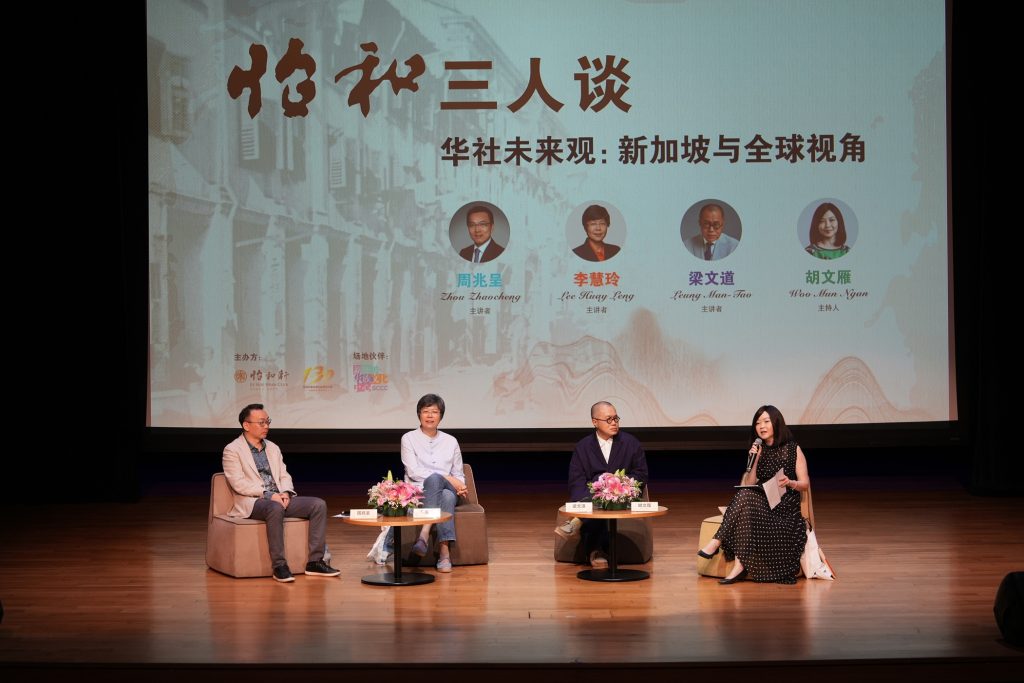
This continued until 2007, when Lim Chin Joo (1937–2024) became president of the club. He spearheaded the club’s redevelopment, establishing the Pioneers’ Memorial Hall and launching the Chinese Book Prize in 2009 to recognise secondary school students who excelled in Higher Chinese. The Ee Hoe Hean Club also promoted social and cultural development by organising lectures on social issues, literature, and history.
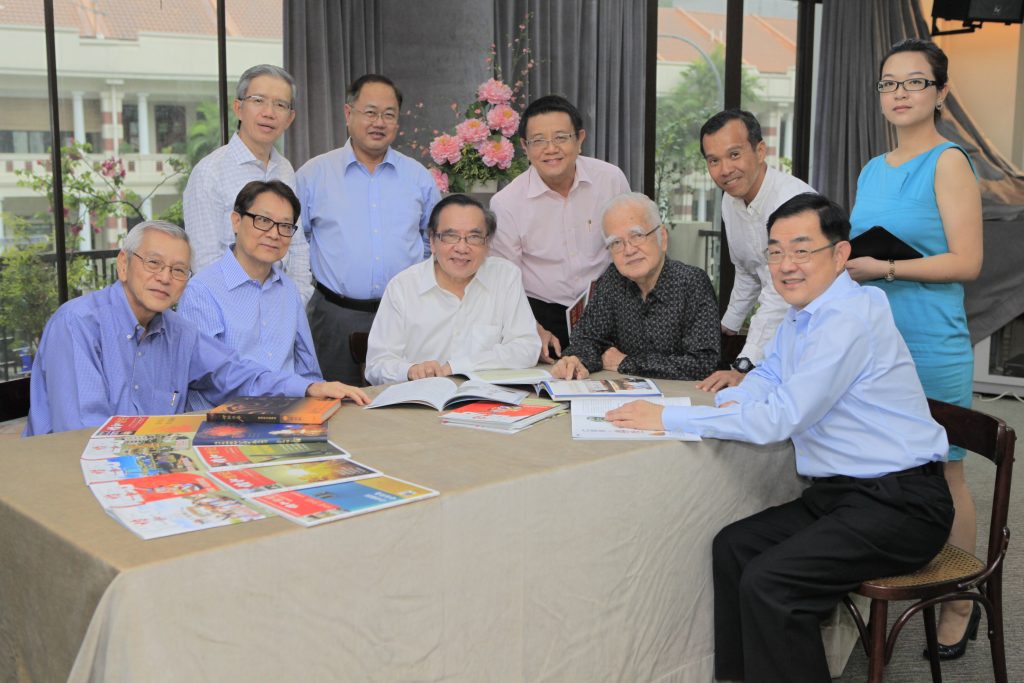
In 2010, Lim founded the magazine Yihe Shiji and led its editorial team. Covering social issues, commentaries, history, culture, finance, art, and literature, the magazine aimed to encourage intellectual exchange. Through these initiatives, the Ee Hoe Hean Club entered a new era, evolving from a “mahjong club” into an institution with a renewed mission to preserve and transmit culture.3 As of December 2025, Yihe Shiji has published 57 issues featuring more than 1,000 articles.
In 2025, coinciding with the club’s 130th anniversary, it broke with tradition by admitting women as members.
This is an edited and translated version of 怡和轩俱乐部. Click here to read original piece.
| 1 | Tan Ee Leong, “Yihexuan huiyilu” [Reminiscences of the Ee Hoe Hean Club], Sin Chew Jit Poh, 16 June 1969. |
| 2 | Lim How Seng et al, Cong zhengmu dao fuyuan: nanqiao jigong huiguo kangzhanshi [The heroic history of Nanyang drivers and mechanics on the Burma Road during the Sino-Japanese War] (Singapore: South Seas Society (Singapore), 2023), 44. |
| 3 | Koh Hsiang Yu, “Yihexuan qian zhuxi linqingru yushi changci, xiangnian 87 sui” [Lim Chin Joo, former president of the Ee Hoe Hean Club, passed away at the age of 87], Lianhe Zaobao, 7 October 2024. |
Lim, How Seng, ed. Ee Hoe Hean Club 100th Anniversary Souvenir Magazine. Singapore: Ee Hoe Hean Club, 1996. | |
Lim, How Seng, Yeap Chong Leng, and Choi Kwai Keong. Cong zhengmu dao fuyuan: nanqiao jigong huiguo kangzhanshi [The heroic history of Nanyang drivers and mechanics on the Burma road during the Sino-Japanese War]. Singapore: South Seas Society (Singapore), 2023. | |
Lü, Shuang. Shehui zhengzhi kongjian xia yihexuan julebu de gongneng yu zhuanxing [Ee Hoe Hean Club within the social political space]. Singapore: Ee Hoe Hean Club, 2015. | |
Nan, Zhiguo, ed. Baige zhengliu: yihexuan 120 zhounian jinian wenji [Ee Hoe Hean Club 120th anniversary anthology]. Singapore: Ee Hoe Hean Club, 2015. | |
Wong, Frank, ed. Ee Hoe Hean Club 90th anniversary souvenir magazine. Singapore: Dashuiniu chuban jigou, 1985. |