Singapore Chinese literature and education


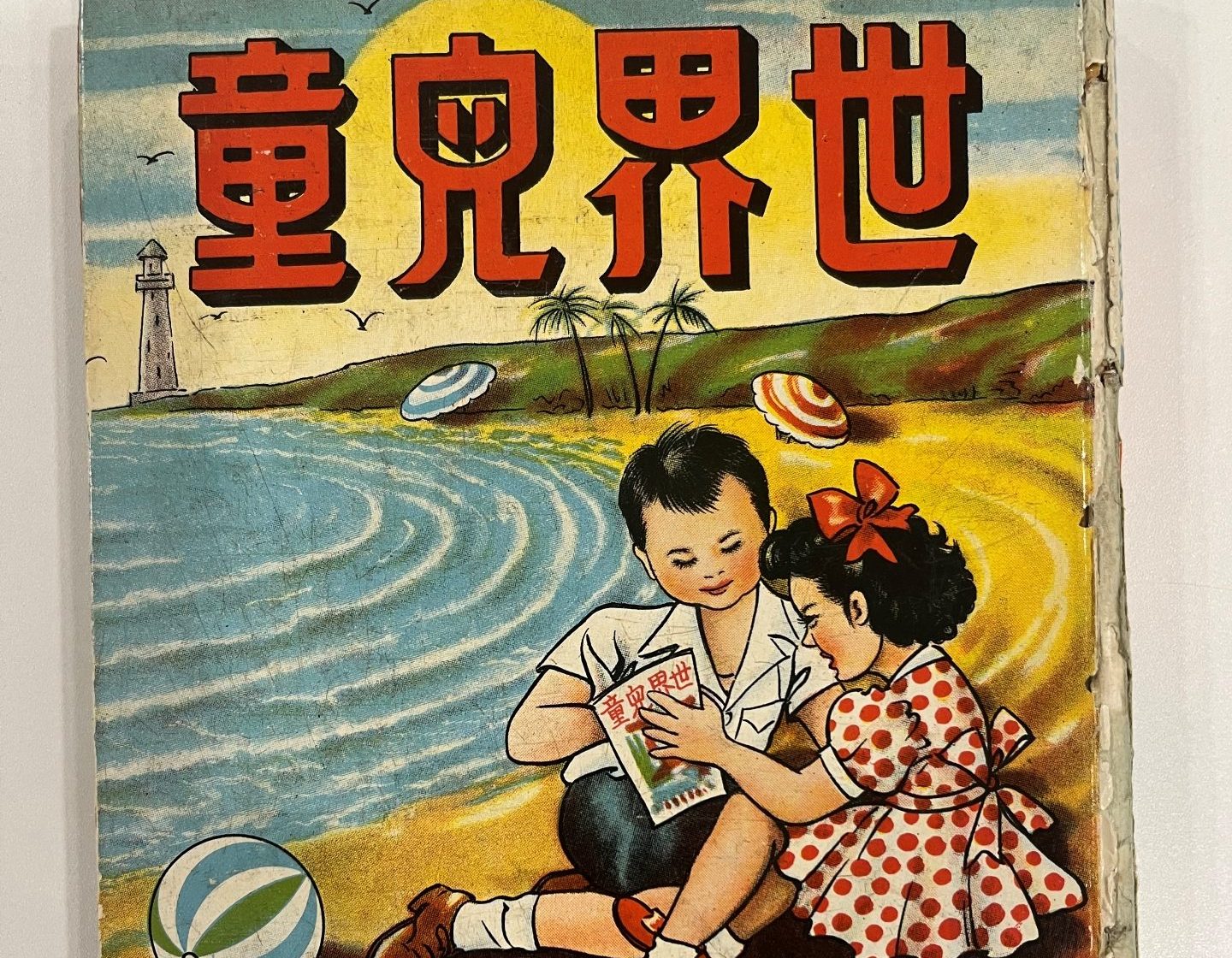
Locally produced Chinese literary works in Singapore had emerged since the late 19th century, when it was still under British rule. But most Chinese and literature textbooks used in local primary and secondary schools pre-independence were from China or adapted for use in Singapore and Malaya. These textbooks, used by students in Chinese-medium schools, were mainly grounded in the history of Chinese literature. Examples include Feng Mingzhi’s (1919–1982) Zhongguo wenxueshi tigang (Outline of the History of Chinese Literature) and Zhongguo wenxueshi chubu (Introduction to the History of Chinese Literature), as well as Xia Han’s (birth and death years unknown) Jianming zhongguo wenxueshi (A Brief History of Chinese Literature). These texts were supplemented with classical Chinese poetry and prose, along with vernacular Chinese literary works that emerged after the 1919 May Fourth Movement.
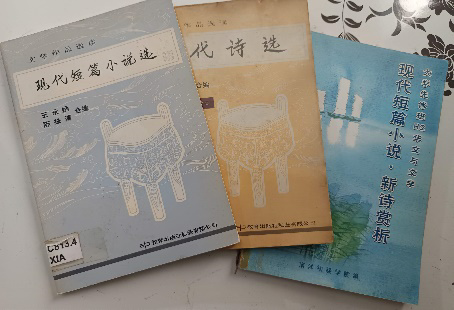
Following Singapore’s independence in 1965, the term “Singapore Chinese literature” gained traction in 1970. While Tang and Song poetry still formed the bulk of secondary school and pre-university literature textbook content from the 1980s to the 1990s, modern and contemporary literature from Mandarin-speaking regions (such as mainland China and Taiwan), as well as a few local Chinese literary works, were gradually incorporated. The local works included Zhong Qi’s (1927–1970) poem Maliujia jiaotang (Malacca Church), and Miao Xiu’s (1920–1980) fiction Huifu ziyou yihou (Regaining Freedom, for pre-university) and Liuli (Displacement, for secondary school), which depict the oppression of the underclass and feature Chinese dialects and local lexicon along with standard Chinese. All such texts were critical of colonialism. Earlier, the 1976–1982 editions of literature textbooks featured such works as Sheng yu zui (Life and Sin, fiction) by Zeng Shengti (1901–1982), Shenghuo shi meili de (Life is Beautiful, poem) by Tie Ge (1923–1948), Xin haoli qu (New Elegy, poem) by Zhong Qi and Dapo jingzi de nüren (The Woman who Broke the Mirror, play) by Lin Chen (1919–2004). Most of these works portrayed the poverty of early Chinese in Southeast Asia. Editors and advisers for these generations of textbooks included Tan Ik Ching, Ong Yong Peng (1939–2019), Chen An-de and Zhou Can.
Reform of the literature curriculum
Post-independence, Singapore’s Chinese literature curriculum continued to evolve, becoming a humanities subject separate from the mother tongue subject. As an elective, Chinese literature is an examinable subject in the Singapore-Cambridge examinations — a marked difference from the teaching frameworks of other Chinese-speaking regions, where literature is integrated into language subjects. In the 1980s, Chinese literature was offered to students with higher Chinese proficiency in the Special stream in secondary schools. This was later extended to students in the Chinese Language Elective Programme (CLEP), which was introduced at the pre-university level in 1990.
Under the CLEP, teacher writers such as Peng Fei, Koh Hock Kiat and Quah Sy Ren, as well as academic Goh Yeng Seng, taught a special paper on “Chinese literary writing”. The programme helped nurture a cohort of writers who later became active in the Singapore Chinese literary scene, including Tan Chee Lay, Wong Koi Tet, Chow Teck Seng and Neo Hai Bin.
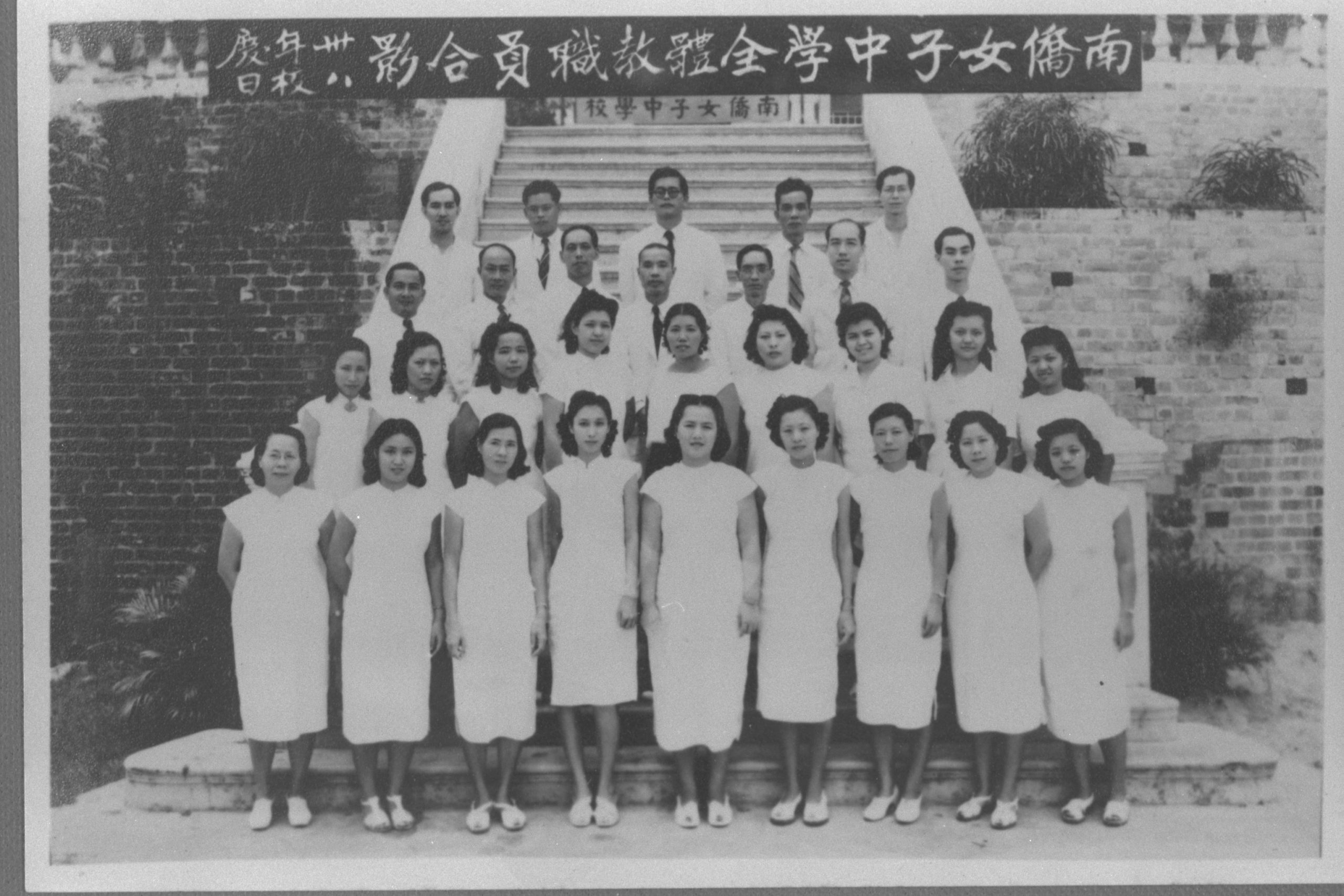
In February 2004, the Ministry of Education (MOE) set up the Chinese Language Curriculum and Pedagogy Review Committee to conduct a comprehensive review of Chinese language teaching in primary and secondary schools. One recommendation was to restructure the Chinese Literature curriculum to allow more students interested in Chinese literature to read it.
The 2006 secondary school Chinese literature curriculum featured poems from local writers, such as Wong Yoon Wah’s Piyingxi (Wayang Kulit) and Liang Wern Fook’s Huisheng (Echo). Other verses were from Chinese and Taiwanese poets, including Xu Zhimo’s (1897–1931) Ouran (Chance Encounter), Wen Yiduo’s (1899–1946) Sishui (Dead Water) from the May Fourth era, Shu Ting’s Zhi xiangshu (To the Oak), Wu Sheng’s Tu (Soil) and Yu Kwang-chung’s (1928–2017) Dengni, zaiyuzhong (Waiting for You in the Rain). The works chosen demonstrated the influence of the May Fourth Movement on modern poetry and its development. As for fiction, Singaporean writer Xi Ni Er’s Renzhen mianju (The Earnest Mask) was among the works featured.
In 2014, Chinese Literature in Singapore’s secondary school curriculum was renamed Literature in Chinese, reflecting how Singapore’s Chinese literature education here is developing its own distinctive characteristics and sense of identity.
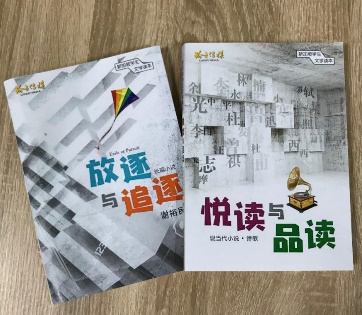
In line with the shift, the 2019 secondary school literature curriculum featured Singaporean writers Toh Lam Huat’s Chuandeng (Lanterns, poetry-music), Denon Lim Denan’s Caichuang (Stained Glass Window, poetry-music), Xiao Han’s Huibuqu de houchezhan (The Bus Stop One Can Never Return to, short story) and Chia Joo Ming’s Fangzhu yu zhuizhu (Exile or Pursuit, novel). Meanwhile, the 2021 pre-university Chinese language and literature selected texts included Singaporean writers Nan Zi’s Pingguo dinglü (The Apple Law, poem), Yeng Pway Ngon’s (1947–2021) Bucunzai de qingren (The Non-Existent Lover, short story) and Kuo Pao Kun’s (1939–2002) Shaguniang yu guailaoshu (The Silly Little Girl and the Funny Old Tree, play) and Gaopei dian (Kopitiam, play). Earlier literature syllabi also featured poet Dan Ying (Lew Poo Chan)’s Sannei sanwai (Inside and Outside the Umbrella) and Haihun (Soul of the Sea), Li Rulin’s Xingui (The Nouveau Riche, fiction) and Qiu Xu Xu’s Banjia (Moving House, fiction).
In the 2000s, the Chinese literature curriculum gradually shifted from emphasising the transmission of literary knowledge and the history of Chinese literature to a stronger focus on literary appreciation. Teaching methodologies also became more varied, supported by audio-visual materials, discussions and computer technology. However, owing to changes in the language environment and other factors, the student cohort has shrunk from several thousand to a few hundred, and Chinese literature is now seen as a niche subject.
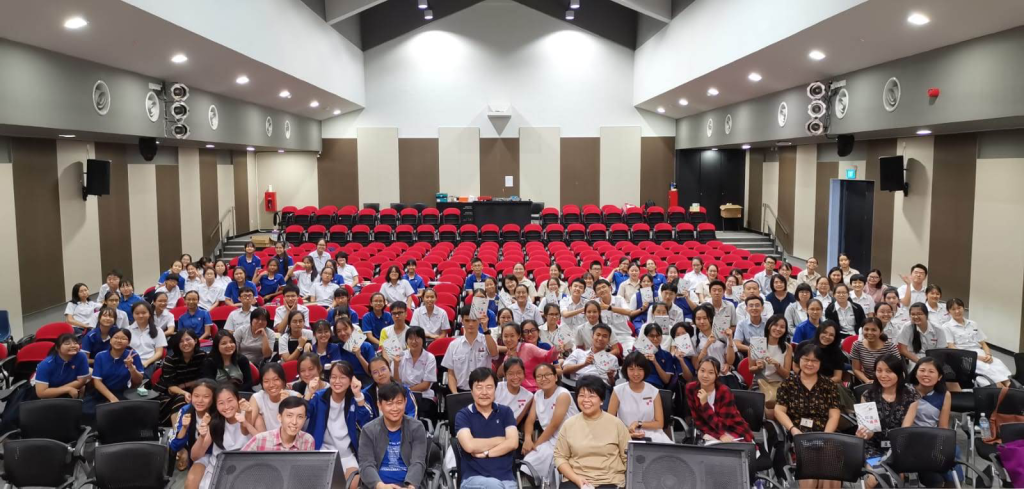
Secondary schools that currently offer Chinese literature programmes include Anglican High School, Chung Cheng High School (Main), Dunman High School, Hwa Chong Institution, Maris Stella High School, Nanyang Girls’ High School, Nan Chiau High School and Nan Hua High School. Pre-university students keen on these programmes can opt for Eunoia Junior College, Hwa Chong Institution, Jurong Pioneer Junior College, Nanyang Junior College, Tampines Meridian Junior College or Temasek Junior College.
Courses at tertiary level
Universities have also been crucial to the development of Singapore Chinese literature and education. Cultural and historical researchers and writers such as Fang Xiu (1922–2010), Han Suyin (1916–2012) and Wong Yoon Wah taught courses on Singapore and Malayan literature or literature in general at Nanyang University and the National University of Singapore (NUS) at different times, spanning the 1960s to the 2000s. At NUS, Yeo Song Nian, Wong Yoon Wah, Chan Cheow Thia, Chow Teck Seng, Lin Gao and Sui Ting ran courses on Singapore and Malayan literature and creative writing. Lam Lap of NUS has also actively conducted courses on Chinese classical poetry and collaborated with local Chinese classical poetry society Xin Sheng Poets Society to promote early local Chinese poets such as Khoo Seok Wan (1874–1941), the development of local zhuzhi ci (bamboo branch verses) — adaptations of a traditional Chinese folk poetry style that blended classical form with local content, and the writing of classical poetry.
At Nanyang Technological University (NTU), Quah Sy Ren, Yow Cheun Hoe, Hee Wai Siam, Zhang Songjian and Wong Koi Tet have run courses on local literature and creative writing. Over the years, writers from Singapore and abroad, including Yeng Pway Ngon (1947–2021), Su Tong, Dung Kai-cheung, Lee Yung Ping (1947–2017) and Lo Chih-Cheng have served as writers-in-residence at NTU, helping to nurture a pool of young local writers. The Chinese Faculty of NTU has also compiled Memorandum and Xinguofeng (New National Style) for fans of Singapore Chinese fiction and poetry.
In addition, Tan Chee Lay, Liu Su and Moh Lee Fair at NTU’s National Institute of Education conducted courses on Chinese literature pedagogy and Chinese-language literature. The Chinese Studies departments of Ngee Ann Polytechnic and Singapore University of Social Sciences have also offered courses on Singapore Chinese literature.
Other organisations have played a key role too. For instance, the Singapore Association of Writers, Singapore Literature Society, clan associations, Lianhe Zaobao, National Arts Council, National Library Board, Singapore Book Council, MOE and the Committee to Promote Chinese Language Learning have organised courses on local Chinese literature, creative writing workshops, writing competitions, writer-in-residence programmes and writing camps to cultivate future generations of Singaporean Chinese writers.
This is an edited and translated version of 新华文学与教育. Click here to read original piece.
Peh, Chong Teck. “Xiri huaxiaosheng de zhongguo wenxueshi keben” [Chinese literature history textbooks for Chinese-school students of the past]. Lianhe Zaobao, 31 August 2017. | |
Tan, Chee Lay. Xinjiapo huawen ji wenxue jiaoxue [Teaching of Chinese language and literature in Singapore]. Hangzhou: Zhejiang University Press, 2011. | |
Qin, Jue. Xinjiapo zhongxue huawen wenxue jiaocai yanjiu [Research of the Chinese literary textbooks in Singapore secondary schools]. Master’s thesis, National Institute of Education, Nanyang Technological University, 2013. |