Pioneer musician: Ye Litian


Ye Litian (1921–1943), who had ancestral roots in Meixian, Guangdong, was born in Singapore. He went to Khee Fatt School as a young boy before transferring to an English-medium school. After graduating from high school, he joined the Public Citizen School as a teacher at age 19.
In 1938, when the Wuhan Chorus was in Singapore for a tour to raise funds for the war against the Japanese, Ye got to know Chinese songwriter and lyricist Ren Guang (1900–1941), known for songs such as Caiyun zhuiyue (Colour Clouds Chasing the Moon) and Yuguang qu (Fishermen’s Song); as well as Chinese writer and poet An E (1905–1976). Ye learnt composing and conducting from both of them. In 1939, Ye wrote the anthem for the now-defunct Tong Luo Choral Group, which was established at Ren’s suggestion. During that time, Tong Luo Choral Group held practice sessions twice a week, with Ren as its instructor and Ye as conductor.
Turbulent years
As political unrest and anti-colonialism sentiment grew in the early 1940s, Ye conducted the Tong Luo Choral Group in their performance of Kongzhong aige (Elegy in the Air) written by Ren and An E, a song that paid tribute to those who had sacrificed their lives for the anti-colonialism movement. Ye also wrote songs such as Chidao zhige (The Equator Song) that reflected the hardship of the times, Xue zhige (Song of Snow) that commemorated the 25th anniversary of the Soviet Union’s founding, and Xinjiapo he (Singapore River). The last song, with lyrics by Mo Ni (Zhang Bihua), a local poet active in the 1930s, depicted the tragic aftermath of the Japanese Occupation. Other songs by him include Ge shengli (Sing to Victory), Dao Tongzhi (Mourning Comrades), and Malaiya song (Ode to Malaya). Ye also joined advanced music courses by Ren and An, and took Tong Luo to Pathe Records so he could spread Singapore’s anti-Japanese songs to various parts of Southeast Asia.
Ye was a pioneer in composing local Chinese songs, but his life was tragically cut short before he turned 22. As his works were considered politically sensitive, he was arrested and executed by the Japanese military police during the Japanese Occupation.
The works of Ye, with their distinctive spirit, had a significant influence on local Chinese music between the 1950s and 1980s, and left an indelible mark on the region’s creative songwriting scene during that period.
This is an edited and translated version of 先驱音乐家:叶立天. Click here to read original piece.
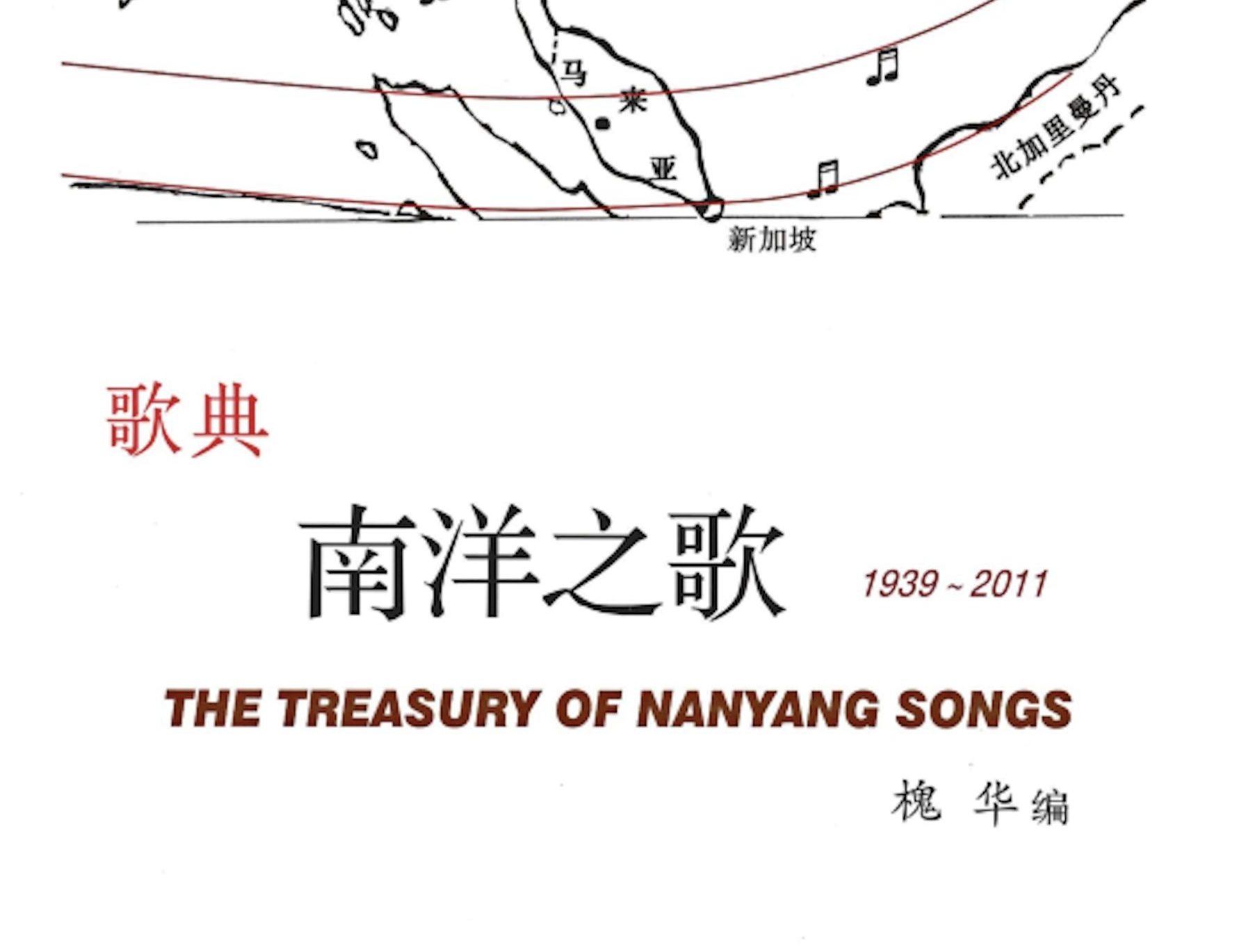
Huai, Hua, ed. Gedian: nanyang zhige, 1939–2011 [The Treasury of Nanyang songs, 1939–2011]. Singapore: Zhaohui Arts and Culture Publishing, 2013. |