Pioneer artiste: Chee Kin Foon


Chee Kin Foon is widely regarded as a maestro of Cantonese opera in Singapore, having spent 70 years performing and promoting the art form, as well as nurturing the younger generation of performers.
Born in 1946, Chee was exposed to Cantonese opera early on, frequently watching performances in Chinatown where she lived as a young girl. Her greatest influence was likely her paternal aunt, the renowned amateur Cantonese opera performer Chee Lai Hong (Chu Kwai, 1923–1995). In the 1940s and 1950s, the elder Chee’s popular tours across Southeast Asia left a lasting impression on her young niece, who often accompanied her.
As the eldest of seven siblings in a poor family who lost their mother when she was 10, Chee Kin Foon dropped out of school at the age of 12 to work as a waitress and kitchen helper in mahjong houses and restaurants to support her family, until she married at 16. Cantonese opera was a great solace to her in her youth.1She later had the opportunity to study with renowned masters in the traditional arts, including music teacher Cheung Hup Kei (birth and death years unknown), famous Cantonese opera artist Lau Lai Hor (birth and death years unknown), Peking opera masters Chun Fu, Liu Songhe, and Lin Laixi, incorporating their different styles into her own craft,2while continuing to experiment with new ways of performance.
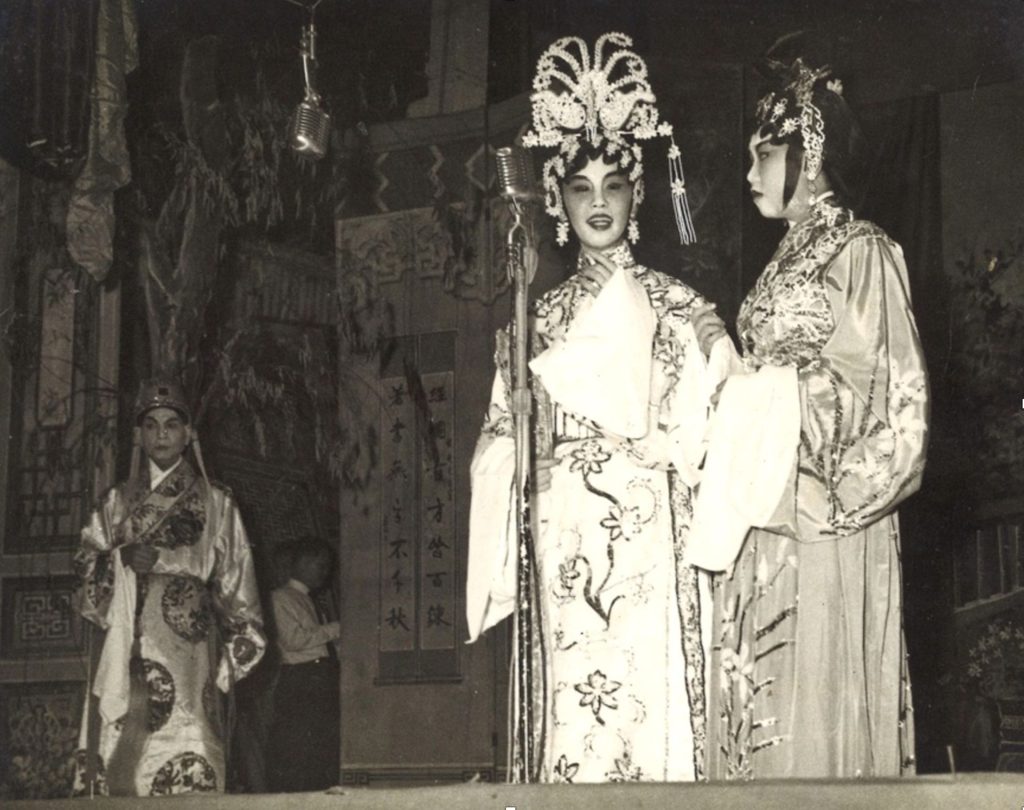
Chee made her stage debut at the age of seven. By the age of 16, she was already playing the principal female role of Princess Le Chang in A Decade’s Dream in the Palace. In 1966, the then-20-year-old earned an invitation to record her performance for television for her extraordinary portrayal of Princess Chang Ping in the classic The Patriotic Princess3 — just three years after television was introduced in Singapore. Known for her versatility in playing different roles,4Chee would go on to be the main actress in theatre troupes such as Lone Vale Musical and Dramatic Association and Tarn Kah Keng Ying Charitable Dramatic Association, earning critical acclaim for her performance in numerous classics such as the martial drama A Pair of Swords, civil drama Zhou Ren Escorts His Sister-in-law, and standard drama Grand Appointment of Ministers in the Six States.5
From performer to teacher
In 1968, Tung On Wui Kun, a Cantonese clan association set up by clansmen from the Dongguan and Bao’an districts of Guangdong, invited Chee to assist in its dramatic productions. As her ancestral hometown was in Dongguan, she gladly accepted the invitation and led the association’s Cantonese opera group for nearly four decades. Since the establishment of Chinese clan associations in Singapore in the early 19th century, they have played a vital role in supporting immigrants from the same hometown in China by providing communal networking opportunities, which reinforced their shared identity and served as a source of entertainment. Chee withdrew from other opera groups upon joining Tung On Wui Kun, devoting herself solely to the activities of the clan association. Not only did Tung On Wui Kun offer her opportunities to perform, it also allowed her to teach and promote Cantonese opera, making her both a performer and teacher.6
After departing from Tung On Wui Kun in 2007 due to artistic differences, she founded the amateur theatre company OperaWorks Singapore the following year to spark wider interest in Cantonese opera, and served as its artistic director.7 Despite the Speak Mandarin Campaign in 1979 and the resulting decline in dialect proficiency among the younger generation,8 she remained committed to preserving the traditional art form in Singapore. Then in her 60s, her focus shifted mainly to teaching and nurturing fresh talent in Cantonese opera.9She has since mentored over a hundred students, continuing the legacy of the traditional art form in Singapore.10Her passion for the craft has also inspired three generations of her family to join her in promoting Cantonese opera.
International connections
Besides being a master performer as well as an educator, Chee’s efforts to internationalise Singaporean Cantonese opera remain under-recognised. Her training under teachers of diverse origins likely informed her appreciation for cross-cultural engagement, while local constraints may have prompted her to seek opportunities for international exchange — performing extensively abroad and inviting international artists to Singapore to collaborate and train younger Cantonese opera practitioners.
Chee has led her troupe to perform in Guangdong and Hong Kong on many occasions, showcasing Singapore’s style of Cantonese opera overseas. In Hong Kong, she performed alongside Law Kar-ying and Leung Tin, Cantonese opera aficionados celebrated for their work on the silver screen, television, and on stage.11 She has also invited various luminaries to Singapore to conduct workshops and long-term training to her students, including Peking opera master Mei Lanfang’s (1894–1961) cousin Chen Rongfang, Zhang Shijie from Shanghai, and Law Kar-ying from Hong Kong. Furthermore, she has arranged for seasoned artists from Hong Kong, Guangdong, and Shenzhen to perform in Singapore and elevate the artistic standards of local Cantonese opera. Chee’s work in promoting Singapore Cantonese opera internationally was acknowledged in the third online edition of the Encyclopaedia of China in 2010. She and her family also made a guest appearance on Hunan Satellite Television’s 2019 programme A Worldwide Celebration: Chinese New Year to showcase the development of Cantonese opera across generations in Singapore.12
Chee’s artistic collaborations also extended to the local arts community — she partnered Zhang Li, artistic director of the Singapore Chinese Opera Institute, to design and direct a scene in OperaWorks Singapore’s production 40 Years of Cherished Love in 2019.
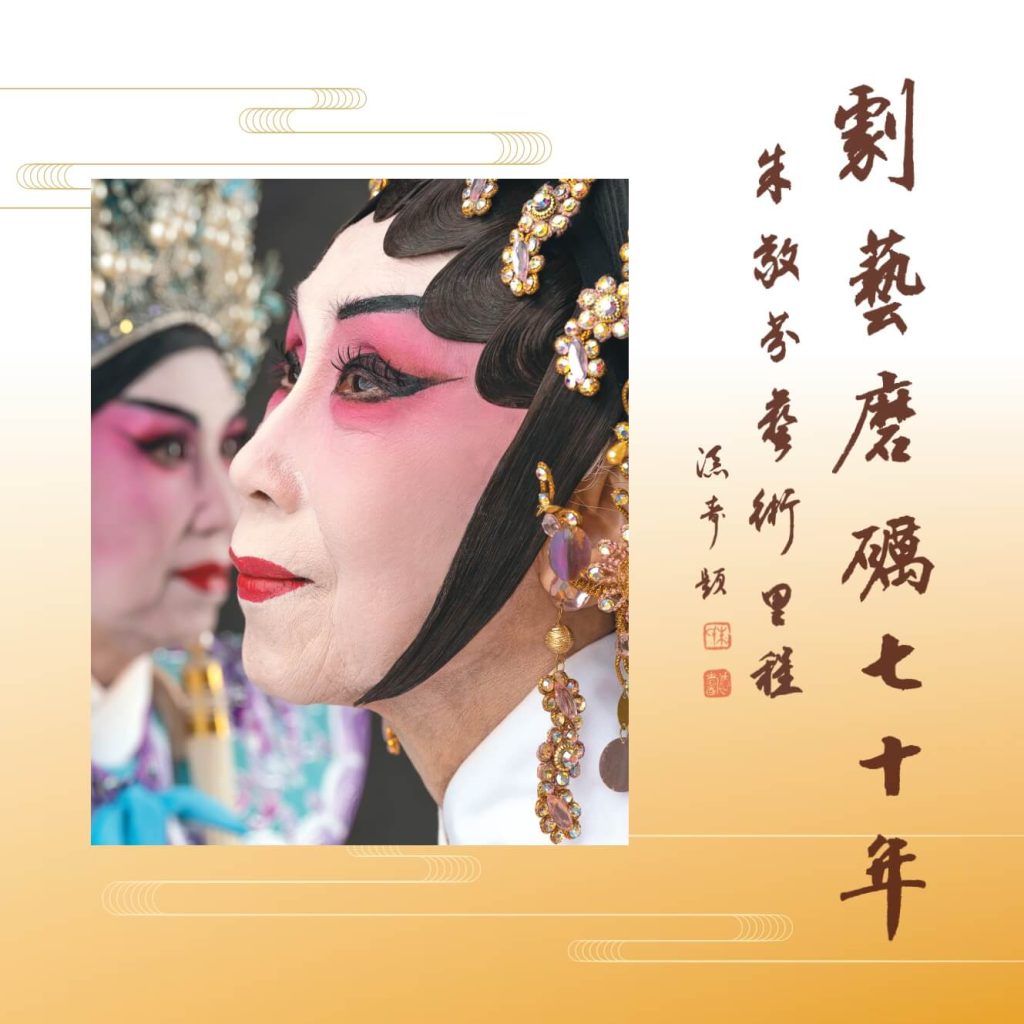
In 2024, OperaWorks Singapore published the book Juyi moli qishi nian — Zhu Jingfen yishu licheng (Seventy years of honing the theatrical arts — Chee Kin Foon’s artistic mileage), which provides a comprehensive review of Chee’s artistic career and her significant contributions to the development of local Cantonese opera.
| 1 | “Liyuan fudang Zhu jingfen” [The Diva of Cantonese Opera — Chee Kin Foon], Tuesday Report: 90 Years Young Season 2, Channel 8, 28 January 2020. Producer: Linda Phua. |
| 2 | Yang Yang, “Zhu Jingfen, Zhu Shaofen zai jin Yangcheng” [Chee Kin Foon, Chee Siew Fun visit Canton again], Nanguo hongdou 3 (2016): 41. |
| 3 | “Liyuan fudang Zhu jingfen”. |
| 4 | “Liyuan fudang Zhu jingfen”. |
| 5 | Xiao Li, “Zhu Jingfen zunshi jingyi liushizai” [Choo Kin Foon: Honoring her teachers and respecting the art form for 60 years], Xiqu pinwei 152 (July 2013): 62. |
| 6 | Liyuan yuanding yu xinren 2 — Zhu Jingfen laoshi [Eminent Chinese Opera Educator in Singapore (Episode 2) — Teacher Chee Kin Foon], Nanyang Channel, 9 June 2022. |
| 7 | “Liyuan fudang Zhu jingfen”. |
| 8 | Cherie Lok, “Chinese Opera Troupes Strive to Keep Art Form Alive in Singapore,” Channel News Asia, 6 April 2023. |
| 9 | Liyuan yuanding yu xinren. |
| 10 | “Liyuan fudang Zhu jingfen”. |
| 11 | Yang, “Zhu Jingfen”, 41. |
| 12 | Chia Yei Yei, “Zhu Jingfen jiazu shang Hunan Chunwan fenxiang yueju chuancheng” [The Chee family shares the legacy of passing down the baton of Cantonese opera at the Hunan Spring Festival gala], Lianhe Zaobao, 22 January 2019. |
Chee, Kin Foon and Phua, Linda. Juyi moli qishi nian — Zhu Jingfen yishu licheng [Seventy years of honing the theatrical arts — Chee Kin Foon’s artistic mileage]. Singapore: Superskill Graphics Pte Ltd, 2024. | |
Chia, Yei Yei. “Zhu Jingfen jiazu shang Hunan Chunwan fenxiang yueju chuancheng” [The Chee family shares the legacy of passing down the baton of Cantonese opera at the Hunan Spring Festival gala]. Lianhe Zaobao, 22 January 2019. | |
Lok, Cherie. “Chinese Opera Troupes Strive to Keep Art Form Alive in Singapore.” CNA, 6 April 2023. | |
Xiao, Li. “Zhu Jingfen zunshi jingyi liushizai” [Choo Kin Foon: Honoring her teachers and respecting the art form for 60 years]. Xiqu pinwei 152 (July 2013): 62–63. | |
Yang, Yang. “Zhu Jingfen, Zhu Shaofen zai jin Yangcheng” [Chee Kin Foon, Chee Siew Fun visit Canton again]. Nanguo hongdou 3 (2016): 41–43. |