Literature by Singaporeans who studied in Taiwan


After World War II, the Taiwanese government actively courted overseas Chinese to pursue higher education in Taiwan. This drew many students from Singapore and Malaya (later Malaysia). Records show that Singaporean students began studying in Taiwan in the 1950s, with their numbers gradually increasing.1
The Singapore government has helped add to the numbers. To strengthen mother tongue education here, it has sponsored pre-university graduates and non-graduate Chinese-language teachers to pursue Chinese-language and literature studies in Taiwan since 1980.2 Some of these students engaged in creative writing in their leisure time, a trend that would later shape the evolution of Singapore Chinese literature. Many returned to Singapore to build careers in Chinese-language education, the media, and academia.
The idea of “Xinjiapo liutaisheng wenxue” (literature by Singaporeans who studied in Taiwan) has echoes of “liutai”, a term coined by Taiwan-based Malaysian Chinese scholar-poet Chan Tah Wei to refer to Malaysian Chinese writers who had completed their tertiary education in Taiwan before returning home or moving elsewhere for work.3 “Literature produced by Singaporean who studied in Taiwan” refers to Chinese literary works by both native-born and naturalised Singaporean authors with a distinct Taiwanese influence, written during or after their studies in Taiwan.4 Most of these have focused on poetry and prose.
Taiwan-educated Singaporean writers
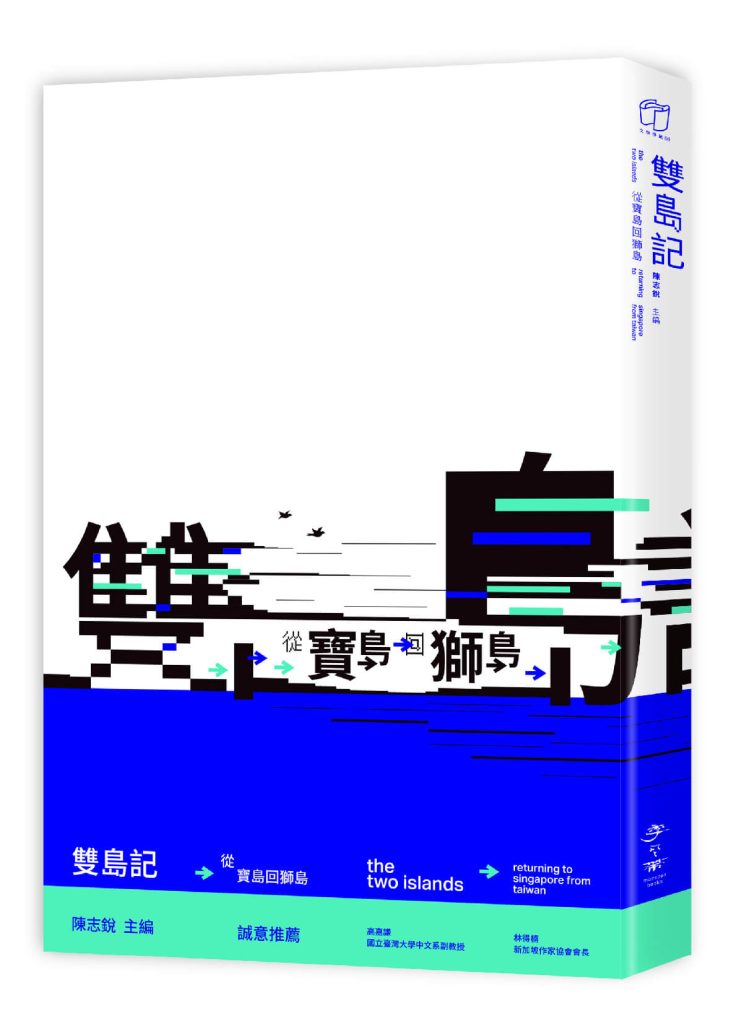
The 2023 anthology The Two Islands: Returning to Singapore from Taiwan, edited by Singaporean scholar Tan Chee Lay, who studied in Taiwan, best captures the group’s diversity. These writers reflect the complexity of the “Singaporean” identity, having navigated varied routes of migration and mobility. While most shuttled between Singapore and Taiwan, several were originally from Malaya or Malaysia and settled in Singapore after graduating (such as Wong Yoon Wah, Dan Ying, and Moh Lee Fair).
The writers also span different generations and resided in Taiwan during different eras. Some studied there while the island was under authoritarian rule (such as Wong Yoon Wah, Dan Ying, and Lin Gao), whereas others experienced the subsequent shift in its governance approach (such as Chua Chim Kang and Yin Songwei). Still others, including Tan Chee Lay, pursued higher education after the lifting of martial law. Consequently, these writers were shaped by markedly different political climates and literary environments. While many received Singapore government scholarships (such as Lin Gao, Chua Chim Kang, Quah Sy Ren, Yin Songwei, and Aw Guat Poh), others enrolled as self-funded students (such as Loo Li San, Cheong Chee Lan and Ng Teck Seng). It is worth noting that not all of these alumni studied in Taipei (for instance, Huang Shujun), or majored in Chinese studies (such as Neo Keng Keok). In addition, some travelled to Taiwan for their postgraduate rather than undergraduate degrees (such as Lee Chih Horng).
The ‘Taipei complex’
Singaporean writer-researcher Liw Pei Kien notes that the works of Chua Chim Kang, Quah Sy Ren, Yin Songwei, and Tan Chee Lay have injected fresh elements into Singapore Chinese modernist literature.5 Quah’s two prose collections, Xun miao (In search of the temple, 1988) and Mengshu guanxing (Dreaming and gazing, 1996); Chua’s poetry collection Ruguo buneng huitou jiu wangji yueguang (Forget the moonlight if one cannot start over, 1989) and prose collection Huilang de shi (The affairs of a lone grey wolf, 1992); Yin’s prose collection Ming ke ming (The name that can be named, self-published in Taipei in 1989; Singapore edition in 1994); as well as Tan’s hybrid collection Ge an guan wo (Gazing at myself from the opposite shore, 2000) and prose collection Huangse yuyi (The yellow raincoat, 2006), all contain many reflections on their experiences of studying abroad.
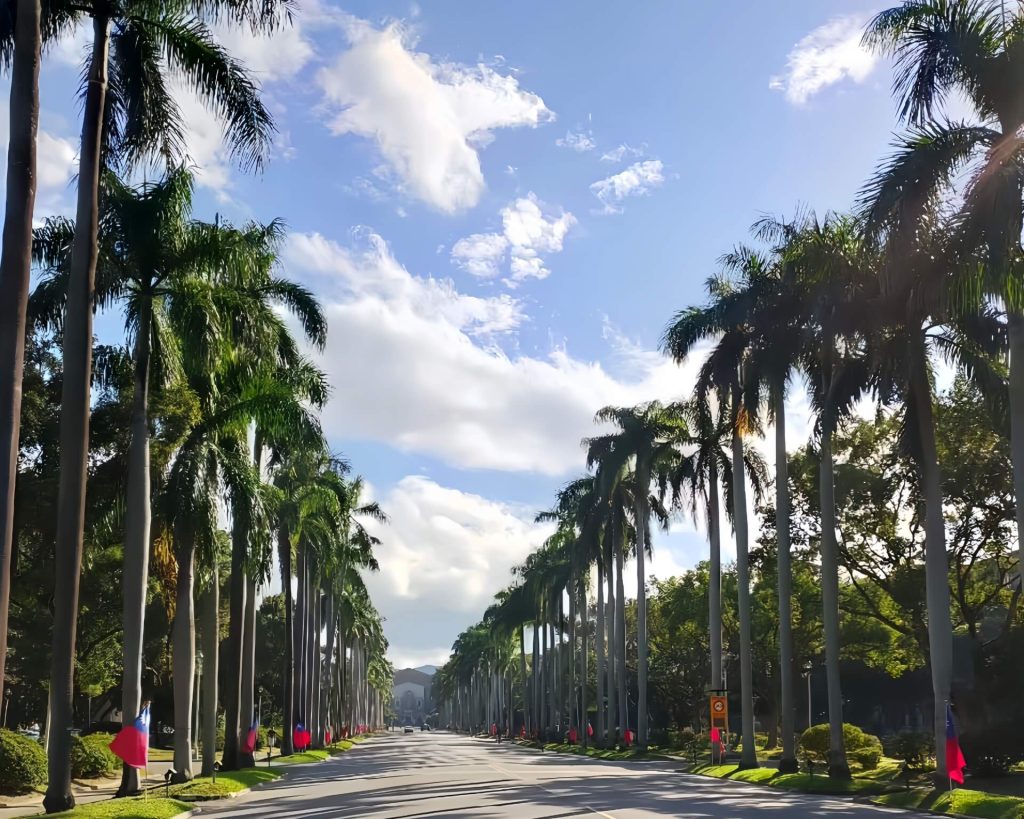
Liw observed a shared emotional resonance across these writings, arguing that they embody a certain “Taipei complex”.6 Through their literary works, these writers repeatedly expressed how Taipei’s university education, humanistic environment, and daily life profoundly transformed their perspectives on literary arts and their outlooks on life. Broad exposure to Taiwanese and international literature, film, and theatre significantly expanded their cultural horizons, and Taipei became both a literary and spiritual homeland for them.
The experience exerted a lasting impact. In 1990, two years after returning to Singapore, Chua won first prize in the prose category of Taiwan’s China Times Literary Award for his deeply poetic prose essay Manbu jingxin (A ramble through the heart). To date, he remains the only Singaporean writer to have won this award. The piece was subsequently featured in one of Taiwan’s most prestigious annual collections of literary works for prose. That same year, his poem Zhiyao haiyou yikeshu huozhe (So long as one tree is still alive) also made it to another important annual collection of literary works for poetry.7
Though modest in volume, the literary output of Taiwan-educated Singaporeans has left its mark. Its transregional character has enriched Singapore Chinese literature, highlighting its diversity and fluidity. It also reminds us that “Singapore” is an open concept: its Chinese writers are not necessarily native-born, and its literature is not confined to local themes. Above all, the recurring comparisons between Singapore and Taiwan within these works offer an enduring reflection on the equatorial island nation itself.
This is an edited and translated version of 新加坡留台生文学. Click here to read original piece.
| 1 | Gu Kejian, “Foreword,” in 10th Anniversary Commemorative Publication of the Alumni of Taiwan Universities and Colleges in Singapore (Singapore: Alumni of Taiwan Universities and Colleges in Singapore, 1990), 3. |
| 2 | Liw Pei Kien, Xinhua dangdai wenxue zhong de xiandai zhuyi [Modernism in contemporary Singapore Chinese-language literature] (Singapore: Global Publishing and Centre for Chinese Studies@SUSS, 2017), 265. |
| 3 | Chan Tah Wei, Zui nianqing de qilin: mahua wenxue zai Taiwan (1963–2012) [The youngest kylin: Malaysian Chinese literature in Taiwan (1963–2012)] (Tainan: National Museum of Taiwan Literature, 2012), 27. |
| 4 | The author first introduced the concept of “literature produced by Singaporean authors who studied in Taiwan” when presenting transregional Singapore literature to the English-speaking academic community. At that time, the term referred broadly to Singaporean authors’ creative writings about their experiences of studying in Taiwan. This article further refines that definition. See Chan Cheow Thia, “Introductory Note,” special section on Transregional Singapore Chinese literature in Renditions: A Chinese-English Translation Magazine, no. 96 (2021): 9–14. |
| 5 | Liw Pei Kien, Xinhua dangdai wenxue zhong de xiandai zhuyi [Modernism in contemporary Singapore Chinese-language literature], 265–266. |
| 6 | Ibid., 266. |
| 7 | Chua Chim Kang, Manbu jingxin [A ramble through the heart], in Qishijiu nian sanwenxuan [A selection of prose essays 1990], edited by Hsiao Hsiao (Taipei: Chiu Ko Publishing Co., 1991), 290–299; his poem Zhiyao haiyou yikeshu huozhe [So long as one tree is still alive] was featured in Qishijiu nian shixuan [A selection of poetry 1990], edited by Xiang Ming (Taipei: Elite Books, 1991), 82–89. |
Liw, Pei Kien. Xinhua dangdai wenxue zhong de xiandai zhuyi [Modernism in contemporary Singapore Chinese literature]. Singapore: Global Publishing and Centre for Chinese Studies@SUSS, 2017. | |
Tan, Chee Lay, ed. The Two Islands: Returning to Singapore from Taiwan. Taipei: Monsoon Zone Publishing Co., 2023. |