Overview of theatre works in Singapore Chinese literature


In pre-war Singapore, the development of theatre works in local Chinese literature was intertwined with the political climate of the time. When Sin Chew Jit Poh’s literary supplement Fanxing (Star) was launched in January 1929, it published a script titled Shizi jietou (Crossroads), which portrayed unemployed rubber tappers and miners marching in the streets, as well as the dire poverty faced by the common people. The play aimed to awaken workers to the need to unite and resist injustice. However, this angered the British colonial government; subsequently, the newspaper’s editor was expelled from Singapore and the paper was ordered to cease publication.
Political suppression did not halt the development of local playwriting. In the 1930s, many Chinese writers who came south began to write scripts. For instance, Ma Ning (birth and death years unknown) published one-act plays such as Daxuesheng yu yitaitai (College Student and the Concubine) and Yi ge nüzhaodao de si (Death of a Waitress) in Singapore’s Kok Min Yit Poh under the pen name “Zeng Qiang”. In 1933, the Nanyang Chinese Students’ Society staged three of Ma’s one-act plays — Fang Niang (Maiden Fang), Lülin zhong (In the Forest), and Yi shinü (A Maidservant) — at the Victoria Theatre in Singapore.
Among pre-war playwrights, Ye Ni (Wu Tian, 1913–1989) was a pivotal figure, hailed by academic Lim Buan Chay (1951–2024) as “the Chinese writer who had contributed the most to Singapore’s literary scene among those who came south before 1937”. Ye’s most important work was Jiushang bingyuan li (In the Hospital for the Wounded and Sick) [later renamed Shangbing yiyuan (Soldiers’ Hospital)], written for the Singapore Amateur Theatre. The following year, Ye led the Singapore Amateur Theatre in a performance of Cao Yu’s (1910–1996) Sunrise in Singapore and Penang, which he also directed.
Following the 1937 Marco Polo Bridge Incident, the key themes of Chinese theatre gradually shifted towards promoting patriotism and resistance against the Japanese, with performances advocating for donations to help Chinese refugees. Zhu Xu (1908–2007), who came to Nanyang, participated in the performances and fundraising activities for disaster relief of the “Malayan Chinese Itinerant Drama Troupe”. The large-scale, four-act play Hailian (Sea Love) was one of his representative works. After Singapore’s independence in 1965, Zhu served as a theatre consultant to the National Theatre, making significant contributions to the development of Singapore theatre. He vigorously promoted and produced quality plays, such as Shui zhi jiu (Who Is to Blame), Bei huan li he (Vicissitudes of Life), and Heping zhihou (After Peace).
During World War II, theatrical works gravitated towards themes related to anti-Japanese resistance and national salvation. Du Bian (1914–1997) was a leading figure of this period. In 1937, he wrote one-act plays including Jumo (Monster), Qing yu fa (Compassion and the Law), Wan’e gongsi (Diabolical Company), and Zhandi leihua (Tears on the Battlefield). He also organised various theatre groups and actively promoted the anti-Japanese theatrical movement in Singapore and Malaya. After the war, in 1946, Du wrote several plays reflecting the lives of ordinary people, including Ernian (Two Years), Fan biqian (Resisting Forced Eviction), and Zhong ma yin yijiaqin (China, Malaya, and Indonesia Are One Family). In particular, Mingtian de taiyang (Sun of Tomorrow), published in Singapore in 1945, remains one of his representative works.
Post-war plays on life in Singapore
After the war, theatrical activities in Singapore flourished once again. Overseas troupes visited Singapore to perform, injecting new vitality into the development of local theatre. Playwright Yue Ye (1920–2001), from the China Song, Dance and Drama Company, also staged works set in Singapore and Malaya, such as Singapore’s Chinatown: A Changing Scene and The Fate of Three Miles Village. These productions incorporated local elements through the use of dialects and Malay expressions.
In the 1960s, dramatist Ly Singko (1913–1996) wrote numerous plays, such as Qiaoshang (On the Bridge), Baoqiong (I’m Poor), Lüzhou (Oasis), and Luanshi chunqiu (Turbulent Times). The play Duli qiao (Independent Bridge) centres on a poor teacher who saves a prostitute from jumping into the sea, only to be falsely accused of molestation by thugs. He later discovers that his money and belongings have been stolen. Using dark humour, the writer highlights the absurdities that can occur in a “dog-eat-dog” society.
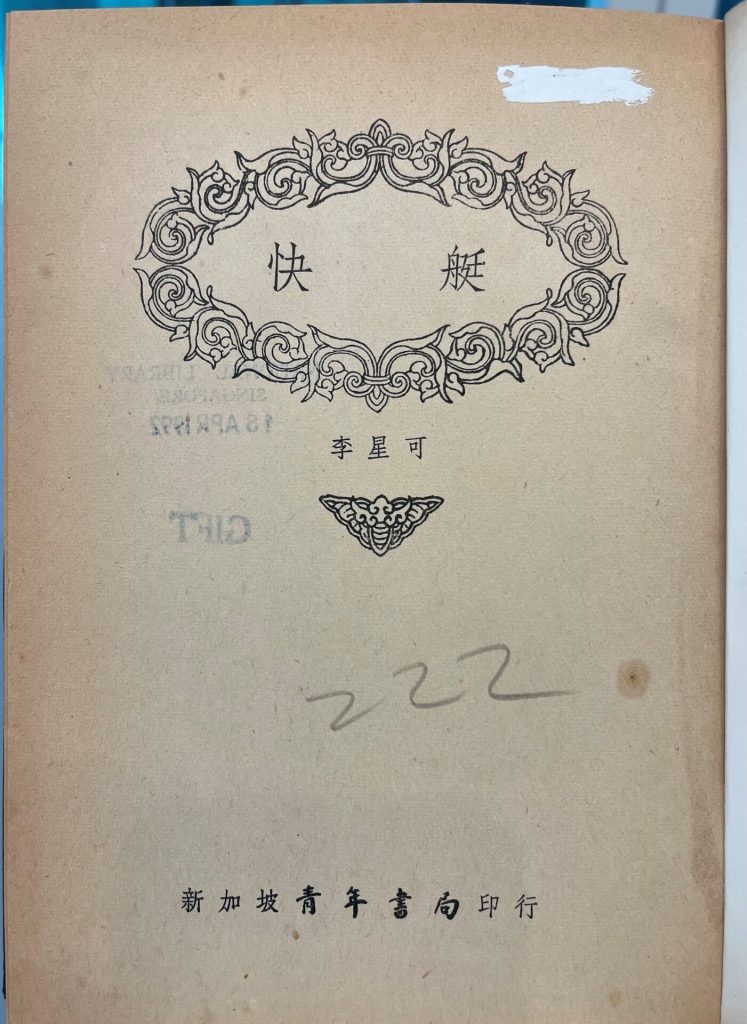
Ly also wrote several comedies, such as Kuaiting (Speedboat), Diao jingui (The Millionaire Chase), and Bangpiao (Kidnap), which are collected in the volume Kuaiting. Written in a lively style charged with dark humour, these works prompt readers to reflect on various social issues.
Lin’s works focused on the plight of ordinary people. For instance, the book Louxiang li (Back Alleys) portrays back alleys as the workplace of impoverished prostitutes, whose sorrow and helplessness are depicted through farce. These women often suffered illnesses due to their working conditions and were bullied by hooligans. From the 1950s to the 1990s, Lin directed more than 160 large-scale theatrical productions. His achievements were recognised by the state, and he was awarded the Cultural Medallion in 1982.
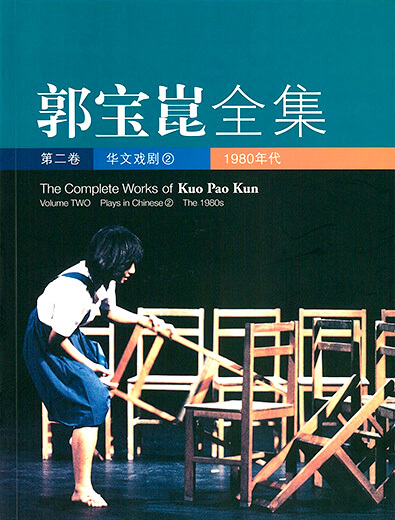
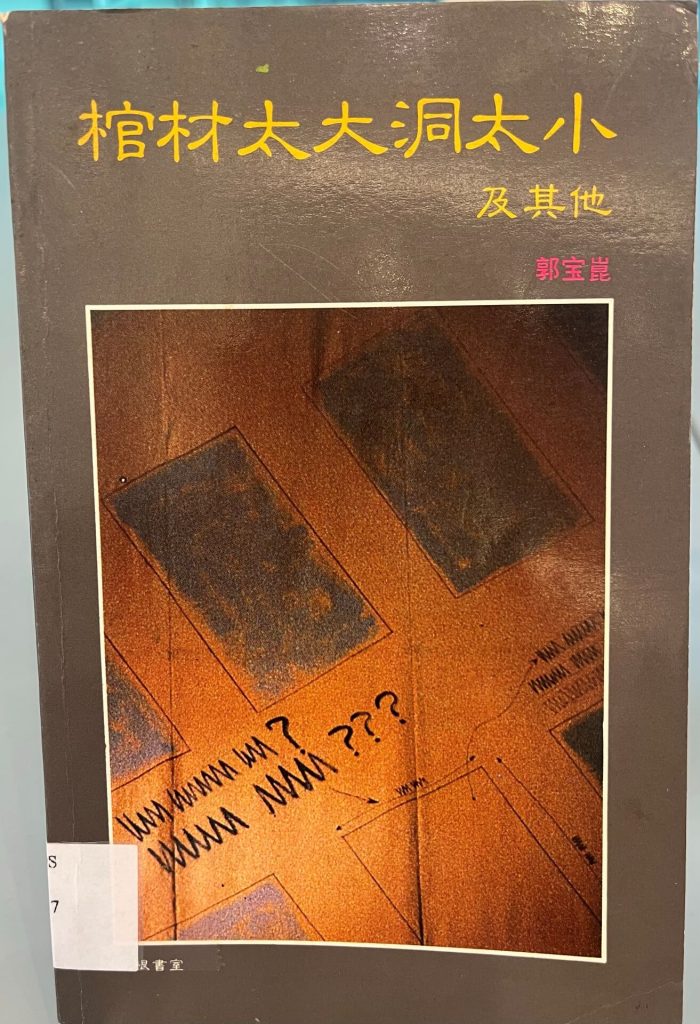
Among post-war Singaporean theatre practitioners, Kuo Pao Kun (1939–2002) deserves special mention. In 1965, Kuo and Goh Lay Kuan founded the Singapore Performing Arts School, with an enrolment of more than 300 students. In December 1982, 14 Chinese theatre groups jointly staged Kuo’s work Little White Boat. This was a significant milestone, marking the first cross-group collaboration in Chinese theatre. In 1986, the play Kopitiam, written and directed by Kuo, involved as many as 23 theatre groups, representing the peak of such collaborative productions. In 1984, Kuo also wrote his first English play, the monologue The Coffin Is Too Big for the Hole. Most of his works reflect the everyday reality of Singaporean life during that period.
Tradition and innovation in the new era
After the 1990s, a new generation of theatrical works began to emerge. These include Quah Sy Ren’s The Assassin, the Medium and the Massage Girl (2004), as well as Chua Soo Pong’s Teochew opera scripts and critiques, such as Ten Teochew Opera from Singapore: A Collection of Chua Soo Pong’s Scripts (2021) and The Collected Works of Chua Soo Pong (2011), which features discussions on local traditional opera.
Yeng Pway Ngon’s (1947–2021) Costume (2015) is another significant literary work related to theatre. Set against the backdrop of Cantonese opera, the novel explores the development and evolution of Cantonese music and opera in Singapore. Yeng also wrote plays such as Man and Bronze Statue (2002) and Love Story (2003). In the contemporary era, elements of traditional theatre continue to be carried forward through such new creations in Singapore Chinese literature.
This is an edited and translated version of 新华文学中的戏剧概述. Click here to read original piece.
Fang, Xiu. Xinma huawen xin wenxue liushi nian [60 years of Singapore and Malaysia Chinese new literature]. 2 vols. Singapore: The Youth Book Co., 2008. | |
Lian, Qi. Xinjiapo xianshi zhuyi huayu huaju de sichao yanbian (1945–1990) [The evolution of thinking in realistic Chinese-language theatre in Singapore (1945–1990)]. Singapore: Chun Yi Trading Co., 2011. | |
Lin, Chen. The Collected Plays of Lin Chen. Singapore: Xinhua Cultural Enterprises, 2003. | |
Quah, Sy Ren. Xiju bainian: Xinjiapo huawen xiju 1913–2013 [Scenes: A hundred years of Singapore Chinese language theatre 1913–2013]. Singapore: Drama Box, National Museum of Singapore, 2013. | |
Quah, Sy Ren and Pan Cheng Lui, eds. The Complete Works of Kuo Pao Kun. Singapore: Drama Box, Global Publishing, 2010. | |
Yeng, Pway Ngon. Costume. Taipei: Tongshan Publications, 2015. |