Women writers and their works in Singapore Chinese literature


Compared with their male counterparts, women writers and their works in Singapore Chinese literature have received less scholarly attention. Singaporean Chinese literary historian Fang Xiu (1922–2010) noted that, prior to World War II, there were five local women writers: Ms LS, Ms SK, Shao Meng, Liu Yingzi, and Chen Jianguang.1 It was likely due to their small number that few commentators noticed them. Overall, pre-war Singapore Chinese women’s literature had limited influence. Nevertheless, they often focused on the awakening of female consciousness and women’s positions in society and the family, demonstrating keen observational skills and delicate sensibilities. For instance, as a founding member of Huangdao (Desolate Island), the literary supplement of The Sin Kuo Min Press, Deng Licheng was a prime example of how women — even in such patriarchal times — could influence society through the press.
Following Singapore’s independence and the popularisation of women’s education, works by Singapore Chinese women writers began to emerge in large numbers, particularly around the 1980s. Academic Aw Guat Poh observed that women writers had become an influential presence in Singapore Chinese literature, noting that “a total of 283 women’s works of fiction were published between 1970 and 1989”.2 Aw argued that the emergence of these writers marked the formal appearance of a women writers’ group within Singapore Chinese literature.3 In this context, “Singapore Chinese women’s works of fiction” refers not only to works authored by women but also to narratives that examine women’s lives and highlight their experiences in Singapore.
The emergence of Singapore Chinese women writers
In the late 1970s, local literary supplements began paying closer attention to the writing environment of Singapore Chinese women writers. In May 1978, the Singapore Literature published a special feature on women, showcasing articles by eight writers. Centred on the theme of “women and writing”, the articles addressed the challenges women encountered in their literary pursuits and the limitations they faced in terms of subject matter. For example, in the article “Funü zuojia yi tuanjie qi lai” (Women Writers Should Unite), Song De pointed out that women writers had to balance their writing endeavours with career and family responsibilities. In her essay “Jinguo qi rang xumei” (Women are No Less Capable than Men), Meng Shuqing noted that women’s limited ability to visit dangerous areas for field observation might have restricted the scope of their writing topics. These discussions echoed the struggles faced by Singapore Chinese women writers in pre-independence Singapore while foreshadowing the rise of a more visible group of women writers after independence.
Indeed, after the war, Singapore Chinese women writers emerged as a notable presence in the literary scene. Writers such as Shi Jun, Lan Yu, Jun Yinglü, Rong Zi, Dan Ying, You Jin, Teoh Hee La, Soon Ai Ling, and Ai Yu collectively shaped the literary landscape for women. This generation had considerable creative output, producing a large body of works that appeared widely in various newspapers. Among them, the works of Teoh Hee La successfully portrayed the dilemmas faced by educated Singapore Chinese women in balancing family and career. For instance, the protagonist of “Ru Shiji” (Entering the Century) is a journalist who, despite knowing that her brother’s abandonment of another woman led to the tragic loss of a life, can only feel a deep sense of remorse for her inability to place justice above family loyalty. Additionally, the protagonist of “Biandiao” (Variations) contemplates the future of Singapore’s next generation from the perspective of a Chinese language teacher. The women in Teoh’s writing are concerned not merely with matters of romance, but with broader social and even national issues.
Interactions and positioning of Singapore Chinese women writers
In the book Chidao shang de qipa: xinjiapo nüzuojia xiaoshuoxuan (Tropical Gem: Selected Stories by Singapore Women Writers, 1994), Xie Ke noted that Singapore Chinese women writers were active contributors to newspapers and had a significant impact on the literary scene, particularly through public discussions on women writers and women’s literature. In 1982, Singapore hosted its first international symposium on the literary mission of women writers, organised by the Singapore Literature Research Society (now Singapore Literature Society). Participants included Singaporean writers He Meng (Ho Woon Ho) and Low Pooi Fong, Hong Kong writer Xiao Si (Lo Wai-luen), Malaysian writer Lee Yoke Kim, and Taiwanese writer Wei Weiqi. The event brought new vitality to what was then a limited space for women-centric writing.4
In 1987, a keynote lecture on “Feminism in Modernism” advanced discussions about women’s writing and featured speakers such as Taiwanese editor Annie Chen and writer Li Ang, Malaysian writer Yulduz Emiloglu, and Low Pooi Fong. In her speech, Low stressed that local women writers rarely wrote about living spaces in other parts of the world, attributing this to their education and living environment.5 The lecture fostered essential dialogue between Singapore Chinese women writers and their international counterparts.
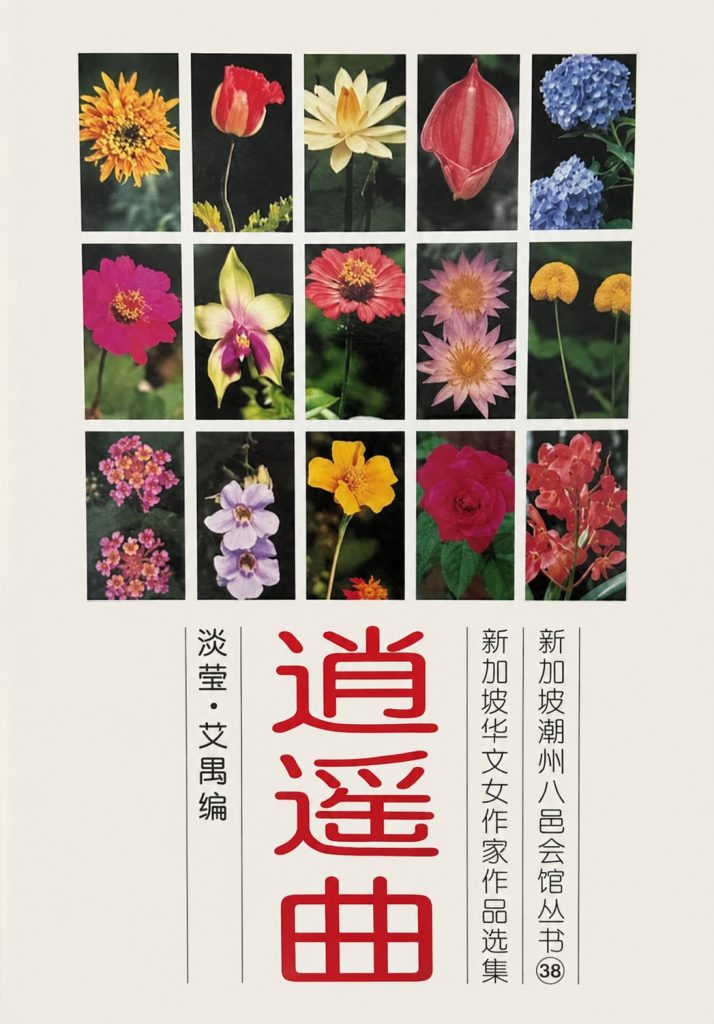
In 1998, Xiaoyaoqu: xinhua nüzuojia xuanji (Unbound Melodies: A Collection of Singapore Chinese Women Writers), edited by Ai Yu and Dan Ying, was published. Furthermore, regarding immigrant writers, Liu Liu (Zhang Xin), who settled in Singapore in 1999, has produced works such as Wanggui yu anna (Wang Gui and Anna) and Woju (Dwelling Narrowness), which depict the predicaments of women caught between the workplace and romance. Similarly, Luo Yifei, who possesses a profound understanding of the lives of new immigrants, explores women’s quest for stability in Taxiang nüzi (Women in a Foreign Land), tracing the journeys of female characters as they move between Singapore, Taiwan, China, and the United States.
Turning to the post-2000 era, a particularly noteworthy figure among the new generation of Singapore Chinese women writers is Sui Ting (He Yingshu). She has won numerous literary accolades, including the Singapore Tertiary Chinese Literature Awards and the Golden Point Award, and her novella Yunyu (Fish Birth) was shortlisted for the Singapore Literature Prize in 2020. The story follows a woman who swallows a whole fish during a shipwreck and becomes pregnant, utilising a fantasy narrative to offer a profound reflection on female survival and the state of childbearing.
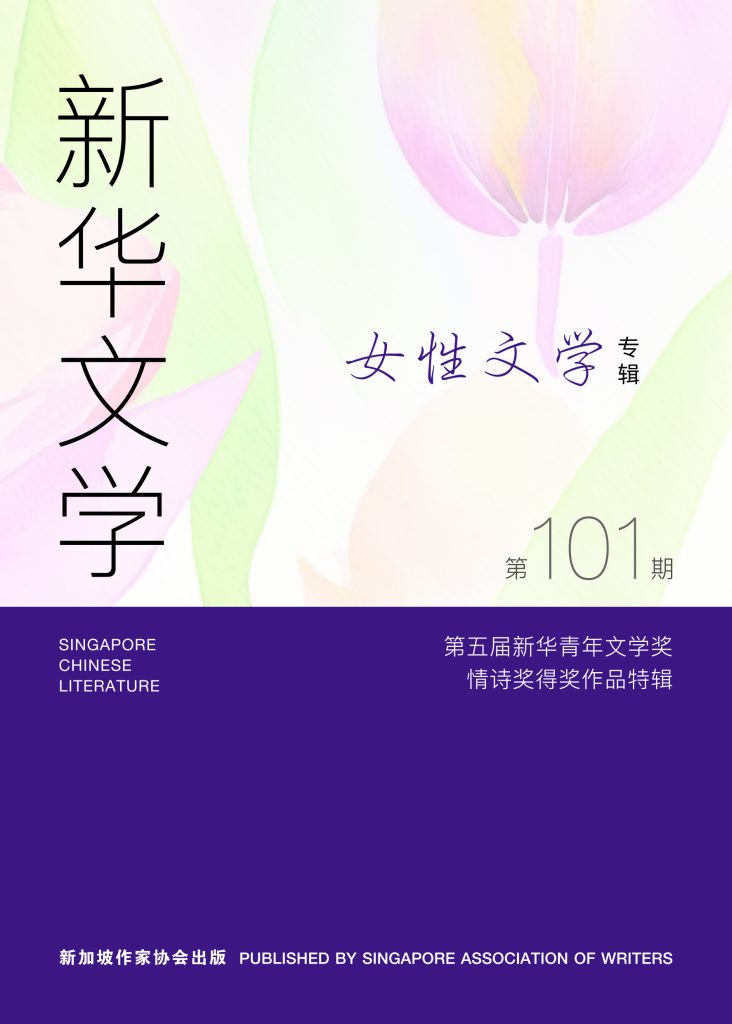
Even younger authors, such as Phoon Jing Ying and Seng Jing Fei, have been writing prolifically and winning awards continuously in recent years. The former travelled to the United Kingdom to pursue studies in creative writing, and her short story collection Ningmeng (Lemon) was selected as one of Lianhe Zaobao’s Best Books of 2025, also clinching the paper’s Best Debut Book Award. The latter primarily writes essays, and her essay collection You de shi qisi (A Cheese of One’s Own) was also honoured with the 2025 Best Debut Book Award. Finally, in 2024, the 101st issue of Xinhua Wenxue (Singapore Chinese Literature) featured a special edition dedicated to women’s literature, showcasing works by women writers alongside articles by male authors addressing women’s issues.
This is an edited and translated version of 新华文学中的女性作家与作品. Click here to read original piece.
| 1 | The birth and death years of the five authors are unknown. |
| 2 | Aw Guat Poh, Yuweishi yu yuweishi pang de huamulan: dangdai xinjiapo huawen wenxue lunwenxuan [The Merlion and Mulan: selected essays on contemporary Singapore Chinese literature] (Guilin: Guangxi Normal University, 2010), 129. |
| 3 | Aw Guat Poh, Yuweishi yu yuweishi pang de huamulan: dangdai xinjiapo huawen wenxue lunwenxuan [The Merlion and Mulan: selected essays on contemporary Singapore Chinese literature], 129. |
| 4 | “Nüzuojia de wenxue shiming yantaohui jilu” [Proceedings from the symposium on the literary mission of women writers], compiled by Du Xuemei, Singapore Literature, no. 29 (1983): 10–16. |
| 5 | “Xiandai wenxue zhong de nüxing wenxue” [Female voices in modern literature], Wenxue [Literature], no. 19 (1987): 135. |
Ai Yu and Dan Ying, eds. Xiaoyaoqu: xinhua nüzuojia xuanji [Unbound melodies: a collection of Singapore Chinese women writers]. Singapore: Publications Sub-committee, Cultural and Educational Committee of Teochew Poit Ip Huay Kuan, 1998. | |
Aw, Guat Poh. Yuweishi yu yuweishi pang de huamulan: dangdai xinjiapo huawen wenxue lunwenxuan [The Merlion and Mulan: selected essays on contemporary Singapore Chinese literature]. Guilin: Guangxi Normal University, 2010. | |
Hsiung, Hsien-kuan, ed. Xingbie yu jiangjie [Gender and boundaries]. Singapore: Centre for Chinese Language and Culture, Nanyang Technological University; Global Publishing, 2006. | |
Singapore Literature Society, ed. Dubai yu duihua: Sun Ailing xiaoshuoxuan [Monologues and dialogues: Selected stories by Soon Ai Ling]. Singapore: Singapore Literature Society, 2001. | |
Wong, Meng Voon and Xu Nai Xiang. Xinjiapo huawen wenxueshi chugao [Draft on the history of Singapore Chinese literature]. Singapore: Department of Chinese Studies, National University of Singapore; Global Publishing, 2002. | |
Xie, Ke. Chidao shang de qipa: Xinjiapo nüzuojia xiaoshuoxuan [Tropical gem: Selected stories by Singapore women writers]. Singapore: Singapore Literature Society, 1994. |