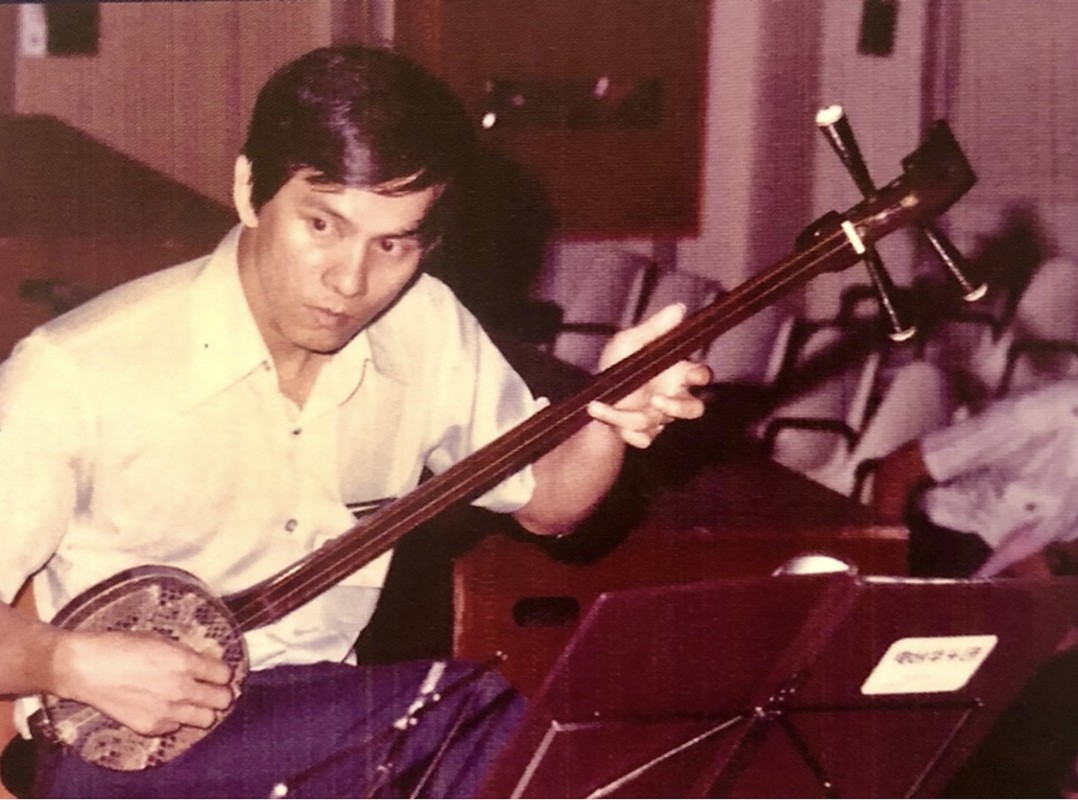
Peranakan Chinese music in Singapore


The Peranakan Chinese are the descendants of Chinese immigrants from southern China (especially Fujian) who settled in the Malay archipelago and married indigenous women. In the late 18th and early 19th centuries, when the British established the Straits Settlements in the Malay Peninsula, the community associated its identity with British colonial history. This is why the Peranakan Chinese were sometimes referred to as Straits Chinese.
Their multiracial and multicultural identity distinguished them from the sinkeh (“newcomers” in Hokkien), who had immigrated to Singapore from China later in the 19th century. Due to the close relations between the Peranakan Chinese and the colonial government during the British colonial period, the Peranakan Chinese had more opportunities to interact with Western culture, and thus had social and economic advantages over the local Malay community and later immigrants. After Singapore’s independence in 1965, the Peranakan Chinese community — often viewed with some nostalgia — was seen as distinct from other local ethnic groups even as they influenced one another. The Peranakan Chinese identity was not only defined by their history of mixed heritage, but also a reconstruction of ethnic self-identity within the contemporary nation state. When we talk about the music of Peranakan Chinese, these factors cannot be neglected. The Peranakan Chinese identity was both given and self-affirmed, and this was reflected in their musical culture.
A fusion of local and foreign elements
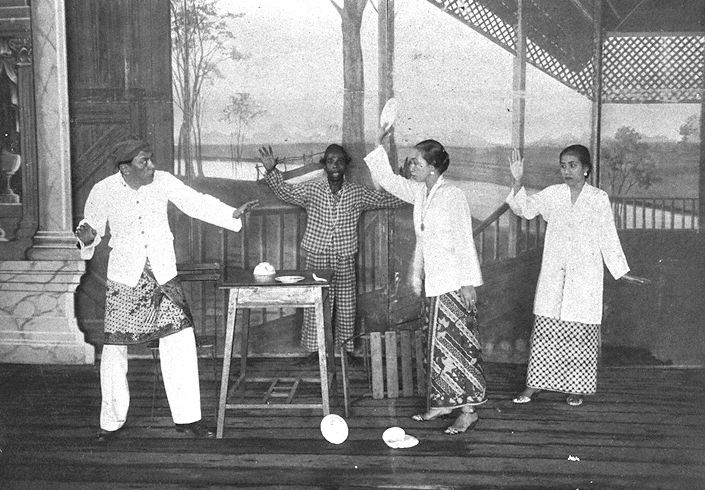
Peranakan Chinese groups combined local and foreign elements in their performances, as is evident in their bangsawan performances. Bangsawan is a form of musical theatre that originated in Malaya in the late 19th century, mainly based on stories about Malay nobles and royalty. Influenced by overseas performing troupes, bangsawan also included stories with Chinese, Indian, Middle Eastern, and European origins.
From the first half of the 20th century, a new form of performance termed wayang peranakan was born, inspired by the interlude songs in bangsawan. Wayang peranakan differed from bangsawan by its regular use of male actors for female roles. They adapted the music and interlude songs from bangsawan, and incorporated elements from the minstrel performances in the United Kingdom and United States, to tell stories about Peranakan Chinese families in Baba Malay1.
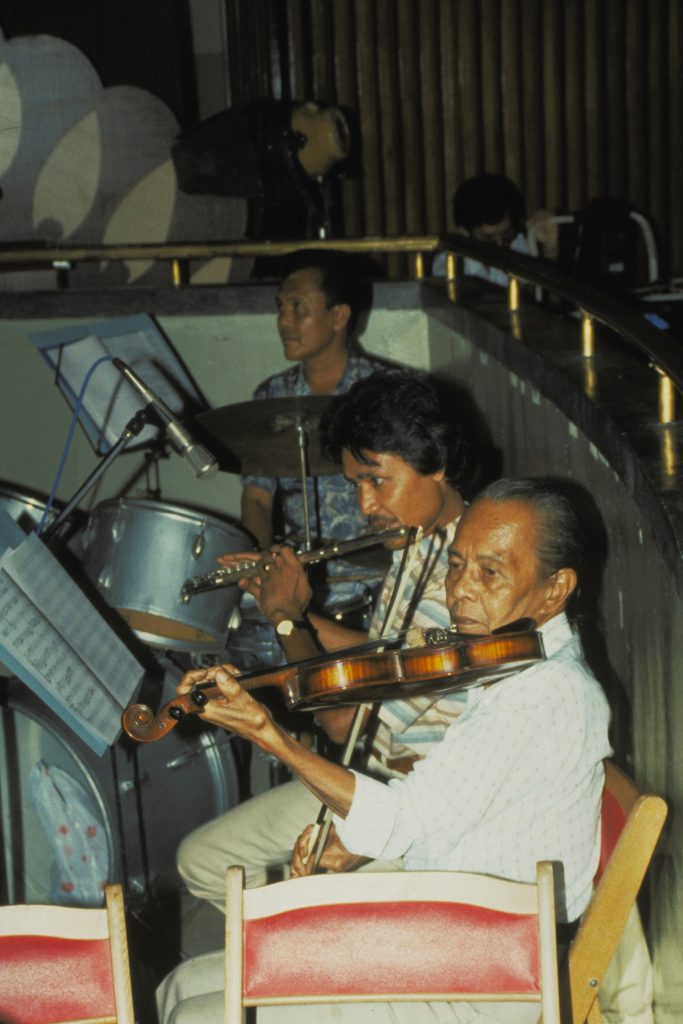
Indonesian culture also had an influence on the Peranakan Chinese. For instance, Peranakan Chinese musicians often played kroncong music, a popular Indonesian musical style, or dondang sayang, a local Malay verbal and musical art form. The latter features two singers (a man and a woman) who improvise verses as they engage in a battle of wits.
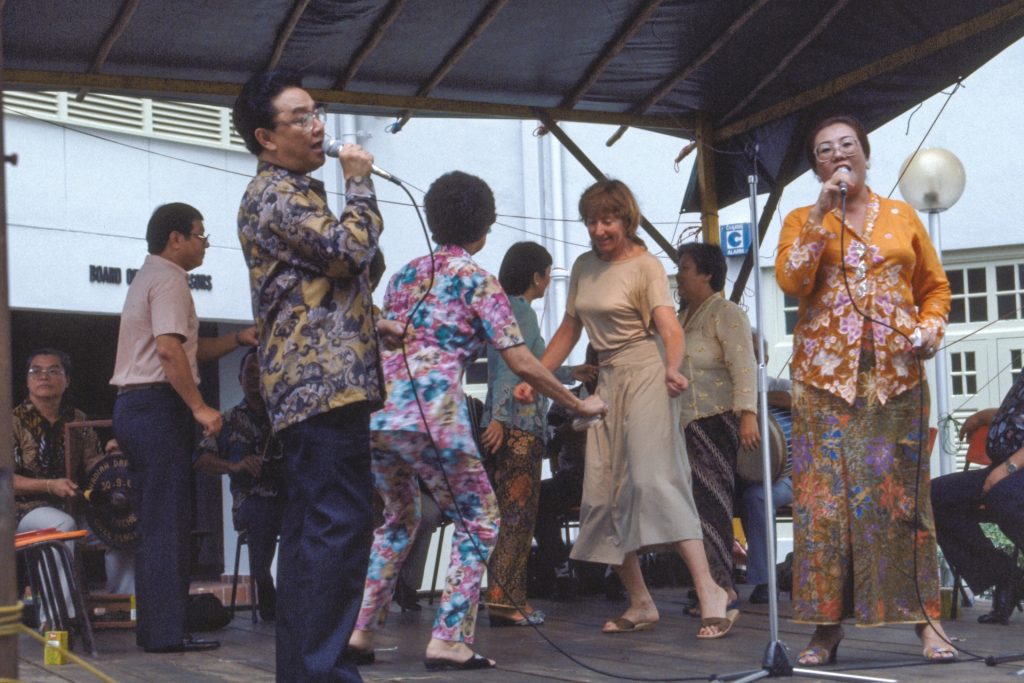
This community was also keen to embrace new trends. In the early 20th century, they gained exposure to Western broadcasts, records, and musical instruments, and formed community groups to practise music and minstrelsy. Such community musical pursuits reached their peak in the 1920s and 1930s. The groups comprised musicians, actors, dancers, and patrons, who performed at public events, ticketed commercial performances, festive celebrations, and fundraising events for private, national, and overseas causes.2 In the first half of the 20th century, charitable and social reform elements were often seen as the hallmarks of public performances by the Peranakan Chinese.
The lifestyle and culture of the Peranakan Chinese became more prominent during the British colonial period, particularly before World War II . After the war, this culture was partly revived but laced with a sense of nostalgia. From the 1980s onwards, and especially in the 1990s, Peranakan Chinese music culture came to occupy a unique place in multiracial and multicultural Singapore. Ethnomusicologist Lee Tong Soon’s research suggests that Bunga Sayang, a 1995 pop song by Singaporean musician Dick Lee, blends the traditions of dondang sayang with elements of Peranakan Chinese music, making it a symbol of Singapore’s multiculturalism.3 The song’s influence and popularity reflect the importance of Peranakan Chinese culture in Singapore’s cultural heritage and national identity.
This is an edited and translated version of 新加坡土生华人音乐. Click here to read original piece.
| 1 | A creole of Bahasa Melayu with a Hokkien influence. |
| 2 | Lee Tong Soon, “Peranakan music and multiculturalism in Singapore,” in Routledge Handbook of Asian Music: Cultural Intersections, edited by Lee Tong Soon (New York: Routledge, 2021), 207–208. |
| 3 | Tong Soon Lee, “Peranakan music and multiculturalism in Singapore,” 213. |
“Gaylads Minstrels Annual Performance.” Malaya Tribune, 22 February 1933. | |
“Growth of the Asiatic Club Movement in Malaya.” The Straits Times, 20 December 1931. | |
Henderson, J. “Ethnic Heritage as a Tourist Attraction: The Peranakans of Singapore.” International Journal of Heritage Studies 9, no. 1 (2003): 27–44. | |
Ho, Stephanie. “Dondang Sayang.” National Library Board, Singapore. | |
Lee, Peter. “Peranakan Musical Groups through the Ages.” The Peranakan 4 (2006): 8–13. | |
Lee, Tong Soon. “Peranakan Music and Multiculturalism in Singapore.” Routledge Handbook of Asian Music: Cultural Intersection, edited by Lee Tong Soon, 204–220. New York: Routledge, 2021. | |
Sarkissian, “The More Things Change, the More They Stay the Same: Peranakan Musical Culture in Malacca, Malaysia.” Música e Cultura 7, no. 1 (2012): 22–69. | |
Tan, Sooi Beng. “Cosmopolitan Identities: Evolving Musical Cultures of the Straits-born Chinese of Pre-World War II Malaya.” Ethnomusicology Forum 25, no. 1, Special Issue: Emergent Sino-Soundscapes: Musical Pasts, Transnationalism and Multiple Identities (April 2016): 35–57. |