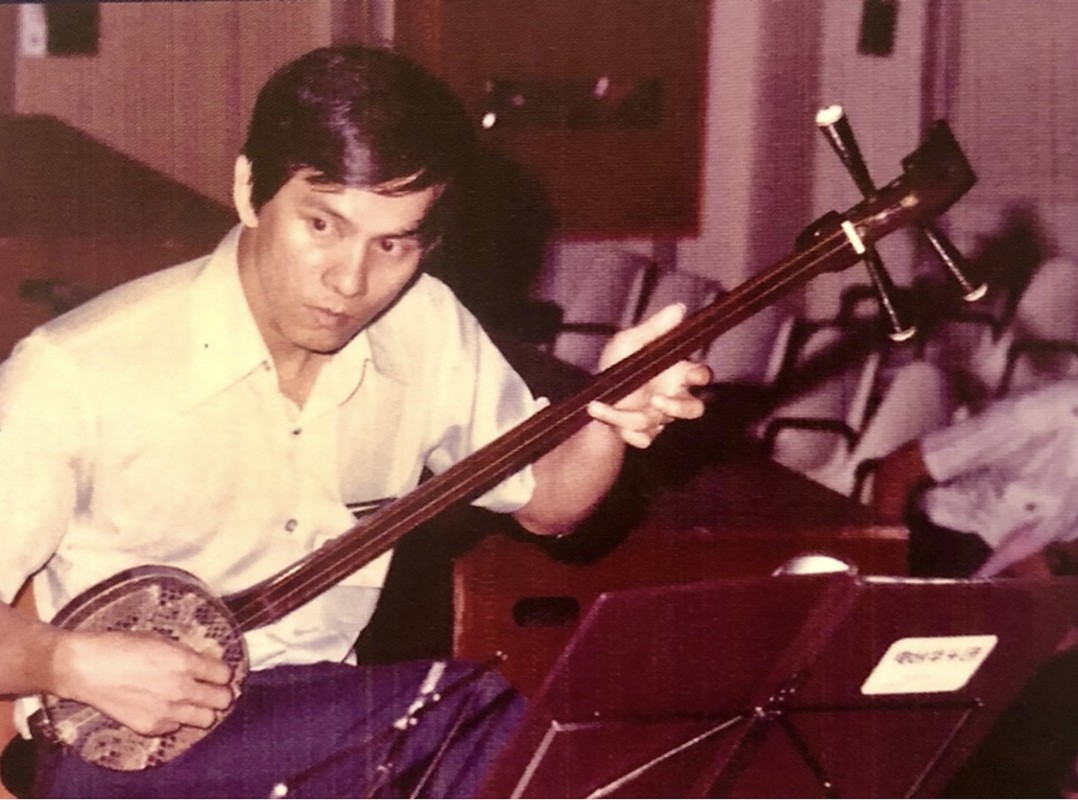
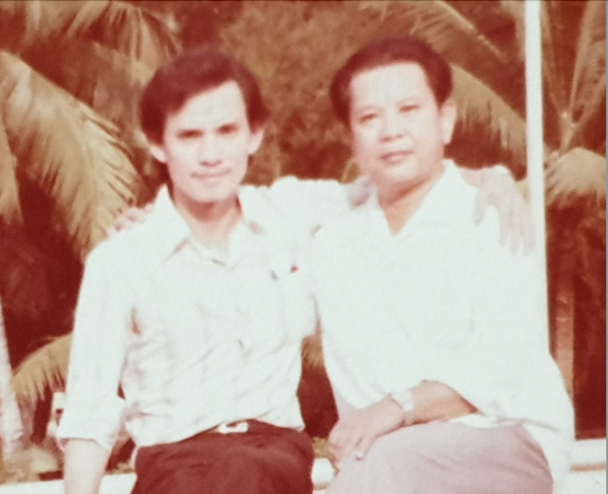
Pioneer musician: Goh Swee Meng


Goh Swee Meng,1the eldest son in a family of 12, was born in Singapore in 1946 to migrant Teochew parents. He grew up in a village in Punggol, where he often went on fishing trips with his father who would sell the day’s catch at a nearby market.
Besides fishing, Goh accompanied his father to make music in the community during festivals,2and soon developed an interest in music himself.3He learnt the basics of Teochew music in this environment, starting with the drums when he was around 12 years old. He went on to play various instruments in Teochew music, including the erxian, a Chinese bowed string instrument; and the suona, a double-reed Chinese woodwind instrument.
Early music career
At the age of 17, Goh began music lessons with Lim Bock Jiao, a musician at Lao Sai Toh Guan, a prominent Teochew opera troupe in Singapore at that time. He recalled performing many times with his teacher, including in towns in peninsular Malaysia, Indonesia, and Sabah. As his musical skills improved, his reputation as a performer also spread within the Teochew music circles in the region. At the age of 24, he was formally accepted as Lim Bock Jiao’s disciple. Goh shared that the traditional Teochew teacher-disciple relationship went beyond just music lessons and was a public declaration of the pupil as the master’s protégé, marked by a formal ceremony and not something easily attained.
From then on, Goh performed frequently at various venues, and his reputation as a performer soon caught the attention of talent scouts. In 1970, at the age of 25, he was offered a job in Hong Kong as the lead musician (tao chiew in Teochew) for Tian Yi Ji Tuan. This was a significant opportunity for Teochew musicians in the region as there was a large audience for Teochew music in places like Thailand, Malaysia, Indonesia, Singapore, and Hong Kong. He readily accepted the offer and moved to Hong Kong, where he kept up a busy schedule and played in many concerts, building a reputation over the years as a masterful musician across Asia. However, the tug of home eventually brought him back to Singapore in 1986.
Continued legacy
Since his return to Singapore, Goh has performed with various musical groups at Teochew clan associations, including the Teochew Poit Ip Huay Kuan. He has also taught at various organisations, most notably through the Thong Kheng Charitable Institution. In 1991, he took 17-year-old Goh Lih Shan from Penang as his disciple. Goh Lih Shan later founded Gaik Lai Teochew Puppet Troupe and served as the music director of Teochew Puppet and Opera House in Penang.
Goh Swee Meng has often been invited to perform in places such as Penang and Johor in Malaysia, as well Swatow in Guangdong, China, where he shares his knowledge with local musicians. While in China, he has performed live, appeared on local television, and even adjudicated at Teochew music competitions.
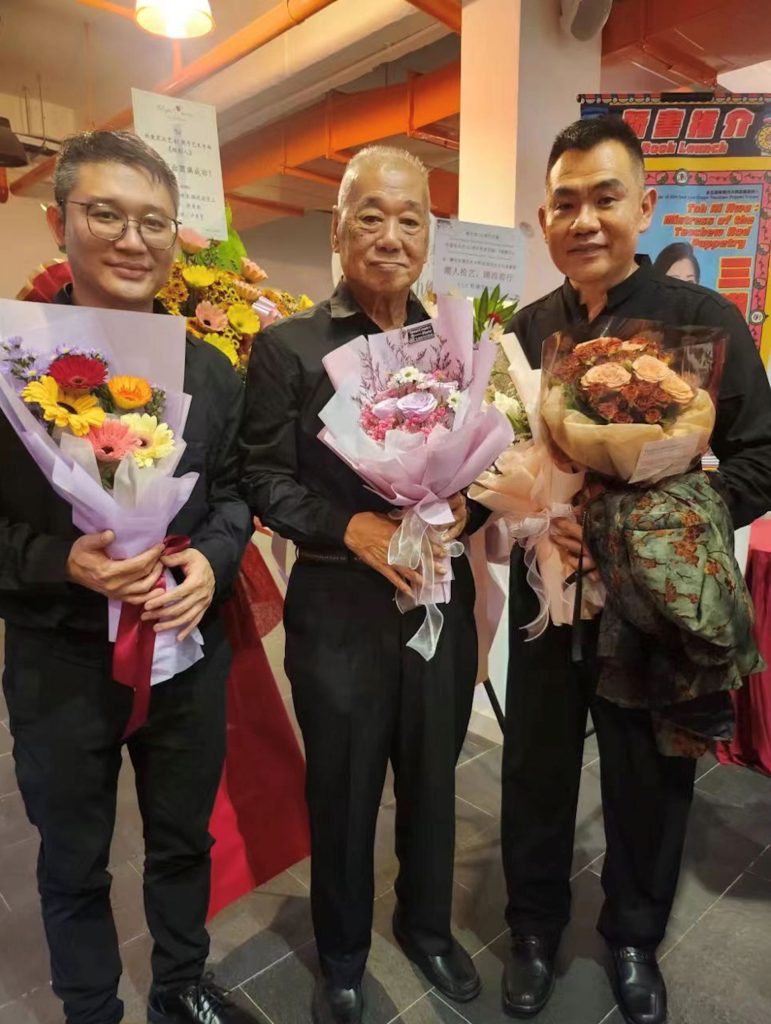
Goh’s recent performances include a concert in June 2024 at the Permaisuri Zarith Sofiah Opera House in Johor Bahru, Malaysia, organised by the Yong Wah Heng Music and Drama Club. As the music advisor for the production, he led and played with the ensemble, accompanying various singers and a combined chorus and singing a variety of Teochew classics over two nights. The performers, ranging in age, included young musicians Goh had personally trained. Shortly after, he travelled to Penang in July 2024 to perform with a musical group organised by his disciple Goh Lih Shan.
Goh has also embraced modern technology, recording his recent performances with students and friends from various countries and posting them on his YouTube channel. His aim is to archive and share Teochew music with a wider and younger audience, ensuring it continues to be performed and listened to.
Since the 1980s, with the decline of live Teochew opera performances in Singapore, Goh has gravitated towards live music performances (cho chionh in Teochew) rather than staged operas. He remains active in the scene, and his dedication to his craft has inspired many members of the Teochew music community in Singapore, Malaysia and China to keep their traditional music alive.
| 1 | As is common with many Singaporean Chinese, he was registered as Goh Siwe Heng, but is commonly known as Goh Swee Meng by Teochew speakers, and as Wu Ruiming by Mandarin speakers. This essay is based on the author’s interview with Goh Swee Meng on 4 July 2024. |
| 2 | Goh makes a distinction between Cho Chionh 做唱 (making music with singing) vs Cho Hee 做戏 (making music for stage performance). He did recall then that both types of music making experiences happened with equal frequency. |
| 3 | Beiyu Zhang, “Chinese Street Opera in Singapore: Heritage or a Vanishing Trade,” in Citizens, Civil Society and Heritage-Making in Asia, edited by Hsin-Huang Michael Hsiao, Yew-Foong Hui, and Philippe Peycam (Singapore: ISEAS–Yusof Ishak Institute, 2017), 208–231. |
Zhang, Beiyu. “Chinese Dialect Opera Among the Twentieth Century Southeast Asian Diaspora.” IIAS The Newsletter 84 (Autumn 2019), 35. | |
Zhang, Beiyu. “Chinese Street Opera in Singapore: Heritage or a Vanishing Trade.” In Citizens, Civil Society and Heritage-Making in Asia, edited by Hsin-Huang Michael Hsiao, Yew-Foong Hui, and Philippe Peycam, 208–231. Singapore: ISEAS–Yusof Ishak Institute, 2017. |