Pioneer musician: Han Yin Juan


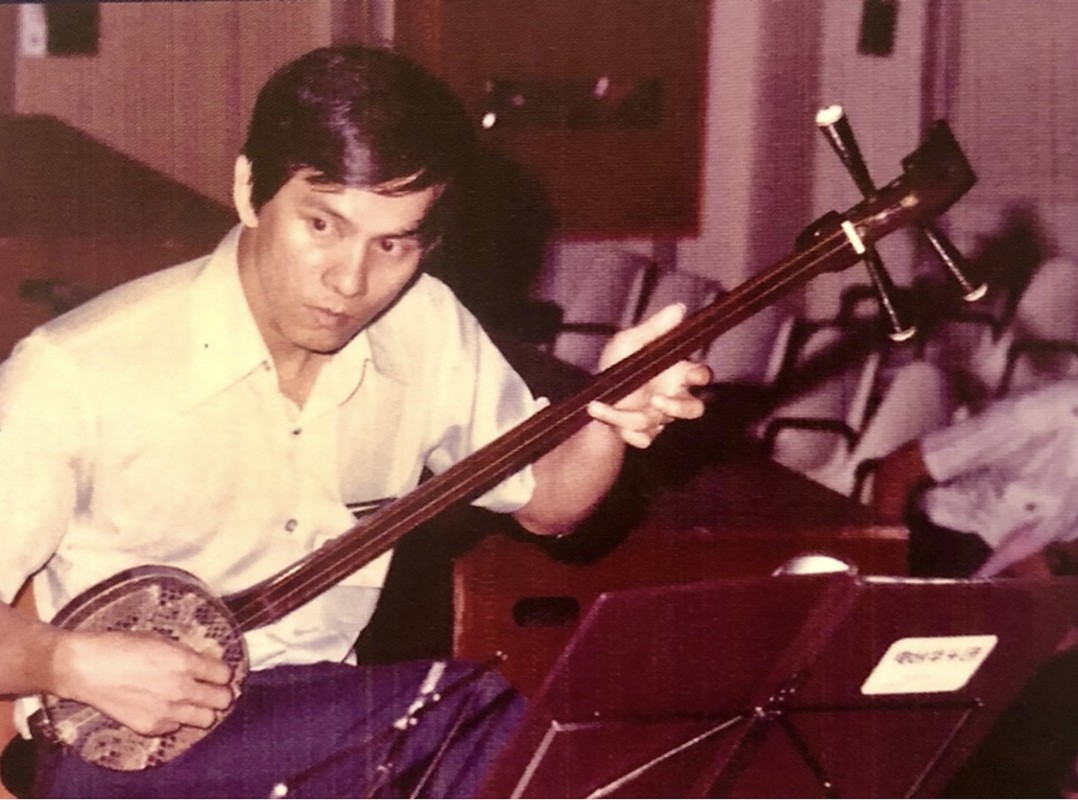
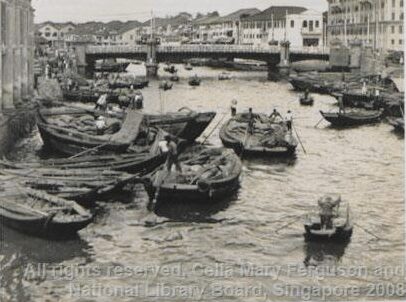
Han Yin Juan is a renowned Hainanese opera lead instrumentalist and percussionist. A first-generation Singaporean born and bred here, his parents migrated to Singapore from Hainan’s Wenchang county in 1939, together with relatives. Han was the eldest in the family and had two younger sisters. His father co-owned a bakery with friends and relatives in the North Bridge Road area, and the family of five lived above the bakery. This place where Han spent his childhood was next to a dormitory for the bakery’s single workers. The workers were from Hainan, and after a hard day’s work, they often spent their leisure hours on the third floor’s rooftop terrace, playing music and singing Hainanese opera songs. Over time, it became a gathering spot for many other Hainanese who worked in other parts of Singapore.
Televisions were not common in Singapore in the 1950s, and entertainment largely came from street operas performed as part of religious celebrations. In 1957, this third-floor rooftop gathering was formalised as the Heng Nam Drama Association (now Tien Heng Kang Heng Nam Drama Association), with the aim of providing entertainment and religious performances for the Hainanese community. The association gradually became well-known and was often invited to local Hainanese villages to perform at festivals celebrating the various birthdays and sacred days of the deities. Such performances took place in the Hainanese villages in Changi, Hougang, Sembawang, and Middle Road (known then as Hainan First Street)’s People’s Park (Zhongqiu yuan).1
During his first year in secondary school, the 13-year-old Han spent his days immersed in the atmosphere of Hainanese opera. He tried repeatedly to join the troupe, but was rejected multiple times for being too young. However, the troupe members soon noticed that Han was able to follow along during their rehearsals, despite being self-taught. He then gained the recognition of the members and was allowed to join them every Friday for rehearsals.
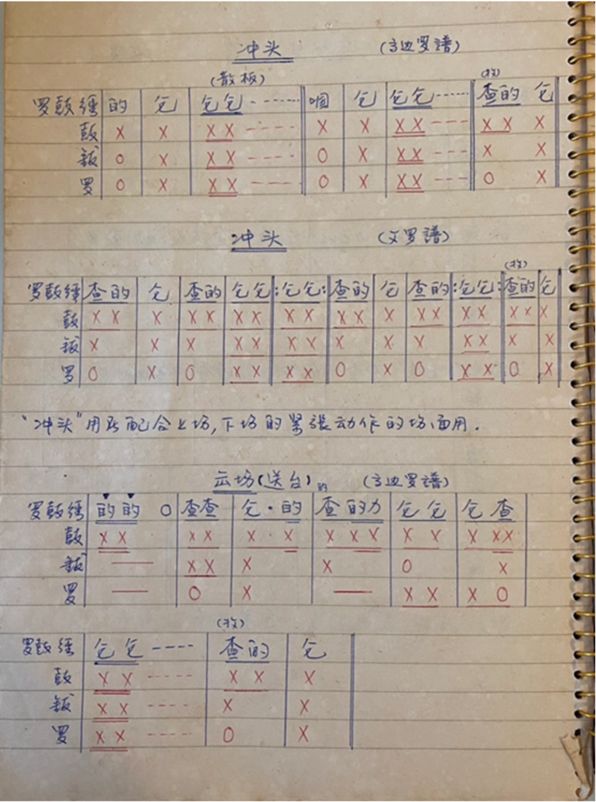
When Han turned 17, the troupe sought to nurture his talent further. Coincidentally, the master suona (Chinese double-reeded horn) player Foo Tiang Soon (1904–1989) was living in Singapore at the time, and arrangements were made for Han to take lessons with Fu. Under Fu’s tutelage, Han made striking progress in learning the wuchang accompaniment2 , and also learned how to use the suona in Hainanese opera accompaniment. This professional training from a master musician developed Han into an all-rounded lead instrumentalist, capable of handling both the melodic wenchang and percussive wuchang. He eventually became a lead percussionist in his own right.3
Mastering Hainanese opera accompaniment
In 1974, Han enrolled in the Faculty of Business Administration at Nanyang University. He paid his school fees and living expenses by serving as the lead instrumentalist of various opera troupes, for which he was paid performance fees. From the 1950s to 1980s, Hainanese opera flourished in Singapore, and there were a number of troupes, including the Ming Tian Hainanese Opera Troupe in Changi Hainan Village, Yi Guang Opera Troupe in Hougang, Lu Nam Ke Huan on Hainan Street, Qiong Lian You Opera Troupe in Sembawang, and Hymn Rhyme Seng Opera Club. To meet the demands of various religious celebrations, these troupes all needed professional musicians for their performances.
Han’s ability to play both wenchang and wuchang instruments meant that he was in high demand. His performance fees went from three dollars per performance in his teenage years to eighty dollars during his university days, when he often led the orchestra as lead instrumentalist or percussionist. During this period, he played in more than 50 performances a year. These live performances further honed his abilities as an accompanist and musician.
Han also began a systematic study of Hainanese opera while in university. Besides attending classes, he spent vast amounts of time in the library, researching opera-related materials and combining them with his experience of live performances. If there were elements he did not understand, he would consult senior practitioners. The knowledge and insights he picked up made him a talented practitioner equipped with a theoretical understanding of the art form, and he was able to provide more structured guidance to opera enthusiasts, allowing them to master the art more quickly.
Connecting with Cantonese opera
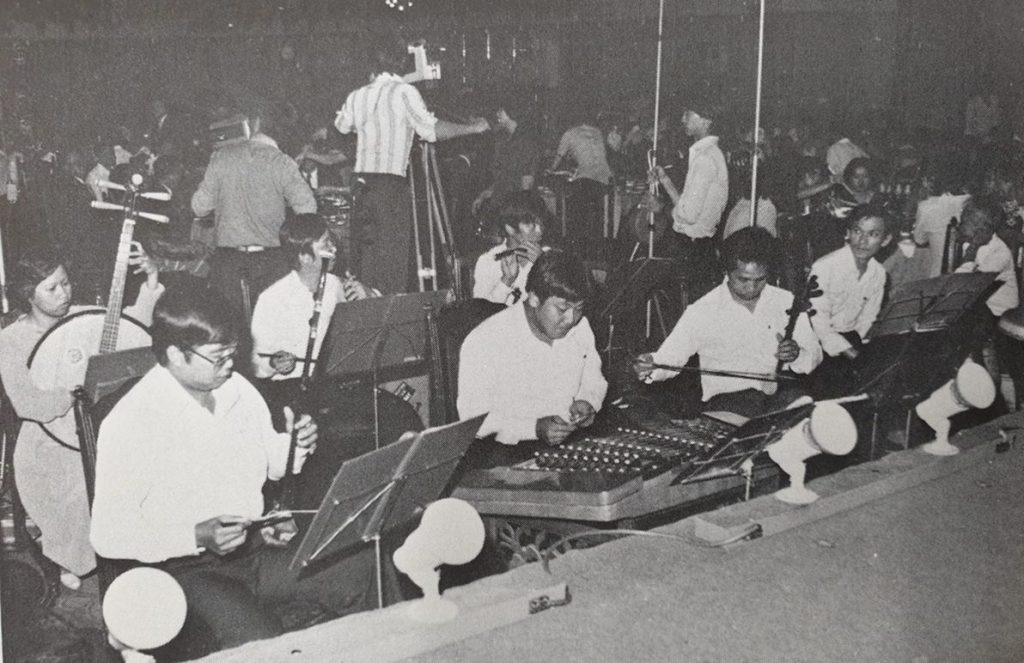
When Han was in his second year of university, he was invited to join the Kheng Chew Junior Association (now Singapore Hainan Society). He founded a Hainanese opera club under its auspices and led a group of amateurs who were new to Hainanese opera in a performance of the classic opera, Poem on a Red Maple Leaf. It was staged at Victoria Theatre in 1979 and was the first large-scale performance of a Hainanese opera with a fixed melody and score (as opposed to more improvisational performances). Also worth mentioning is the fact that Han invited his 16-year-old junior apprentice Yan Yueying (also known as Mai Eng) to serve as the lead percussionist. Today, Yan is a sought-after performing artist in Singapore, Malaysia, and Hainan, and a renowned percussionist for both Hainanese and Cantonese operas.
At the time, well-known Cantonese opera actresses Wong Quee Heng and Lou Mee Wah were invited to guide the actors and actresses of the show. Seeing Han’s talent, Wong invited him to play the accompaniment for Cantonese operas, opening up a new field for Han. 4 Through the exposure, Han began to realise that Cantonese opera had what Hainanese opera lacked: a more formalised system of music, and a more systematic approach to learning and training. This spurred him on to learn more about the foundational musical theory of Hainanese opera.
Field studies in Hainan
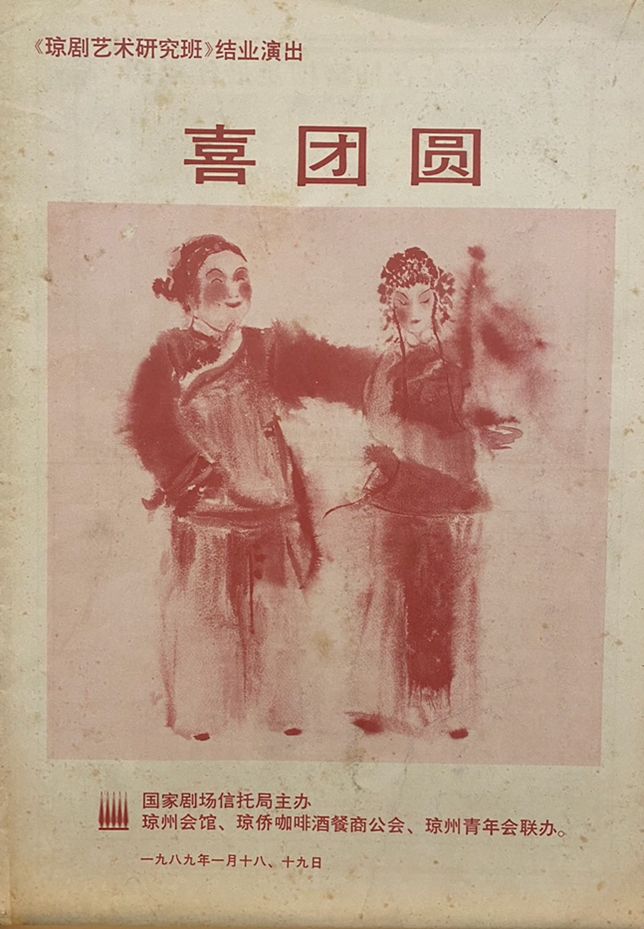
In the 1980s, China began to open up. During this period of reform, many people returned to their home villages to visit family. But for the average Singaporean youth of the time, visiting China was politically fraught. Despite the challenges, Han was eager to seek the birthplace of Hainanese opera. His thirst for knowledge impressed the president of the Kheng Chew Junior Association, who eventually helped Han secure an invitation from China’s Hainan Cultural Bureau to conduct field studies in Hainan. During the trip, Han met with famous opera artists such as the dan (female lead role) performer Wang Yingrong (1939–2011), Lin Daoxiu (1924–2000), who was known as the “Mei Lanfang of Hainan”, and the composer Zhang Bashan (1940–2021). 5 Han also seized the opportunity to watch Hainanese opera in its native environment and visit drama schools to learn more about their teaching methodology. After his time in Hainan, Han became convinced that Hainanese opera required a fixed melody and score in order to be more easily transmissible. This also catalysed the 1989 performance of Happy Reunion in Singapore, where Chinese directors Huang Liangdong and Mo Aihua were invited to collaborate with Han, who directed the music and served as lead percussionist.
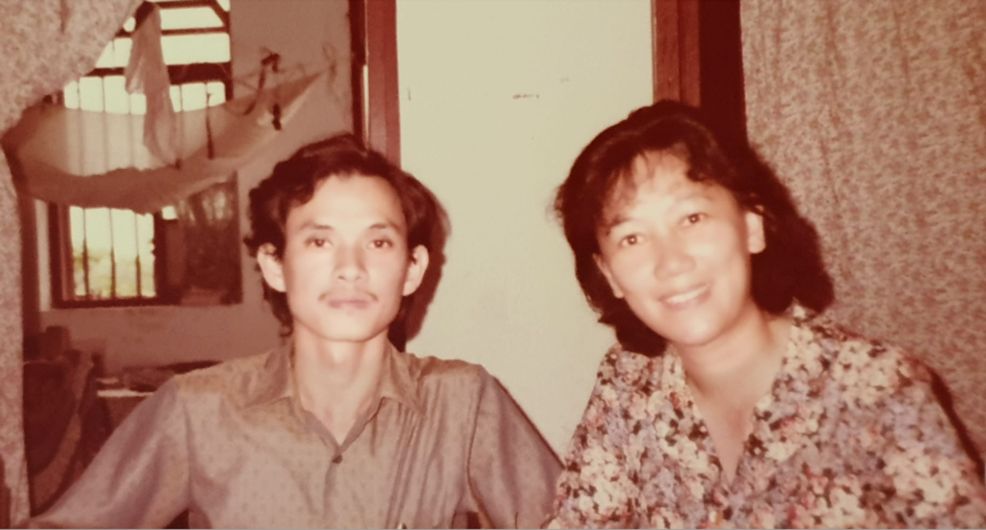
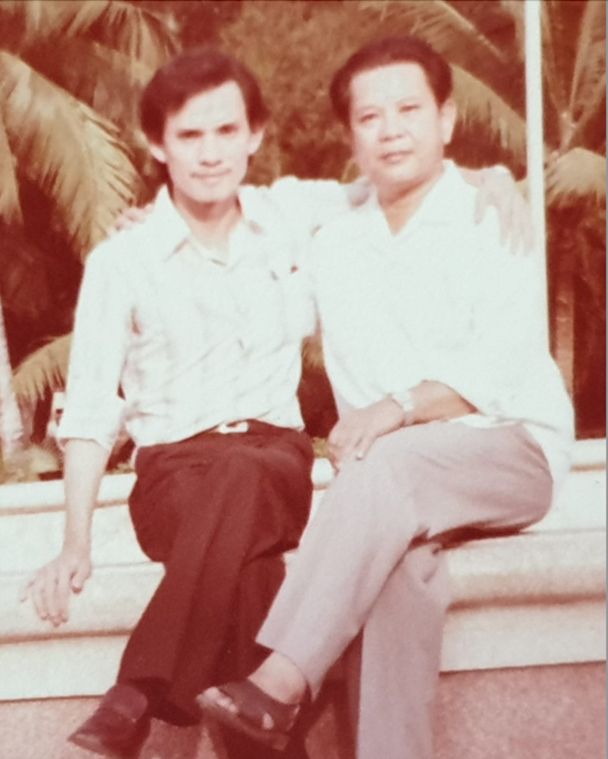
After graduating from university in 1977, Han accepted renowned dan performer Loi Lee Eng’s invitation to join her on tour with the Thai Southern Performing Arts Troupe. Later, after the death of his mother, Han returned to Singapore to pursue a career in business management, working at Hitachi Shipyard and Keppel Offshore and Marine. Outside of work, Han continued to pursue opera. Due to the demands of work and family, Han’s performances gradually decreased after 1989, though his passion for music remained as strong as ever.
Apart from Hainanese opera, Han also participates in amateur productions of Peking opera and established the Tian Yun Beijing Opera Society with some friends. His musical journey started with Hainanese opera, and the richness of music — along with the support of friends and mentors he met along the way — continues to be an integral part of his life.
This is an edited and translated version of 先驱音乐家:韩萱元. Click here to read original piece.
| 1 | The “Zhongqiu yuan”, or the People’s Park was a park in the Middle Road Community Centre in the early days, and was frequented by the Hainanese community. The park had several swings, and in Hainanese, swings are known as “zhongqiu” (中秋). Hence, the park was also known as “Zhongqiu yuan” (中秋园). See Wong Chin Soon, “Laojie tongnian” [Memories of the streets of my youth], Lianhe Zaobao, 11 April 2016. |
| 2 | Chinese opera instrumentalists are generally divided into two groups: the wenchang (文场) or civil section, which includes the more melodic strings and wind instruments, and the wuchang (武场) or martial section, which involves the gongs and drums. |
| 3 | Han Yin Juan, “Yi Fu Xiangchun laoshi” [In memory of Mr Foo Tiang Soon], Xinxinggang qiongnan jushe chengli sanshiwu zhounian ji leling zhongxin shi zhounian jinian tekan [Commemorative publication for the 35th anniversary of the Tien Heng Kang Heng Nam Drama Association and the 10th anniversary of the Senior Citizens’ Centre], 17. |
| 4 | Wong Chin Soon, “Xishuo qiongju liushi nian, Xiangchun tixie, Xuanyuan jueqi” [60 years of Qiong opera: Foo Tiang Soon nurtures, Han Yin Juan ascends], Shin Min Daily News, 12 August 1982. |
| 5 | Ibid. |
Han, Yin Juan. “Yi Fu Xiangchun laoshi” [In memory of Mr Foo Tiang Soon]. In Xinxinggang qiongnan jushe chengli sanshiwu zhounian ji leling zhongxin shi zhounian jinian tekan [Commemorative publication for the 35th anniversary of the Tien Heng Kang Heng Nam Drama Association and the 10th anniversary of the Senior Citizens’ Centre], 17. Singapore: Tien Heng Kang Heng Nam Drama Association, 1991. | |
Koh, Eng Soon. Xinjiapo qiongju, 1965–2007 [Hainanese opera in Singapore, 1965–2007]. Singapore: Xu yongshun gongzuo ting, 2008. | |
Wong, Chin Soon. “Xishuo qiongju liushi nian, Xiangchun tixie, Xuanyuan jueqi” [60 years of Qiong opera: Foo Tiang Soon nurtures, Han Yin Juan ascends]. Shin Min Daily News, 12 August 1982. | |
Xiao Ren. “Fang mingjia, tan qiongju — ji qiongqinghui wenyu yanchu” [Renowned experts talk about Qiong opera — A record of Kheng Chew Junior Association’s cultural performance]. Sin Chew Jit Poh, 11 November 1977. |