History of soy sauce brewing in Singapore


Soy sauce, known for its salty, umami-rich flavour, is an essential condiment in many Singapore Chinese foods — from char kway teow (a stir-fried noodle dish) to kong bak (braised pork belly). Widely used in Singapore due to its large number of immigrants from southern China, it is thought to have originated over 2,000 years ago in China, where it has traditionally been used in a wide range of vegetable, meat and seafood dishes.
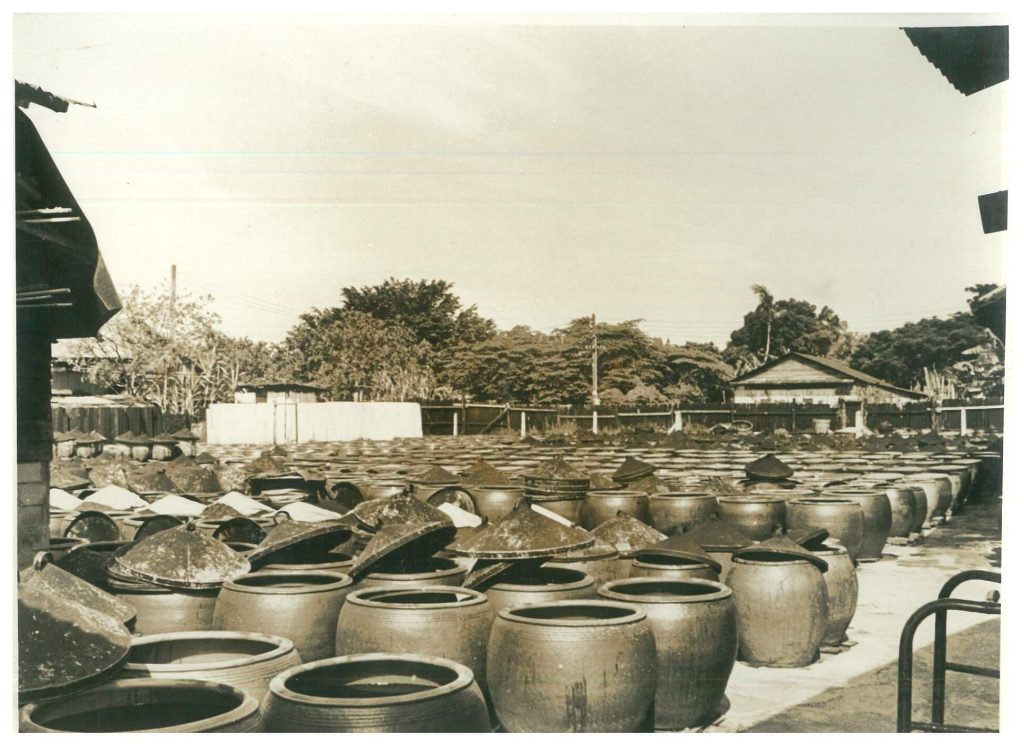
To make soy sauce, Chinese people fermented soybeans, adding water and salt and leaving the mixture to ferment outdoors in the sun in earthenware vats for months, even years.
It is unclear when soy sauce first appeared in Southeast Asia, although records indicate that European traders and colonialists in the region were already ordering it for use in the 17th century.1 The earliest known English record of soy sauce in Singapore dates back to the 1820s, although it had likely existed on the island long before that.2
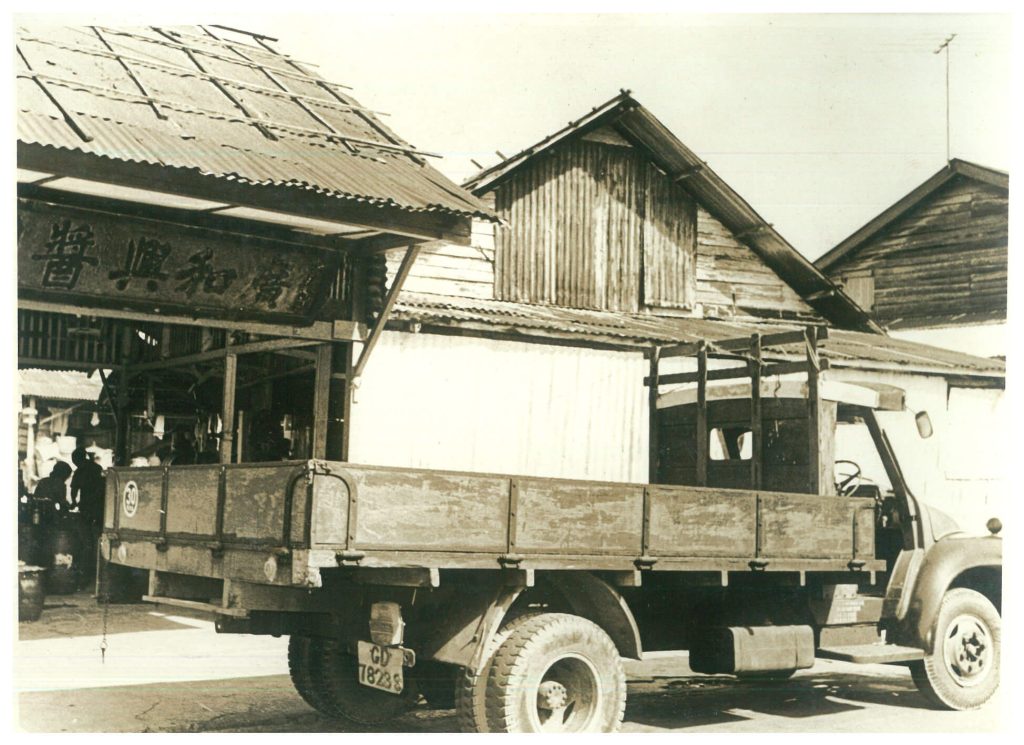
During the massive waves of Chinese emigration in the 19th and 20th centuries, many people from Fujian and Guangdong made their way to Singapore, bringing with them their soy sauce-making expertise. Brewing soy sauce began as a cottage industry but at the turn of the 19th century, the island was already home to several soy sauce factories: Kwong Cheong Thye’s factory opened in Jalan Sultan in 1892; in 1904, the Agricultural Bulletin of the Straits and Federated Malay States reported on a visit to three local factories whose beans came from China.3
From China to Singapore
For soy sauce manufacturers, Singapore had one key advantage over China: hot and sunny weather all year round, which was ideal for fermentation. By the 1930s, more than 30 soy sauce factories were operating in areas such as Kallang, Lavender and Outram. Competition was stiff, and sellers cycled from door to door on tricycles to hawk their wares.
The market was dominated by the Cantonese in the early days. Many hailed from Xinhui and Heshan in Guangdong province, which was famous for soy sauce production.4 The Hokkiens eventually also gained a strong foothold in the industry, with heavyweights such as Yeo Hiap Seng (1938), Tai Hua Food Industries (1947), and Amoy Canning Corporation (1951) emerging on the scene.5 Besides the Cantonese and Hokkiens, other dialect groups such as the Teochews, Hainanese, Henghua, and Hakkas were also making soy sauce.6
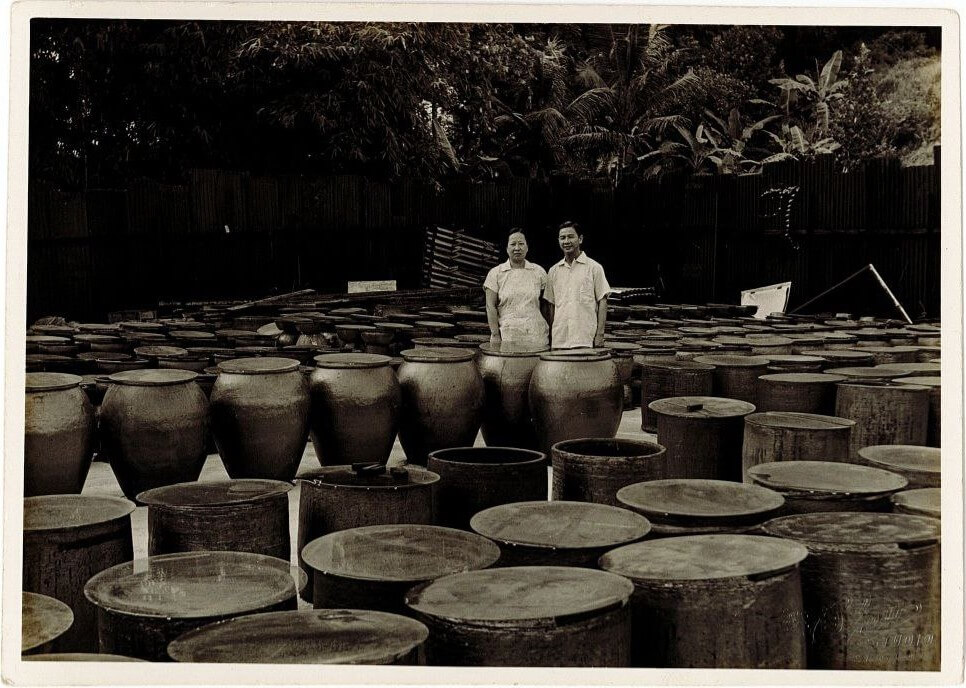
Step into a soy sauce factory and you would be greeted by a distinctive sight: row upon row of earthenware vats of sauce left out in the sun to ferment. Brewing soy sauce was a labour-intensive and time-consuming process.
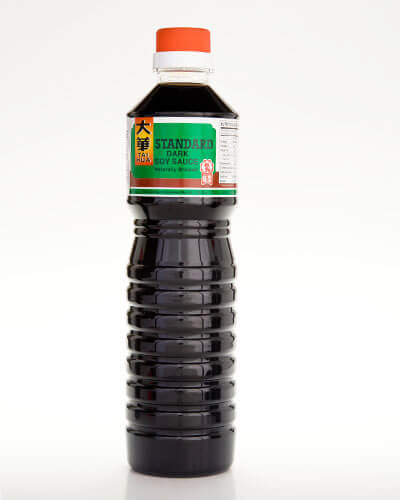
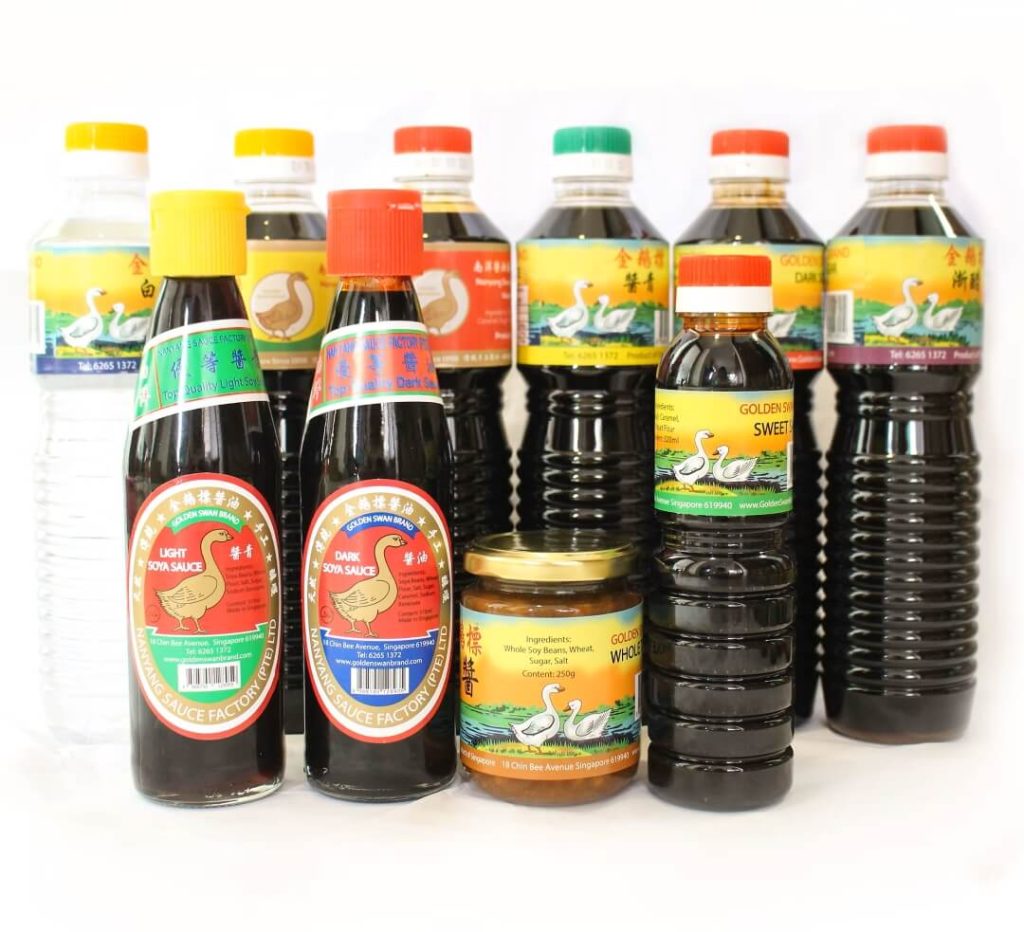
First, soybeans would have to be soaked and steamed. They were then mixed with wheat flour and a starter such as Aspergillus oryzae, also known as koji mould, and spread over trays for several days. The beans would later be transferred to large earthenware jars, where they were soaked in brine and left to ferment under the sun for months (with occasional stirring) before light soy sauce (jiangqing or shengchou) could be extracted from the mash. The remaining sauce was then left to age further before caramel or molasses were added to the mixture.7 This liquid is known as dark soy sauce (laochou) — thicker, darker, and sweeter than its lighter cousin.
Turbulence and transformation
During World War II, soy sauce factories in Singapore were seized by the Japanese for military use. Factories were also bombed, sometimes because they were mistaken for armaments factories.8 Yeo Hiap Seng Sauce Factory, which had been partially destroyed by bombing, was left alone by the Japanese. This enabled them to continue their operations during this period.
Yeo Hiap Seng, one of Singapore’s major soy sauce factories, had opened in 1938 at the junction of Outram Road and Havelock Road. Its founders were members of the Yeo family who also owned a soy sauce factory in Fujian, China. Fleeing to Singapore during the Sino-Japanese war, they found the island a suitable place for a soy sauce factory: they could communicate with many people in Hokkien, the climate was good for fermentation, salt was cheap, and the transport system and supply of electricity and water were good enough to support the running of a factory.9
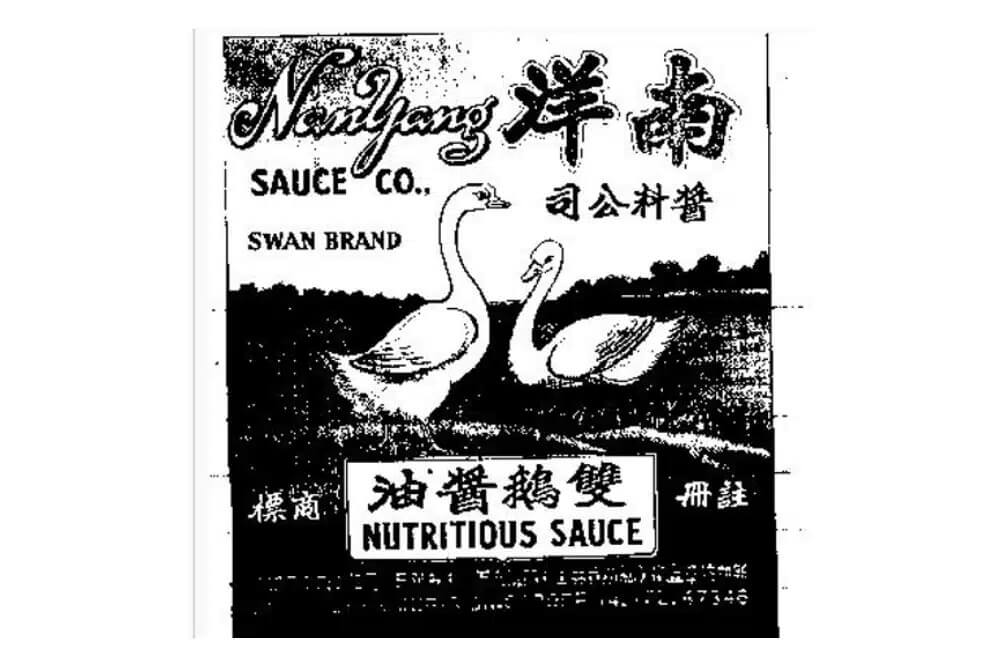
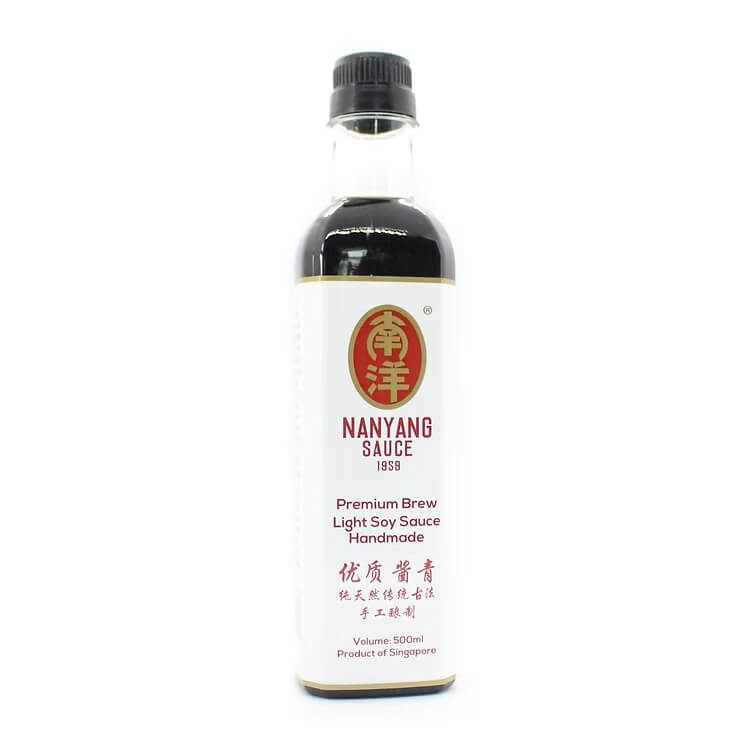
A decade after World War II, Yeo Hiap Seng diversified its business into canned food, soymilk and other products. New players had also entered the industry by then. Among them were Kwong Woh Hing, founded in 1943 in Kallang by an immigrant from Guangzhou; Tai Hua Food Industries, founded by Fujian native Pek Cheng Chuan (1910–2005) in 1947, who picked up the craft after acquiring a sauce factory at Pearl’s Hill in Chinatown; and Nanyang Sauce, which was opened by Fujian immigrant Tan Tiong How (1926–1996) in 1959. Kwong Cheong Thye, which had shuttered in 1921,10 re-opened in Jalan Besar in 1953. By the 1950s and 1960s, the soy sauce industry in Singapore was bustling, with more than 70 to 80 soy sauce businesses of varying sizes.11
In the ensuing decades, however, factories had to relocate as the parcels of land they were on were repurposed by the state. The number of factories declined, and it was common for those that remained to also produce other products, such as oyster sauce, chilli sauce, and bean paste. “We cannot survive if we only make soya sauce, as it is time and space consuming and profits are marginal”, said a third-generation leader of Yuen On Tai Food Industries in 1983. “In recent years, there is a drop in the number of producers. This may be because most of them have had to resettle in industrial estates which meant higher operating costs. In addition to the initial capital outlay being high, you have to wait at least three months before you make any profit. Thus, the older people in this trade may just decide to drop it altogether, rather than to start it all over again.”12
The 1980s were a time of transformation for the soy sauce industry in Singapore. Factories introduced greater automation, as well as newer processes such as the chemical hydrolysis of soybeans using food-grade hydrochloric acid. Chemical hydrolysis was a much quicker way of making soy sauce, taking just a few days compared to the months-long process required for the traditional fermentation method involving mould spores. The flavour it produced, however, was thought to be inferior to that of fermented soy sauces.13
Tai Hua Food Industries avoids chemical hydrolysis but managed to successfully scale up its operations by automating some steps in the traditional brewing process, such as soybean-steaming, part of the fermentation process, and packaging. Large fibreglass sauce vats, climate-controlled rooms, and machinery have also enabled the company to step up production from a few hundred tonnes a year to 5,000 tonnes.14
In the mid-1980s, there were about 20 local soy sauce manufacturers in Singapore.15 They faced fresh competition in the form of Japan’s Kikkoman Corporation — one of the world’s largest soy sauce manufacturers — which had set up a soy sauce plant here. Japanese soy sauce typically had a more alcoholic flavour profile, due to differences such as temperature, the state of the soybean, and ingredient ratios.16
By the end of the 20th century, many soy sauce merchants had either closed their businesses or pivoted to other sectors. Real estate tycoon Ng Teng Fong’s family, which had run the Kian Heng Sauce Factory, had by then shifted its focus to more profitable ventures such as property; others expanded into a larger variety of sauces, spices, or canned goods.
The future of the soy sauce industry
Despite longstanding competition from overseas brands from Japan, Hong Kong, and China, Singaporeans’ appetite for local soy sauce remains strong.
However, the rising costs of raw materials and rent have prompted many of these manufacturers to shift at least part of their operations out of land-scarce Singapore to neighbouring countries such as Malaysia.17 There are now fewer than 10 local soy sauce companies today, most of which are family-owned.18
Some continue to embrace slower traditional methods, while others automate more processes and export their goods around the globe due to the small domestic market.19 Many local players use non-genetically modified organism (non-GMO) beans from Canada,20 although in the past it was common to use soybeans from China.
Companies are also finding new ways to stay competitive and cater to consumers’ needs. These range from offering less salty or gluten-free soy sauce options, to marketing soy sauce as a premium gift, or even selling newfangled goods such as crystalline soy salt and fermented skincare products and health goods. As times change and tastes evolve, much will hinge on the willingness of younger generations to innovate and keep old flavours alive.
| 1 | William Shurtleff and Akiko Aoyagi, History of Soy Sauce (160CE to 2012) (Lafayette: Soyinfo Center, 2012), 7. |
| 2 | John Crawfurd, Journal of an Embassy from the Governor-General of India to the Courts of Siam and Cochin China: Exhibiting a View of the Actual State of those Kingdoms (London: Henry Colburn, 1828), 358–359. |
| 3 | Henry Nicholas Ridley, “Soy and bean cheese,” Agricultural Bulletin of the Straits and Federated Malay States, vol. III, no. 1 (Singapore: Kelly & Walsh, 1904), 494–495. |
| 4 | Elizabeth H. Groff, “Soy-sauce manufacturing in Kwangtung, China,” East Collection 61 (1919). |
| 5 | Amoy Canning Corporation, founded in Xiamen in 1908, set up its first Southeast Asian factory in Singapore in 1951. |
| 6 | Pin Xiang, a Teochew soy sauce factory, was founded in the Balestier neighbourhood in 1928; Guang Yi, founded near Joo Chiat (year unknown) by a Hainanese man who roped in a brewer from Kuala Lumpur, shuttered in the 1980s; Kian Heng Sauce Factory was run by Henghua people (real estate magnate Ng Teng Fong’s family). See Mo Meiyan, “Zhan shang zuihou de chuantong” [Dipping into the last tradition], Lianhe Zaobao, 4 January 2013. |
| 7 | Author’s interview with Thomas Pek, managing director of Tai Hua Food Industries, 19 November 2025. |
| 8 | A personal account in Khir Johari’s The Food of Singapore Malays details the accidental bombing of a large Chinese soy sauce factory in Jalan Pekan. |
| 9 | Alfred Yeo, The Soy Sauce Towkay, 19–29; “Five brothers run flourishing sauce factory and cannery,” The Singapore Free Press, 7 October 1955. |
| 10 | “Bai nian jiang yuan tui xiang xin gaofeng, fufu qixin zhenxing Guangxiangtai” [Century-old soy sauce factory seeks new heights, husband and wife work together to develop Kwong Cheong Thye], Shin Min Daily News, 29 June 2002. |
| 11 | Koh Hong Kai, “Umami magic: The soya sauce tradition in Singapore,” MUSE SG 13, no. 1 (2020). |
| 12 | “Getting to the sauce of Chinese cooking,” The Straits Times, 22 March 1983. |
| 13 | “Jiangyou” [Soy sauce], Nanyang Siang Pau, 16 December 1980. |
| 14 | Author’s interview with Thomas Pek, managing director of Tai Hua Food Industries, 19 November 2025. |
| 15 | “Getting to the sauce of Chinese cooking,” The Straits Times, 22 March 1983. |
| 16 | Author’s interview with Thomas Pek, managing director of Tai Hua Food Industries, 19 November 2025. |
| 17 | Author’s interview with Thomas Pek, managing director of Tai Hua Food Industries, 19 November 2025; and Darren Woo, third-generation member of Kwong Woh Hing Sauce Factory, 17 December 2025. |
| 18 | Koh Hong Kai, “Umami magic: The soya sauce tradition in Singapore,” MUSE SG 13, no. 1 (2020). |
| 19 | Nanyang Sauce, which describes its soy sauce as “100% handmade”, takes nine months to make light soy sauce. Kwong Woh Hing Sauce Factory takes one-and-a-half years to make its light soy sauce, and two years to make dark soy sauce. Author’s interview with Nanyang Sauce’s second-generation owner Tan Poh Choo, 9 October 2025; and Darren Woo, third-generation member of Kwong Woh Hing Sauce Factory, 17 December 2025. |
| 20 | Author’s interview with Thomas Pek, managing director of Tai Hua Food Industries, 19 November 2025; and Nanyang Sauce’s second-generation owner Tan Poh Choo, 9 October 2025. |
Koh, Hong Kai. “Umami magic: The soya sauce tradition in Singapore.” MUSE SG 13, no. 1 (2020). | |
Koh, Siew Tin. “Getting to the sauce of Chinese cooking.” The Straits Times, 22 March 1983. | |
“Making of soya sauce.” Roots, National Heritage Board. | |
Mok, Mei Ngan. “Zhan shang zuihou de chuantong, zou yi tang bendi xiao jiangyuan” [Dipping into the last tradition, a walk through Singapore’s small soy sauce factories]. Lianhe Zaobao, 4 January 2013. | |
Pek Cheng Chuan, oral history interview by Lim How Seng, 23 July 1980, transcript and audio, National Archives of Singapore (accession no. 000027), Reel/Disc 5 of 8. | |
Shurtleff, William and Akiko Aoyagi. History of Soy Sauce (160CE to 2012). Lafayette: Soyinfo Center, 2012. | |
Song, Naiyi. “Jiangyou” [Soy sauce]. Nanyang Siang Pau, 16 December 1980. | |
Yeo, Alfred. The Soy Sauce Towkay: The Story of Yeo Thian In, Founder of Yeo Hiap Seng Sauce Factory in Singapore. Singapore: Campus Crusade Asia Limited, 2010. | |
Yeo Thian Seng, oral history interview by Tan Beng Luan, 20 September 1983, transcript and audio, National Archives of Singapore (accession no. 000298), Reel/Disc 4 of 19. | |
“Wo guo de jiangyou ye” [Singapore’s soy sauce businesses]. Sin Chew Jit Poh, 15 August 1980. |