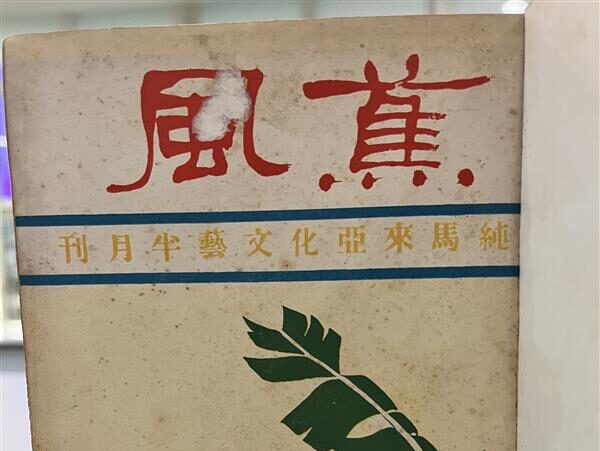
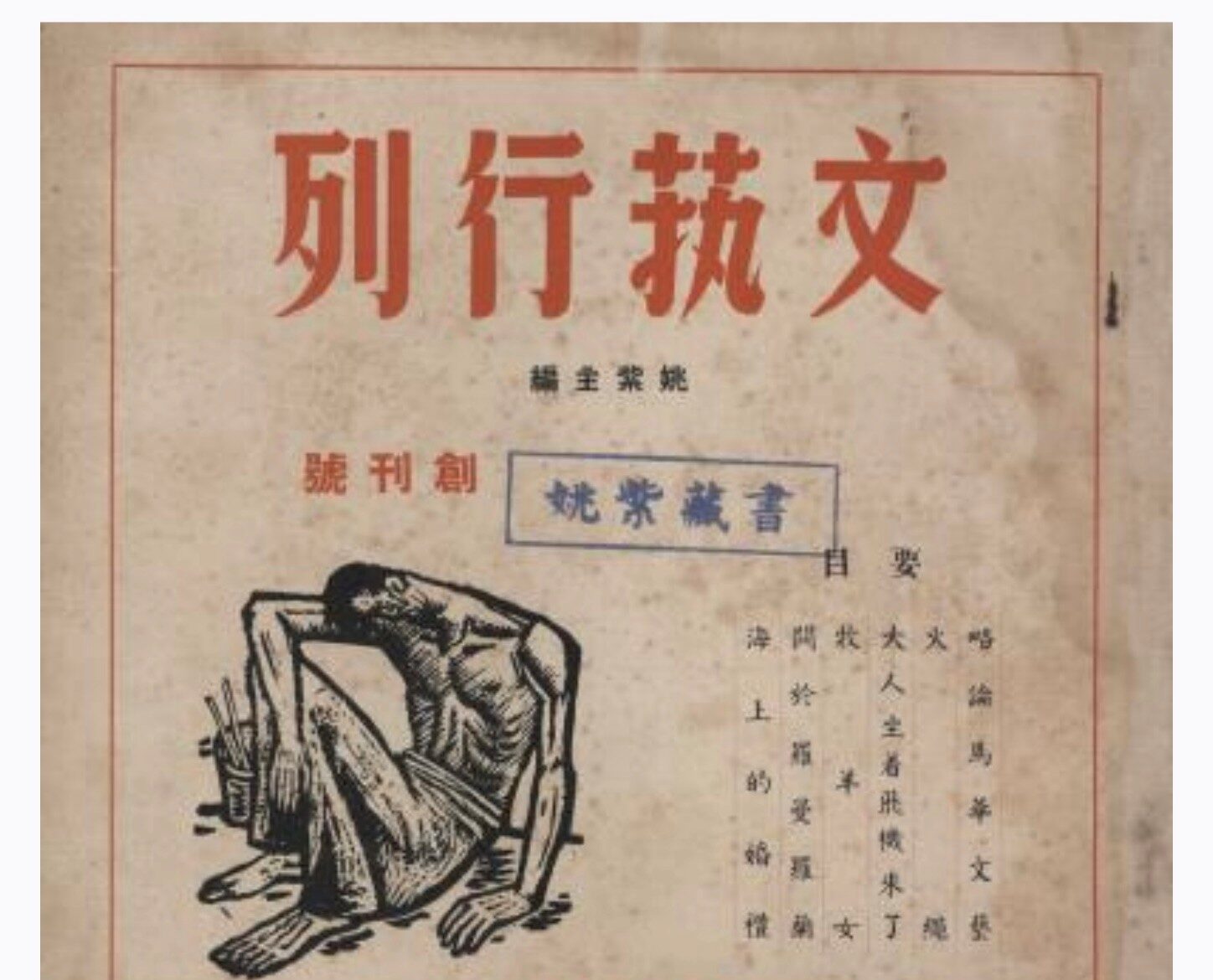
Overview of Singapore Chinese prose


Singapore Chinese literature can be traced back to the poetry and prose written by Qing government diplomats and cultural figures such as Zuo Binglong (1850–1924), Huang Tsun-hsien (1848–1905), and Khoo Seok Wan (1874–1941) while they were residing in Singapore during the late 19th century. China’s New Literature Movement in 1917 further spurred the growth of vernacular (baihua) literature in Singapore.
From 1910, more literati from China arrived in Singapore, including Lin Cantian (1901–1972), Pan Shou (1911–1999), Liu Yanling (1894–1988), Yu Dafu (1896–1945), and Hu Yuzhi (1896–1986). These Chinese writers either edited literary publications or published their works, sowing the seeds for the growth of the literary scene here. Yu Dafu wrote many essays reminiscing about the past, while Hu Yuzhi became known for his influential political prose. Prose — primarily narrative, but also lyrical, descriptive, and argumentative — gradually gained popularity. In 1939, Yu Dafu took over as editor of Sin Chew Jit Poh’s supplement, Chenxing (Morning Star), further driving the development of local literature.
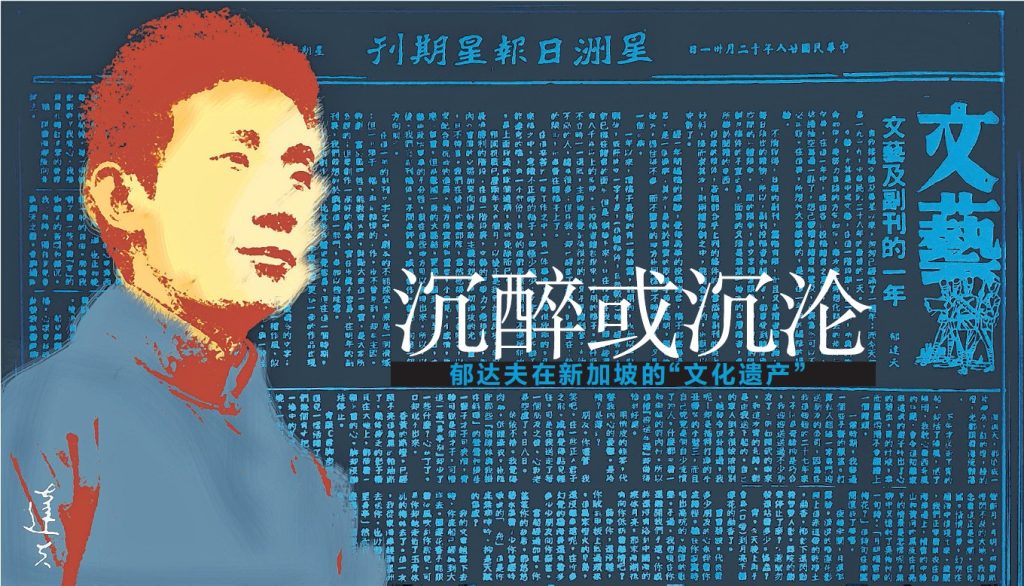
Focusing on Nanyang culture
As these Chinese writers grew attached to their host countries, they began to realise the need to portray local society and landscapes from a local perspective, even though they still wrote in their capacity as sojourners. From 1927, supplements of Singapore newspapers such as Sin Kuo Min Press, Lat Pau, and Nanyang Siang Pau published views by Zhang Jinyan (1901–1981), Chen Lien Tsing (1907–1943), and Zeng Shengti (1901–1982), who advocated that Chinese writers who had travelled south should cultivate a local consciousness and depict Nanyang perspectives.
In 1934, Qiu Shizhen (Fei Ming, 1905–1993) opined in an article in Nanyang Siang Pau that writers in Singapore and Malaya need not conform to the literary trends of Shanghai, but should focus on Nanyang culture. In late 1947, the first forum on the uniqueness of Chinese literary arts in Malaya was convened against such a backdrop. At that time, literary works produced in Singapore and Malaya were collectively known as Malaya Chinese literature. Writers began to agree that indulging in talk of ancient history or distant dynasties was out of touch with present realities. After experiencing World War II, survivors of the catastrophe became more aware that their own fate and the fate of all the peoples of Malaya were inseparably linked.
The rise of Singapore Chinese literature
After Singapore’s independence in 1965, the term “Singapore Chinese literature” was coined by Wong Meng Voon in 1970 to distinguish it from “Malaya Chinese literature”. Prose has been the primary literary genre of Singapore Chinese literature. Prose emphasises practicality and confronts self and reality directly. Whether addressing current affairs, reflecting on life, or recounting travel experiences, prose writers handled these subjects with ease.
Singapore Chinese prose strives to articulate the role that history has bestowed upon it by tackling subject matter from local, modern, and national perspectives. Through small narratives or grand storytelling, writers demonstrate their love and concern for literature, family, nation, and society. For a young country like Singapore, such awareness and practice hold special significance at this stage. Notable local essayists include Lien Shih Sheng (1907–1973), Liu Si (1917–2012), Xing Ying (1912–1967), Lin Zhen (1937–2024), Li Xiang (1935–1998), Zhou Can, Dan Ying, Shi Jun, and Lin Kang.
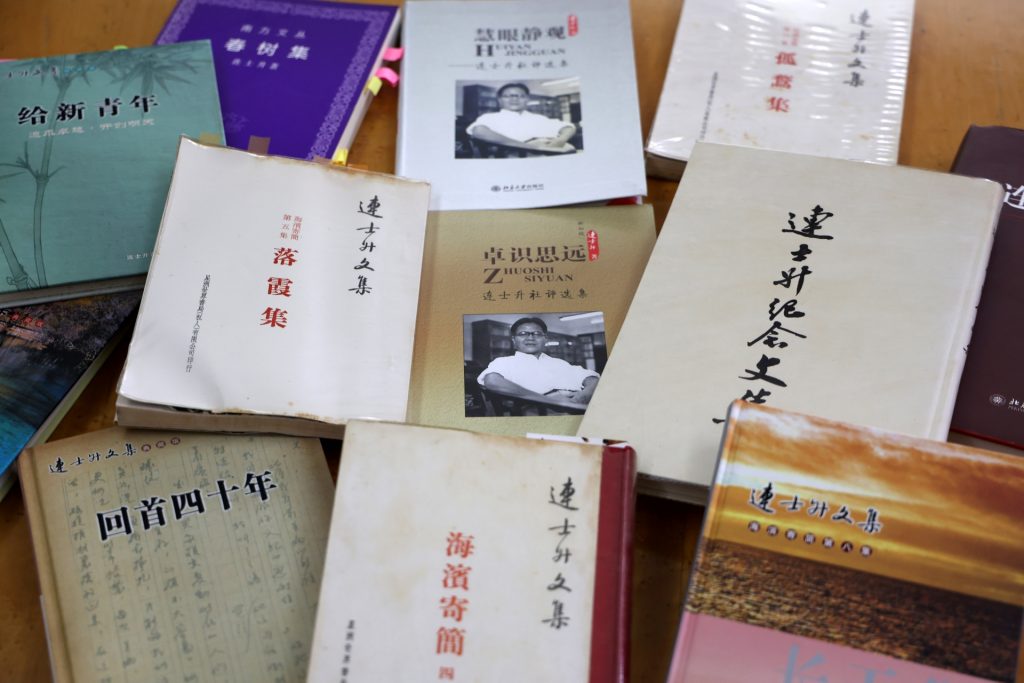
Early prose embraced realism as the mainstream and orthodox approach. As modernism gained momentum in the 1950s, modern poetry became the primary battleground of modernism and realism. While prose writers watched the contest from the sidelines, they quietly expanded their creative horizons. Since the 1980s, Singapore’s Ministry of Education has sponsored fresh graduates and in-service teachers annually for further studies at tertiary institutions in China, Hong Kong, and Taiwan. Many are literature enthusiasts, and some chose to pursue advanced degrees in Europe and the United States. Armed with new knowledge and skills, these graduates fostered an atmosphere of innovation and mutual influence, ushering in a new phase in prose writing. Writers such as Qing Zhe, Lin Gao, Liang Wern Fook, Quah Sy Ren, Chua Chim Kang, Liu Su, Yin Songwei, Wu Yeow Chong, Tan Chee Lay, and Wong Koi Tet are known for their distinctive styles.
Singapore Chinese prose in the new era
After the turn of the millennium, the integration of new immigrants and their children into local society inevitably involved self-reflection on their identity and emotional ties to their ancestral homelands. This has undoubtedly provided Singapore Chinese prose with new perspectives and inclusiveness. The writings of new immigrants added colour to the landscape, reflecting “diversity” as an ongoing process of existence and acceptance. Writers such as Mao Lifei, Sui Ting, Tan Yu Xin, Lin Yijun, Phoon Jing Ying, Wong Ying Tyng, Tan Kai Yik, and Seng Jing Fei have infused new vitality into Singapore Chinese prose.
Newspaper supplements have long served as a nurturing ground for literature. Particularly noteworthy are newspaper columns created to keep pace with the times, which feature a rotating cast of writers, wide-ranging topics, distinctive language styles, and insightful viewpoints. They may encompass existential awakening, artistic inspirations, historical and cultural sites, travel impressions, street life, nostalgic reflections, or even scenes from the underworld. These vivid snapshots of life invite readers to pause and reflect. In fact, such short essays have grown to become a domain in Singapore Chinese prose that should not be overlooked. A number of homegrown and immigrant writers, such as Cai Xin, You Jin, Hu Wei, Low Pooi Fong, Teoh Hee La, Yu Yun, Lim Jen Erh, Chow Yian Ping, Ng Siang Ping, Yap Seow Choong, Mu Zi, He Hua, Ng King Kang, Wong Hong Mok, Chew Wee Kai, and Neo Hai Bin have each carved out their own niche in this field.
Singapore is an immigrant society characterised by its ability to make trade-offs and progress steadily amid constant change. The convergence of new cultures sparks new perspectives, and new perspectives give rise to new vitality. Against such a backdrop, Singapore Chinese prose will surely flourish and stand out with its originality and uniqueness.
This is an edited and translated version of 新加坡华文散文概述. Click here to read original piece.
Chong, Yee-Voon and Chan Tah Wei, eds. Mahua sanwen shi duben [A reader on the history of Malaysian Chinese prose]. Taipei: Wan Juan Lou Books Company Limited, 2007. | |
Fang, Xiu. Mahua xin wenxue jianzhi [A brief history of Malaya Chinese new literature]. Singapore: Wan Li Book Co, 1973. | |
Seah, Cheng Ta. “Xinhua wenxue xiao cidian 1. xinhua wenxue” [Dictionary of Singapore Chinese literature 1. Singapore Chinese literature]. Lianhe Zaobao, 2 January 2018. | |
Seah, Cheng Ta. “Zhongguo nan lai zuojia” [Chinese writers who travelled south]. Lianhe Zaobao, 30 January 2018. | |
Wong, Meng Voon. Xinhua wenxue, shihua wenxue (pinglun yu shiliao xuanji) [Singapore Chinese literature and global Chinese literature: Selected commentaries and historical materials]. Singapore: Yun Nan Yuan Ya She, 2008. | |
Zhao, Rong, ed. Xinma huawen wenxue daxi [The complete compendium of Singapore and Malaysia Chinese literature], vol. 1 “Theory”. Singapore: Educational Publishing House, 1971. |