Yue opera in Singapore


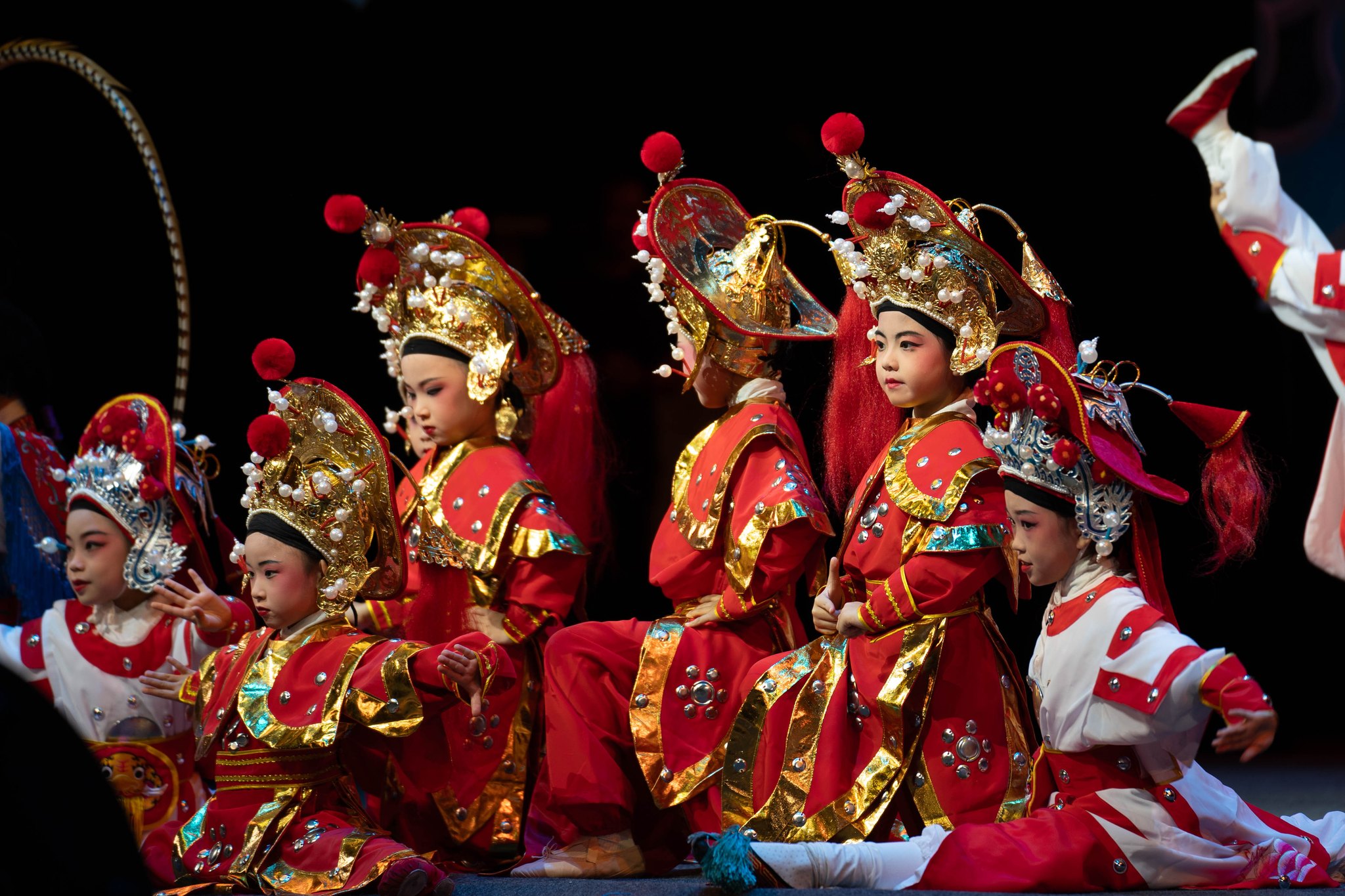
Originating in the late 19th century in Sheng county, south of Shaoxing in China’s Zhejiang province, yue opera became popular in areas including Zhejiang, Shanghai and Jiangsu. Known as the “second national opera” in China after Peking opera, yue opera gradually developed its distinct performance style based on folk storytelling tunes in place in the mid-to-late 19th century. From the late 1930s, yue opera made its way to Shanghai and rapidly flourished, producing a wealth of classic productions. At the same time, the genre also developed its own characteristics in the role categories of sheng (male character), dan (female character), jing (painted-face character), mo (old male character) and chou (comic character), while refining its vocal styles, acting techniques and costumes. After the 1990s, yue opera experienced a period of prosperity and produced widely recognised classics such as A Dream of Red Mansions and The Butterfly Lovers. Meanwhile, its influence in China and abroad continued to grow.
As a relatively young genre, yue opera stood out in traditional Chinese opera in the 20th century for its unique female perspective as well as graceful and refreshing artistic style. While its performance techniques and artistic execution are less mature and comprehensive than those of older genres such as Peking opera, Shaanxi opera and Sichuan opera, yue opera is often described as having two “wet nurses” — kun opera and spoken drama (huaju). The song-and-dance performance style of kun opera known for its refined and elegant aesthetics, as well as the natural and genuine feel of spoken drama, have contributed to yue opera’s appeal that blends the charm of classical Chinese opera with a distinct modern sensibility.
From the reforms of women’s yue opera in the 1930s and 1940s to the shaping of its aesthetic paradigm in the 1950s, yue opera has been defined by characteristics such as “refreshing, enchanting and emotionally subtle”. The yue opera version of The Butterfly Lovers, which was sincere and refreshing, and of A Dream of Red Mansions, which brought out the characters’ profound emotions, stand out among many Chinese opera genres whose subject matter is largely based on historical narratives.
Yue opera in Singapore
In 1963, the yue opera film The Butterfly Lovers premiered in Singapore and caused a sensation. The organisers distributed posters to draw yue opera enthusiasts to watch the film in movie theatres. In 1986, the National Theatre invited the Zhejiang Xiaobaihua Yue Opera Troupe to perform at the Kallang Theatre, where they were warmly welcomed by Chinese opera enthusiasts. In 1987, the OE Group in Singapore invited renowned yue opera performers Xu Yulan (1921–2017) and Wang Wenjuan (1926–2021) to Singapore. They led a group of young artistes from the Shanghai Yue Opera’s Red Mansion Troupe to perform multiple classic productions over eight consecutive nights to full houses at the Kallang Theatre.
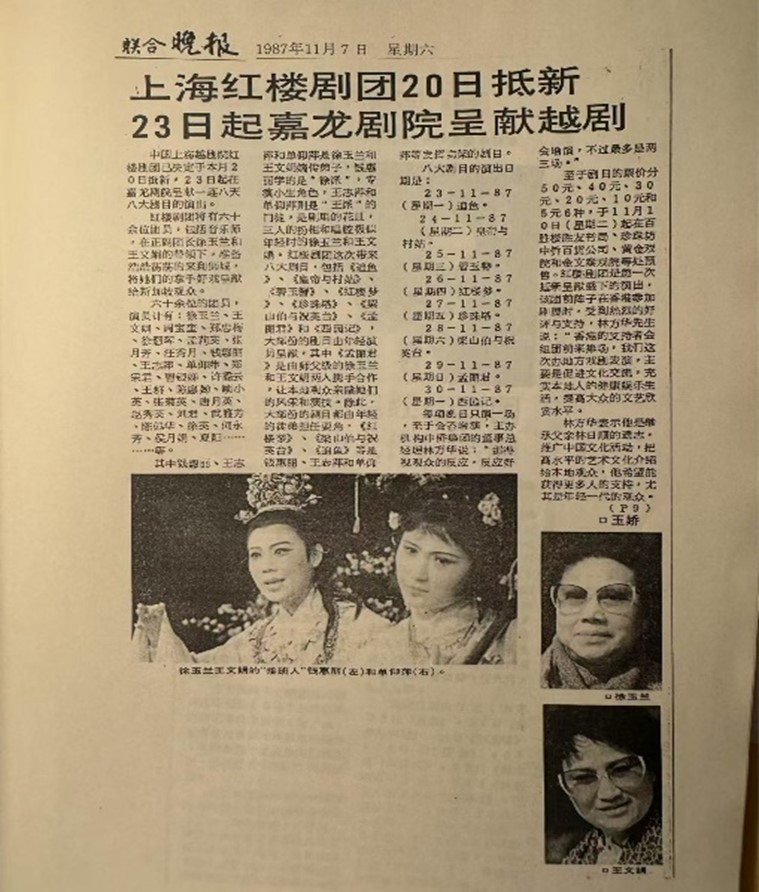
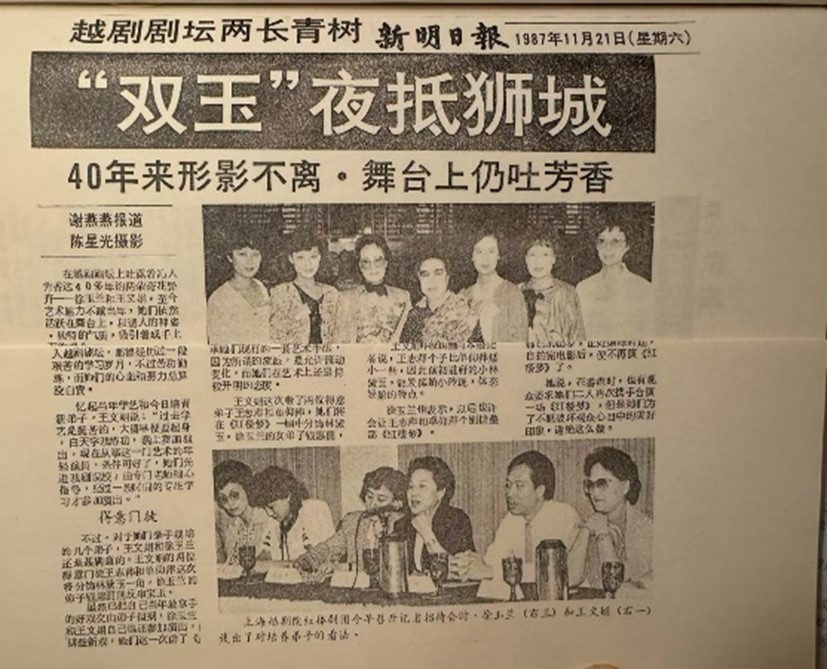
The troupe’s premiere at Kallang Theatre marked a new era for the introduction of yue opera in Singapore. While yue opera has a shorter history in Singapore than other Chinese opera genres, it is slowly taking root here with the combined efforts of local yue opera enthusiasts and new immigrants, as well as strong government support.
In 1998, to promote traditional Chinese opera in Singapore, the Singapore Chinese Opera Institute invited Shui Xiaoyan, a senior mentor from the Nanjing Yue Opera Troupe, to Singapore to conduct the first yue opera training course and stage the production Yueju Showcase Performance. The initiative not only attracted yue opera lovers and many local Chinese whose ancestral roots were not in Zhejiang or Shanghai, but also introduced the art form to primary and secondary schools, thus laying a foundation for cultivating young audiences of yue opera.
From 2000, community clubs (CCs) under the People’s Association began establishing organisations to promote yue opera. They include Marine Parade CC Shanghai Yue Opera Appreciation Club (renamed Tang Renaissance in 2000), Bedok Community Centre Yue Opera (2000), Bedok Community Centre East Yue Opera Network (2002), Xin Yue Yun Opera Troupe of Potong Pasir Community Club’s women’s committee (2009), and Xin Yue Performing Arts (2013).
New touches to classic repertoire
For decades, yue opera troupes in Singapore have continued to grow and thrive. They not only perform classic plays during traditional festivals, but also integrate modern elements into traditional arts, creating stage productions that preserve the essence of yue opera while appealing to contemporary tastes. Such innovation has infused new vitality into the art of yue opera in Singapore.
As one of the more active yue opera groups in Singapore today, Tang Renaissance is Singapore’s first amateur yue opera troupe which became a non-profit arts charity in 2005. Its productions include The Emperor and the Country Maiden (2012), Empress Han Wen (2010), and Five Daughters Celebrating the Grand Birthday (2008/2010). Tang Renaissance also invited local opera director Zhang Li to direct the classic play A Dream of Red Mansions in 2015 and a new version of The Butterfly Lovers in 2018. In 2019, it organised the International Shanghai Yue Opera Festival.
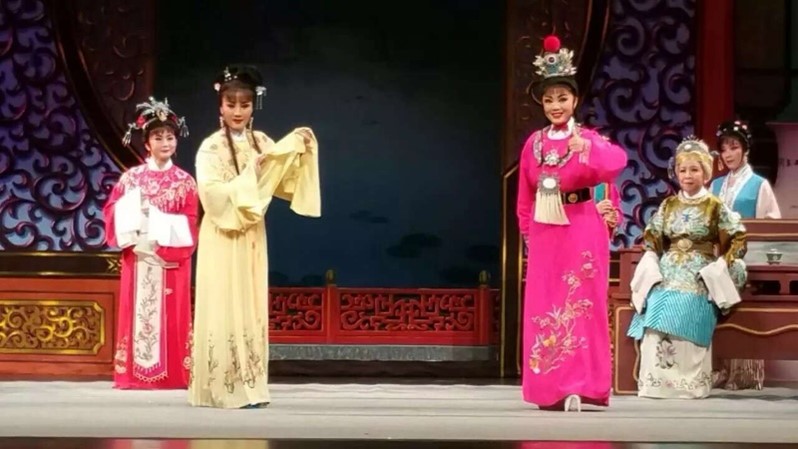
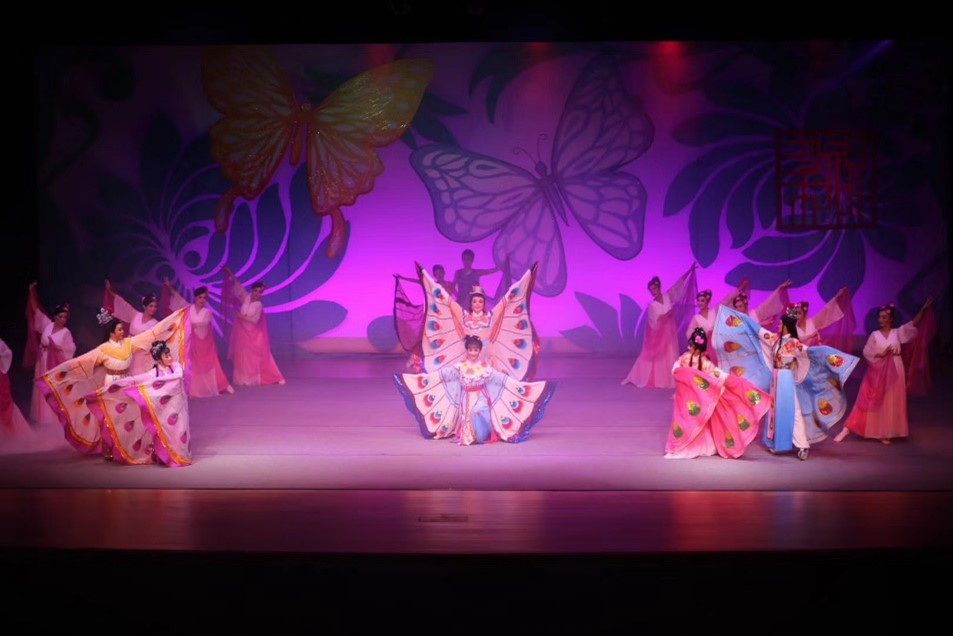
Xin Yue Performing Arts was founded in 2013 by a group of local yue opera enthusiasts, who invited Zhang Li to infuse new elements into their performances, development direction and works, as well as create innovative yue opera plays. In staging multiple large-scale productions, Xin Yue Performing Arts strives to present simple, graceful and elegant performance techniques to align with audience expectations, and to attract and cultivate younger audiences. Between 2013 and 2019, Xin Yue performed Ya Yue Gong Shang at the Singapore Chinese Cultural Centre, as well as staged large-scale productions A Test of Love: The Journey, The Tale of Lu You and Tang Wan, and A Test of Love at the Drama Centre Theatre.
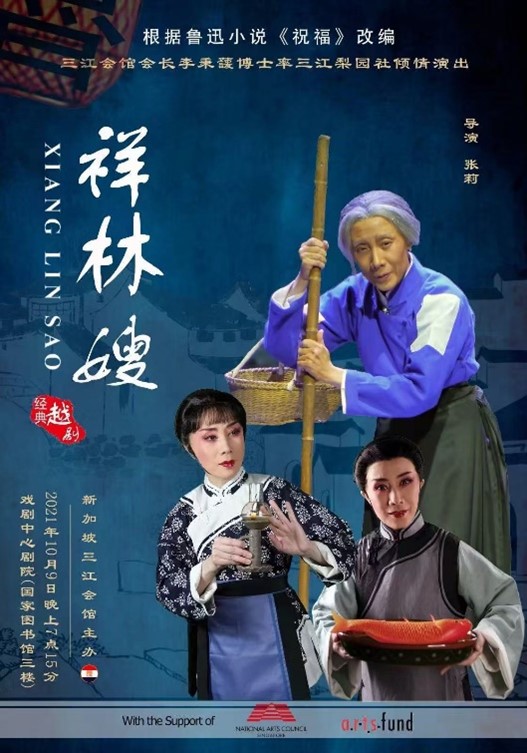
Established in 2016, Sam Kiang Chinese Opera is an opera troupe affiliated with the Singapore Sam Kiang Huay Kuan. Its core mission is to preserve and promote the performing arts of yue opera. Sam Kiang Chinese Opera has been actively participating in various Chinese opera events and performances in Singapore and abroad, engaging professional instructors to conduct Chinese opera courses for the public and nurturing young people’s passion for and appreciation of the art of traditional Chinese opera. Its productions include opera excerpts such as A Test of Love: The Appeal, A Test of Love: The Journey (2017), mythological play The Carp Fairy (2019), and Xiang Lin Sao.
Today, yue opera has cultivated a relatively stable audience base in Singapore, with long-time patrons continuing to give their support and new audiences steadily expanding, making it one of the most familiar Chinese opera genres among local audiences. Yue opera has also gradually blended into the local cultural fabric and become part of Singapore’s multicultural tapestry.
This is an edited and translated version of 越剧在新加坡. Click here to read original piece.
Gao, Yilong. Yueju shihua [A brief history of yue opera]. Shanghai: Shanghai Literature and Art Publishing House, 1991. | |
Yi, Yan. Liyuan shiji: Xinjiapo huazu difang xiqu zhi lu [Hundred years development of Chinese opera in Singapore]. Singapore: The Singapore Chinese Opera Institute, 2015. |