Singapore’s modern and contemporary Chinese literary journals


Literary journals have long been a vital medium for Singapore Chinese literature. They provide writers with a platform for publication and creative exchange, bearing witness to the development of the literary scene and changing zeitgeist from the pre-World War II period through to Singapore’s post-independence years.
Journals that existed around World War II
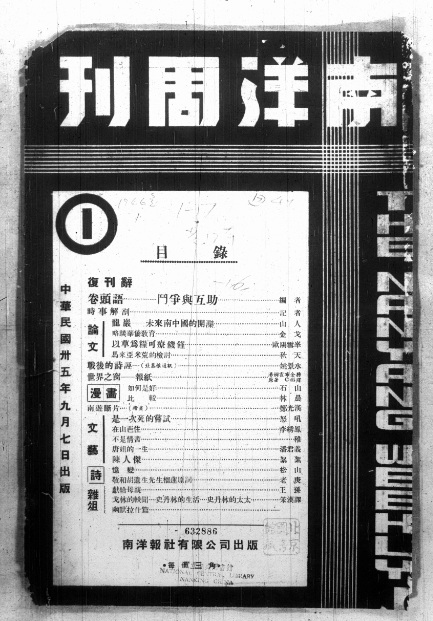
As early as the 1930s, Chinese literary journals were being published and circulated in Singapore. Notable examples included The Nanyang Weekly, founded in July 1938, and Wenyi changcheng (Great Wall of Literature & Art), launched in April 1939. While The Nanyang Weekly was a general-interest publication, literary works accounted for about a third of its content. Prominent writers of the era, including Liu Si (1917–2012), Shangguan Zhi (Wei Yun, 1913–1996), and Liu Bing (1914–1987), contributed to the journal.
The key figures and editors behind Wenyi changcheng were Tie Kang (1914–1942), Wu Tian (1913–1989), and Wang Junshi (1910–1942), all of whom were Chinese writers who came south. The journal focused on the development of Nanyang literature and published special issues on topics such as theories of Nanyang literature. Works by renowned Chinese writers such as Ba Jin (1904–2005), Ke Ling (1909–2000), Lin Huanping (1911–2000), Xu Xingzhi (1904–1991), and Liu Xiwei (1906–1982) were also featured. While predominantly targeted at readers in Nanyang, the journal was also distributed in Shanghai in addition to Southeast Asia in its effort to engage with the former’s literary and artistic circles. The journal ceased publication after its eighth issue in March 1940.
More publications emerged before the War of Resistance Against Japan, including Dazhong zhoubao (The Popular Weekly), Ta Kung Chou Pao, Xiandai xinwen (New Age News), Shenglu (Way Out), Qingnian yuekan (Youth Monthly), and Xingzhou banyuekan (Sin Chew Fortnightly). Although these publications were short-lived, they exerted considerable influence, driving the robust growth of both creative writing and literary theory in the Singapore Chinese literary scene at the time.
After World War II, Singapore experienced a shortage of resources, and its people lived in straitened circumstances. Nevertheless, several literary publications emerged in 1945 and 1946, including Xin shidai (New Era), Nanfang wenyi (Southern Literature), Chidao wenzhen (Equatorial Literary Front), and Xinliu (New Trend). Chidao wenzhen, edited by Liu Si, was launched in February 1946.
A flourishing scene in the 1950s
The 1950s saw a boom in journal publications. Many writers, literati, and students founded magazines, producing literary journals that reflected the spirit of the times. Student-run magazines included Huangdi (Wasteland), Renjian (The World), Gengyun (Cultivation), and Shenghuo wencong (Life Literary Series). The editors and contributors of the fortnightly Renjian, such as Lin Zhen (1937–2024) and Liu Shun, went on to become prominent figures in the local literary scene.
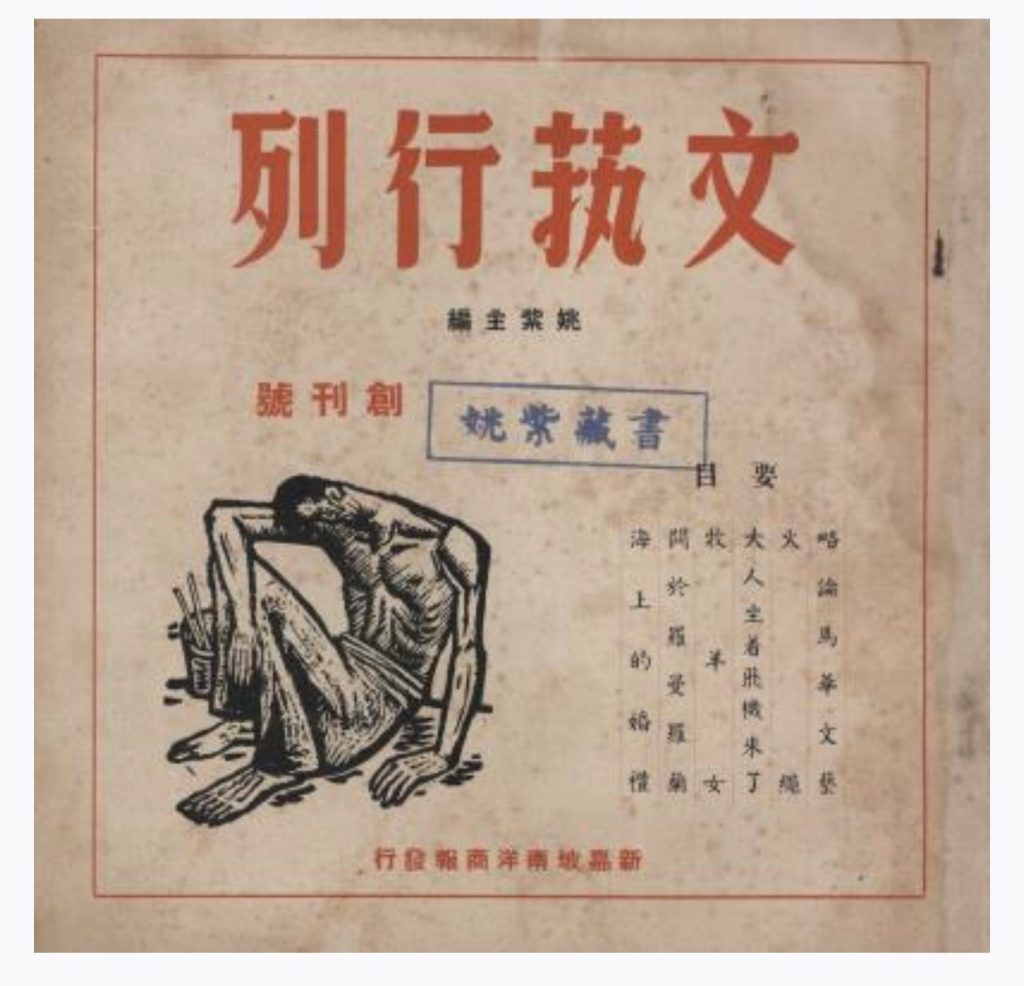
Other literary journals that emerged during this period included Wenyi hanglie (The Literary Front) and The Literary Post, edited by novelist Yao Zi (1920–1982); Renwen (Voices), edited by Luo Binlu and others; and Huiliu (Confluence), edited by Du Hong (1936–2024) and others. From 1954 to 1967, Yao Zi ran the Literary Post Publishing House, which published The Literary Post monthly. Due to the magazine’s anti-colonial stance, Yao Zi was arrested by the colonial government in September 1954. Although he was later released, the publication licence of The Literary Post was revoked in 1955. In 1956, Yao Zi founded the 10-day periodical The Earth Magazine, but it was shut down after just three issues.
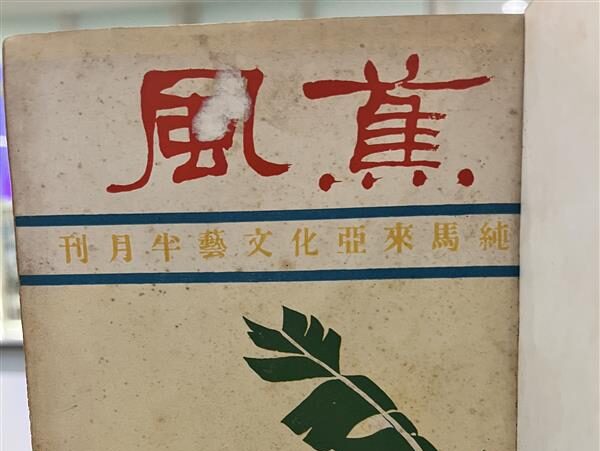
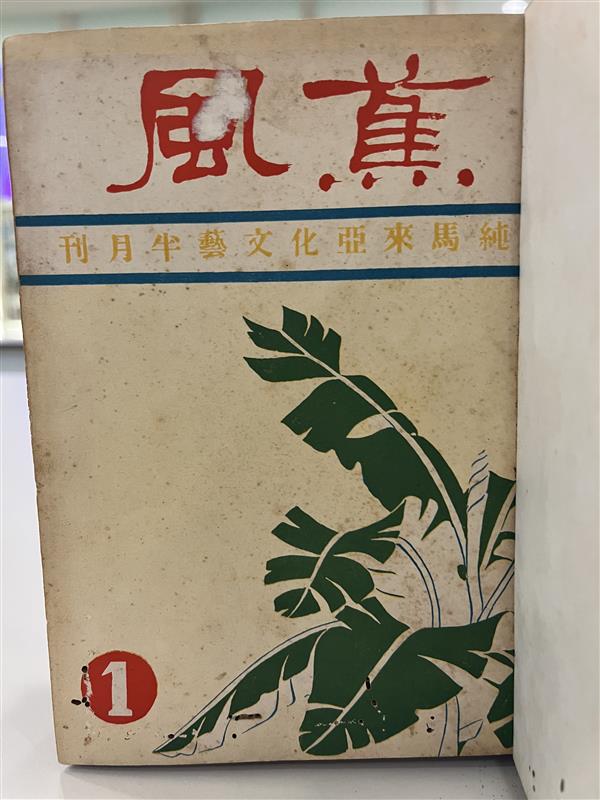
Hailed as an “evergreen” of Malaysian Chinese literature and an important asset in its modern development, Chao Foon was first published in Singapore in November 1955. Launched by the Union Cultural Organisation, the journal was founded by John Paul Yu Tak-foon (1922–2010) and edited by Fang Tian (c. 1927–c. 1983), both of whom were Chinese writers who came south. The editorial policy of Chao Foon advocated pure Malayanisation, stressing in its inaugural issue that it was a “literary publication set exclusively in Malaya”. After releasing its 29th issue in November 1957, Chao Foon relocated its operations from Singapore to Kuala Lumpur, where it continued to be published.
New voices from a young nation
In the early years of Singapore’s independence, Chinese writing flourished, and several writers took the lead in editing or even founding literary journals. For example, The Wilderness, launched in February 1967, was edited by Miao Xiu (1920–1980) and published by fellow writer Zhang Jinyan (1901–1981). The journal released five issues before ceasing publication in 1968.
In March 1967, Xin She — a literary and academic group founded by Lee Ting Hui (1931–2023), Gwee Yee Hean (1929–2013), and others — published the inaugural issue of Xinshe wenyi (New Society Literature). Edited by Xie Ke, Zhou Can, and Zhong Qi, the journal published 24 issues before ceasing in 1972. In 1966, Zhou Can and Zhong Qi founded the Poetry Monthly, which ceased publication in October 1967 after its 10th issue.
Xin Shengdai (New Generation), edited by Xie Ke, originated as the literary supplement of Min Pao. It published works by numerous prominent writers from Singapore and Malaysia, compiling them into four anthology volumes before it ceased publication in 1970.
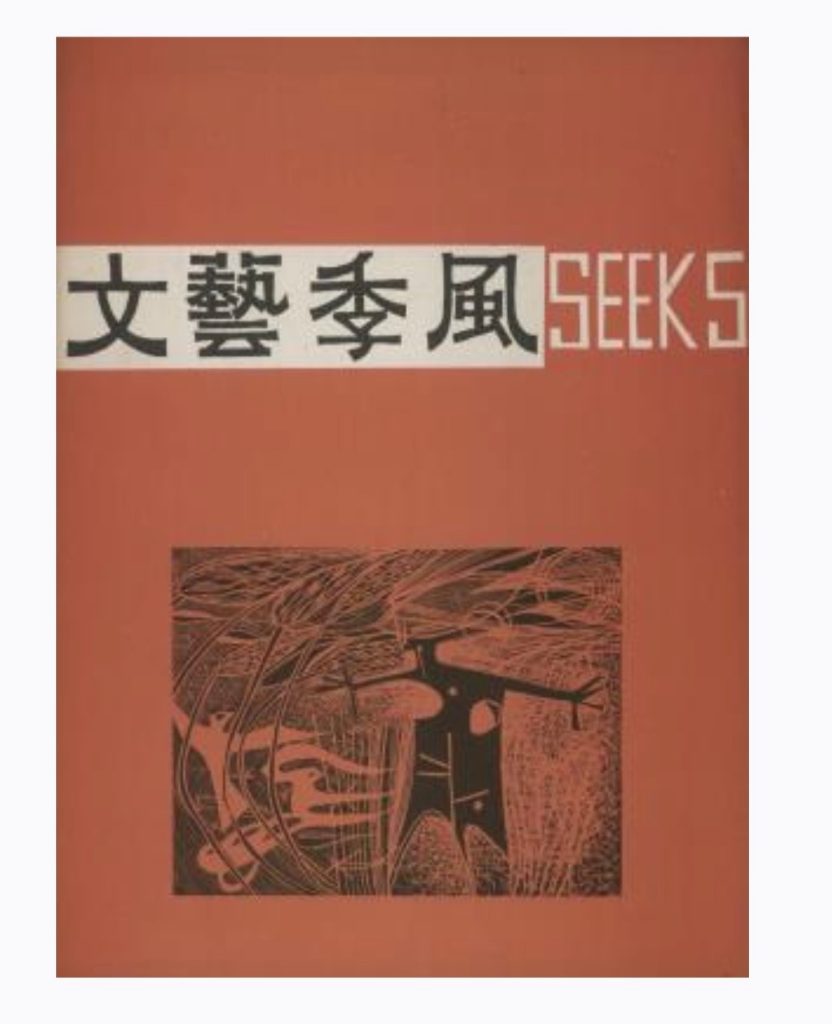
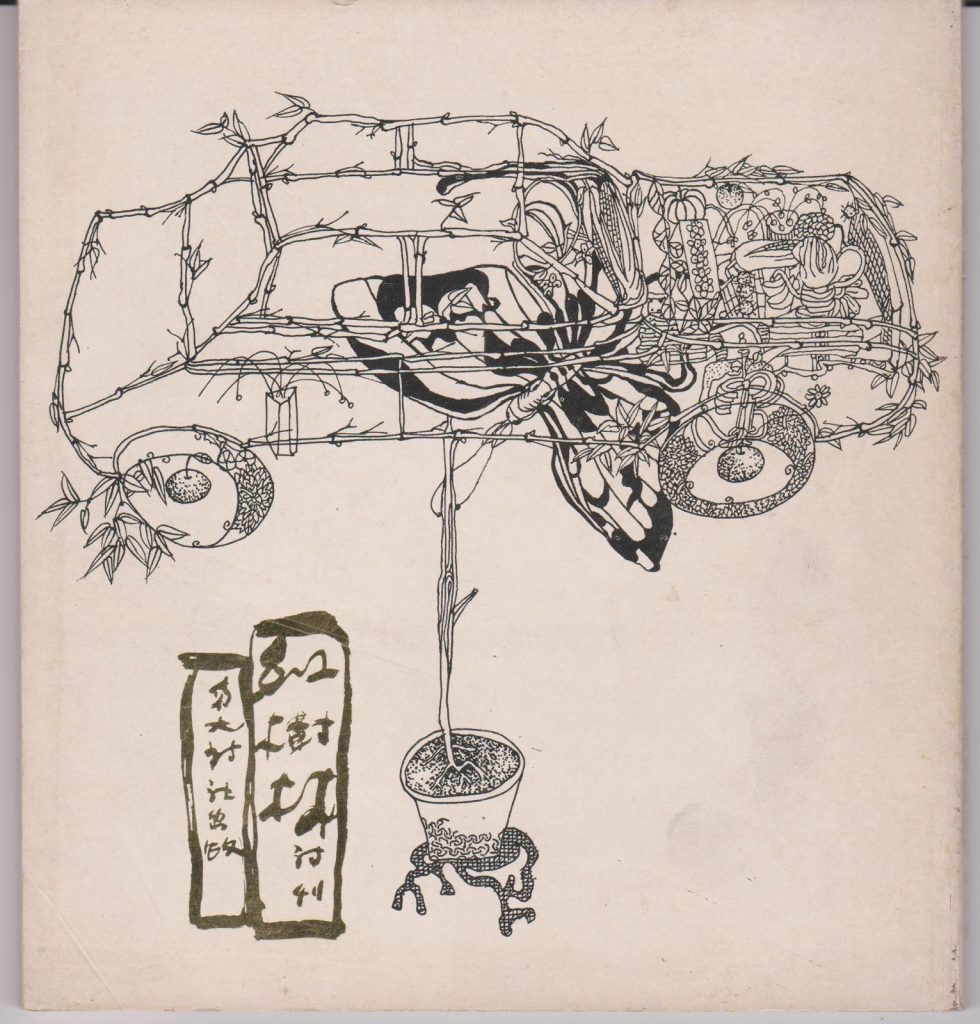
Other literary publications that appeared in the 1960s included Seek and Wenyi shenghuo (Literary Life) published by schools. The former was the literary journal of the Chinese Society of the University of Singapore (now the National University of Singapore), while the latter was published by the Chinese Society of Ngee Ann Polytechnic. Another impressive publication was The Huntsmen, edited and published by a group of Catholic High School graduates, including Chen Shengduan (1947–2024), Zeng Dejie, and Lim Jim Koon. While it only produced three issues, the journal’s avant-garde design and rich content reflected the independent thinking of the era’s youth.
In 1969, Yeng Pway Ngon (1947–2021) founded the literary magazine Teahouse. Initially issued as a fortnightly, the journal later became a monthly and subsequently an irregular publication. By 1972, a total of 15 issues had been published. Following the closure of Teahouse, Yeng launched Vanguard Monthly in 1973, though it was discontinued after just two issues.
The 1970s were a period when Singapore Chinese literature enjoyed a relatively stable environment for writing and publication. New literary groups emerged, and along with them, affiliated journals.
From 1976 to 1977, the Singapore Association of Writers (established in August 1970) published 12 issues of Literature Monthly. In 1978, it launched the semi-yearly Wenxue (Literature), which ran for 40 issues. After ceasing publication in 1998, it merged with Weixing xiaoshuo jikan (Microfiction Quarterly), the April issue of Houlai (Later), and Xinjiapo zuojia (Singapore Writers) to form Singapore Chinese Literature.
The Singapore Literature Society launched its flagship magazine, Singapore Literature, in 1976. In 2002, the society published Singapore Literature News, which focused mainly on literary reports. In 2016, it produced the large-format poetry publication Singapore Poetry.
In the late 1970s and early 1980s, the decline of Chinese-language education posed significant challenges for Singapore’s Chinese-language reading market. Nevertheless, several Chinese-educated students from tertiary institutions and junior colleges continued to run literary journals. These included Beidou (The Northern Dipper), published by the Chinese Language and Literary Society of Nanyang University in December 1969 and discontinued in 1971; The Mangrove, founded by the Nanyang University Poetry Society in 1976; as well as Duhuang Literary and Plaza, published by young literary enthusiasts.
Uphill battle from the 1980s to the present
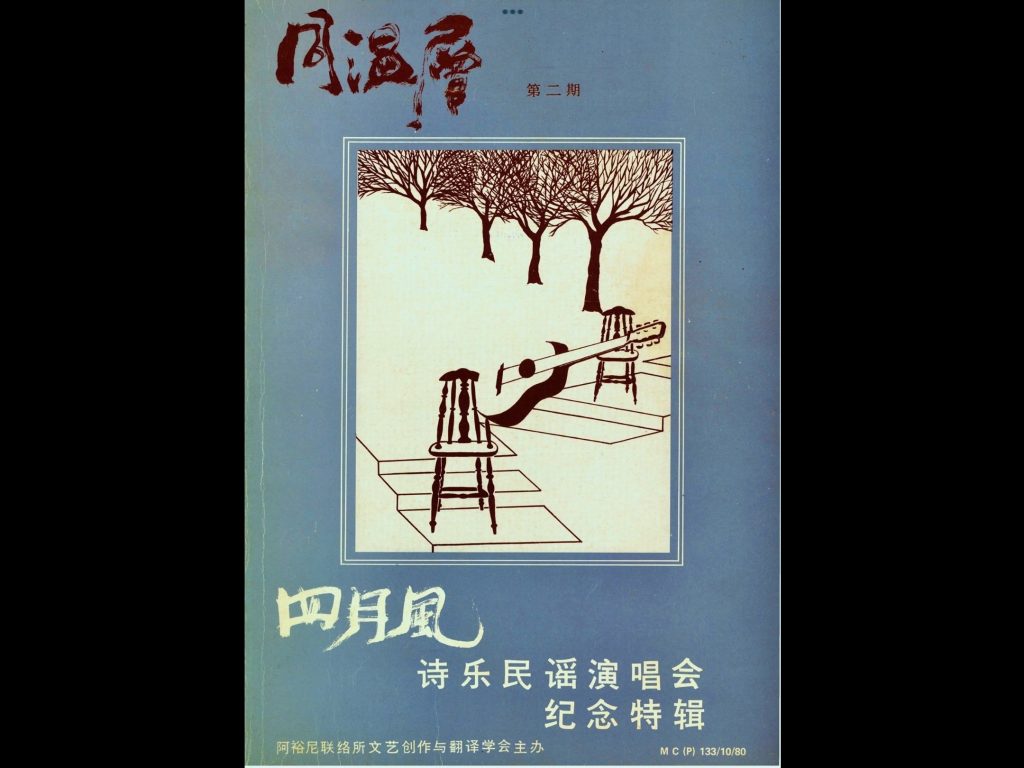
Although the 1980s and 1990s were turbulent years for Chinese-language education, many literary journals continued to emerge. One notable title was Stratosphere, first published in December 1980 by the Aljunied Creative Writing and Translation Group, which was affiliated with the Aljunied Community Centre. It ran for 10 issues before ceasing in December 1990. Another key publication was May Poetry, founded by the May Poetry Society in 1984.
In the early 1980s, poet Shi Min edited and published Redai wenyi (Tropical Literature & Art) and Haixia shikan (Straits Poetry), both of which ran until 2001. Debuted in 1986, Equatorial Wind was jointly published by a group of literary enthusiasts, including writers Fang Ran (1943–2023) and Qian Hua. Upon the journal reaching its 100th issue, physician and writer Ng Beng Yeong took over as editor-in-chief and formed an editorial team.
After the Bukit Timah Literary Centre was established in 1990, which was affiliated with the Bukit Timah Community Club, it published the inaugural issue of Bukit Timah Literature the following year. Literary journals launched after 2000 included Redai (Tropical), founded in 2011 by the Tropical Literature and Art Club; Tuas Literature, published in 2012 by the Tuas Literature Promotion Committee; and Literature Writing, launched in 2017 by the Society of Literature Writing.
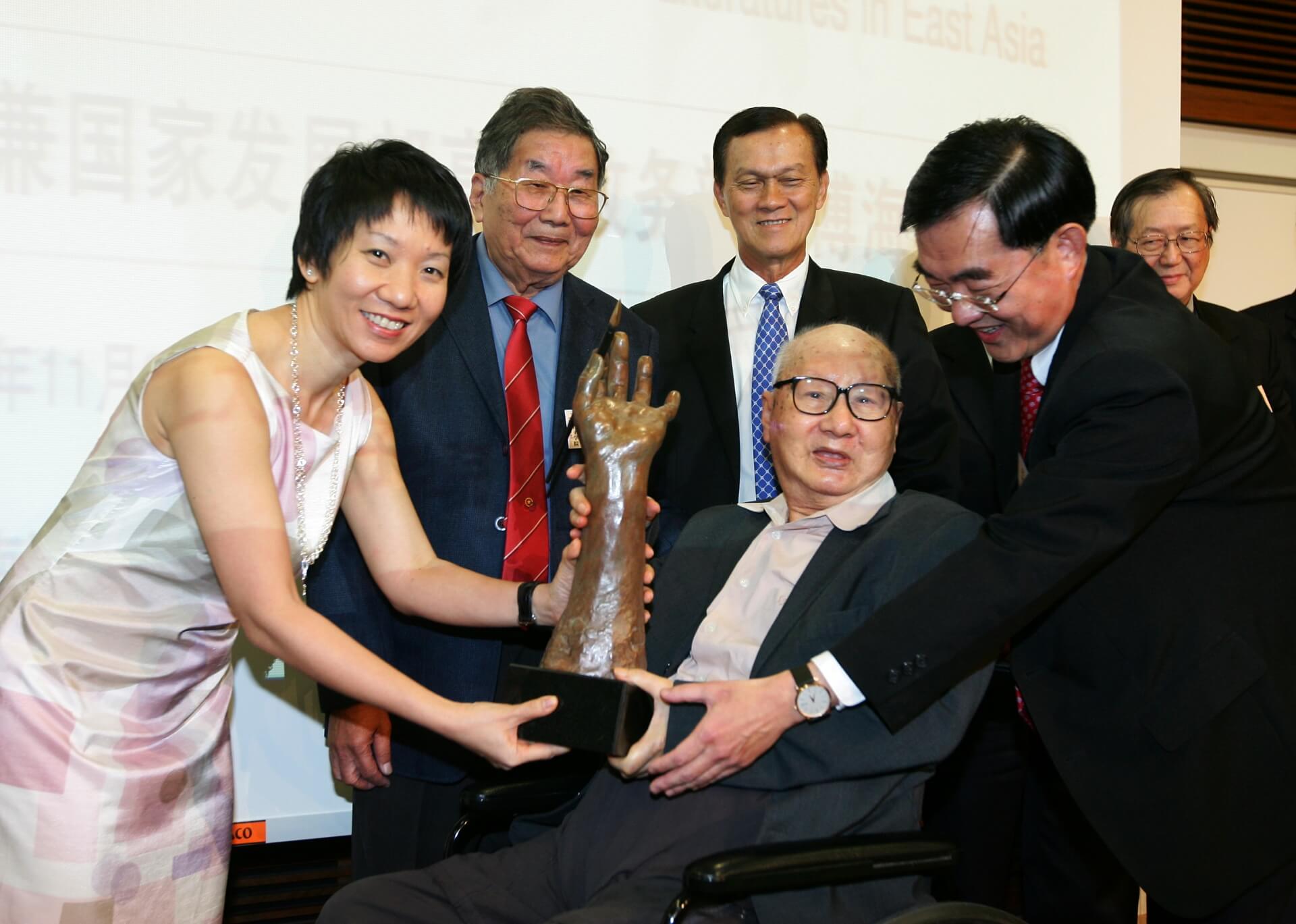
Particularly noteworthy was Why Not, a literary magazine published by TrendLit Society. The literary group was founded in 2012 by five undergraduates from the Chinese Department of Nanyang Technological University, including Ang Lai Sheng and Tan Boon Hui. Debuted in 2013, Why Not featured works primarily by young writers and possessed an experimental edge. Although only seven issues were published before the magazine ceased publication in 2018, it held special significance in the history of Singapore Chinese literature in the new century. It demonstrated that young people were still willing to write in Chinese and devote their time and effort to establishing literary societies and publishing literary magazines, even as reading and writing in Chinese became increasingly marginalised in Singapore. This also proved that literary journals from the various eras have played different roles in the development of Singapore Chinese literature, and driven its growth.
This is an edited and translated version of 新加坡现当代华文文学期刊. Click here to read original piece.
Han, Tan Juan. 50 Years of Singapore Chinese Periodicals. National Library, Singapore. | |
Law, Lin Mui, Ho Phang Phow and Ng Wee Lay, eds. 50 Years of Singapore Chinese Periodicals. Singapore: National Library, Singapore, 2008. | |
Lim, Jim Koon. “Wangong liehu shao yiren: daonian ‘liehu’ he ‘xuewen’ chuangkanren Chen Shengduan” [One less archer: remembering Chen Shengduan, founder of The Huntsmen and Xuewen]. Lianhe Zaobao, 7 November 2024. | |
Lin, Jing. “‘Wenyi changcheng’ chuban yibosanzhe” [The long road to publishing Wenyi changcheng]. Lianhe Zaobao, 11 October 1987. | |
Lin, Qiong. “Miao Xiu zhubian de ‘Xinye’” [The Wilderness under the editorship of Miao Xiu]. Lianhe Wanbao, 5 August 1990. | |
Liu, Shun. “Huiwei ‘Renjian’ wangshi” [Reflections on the days of Renjian]. Yihe shiji, 3 September 2021. | |
Tan, Boon Hui, Ang Jin Yong and Ang Lai Sheng. “Xinhua wenxue zouchu ketang: wenxue zazhi ‘buweishenme’ tingkan zongjie” [Beyond the classroom: reflections on the closure of Why Not]. Lianhe Zaobao, 23 January 2019. | |
Teoh, Hee La. “Bendi huawen wenxue qikan zhili peiyang duzhe, jiebanren” [Local Chinese literary journals cultivating readers and the next generation of writers]. Lianhe Zaobao, 3 December 2018. | |
Wong, Meng Voon and Xu Nai Xiang, eds. Xinjiapo huawen wenxueshi chugao [Draft on the history of Singapore Chinese literature]. Singapore: National University of Singapore Department of Chinese Studies, Global Publishing, 2002. |