Pioneer artist: Cheong Soo Pieng


Singapore pioneer artist Cheong Soo Pieng (1917–1983), best known for his distinctive depictions of Malay and Balinese women, was a painter ahead of his time.
When he moved to Singapore from Hong Kong in 1946, his emerging modern, semi-abstract artworks — “never before seen” by a Chinese artist — were already creating a stir in the local art scene.
They included an Untitled watercolour painting showing rocks on a hill which he painted in 1943, and A Corner of Art Studio painted in oil on wood in 1947, his first portrait of a Eurasian woman focusing on her strong facial features, colour of her skin and the way she looked.
His later works, such as Surreal Figures in pencil and watercolour created in 1951, and Tend Cows in oil on canvas painted in the same year, showed even stronger modern Surrealist, Cubist and Expressionist influences.
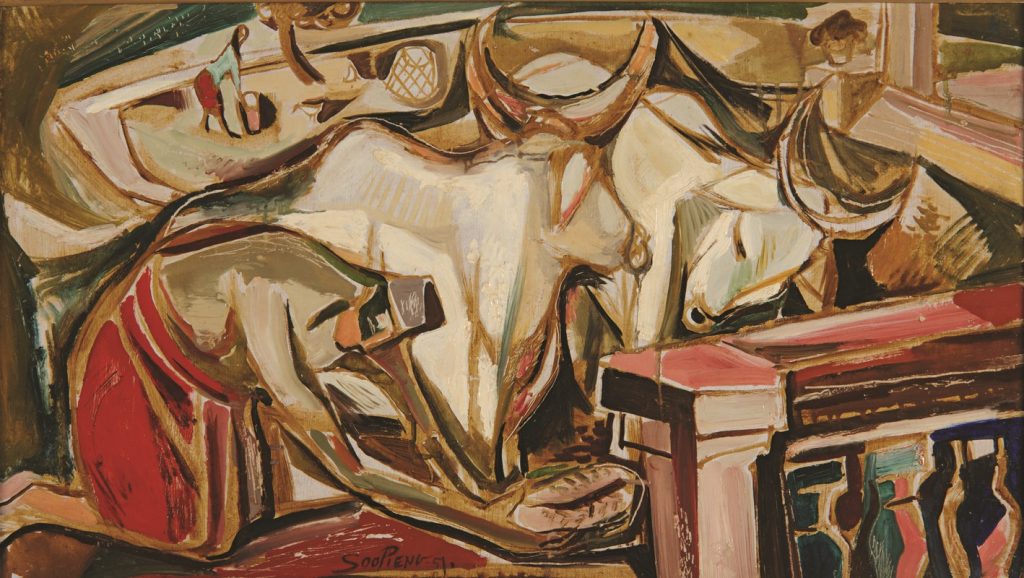
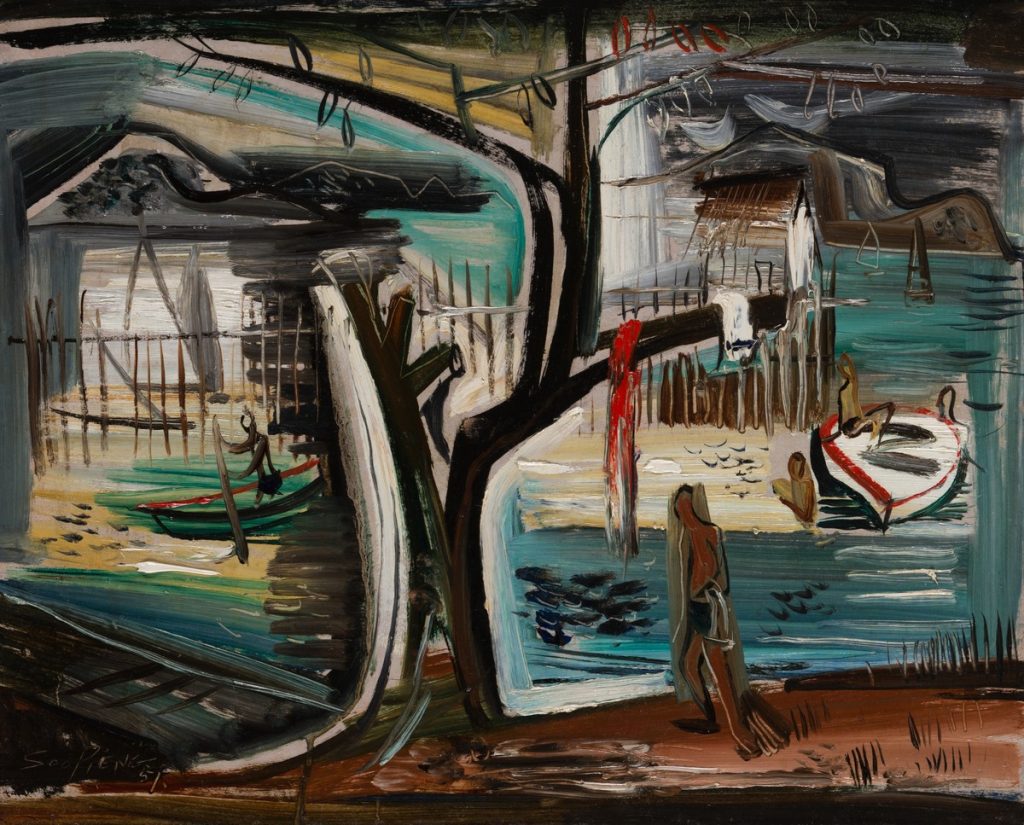
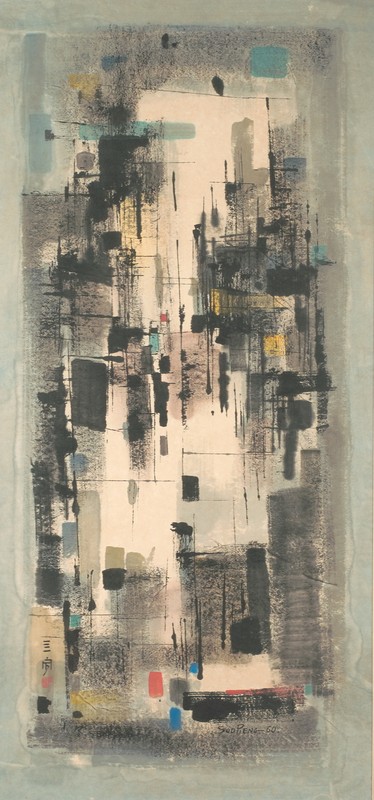
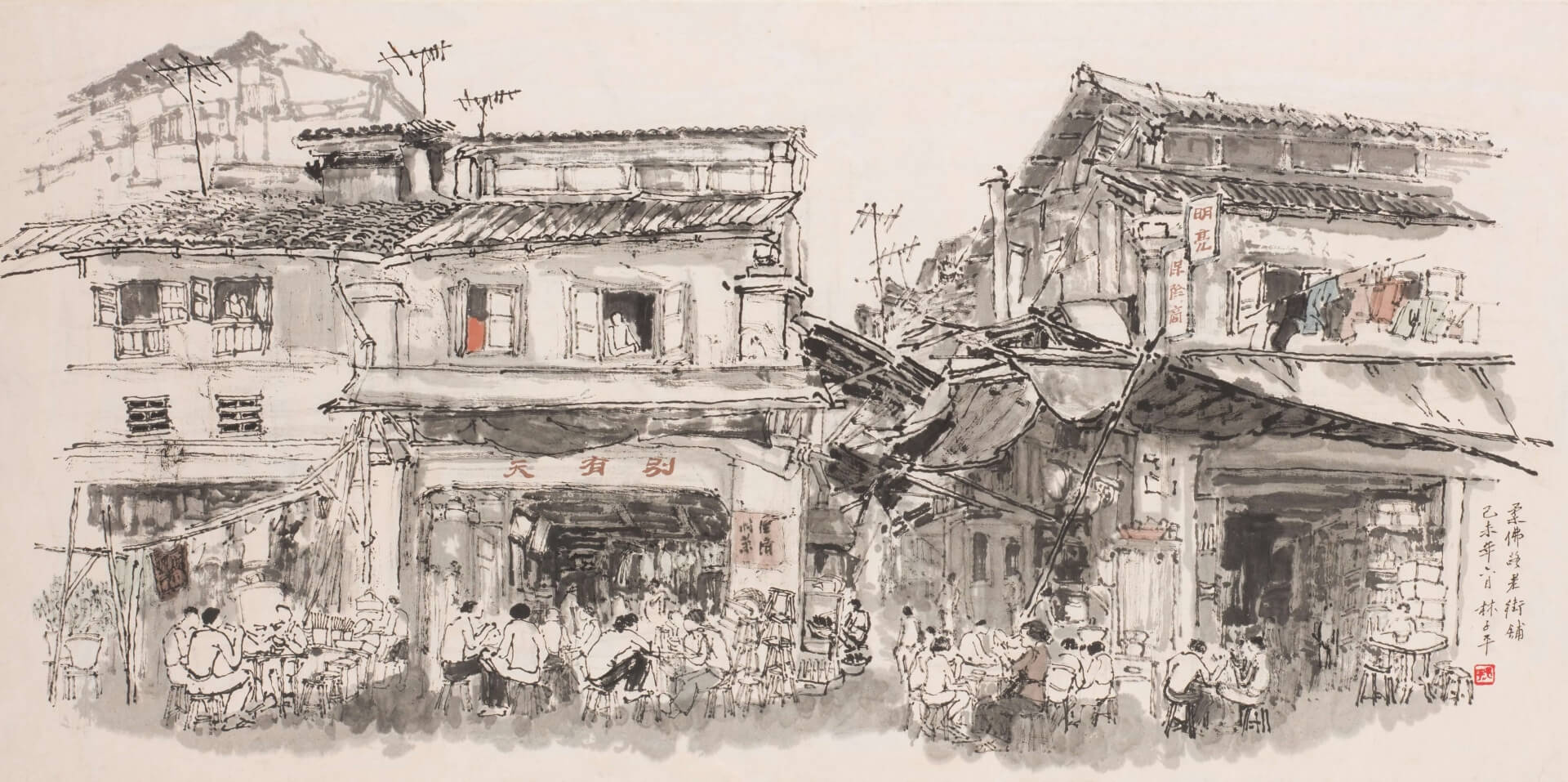
Even his still lifes and landscapes — including Seaside painted in oil in 1951, and Scenery painted in Chinese ink in 1960 — were different from those of his peers at the time, which were mostly realist or representational in their compositions and forms.
With his modern ideas, good aesthetic sense, versality in the various art genres and effective use of different painting materials, he soon caught the attention of art curators and writers in Singapore.
One was art historian Michael Sullivan (1916–2013). In his book on 20th century Chinese art and artists published in London in 1959, the English curator of Singapore’s first art museum at the then-University of Malaya described Cheong as “the leading personality in Singapore art” whose “strength of colour was quite un-Chinese”.
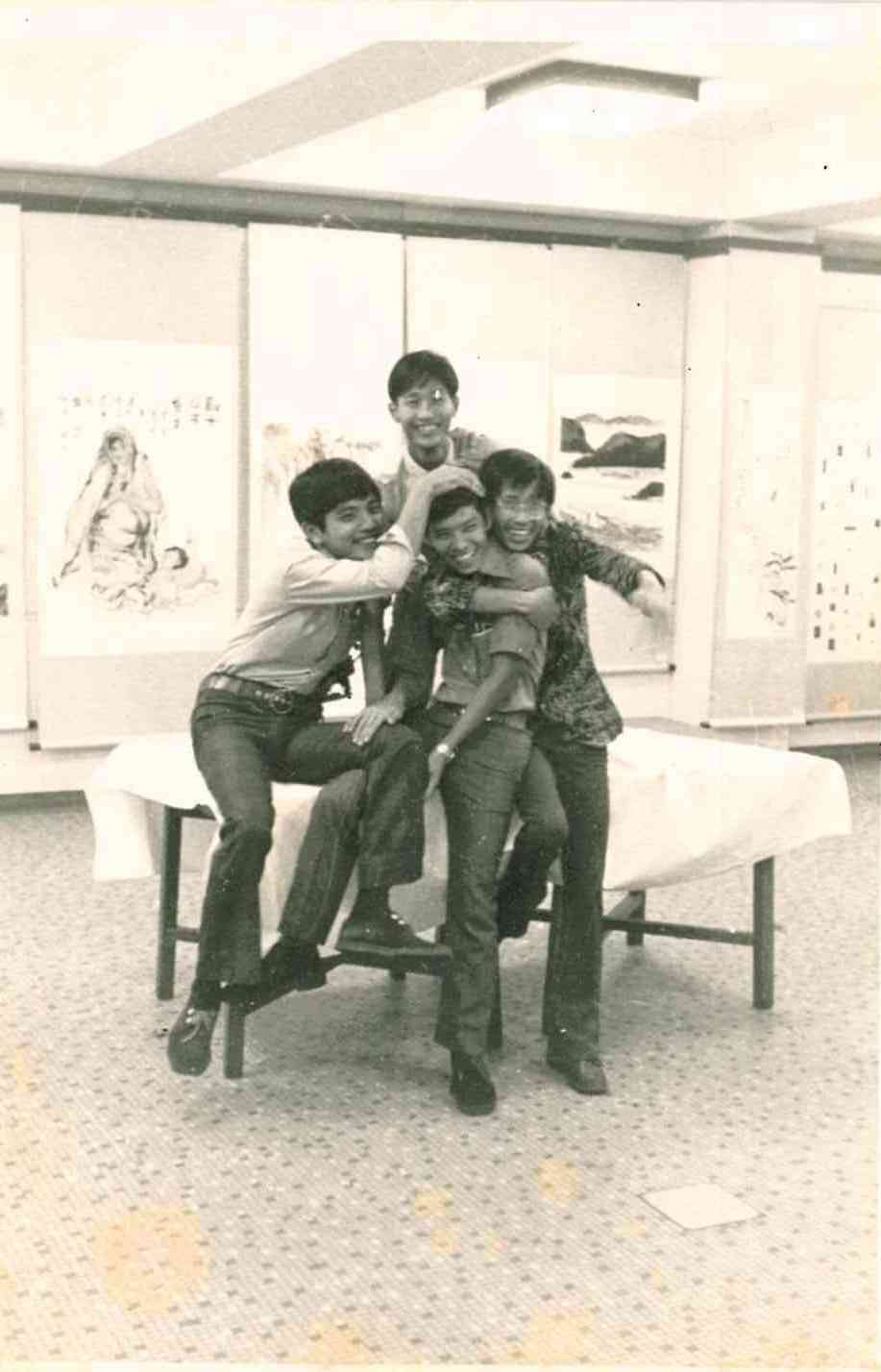
Inspired by his modern artworks, several of his students at the Nanyang Academy of Fine Arts (NAFA), where he taught between 1947 and 1961, founded the Modern Art Society in 1964, with support from other like-minded young artists who were also influenced by Cheong and his works.
Among the NAFA students were second-generation Singapore painters Wee Beng Chong, Tay Chee Toh, Tan Yee Tong, and Ng Yuat Chuan, who was the society’s founding president. Both Wee and Tay were recipients of the Cultural Medallion, Singapore highest award for artistic excellence, in 1979 and 1985 respectively.
In an essay published in the catalogue in conjunction with the Cheong Soo Pieng Retrospective 1983 exhibition, the then National Museum art curator Choy Weng Yang praised Cheong as a “restless innovator who was always on the move” and his career a “continuous flux of shifting ideas and styles”.
Cheong died suddenly of a heart failure in July 1983, aged 66, just four months shy of the exhibition showing his life’s works to be presented by the then Singapore Ministry of Culture and National Museum.
That retrospective exhibition became his first posthumous one-man show. It was held at the then-National Museum Art Gallery in November that same year.
Perhaps the highest praise given to Cheong came from Singapore art historian T.K. Sabapathy. In his introduction to the publication for another posthumous retrospective exhibition staged by the artist’s family in 1991, Sabapathy wrote:
“When the stories of art in Singapore get to be written, Cheong Soo Pieng will undoubtedly assume a formative, formidable presence and stature. He has more than any other artist here, traversed several frontiers in the art world, renovating acquired practices, extending existing limits, creating new ways of making art and pointing to tentative regions that can be prospected.”
Early years
Cheong was born in Xiamen, a southern coastal city in Fujian province, China. He showed early interest and potential in art. Soon after completing secondary school at 16, his farmer parents sent him to the Xiamen Academy of Fine Arts to study between 1933 and 1935.
His teachers there included Lim Hak Tai (1893–1963) who founded NAFA in Singapore in 1938. Cheong also designed NAFA’s first logo in 1946, a year before he started teaching in the Singapore school at Lim’s invitation.
Looking back, it was really the Xiamen art academy’s principal Lin Kegong (1901–1992) who had the greatest impact on Cheong’s life and art. The principal had studied in Paris in the early 1930s, and it was he who introduced Cheong to the Parisian art movements such as Fauvism and Cubism.
Cheong moved to Shanghai in 1935 to further his studies at the Xinhua Academy of Fine Arts where both Chinese and Western art forms were taught. That was critical to his artistic development later, essentially a blend of the East and West, the old and new, with a dose of Southeast Asian culture and arts.
His studies at Xinhua were disrupted by the Sino-Japanese War in 1937 when the art academy in Shanghai was bombed by the Japanese. It forced him to return to Xiamen the following year. He taught painting in an art school there for four years between 1939 and 1943.
Moving to Singapore
Social unrest and political strife in China did not end with the Japanese surrender in 1945, as the civil war between the Nationalists and Communists began almost immediately following the end of World War II.
Many Chinese intellectuals including writers and artists were then leaving China to avoid the chaos and instability caused by the war. Cheong was among them.
But leaving home was a difficult decision for he was already married and his school teacher wife, Huang Lizhen (birth and death years unknown), was pregnant with their second son. Nevertheless, he left for Hong Kong alone without his family in late 1945, arriving in Singapore a few months later.
He was in Singapore because Lim Hak Tai wanted him to teach in NAFA. By early 1947, he was a full-time staff member with lodging provided by the school at its then St Thomas Walk premises which was re-opened after the war.
Cheong’s wife and his two young sons left Xiamen to join him in Singapore only in the early 1950s. Their third child, a girl, Cheong Leng Guat (1954–2018), was born in Singapore. She followed in her father’s footsteps and became an artist.
The Bali trip
In 1952, after Cheong had settled down in Singapore and established himself both as a teacher and painter, he and three other Singapore pioneer artists, all alumni of Xinhua Academy of Fine Arts, took a few months off to travel and paint in Indonesia, including Bali.
The trip where they immersed themselves into the indigenous people’s culture, explored new painting styles and subject matter, turned out to be a groundbreaking one. The other members of the group were Chen Chong Swee (1910–1985), Chen Wen Hsi (1906–1991) and Liu Kang (1911–2004). The following year in 1953, they held a joint exhibition of works they painted during the trip, which was a great success.
Mesmerised by what he saw in Indonesia, especially Balinese women in traditional dress, Cheong went further to paint in Sarawak in what was then British Borneo in 1959. He did many sketches of human figures, especially women, as well as landscapes there.
It was during the 1950s when Cheong styled the woman figures with long, exaggerated limbs and almond-shaped eyes, drawing inspiration from both wayang kulit puppets and works by European modern artists such as Amedeo Modigliani (1884–1920).
Those “elongated figures”, mostly of women, were further refined by Cheong in the 1970s. They have become his signature works today, such as Mother and Daughter which he painted in oil on canvas in 1975.
Two years after his trip to Sarawak, Cheong decided to do more travelling and painting abroad. He resigned from NAFA in 1961 to paint full-time.
He went to live in Europe for over two years (1961–1963) when he painted, dabbled in abstraction in his works and held solo exhibitions in several European cities like in London and Munich.
Those were his most productive years which led to more of his solo exhibitions held in other parts of the world, including Australia, Malaysia, Hong Kong and Taiwan from the mid-1960s to early 1980s.
Besides paintings, his other works included sculptures, metal reliefs, murals, woodcuts and woodcarvings as well.
A rich legacy
In recognition of his artistic achievements and contributions to the arts, Cheong was the first artist to receive the Meritorious Public Service Medal from the Singapore government in 1962.
His signature “elongated figures” 1975 oil painting, Mother and Daughter, was made into an UNESCO stamp in 1982, making him the first Singapore artist to achieve such an honour.
His 1978 work in Chinese ink, Drying Salted Fish, is featured on the back of the Singapore $50 banknote, available for all to see and admire.

Besides the 1983 retrospective at the National Museum Art Gallery, at least two other posthumous solo exhibitions have been held by Singapore art institutions to honour him in recent decades. The first, Cheong Soo Pieng: Bridging Worlds, was presented by the National Art Gallery, Singapore, in 2010, and the other, Soo Pieng, was organised by NAFA in 2013.
Between April and September 2024, the National Gallery Singapore staged a special exhibition, Cheong Soo Pieng: Layer by Layer, which used science and material analysis to explore and show some of the artist’s work which included his 1947 work in oil painted on wood, A Corner of Art Studio.
Tan, Yong Jun. Tonalities: The Ink Works of Cheong Soo Pieng. Singapore: Artcommune Gallery, 2021. | |
Yeo, Wei Wei, ed. Cheong Soo Pieng: Visions of Southeast Asia. Singapore: National Art Gallery, 2010. |