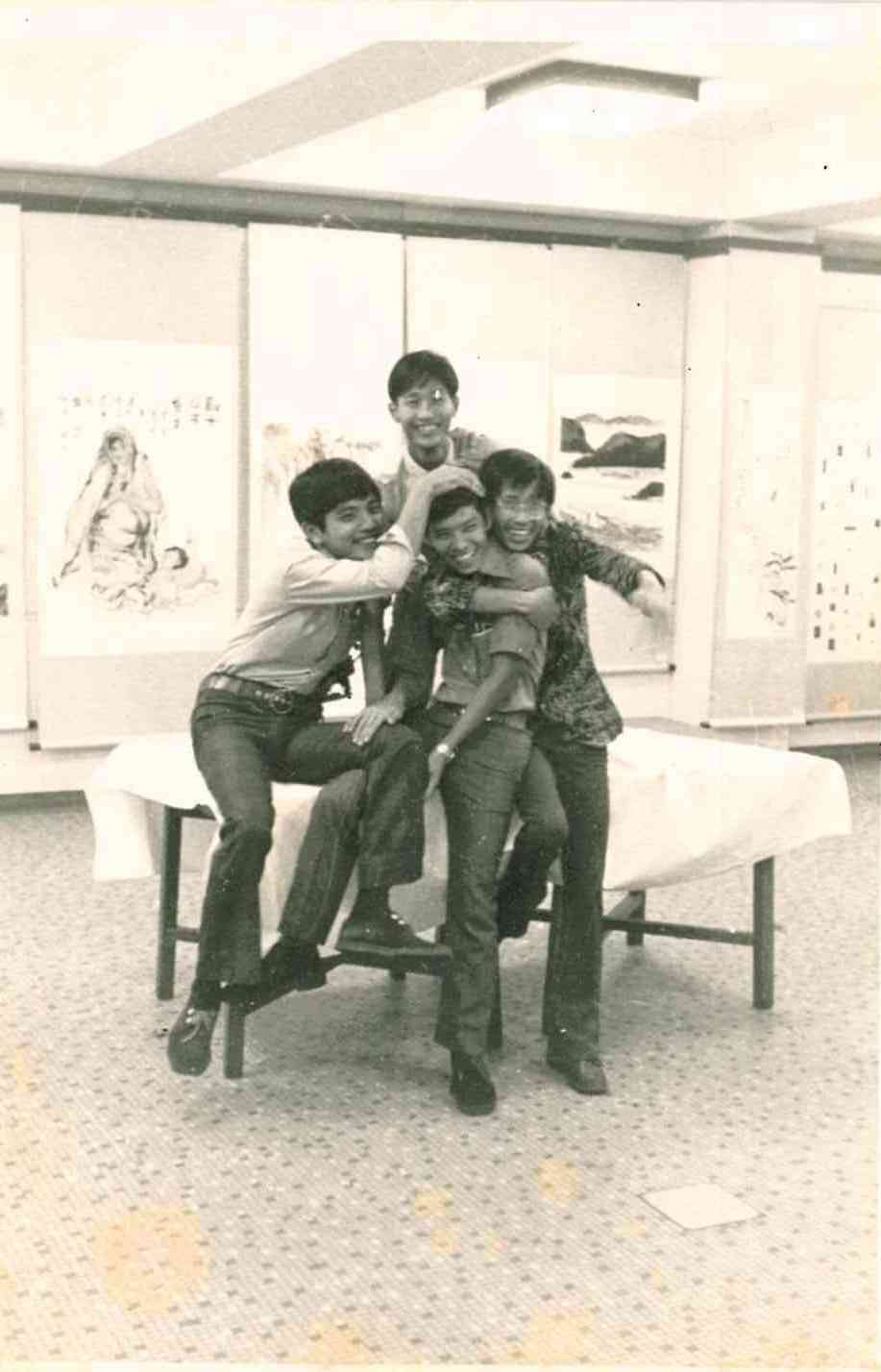
Pioneer artist: Chen Chong Swee


Pioneer artist Chen Chong Swee (1910–1985), whose life and works in Singapore span over five decades, is not only known for his Nanyang-style paintings, but also remembered as a teacher, writer and a leading figure in the local visual arts scene between the 1930s and 1980s.
Born in Chenghai county of Shantou in China’s Guangdong province, the Chinese ink painter and watercolourist spent his early childhood in Bangkok, Thailand, where his father was doing business.
He returned to China for his primary and secondary education by the early 1920s, and was taught the classics, poetry, Chinese art and calligraphy. Being the eldest son of a wealthy Teochew merchant, he was sent to a business school, but later switched to studying art at Union High School in Shantou before pursuing further studies at Xinhua Academy of Fine Arts in Shanghai.
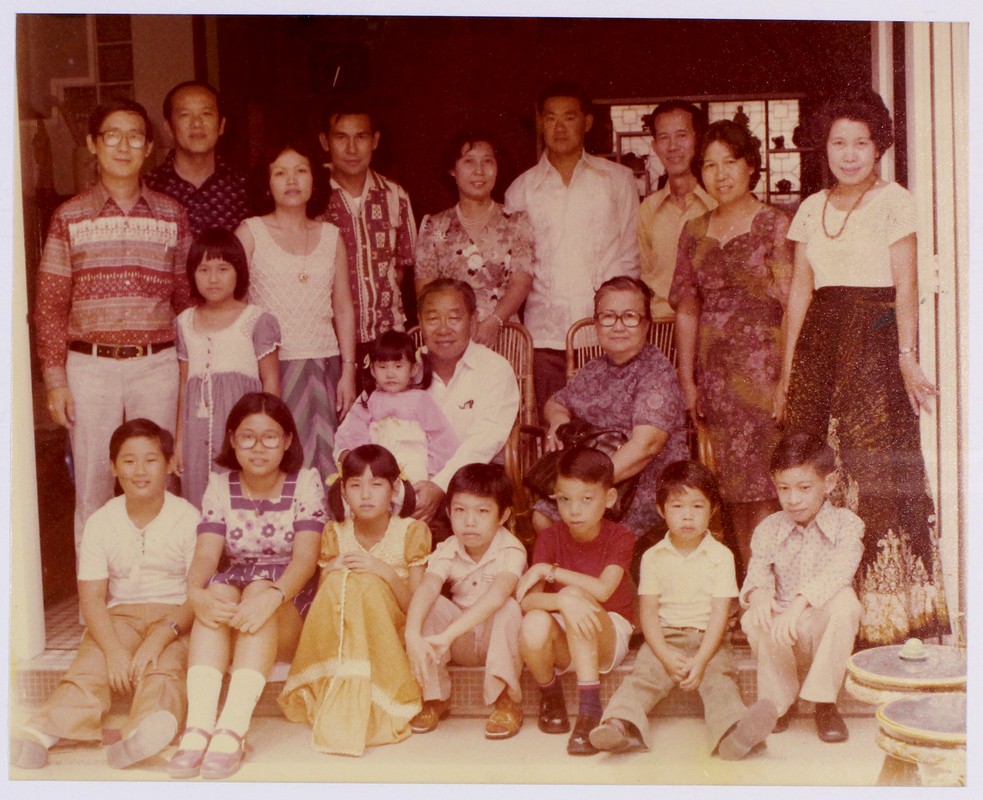
Chen, who also painted in oil, married his childhood sweetheart, Tay Peck Koon (unknown–1982), a school teacher, one year before he graduated from Xinhua in 1930. The first of their five children, a baby girl, was born in the same year.
The next year, he and his family moved to the then Malaya before settling down in Singapore. He was teaching art at Jit Sin Chinese Public School in Penang in 1932, and travelled to Malacca a few months later, also to teach.

Life in Singapore
He arrived in Singapore in 1934, and started teaching art at Tao Nan School the following year. For the next 40 years, between 1935 and 1975, he taught in many other Singapore schools, including the former Tuan Mong, Chinese High, Teachers’ Training College, and Nanyang Academy of Fine Arts (NAFA).
Meanwhile, he was active in the Singapore art scene, taking part in art exhibitions and co-founding at least two art groups, Salon Art Society, now known as the Society of Chinese Artists, in 1935, and the Singapore Watercolour Society in 1969. He was also adviser to several others, such as Life Art Society, San Yi Finger Painting Society, Singapore Teachers’ Art and Craft Association, and NAFA, where he taught from 1938 till his retirement in 1975.
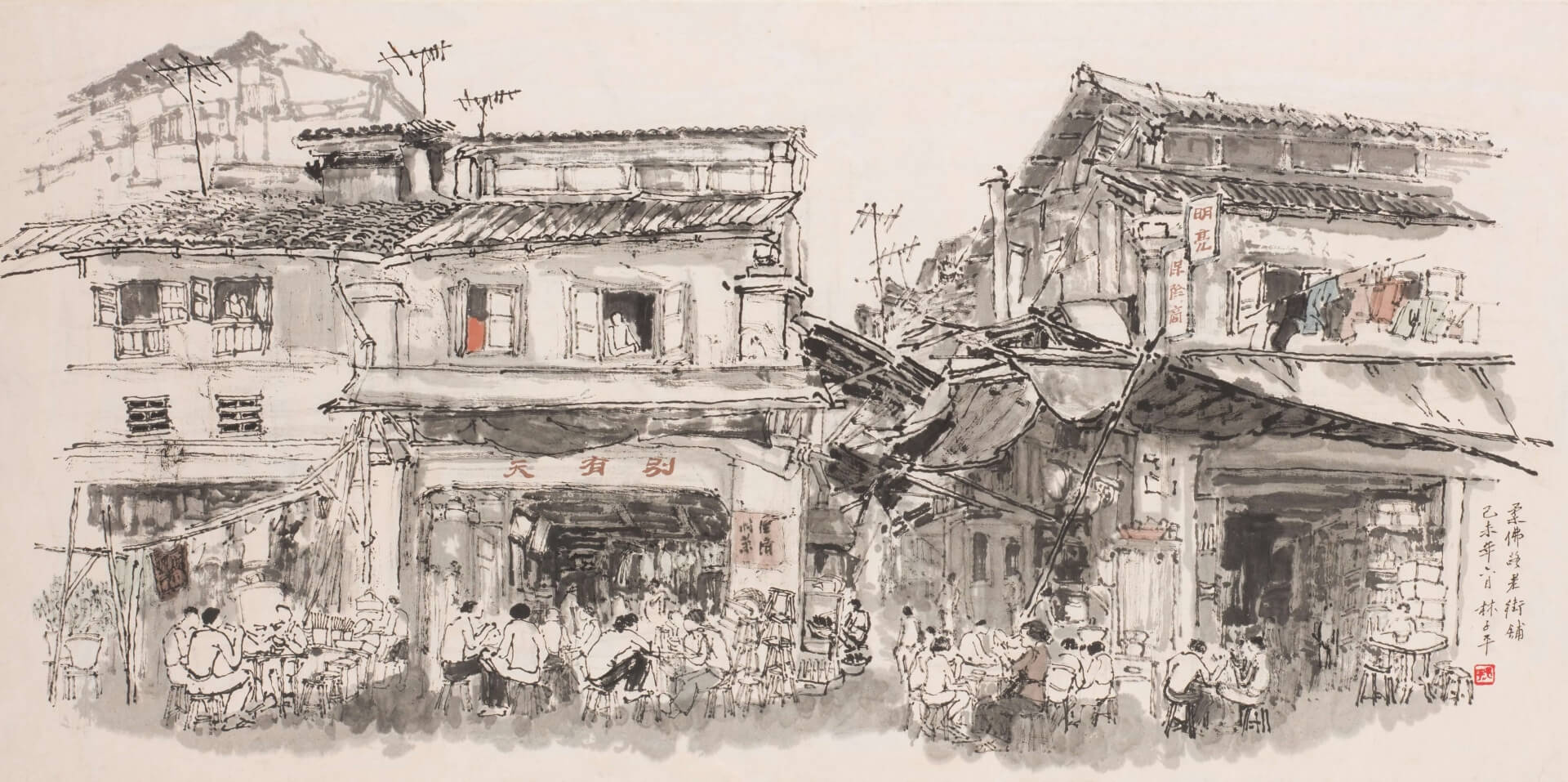
Chen enjoyed painting plein-air, and made frequent trips abroad with fellow artists to capture the flora and fauna, people and places in various countries between the early 1950s and the mid-1970s. These include China, India, Nepal, and neighbouring Indonesia and Malaysia.
Incorporating local elements
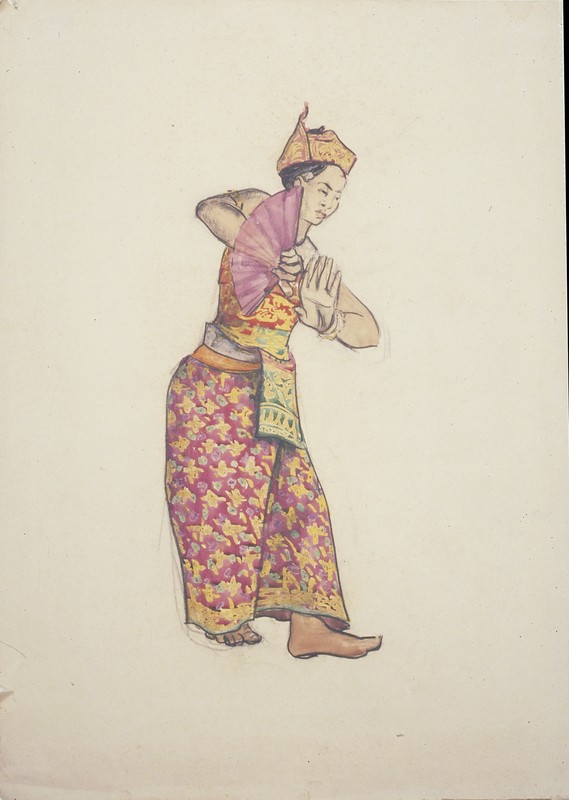
Perhaps the most significant was his trip to Bali in 1952, when he, together with three other Singapore pioneer artists — Liu Kang (1911–2004), Chen Wen Hsi (1906–1991), and Cheong Soo Pieng (1917–1983) — were inspired by the exotic Balinese lifestyle and culture.
The four, all China-born and graduates from Xinhua Academy of Fine Arts in Shanghai, moved to Singapore around the same time in the 1930s or earlier.
Their trip, described by some as “the most important art journey in Singapore’s art history”, was followed by the exhibition of their works, Pictures of Bali, the very next year (1953). Chen’s works painted in 1952 such as Balinese Women (73.5 x 58.5 cm) and Deep Thoughts (68 x 56 cm), both in watercolour, and Pilgrimage (58 x 70 cm) in oil, were among them.
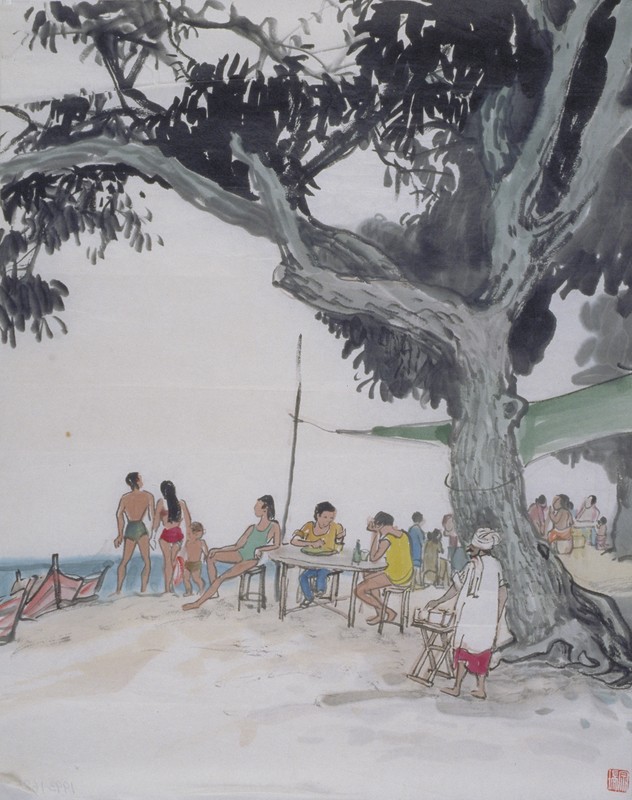
The show created quite a stir, and most importantly, it rekindled interest in the Nanyang style of painting, a localised art movement Chen and another Chinese migrant artist, Tchang Ju Chi (1904–1942), had initiated earlier. They encouraged artists to incorporate local elements like Malay villages and tropical fruits and trees in their Chinese ink or oil paintings. The movement, which later developed into the Nanyang style of painting, was disrupted by World War II.
Remembering Chen
Besides teaching and painting, Chen was also a prolific writer, contributing articles and essays on art and related topics to newspapers and magazines. He also wrote many profiles or “introductions” for fellow artists’ exhibition catalogues and publications.
A selection of 36 of his writings in Chinese published over the years was compiled into a book to mark the centenary of Chen’s birth in 2010. Also published in conjunction with the event was a compilation of his poems, and a commemorative book titled Chen Chong Swee: A Legacy in Truth, Goodness and Beauty. An exhibition of 50 selected works was also held at NAFA.
An English translation of his writings on topics ranging from differences between Chinese and Western painting and art education in Singapore, to his views on the art scene and profiles of some of his artist friends, was published by the National Gallery Singapore in 2017 titled Unfettered Ink: The Writings of Chen Chong Swee.
Chen’s first coffee-table book, The Paintings of Chen Chong Swee, which showcased his mainly Chinese ink and watercolour paintings from the late 1940s to the mid-1970s, was published in 1983. It was just a year after his wife had died, aged 71.
While most of the works in the book depict local scenes and those of neighbouring countries such as Malay villages, tall coconut trees and women in sarongs painted in Nanyang style, two watercolour paintings among the 143 featured stood out in terms of subject matter. They were the Church of St Paul, Malacca (77 x 56 cm) painted in 1955 and Wesley Methodist Church (44 x 31 cm) in 1957.
The following year, the then Ministry of Culture and National Museum staged the Chen Chong Swee Retrospective 1984 exhibition featuring more than 200 of his works in watercolour, Chinese ink, oil, pencil and pastel. It included his 1937 work in oil, My Son (33 x 42 cm).
Chen died after a stroke the following year in 1985, aged 75.
A second posthumous retrospective exhibition was held at the former National Museum Art Gallery in 1993 featuring about 70 of his works, including many of his Nanyang-style tropical landscapes in Chinese ink and watercolour. A book titled Chen Chong Swee: His Thoughts, His Art was published in conjunction with the show.
A year later in 1994, the National Arts Council in collaboration with auction house Sotheby’s held the Chen Chong Swee Charity Auction at the former Empress Place Museum, now the Asian Civilisations Museum. It sold 138 of the 151 paintings donated by Chen’s family for the Chen Chong Swee Scholarship Fund. The auction raised S$730,000.
To honour the pioneer artist and celebrate his legacy, the National Gallery Singapore staged an eight-month-long exhibition of his works from his entire oeuvre in 2017.
Gallery director Eugene Tan, in his foreword to the commemorative book published in conjunction with the show titled Strokes of Life: The Art of Chen Chong Swee, said:
“Chen’s art is perhaps best characterised by the way in which he depicted the local environment and subject matter in Singapore and Southeast Asia using traditional Chinese ink painting, an approach which he was one of the earliest to adopt.”
Chen was conferred the Meritorious Public Service Star in 1965 by Yusof bin Ishak (1910–1970), Singapore’s first president, for his artistic and cultural contributions to Singapore.

Chen Chong Swee – A legacy in Truth, Goodness and Beauty. Singapore: Nanyang Academy of Fine Arts, 2010. | |
Chen Chong Swee – His Thoughts & Art. Singapore: National Museum of Singapore, 1993. | |
Low, Sze Wee and Cai, Heng, eds. Strokes of Life: The Art of Chen Chong Swee. Singapore: National Gallery of Singapore, 2017. | |
Low, Sze Wee, ed. Unfettered Ink: The Writings of Chen Chong Swee. Singapore: National Gallery of Singapore, 2017. | |
Sabapathy, T.K. “Communicable Imagery: A View of Works by Chen Chong Swee.” In The Paintings of Chen Chong Swee, edited by Chen Chi Seng, 10–12. Singapore: Nan Fang Art Company, 1983. | |
Tan, Wee Lee, ed. Chen Zongrui wenji [The writings of Chen Chong Swee]. Singapore: private publication, 2010. |