Classical-style poetry in Singapore Chinese literature


Classical-style poetry and prose can be said to be the earliest forms of writings in Singapore Chinese literature. In fact, it would not be an overstatement to call them the origin of Singapore Chinese literature. In the early days, the literacy and cultural levels of the Chinese communities in Singapore and Malaya were low, and it was only through the vigorous efforts of Tso Ping-lung (1850–1924) and Huang Tsun-hsien (1848–1905) — consulate-generals in Singapore appointed by the Qing government — that a literary scene gradually took shape.
Tso and Huang established literary societies such as Huixian she (Society for Assembly of Worthies) and Tunan she (Society of Journeying to the South), actively set up schools, and encouraged writing, paving the way for the emergence of a literati class. The two men were themselves accomplished poets who had written numerous works inspired by local scenery, products, and daily life. These included Tso’s Selat (Selat is a former name of Singapore), Liulian (Durian) and Yuan duo yimu qiguo bian yi cheng shi (A Poem for the Exotic Garden), as well as Huang’s Yi lian ju tao zagong yiping zuoge (Mixed Blossoms in a Vase), Fanke pian (Stories of Overseas Chinese), and Xinjiapo zashi (12 Miscellaneous Poems on Singapore).
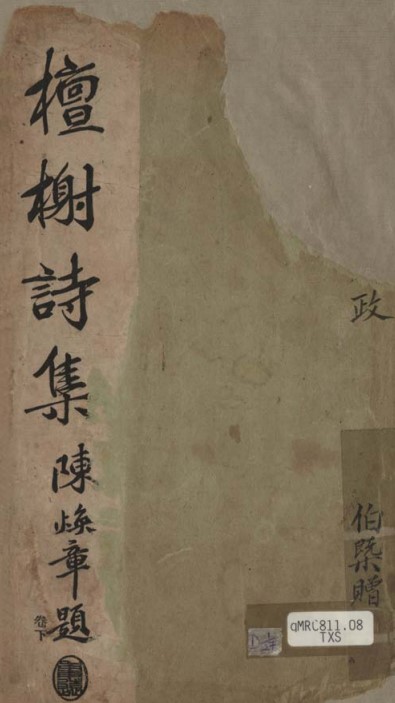
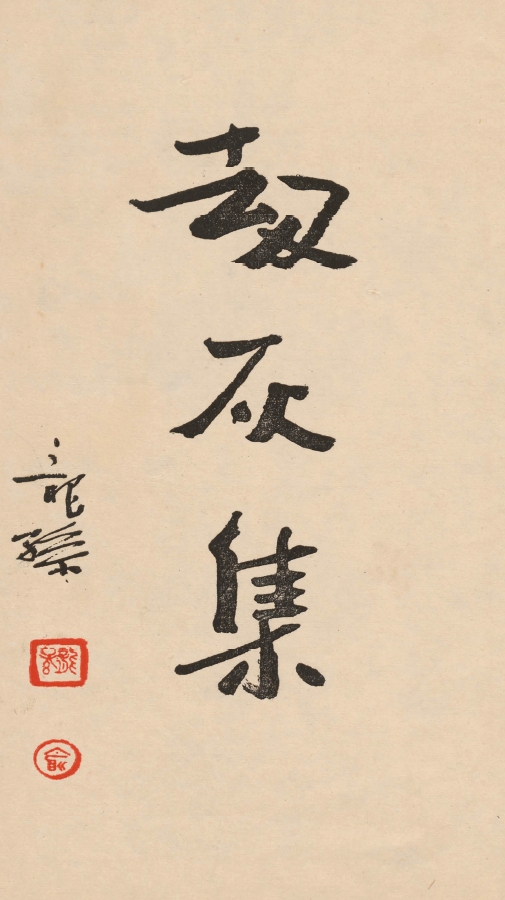
Tanxie shiji published in 1926
Later, Khoo Seok Wan (1874–1941), known as the “Master Poet of the South”, founded the Lize she (Society of Mutual Learning) and Lequn wenshe (Literary Society of Harmonious Fellowship) in Singapore in the late 19th century. In the 1920s, he established Tan she (Sandalwood Society) with poet-monk Shi Ruiyu (c. 1867–1953) and others, as he continued to promote the writing of classical-style poetry. In 1926, Tan she published Tanxie shiji (Poetry Collection of the Sandalwood Society), which stands as the only extant collection of poems by a poetry society in Singapore in the early years. Its content reflects not only local life and culture, but also nostalgia for the homeland in China, revealing the complex emotions of early Chinese settlers in Singapore. Khoo also composed numerous Singapore-themed poems rich in Nanyang flavour, such as four verses of Xingzhou zagan (Reflections on Singapore), over 100 verses of Xingzhou zhuzhi ci (“Bamboo-branch Verses” of Singapore), Wan guo jiadong (Passing through Katong at Night), and Jiadong yu (Rain in Katong). Among them, Wen malai tong shu songsheng (The Recitations of Malay Children) is an exemplary piece that reflects racial harmony:
These aboriginal children reading in the afternoon class.
Like a string of pearls, their voices continue,
Which through the window I clearly hear.
They are water tinkling on the rocks;
Or orioles chirping high in the trees.
How can I, an old man, read like you?
If ever I could have my teeth grown anew.1
The poem vividly likens recitations of Malay children to water tinkling on the rocks and “orioles” singing in the forest. It even expresses a desire to learn from the students, which reflects the writer’s love for and appreciation of the culture of other ethnic groups.
In those days, Chinese poets frequently adopted the concise and popular “bamboo-branch verse” form of poetry to chronicle the daily life and social landscape of Southeast Asia. Lee Keng Lian’s Nanyang zhuzhi ci huibian (Compendium of Bamboo-branch Verses of Southeast Asia) contains more than 4,000 of such poems published in Chinese-language newspapers. These works not only depict the lifestyle and sentiments of early Singaporeans, but also deepen our understanding of pre-war Singapore.
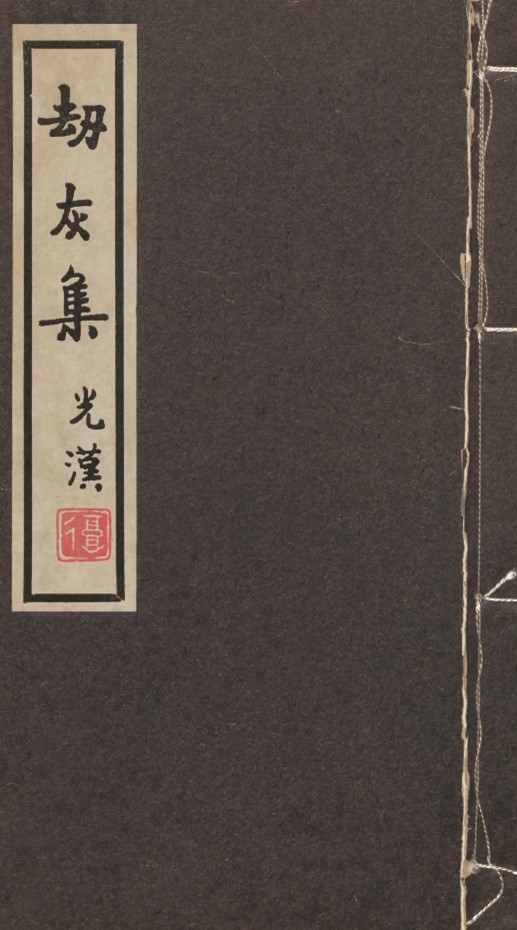
During the Japanese Occupation, under the oppressive rule of the Japanese military government, a group of poets continued to engage in clandestine poetic exchanges, documenting their traumatic experiences and yearning for liberation from Japanese rule. These works were published after the war, including Jiehui ji (Collection of Kalpa Ashes) by Lee Say Long (1898–1972) and Lanhua ji (Orchid Flower Collection) compiled by Zheng Guanghan (1909–1971). The poetry collection Xuehai (Sea of Blood) by Xie Songshan (1891–1965) chronicles the entire history of the occupation, and specifically mentions the Sook Ching Massacre, as well as the various forms of tyranny and social anomalies during the Japanese Occupation.
The founding of Xin Sheng Poets Society
Classical-style poetry flourished in Singapore from the post-war period to the country’s nation-building era. In 1958, a group of poets founded Xin Sheng Poets Society, which remains active today and is the oldest Chinese poetry society in Singapore. In the late 1950s, the Chinese language department of Nanyang University ran classes on poetry and published three anthologies: Yunnan yuan yinchang ji (Collection of Poetry at Yunnan Garden), Xinjiapo gubao jiyoushi (Travel Verses on the Ancient Fort of Singapore), and Nanfeng ciji (Ci Lyric Collection from the South Wind Villa).
Poet Pan Shou (1911–1999), hailed as a “national treasure”, is considered Singapore’s last prominent 20th century poet who wrote in the classical style. A man of profound learning, Pan’s works are refined and concise, incorporating current affairs to offer fresh perspectives. His poem Zhong hua (Flowers of All Kinds), for instance, uses symbolic imagery to celebrate racial harmony:
To my delight, the fragrances blend in harmony,
A toast to the East Wind,
For it made this spring more splendid than the last.
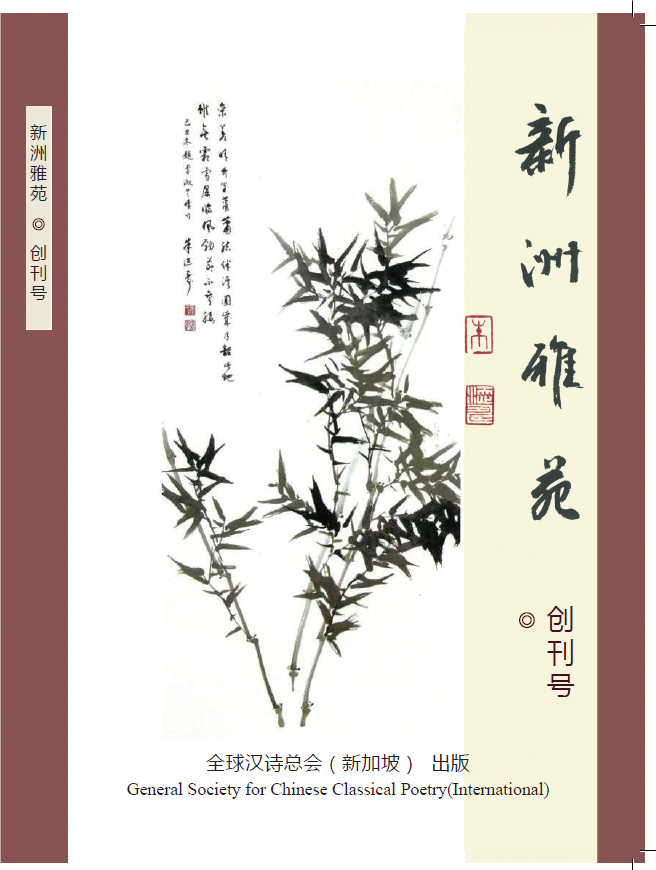
Classical-style poetry has readers of all ages today. Besides Xin Sheng Poets Society and the General Society for Chinese Classical Poetry (International) founded in 1990, a group of students from the National University of Singapore also formed the Nanjin Poetry Club in 2016 to actively promote the study and writing of classical-style poetry on campus. In 2015, the General Society for Chinese Classical Poetry (International) also launched the biannual journal Xinzhou yayuan (Elegantiae Florilegium of the New Island) to provide local poets and students with a platform for the publication and exchange of classical poetry.
This is an edited and translated version of 新华文学中的旧体诗. Click here to read original piece.
| 1 | Translation of the poem follows: Lam Lap, Cultural Transplantation: The Writing of Classical Chinese Poetry in Colonial Singapore, 1887–1945 (Leiden: Brill, 2024), 130. |
Lam, Lap. Cultural Transplantation: The Writing of Classical Chinese Poetry in Colonial Singapore (1887–1945). Leiden: Brill, 2024. | |
Lee, Keng Lian. Malaiya huaren jiutishi yanjinshi (1881–1941) [Evolution of classical-style poetry of Malayan Chinese (1881–1941)]. Shanghai: Shanghai Chinese Classics Publishing House, 1998. | |
“Xinjiapo jiuti shiku” [Repository of Classical Chinese Poetry in Singapore]. NUS Libraries. | |
Wang, Bing. Classical Chinese Poetry in Singapore: Witnesses to Social and Cultural Transformations in the Chinese Community. Lanham, MD: Lexington Books, 2018. |