Peranakan Chinese food in Singapore


Peranakan Chinese cuisine, also known as Nonya (or Nyonya) cuisine,1 is an early example of fusion food in the Malay Archipelago, where ingredients like belacan (shrimp paste) and daun limau purut (kaffir lime leaf) meet Chinese foods such as pork and soy sauce.
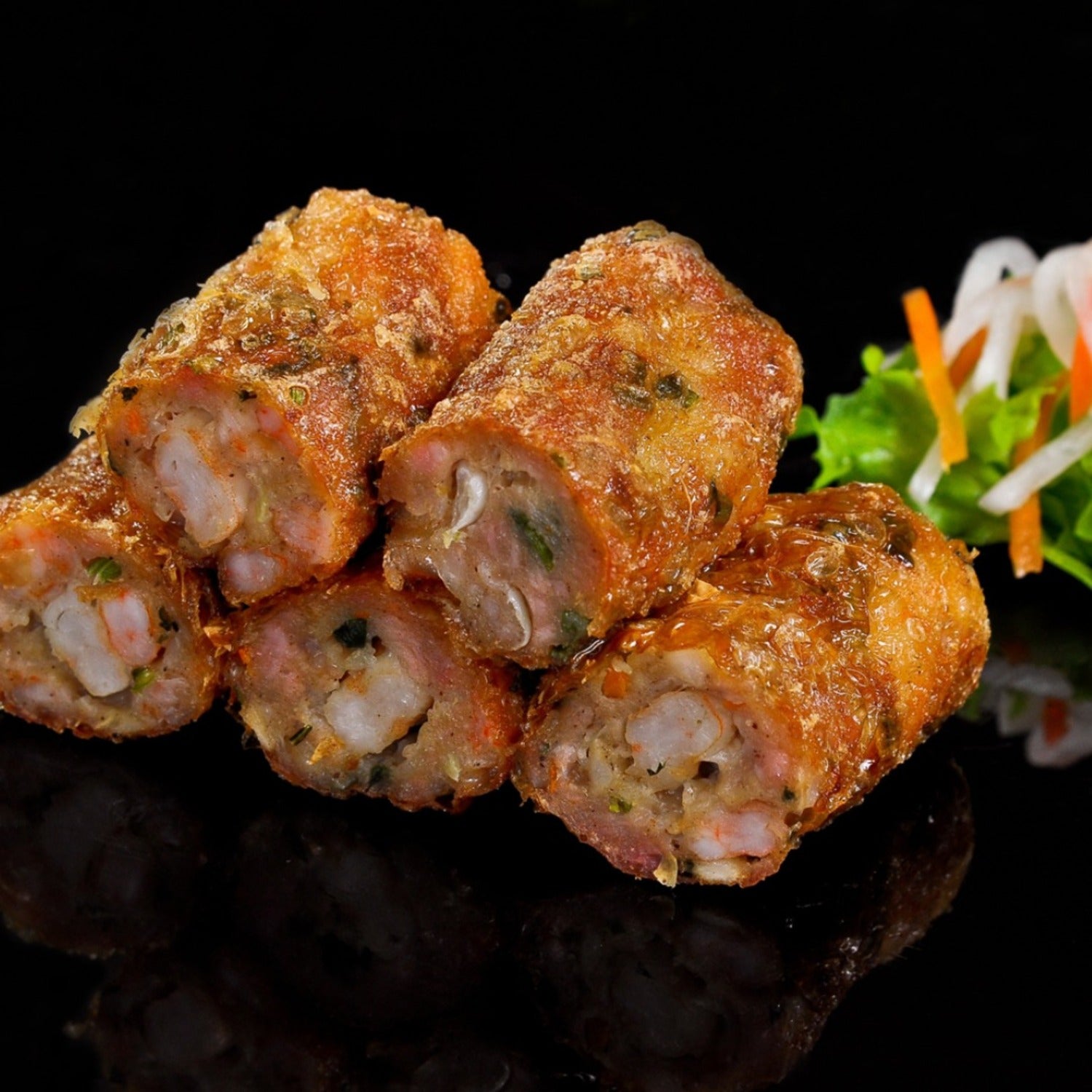
The Peranakan Chinese are the descendants of 15th to 17th-century Chinese immigrants — mainly from the Hokkien or Teochew regions of China — and local Malay or Indonesian women. Many of them lived in the Straits Settlements, at the crossroads of global trade where ingredients and cooking techniques from India and China made their way into households. Over centuries, Nonyas (Peranakan women) incorporated these influences into their cooking. Singapore’s Peranakan cuisine draws heavily on the culinary customs of the Malay world, resulting in coconut-heavy dishes and robust sambals (chilli-based pastes). The Hokkien influence is meanwhile strong in ngoh hiang (fried meat rolls), babi pongteh (braised pork), itek tim (salted vegetable duck soup, also known as kiam chye ark), and chap chye (mixed vegetables), which use common Chinese ingredients such as soy sauce, pork, and duck.2
British colonial rule also influenced the culinary habits of the Peranakans. Imported goods like condensed milk, Worcestershire sauce, bread, and butter made their way into Peranakan kitchens,3 giving rise to new dishes like shortcrust curry puffs. As ovens became more commonplace, the Nonyas, who typically steamed their desserts, also embraced baking, adding treats like kueh bengkah (baked cassava cake) to their repertoire.4
Singapore’s Peranakan Chinese food is distinct from that of the Malaysian cities of Penang and Malacca, which are also home to large Peranakan communities. Penang Nonya food tends to be sourer and tangier due to its proximity to Thailand, while the Nonya food in Malacca (where the ancestors of many Singapore Peranakans came from) is more influenced by Portuguese and Eurasian traditions, and typically uses chicken instead of pork due to its large Muslim population.
A labour of love
Known for its lengthy preparation process, Singapore’s Peranakan cuisine has complex flavour profiles — from fiery and spicy food like gerang asam ikan (spicy and sour fish) and laksa lemak, to tangier or milder dishes such as itek tim and chap chye. Many dishes involve braising and stewing over low heat over many hours, giving rise to rich broths and tender meats.
The heart and soul of almost every Peranakan dish is the rempah, or spice paste, created by hand-grinding fresh spices with a stone pestle and mortar. Shallots, earthy candlenut, fiery chillies, and pungent belacan are painstakingly mashed into a savoury, aromatic paste. Similarly, sambal belacan is made by hand-grinding dried shrimp paste, fresh chillies, and other spices into a fiery, umami-rich condiment.
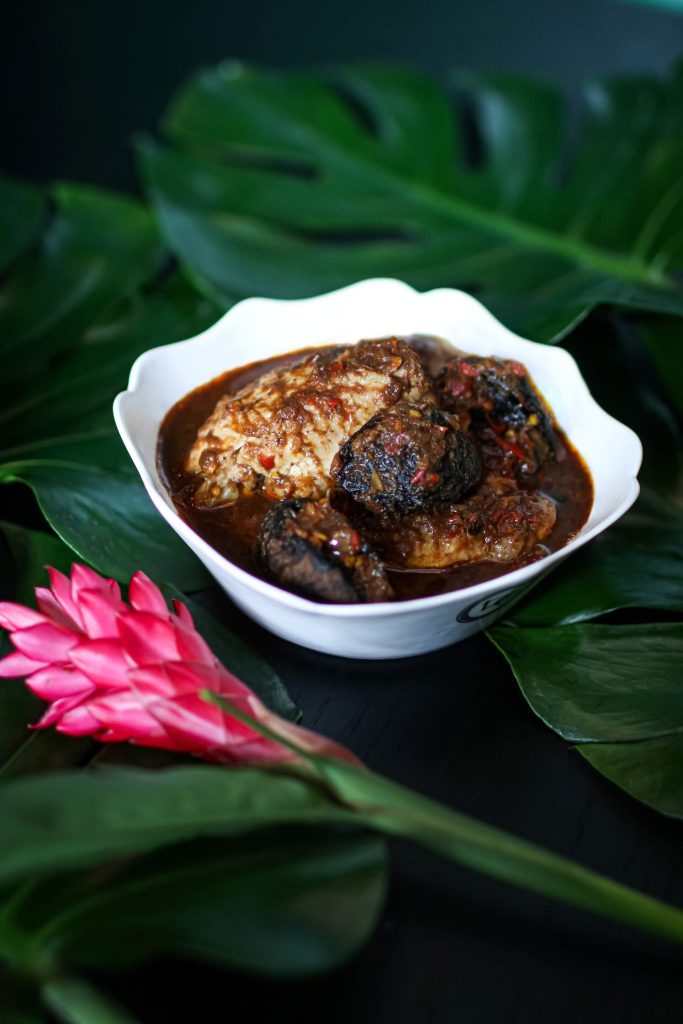
Perhaps the most iconic Nonya ingredient is buah keluak. This dark, chestnut-like nut lends a deep, earthy smokiness to the chicken curry dish of ayam buah keluak. It has been hailed by doyenne of Peranakan cooking Violet Oon as the “black diamond” of Peranakan cooking — a nod to a rare black truffle from France known as the “black diamond of Perigord”.5 Native to the region, buah keluak has long been prized by generations of cooks in maritime Southeast Asia, and was used in Javanese dishes dating as far back as the 12th century.6 Buah keluak is “intoxicating” in more ways than one: it contains hydrogen cyanide and is poisonous raw. Before it can be used, the nut must undergo a lengthy detoxification process, which involves burying the nut in ash for up to 40 days. By the time it is unearthed, the whole shell and flesh would have turned black, signifying that it is safe for cooking. Afterwards, the blackened nuts are thoroughly scrubbed and soaked in water. Then their insides are scraped out, pounded, and mixed with minced pork before the paste is stuffed back into the shell. Finally, the stuffed shells are cooked with diced chicken, rempah, and other spices.7
The classic eats
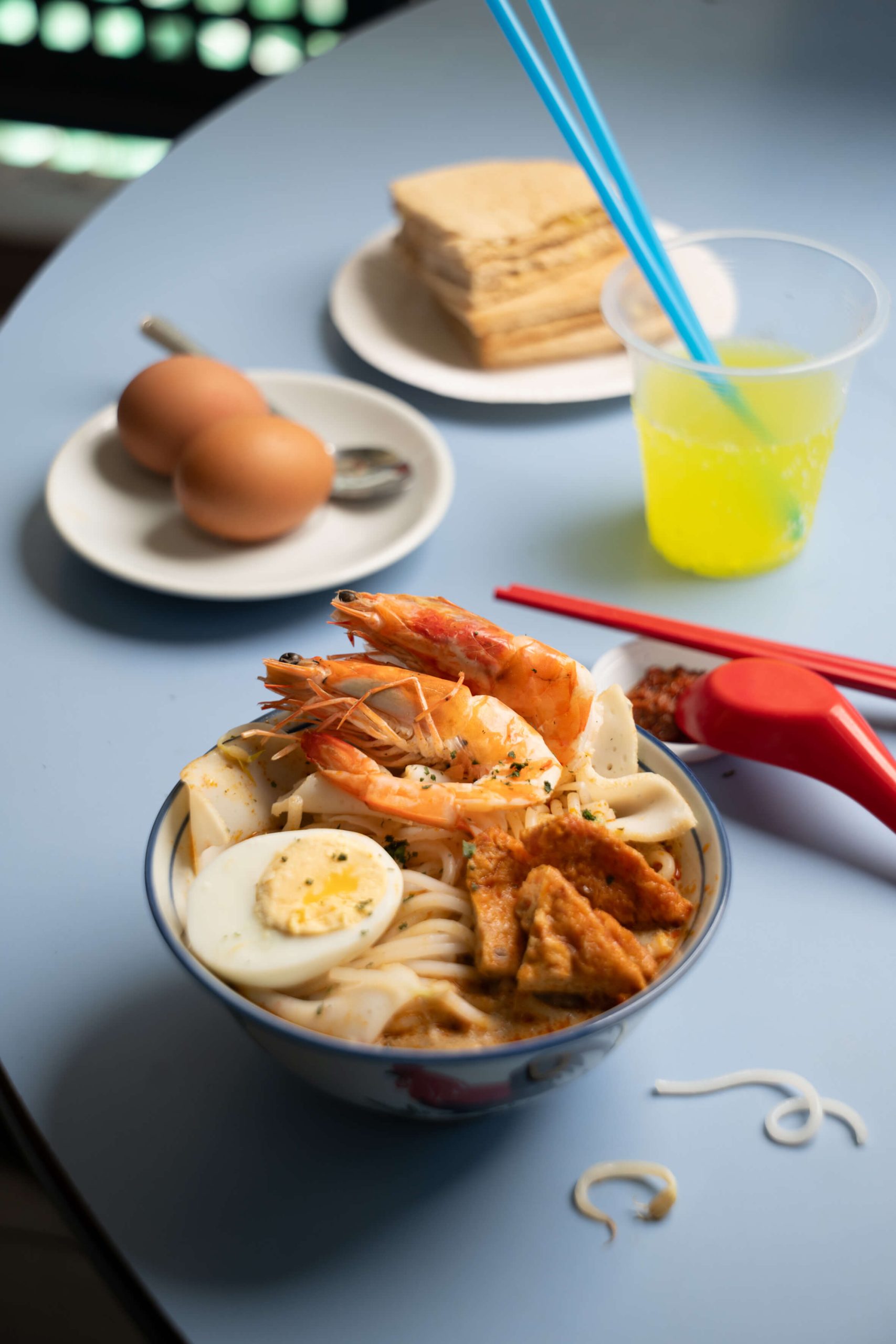
Another cornerstone of Peranakan cuisine is laksa lemak. Unlike its tangy Penang counterpart assam laksa, which consists of coarse rice vermicelli in a hot and sour fish gravy, this version consists of rice vermicelli served in a curry-based soup made with the generous use of coconut milk. It is garnished with prawns, fishcake, cockles, and sambal belacan.
A dish representative of the culture’s penchant for fusion is babi pongteh, a hearty stew that blends Chinese ingredients like pork belly, dried mushrooms, and salty fermented bean sauce with Malay elements like sambal belacan. The pork is slow-braised until meltingly tender, resulting in a sweet and savoury dish that is uniquely Peranakan.
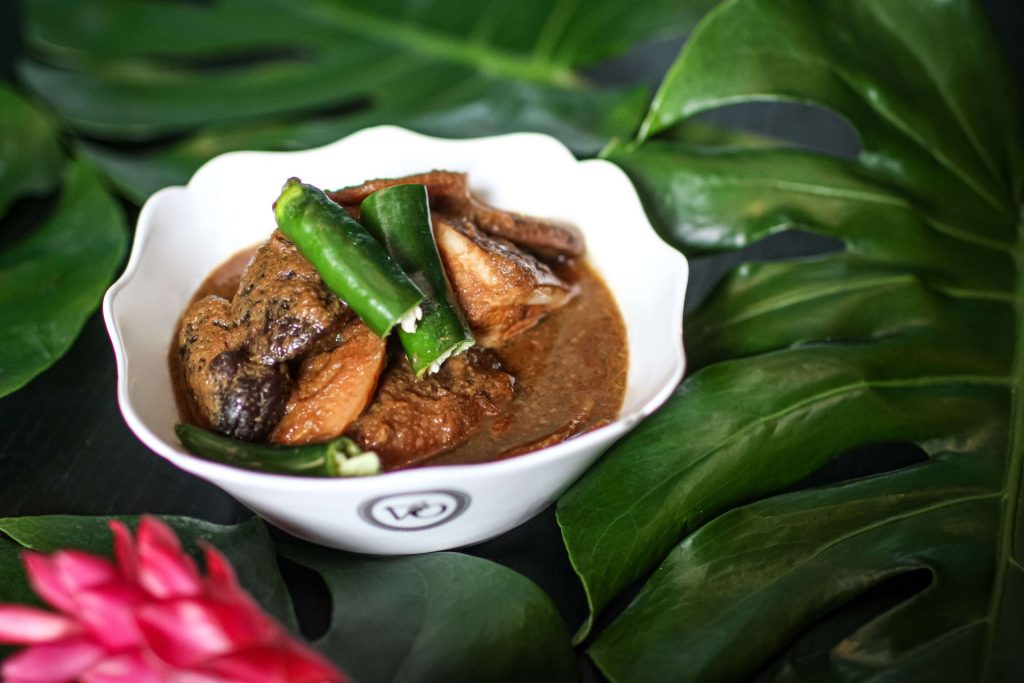
For a lighter, more nuanced offering, itek tim is a clear broth made with duck, salted mustard greens, and tomatoes. Through a slow simmering process, the rich flavour of the duck is drawn into the broth, which is then cut through by the sharp, salty tang of the preserved vegetables.
Nonya kueh chang, or bak zhang, is another must-try. This glutinous rice dumpling is both sweet and savoury, compared to the distinctly savoury Hokkien zhang. Nonya zhang uses slightly different ingredients — such as lean pork, candied winter melon and coriander powder — from its Hokkien counterpart, which often includes salted egg yolk and chestnuts. The rice in the Nonya version does not use dark soya sauce, but is tinged blue with blue pea flower juice.8
Finally, there is otak-otak, a savoury, slightly spicy fish paste. “Otak” meaning “brains” in Malay, is a nod to the dish’s mousse-like texture.9 Fresh fish, typically mackerel, is blended with a rempah. This mixture is wrapped in banana leaves and grilled or steamed, and often served alongside nasi lemak. Incidentally, nasi lemak, a dish consisting of rice cooked in coconut milk and pandan leaf, was traditionally served on the 12th day of Peranakan weddings to show that the groom’s family was happy with the bride’s purity.
Kueh: Petite Peranakan treats
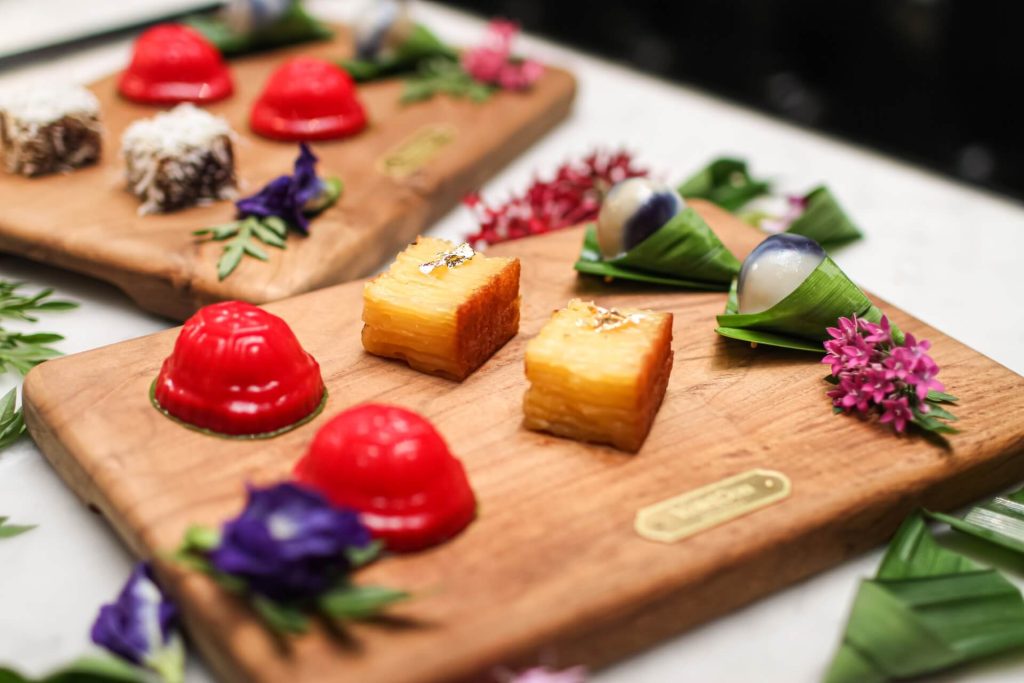
Peranakan cuisine also offers a selection of bite-sized snacks known as kueh.
1. Ondeh ondeh
These bright green balls bursting with flavour are made with glutinous rice flour coated with grated coconut and filled with gula melaka, or palm sugar.
2. Kueh salat
This two-layered dessert is made with steamed glutinous rice (sometimes coloured blue using the butterfly pea flower) and an upper layer of green pandan custard. It is also called pulut seri kaya.
3. Ang ku kueh
This snack, which has Hokkien origins and means “red tortoise cake”, is made with a glutinous rice flour skin and a sweet filling of mung bean paste or ground peanuts. Also called kuih ku merah, it is often imprinted with the patterns of a tortoise shell, and was traditionally offered to deities for good fortune.
4. Kueh dadar
This is a green, pandan-flavoured rolled crepe with a sweet coconut filling made with gula melaka.
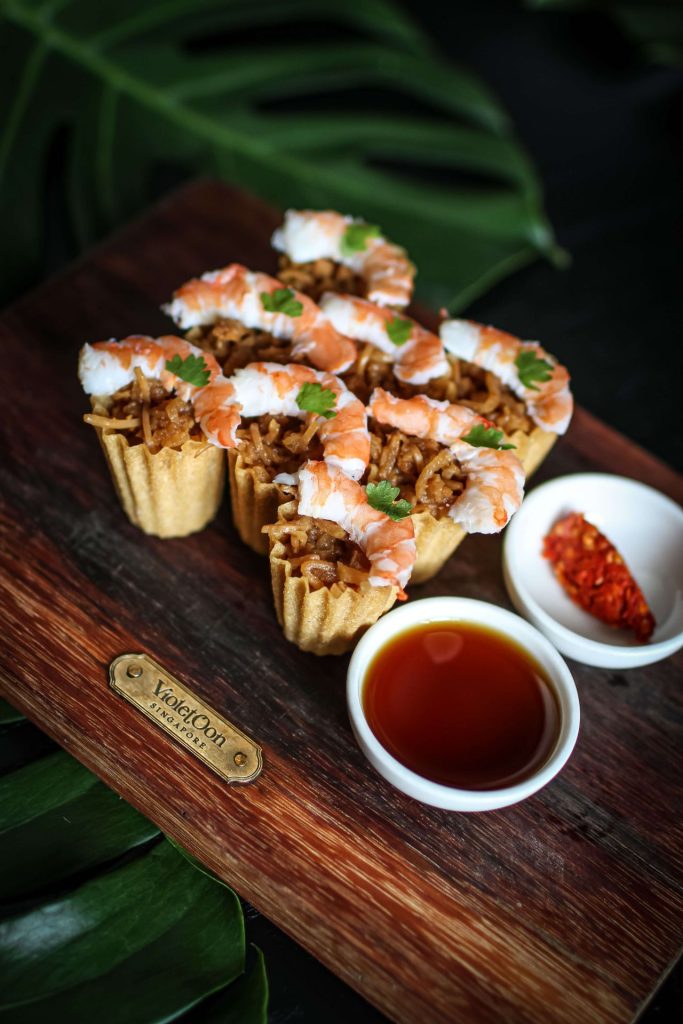
5. Kueh pie tee
While this is not, strictly speaking, a kueh, it is often referred to as such as it is similarly served as a bite-sized snack — often during special occasions such as Chinese New Year and weddings. Featuring a thin and crispy pastry shell, it is filled with a savoury and spicy mixture of shredded turnips, sliced vegetables, and prawns.
Other notable kueh are kueh kosui (a soft, chewy kueh made with pandan and gula melaka, topped with shredded coconut), kueh bengkah (baked tapioca cake), apom berkuah (coconut pancakes often paired with a rich, sticky banana sauce), and kueh lapis beras (colourful multi-layered kueh).
Vanishing traditions
Peranakan home dining used to be a more complex affair. The influence of the British popularised the use of a long dining table for formal, multi-course meals, although the traditional round Chinese table would still be used in the kitchen.11 As more affluent Peranakan households adopted this practice during special occasions such as weddings, birthdays, and Chinese New Year, the table earned itself a local name: tok panjang (tok meaning “table” in Hokkien and panjang meaning “long” in Malay).
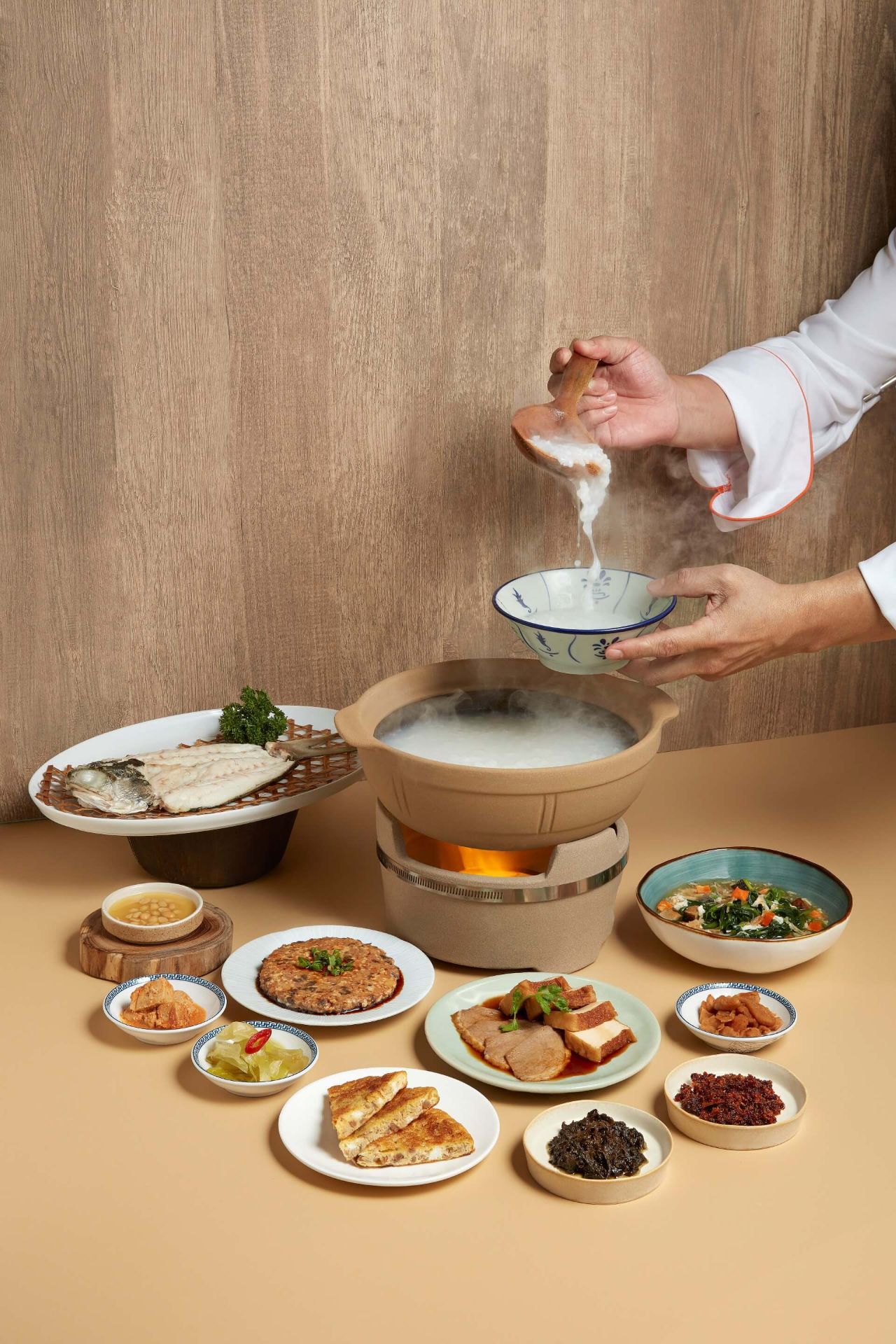
Wedding feasts were particularly elaborate and designed to showcase the family’s status, featuring classic dishes like ayam buah keluak, symbolising fertility and the hope for male offspring, and kueh pie tee, whose cup-like shape represents gold ingots and wealth. Colourful kueh like the nine-layer kueh lapis beras and ang ku kueh were highlights at such celebratory occasions.12 Meanwhile, birthday celebrations would typically feature Nonya lam mee, also known as “birthday mee”, to wish the birthday girl or boy longevity. Similar to Hokkien prawn mee, it features a mix of yellow noodles and rice noodles, but it is served in prawn and pork broth rather than fried. Funerals and ancestral veneration, on the other hand, leaned towards more traditional Hokkien Chinese practices. Meals were often vegetarian or consisted of simple dishes, such as porridge. Colourful elements were also toned down — for example, the bright-red ang ku kueh is made black for the occasion.
Many of these traditions have faded as the community grows increasingly Westernised. Many home cooks opt for shortcuts, replacing the pestle and mortar with the electric blender, buying packaged coconut milk rather than squeezing the milk fresh from grated coconut, and using pressure cookers rather than slow-braising. A number of once-beloved, but laborious-to-prepare dishes have all but vanished from the scene, one of them being nasi ulam, a rice dish tossed with eight or more finely shredded herbs, finely shredded grilled fish and diced cooked prawns. Then there is hati babi bungkus, which consists of diced pork liver and pork flavoured with coriander powder and soy sauce parcels wrapped in pig’s caul fat, steamed, and then fried to brown perfection. Chef Oon adds: “Dishes such as itek siyow — braised duck in tamarind juice, dark soya sauce, sugar, and coriander powder — and traditional kerabu salads made with foraged greens like fern shoots or winged beans have also slipped out of everyday cooking, largely because of the amount of labour involved and the disappearance of certain ingredients from our urban environment. There is a well-loved Peranakan dish with Cantonese origins called lo kai yit which I remember from my childhood, made up of various pork offal and pork skin cooked in fermented red bean cheese, which is not found today, even in traditional Peranakan households.”13
Another long-gone custom is the social ritual of betel-nut chewing. Each betel quid comprised a betel leaf, a smear of slaked lime, a sliver of areca nut, and occasionally a dab of gambier or spices for flavour, which were housed in elegant, multi-compartment sets. Betel-nut chewing was said to increase alertness, bodily warmth, and improve digestion, although it also commonly led to red saliva, and even red stool. The tradition has largely died out as the areca nut is now a known carcinogen.
Modern twist on old flavours
Over the years, Peranakan cuisine in Singapore has transitioned from the private domain of the Nonya home kitchen to a celebrated feature of the nation’s public dining scene.
The island is today home to several Peranakan restaurants, the earliest of which were concentrated in the Katong-Joo Chiat area where many Peranakan families had settled. Guan Hoe Soon is one of the oldest that still exists today, set up in 1953 at 214 Joo Chiat Road before finally moving to its current address at 200 Joo Chiat Road. It was founded by a Hainanese man, Yap Chee Quee (1908–1978), who arrived in Singapore in 1918 and learnt Nonya cooking when he was a housekeeper for a Peranakan family.14
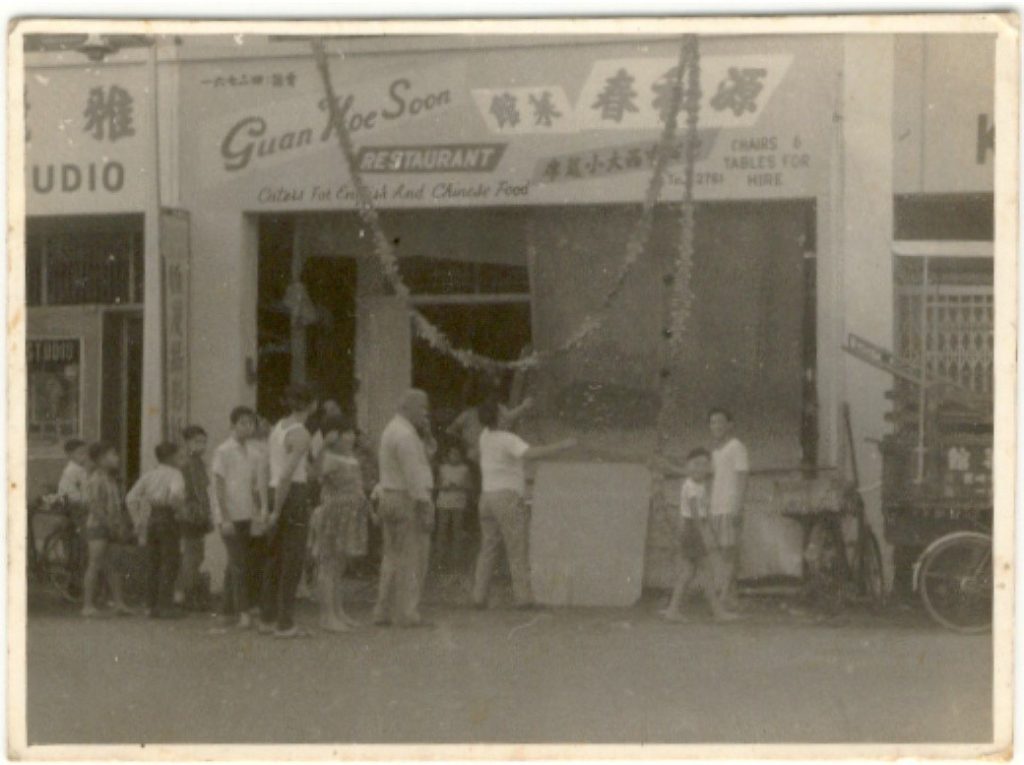
Other pioneers include one of the first Peranakan buffets in Singapore, started by chef Yap Kow Wah in 1972 at the now-defunct Apollo Hotel; Chilli Padi Nonya Restaurant at 11 Joo Chiat Place, started in 1997 by Patricia Lee Siang Choo (a protégé of well-known Peranakan chef Jolly Wee); and Kim Choo Kueh Chang, which was founded in 1945 and retains its first shopfront at Joo Chiat Place, with another outlet in East Coast Road.
Peranakan cookbooks have also helped to preserve tradition. One of the earliest and most well-known is Mrs Lee’s Cookbook (1974), by Mrs Lee Chin Koon (née Chua Jim Neo), mother of former Prime Minister Lee Kuan Yew. Her cookbook set the standard for Peranakan cuisine and was studied by many aspiring chefs and home cooks. Her sister, Mrs Leong Yee Soo (née Chua Sim Neo), also published a cookbook, Singaporean Cooking (1976). In the 1970s and 1980s, Lee and Leong were among the first Peranakan women actively spreading their knowledge about Straits-born cuisine through cooking classes.15 Other contributors to the scene include Violet Oon’s Peranakan Cooking (1978) and Wee Eng Hwa’s Cooking for the President (2010), which compiled her mother’s recipes and reflections as the wife of Singapore’s former president Wee Kim Wee.
When Singapore became a major tourist destination from the late 1980s and began promoting its food as a main attraction, Peranakan cuisine gained more prominence. In 1988, Oon was appointed Singapore’s food ambassador by the Singapore Tourist Promotion Board (now the Singapore Tourism Board) and later participated in the first Singapore Food Festival. Launched in 1994, the festival highlighted Peranakan food as one of the major cuisines of Singapore. Several restaurants — such as Peranakan Inn, Nonya and Baba, and Nona Manis — also sprung up in the 1980s.
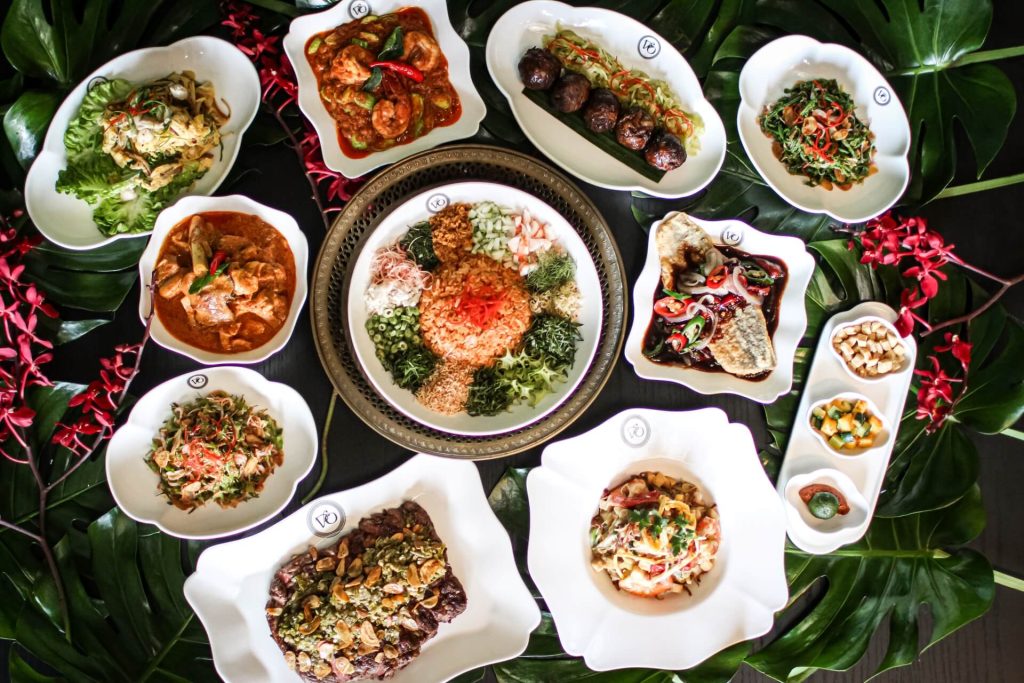
Restaurants are putting a modern twist on traditional Peranakan cuisine. One example is Candlenut, a fine-dining restaurant by chef Malcolm Lee, which in 2016 became the first Peranakan restaurant to win a Michelin Star. It offers a modern take on the cuisine, with dishes such as buah keluak ice cream. Other establishments are diving deeper into traditional flavours and finding new ways to expose diners to them. Violet Oon Singapore, a stalwart of Peranakan cuisine on the island, is reintroducing old-time ingredients such as the raw winged bean, used in its kerabu salad, and nangka (jackfruit), simmered in a turmeric coconut gravy and enhanced with salted fish.
While aspects of Peranakan culture in Singapore are said to be dying, the cuisine remains well-loved. It saw a resurgence of interest after the launch of the popular television drama The Little Nyonya (2008), which depicted the life and tradition of the Peranakans, including their food. Today, even as some modern cooks opt to simplify traditional recipes, and others experiment with modern spins on centuries-old Nonya delights, the cuisine, and its spirit of creative fusion, continue to live on.
| 1 | While the term “Peranakan” encompasses several communities, such as the Jawi Peranakans and Peranakan Indians, each with their own rich gastronomic heritage, this article focuses on the world of Peranakan Chinese food in Singapore. |
| 2 | Author’s email interview with Violet Oon, founder of Violet Oon Singapore, 3 September 2025. |
| 3 | Many Peranakans spoke English and enjoyed a symbiotic relationship with the British in colonial Singapore, serving as middlemen between the colonial administration and the rest of the Chinese population. |
| 4 | Author’s email interview with Violet Oon, 3 September 2025. |
| 5 | Violet Oon, “Life in food with Violet Oon: Buah keluak, the black diamond of Peranakan cooking,” The Straits Times, 16 January 2022. |
| 6 | Khir Johari, “From Java with love: The origin of the keluak,” Peranakan Magazine, 5 August 2022. |
| 7 | Author’s interview with Jenny Yap, third-generation owner of Guan Hoe Soon Restaurant, on 16 September 2025. |
| 8 | Genevieve Sarah Loh, “Bak chang 101: How to tell Hokkien, Nyonya, Teochew and other rice dumplings apart,” CNA, 28 May 2021. |
| 9 | Khir Johari, The Food of Singapore Malays: Gastronomic Travels Through the Archipelago (Singapore: Marshall Cavendish Editions, 2021), 200. |
| 10 | Christopher Tan, “Cups and sources: Hunting down the origins of kueh pie tee,” BiblioAsia 20, no. 4, January–March 2025. |
| 11 | Author’s email interview with Violet Oon, 3 September 2025. |
| 12 | Author’s interview with Jenny Yap, 16 September 2025. |
| 13 | Author’s email interview with Violet Oon, 3 September 2025. |
| 14 | Author’s interview with Jenny Yap, 16 September 2025. |
| 15 | Lee Geok Boi, “The evolution of Straits-born cuisine,” BiblioAsia 17, no. 2, July–September 2021. |
Cheo, Kim Ban. A Baba Wedding. Singapore: Marshall Cavendish, 2009. | |
Chia, Felix. The Babas. Singapore: Estate of Felix Chia Thian Hoe; Landmark Books, 2015. | |
Chia, Philip. Peranakan Heritage Cooking. Singapore: Marshall Cavendish International (Asia), 2012. | |
Khir, Johari. The Food of Singapore Malays: Gastronomic Travels through the Archipelago. Singapore: Marshall Cavendish, 2022. | |
Kua, Bak Lim, ed. Xinjiapo huaren tongshi [A general history of the Chinese in Singapore]. Singapore: Singapore Federation of Chinese Clan Associations, 2019. | |
Lee, Chin Koon. Lee’s Cookbook: Nonya Recipes and Other Favourite Recipes. Singapore: Eurasia Press, 1974. | |
Lee, Geok Boi. “The evolution of Straits-born cuisine.” BiblioAsia 17, 2, July–September 2021. | |
Lokasundari, Vijaya et al. “Chinese culture and customs in Peranakan funerals in Malaysia and Singapore.” SEARCH-Journal of the Southeast Asia Research Centre for Communications and Humanities 8, no. 1 (2016): 17–36. | |
Ong, Jin Teong. Nonya Heritage Kitchen: Origins, Utensils and Recipes. Singapore: Landmark Books, 2016. | |
Oon, Violet. Peranakan Cooking. Singapore: Her World, 1978. | |
“Peranakan cuisine in Singapore.” Roots, National Heritage Board. | |
Tan, Chee-Beng, ed. Chinese Food and Foodways in Southeast Asia and Beyond. Singapore: NUS Press, 2012. | |
Tan, Christopher. The Way of Kueh: Savouring & Saving Singapore’s Heritage Desserts. Singapore: Epigram Books, 2020. | |
Wee, Eng Hwa. Cooking for the President: Reflections & Recipes of Mrs Wee Kim Wee. Singapore: Wee Eng Hua, 2022. | |
Wee, Sharon. Growing Up in a Nonya Kitchen: Singapore Recipes from My Mother. Singapore: Marshall Cavendish International (Asia), 2023. |