The development of popular entertainment in Singapore


In contrast to high art, popular entertainment refers to accessible and relatable performances targeting the general public and enjoyed by the masses. “Popular” does not mean “vulgar” — during the Ming and Qing dynasties, scholars and the literati enjoyed reading popular fiction too. Commenting on the vernacular-fiction anthology Jingben tongsu xiaoshuo (Popular Stories From the Capital), Chinese writer Lu Xun (1881–1936) noted that “its subject matters are often drawn from recent events or other narrative genres, and aim primarily to entertain while also incorporating moral lessons”. This observation succinctly defines the characteristics and social function of popular entertainment.1
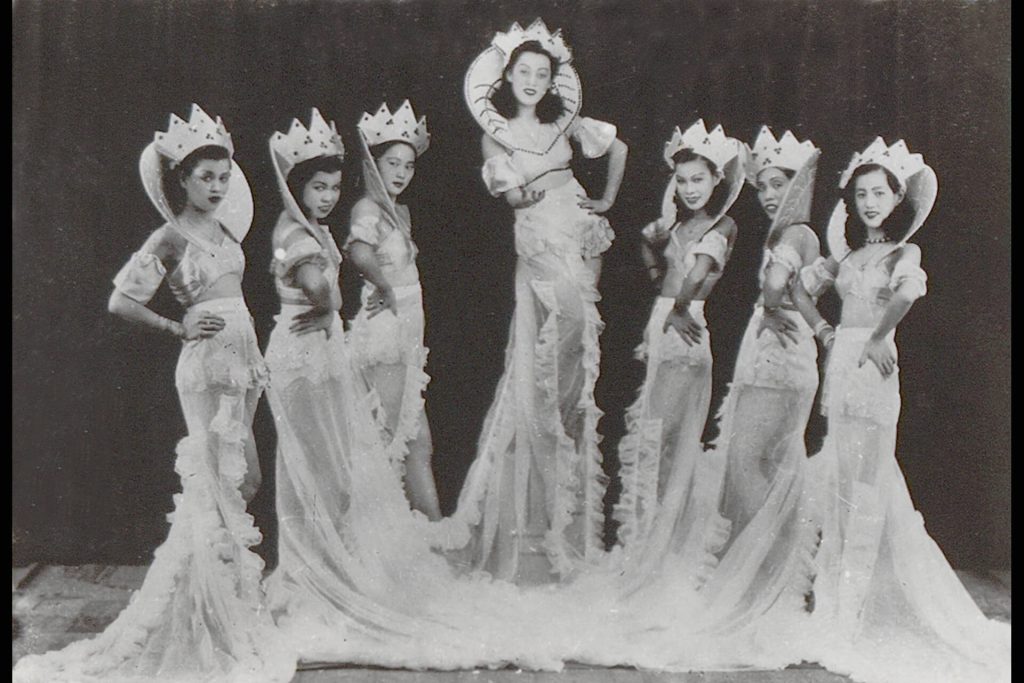
In Singapore, popular entertainment generally refers to entertainment forms found at performance venues for the masses, such as getai, amusement parks and those used by song and dance troupes. Tabloids and radio stations also formed a unique ecosystem with these venues. Literati who travelled south from China, as well as artistes and performing troupes from China, contributed to the development of popular entertainment in Singapore. Back then, venues such as amusement parks, theatres, restaurants, nightclubs and cabarets provided performance opportunities and spaces for artistes and troupes. The “Three Worlds” amusement parks were especially popular as they were relatively affordable. While the performance venues were sometimes shabby, that did not affect the quality of the shows or audiences’ enthusiasm.
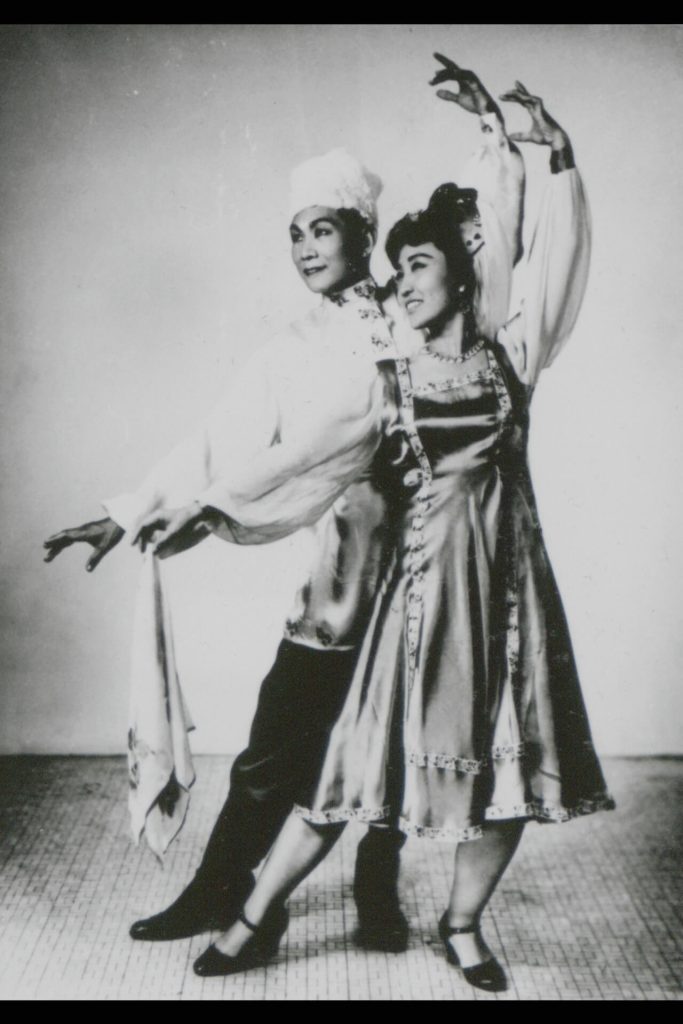
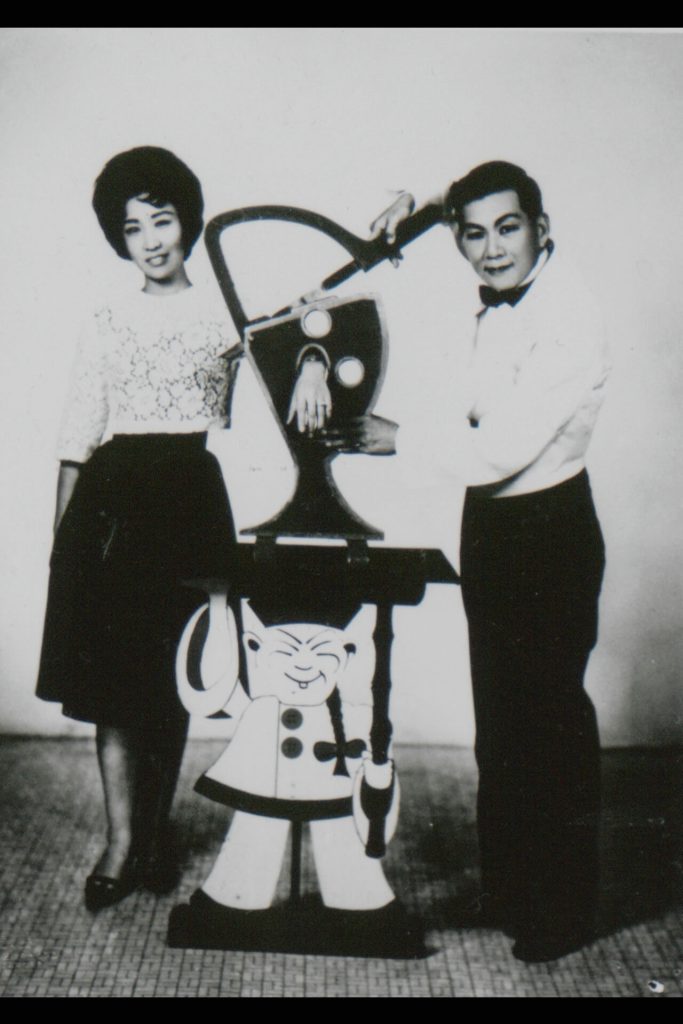
In the post-war era, competition between artistes and performance troupes intensified. To attract audiences, some performers started to put on risqué and provocative dances, such as stripteases, leg lifts, and the “Bath of the Concubine” act, while some troupes hired famous singers from overseas to boost their shows’ appeal. According to the book Juren baixiang (Profiles of Artistes),2 performers active in Singapore and Malaya in the early 1950s3 included Wang Sha (1925–1998), Kwan Sin Ngee (1927–1996), Bai Yan (1920–2019), Huang Hun, Tang Qisheng, Zhu Jun, Hong Hong, Meng Lang, Ye Kezhong, Lu Ding, Ma Jun (unknown–1986) and others. Among them, Bai Yan was known as a versatile all-round entertainer. He once remarked that he was at the peak of his fame when he was doing plays such as Thunderstorm and Crossroads at amusement parks. He was also good at performing comedic sketches, crosstalk and traditional Peking opera. He even learnt Indian classical dance, in addition to being a magician.4 This showed that on top of singing skills, the audiences also paid attention to other forms of performances, including plays, skits, dances, operas, crosstalk, magic shows and acrobatics. To a certain extent, artistes and troupes in the entertainment industry then had a knack for variety-style performances.
The rise and fall of getai and tabloids
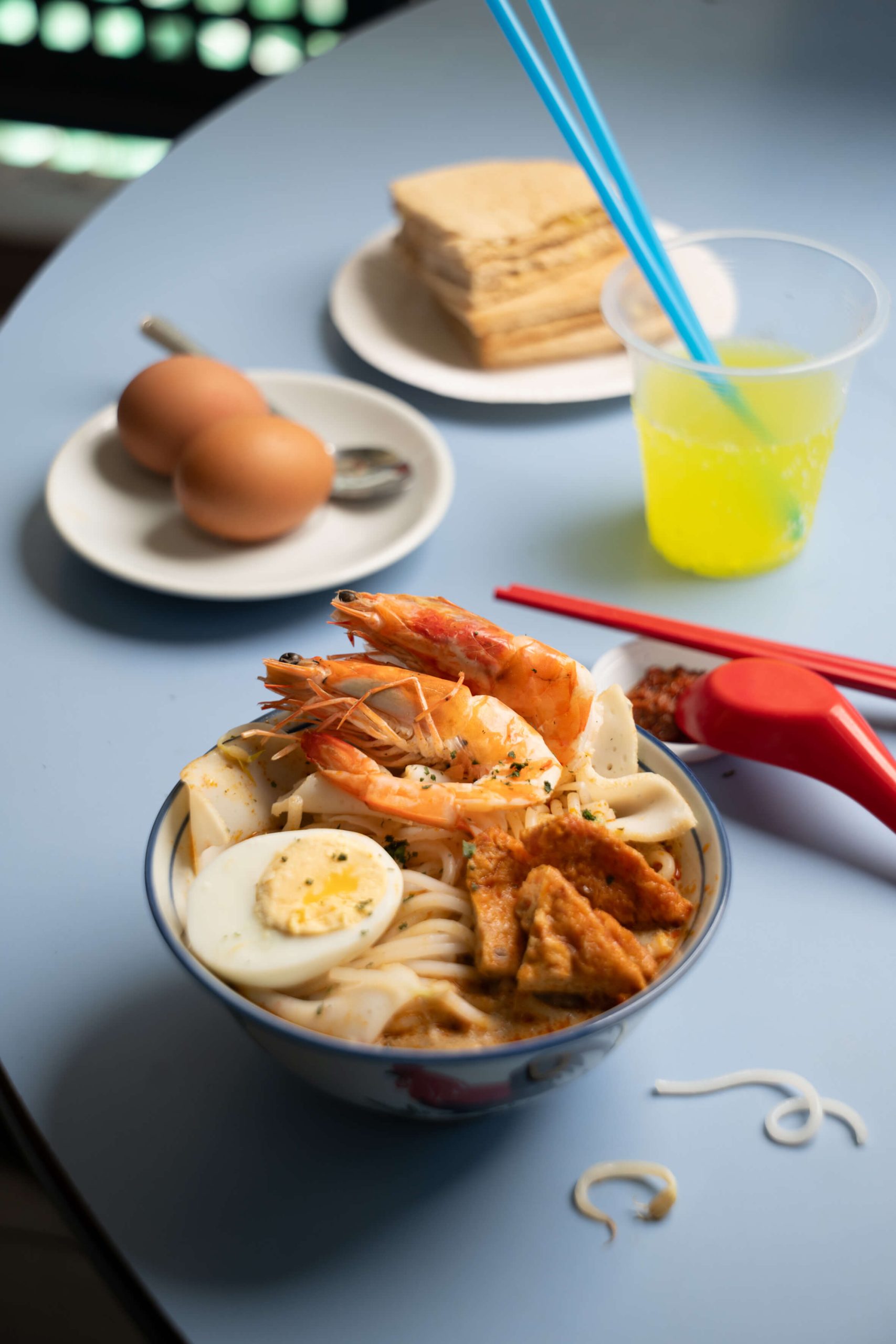
The development of popular entertainment was closely tied to amusement parks and tabloids. The former provided audiences with diverse entertainment options, while the latter served as the main publicity medium for artistes, song and dance troupes, and getai. In oral interviews, many performers noted that before World War II, a bowl of kway teow cost only three cents and a cup of coffee just one cent, while admission to amusement parks was also affordable at 10 cents. Buoyed by the post-war surge in rubber prices, even more people flocked to amusement parks with their families for leisure and entertainment as affluence grew. The getai industry in Singapore also flourished, with new getai forming one after another. Each amusement park housed its own “signature” getai. The more prominent ones included Man Jiang Hong, Feng Feng and Shangri-La at New World; Night Garden, Tao Hua Jiang and Bai Le Men at Great World; as well as Happy Sky and Mei Gui Lin at Happy World. The New Life Revue, which was established in 1959 at New World, took a different approach by promoting its “Four Heavenly Kings” — Chin Whai, Wei Meng, Zhu Jiang and Feng Chong — who specialised in performing artistic songs.5
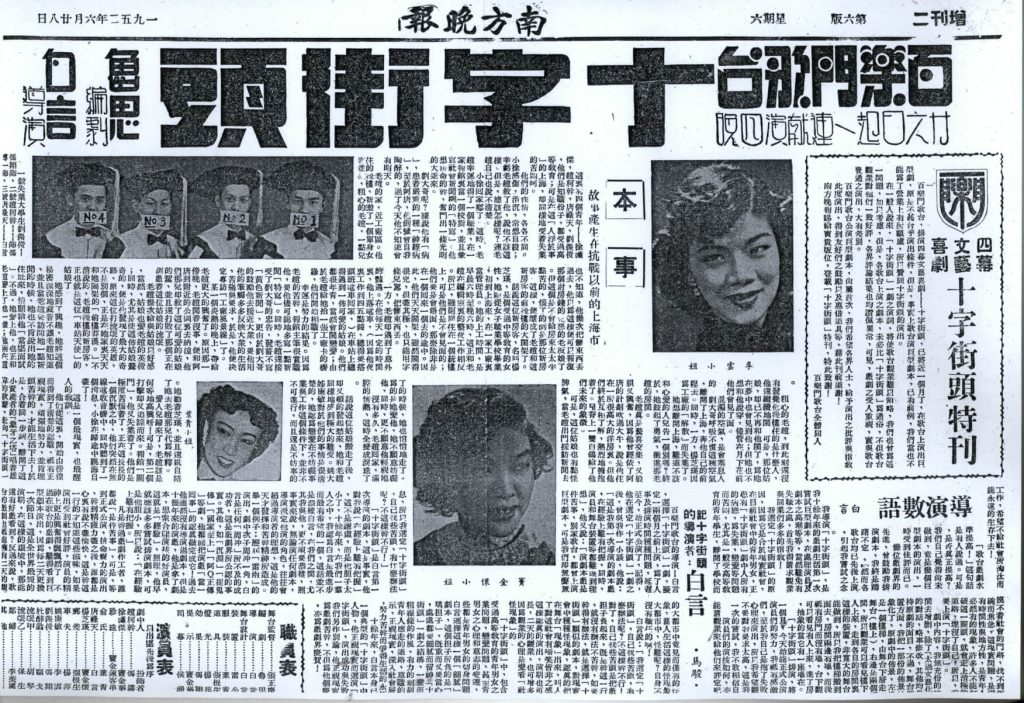
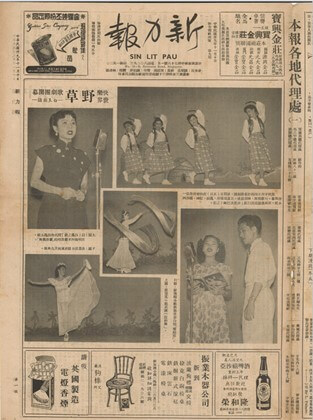
The 1950s saw the mushrooming of getai and tabloids in Singapore. At one point, the number of Chinese-language tabloids hit 40. Some closed down after just a few print runs, while the longest-running tabloid, Yeh Teng Pao, operated for 10 years. Other tabloids from the same period included Huan Le Bao, Xiang Bin Bao, Feng Pao, Nei Mu Xin Wen, Zhong Liu Bao and Ti Press.
One of the founders of Yeh Teng Pao, Lu Junxi (birth and death years unknown), also published Chuang Zao Bao, which began in 1953 but ceased publication shortly after. He later ran Lao Ye Bao and Qi Cai Bao, which failed as well. Yeh Teng Pao, which ran from 1949 to 1959, covered not only entertainment news but also political and social news on the newly founded People’s Republic of China. Its supplement, on the other hand, focused on anecdotes and serialised novels. The editorial teams of most other tabloids were unstable and lacked professional training. To attract readers, their content tended to focus on gossip and salacious news, particularly sensational news about getai, which was often accompanied by provocative cover photos. A mutually beneficial relationship thus developed between getai and tabloids.6
When Singapore became a self-governing state in 1959, the People’s Action Party government began to clamp down on “yellow culture” (degenerate behaviour). Many getai subsequently closed down, while the tabloid craze faded quickly after the war. In the 1960s, to adapt to changing times, getai moved from amusement parks to restaurants, nightclubs and cabarets, and later to temples and the heartlands. Interestingly, the close ties among song and dance troupes, getai, amusement parks and tabloids led not only to stardom for some artistes, but also many nuptials. Lau Yee-cheung (1918–2018) and his wife Lo Pai Wan were one such couple. After the war, Lau worked as an editor for nearly 10 newspapers and tabloids in Singapore and Malaya, including Chung Shing Jit Pao, Sin Lit Pau, Life News, Ti Press, Shieh Pau and Kang Pao. He frequently covered news on getai and performers. There were countless Chinese literati like him who had travelled south from China and followed not only popular entertainment news, but also wrote fiction and poetry as well as commented on current affairs and social issues. As a result, tabloids became an important platform where intellectuals touched on popular culture, giving rise to a unique ecosystem of mass entertainment culture in Singapore.
Blending entertainment and education through radio and television
Radio became a close companion of the common people in the 20th century. Rediffusion, which began broadcasting in August 1949, was a well-known private commercial radio station after the war. Subscribers paid a monthly fee to listen to its programmes via its exclusive radio set. At its peak, Rediffusion had 120,000 subscribers and more than 720,000 listeners.7 The station offered Chinese and English channels, and in post-war Singapore, many coffeeshops and stores installed Rediffusion to attract customers. Whenever radio dramas and dialect storytelling programmes were aired, particularly those by the three master storytellers Ong Toh (1920–1999), Lee Dai Soh (1913–1989) and Ng Chia Keng (1912–2003), large crowds would gather to listen. Rediffusion also broadcast Mandarin news, produced radio dramas, organised singing competitions and trained broadcasters. In October 1966, Rediffusion established a Children’s Drama Group, founded and led by its presenters Zeng Pengxiang (1959–2006) and Chong Chow Yin.8 Several drama groups under Rediffusion also served as a cradle for nurturing talents for Singapore’s performing arts and cultural scene. Local artistes such as Anna Lim, Xiang Yun, Chen Shucheng, veteran crosstalk performer Tan Poh Han, writer Yeng Pway Ngon (1947–2021) and playwright Kuo Pao Kun (1939–2002) had all joined these drama groups at one point.
From the 1950s to the 1980s, Rediffusion organised singing competitions featuring artistic songs and later pop music. These contests unearthed many talented singers and catalysed the vibrant growth of Singapore’s music scene. Among those who found fame were Huang Qing Yuan, Chin Whai, Wei Min, Chen Weide and Low Cheong Fong (known for their renditions of artistic songs), as well as pop music competition winners Chang Siao Ying, Ling Xiao and Yue Lei.9 In 1963, Singapore’s two television channels, Channel 5 and Channel 8, started broadcasting on a regular basis. The most popular television programmes then were musical variety shows such as Sharp Night, Huayueliangxiao (A Beautiful Evening), Xingxing zhige (Song of the Stars), Zaigezaiwu (Singing and Dancing) and Qingge miaowu (Melodious Tunes). During this period, radio, getai and the record industry developed a symbiotic relationship. As the local television industry reached its peak in the 1990s, television and radio gradually became an indispensable part of daily life.
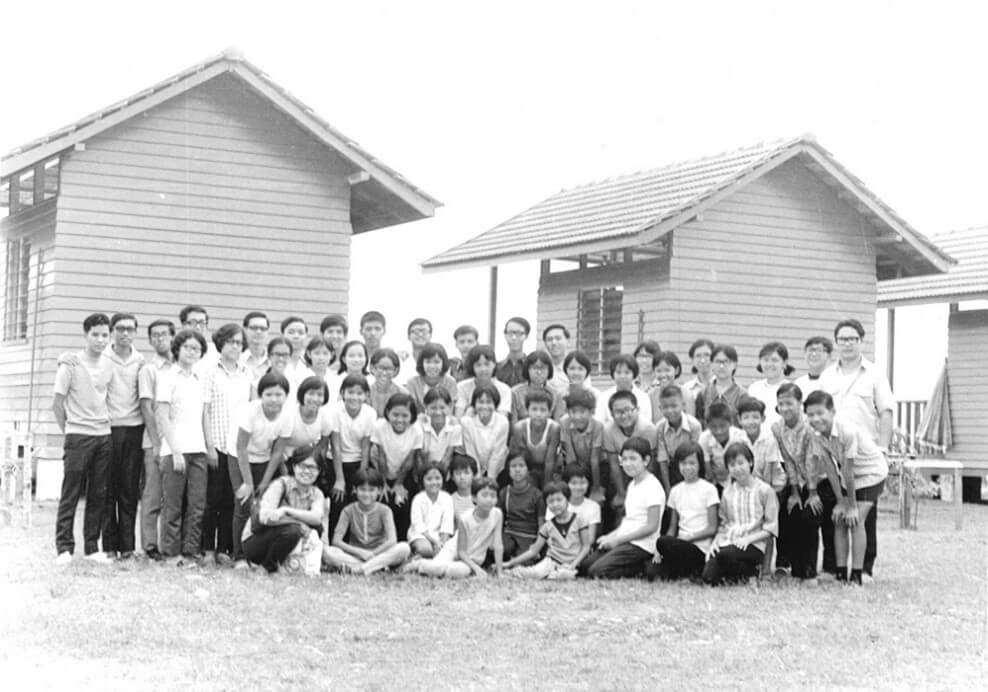
Besides providing entertainment, television and radio were also tasked with the mission to educate the public and foster civic awareness. For example, Radio Malaya produced programmes such as Kongzhong yisheng (Doctors on Air) and Kongzhong lüshi (Lawyers on Air) to educate listeners on medical and legal matters. Comedians Wang Sha (1925–1998) and Ye Feng (1932–1995) also used humour and wit in their screen performances to raise awareness on topics such as environmental protection, public hygiene and racial harmony. It should also be noted that the repertoire of song and dance troupes and getai in post-war Singapore was wholesome as well. Plays staged nightly, such as New Year’s Sacrifice, Night Inn, Thunderstorm, The Wilderness and Crossroads, attracted not only the literati but also families with children. To retain audiences, some members of song and dance troupes from China, such as Lu Ding, Chen Changlin, Bai Yan, Kwan Sin Ngee and Feng Xiang, began performing crosstalk, offering wholesome popular entertainment that also educated.10
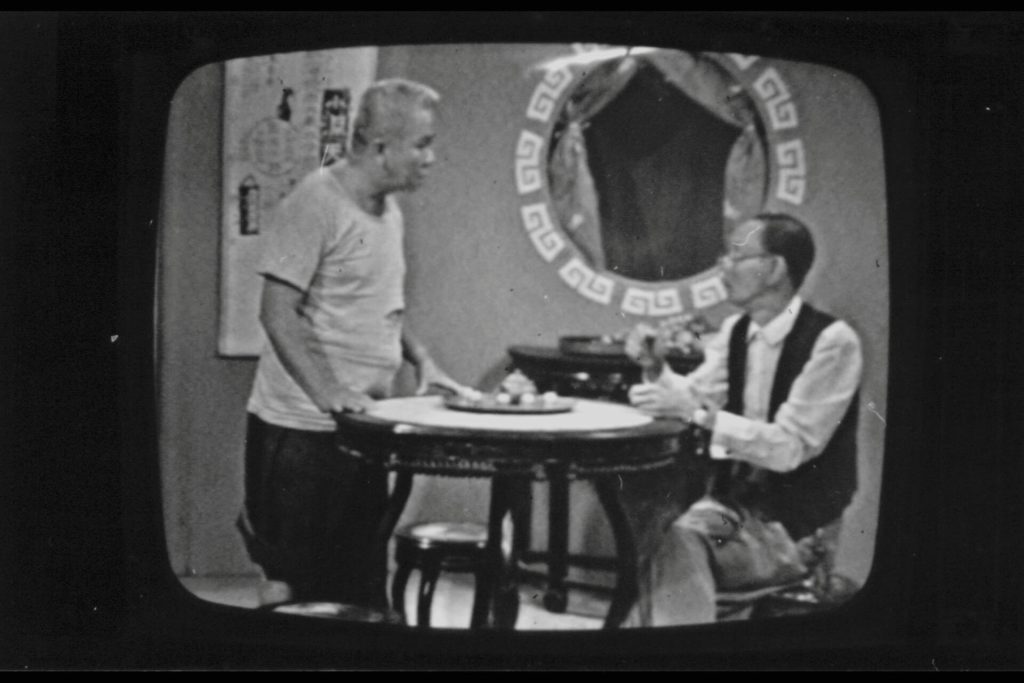
Following the “yellow culture” that permeated getai performances in the 1950s, calls for an “anti-yellow campaign” had grown more strident. Artistes and troupes in the popular entertainment industry often struggled to shake off the negative image. Wang Sha once lamented that one could not “just shout empty slogans about the arts…the ultimate goal of performers is to earn a living”. Even if “people keep saying you are from getai, or from the song and dance troupes … we [always] have the responsibility to bring something good to audiences”.11 With the launch of the Speak Mandarin Campaign in 1979, television and radio programmes in dialects gradually faded from the spotlight. As the use of dialects declined, many forms of mass entertainment that were multilingual also lost their audiences.
Today, the local entertainment ecosystem is very different from what it used to be. But the contributions of earlier generations of artistes should not be forgotten, as they constitute an important part of our cultural heritage.
This is an edited and translated version of 新加坡通俗娱乐的发展. Click here to read original piece.
| 1 | See Lu Xun, Zhongguo xiaoshuo shilue [A brief history of Chinese fiction] (Shanghai: Shanghai Chinese Classics Publishing House, 1998). |
| 2 | See Chew Wee Kai, “Nanfeiyan — bentu getai wenhua de lanshang” [The origins of local getai culture], Lianhe Zaobao, 23 December 2019. |
| 3 | Birth and death years of some artistes are unknown. |
| 4 | Bai Yan, oral history interview, 21 June 1985, National Archives of Singapore, Reel/Disc 1–24. |
| 5 | Wong Chin Soon, “Jiu shijie de getai zhengba” [Rivalries between getai in the “Old World”], Oneness Magazine 43 (2023). |
| 6 | Tay Bon Hui, Xinjiapo huawen baoye shi (1881–1972) [History of Chinese newspapers in Singapore (1881–1972)] (Singapore: Xinma chuban yinshua gongsi, 1973), 76–80. |
| 7 | Leong Hui Chuan, “Chongwen ‘li de husheng’ xiri duozi duocai de shiguang” [Reliving the past of Rediffusion], BiblioAsia 8, no. 3 (October–December 2012), 18–23. |
| 8 | Lee Yong Tick, “Youru yizhi shenqi huabi – gan’en li de husheng shao’er zu” [Like a magical paintbrush — Gratitude to the Rediffusion’s Children’s Drama Group], Lianhe Zaobao, 8 July 2016; Lee Yong Tick, “Huainian enshi Zeng Pengxiang” [Remembering my mentor, Zeng Pengxiang], Yuan Magazine 151 (2021). |
| 9 | Leong Hui Chuan, “Chongwen ‘li de husheng’ xiri duozi duocai de shiguang” [Reliving the past of Rediffusion]. |
| 10 | Han Lao Da, “Xinjiapo xiangsheng huodong de huigu yu qianzhan” [Crosstalk in Singapore: reflections and prospects], Sin Feng Xiang Sheng Society website. |
| 11 | Wang Sha, oral history interview, 21 August 1992, National Archives of Singapore, Reel/Disc 1–11. |
Wang Sha, oral history interview by Tan Beng Luan, 21 August 1992, National Archives of Singapore (accession no. 001371), Reel/Disc 1–11. | |
Kwan Sin Ngee, oral history interview by Tan Beng Luan, 18 August 1992, National Archives of Singapore (accession no. 001369), Reel/Disc 1–14. | |
Bai Yan, oral history interview by Tan Beng Luan and Lye Soo Choon, 21 June 1985, National Archives of Singapore (accession no. 000578), Reel/Disc 1–24. |