Joint examination for Chinese-medium primary schools before independence


During the period of colonial rule in Singapore, the British government adopted a passive, laissez-faire approach to Chinese-language education. Consequently, Chinese-medium schools in Singapore were left to fend for themselves for a long time. In the 1930s, Chinese community leaders introduced a joint examination for Chinese-medium primary schools to improve teaching quality and consolidate scattered educational resources, marking the transition of these schools from operating independently to becoming part of a more coordinated system.
Early Chinese-medium schools
Early Chinese-medium schools were mostly set up by dialect-based clan associations or kinship organisations. Due to dialect differences and localised interests, these schools had little administrative or academic interaction with each other, and functioned more like separate cultural enclaves.
Before the joint examination was introduced, a school’s teaching standards, curriculum pace, and teacher qualifications were entirely determined by its own school board. These early institutions tended to follow the practices of traditional private schools or adopt models from China. During the Republican era, local Chinese-medium schools gradually shifted towards a modern model that included subjects such as mathematics, geography, history, science, and health.
The lack of government support or a central coordinating body made it impossible for these schools to establish common teaching standards and educational materials. Furthermore, they relied entirely on the financial support and dedication of wealthy businessmen, such as Tan Kah Kee (1874–1961) and Aw Boon Haw (1882–1954). The schools risked closure whenever the circumstances of their patrons changed unexpectedly. Teacher turnover was also highly volatile, compounded by a lack of standardised professional evaluations.
Recognising these shortcomings, Chinese community leaders began planning a joint examination to evaluate teaching quality and encourage the adoption of standardised materials across different schools. Many schools, for instance, started using textbooks designed specifically for Chinese-medium schools in Southeast Asia — a shift that can be seen as an early step towards localised educational content.
Establishment and benefits of the joint examination
On 13 November 1930, Lim Keng Lian (1893–1969), Director of the Education Section of the Hokkien Huay Kuan, and Chng Phee Tong (1889–1962), convened a meeting at the Ee Hoe Hean Club. The purpose of the meeting was to propose a joint examination for Chinese-medium primary schools. Representatives from over 10 such schools were in attendance. Lim pointed out that, as these schools operated independently with little communication or consensus, a joint organisation was needed to raise teaching standards. The meeting resolved to establish the Chinese Primary School Examination Committee to advance this landmark educational reform.
The following day, on 14 November 1930, Nanyang Siang Pau published a report on the meeting under the headline “Kongqian weiyou de chuangju” (An unprecedented initiative). The proposed examination was hailed as “the precursor to the unification of Chinese education”. Notably, this was two years before the announcement of the Nanjing Nationalist government’s 1932 Provisional Regulations for Primary and Secondary School Graduation Examinations.
The committee swiftly set up an examination division to formulate regulations, select test subjects, design exam papers, and establish grading criteria. A week later, the committee publicly announced the following key details of the examination:
- The examination would be conducted at two levels: Primary 4 and Primary 6;
- The examination would test four subjects: Chinese language, English language, arithmetic, and general knowledge;
- The inaugural examination would be held on 13 and 14 December in the hall of the Chinese Industrial and Commercial Continuation School (now Gongshang Primary School);
- The examination papers would be set by schools outside Singapore and marked by independent education experts who were not affiliated with any of the participating schools;
- The Chinese language paper would consist of true-or-false, multiple-choice, error-correction, fill-in-the-blank, and short-answer questions. There would be no essay component.
The inaugural examination
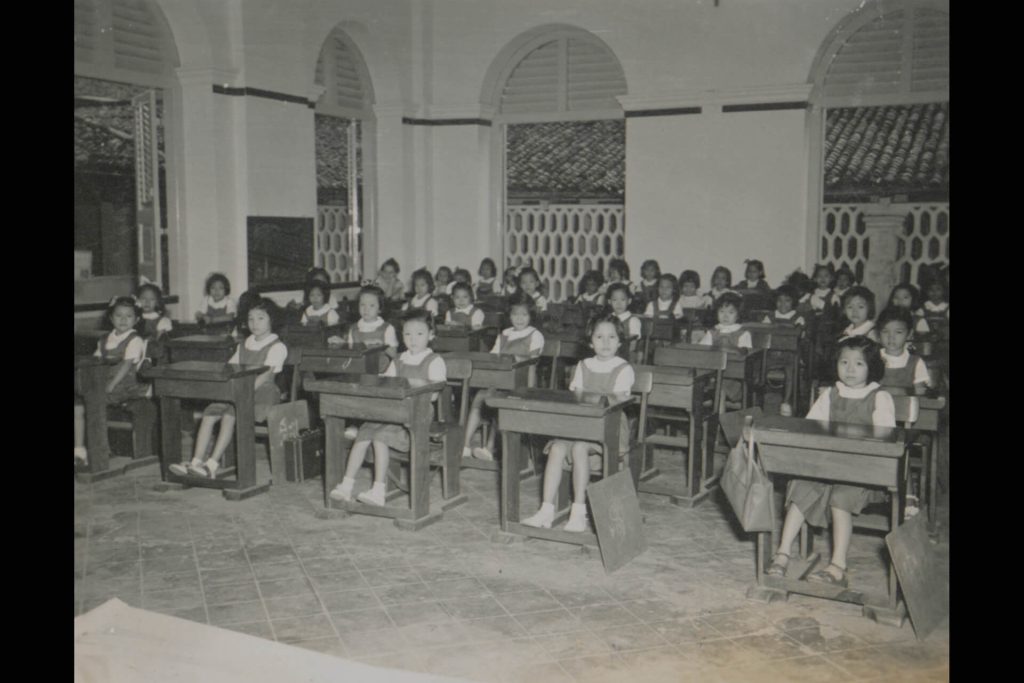
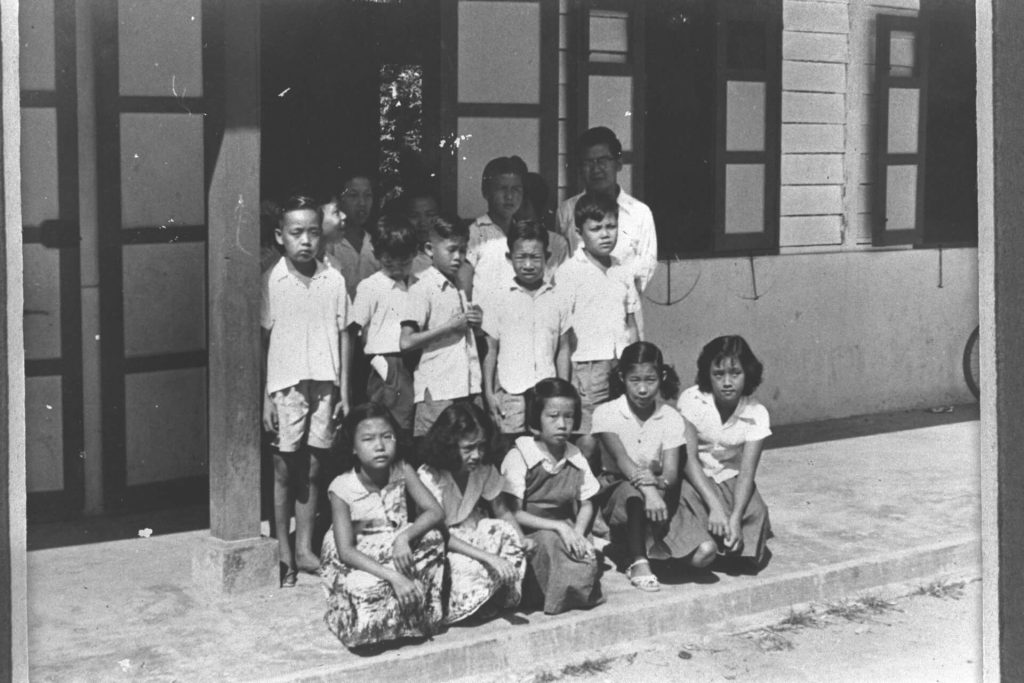
Twenty-two schools took part in the inaugural examination in 1930. With the exception of Kong Yiong School in Yio Chu Kang (now Townsville Primary School) and Min Cheng School in Bukit Timah (no longer in operation), all of the participating schools were located in the city or its vicinity. A total of 475 pupils took the examination, of whom 381 were boys and 94 were girls.
The examination papers were set by schools in the southern Malayan states of Johor and Malacca. These included Ai Chun School in Batu Pahat (Chinese language), Foon Yew School in Johor Bahru (general knowledge), Chung Hwa School in Muar (arithmetic), and Pay Fong School in Malacca (English language).
The results were announced on 17 January 1931, about a month after the examinations. Of the 322 candidates who took the Primary 4 examination, only 107 passed, yielding a pass rate of 33%. At the Primary 6 level, 64 of the 148 candidates passed, registering a pass rate of 43%. The top-performing school was the Chinese Industrial and Commercial Continuation School, followed by Ai Tong School.
The following day, a certificate and prize presentation ceremony was held in the hall of the Chinese Industrial and Commercial Continuation School, with Tan Kah Kee as the guest of honour. In his speech, Tan highlighted the critical issues facing Chinese-medium schools: they were numerous, too small, and severely lacking in funding and facilities, all of which affected the quality of education. Consequently, when students entered Singapore’s only Chinese-medium secondary school at the time, The Chinese High School (which eventually merged with Hwa Chong Junior College to form Hwa Chong Institution in January 2005), they struggled with the coursework and required a year of remedial classes to catch up. To address this issue, Tan proposed that under-resourced primary schools should focus solely on the lower primary curriculum. This would enable resources to be consolidated, allowing experienced and established schools, such as Yeung Ching (now Yangzheng Primary School), Tuan Mong, Yuying, Tao Nan, Khee Fatt (now Qifa Primary School), Ai Tong, and Chongzheng, to focus on delivering the upper primary curriculum.
In 1931, only 10 schools took part in the second joint examination, which was less than half the number that participated in the inaugural year. At the lower primary level, 113 pupils took the examination and achieved a pass rate of 45%. Chong Fook Girls’ School (no longer in operation today) recorded a perfect pass rate of 100%, followed by the Chinese Industrial and Commercial Continuation School with 83% and Ai Tong with 76%. At the upper primary level, 49 candidates took the examination, with 19 passing for an overall pass rate of 38%. Ai Tong achieved a 100% pass rate, while the Chinese Industrial and Commercial Continuation School came in second with 90%.
After running for two years, the examination was suspended for unknown reasons in 1932 and 1933. It resumed in 1934, following a proposal by the Chinese Consul-General in Singapore, Philip Tyau (1880–1974). Believing a joint examination system was vital for Chinese-medium schools, he convened a meeting of school representatives at the consulate in May 1934. It was decided that the examination would resume at the end of the year under the consulate’s supervision. From 1935 onwards, the examination was jointly administered by the Straits Settlements, the Chinese education department of the Federation of Malaya, and the Chinese Consulate-General in Singapore, until it was suspended during the Japanese occupation of Singapore and Malaya in 1942. Following Japan’s surrender in 1945, the examination resumed before being discontinued in 1951.
Joint examination replaced by Primary School Leaving Examination (PSLE)
On 3 June 1959, Singapore attained self-government, with Lee Kuan Yew (1923–2015) taking office as prime minister. In 1960, the Ministry of Education introduced the Primary School Leaving Examination (PSLE) across all four language streams — English, Chinese, Malay, and Tamil — with the first examination scheduled for the end of the year. This marked the first time the government coordinated and administered a joint examination for all Primary 6 students, serving as a standardised assessment for secondary school admission.
A total of 30,000 candidates sat for the inaugural PSLE in 1960. Only 13,000 students passed while 16,000 failed, registering an average pass rate of just 44%. Chinese-medium schools achieved a pass rate of 68%, followed by Malay-medium schools at 48% and English-medium schools at 34%, while Tamil-medium schools ranked last. Newspaper reports noted instances where entire classes or even entire schools failed the examination. By the time Singapore gained independence in 1965, the average PSLE pass rate had surged to 72%, with the pass rate for Chinese-medium schools rising to 86%.
Although the joint examination was only held for a few years, its introduction demonstrated that, as early as the 1930s, the local Chinese community was actively reforming and institutionalising Chinese-language education in Singapore, steering it towards a more structured and systematic future.
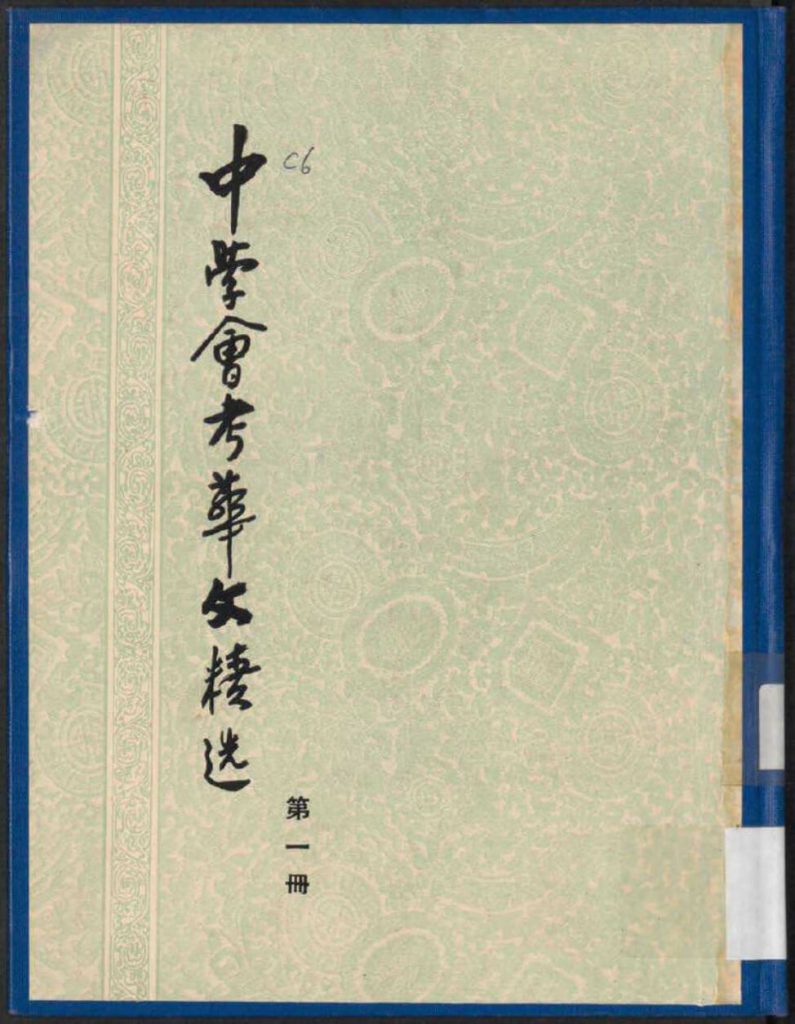
This is an edited and translated version of 独立前的华小会考. Click here to read original piece.
Chew, Wee Kai. “Xinjiapo huaxiao bainian lunkuo” [A century of Chinese-medium schools in Singapore]. Quan 1 (2013): 23–35. |